fredmiranda.com
Login

Moderated by: Fred Miranda
  New fredmiranda.com Mobile Site
  New Feature: SMS Notification alert
  New Feature: Buy & Sell Watchlist
  

FM Forums | Sony Forum | Join Upload & Sell

1       2       3              15              17              21       22       end
  

After 13 years of all Sony, I'm trying Nikon


old-gregg
Online
• • •
Upload & Sell: Off
p.16 #1 · After 13 years of all Sony, I'm trying Nikon


@Ross Martin Well, here's a similar shot where there was not enough DR, as evidenced by the abrupt transitions in the skies:


I bracketed it, and this one was the best in the series. So I'm not sure what your point was: DR doesn't matter? But I think we all would agree that we're facing the DR deficit every once in a while, and if a camera offers 2EV less of it, it's worth paying attention to.


Oct 06, 2025 at 06:15 PM
Ross Martin
Offline
• • • • •
Upload & Sell: On
p.16 #2 · After 13 years of all Sony, I'm trying Nikon


RoamingScott wrote:
Funny enough, my sunset shots from WSNP are among what I consider the hardest light conditions I've ever shot in as well. Turns out the Z9 had zero issues in post and I came home with some of my favorite all time images.


I remember your post from White Sands, you got some cool shots.


Oct 06, 2025 at 06:24 PM
bernardl
Offline
• • • •
Upload & Sell: Off
p.16 #3 · After 13 years of all Sony, I'm trying Nikon


Ross Martin wrote:
I can geek out on photo specs at times including DR numbers, like any good photo forum nerd but the truth is I have not been able to see any problems in actual real-world shooting of cameras from many different brands over the years that have different DR numbers. The example here is from the Z9 and I intentionally and massively underexposed to protect the highlights, then pulled up exposure/shadows in Lightroom by 3 stops, and to me it looks good.
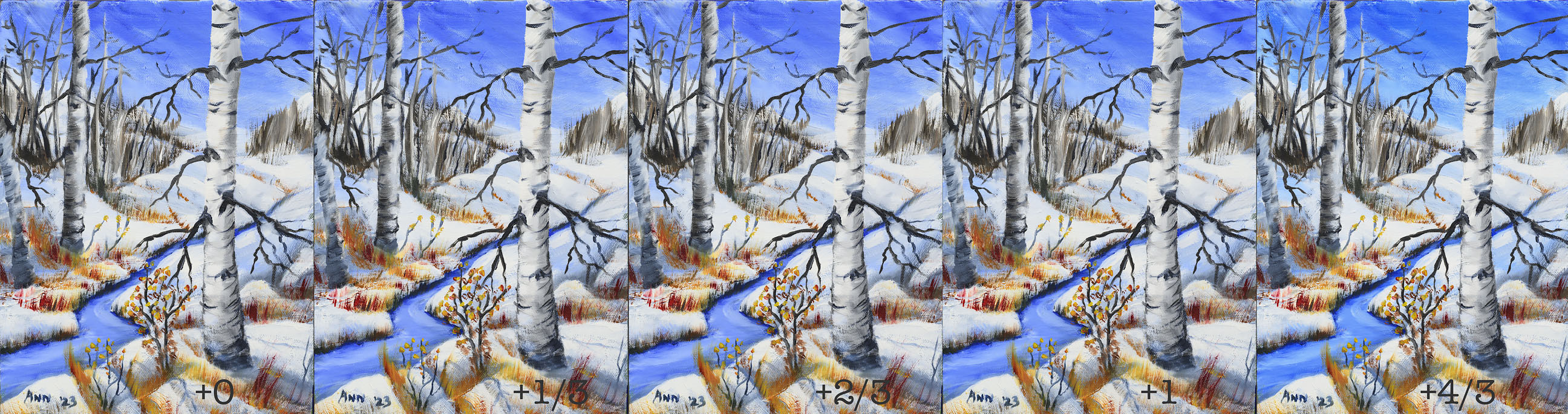

Nice image! A great candidate for focus stacking if one can act fast. Although f22 did the job pretty well I bet that either the foreground or the mountain line look a bit soft on a larger print, possibly both if you used traditional hyperfolcal distance.

Leaving them visible was probably an artistic decision on your part, but when I try to capture such images on tripod with a lens prone to flaring such as the 24-120mm I often capture 2 images, one as is, one with my hand masking the sun to reduce/eliminate flare effects outside the sun stars. Overlaying them in PS and masking out the flare using the second image takes a few seconds.

Cheers,
Bernard


Edited on Oct 06, 2025 at 07:28 PM · View previous versions


Oct 06, 2025 at 07:22 PM
bernardl
Offline
• • • •
Upload & Sell: Off
p.16 #4 · After 13 years of all Sony, I'm trying Nikon


old-gregg wrote:
@Ross Martin@ Well, here's a similar shot where there was not enough DR, as evidenced by the abrupt transitions in the skies:
https://d3ue2m1ika9dfn.cloudfront.net/dr-failure.jpg
I bracketed it, and this one was the best in the series. So I'm not sure what your point was: DR doesn't matter? But I think we all would agree that we're facing the DR deficit every once in a while, and if a camera offers 2EV less of it, it's worth paying attention to.


I would have exposed for the sky and lifted shadows in post. This is what I would call correct digital exposure which is basically the old ETTR mantra.

With such correct exposure DR only affects the shadows. In fact that's the very definition of DR.

Cheers,
Bernard


Oct 06, 2025 at 07:24 PM
Ross Martin
Offline
• • • • •
Upload & Sell: On
p.16 #5 · After 13 years of all Sony, I'm trying Nikon


bernardl wrote:
Nice image! A great candidate for focus stacking if one can act fast although f22 did the job pretty well.

When I try to capture such images on tripod with a lens prone to flaring such as the 24-120mm I often capture 2 images, one as is, one with my hand masking the sun to reduce/eliminate flare effects outside the sun stars. Overlaying them in PS and masking out the flare using the second image takes a few seconds.

Cheers,
Bernard


Thanks Bernard! That is a great tip about flare, I will try to remember that. I think I used f/22 in order to produce the best possible sunstar, but I really don’t remember, and I rarely stop down that much so kind of weird for me. I am well acquainted with diffraction, but I also know that a good deconvolution sharpening tool can help immensely. Anyway, thanks for your comment.

PS: have you heard some whisperings about what the Z9II sensor might bring to the table? I saw a recent post where you maybe hinted at something new.


Oct 06, 2025 at 07:27 PM
bernardl
Offline
• • • •
Upload & Sell: Off
p.16 #6 · After 13 years of all Sony, I'm trying Nikon


Ross Martin wrote:
Thanks Bernard! That is a great tip about flare, I will try to remember that. I think I used f/22 in order to produce the best possible sunstar, but I really don’t remember, and I rarely stop down that much so kind of weird for me. I am well acquainted with diffraction, but I also know that a good deconvolution sharpening tool can help immensely. Anyway, thanks for your comment.

PS: have you heard some whisperings about what the Z9II sensor might bring to the table? I saw a recent post where you maybe hinted at something new.


Hi Ross,

Nothing definite unfortunately. I hear 2 streams of rumors, some claiming that the sensor will be the same as the Z9 but that Exceed 8 will add more speed together with many other small usability improvements (similar to a1 to a1II), another one speaking about a Red inspired lower res global shutter sensor (36 mp).

Not sure which one is correct.

Regards,
Bernard


Oct 06, 2025 at 07:34 PM
old-gregg
Online
• • •
Upload & Sell: Off
p.16 #7 · After 13 years of all Sony, I'm trying Nikon


Bernard, that failed shot was impossible to make with the DR of my camera (A7RV), I shared it to remind that some scenes simply don't fit into 14 bits.


Oct 06, 2025 at 07:36 PM
bernardl
Offline
• • • •
Upload & Sell: Off
p.16 #8 · After 13 years of all Sony, I'm trying Nikon


old-gregg wrote:
Bernard, that failed shot was impossible to make with the DR of my camera (A7RV), I shared it to remind that some scenes simply don't fit into 14 bits.


I understand the intent, sure.

And you are right that the key here is probably more bit depth rather than DR since bit depth is the aspect controlling the amount of data available to handle tonal transitions. But such banding may also only be present when displaying an image on a limited bit depth device such as a screen and may not actually be present in the file.

Cheers,
Bernard


Oct 06, 2025 at 07:41 PM
j4nu
Offline
• • • • •
Upload & Sell: Off
p.16 #9 · After 13 years of all Sony, I'm trying Nikon


Reading this thread, I think the biggest misconception is that people think that if they just take any photo they will see a difference in DR between, for example A7RV and Z8 at 100 ISO.
The truth is that it needs to be a scene that's pushing the DR (like the posted sunset) AND is correctly ETTR exposed... and even then it will require pulling the shadows in post.


Oct 07, 2025 at 01:14 AM
wind30
Offline
• • •
Upload & Sell: Off
p.16 #10 · After 13 years of all Sony, I'm trying Nikon


I think the dr difference between the z8 and A7r5 is insignificant. I own both. Who said there was a difference? The Nikon with bad dr is z6iii


Oct 07, 2025 at 04:15 AM


Search in Used Dept. 

bernardl
Offline
• • • •
Upload & Sell: Off
p.16 #11 · After 13 years of all Sony, I'm trying Nikon


wind30 wrote:
I think the dr difference between the z8 and A7r5 is insignificant. I own both. Who said there was a difference? The Nikon with bad dr is z6iii


There is only 0.4 stop difference between Z8 and a7r5, which is indeed negligible.

Cheers,
Bernard


Oct 07, 2025 at 05:12 AM
j4nu
Offline
• • • • •
Upload & Sell: Off
p.16 #12 · After 13 years of all Sony, I'm trying Nikon


bernardl wrote:
There is only 0.4 stop difference between Z8 and a7r5, which is indeed negligible.

Cheers,
Bernard


Depends on how you compare, both at 100 ISO it's 1EV, both at their respective base ISO - 64 vs 100 ISO it's 0.4EV.


Oct 07, 2025 at 06:11 AM
ruthenium
Offline
• • • •
Upload & Sell: On
p.16 #13 · After 13 years of all Sony, I'm trying Nikon


j4nu wrote:
Depends on how you compare, both at 100 ISO it's 1EV, both at their respective base ISO - 64 vs 100 ISO it's 0.4EV.


Well-noted! Comparing the DR of FF sensors at different ISO values serves no purpose. The one at a lower ISO received more light; thus, the comparison is pointless. The amount of light must be the same (thus, the ISO must be the same) for a meaningful comparison of two FF sensors.


Oct 07, 2025 at 06:48 AM
Steve Spencer
Offline
• • • • • • •
Upload & Sell: On
p.16 #14 · After 13 years of all Sony, I'm trying Nikon


ruthenium wrote:
Well-noted! Comparing the DR of FF sensors at different ISO values serves no purpose. The one at a lower ISO received more light; thus, the comparison is pointless. The amount of light must be the same (thus, the ISO must be the same) for a meaningful comparison of two FF sensors.


No, in many situations you have more than enough light to shoot at base ISO and have plenty of shutter speed. In those situations both cameras would be shot at base ISO and it makes sense to compare them at base ISO not turn up the ISO on the camera with a lower base ISO.

Only if there is just enough light to shoot at ISO 100 and use the shutter speed you want does it make sense to compare at ISO 100. If there is any more light than that you can turn down the ISO on a camera with lower base ISO and shoot at base ISO and there is no reason you wouldn't do that and then it makes sense to compare the images at base ISO. And yes, the camera with the lower base ISO would be using a slower shutter speed and would have more light, but that is exactly the advantage of having that lower base ISO, it can actually use that extra light whereas the camera with the higher base ISO cannot because it will have hit the full well capacity of its sensor.


Oct 07, 2025 at 08:06 AM
Immortal
Offline
• •
Upload & Sell: Off
p.16 #15 · After 13 years of all Sony, I'm trying Nikon


wind30 wrote:
I think the dr difference between the z8 and A7r5 is insignificant. I own both. Who said there was a difference? The Nikon with bad dr is z6iii


Z8 and Z6 III are almost matched in DR till ISO 400, after that till roughly 700-750 Z8 is ahead and again, from ISO 800 and up they're matched. The real benefit of Z8 is that you can shoot at ISO 64 with higher DR than Z6 III at its base ISO of 100.


Oct 07, 2025 at 08:24 AM
ruthenium
Offline
• • • •
Upload & Sell: On
p.16 #16 · After 13 years of all Sony, I'm trying Nikon


Steve Spencer wrote:
No, in many situations you have more than enough light to shoot at base ISO and have plenty of shutter speed. In those situations both cameras would be shot at base ISO and it makes sense to compare them at base ISO not turn up the ISO on the camera with a lower base ISO.

Only if there is just enough light to shoot at ISO 100 and use the shutter speed you want does it make sense to compare at ISO 100. If there is any more light than that you can turn down the ISO on a
...Show more

Steve, this raises the question on what is it that is compared?
1) If we compare sensors, then a correct comparison requires the same amount of light. There is no alternative.
2) If we compare the usage of cameras in "many situations" when "you have more than enough light to shoot at base ISO" then, yes, the relatively poor DR of one sensor can be helped by allowing more light on this sensor when the base ISO is 64 (vs. 100 on the other bodies) and the ISO can be maintained at 64.
As soon as a need would arise to crank the ISO up to 100 and higher, the relatively poor DR can become a factor that may or may not be significant, depending on whether the resulting images should require lifting shadows by more than 2 stops (a conservative estimate).


Oct 07, 2025 at 11:39 AM
Steve Spencer
Offline
• • • • • • •
Upload & Sell: On
p.16 #17 · After 13 years of all Sony, I'm trying Nikon


ruthenium wrote:
Steve, this raises the question on what is it that is compared?
1) If we compare sensors, then a correct comparison requires the same amount of light. There is no alternative.
2) If we compare the usage of cameras in "many situations" when "you have more than enough light to shoot at base ISO" then, yes, the relatively poor DR of one sensor can be helped by allowing more light on this sensor when the base ISO is 64 (vs. 100 on the other bodies) and the ISO can be maintained at 64.
As soon as a need would arise to crank the
...Show more

Exactly. We are in agreement, but with different base ISOs which same amount of light should we compare? The max that fills the wells on the camera with higher base ISO or the max that fills the wells on the camera with lower base ISO? We could use either amount of light and compare the sensors and get different answers. When comparing the Sony A1 II and the Nikon Z9 we see that at base ISO for both cameras the A1 II has .4 stops better DR, which IMO is not very large and from ISO 640 and higher about .5 stops better DR, which still is pretty small in my book. At ISO 500, the Z9 actually does slightly better than the Sony A1 II, and it is only from ISO 100 to 400 that the difference in DR is larger. The A1 II does have a bit higher DR, but the difference isn't that large and I would expect it not to be a substantial or important difference in real world shooting in almost all situations.


Oct 07, 2025 at 12:58 PM
ruthenium
Offline
• • • •
Upload & Sell: On
p.16 #18 · After 13 years of all Sony, I'm trying Nikon


Steve Spencer wrote:
Exactly. We are in agreement, but with different base ISOs which same amount of light should we compare? The max that fills the wells on the camera with higher base ISO or the max that fills the wells on the camera with lower base ISO? We could use either amount of light and compare the sensors and get different answers. When comparing the Sony A1 II and the Nikon Z9 we see that at base ISO for both cameras the A1 II has .4 stops better DR, which IMO is not very large and from ISO 640 and higher
...Show more

Steve, this isn't exactly my area of deep expertize. The dynamic range is calculated from the ratio of the numerical value for the maximum signal to the numerical value of the minimum acceptable signal.
To your question: "but with different base ISOs which same amount of light should we compare? The max that fills the wells on the camera with higher base ISO or the max that fills the wells on the camera with lower base ISO?"
My understanding is that these two maxes should be practically the same, at or near 16383, assuming that the Analog-to-Digital-Converter is 14 bit and the light has been correctly digitized to match the strongest highlights to the largest number the ADC can handle: 16383.

If sensor A received more light than sensor B, it is tempting to claim that the signal-to-noise ratio (SNR) for A is greater than the SNR(B), and hence the DR. Let's look into this. We know that at base (and generally at low) ISO, the noise is dominated by the photon shot noise, and not by the electronic read noise. According to some calculations, the ratio of the two is about 99 to 1, and the read noise can be ignored. The shot noise increases as the square root of the signal.
For example, if the full-well capacity is 80,000 electrons per pixel, then the shot noise is at about 283.
If the full-well capacity is 60,000 then the shot noise is 245.
When the full-well capacities are digitized to match the largest number the ADC can handle, the noise is scaled proportionally.
In this example, e.g., scaling 60,000 to 80,000 means the 245 noise is scaled to 328.
Thus, I conclude that the sensor that received more light should have a better SNR than the sensor that received less light.
The DR of the former should be better than that of the latter, assuming the same sensor technology.
I hope my numbers are correct, and if there are experts who know better, please, correct me.


Oct 07, 2025 at 02:10 PM
bernardl
Offline
• • • •
Upload & Sell: Off
p.16 #19 · After 13 years of all Sony, I'm trying Nikon


We have always compared the DR of sensors by comparing the highest DR value, which is at the native base ISO of the sensor. 64 for the Z8, 100 for the a7rV.

Why so? Because that determines the ability of the sensor to extract useful shadow information while not saturating it’s highlights. Which is the very definition of DR.

And this matches the way cameras are used in the real world. Nobody shoots landscape at ISO100 with a Z8. The lower base ISO of the Z8 is a feature.

Cheers,
Bernard


Oct 07, 2025 at 02:23 PM
old-gregg
Online
• • •
Upload & Sell: Off
p.16 #20 · After 13 years of all Sony, I'm trying Nikon


bernardl wrote:
Why so? Because that determines the ability of the sensor to extract useful shadow information while not saturating it’s highlights. Which is the very definition of DR.


But "useful shadow information" and "not saturating highlights" are not defined in your (correct) statement. Most people just assume that lost "useful shadows" means clipping to black, and "saturating highlights" means clipping to white. In the monochromatic world that could be, but the color is more nuanced. When a camera's DR is challenged, you begin to lose color fidelity unless your exposure is spot-on, yes even at ISO 64, and even with low-contrast scenes.

I've shown the uneven saturation example in another thread, and below is another one from Diglloyd. I am aware of his somewhat controversial standing (due to his comms style). But he gets the tech right. Here's an example from his paywalled section which shows the color shift for a non-challenging scene (less than 8EV range) at ISO 64 when the Z8 gets overexposed just shy over 1EV. The color shift happens way before any of the RGB channels are clipped, he showed RawDigger data as well. This is what happens when one aggressively ETTR.

BTW this is also why DxO issues two different DR ratings to sensors: one for landscapes, and another for portraiture.


Oct 07, 2025 at 02:50 PM
1       2       3              15              17              21       22       end


FM Forums | Sony Forum | Join Upload & Sell

1       2       3              15              17              21       22       end


Welcome back
Log in to your account