p.15 #8 · After 13 years of all Sony, I'm trying Nikon
Extending the discussions on DR, I just saw Nikon claiming Zr having 15 stops of DR. But the same sensor on Z6iii only shows < 11 stops on photonstophotos. I wonder what's people's interpretations of the discrepancy.
p.15 #9 · After 13 years of all Sony, I'm trying Nikon
tctmp wrote:
Extending the discussions on DR, I just saw Nikon claiming Zr having 15 stops of DR. But the same sensor on Z6iii only shows < 11 stops on photonstophotos. I wonder what's people's interpretations of the discrepancy.
Video and still DR have different parameters; I don't know why but it is normal to claim higher DR with video.
p.15 #10 · After 13 years of all Sony, I'm trying Nikon
mogul wrote:
Video and still DR have different parameters; I don't know why but it is normal to claim higher DR with video.
The dynamic range is a subjective metric, because it depends on the personal noise tolerance of a viewer. The SNR floor can be set lower with video because your brain is presented with 25+ frames per second and it performs the same "multi-shot averaging" as the A1 II does in the high-DR multi-shot mode. The higher the framerate, the higher the perceived DR.
p.15 #12 · After 13 years of all Sony, I'm trying Nikon
tctmp wrote:
Extending the discussions on DR, I just saw Nikon claiming Zr having 15 stops of DR. But the same sensor on Z6iii only shows < 11 stops on photonstophotos. I wonder what's people's interpretations of the discrepancy.
15 might be the "engineering dynamic range", EDR. To clarify, a DR is calculated from the ratio of the maximum signal a photosite can record before clipping, to the minimum "acceptable" signal. The former is reasonably well defined (the full well capacity), the latter is not. This results in different calculated DR values. For example, for the EDR, the minimum signal is at the Signal-to-Noise-Ratio, SNR = 1. The Photographic Dynamic Range (PDR) is defined by Bill Claff vs. "a low endpoint with an SNR of 20 when adjusted for the appropriate Circle Of Confusion (COC) for the sensor."
The 20-fold difference, in log2 terms, is 4.3 stops. This is probably the reason for the two values you mentioned, 15 and 11. At least, this seems to be the simplest explanation.
p.15 #13 · After 13 years of all Sony, I'm trying Nikon
tctmp wrote:
Extending the discussions on DR, I just saw Nikon claiming Zr having 15 stops of DR. But the same sensor on Z6iii only shows < 11 stops on photonstophotos. I wonder what's people's interpretations of the discrepancy.
Its call marketing, same as 8 stops of ibis when its not even 5.
p.15 #14 · After 13 years of all Sony, I'm trying Nikon
old-gregg wrote:
@j4nu@ I have not used the A1 II, a $7K camera by the way, and can't comment on that. My rant was "inspired" by folks who're claiming that the Z8's DR deficit doesn't matter, and the Z6 III is perfectly competitive. As if sports and birds are the only subjects that matter.
I just checked your numbers on Photon to Photon, and as I expected the PDR difference between the Z8 (11.3 stops) and a7rV (11.7 stops) is only 0.4 stops, not 1 stop.
I am sorry, I am 100% sure that this is completely impossible to tell apart in a double blind test. I don't doubt your honesty, but what you think you see is your pre-conveived idea that there is a difference. I have spent enough time in high-end audio to know this is very common even among highly educated individuals aware about this phenomenon.
Considering this tiny difference, it would IMHO be a mistake to stick to BIS sensors because of this DR gap considering the huge advantages of stacked sensor for many schooting scenarios.
The cost if higher for the Z6III and even higher for the a9III which is clearly by far the worst sensor in terms of DR. Not that it really matters that much for the applications where it is used.
The next interesting sensor development could come with the Z9II. It shouldn't be that far off now.
p.15 #15 · After 13 years of all Sony, I'm trying Nikon
As usual, the only people that care about DR enough to post about ceaselessly it never produce examples of the cameras in question falling short in tough conditions.
p.15 #16 · After 13 years of all Sony, I'm trying Nikon
ruthenium wrote:
15 might be the "engineering dynamic range", EDR. To clarify, a DR is calculated from the ratio of the maximum signal a photosite can record before clipping, to the minimum "acceptable" signal. The former is reasonably well defined (the full well capacity), the latter is not. This results in different calculated DR values. For example, for the EDR, the minimum signal is at the Signal-to-Noise-Ratio, SNR = 1. The Photographic Dynamic Range (PDR) is defined by Bill Claff vs. "a low endpoint with an SNR of 20 when adjusted for the appropriate Circle Of Confusion (COC) for the sensor."
The 20-fold difference, in log2 terms, is 4.3 stops. This is probably the reason for the two values you mentioned, 15 and 11. At least, this seems to be the simplest explanation. ...Show more →
That sounds like a nice explanation.
I wasn't aware of the 20x floor in Bill's calculation. Considering the raw file is only 14 bits currently, that would then mean the noise almost never register even in a single bit at ISO ranges where Bill gives a DR value like 12.
p.15 #17 · After 13 years of all Sony, I'm trying Nikon
RoamingScott wrote:
As usual, the only people that care about DR enough to post about ceaselessly it never produce examples of the cameras in question falling short in tough conditions.
It's really easy to see through the schtick.
My first DSLR (2005 Pentax *ist Ds 6MP APSC Sony Sensor) had a RAW DR of about 10... I still own it, still works, and it doesn't suck. I actually enjoyed that camera and worked within its limits for a long time. Its biggest drawback was the camera CPU/Memory was slow, the AF-C was poor, otherwise it was fine for its day. I still fire it up now and then for laughs or suicide missions, heh.
We talk all this trash and then post an 8 bit JPG to show our work. The potential dynamic range of a standard 8-bit JPEG image is approximately 9 to 11 stops and goes down even more with any compression. That means my ancient Pentax is still just fine for internet JPG posting except it won't quite fill a 4K screen.
p.15 #18 · After 13 years of all Sony, I'm trying Nikon
bernardl wrote:
I just checked your numbers on Photon to Photon, and as I expected the PDR difference between the Z8 (11.3 stops) and a7rV (11.7 stops) is only 0.4 stops, not 1 stop.
I am sorry, I am 100% sure that this is completely impossible to tell apart in a double blind test. I don't doubt your honesty, but what you think you see is your pre-conveived idea that there is a difference. I have spent enough time in high-end audio to know this is very common even among highly educated individuals aware about this phenomenon.
Bernard, this absolutely could be the case. In fact, when I got my first Z8 I actually attempted to compare them in something much closer to a controlled test and wasn't able to manufacture a synthetic scene where shadow/highlights recovery was possible on the Sony but not on the Nikon. I couldn't do it!
But when I go through my Z8 images I periodically see funky color in shadows/highlights, with uneven saturation and uneven magenta/green split depending on luminance, mostly in mid ISOs between 800 and 1600. I don't see those with my other cameras, even DSLRs, that's why my "leading theory", so to sepak, is to blame its stacked design because it's the D850 sensor otherwise. Sure, it's pixel peeping and you see it once you know what to look for. But I deem all human sins equal: pixel peeping is no less noble than looking at a gallery print. My second theory is the shitty DCP profile for the Z8 in Adobe Camera RAW.
p.15 #19 · After 13 years of all Sony, I'm trying Nikon
RoamingScott wrote:
As usual, the only people that care about DR enough to post about ceaselessly it never produce examples of the cameras in question falling short in tough conditions.
It's really easy to see through the schtick.
I can geek out on photo specs at times including DR numbers, like any good photo forum nerd but the truth is I have not been able to see any problems in actual real-world shooting of cameras from many different brands over the years that have different DR numbers. The example here is from the Z9 and I intentionally and massively underexposed to protect the highlights, then pulled up exposure/shadows in Lightroom by 3 stops, and to me it looks good.
NIKON Z 9NIKKOR Z 24-120mm f/4 S lens35mmf/22.01/50s64 ISO0.0 EV
p.15 #20 · After 13 years of all Sony, I'm trying Nikon
Ross Martin wrote:
I can geek out on photo specs at times including DR numbers, like any good photo forum nerd but the truth is I have not been able to see any problems in actual real-world shooting of cameras from many different brands over the years that have different DR numbers. The example here is from the Z9 and I intentionally and massively underexposed to protect the highlights, then pulled up exposure/shadows in Lightroom by 3 stops, and to me it looks good.
Funny enough, my sunset shots from WSNP are among what I consider the hardest light conditions I've ever shot in as well. Turns out the Z9 had zero issues in post and I came home with some of my favorite all time images.



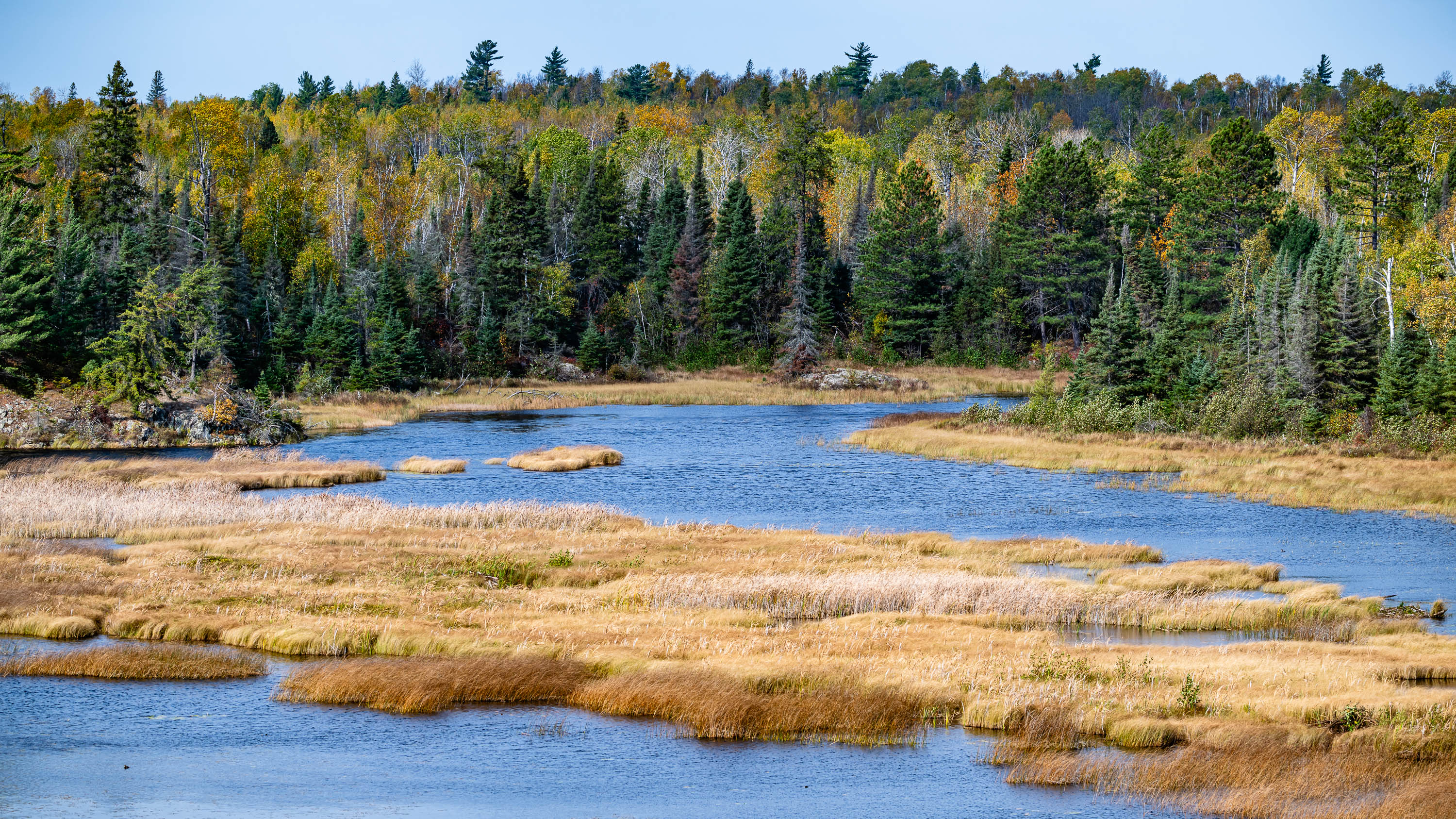

 but the truth is I have not been able to see any problems in actual real-world shooting of cameras from many different brands over the years that have different DR numbers. The example here is from the Z9 and I intentionally and massively underexposed to protect the highlights, then pulled up exposure/shadows in Lightroom by 3 stops, and to me it looks good.