Maximilian wrote:
Fred, did you notice any difference in image quality between shooting the 28mm Apo Lanthar on your Leica M and your Kolari modded Sony A7cR
The performance in terms of resolution and contrast is identical on the Leica and Sony with the Kolari mod. There are color differences, which come from their different color science, not the lens. The Sony sensor also shows more internal 'sensor' reflections at smaller apertures when the sun is in the frame. You can see that in the sunstar test, where I also used the modded A7CR.
By the way, if you have a lot of M-mount lenses, I definitely recommend getting the Kolari mod.
rscheffler wrote:
Fred, if you have the chance, please include frame line blockage examples here with/without hood. Thanks!
Hi Ron,
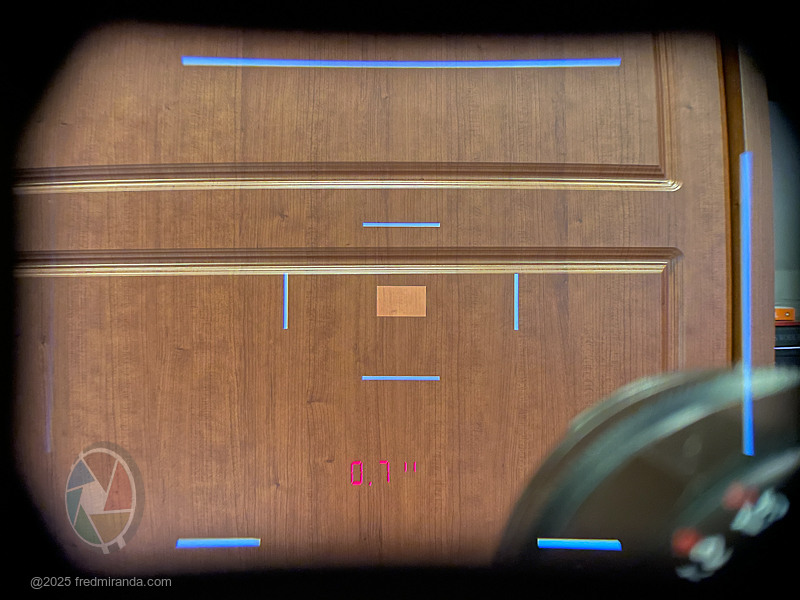
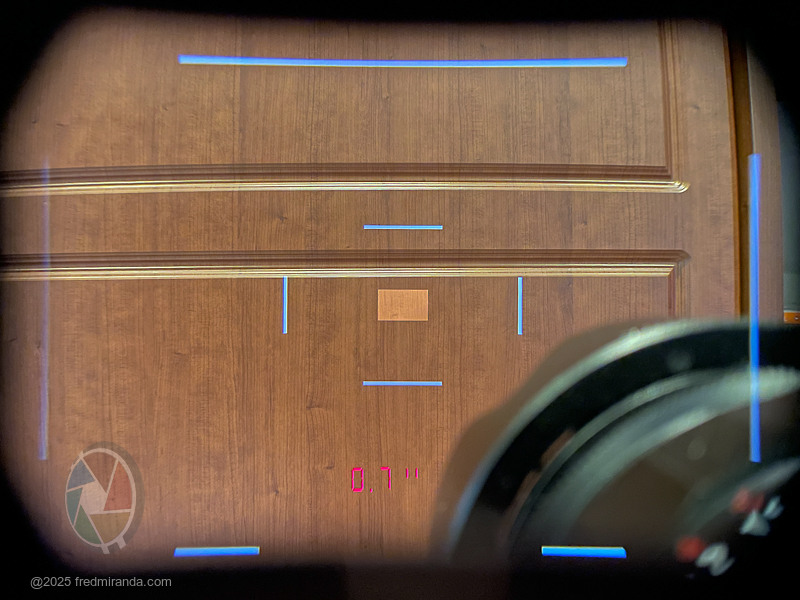
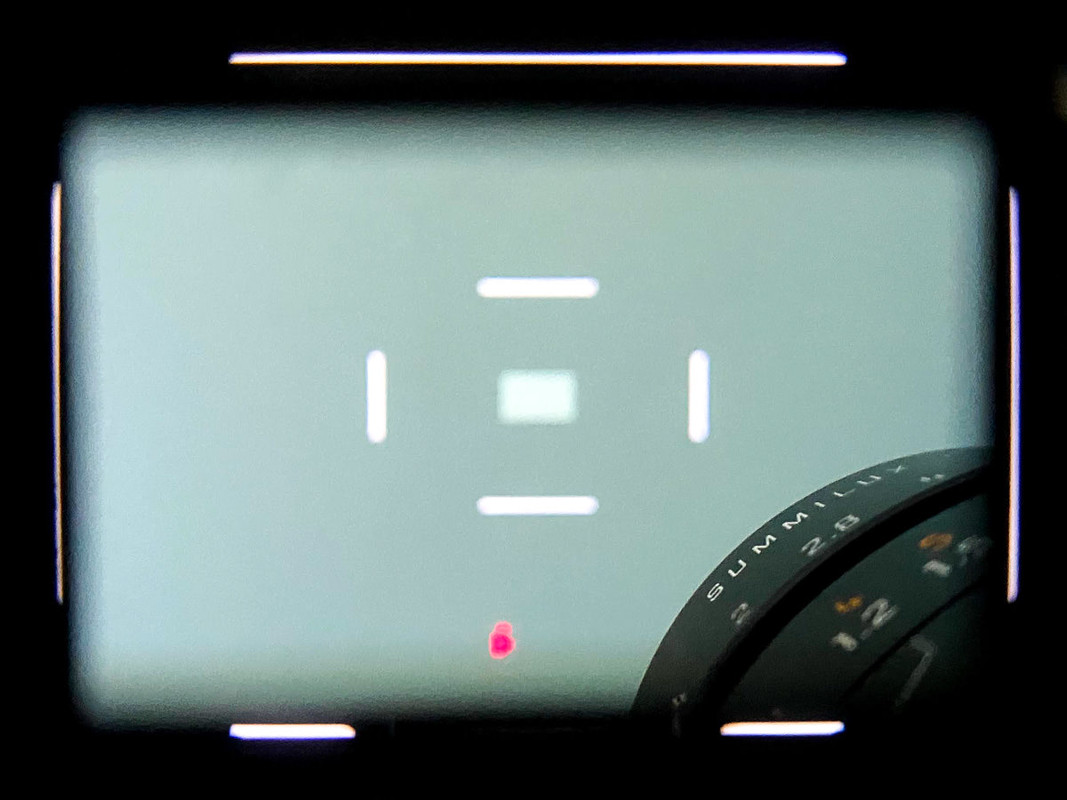
Here's a comparison showing the frameline blockage of the Voigtlander 28mm f/2 APO-Lanthar with and without the included hood. (Some distortion since I used my phone)
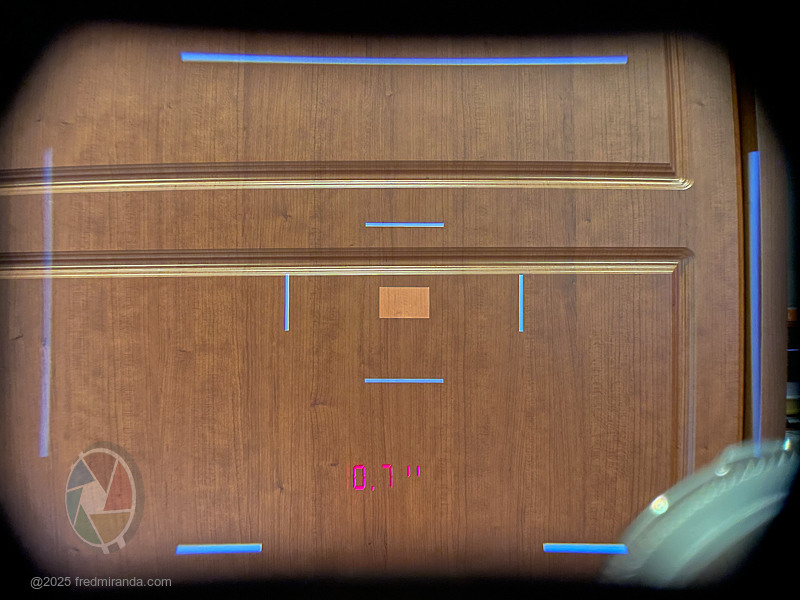
I also added a third photo with the Ultron II, which is clearly superior in this regard. It blocks less of the view, even though the APO is also a compact lens.
My main criticism of the Voigtlander 28mm f/2 APO-Lanthar is that even though it is compact for what it is, it causes more viewfinder blockage than the Ultron II and the included non-ventilated hood only makes it worse. That said, the 35mm and 50mm APO-Lanthars did not come with hoods at all, so I can't complain too much. Hood makers like Squarehood will likely release a ventilated option eventually but it will come at an extra cost.
Voigtlander 28mm f/2 APO-Lanthar without hood.
Voigtlander 28mm f/2 APO-Lanthar with included hood. It really should have been ventilated in my opinion.
Voigtlander 28mm f/2 Ultron II without hood — significantly less blockage.
Fred Miranda wrote:
Hi Ron,
Here's a comparison showing the frameline blockage of the Voigtlander 28mm f/2 APO-Lanthar with and without the included hood. I also added a third photo with the Ultron II, which is clearly superior in this regard. It blocks less of the view, even though the APO is also a compact lens.
My main criticism of the Voigtlander 28mm f/2 APO-Lanthar is that even though it is compact for what it is, it causes more viewfinder blockage than the Ultron II and the included non-ventilated hood only makes it worse. That said, the 35mm and 50mm APO-Lanthars did not come with hoods at all, so I can't complain too much. Hood makers like Squarehood will likely release a ventilated option eventually but it will come at an extra cost....Show more →
Thanks Fred!
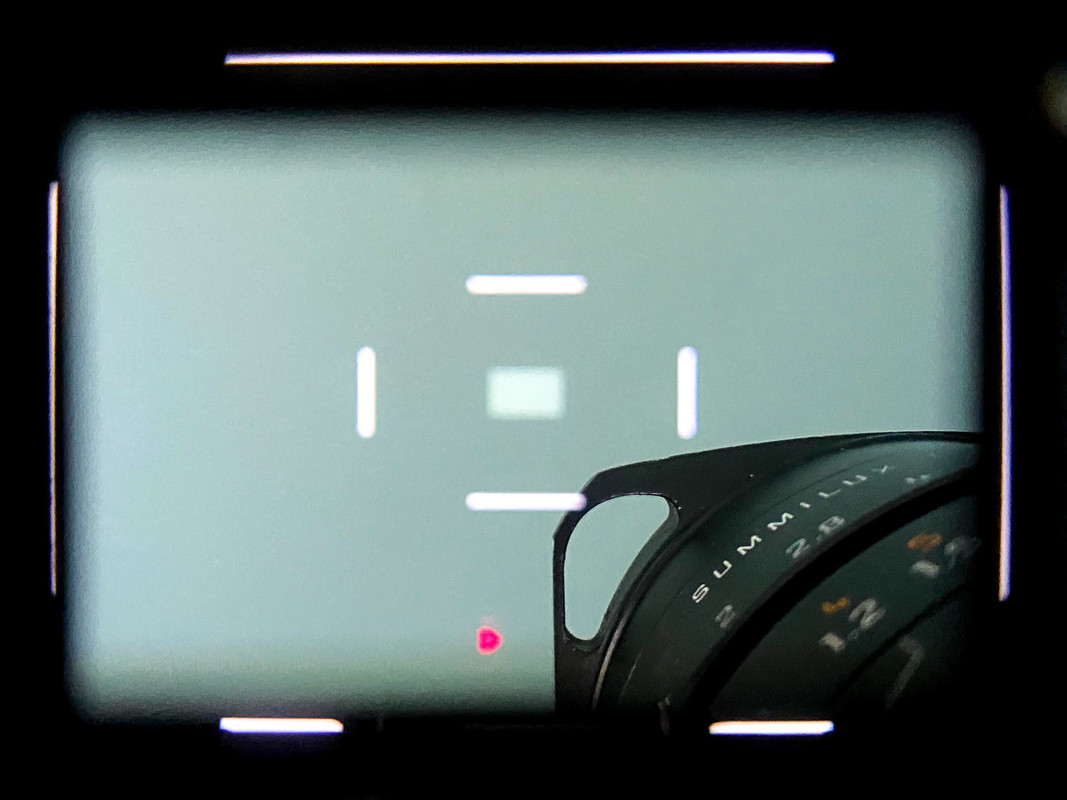
Looks similar to the 28 Lux which I've been able to live with, though of course not ideal. What bugs me about the VM is that the design Cosina has settled on for the APO Lanthars is IMO excessively 'bulky' relative to the optical components, making the lenses wider than they could be if minimized viewfinder blockage was a priority, which apparently it's not. For reference, below is viewfinder blockage with the M240 and 28 Lux combo at infinity, with and without hood. Blockage worsens at nearer focusing distances because of parallax correction shifting the frame lines down and to the right, IIRC. And as we know, most lenses also extend slightly at closer focusing distances.
Looks similar to the 28 Lux which I've been able to live with, though of course not ideal. What bugs me about the VM is that the design Cosina has settled on for the APO Lanthars is IMO excessively 'bulky' relative to the optical components, making the lenses wider than they could be if minimized viewfinder blockage was a priority, which apparently it's not. For reference, below is viewfinder blockage with the M240 and 28 Lux combo at infinity, with and without hood. Blockage worsens at nearer focusing distances because of parallax correction shifting the frame lines down and to the right, IIRC. And as we know, most lenses also extend slightly at closer focusing distances.
Indeed, it's similar to the 28 Lux in terms of blockage, though slightly less. But the Lux's ventilated hood definitely helps.
I'm not sure Cosina could have made this lens any smaller. The rear element protrudes quite a bit and the front element isn't recessed. They could have gone with a coned shape like the Ultron, but that look isn't for everyone and it might have introduced more vignetting.
I can't really fault the CV 28/2 APO-Lanthar for its size given the performance. The hood design is another story, but the lens itself is actually smaller than I expected for a 28mm f/2 APO with almost no compromises.
I agree the tapered 'cone' look (lens narrows at the front) is aesthetically unpleasing but would be functionally practical for minimizing viewfinder blockage. I don't think Cosina could do much about the length without venturing into Leica pricing territory but looking at the front of the lens, there's apparently about 1cm between the front element and the filter ring on each side. That could have been cut in half and likely not resulted in significant vignetting problems. I mean, the Ultron is 39mm filter size...Sure, not apples to apples in all respects. Cosina established a design language with the earlier APO Lanthars and I can't blame them for sticking with it, though it's a design that isn't really optimized for rangefinder uses. One more reason I expect to see this lens in mirrorless mounts. And it's optically just too good to force people to adapt to mirrorless with all the tradeoffs.
Based on Fred's test outcome, APO is batter in vivid description and color rendering
that are the key element of lens charter. APO is also controlled CA well.
Thanks to this important test that bring more attention for purchase.
The below image is taken in December 7, 2019 at Cleveland Park in Spartanburg
Leica Elmarit-M 28mm F2.8 with Sony A7R2
Minimal Focus Distance performance and Focus Shift
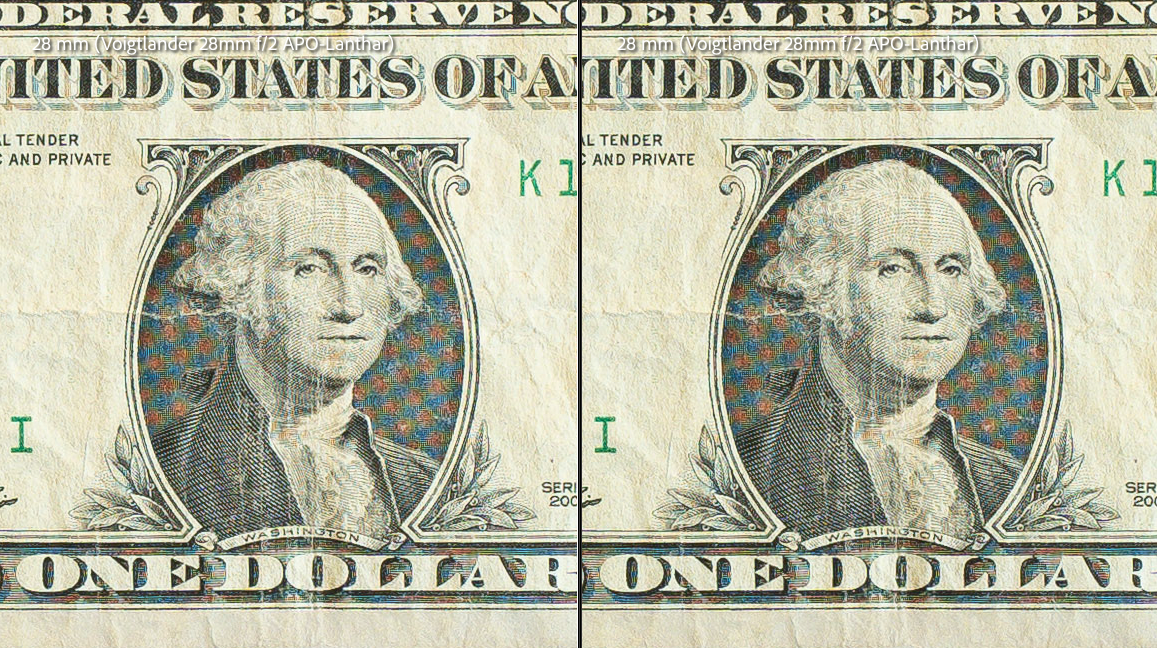
The Voigtlander 28mm f/2 APO-Lanthar uses a floating element mechanism, which helps explain its excellent performance at close distances. The lens is also very well corrected for spherical aberrations, contributing to consistent resolution and contrast. It performs impressively at both minimum focus distances: the 0.7m rangefinder limit and the closer 0.5m Live View distance.
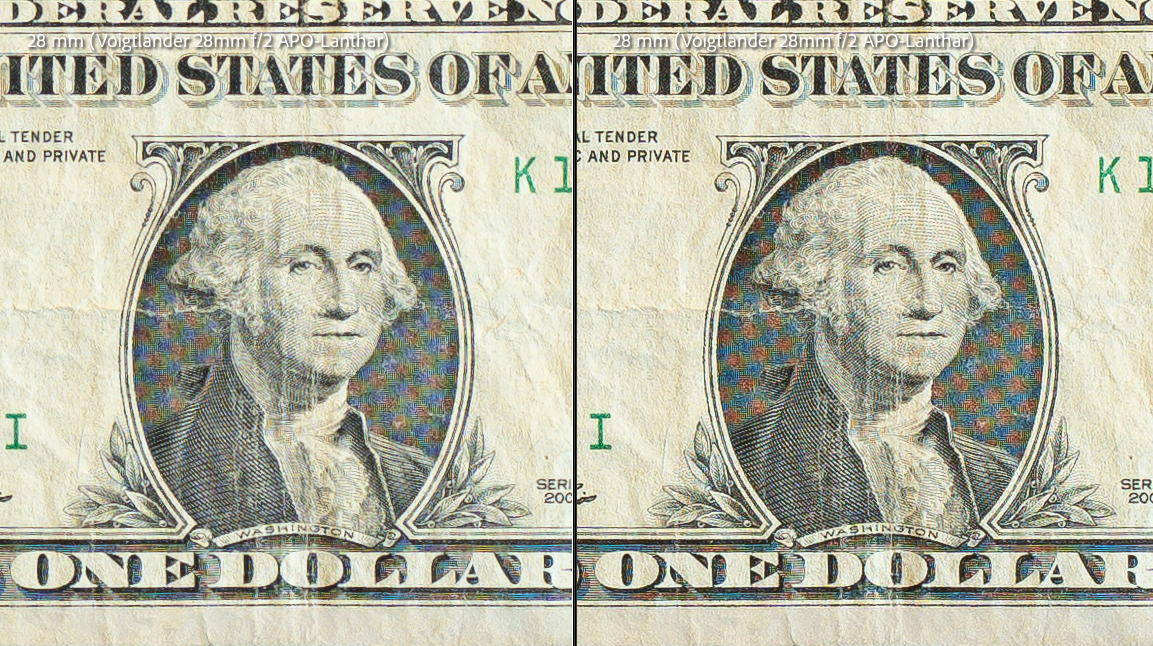
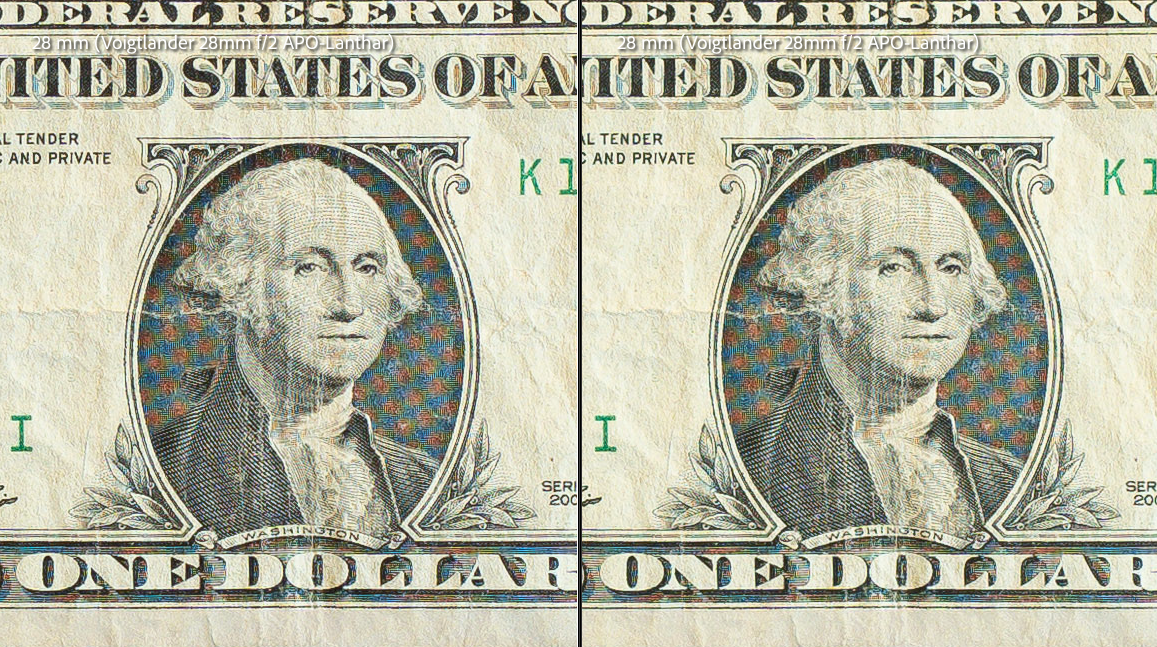
In the test crops below (shown at pixel level), you can see that sharpness and contrast are excellent even wide open at f/2, and they improve only very slightly when stopping down. There's also zero detectable focus shift, whether you're shooting at close range or at infinity which is great news for rangefinder shooters. At least on a 60MP sensor, any shift is too small for me to notice.
To confirm this, I've included a set of crops. The first series is focused at f/2, then stopped down to f/2.8 and f/4 without refocusing. Next, I compare another crop where the lens is re-focused at f/4. There's no visible difference in focus position, which confirms the lens has no detectable focus shift.
These crops cover both the 0.7m and 0.5m distances. You’ll notice that performance is stronger at 0.7m, with visibly higher sharpness and more pronounced moire, likely because the lens out-resolves the 60MP sensor at this distance.
As someone who doesn't have to deal with VF blockage, I like the hood. It makes the lens look like a rook from my favorite chess set. As for the size, I'm really impressed they got all that goodness into something roughly the size of the Elmarit-M 28 pre-A (vIV), and only 5g heavier. It's a nice example of how far optical engineering has come over some of our lifetimes.
To me, it looks like everything I wanted the AL 35 to be, but fell short of in the mid-to-close performance. And I love that they retained the mini-SLR lens with the aperture dial in the right place ethos of the other ALs. I'm still not sure 28 is the right focal length, but based on what I'm seeing here, I think it's worth a shot.
Also, Fred, the lifeguard shack shot and the sunflower shot are burned into my brain as excellent examples of what this lens can do.
Jul 20, 2025 at 06:10 PM
Steve Spencer Offline • • • • • • • Upload & Sell: Off
Minimal Focus Distance performance and Focus Shift
Fred the description of the lens on the English version of the Cosina website claims the lens has a floating element design. Specifically it says:
Optical glass and mechanical components that deliver high performance
The lens employs floating elements for improved close up performance. Of the 12 elements in 8 groups, 6 elements are made using anomalous partial dispersion glass, while 2 elements have aspherical surfaces on both sides.
Steve Spencer wrote:
Fred the description of the lens on the English version of the Cosina website claims the lens has a floating element design. Specifically it says:
Optical glass and mechanical components that deliver high performance
The lens employs floating elements for improved close up performance. Of the 12 elements in 8 groups, 6 elements are made using anomalous partial dispersion glass, while 2 elements have aspherical surfaces on both sides.
Thanks Steve,
You are always there to catch any slip-ups I make and I actually really appreciate that. Glad to know it has a floating element design. I will go ahead and update the description. Thanks again for keeping things accurate.
rscheffler wrote:
I agree the tapered 'cone' look (lens narrows at the front) is aesthetically unpleasing but would be functionally practical for minimizing viewfinder blockage. I don't think Cosina could do much about the length without venturing into Leica pricing territory but looking at the front of the lens, there's apparently about 1cm between the front element and the filter ring on each side. That could have been cut in half and likely not resulted in significant vignetting problems. I mean, the Ultron is 39mm filter size...Sure, not apples to apples in all respects. Cosina established a design language with the earlier APO Lanthars and I can't blame them for sticking with it, though it's a design that isn't really optimized for rangefinder uses. One more reason I expect to see this lens in mirrorless mounts. And it's optically just too good to force people to adapt to mirrorless with all the tradeoffs....Show more →
There must be some constraints at work, for this APO lens, since this lens is (when compared against the Nokton) 2mm thicker, 5mm longer, sports a 49mm filter (vs 43mm) while being one stop slower.
catacore wrote:
There must be some constraints at work, for this APO lens, since this lens is (when compared against the Nokton) 2mm thicker, 5mm longer, sports a 49mm filter (vs 43mm) while being one stop slower.
On the basis of it being an f/2 ... it suggests that the entrance / exit pupils are more constrained along the optical path. This having a "straighter" and "narrower" optical path will have less "bending" and subsequently, less separation of the different wavelengths of light when refracted. The girth and length differences combine to facilitate a better path than the Nokton.
We sorta see this naturally occur, when we have faster lenses with purple / green fringing, but then as we stop down the fringing subsides. But, instead of the aperture providing a single point of restriction (the angles through the remaining glass are still refracting similar to when WO) ... designing the entire optical path with less challenging angles of refraction, the alignment of wavelengths is less disturbed. f/2 seems to be the industry chosen limits of constraint that designers can reign in the refraction angles and hold the wavelengths together, well enough to retain apochromatic levels.
Jul 21, 2025 at 03:08 AM
Steve Spencer Offline • • • • • • • Upload & Sell: Off
Steve Spencer wrote:
Fred the description of the lens on the English version of the Cosina website claims the lens has a floating element design. Specifically it says:
Optical glass and mechanical components that deliver high performance
The lens employs floating elements for improved close up performance. Of the 12 elements in 8 groups, 6 elements are made using anomalous partial dispersion glass, while 2 elements have aspherical surfaces on both sides.
I have made plenty of these little mistakes over the years and too appreciate when others correct them. With you the mistakes are very few and very far between. They are much more common with me. Thanks again for such thorough and thoughtful reviews and for bringing us this fantastic website.
I`m very tempted to move to this from my 28 Ultron II on a M11... I really do love my Ulton II but I`d like to shoot wider and the vignetting is a little too much for me, that and odd colours i get in the far corners especially on brighter days. Stopped down it`s been great but a little less versitile for me
I presume from Fred`s review and members comments it would be more optimium on the 60mp sensor than the Ultron II? Also availability, have cosina given any form of shipment dates around Europe at all?
RustyBug wrote:
On the basis of it being an f/2 ... it suggests that the entrance / exit pupils are more constrained along the optical path. This having a "straighter" and "narrower" optical path will have less "bending" and subsequently, less separation of the different wavelengths of light when refracted. The girth and length differences combine to facilitate a better path than the Nokton.
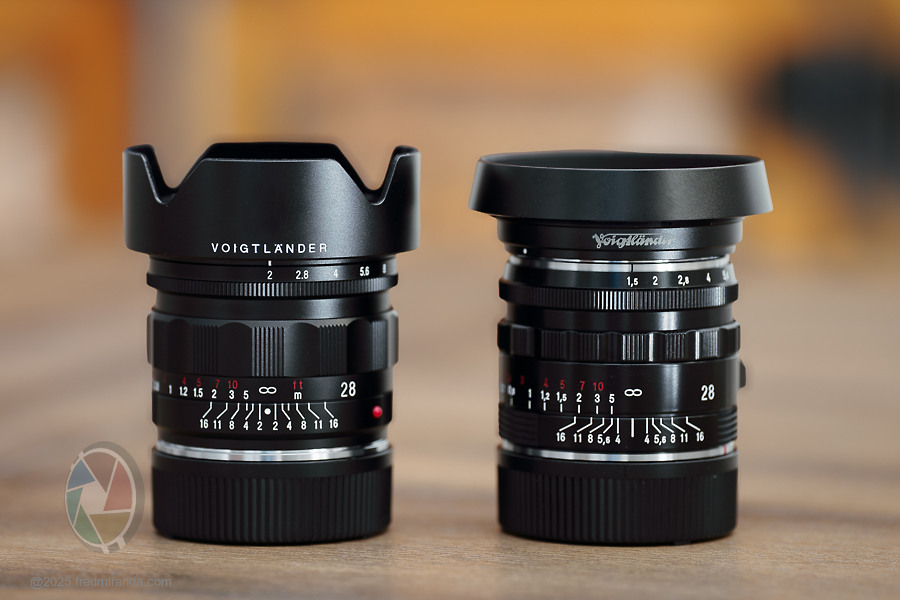
Compared to the earlier Noktons, the size remains consistent, although I find the Voigtlander 28mm f/2 APO-Lanthar to be more compact than I expected. For example, the Voigtlander 50mm f/2 APO-Lanthar has the same overall length as the Voigtlander 50mm f/1.2 Nokton, while the 35mm f/2 APO-Lanthar is actually larger than its Nokton counterpart. It's impressive that Cosina managed to design a 28mm APO lens that's very close in size to the 28mm Nokton, especially considering that wide-angle APO designs typically require more correction, which often leads to a larger lens.
Here is a comparison with the Nokton. Both lenses are shown with their hoods, and in hand, they feel similar in size aside from the filter thread and the fact that the Nokton's rear element protrudes more.
rsolti13 wrote:
I wonder why the APOs only come in black, I would love this lens in silver
I shared this feedback directly with Cosina. I asked if they would consider releasing APO-Lanthar lenses in silver anodized (Like they did with the APO-Ultron and APO-Skopar) to help keep the weight down, but also in special editions like brass silver chrome and glossy black paint.
A Voigtländer employee told me that for every 20 Voigtländer lenses produced, only one is made in silver. The reason there are so few silver models is mainly because various silver cameras—especially Leica, but also those from other manufacturers—have used different shades of silver over time. This makes it difficult for a third-party manufacturer to choose a silver tone that will satisfy as many customers as possible when paired with their cameras.