LBJ2 wrote:
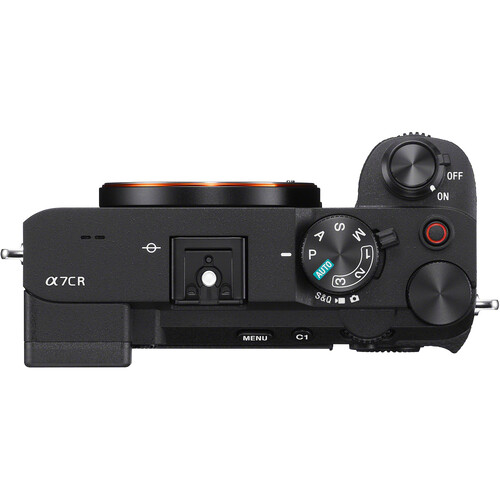
"You also mentioned extending the lens mount (protruding from the camera) to create extra space for IBIS. That's a clever solution used by Sony on the A7CR and other models"
That's an interesting tidbit about the extended mount on the A7CR that I was not aware of, is there some place I can read up on this? Or is this just something that you noticed on the camera body?
I'm not so sure, guys. It feels like Leica might be underestimating how much pushback they'll get for releasing a true mirrorless camera without IBIS, especially at a premium price. If this were a rangefinder, most shooters would accept that trade-off since it has never been part of the design. But this isn't one. It's a modern digital body, and expectations are different now.
With an M-mount, photographers will naturally use standard and longer lenses or adapt just about anything to it. In today's mirrorless market, IBIS is expected, and leaving it out could be a serious mistake Leica isn’t anticipating.
From what's been rumored, it seems more like a variation of the Q series in both size and shape, but with an M-mount instead. The Q line, however, has mainly centered on wide-angle lenses until the recent 43mm, which is still wider than a true normal lens. Both of those lenses also feature built-in optical stabilization..
That said, maybe Leica is targeting M shooters who rely on the Visoflex most of the time, either due to eyesight limitations or simply because they prefer not to focus with the rangefinder. They're already used to shooting without IBIS and might actually appreciate a built-in Visoflex body that suits the way they already work. It will be interesting to see what happens.
Fred Miranda wrote:
From what's been rumored, it seems more like a variation of the Q series in both size and shape, but with an M-mount instead. The Q line, however, has mainly centered on wide-angle lenses until the recent 43mm, which is still wider than a true normal lens. Both of those lenses also feature built-in optical stabilization..
Technically, 43mm is the mathematical normal for a FF, where the diagonal of the sensor is the "normal" focal length. 21ish for MFT, 28 for APSC, 43 for FF, 52 for Leica S, 55 for the mirrorless mediums, and 67ish for the largest MF sensors.
I'm very interested to see what Leica does here. I think they've got quite a challenge in replacing the VF with an EVF without making just another mirrorless camera that's a bit underspeced for its likely price. I think it's going to have to maintain some of what people love about the RF experience while adding easy usability of features you can't get with an optical VF. Seems like a high bar to me.
freaklikeme wrote:
I'm very interested to see what Leica does here. I think they've got quite a challenge in replacing the VF with an EVF without making just another mirrorless camera that's a bit underspeced for its likely price. I think it's going to have to maintain some of what people love about the RF experience while adding easy usability of features you can't get with an optical VF. Seems like a high bar to me.
IMO for it to be an effective 'virtual' M, the EVF software-driven manual focusing experience has to be unique and exceptionally effective. Something like a virtual RF patch. This would differentiate it from any other mirrorless camera and would appeal to M users and manual focus aficionados. It is this point in which I am most interested and apprehensive about this rumored camera, because Leica has a great opportunity here to be class leading, but could also royally f it up.
flash wrote:
No. Steve is correct. I mistakenly thought the Z9 could now do 30 fps in compressed raw, which is wrong.
Gordon
No big deal. I think 20fps is plenty for anything I shoot. But thanks for correcting the statement. Respect.
flash wrote:
I am correct that Nikon have propriatary rights over the Z9 sensor as well as Canon for theirs.
Gordon
I have always agreed with that. Sony will not make the Nikon Z9/8 sensor for anyone else. This is Sony's published policy regarding all custom manufactured sensors. These custom manufactured sensors are not "open to buy" as many Sony sensors are. This policy is what causes the "firewall" misstatements. But that doesn't change the fact that these sensors are based on the core Sony Stacked BSI sensor technology which Sony innovated, holds the patents on, and was the first to manufacture for their own products. You either pay Sony a royalty to use this technology or buy your sensors from Sony directly. They held this technology exclusively for their own use (from the time of the A9 release) to give their mirrorless camera line an advantage as they publicly stated a number of times. This sensor advantage policy is very much responsible for the rapid growth of the Sony mirrorless camera market share. The disruptive Sony Sensor innovation has been the protagonist that now has the whole camera World following along with.
flash wrote:
Back on topic. If the M11-V or whatever, is close to a Q in size, I'm all over it.
Gordon
I am also interested is seeing what this new camera brings to the game. I don't like using the Visoflex on my M camera for many reasons. But I love using my manual focus M lenses on my SL3, so smooth, crystal clear, and stable MF experience. No problem with either ultra wide or very long lenses. If this new camera can provide that level of experience along with some advanced focusing aids like eye detect it will likely be a huge success. I am doubtful that this can be done without IBIS. But software may be able to stabilize the EVF enough to make the shooting experience excellent even if doesn't help on the sensor. The Visoflex currently doesn't attain SL3 levels of smoothness, clarity, and responsiveness.
rscheffler wrote:
IMO for it to be an effective 'virtual' M, the EVF software-driven manual focusing experience has to be unique and exceptionally effective. Something like a virtual RF patch. This would differentiate it from any other mirrorless camera and would appeal to M users and manual focus aficionados. It is this point in which I am most interested and apprehensive about this rumored camera, because Leica has a great opportunity here to be class leading, but could also royally f it up.
Since the lenses aren’t communicating, I imagine there will be no focus confirmation. So one “focus point”/split image is probably what will happen.
I have my fingers crossed that they make new chipped M-lenses for this camera so it can have some modern features when the right lens is attached.
olegkin wrote:
Since the lenses aren’t communicating, I imagine there will be no focus confirmation. So one “focus point”/split image is probably what will happen.
I have my fingers crossed that they make new chipped M-lenses for this camera so it can have some modern features when the right lens is attached.
Yes, and that's also why we won’t get Nikon-style focus confirmation on the focus point or the eye in the traditional sense when using manual focus. M lenses don't have any electronic communication, so the camera can't read focus distance or aperture. Focus confirmation could only happen through sensor-based contrast detection. As far as I know, even the SL series doesn't offer auto-magnification with these lenses. I'm really curious to see how Leica handles this.
Fred Miranda wrote:
Yes, and that's also why we won’t get Nikon-style focus confirmation on the focus point or the eye in the traditional sense when using manual focus. M lenses don't have any electronic communication, so the camera can't read focus distance or aperture. Focus confirmation could only happen through sensor-based contrast detection. As far as I know, even the SL series doesn't offer auto-magnification with these lenses. I'm really curious to see how Leica handles this.
Does the camera need to communicate with the lens to know when focus is achieved? There is no communication needed for focus peaking and the camera knows whats in focus-
You also don't need electronic contacts to move a focus point to an eye- automatically
I am no camera engineer but I would assume that the camera doesn't need the electronic focus and its more of a cripple hammer feature but thats me just guessing.
I am sure there is enough inteligence in camera already to do what LEica needs without need an electronic contact on the lens.
rscheffler wrote:
IMO for it to be an effective 'virtual' M, the EVF software-driven manual focusing experience has to be unique and exceptionally effective. Something like a virtual RF patch. This would differentiate it from any other mirrorless camera and would appeal to M users and manual focus aficionados. It is this point in which I am most interested and apprehensive about this rumored camera, because Leica has a great opportunity here to be class leading, but could also royally f it up.
Agreed. I share the interest and, while it's not a camera I'd want, I hope the effort falls more on the class-leading side than the royally f'd up. It's been really interesting watching the oldest camera company navigate the digital age and this camera could be a watershed release for them in expanding the brand. I don't expect them nail it on the first go anymore than I expect it have users of their other digital M's abandoning their cameras en masse for it, but they do have an opportunity to show they respect what makes the M unique, and I hope they successfully lean into it.
It has the M-shooter in our house a little apprehensive. He just transitioned from an M7 to M11, and now he's worried it'll be the last OVF based M they produce. So he's rooting for a failure or some sort of guarantee from Leica that they'll continue with the OVF.
Fred Miranda wrote:
Yes, and that's also why we won’t get Nikon-style focus confirmation on the focus point or the eye in the traditional sense when using manual focus. M lenses don't have any electronic communication, so the camera can't read focus distance or aperture. Focus confirmation could only happen through sensor-based contrast detection. As far as I know, even the SL series doesn't offer auto-magnification with these lenses. I'm really curious to see how Leica handles this.
Nah that’s not correct. The limitation is artificially set by Nikon (same on Canon cameras btw), not a technical limitation.
It works perfectly fine with adapters that communicate any kind of focal length to the camera. With some adapters you can literally write the focal length you want in a txt file.. and the focal length also just needs to be correct for IBIS, which is a non-issue with the EV1.
And a prime example that works very well on Nikon is the TTartisan 6bit adapter - automatically tags the Leica lens correctly in Exif and enables focus confirmation (subject detection is available anyway, also with unchipped adapters).
Focus confirmations only needs (on-sensor) phase detection, nothing else. It even works with fully manual lenses on (D)SLRs like my Nikon D700 or the lowly F65- obviously not on-sensor for those, so less accurate.
RustyRus wrote:
Does the camera need to communicate with the lens to know when focus is achieved? There is no communication needed for focus peaking and the camera knows whats in focus-
You also don't need electronic contacts to move a focus point to an eye- automatically
I am no camera engineer but I would assume that the camera doesn't need the electronic focus and its more of a cripple hammer feature but thats me just guessing.
I am sure there is enough inteligence in camera already to do what LEica needs without need an electronic contact on the lens.
Couldn't focus confirmation be achieved in software without mechanical coupling? The eye is detected by subject recognition on the sensor with software, not coupling with the lens. An algorithm should be capable of determining that the area of maximum contrast (focus peaking) coincides with the selected subject area on the sensor. Does anyone see a problem doing it that way?
fjablo wrote:
Nah that’s not correct. The limitation is artificially set by Nikon (same on Canon cameras btw), not a technical limitation.
It works perfectly fine with adapters that communicate any kind of focal length to the camera. With some adapters you can literally write the focal length you want in a txt file.. and the focal length also just needs to be correct for IBIS, which is a non-issue with the EV1.
And a prime example that works very well on Nikon is the TTartisan 6bit adapter - automatically tags the Leica lens correctly in Exif and enables focus confirmation (subject detection is available anyway, also with unchipped adapters).
Focus confirmations only needs (on-sensor) phase detection, nothing else. It even works with fully manual lenses on (D)SLRs like my Nikon D700 or the lowly F65- obviously not on-sensor for those, so less accurate.
But that's exactly my point. The TTAdapter "works" because it has electronic contacts. M lenses don't. (Unless Leica starts to produce new updated ones)
A true Leica M lens is completely mechanical. On a native M-mount camera, there’s no electronic communication, so the camera can't read focus distance or aperture. Focus confirmation, like eye-AF, would only be possible if the camera uses sensor-based contrast detection, independent of the lens.
Adapters like the TTArtisan can add electronic transmission, but that only applies when adapting M lenses to other mounts.
I can imagine it'll use some combination of the auto magnify focusing aid when focus ring is turned (rather it detects movement of the focusing plane) in Live View and some kind of eye detection algo box so it displays automatically there. Kind of like Nikons option to punch in their green box.
The early leaked images kind of show this, and it would be the most accurate. I use this method with manual placement the most in EVF cameras.
Fred Miranda wrote:
But that's exactly my point. The TTAdapter "works" because it has electronic contacts. M lenses don't. (Unless Leica starts to produce new updated ones)
A true Leica M lens is completely mechanical. On a native M-mount camera, there’s no electronic communication, so the camera can't read focus distance or aperture. Focus confirmation, like eye-AF, would only be possible if the camera uses sensor-based contrast detection, independent of the lens.
Adapters like the TTArtisan can add electronic transmission, but that only applies when adapting M lenses to other mounts.
I think you misunderstand how those adapters work. All they do is trick the camera into not applying the firmware block.
The lens itself is still an M lens (or any other fully manual lens, without electronics), it’s not communicating any useful information to the camera. There’s no focus distance information transmitted or anything like that.
Focal length information is also not necessary for focus confirmation, beyond tricking the camera. It is useful on the Nikon cameras because of IBIS but that’s it.
Easy proof: you can make focus confirmation work by telling the camera (via the adapter) that a 10mm lens is attached but actually put a 300mm lens on the adapter and it will work. It really is just a random firmware block, that Nikon probably put in so you’re incentivized to buy native Z lenses.
The „electronic rangefinder“ (that’s what they’re called even though different thing than Leica‘s) on my Nikon SLRs also works happily with all lenses that don’t have electronic contacts. Even with a hacked Helios 44-2 that someone glued an F mount on..
RustyRus wrote:
Does the camera need to communicate with the lens to know when focus is achieved? There is no communication needed for focus peaking and the camera knows whats in focus-
You also don't need electronic contacts to move a focus point to an eye- automatically
I am no camera engineer but I would assume that the camera doesn't need the electronic focus and its more of a cripple hammer feature but thats me just guessing.
I am sure there is enough inteligence in camera already to do what LEica needs without need an electronic contact on the lens.
M lenses do not open apertures for focusing is another problem. Even if camera is able to focus with sensor only, it will run out of acceptable amount of light quickly. I learned it with CV lenses on Z8. Focus confirmation stops working at about f/5.6 in somewhat dim light, like cloudy end of day, rooms with no direct sun light, etc. Or when you need to use flash. You can still focus in "natural view/no exposure preview" mode but so far both gfx and nikon are less than impressive in those modes - grainy low resolution evf with super low refresh rate. Maybe Leica will figure it out, but if not, one will have to open and close aperture manually.
fjablo wrote:
I think you misunderstand how those adapters work. All they do is trick the camera into not applying the firmware block.
The lens itself is still an M lens (or any other fully manual lens, without electronics), it’s not communicating any useful information to the camera. There’s no focus distance information transmitted or anything like that.
Focal length information is also not necessary for focus confirmation, beyond tricking the camera. It is useful on the Nikon cameras because of IBIS but that’s it.
Easy proof: you can make focus confirmation work by telling the camera (via the adapter) that a 10mm lens is attached but actually put a 300mm lens on the adapter and it will work. It really is just a random firmware block, that Nikon probably put in so you’re incentivized to buy native Z lenses.
The „electronic rangefinder“ (that’s what they’re called even though different thing than Leica‘s) on my Nikon SLRs also works happily with all lenses that don’t have electronic contacts. Even with a hacked Helios 44-2 that someone glued an F mount on.. ...Show more →
I could be mistaken since I have not tested the Nikon or Canon MF systems myself, but here's how I imagine Leica might handle it:
1) The camera analyzes the live image continuously, looking for contrast peaks or detecting an eye using sensor contrast detection.
2) It shows visual feedback in the EVF...focus peaking, colored highlights, or a green box when the subject is sharp. (As Leicarumors has reported)
3) The photographer turns the focus ring manually, watching the EVF as the image changes.
4) The camera updates its analysis and refreshes the cues in real time.
5) When the subject is in focus, the cue signals it, and the photographer takes the shot.
Basically, the camera relies on the live image to give feedback, but the photographer must adjust the lens manually to achieve focus, using sensor-based contrast detection for guidance.
olegkin wrote:
M lenses do not open apertures for focusing is another problem. Even if camera is able to focus with sensor only, it will run out of acceptable amount of light quickly. I learned it with CV lenses on Z8. Focus confirmation stops working at about f/5.6 in somewhat dim light, like cloudy end of day, rooms with no direct sun light, etc. Or when you need to use flash. You can still focus in "natural view/no exposure preview" mode but so far both gfx and nikon are less than impressive in those modes - grainy low resolution evf with super low refresh rate. Maybe Leica will figure it out, but if not, one will have to open and close aperture manually....Show more →
Fred Miranda wrote:
I could be wrong since I haven't tried it myself, but here's how I think Leica could do it:
1) The camera analyzes the live image continuously, looking for contrast peaks or detecting an eye using sensor contrast detection.
2) It shows visual feedback in the EVF...focus peaking, colored highlights, or a green box when the subject is sharp. (As Leicarumors has reported)
3) The photographer turns the focus ring manually, watching the EVF as the image changes.
4) The camera updates its analysis and refreshes the cues in real time.
5) When the subject is in focus, the cue signals it, and the photographer takes the shot.
Basically, the camera relies on the live image to give feedback, but the photographer must adjust the lens manually to achieve focus, using sensor-based contrast detection for guidance.
The sensor has phase detection pixels. They “see” the scene from slightly different angles, like two eyes or the optical rangefinder in an M. When the image is in focus, their views line up; when it’s out of focus, they shift apart. By measuring that shift, the camera knows both how far and in which direction focus is off (front or back focus).
This is all that is needed and almost all modern cameras have this. Different manufacturers have created different user interfaces to display that information to the user, from those „electronic rangefinders“ in SLRs, the focus confirmation box on Nikon Z cameras or Canon‘s focus guide feature.
The question is what kind of user interface will Leica come up with (so far they don’t have one, I think, even though the SL cameras could already do this).
And yes obviously still manual focus, just a user interface tool that tells you if you’re in focus, how far off and front or back focused. Same type of information that the rangefinder patch provides.