fredmiranda.com
Login

Moderated by: Fred Miranda
  New fredmiranda.com Mobile Site
  New Feature: SMS Notification alert
  New Feature: Buy & Sell Watchlist
  

FM Forums | Leica & Alternative Gear | Join Upload & Sell
       2       3              7       8       end
  

Light Lens Lab 50mm f/2 Rigid Review


Fred Miranda
Offline
Admin
Upload & Sell: On
p.1 #1 · Light Lens Lab 50mm f/2 Rigid Review


Light Lens Lab 50mm f/2 Rigid Review

Order the Light Lens Lab 50mm f/2 Rigid lens:

Lens Light Lab Store | Get a 5% discount when you use the FREDMIRANDA code at checkout.

___

Review Quick Links:
  1. Initial Impressions
  2. Resolution and Contrast at Infinity distance: Light Lens Lab 50mm f/2 Rigid vs Leica 50mm f/2 Summicron Rigid (M11)
  3. Resolution and Contrast at Infinity distance: Light Lens Lab 50mm f/2 Rigid vs Light Lens Lab 50mm f/2 SP II (Cooke)
  4. Distortion
  5. Field Curvature
  6. Minimal Focus Distance performance and Focus Shift
  7. Sunstar Rendering
  8. Flare Resistance
  9. Rendering compared to Leica 50mm f/2 Summicron Rigid
  10. Rendering compared to Light Lens Lab 50mm f/2 SP II (Cooke)
  11. Optical Vignetting and Specular Highlights shape
  12. Chromatic Aberration (CA)

  13. Final Thoughts
  14. Samples
  15. Samples 2
  16. Samples 3


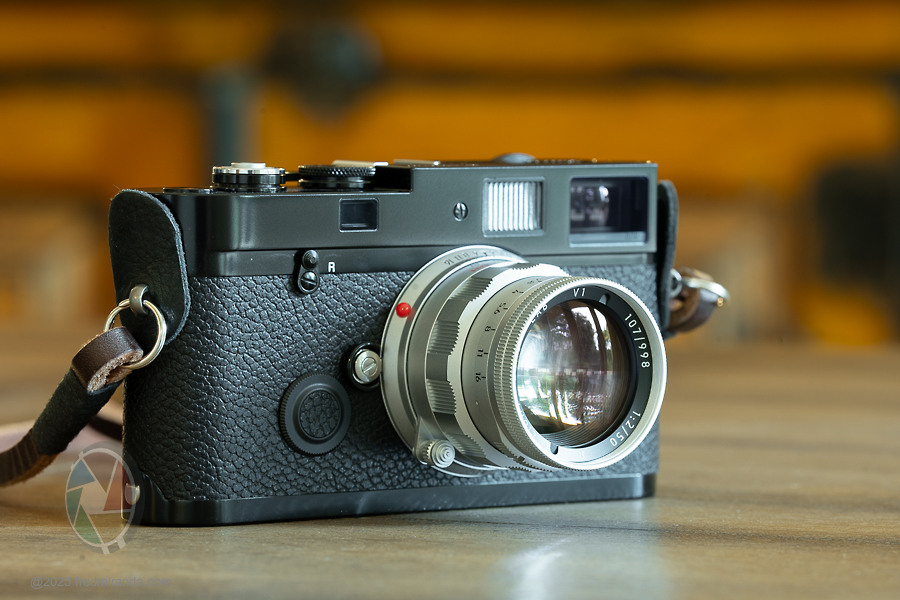
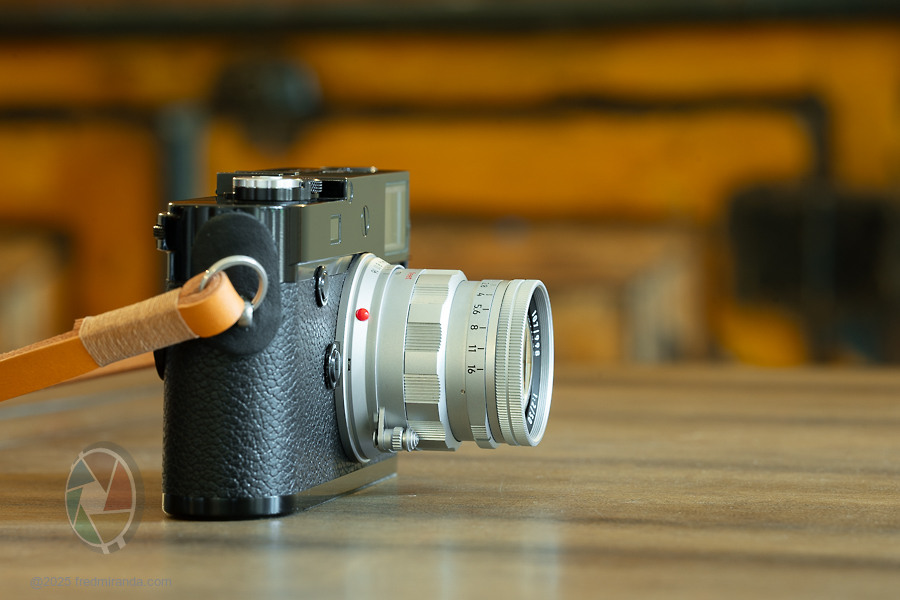
  Leica MP paired with the Light Lens Lab 50mm f/2 Rigid lens.


Back to Quick Links


Initial impressions of the Light Lens Lab 50mm f/2 Rigid lens:


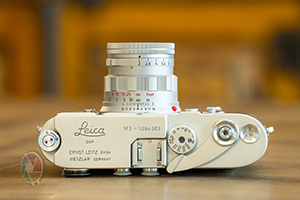
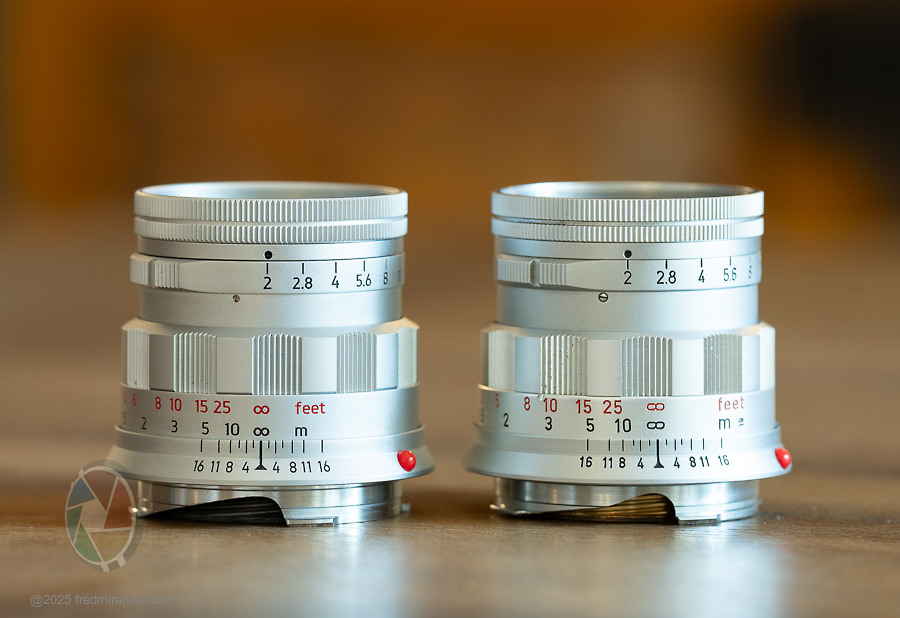
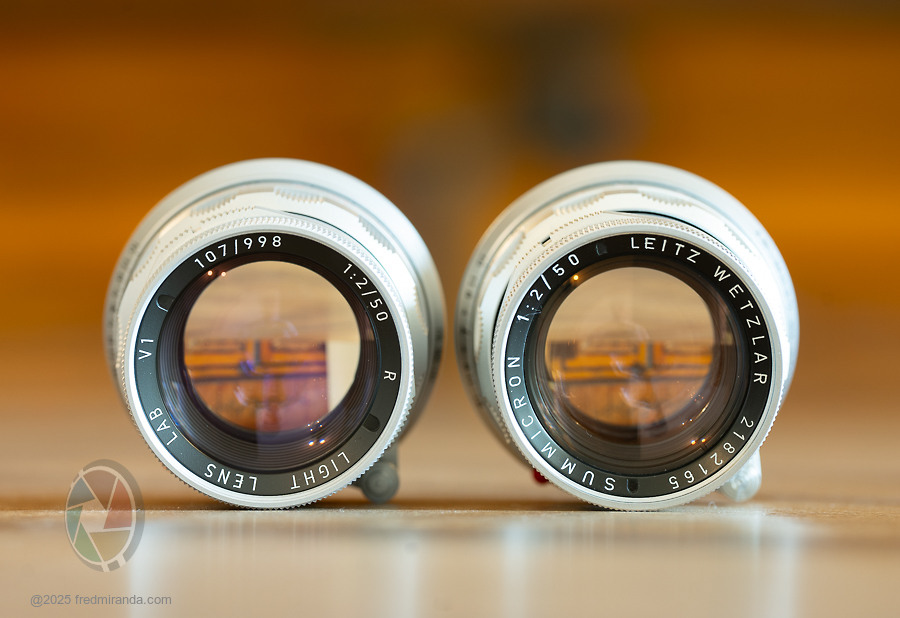
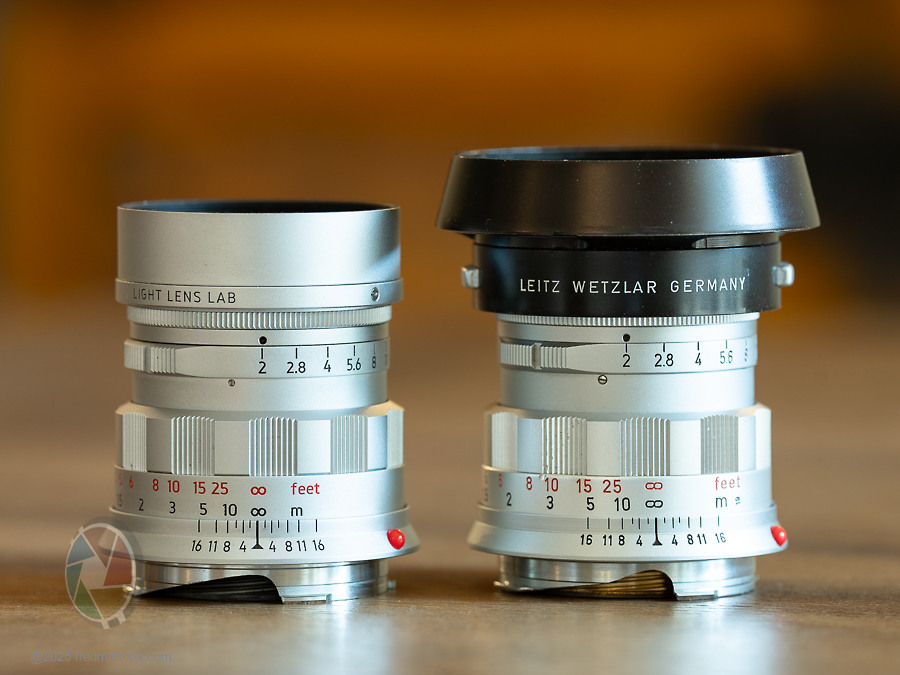
When I first held the Light Lens Lab 50mm f/2 Rigid, I was immediately struck by how closely it resembles the Leica 50mm f/2 Summicron "Rigid." Having owned the Leica for years, I know it well, and it remains one of my favorite 50mm lenses. Both lenses feature the brass chrome version, making their appearances nearly identical. The only noticeable differences are in the typeface and screw sizes, which become apparent only when comparing the two side by side and paying attention to the finer details.


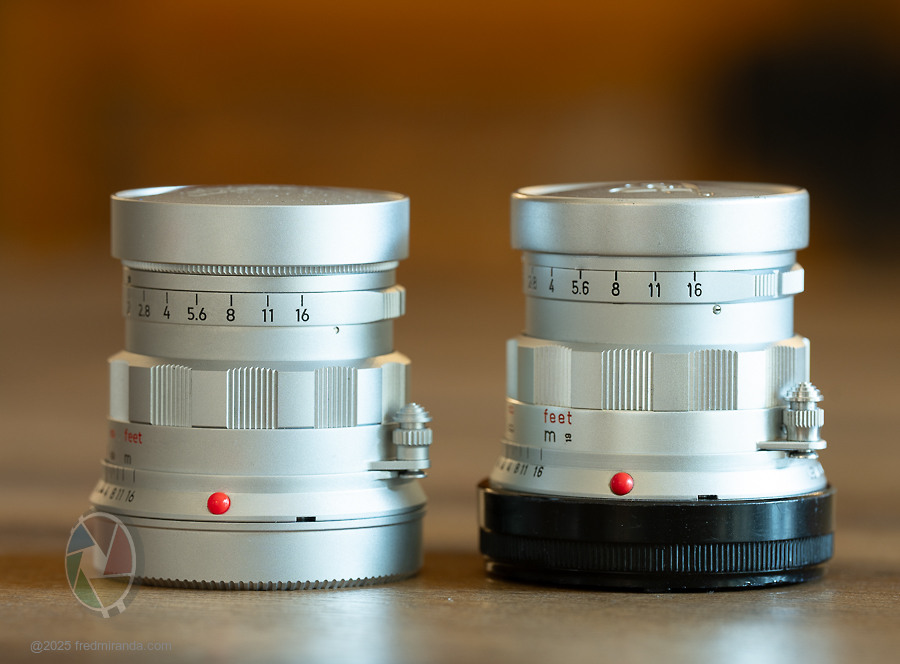
   Light Lens Lab 50mm f/2 Rigid compared to Leica 50mm f/2 Summicron Rigid.


Although you would not notice it when holding them side by side, it is interesting to note that the Light Lens Lab version is 9 grams heavier than the Leica (265 grams versus 256 grams), even though their overall size and parts seem identical. The Light Lens Lab version also has some notable differences. Its aperture ring features half-stop click increments, whereas the Leica has full-stop clicks. Also, the Light Lens Lab version focuses much closer, with a minimum focus distance of 0.7 meters, while the Leica's is 1 meter. My particular Leica copy was modified to focus as close as 0.75 meters (Link) so it will be interesting to compare both lenses at their closest focusing distance in terms of resolution and contrast.


   Light Lens Lab 50mm f/2 Rigid compared to Leica 50mm f/2 Summicron Rigid.


Just like the Leica original, the Light Lens Lab 50mm f/2 Rigid features a body made from brass, and the optical design includes seven elements in six groups, including Lanthanide-infused elements, code-named "LaK-9." The lens also has 10 aperture blades and uses a filter thread of E39, just like the original. As mentioned earlier, Light Lens Lab extended the minimum focus distance to 0.7 meters, which is the rangefinder limit.


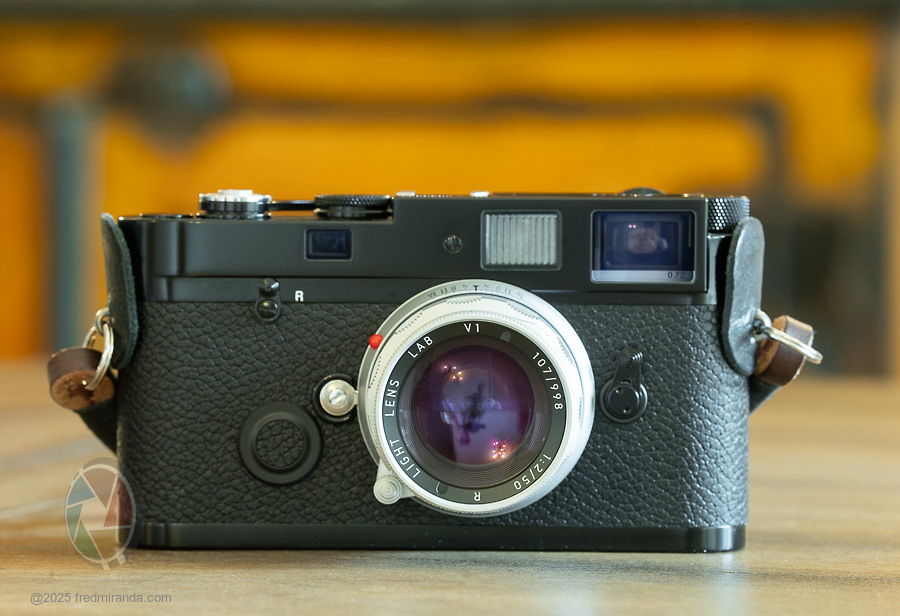
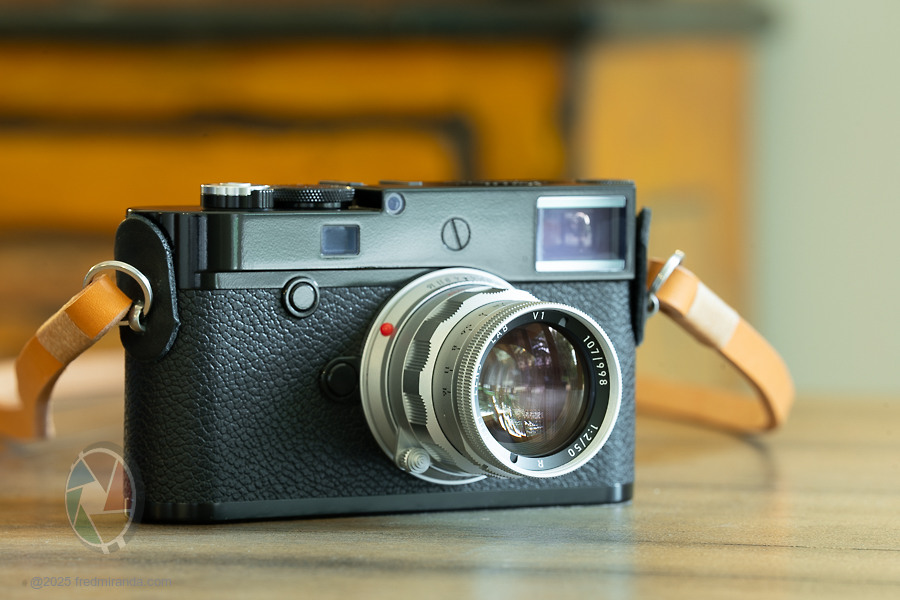
   Leica M10-R paired with the Light Lens Lab 50mm f/2 Rigid.


The Leica 50mm f/2 Summicron "Rigid" introduced in 1954, is one of the most iconic lenses in Leica's history. Known for its durable construction and excellent optical performance, it quickly became beloved for its sharpness, contrast, and unique bokeh. The lens earned its "Rigid" nickname due to its solid barrel design, which differed from earlier, collapsible versions. The black version of the Rigid is particularly rare, making it highly sought after by collectors. Its enduring popularity likely influenced Light Lens Lab's decision to replicate it, aiming to mimic the resolution, contrast, and rendering of the original. Although it was replaced by the Summicron version IV in the 1970s, the Rigid remains highly regarded and cherished by photographers. Light Lens Lab drew inspiration from this early retrofocus design, and as we will see in this review, it managed to create a lens that closely mirrors the original's characteristics.


   Leica MP paired with the Light Lens Lab 50mm f/2 Rigid.


During my initial tests and comparisons with the Leica 50mm f/2 Summicron 'Rigid', I was amazed at how similarly they performed. It was hard to believe I was comparing a lens made in the 1950s with one produced in 2025. Unlike other Chinese lens manufacturers, Light Lens Lab takes pride in replicating the performance and characteristics of older Leica lenses as closely as possible. In this review, I will be comparing the Light Lens Lab 50mm f/2 Rigid to the original Leica version. I will evaluate whether their resolution and contrast match, as well as whether the wider exit pupil diameter results in any differences in rendering characteristics.


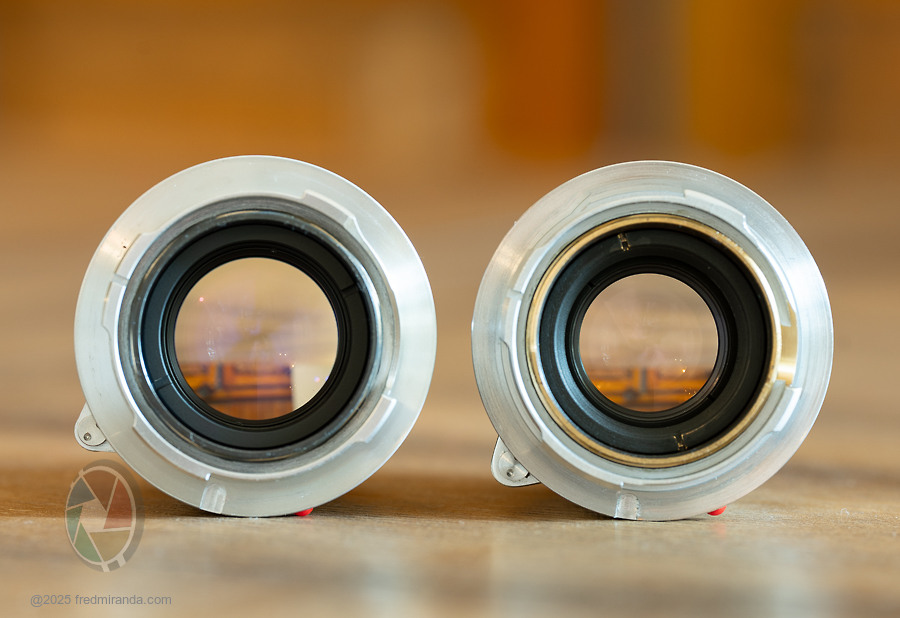
   The exit pupil of the Light Lens Lab 50mm f/2 Rigid is slightly larger in diameter compared to the Leica.


The focus throw on this lens is relatively long, about 180 degrees from the minimum focus distance to the infinity lock, which is typical for vintage Leica M lenses. My Leica 50mm f/2 Summicron has been modified to focus as close as 0.75 meters and has a slightly shorter focus throw of around 170 degrees, though it is still longer than the original, which focuses to 1 meter. This extended focus throw allows for very precise adjustments, though it is not as quick to achieve focus across distances as modern 50mm Leica M lenses.


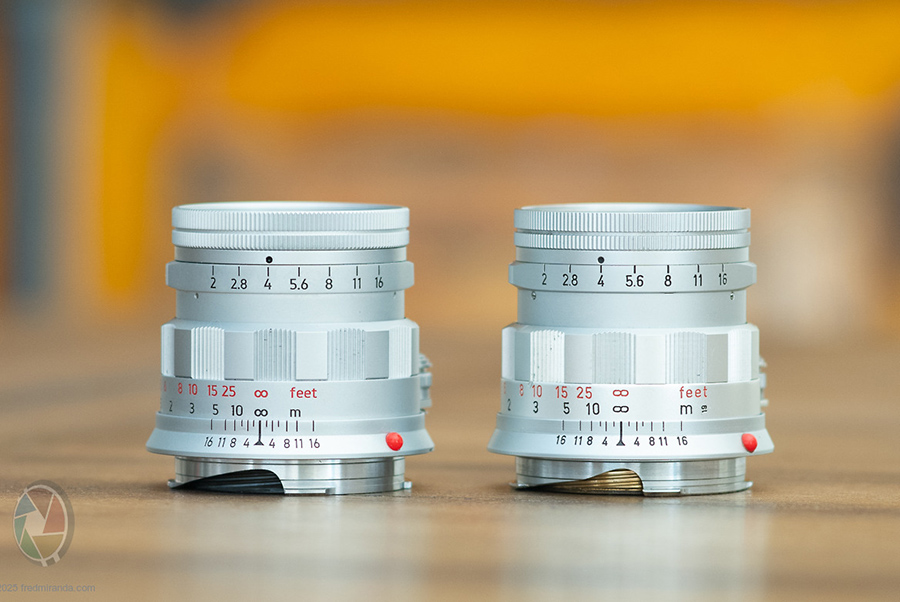
   Light Lens Lab 50mm f/2 Rigid compared to the Leica 50mm f/2 Summicron Rigid, both with their front and rear caps.


Overall, the Light Lens Lab 50mm f/2 Rigid closely replicates the original Leica design, with similar build quality, optical characteristics, and performance.


   Light Lens Lab 50mm f/2 Rigid compared to the Leica 50mm f/2 Summicron Rigid, each with its dedicated hood (Must be purchased separately).


Features:
  1. Homage to the legendary 50mm f/2 version II.
  2. Classic seven elements in six groups optical design.
  3. Minimum focus distance (MFD) of 0.7 meters.
  4. Classic brass alloy body with focus tab and infinity lock.
  5. Lanthanide-infused elements, code name "LaK-9," with updated lens coatings.
  6. Available in Chrome and Black Paint finishes.
  7. Lenses are made by hand and assembled in limited quantities.
  8. Compatible with all digital and film M-mount cameras.


   Leica M10-R paired with the Light Lens Lab 50mm f/2 Rigid lens.


Specifications:
  1. Focal Length: 50mm
  2. Coverage: 35mm Full Frame (24x36mm)
  3. Optics: 7 Elements in 6 groups
  4. Focus Range: 0.7 meters to ∞
  5. Diaphragm: Even half-stop aperture, manual control from f/2 to f/16
  6. Lens Mount: M Mount
  7. Filter Thread: E39
  8. Number of aperture blades: 10
  9. Lens Hood: A42 Screw-on or clip-on lens hood (Hood must be purchased separately)
  10. Length: 43.5mm
  11. Diameter: 54mm
  12. Weight (chrome): 265g for the lens alone (measured), and 286g with the lens hood shown in the review


Jan 30, 2025 at 08:07 PM
Fred Miranda
Offline
Admin
Upload & Sell: On
p.1 #2 · Light Lens Lab 50mm f/2 Rigid Review


Back to Quick Links

Resolution and Contrast at Infinity distance: Light Lens Lab 50mm f/2 Rigid vs Leica 50mm f/2 Summicron Rigid (M11)

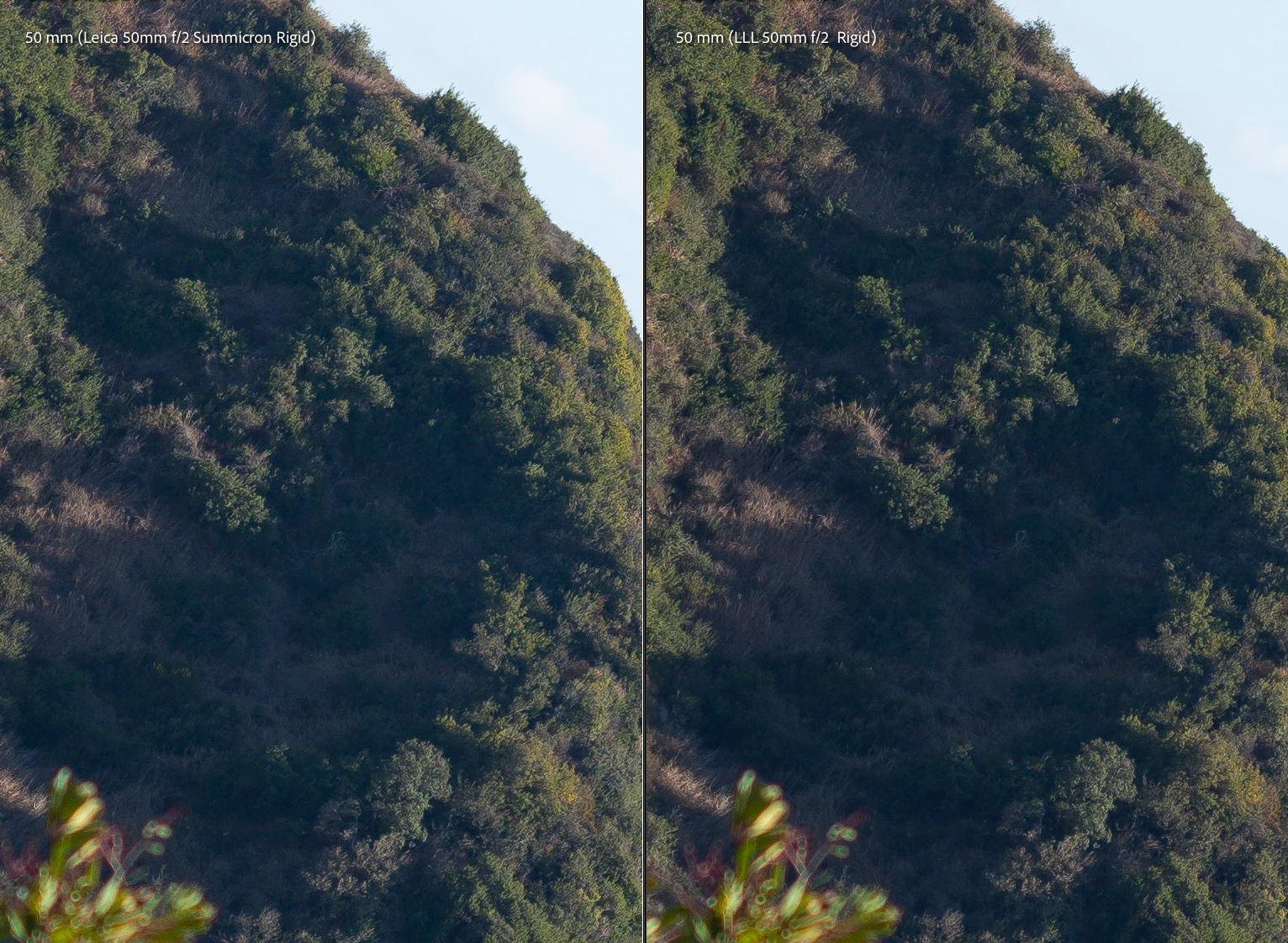
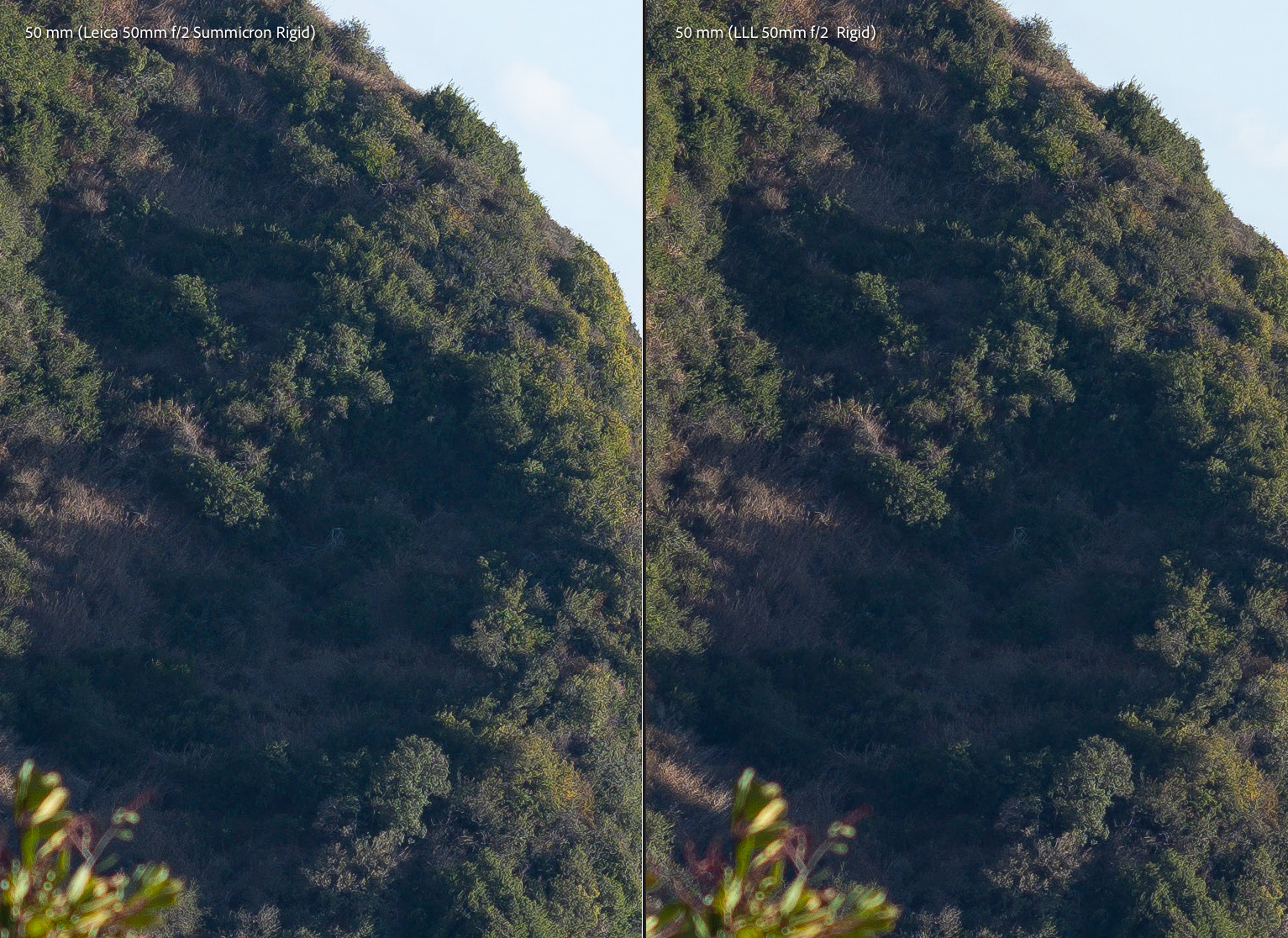
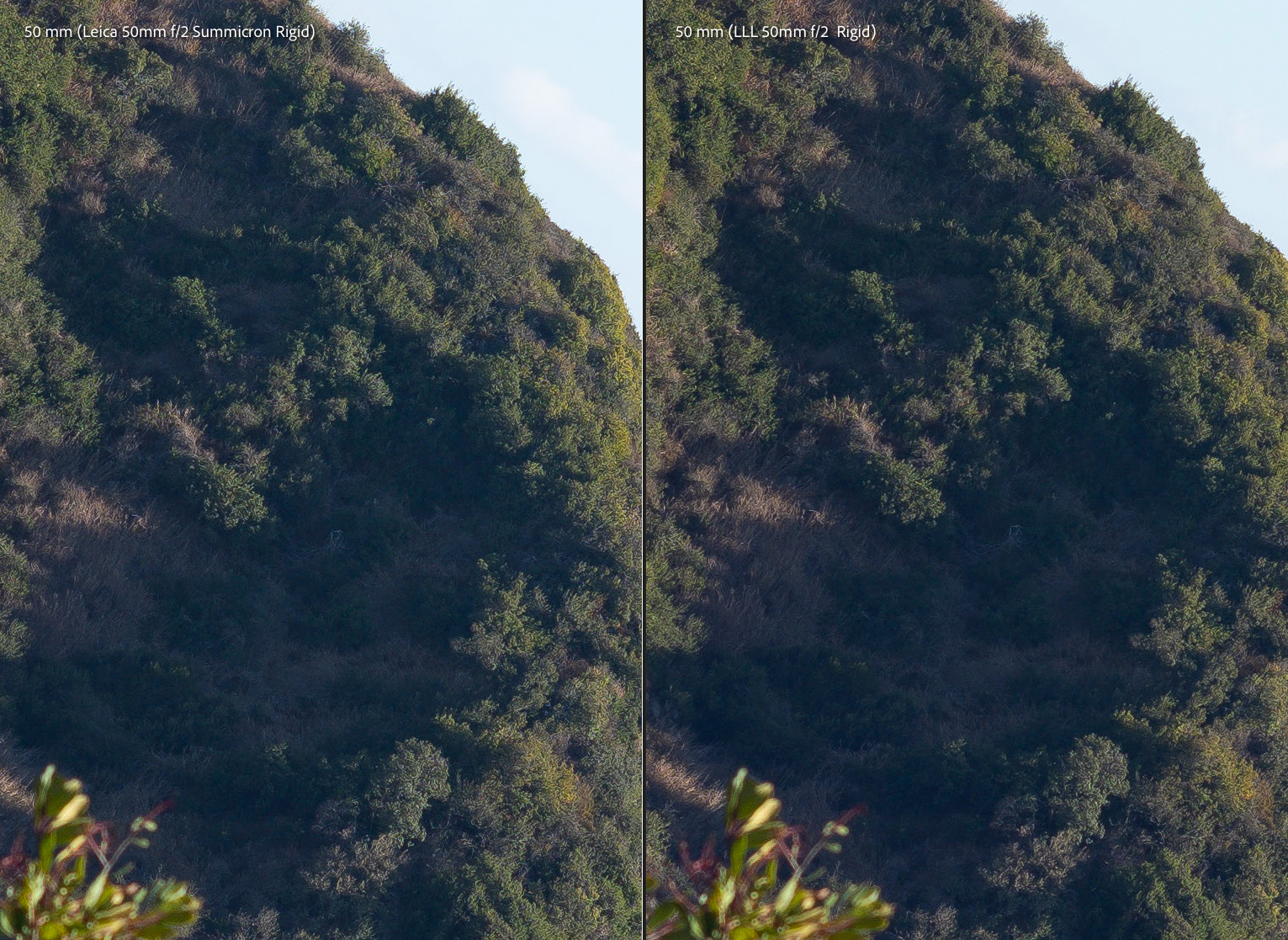
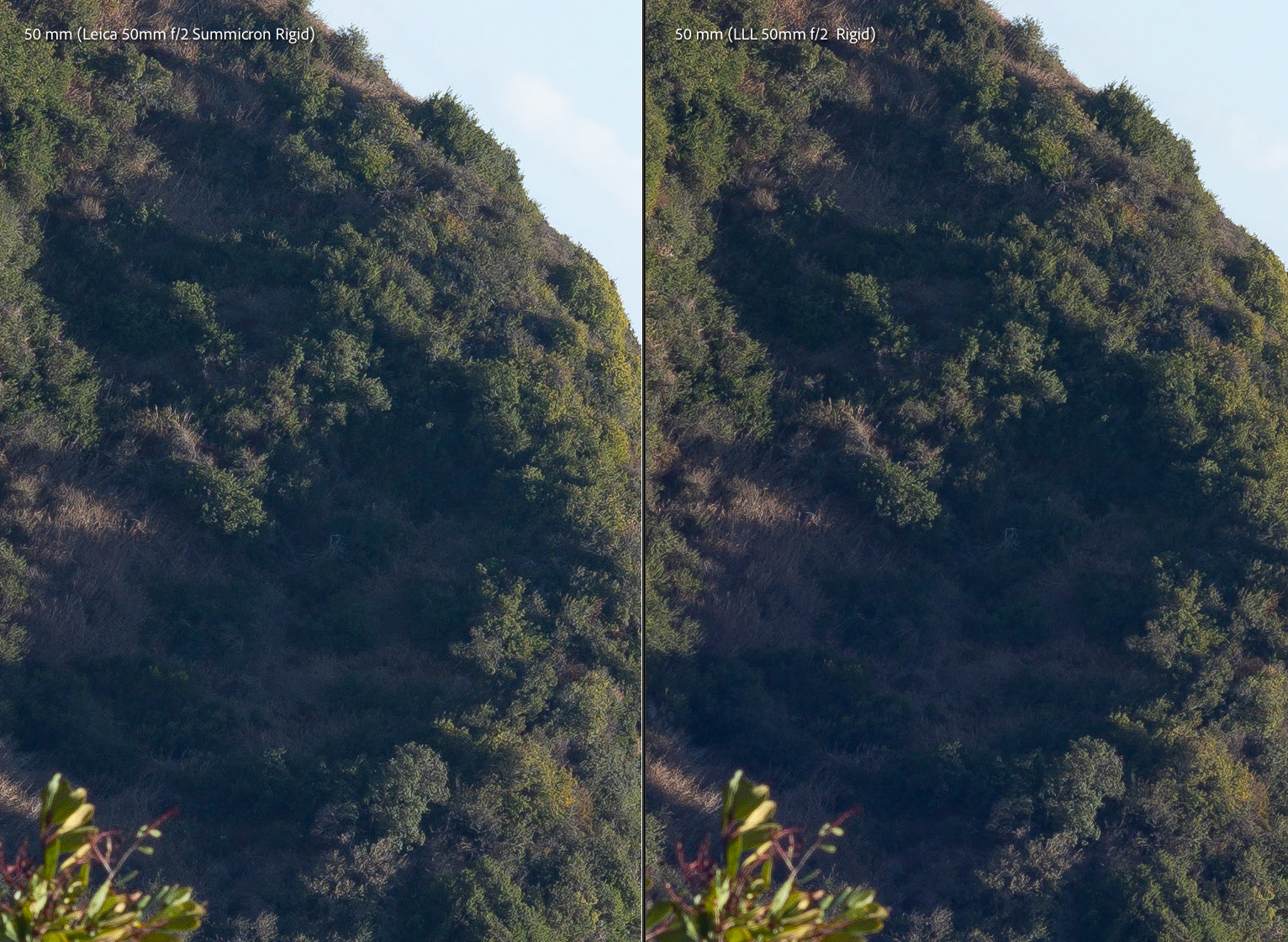
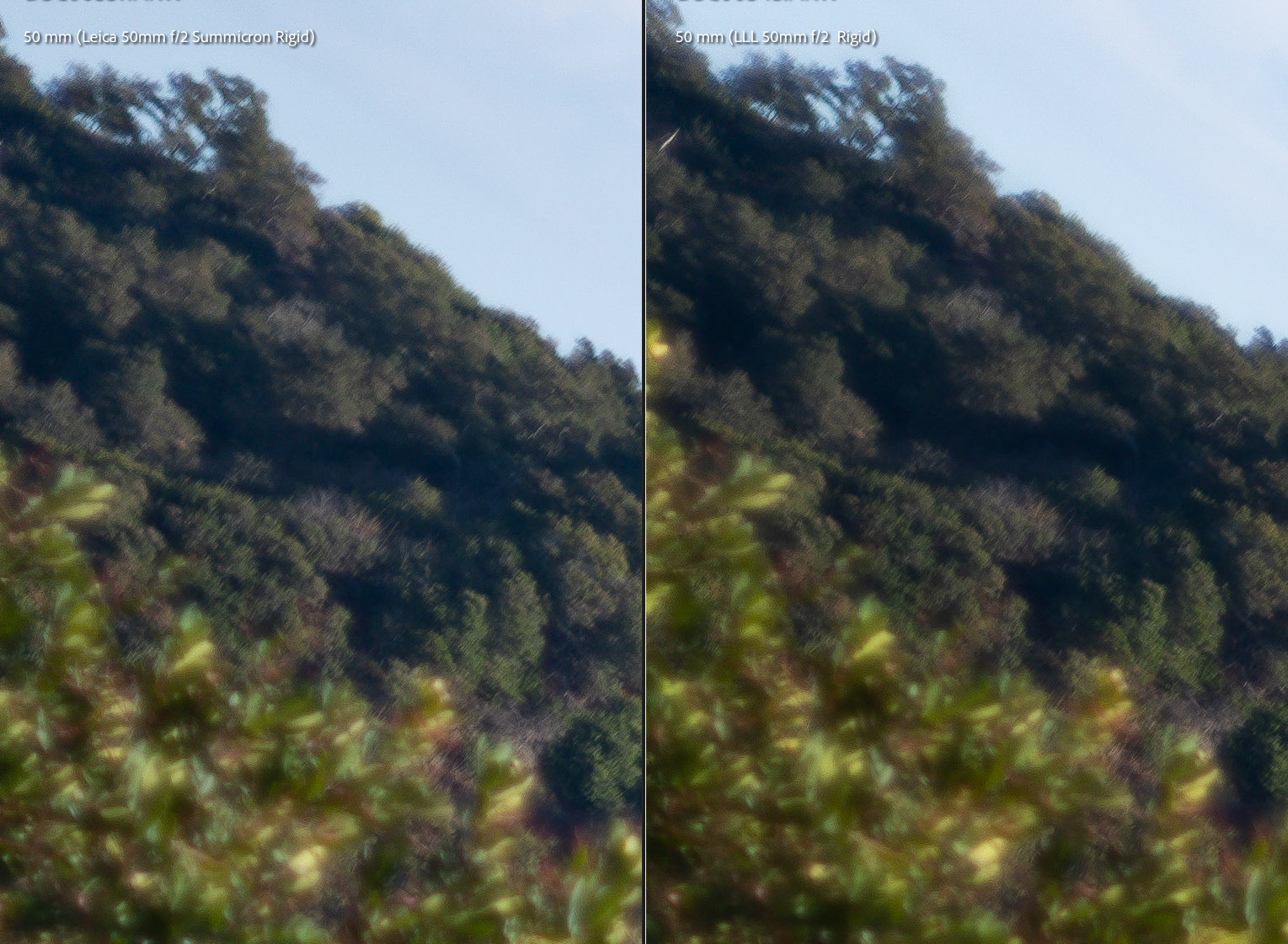
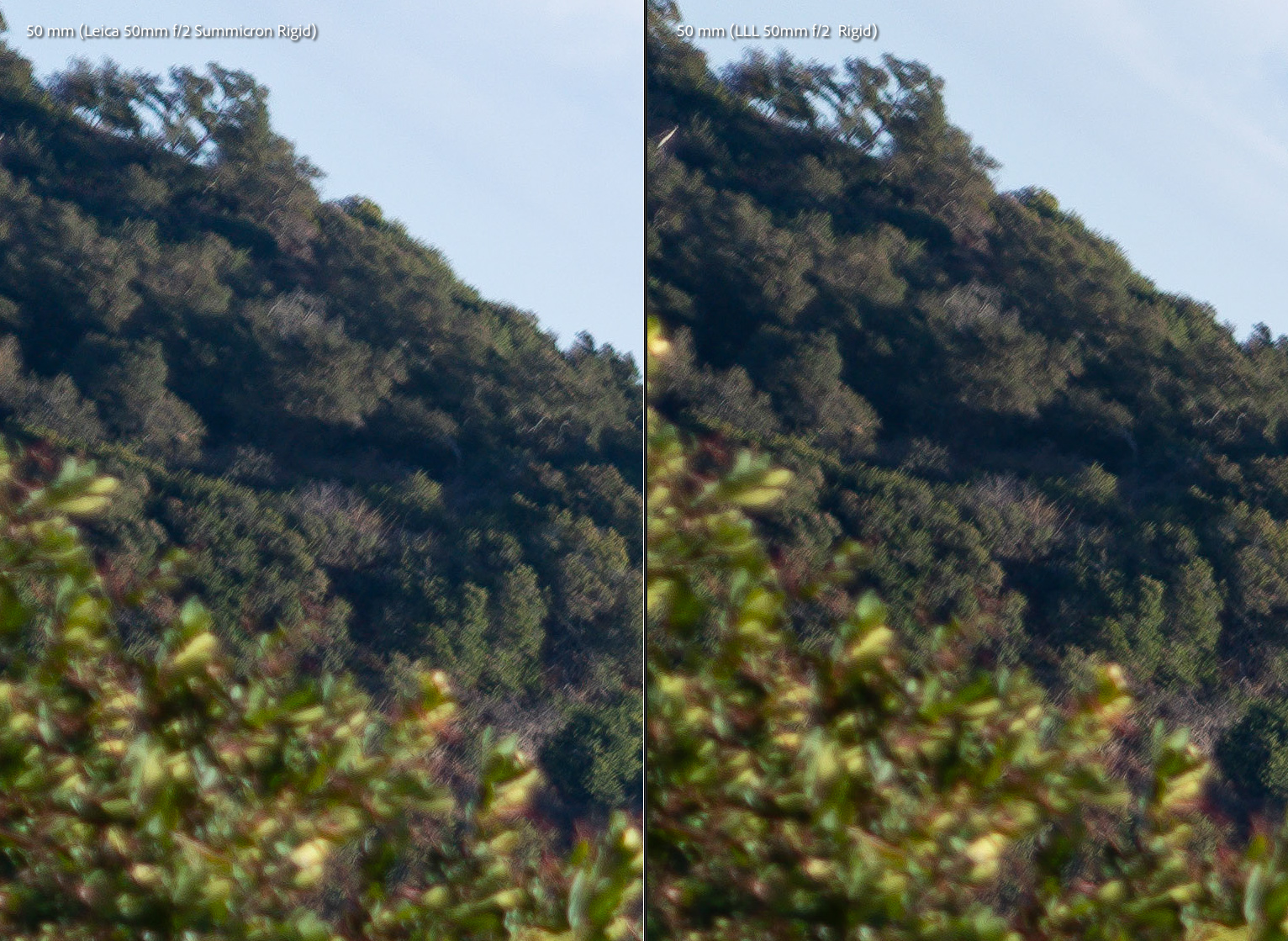
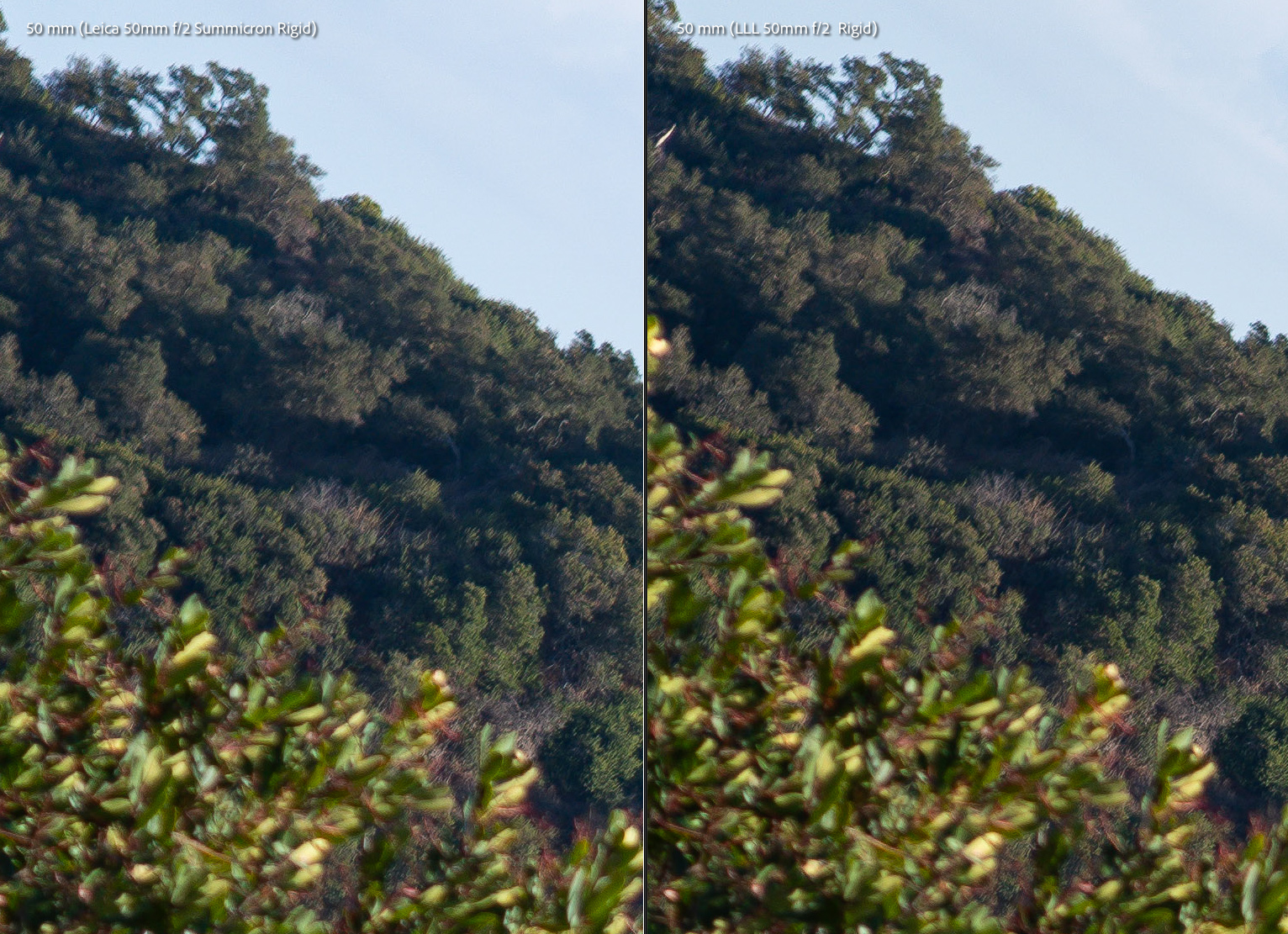
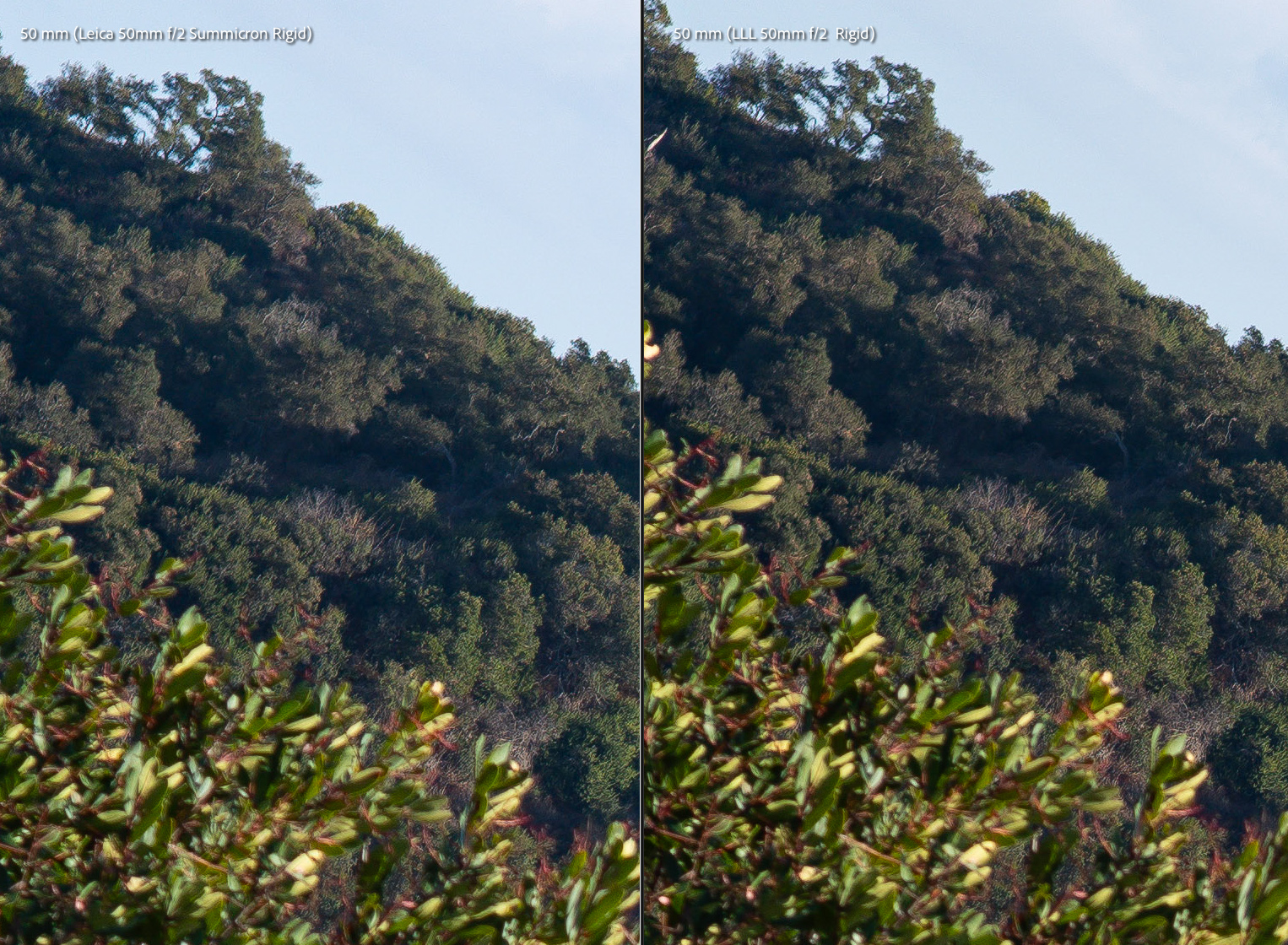
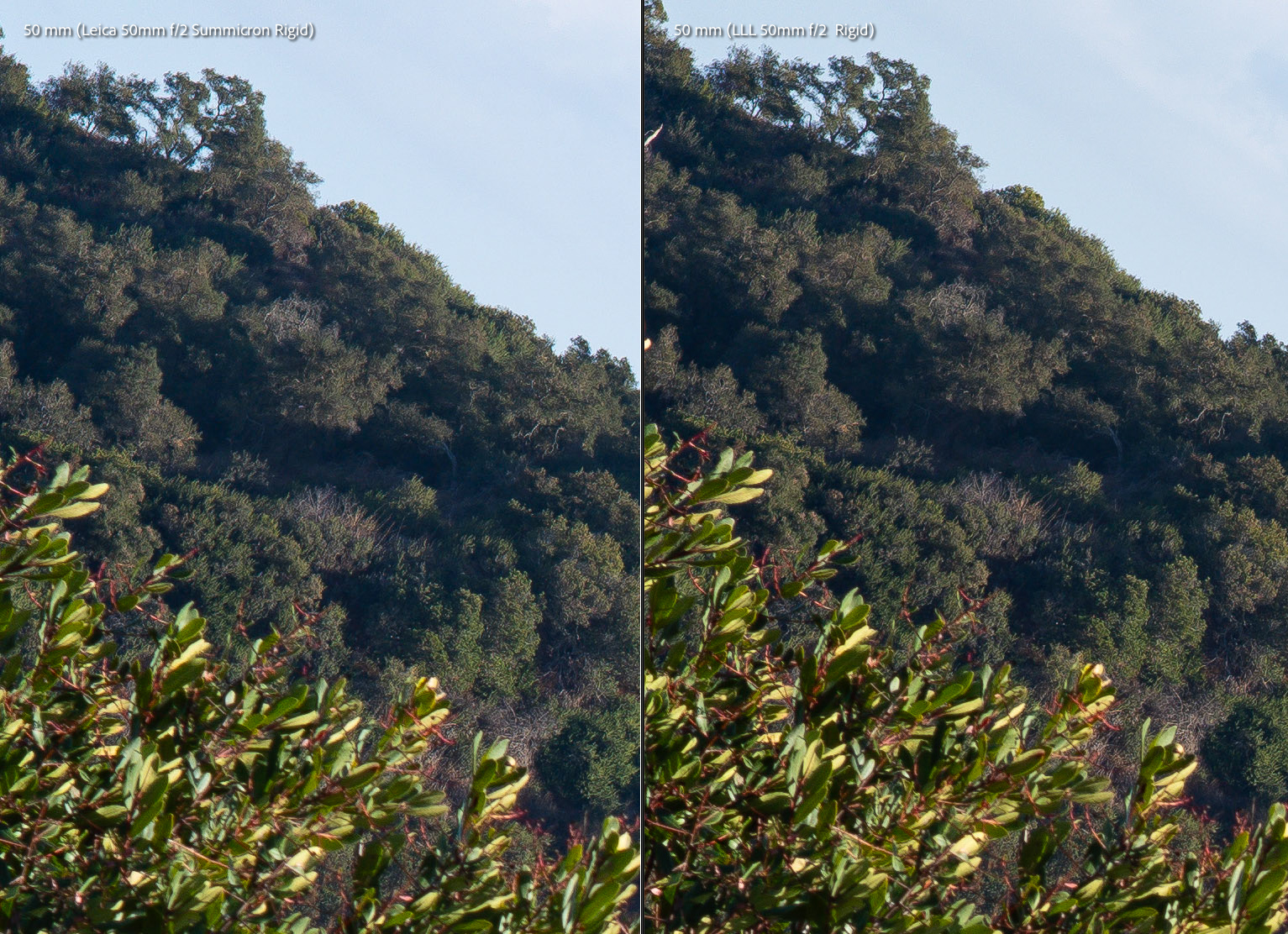
The 60 megapixel sensor of the Leica M11 provides an exceptional level of detail, revealing the strengths and weaknesses of a lens with even greater clarity. While I previously considered the 40 MP sensor of the Leica M10-R sufficient for evaluating lenses, the M11 takes it a step further, making subtle differences more apparent across the frame.

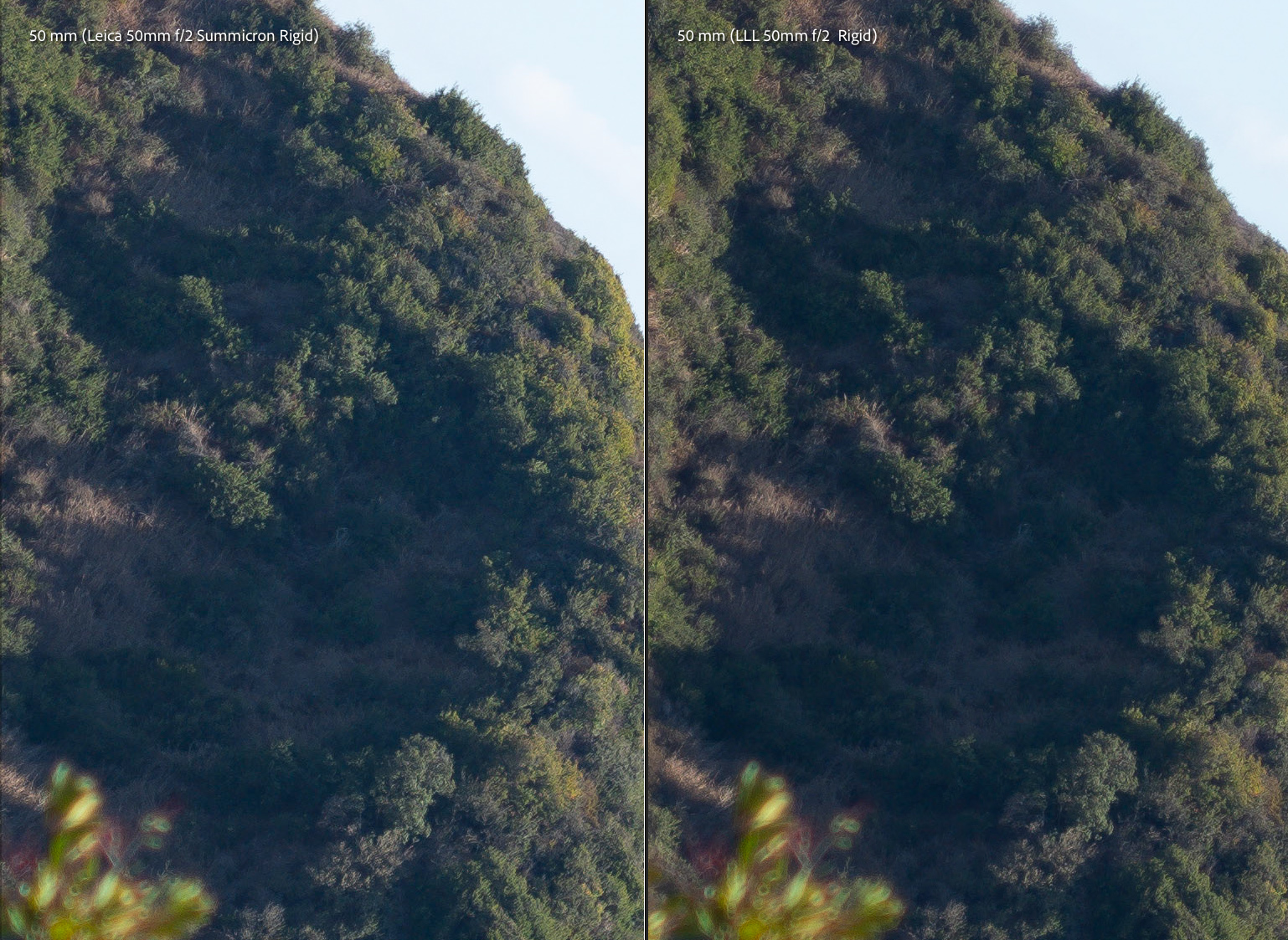
Given that Light Lens Lab aimed to closely match the resolution and contrast of the Leica 50mm f/2 Summicron Rigid, the comparison results were mostly in line with expectations. To ensure accuracy, I repeated the test multiple times. My personal Leica 50mm f/2 Summicron Rigid is a well-maintained copy, perfectly centered and precisely aligned with the rangefinder. The Light Lens Lab lens, provided for this review, also is a well-centered optimal sample. To minimize any focusing inconsistencies, I relied on the hard stops to achieve focus and confirmed the accuracy of the infinity stops using Live View.

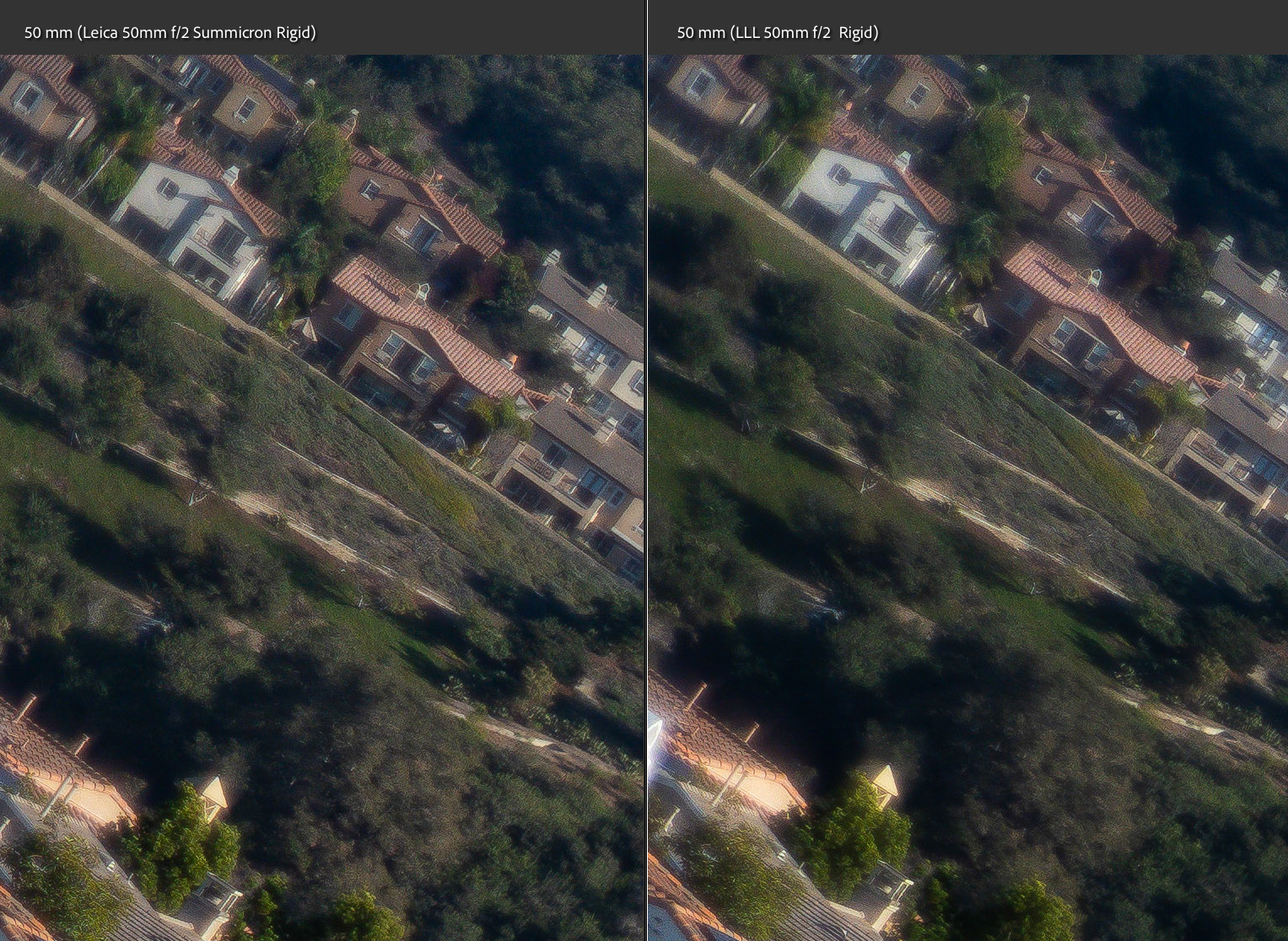
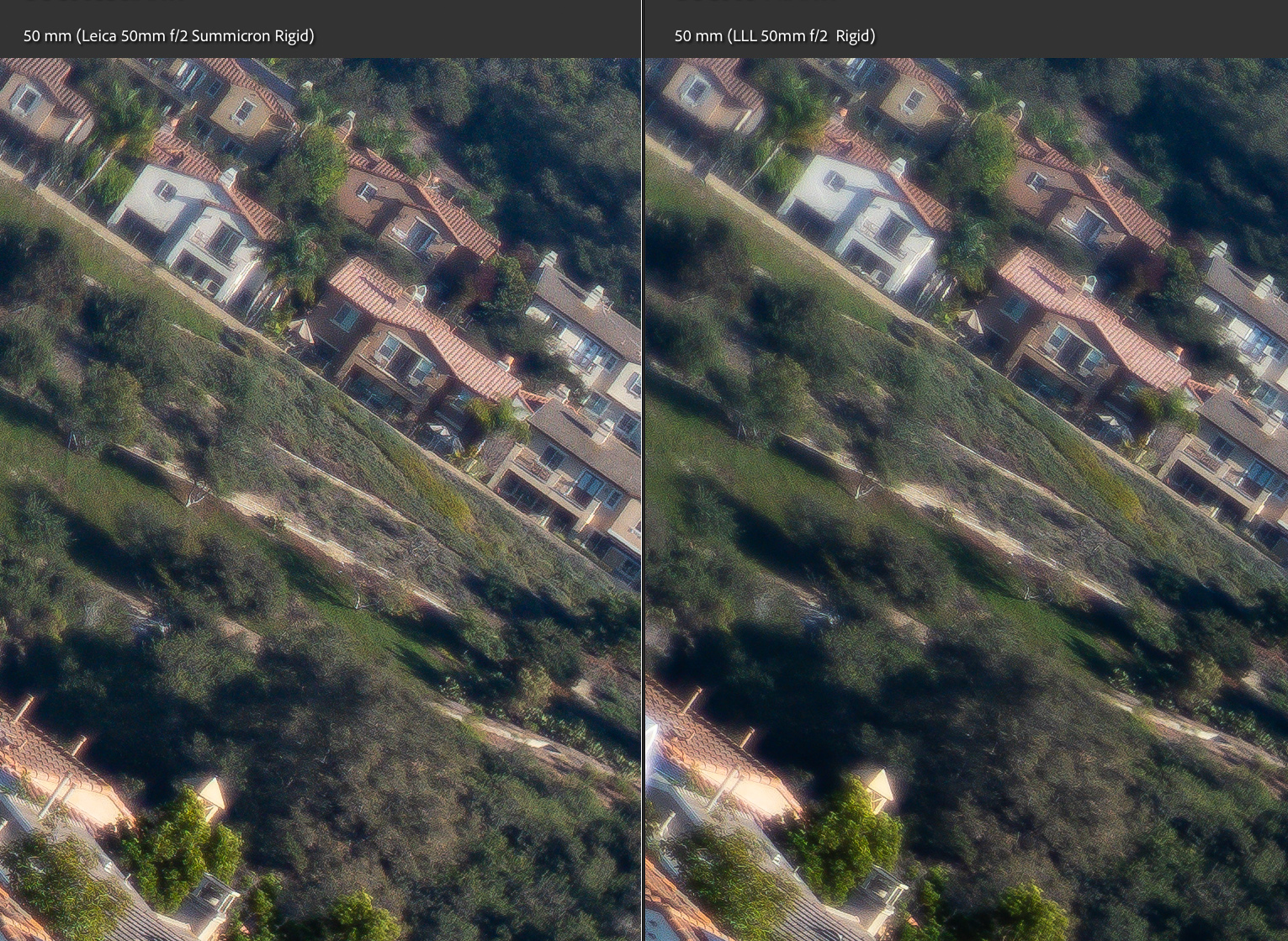
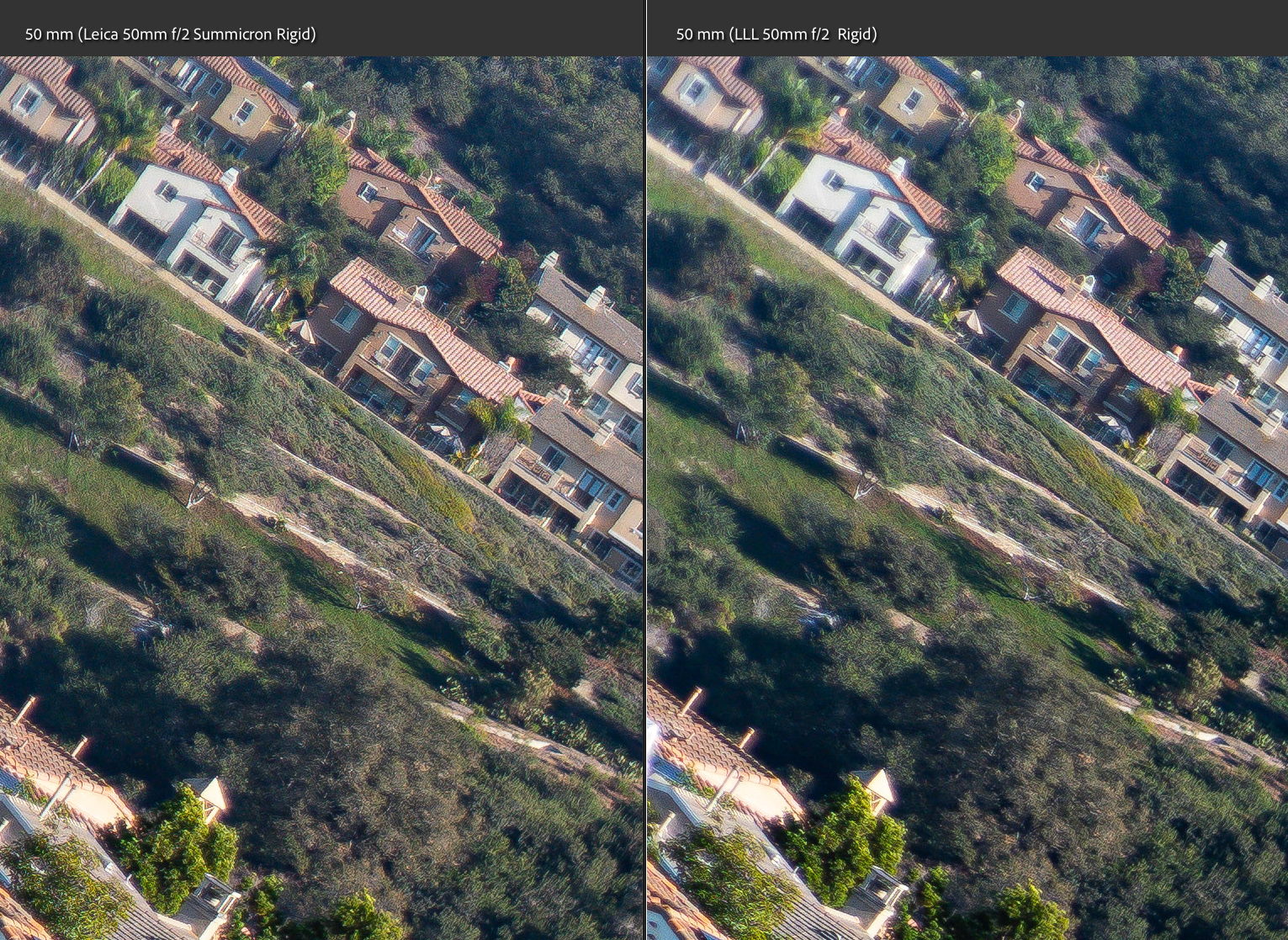
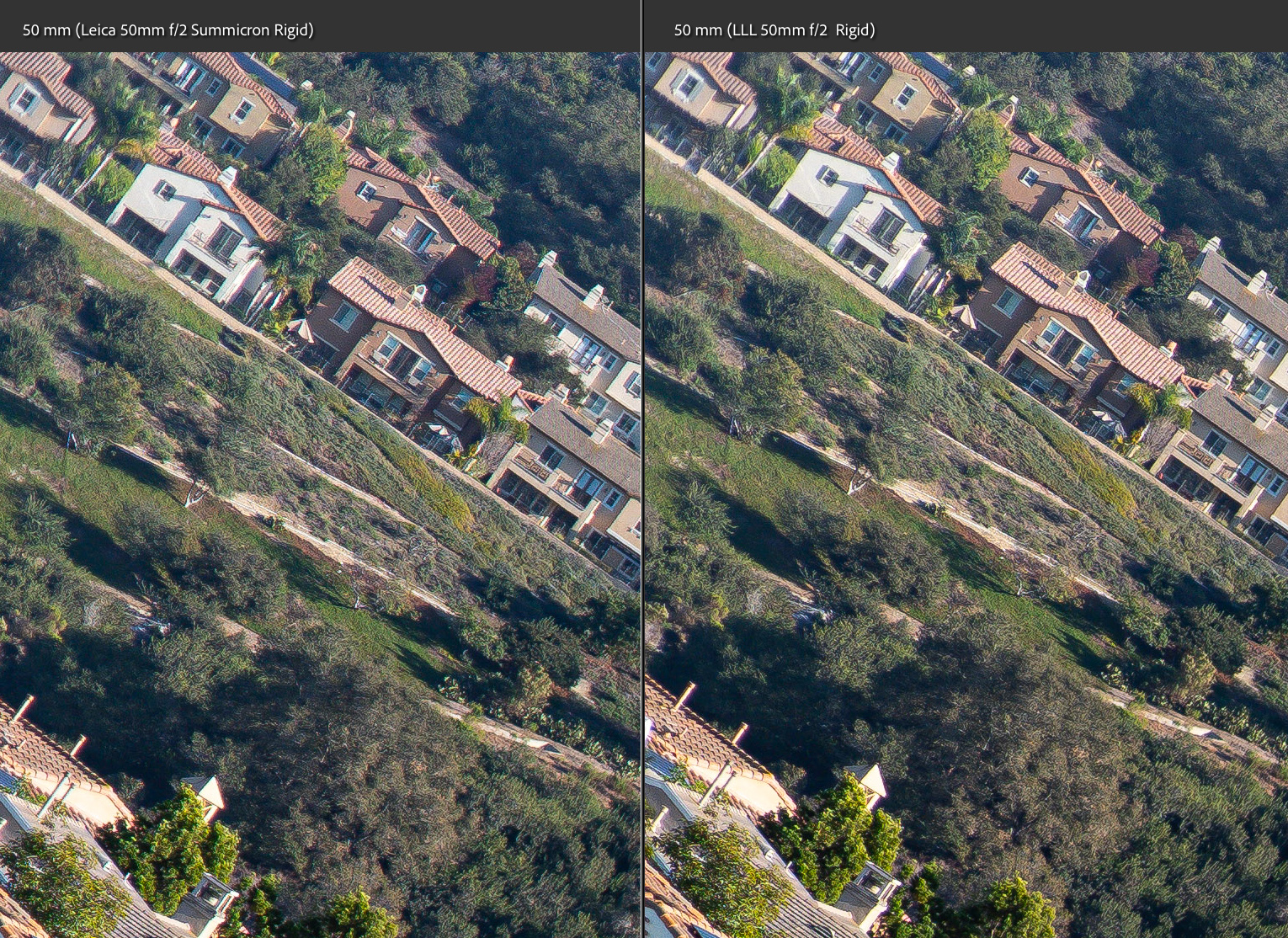
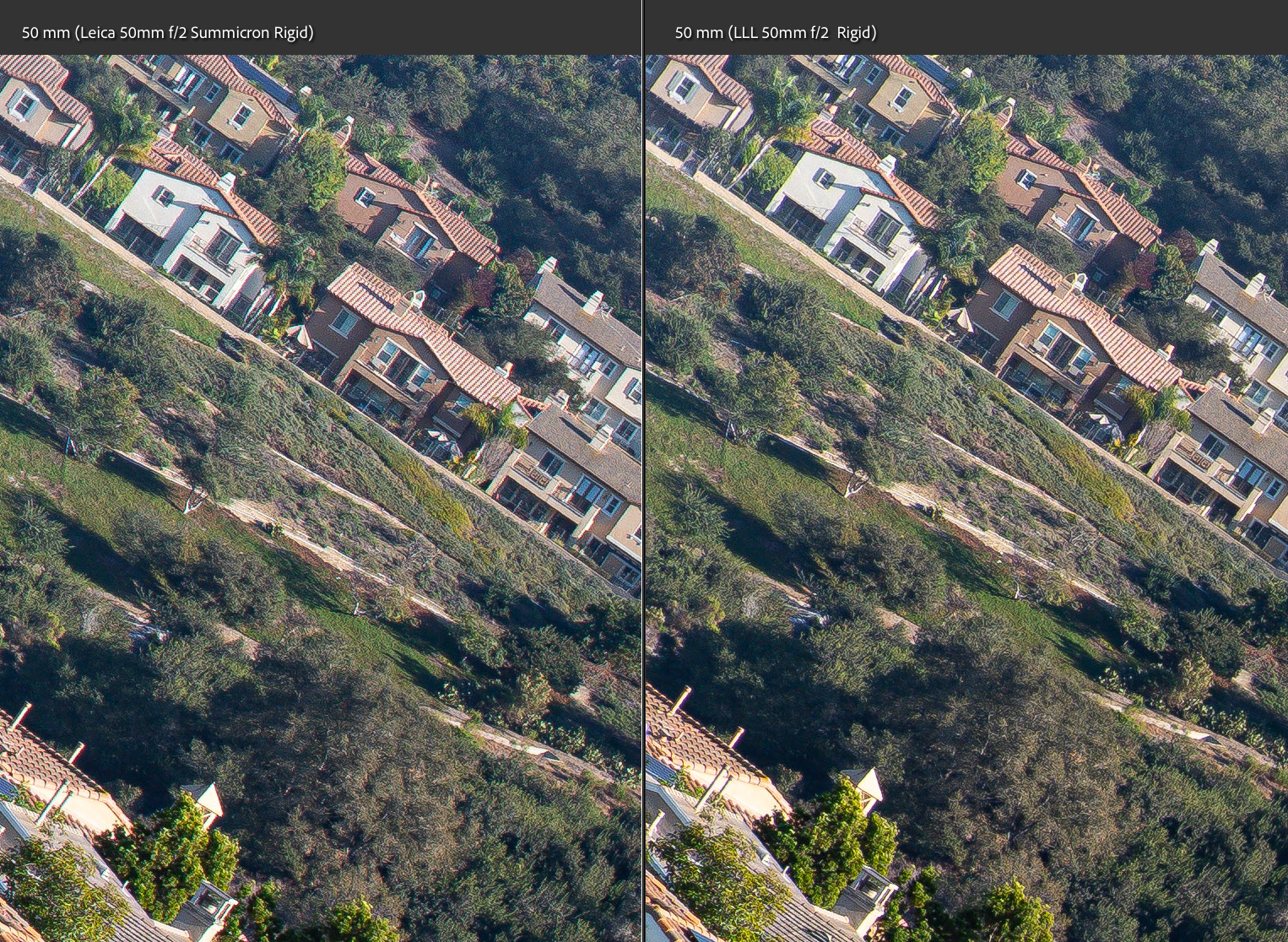
At center, mid-field, and corners, both lenses deliver nearly identical performance. However, in side-by-side comparisons, minor differences show up in the corners, where the Light Lens Lab version shows a slight increase in highlight glow. This difference is subtle and unlikely to be noticed without direct comparison. Considering the seven-decade gap between their production, the fact that their performance is so closely matched is remarkable.

At wide apertures, both lenses show some spherical aberration, which gradually disappears when stopped down. Once closed to smaller apertures, their resolving power rivals that of modern high-performance 50mm lenses. The M11's high-resolution sensor further confirms this, showing how well these classic optical designs hold up even today.

For this test, distortion, chromatic aberration, and vignetting have not been corrected. This allows for a more accurate analysis of these characteristics in the pixel level crops.


  1. Distance: Infinity
  2. Focus: Center - Best of three shots at maximum magnification
  3. White Balance: Daylight
  4. Both lenses are well centered, as verified with my decentering test.
  5. Software used: Lightroom with FM Default Landscape Sharpening; all other settings are at default.

    PS: Vignetting, Chromatic Aberration (CA), and distortion were not corrected either in post-processing or in-camera.


    Center Resolution and Contrast

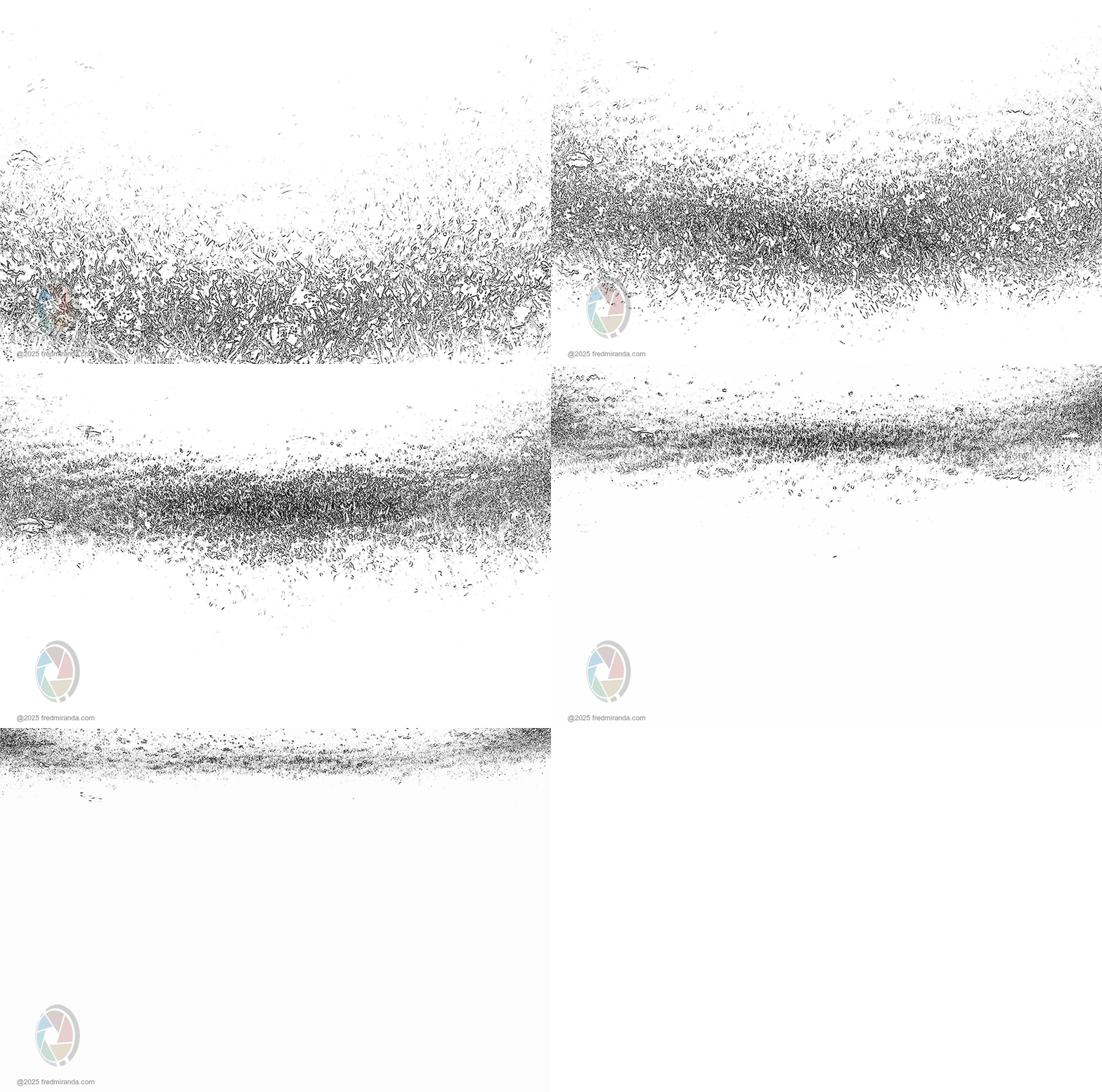
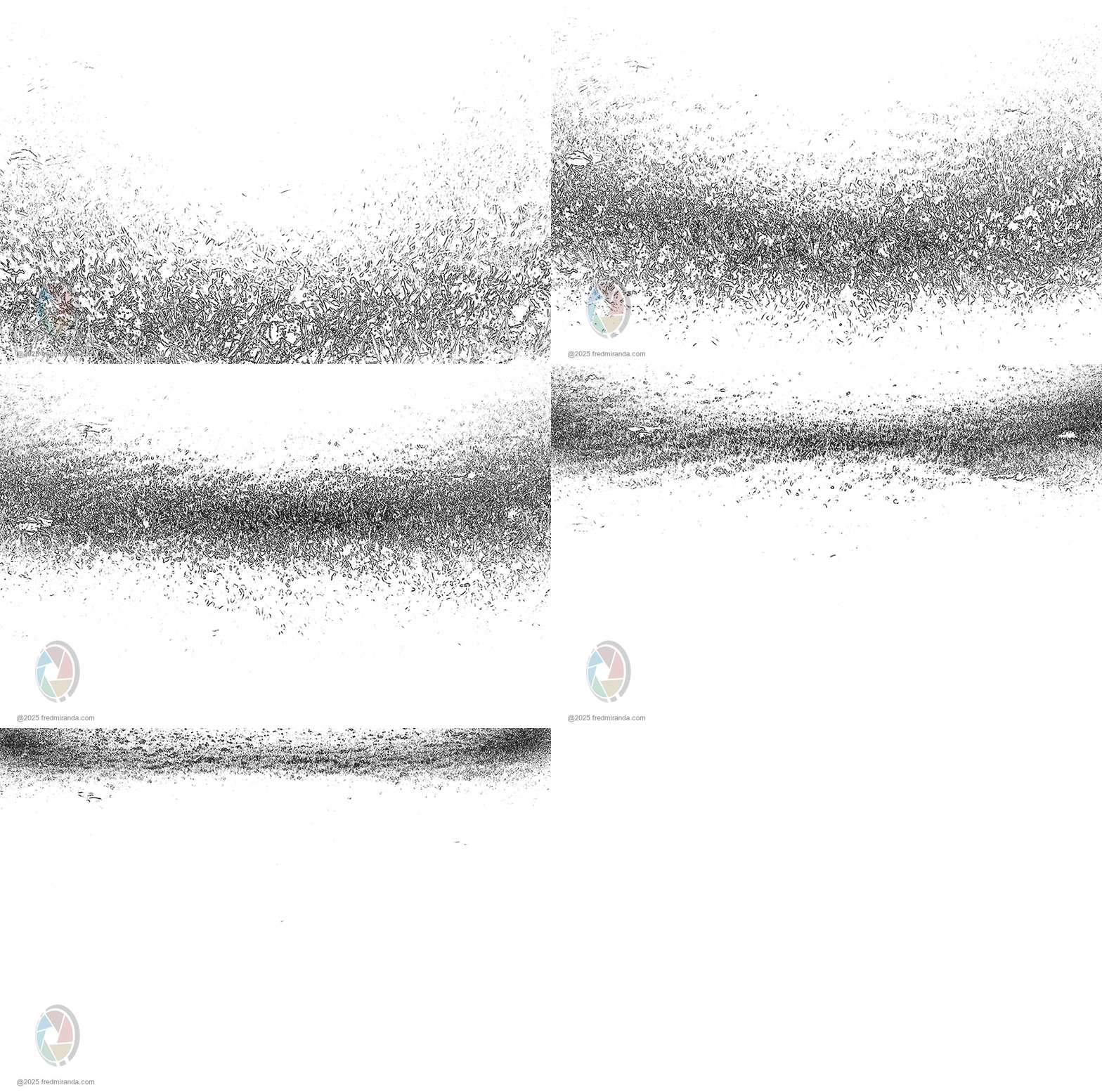
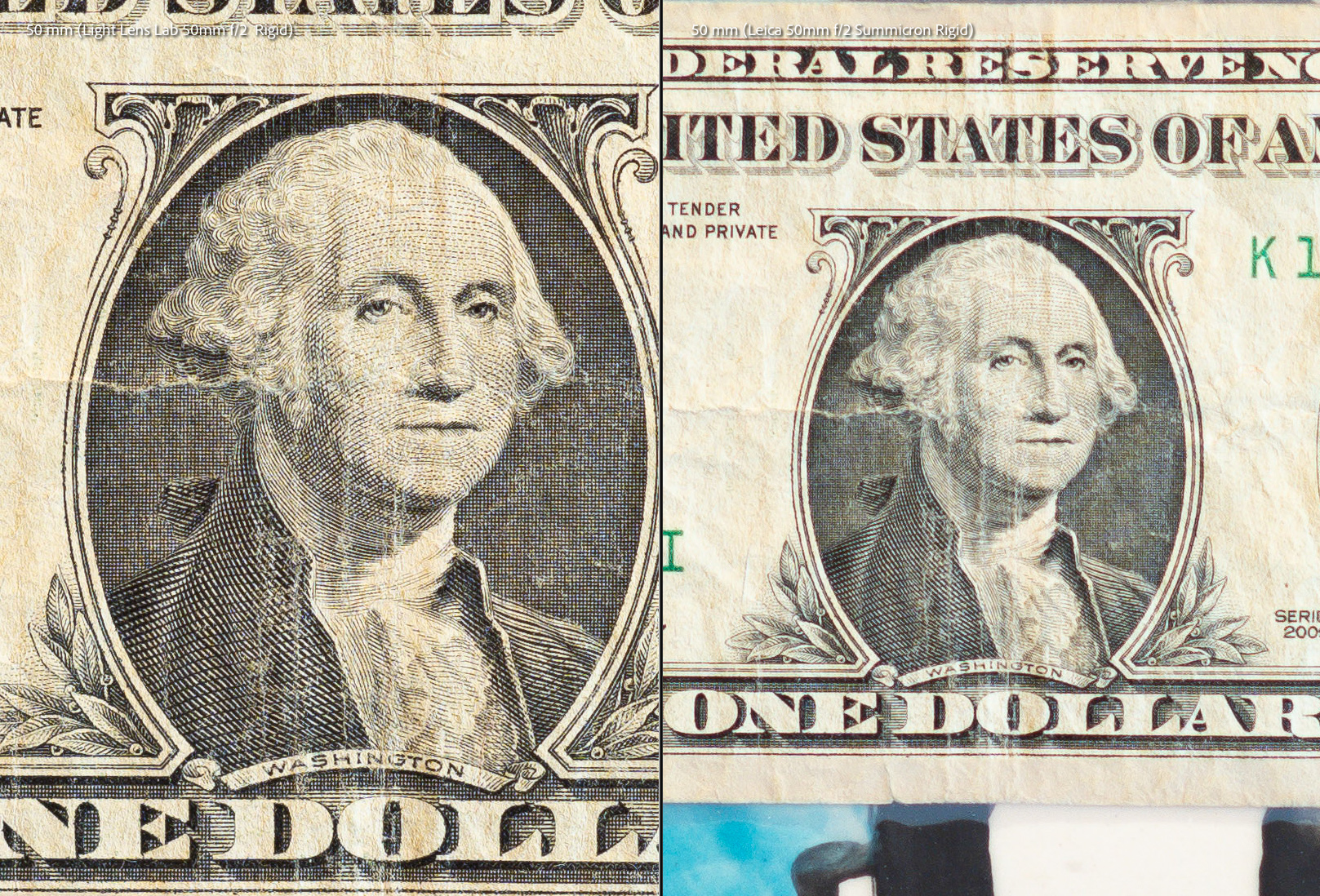
    Resolution and Contrast at Infinity distance: Light Lens Lab 50mm f/2 Rigid vs Leica 50mm f/2 Summicron Rigid (M11)
    (open the browser window to view entire image without resizing)


    f/2


    f/2.8


    f/4


    f/5.6


    f/8


Jan 30, 2025 at 09:21 PM
Fred Miranda
Offline
Admin
Upload & Sell: On
p.1 #3 · Light Lens Lab 50mm f/2 Rigid Review


Mid-field Resolution and Contrast

Resolution and Contrast at Infinity distance: Light Lens Lab 50mm f/2 Rigid vs Leica 50mm f/2 Summicron Rigid (M11)
(open the browser window to view entire image without resizing)


f/2


f/2.8


f/4


f/5.6


f/8


Jan 30, 2025 at 09:22 PM
Fred Miranda
Offline
Admin
Upload & Sell: On
p.1 #4 · Light Lens Lab 50mm f/2 Rigid Review


Extreme Corner Resolution and Contrast

Resolution and Contrast at Infinity distance: Light Lens Lab 50mm f/2 Rigid vs Leica 50mm f/2 Summicron Rigid (M11)
(open the browser window to view entire image without resizing)


f/2


f/2.8


f/4


f/5.6


f/8


Jan 30, 2025 at 09:23 PM
highdesertmesa
Offline
• • • • •
Upload & Sell: On
p.1 #5 · Light Lens Lab 50mm f/2 Rigid Review


Great tests, Fred! The centers look similar though the Leica seems to be a bit sharper at f/2. Midframe favors the LLL, and corners favor the Leica until f/5.6 or f/8. I think I prefer the LLL performance here since if I'm shooting infinity landscape, I'm probably at f/5.6 or 8. If I'm having to shoot infinity at f/2-f/4, I want the midframe to be sharp and the corners can fade off.


Jan 30, 2025 at 10:19 PM
Fred Miranda
Offline
Admin
Upload & Sell: On
p.1 #6 · Light Lens Lab 50mm f/2 Rigid Review


highdesertmesa wrote:
Great tests, Fred! The centers look similar though the Leica seems to be a bit sharper at f/2. Midframe favors the LLL, and corners favor the Leica until f/5.6 or f/8. I think I prefer the LLL performance here since if I'm shooting infinity landscape, I'm probably at f/5.6 or 8. If I'm having to shoot infinity at f/2-f/4, I want the midframe to be sharp and the corners can fade off.


You're welcome! Considering how closely I am scrutinizing these lenses, comparing them at the pixel level on a 60MP sensor, and factoring in normal copy variation and tolerances, by the time either the LLL or the Leica 50/2 Rigid is stopped down to f/5.6–f/8, we can expect excellent performance across the entire image field. It's pretty remarkable that a lens design from the 1950s can offer such a beautiful and unique character at wider apertures, yet, when stopped down, it delivers a level of performance that holds its own against some of the best modern lenses available today.


Jan 31, 2025 at 11:33 AM
sander9t
Offline

Upload & Sell: Off
p.1 #7 · Light Lens Lab 50mm f/2 Rigid Review


Fred, thanks for another thorough test and review. Look forward to more samples comparing the rendering.

The original Rigid have very tricky builds. The late version Rigid, with a distance scale in both ft and m and smooth top knuckles, like your copy here, has a chrome plated (not anodized) aluminum focus ring while the rest of the barrel is made out of brass. Your copy is minty so looks great, but I have seen many copies with the chrome plating wearing off faster which makes the focus ring look slightly different from the rest of the barrel. I am not an expert but it appears that chrome plating doesn't work too well with aluminum, and that is why we have seen most aluminum lenses are anodized instead. More interestingly, the early version Rigid, with grooved top knuckles and a distance scale in either ft or m, has a silver painted chrome plated brass focus ring and thus is about 30 grams heavier than the late version. This early version is more problematic when the silver paint wears off, leaving many copies with a yellow colored focus ring. Leica was experimenting with this silver paint technique but obviously it was a failure so they switched to the mixed brass/aluminum build in the late version. On the other hand, the LLL is made out of chrome plated brass all around. Hope this information helps people who are deciding between the original and the LLL.


Jan 31, 2025 at 11:18 PM
ocean2059
Offline
• • • •
Upload & Sell: On
p.1 #8 · Light Lens Lab 50mm f/2 Rigid Review


Fred Miranda wrote:
You're welcome! Considering how closely I am scrutinizing these lenses, comparing them at the pixel level on a 60MP sensor, and factoring in normal copy variation and tolerances, by the time either the LLL or the Leica 50/2 Rigid is stopped down to f/5.6–f/8, we can expect excellent performance across the entire image field. It's pretty remarkable that a lens design from the 1950s can offer such a beautiful and unique character at wider apertures, yet, when stopped down, it delivers a level of performance that holds its own against some of the best modern lenses available today.


Fred, do you find the color profile of the LLL and Leica very similar? I noticed that LLL 35/2 8-E's color is a just bit more modern compare with the original Summicron 35/2 V1-8E, maybe due to newer coating.


Feb 02, 2025 at 04:47 PM
stgrove
Online
• • • •
Upload & Sell: On
p.1 #9 · Light Lens Lab 50mm f/2 Rigid Review


Just received mine and will soon compare to my 1956 version. I got the black since it more stealth looking in public environments.


Feb 02, 2025 at 05:12 PM
Edward Teller
Offline
• • •
Upload & Sell: On
p.1 #10 · Light Lens Lab 50mm f/2 Rigid Review


I’ve only started looking at this lens, so may well have missed something that others already know, but am wondering if someone could address a surprising level of confusion I find on the web regarding the optics. The take on Reddit(!), and the single thread on l-camera-forum, is that the LLL Summicron Rigid copy is just the LLL Speed Panchro optical group, rehoused in a clone of the Summicron body, as both are 7/5 optical blocks. But, looking at the optical diagrams, and mtf charts I have been able to find here and there, if accurate, they seem to be quite different, both 7/5, but different in both the lenses and the groups, and the mtf charts.
This lens seems very much not a rehoused Speed Panchro optical block, or am I missing something?


Feb 03, 2025 at 11:12 AM


Search in Used Dept. 

Steve Spencer
Offline
• • • • • • •
Upload & Sell: On
p.1 #11 · Light Lens Lab 50mm f/2 Rigid Review


Edward Teller wrote:
I’ve only started looking at this lens, so may well have missed something that others already know, but am wondering if someone could address a surprising level of confusion I find on the web regarding the optics. The take on Reddit(!), and the single thread on l-camera-forum, is that the LLL Summicron Rigid copy is just the LLL Speed Panchro optical group, rehoused in a clone of the Summicron body, as both are 7/5 optical blocks. But, looking at the optical diagrams, and mtf charts I have been able to find here and there, if accurate, they seem to
...Show more

Edward, the answer seems to be that people are confusing two different lenses from LLL. The one Fred is reviewing is this one:

https://lightlenslab.com/products/light-lens-lab-50mm-f-2-rigid?srsltid=AfmBOopIuhT4XyKBOUSgajP9SShLiGQYGvTBle-PwyzI809L6Z2C31np

It is based on the Leica M 50 f/2 nicknamed the 50 cron Rigid. It has elements with rare earth elements and lanthanum like the original Leica lens.

LLL, however, also makes this lens based on the Speed Panchro:

https://lightlenslab.com/products/light-lens-lab-50mm-f-2-rigid-spii?srsltid=AfmBOorD6Z_F7J9K5qeCzJaAWFP8QPwKIm_WDv4TIEus9RIrDW5Sfnkh

This is a different lens even though they both are 50mm f/2 lenses and both have "Rigid," in the official LLL name for the lens. The naming is pretty confusing, but they are different lenses.


Feb 03, 2025 at 11:23 AM
Edward Teller
Offline
• • •
Upload & Sell: On
p.1 #12 · Light Lens Lab 50mm f/2 Rigid Review


Thanks, I knew they were different lenses, and it seems that the people over in the Leica forum knew they were sold as two different lenses, but I was confused as to why there seemed to be so much agreement there that LLL was trying to sell two different lenses which were optically identical. Very much a bash fest over there. Am considering purchasing one, so just wanted to make sure I wasn’t wrong in my assessment.
So, thanks.
https://www.l-camera-forum.com/topic/385999-lll-50-rigid-announcement/#comment-4951433


Feb 03, 2025 at 12:26 PM
highdesertmesa
Offline
• • • • •
Upload & Sell: On
p.1 #13 · Light Lens Lab 50mm f/2 Rigid Review


Edward Teller wrote:
Thanks, I knew they were different lenses, and it seems that the people over in the Leica forum knew they were sold as two different lenses, but I was confused as to why there seemed to be so much agreement there that LLL was trying to sell two different lenses which were optically identical. Very much a bash fest over there. Am considering purchasing one, so just wanted to make sure I wasn’t wrong in my assessment.
So, thanks.
https://www.l-camera-forum.com/topic/385999-lll-50-rigid-announcement/#comment-4951433


I'm not seeing anything that sounds like "bashing" over there. People just want to understand what's going on, and LLL made it a bit confusing for those not following their lens releases.


Feb 03, 2025 at 02:20 PM
Edward Teller
Offline
• • •
Upload & Sell: On
p.1 #14 · Light Lens Lab 50mm f/2 Rigid Review


Maybe “bashing” was too strong a word, but it was this, at least, which seemed less than the understanding that was showing up here:

“Not for me. IMO If i wanted an SP II, I would have bought one. Too bad this this copy isnt true to the original optics.”

“Well, this is sort of a bastard lens, as it will have the outer appearance of the 50 Rigid, but will have the Speed Panchro Series II optical block.”

“There are so many nice rígids for sale. I don’t see the point of this lens.”


Your results and comments on this lens have been very helpful to me, BTW. So, thanks, looking forward to more.


Feb 03, 2025 at 02:41 PM
Fred Miranda
Offline
Admin
Upload & Sell: On
p.1 #15 · Light Lens Lab 50mm f/2 Rigid Review


Back to Quick Links

Distortion

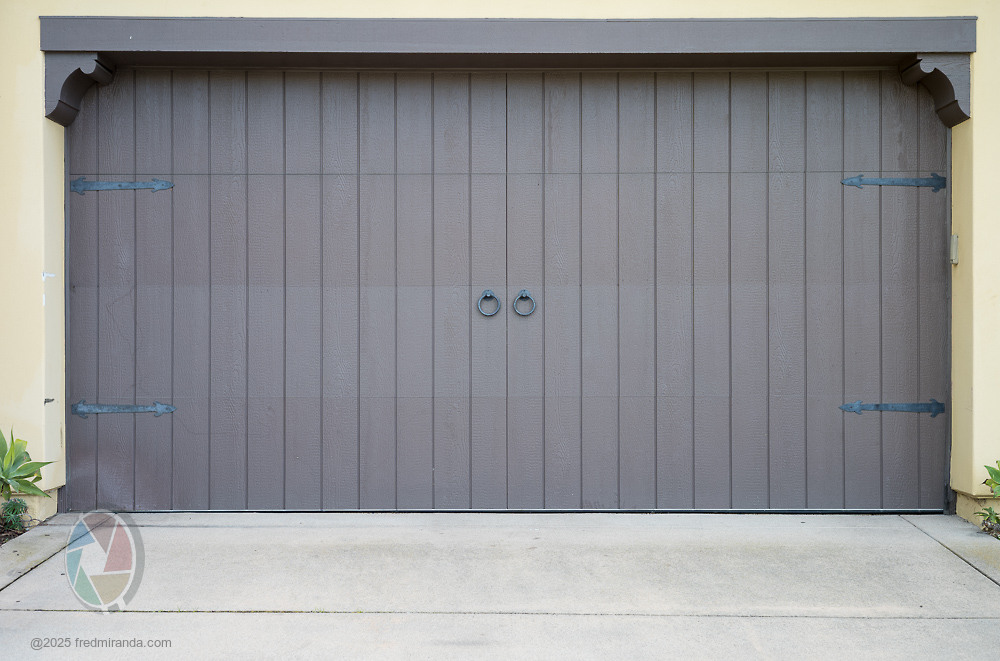
I have been shooting with the Leica 50mm f/2 Summicron Rigid for many years, and one of the qualities I appreciate most about this lens is its low distortion. We already know that the Light Lens Lab 50mm f/2 Rigid closely matches the Leica in resolution and contrast, so I expected their distortion levels to be similar as well, and that turned out to be the case.

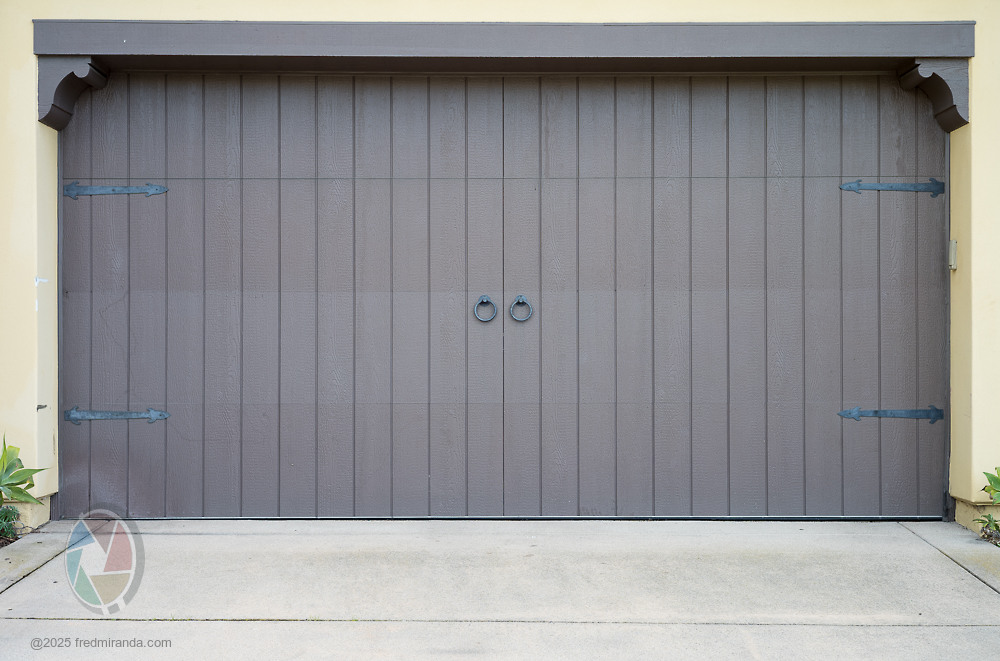
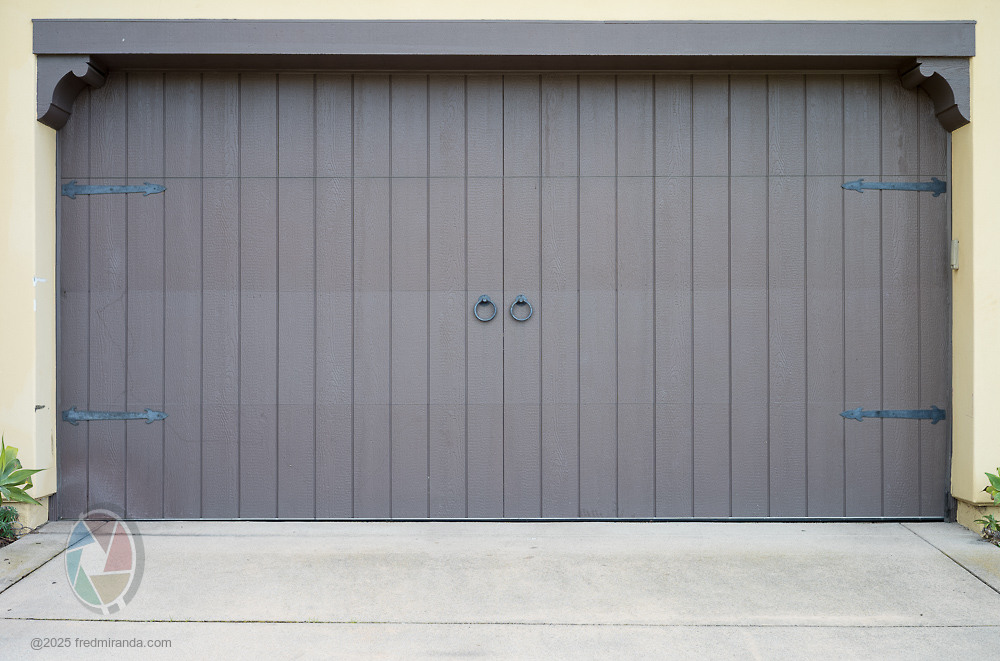
Both lenses exhibit the same slight pincushion distortion, which is negligible in real-world images. This can be completely corrected in post-processing with a setting of “-2” in Lightroom, which I consider to be characteristic of a low distortion lens.

Below are examples showing an uncorrected image followed by a distortion-corrected version, taken first with the Light Lens Lab and then with the Leica.

It is also interesting to observe the differences in color rendering, which are very similar, as well as the exact angle of view between the two lenses.


Light Lens Lab: No Correction

  LEICA M10-R    Light Lens Lab 50mm f/2 Rigid lens    50mm    f/4.8    1/60s    100 ISO    0.0 EV  


Light Lens Lab: Distortion corrected in LR (setting -2)

  LEICA M10-R    Light Lens Lab 50mm f/2 Rigid lens    50mm    f/4.8    1/60s    100 ISO    0.0 EV  


Leica: No Correction

  LEICA M10-R    Leica 50mm f/2 Summicron Rigid lens    50mm    f/4.8    1/60s    100 ISO    0.0 EV  


Leica: Distortion corrected in LR (setting -2)

  LEICA M10-R    Leica 50mm f/2 Summicron Rigid lens    50mm    f/4.8    1/60s    100 ISO    0.0 EV  


Feb 03, 2025 at 05:17 PM
Fred Miranda
Offline
Admin
Upload & Sell: On
p.1 #16 · Light Lens Lab 50mm f/2 Rigid Review


Back to Quick Links

Field Curvature

The Leica 50mm f/2 Summicron Rigid exhibits outwards field curvature from close focus to infinity, starting more pronounced at close distances and gradually flattening as it approaches infinity, though not entirely. The Light Lens Lab follows similar curvature. If I did not know one was from the 1950s, I would say both lenses are identical based on my tests so far.

Below is a GIF animation showing the focus area across five stages, transitioning from close-up to long distance:

First, the Light Lens Lab, followed by the Leica.


Light Lens Lab Field curvature


Leica Field curvature


Feb 03, 2025 at 05:32 PM
Fred Miranda
Offline
Admin
Upload & Sell: On
p.1 #17 · Light Lens Lab 50mm f/2 Rigid Review


Back to Quick Links

Minimal Focus Distance performance and Focus Shift

I wanted to see how the Light Lens Lab 50mm f/2 Rigid compares to my modified version of the Leica 50mm f/2 Rigid. The original Leica has a long minimal focus distance of 1 meter, and I think Light Lens Lab made a smart choice by updating the 1950s design to focus down to 0.70 meters. My personally modified copy focuses down to 0.75 meters.

The results were as expected. Both lenses perform ‘ok’ wide open at the minimal focus distance but due to focus shift, they require refocusing when stopping down. This is not ideal for rangefinder shooters. This is a known limitation of the Leica Rigid, and Light Lens Lab has replicated this characteristic.

To test for focus shift, I captured images at f/2, f/2.8, and f/4 without refocusing, then took another shot at f/4 with refocusing for comparison. The focus shift is more noticeable on the Light Lens Lab version, largely due to its higher magnification. I also compared the Light Lens Lab and Leica versions at f/4 with refocusing to assess the extent of the focus shift.

The following sequence demonstrates performance across these apertures.


At 0.7m MFD for the Light Lens Lab and 0.75m for the Leica, using LiveView.

***Expand the browser window to view the full image without any resizing.


At f/2, both lenses at their minimal focus distances: Light Lens Lab (left), Leica (right).


At f/2.8, both lenses at their minimal focus distances: Light Lens Lab (left), Leica (right).


At f/4, both lenses at their minimal focus distances: Light Lens Lab (left) and Leica (right). Focus shift is noticeable on both.


At f/4 again, but this time refocused using live view. Resolution and contrast are higher since focus shift is no longer an issue.


Magnification comparison between the LLL and Leica (without close-focus mod) at their MFD: Light Lens Lab at 0.7m and Leica at 1m. Differences in resolution are due to varying apertures. This shows how much closer the LLL can focus than the Leica


Feb 05, 2025 at 07:36 PM
intangiblethin
Offline

Upload & Sell: Off
p.1 #18 · Light Lens Lab 50mm f/2 Rigid Review


Between the LLL Cooke vs. the Rigid, what would be the major differences?

Are they basically in the same classification?

I have the Cooke but the Rigid is obviously an iconic classic (in the sense that it's so well-known) that I would consider adding.


Feb 06, 2025 at 09:15 AM
highdesertmesa
Offline
• • • • •
Upload & Sell: On
p.1 #19 · Light Lens Lab 50mm f/2 Rigid Review


intangiblethin wrote:
Between the LLL Cooke vs. the Rigid, what would be the major differences?

Are they basically in the same classification?

I have the Cooke but the Rigid is obviously an iconic classic (in the sense that it's so well-known) that I would consider adding.


Biggest differences to me are the SPII has an awkward external design and quite a bit of glow at f/2 at mid to long distances. The SPII also has a huge quirk that doesn’t always show up, but it can be image-ruining when it does: in some less common lighting conditions, a central circle of low contrast blue/purple tinted flare starts to appear around f/5.6-8 in the center of the image, getting larger the smaller the aperture. The Rigid is your basic, sharp 50 f/2 with a nice rendering wide open. Stopped down, I don't think there’s much difference between them, at least for how I shoot. I have the SPII and added the Rigid just because I don’t always want the glow at f/2 from the SPII. The smaller size of the Rigid is also a bonus, and the black color is a nice nod to the rare black original copies.


Feb 06, 2025 at 10:36 AM
Fred Miranda
Offline
Admin
Upload & Sell: On
p.1 #20 · Light Lens Lab 50mm f/2 Rigid Review


intangiblethin wrote:
Between the LLL Cooke vs. the Rigid, what would be the major differences?

Are they basically in the same classification?

I have the Cooke but the Rigid is obviously an iconic classic (in the sense that it's so well-known) that I would consider adding.


I may add the Light Lens Lab 50mm f/2 SP2 (Cooke) to my comparisons. Having shot with both lenses, my impression is that the Leica 50mm f/2 Rigid (or the Light Lens Lab version) has significantly higher contrast and an advantage in center resolution. It is also better corrected for spherical aberration and more resistant to flare. As mentioned earlier, the Light Lens Lab 50mm f/2 SP2 produces a bluish flare, whereas the Rigid has a purple/red flare, which many prefer..

On the other hand, the Light Lens Lab 50mm f/2 'Cooke' has more uniform performance across the image field, with excellent corner resolution for a lens of its era.

In short, the Rigid is the better-corrected lens but still retains beautiful characteristics in its rendering.

Now, just waiting for the rain to let up.


Feb 06, 2025 at 11:30 AM
       2       3              7       8       end


FM Forums | Leica & Alternative Gear | Join Upload & Sell

       2       3              7       8       end


Welcome back
Log in to your account