Leica 6-bit code template tool
p.2 #1Leica 6-bit code template tool
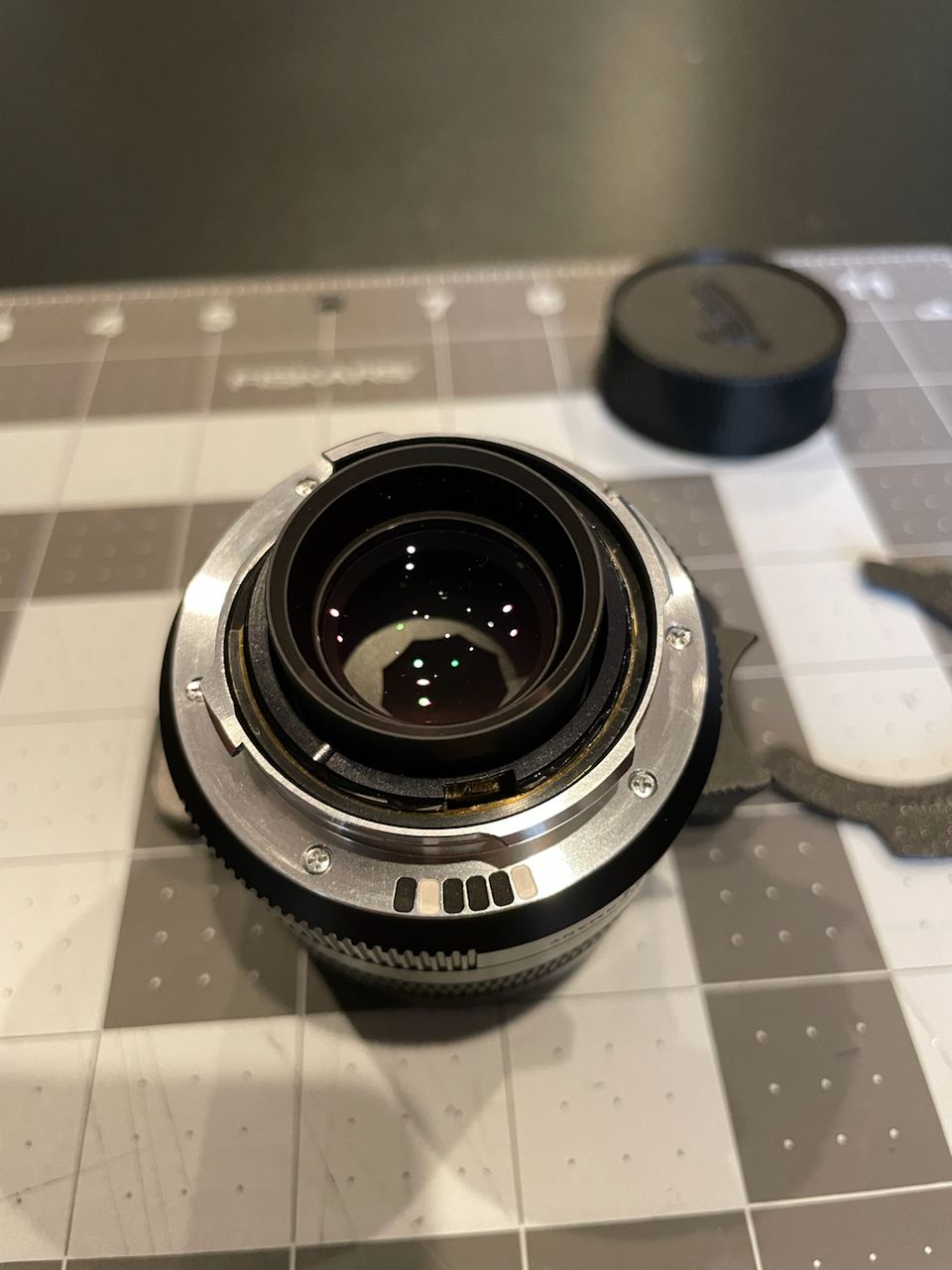
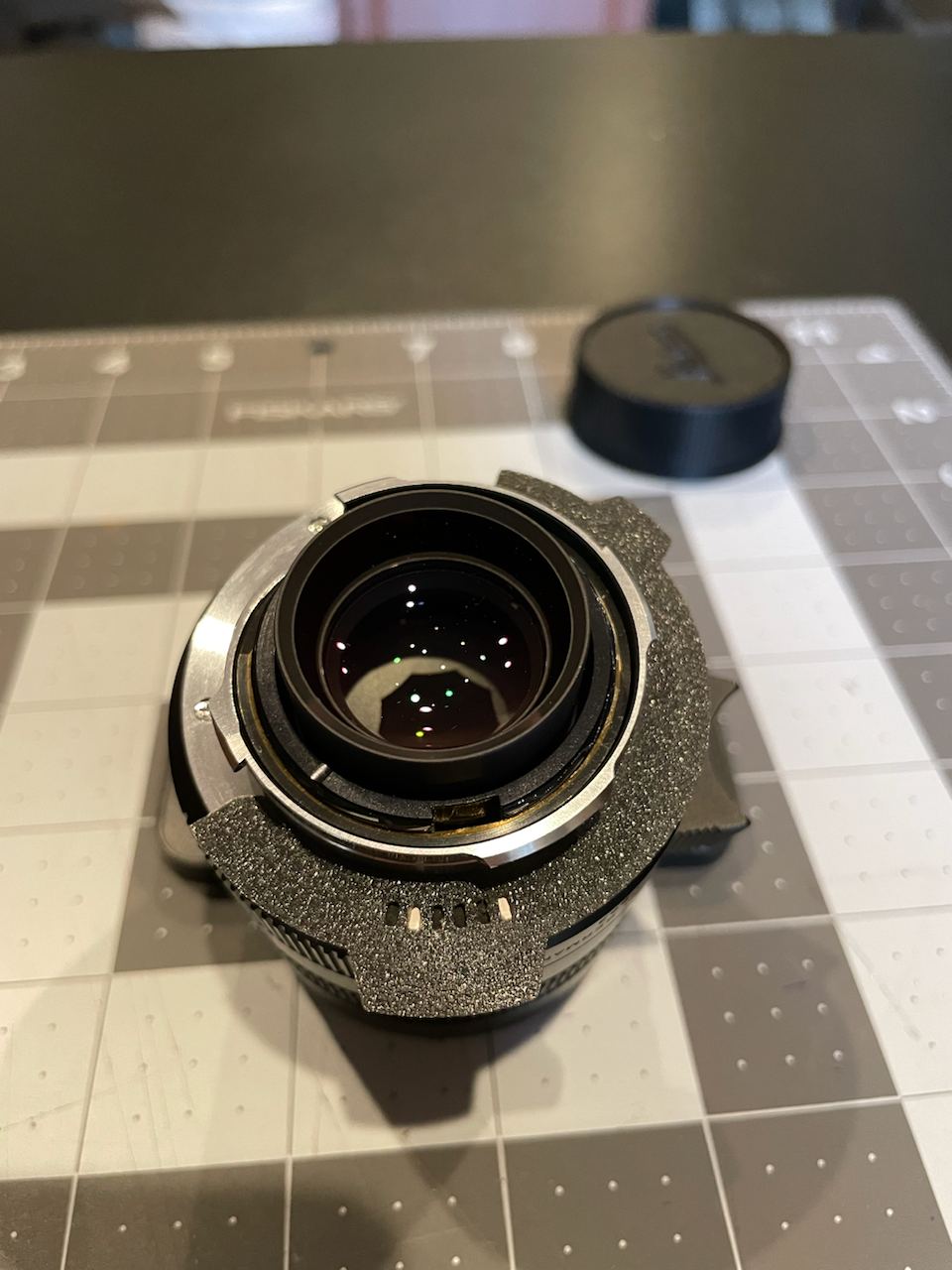
Here is how the template covers the 6-bit paint on my Leica 35/1.4 FLE.
With and without the template:
With and without the template:
 |
||
 |
||
|
|
||
 |
||
|
May 07, 2024 at 09:48 AM
p.2 #2Leica 6-bit code template tool
Really nice tool, thanks for making it available!
I just had one 3D-printed and coded my Voigtländer 35mm f1.5 and 75mm f1.9 as Summilux 35 and APO-Summicron 75 respectively - both show up correctly with my TTartisan 6-bit adapter on the Zf!
One thing that was a bit fiddly is that the notch is not very well pronounced on my adapter and relatively easy to slip past. So one has to take some care correctly aligning the template. Maybe that's due to the print quality and/or the material I chose (used PA12-CF and the company uses FDM printers - whatever any of this means ).
The pen I used was an Edding 780.
Well, I guess I have to buy that Voigtländer 21mm 3.5 now to complete the trinity..
I just had one 3D-printed and coded my Voigtländer 35mm f1.5 and 75mm f1.9 as Summilux 35 and APO-Summicron 75 respectively - both show up correctly with my TTartisan 6-bit adapter on the Zf!
One thing that was a bit fiddly is that the notch is not very well pronounced on my adapter and relatively easy to slip past. So one has to take some care correctly aligning the template. Maybe that's due to the print quality and/or the material I chose (used PA12-CF and the company uses FDM printers - whatever any of this means
). The pen I used was an Edding 780.
Well, I guess I have to buy that Voigtländer 21mm 3.5 now to complete the trinity..
May 08, 2024 at 09:58 AM
p.2 #3Leica 6-bit code template tool
Vetteman wrote:
I uploaded the file that @yukosteel@@ generously shared with us to Xometry.com on Friday 4/26/24. Creating the order was simple and straightforward. The cost for the part was $8.50 + $.51 tax for a total cost of $9.01. This included FedEx Priority Overnight Shipping
The part was printed on 4/30/24 and shipped the same day. It was delivered this morning.
What about the printed piece? It's perfect! I placed it on a 28mm Elmarit to check alignment of the codes and it is spot on perfect.
@yukosteel@@ thanks for taking the time to design the part and for sharing it with...Show more →
I had this one printed by Xometry. It lines up better than the previous one I had downloaded and printed by Print a Thing but it is not as tight, that might be the material used, I don't know. I am thinking a 3D printer is in my future so I can make my own adjustments and material choices.
May 08, 2024 at 10:19 AM
p.2 #4Leica 6-bit code template tool
I ordered mine from Xometry-
ordered Monday and arrived in less than 48 hours for 9 bucks!!!!! I am going to be using them a ton now-
ordered Monday and arrived in less than 48 hours for 9 bucks!!!!! I am going to be using them a ton now-
May 08, 2024 at 11:08 AM
p.2 #5Leica 6-bit code template tool
I plan to work on full-circle firm-lockable version of this template and reduce potential impact from print precision and material chosen.
May 08, 2024 at 03:48 PM
p.2 #6Leica 6-bit code template tool
Thanks for the effort!
For what it's worth, I could slice and print V1 with BambuLab's slicer. V2 was another matter: everything was fine and rather better than V1 except that the fourth bit counting from the index stayed closed whatever parameters I tried. Obviously others have printed V2 without a problem so I don't know where the problem comes from.
I ended up drawing a V2 more or less clone from scratch with OpenSCAD and it prints properly with the bit holes looking exactly the same. I still have to test if the codes are read properly by the camera.
May 08, 2024 at 10:41 PM
p.2 #7Leica 6-bit code template tool
fjablo wrote:
One thing that was a bit fiddly is that the notch is not very well pronounced on my adapter and relatively easy to slip past. So one has to take some care correctly aligning the template. Maybe that's due to the print quality and/or the material I chose (used PA12-CF and the company uses FDM printers - whatever any of this means).
Thank you for that note! Thanks to extra research performed by Fred on various Leica lenses the V2C_II model has slightly wider pin, which fits Leica mount sizing but may be not be perfect fit on Voigtlander lenses. I included 3D model version V2C with 0.2mm thinner lock pin - it should precisely fit Voigtlander lenses and better tolerate print precision variations.
One thing that was a bit fiddly is that the notch is not very well pronounced on my adapter and relatively easy to slip past. So one has to take some care correctly aligning the template. Maybe that's due to the print quality and/or the material I chose (used PA12-CF and the company uses FDM printers - whatever any of this means
). Thank you for that note! Thanks to extra research performed by Fred on various Leica lenses the V2C_II model has slightly wider pin, which fits Leica mount sizing but may be not be perfect fit on Voigtlander lenses. I included 3D model version V2C with 0.2mm thinner lock pin - it should precisely fit Voigtlander lenses and better tolerate print precision variations.
May 08, 2024 at 10:51 PM
p.2 #8Leica 6-bit code template tool
Thury wrote:
Thanks for the effort!
For what it's worth, I could slice and print V1 with BambuLab's slicer. V2 was another matter: everything was fine and rather better than V1 except that the fourth bit counting from the index stayed closed whatever parameters I tried. Obviously others have printed V2 without a problem so I don't know where the problem comes from.
I ended up drawing a V2 more or less clone from scratch with OpenSCAD and it prints properly with the bit holes looking exactly the same. I still have to test if the codes are read properly by the camera.
One thing I'm still fighting with Cura slicer is to force model print not form the socket holes, because it always put extra material first on my Neptune 3 Pro first, which is annoying. One thing is helping - adding extra holes in the model, so print starts form them and smoothly moving to the 6bit sockets and printing them better.
Another thing is to find compromise between print speed and print time. If speed is too slow - material may expand from the head, if it's too quick - 6bit socket edges geometry is slightly distorted.
Thanks for the extra effort on cloning the design, I can share my original .blend file if that helps, or export it to other fotmat compatible with OpenSCAD, just let me know.
May 08, 2024 at 10:55 PM
p.2 #9Leica 6-bit code template tool
Stimulated by these tools to code lenses, I've been trying to update my list of 6 bit codes and have had a surprise.
If I understand it correctly, each combination of different "optical formula, name, focal length, aperture" gets one code. 6 bit coding provides for 64 combinations.
My list of lenses with different codes is 62 items long. I'm sure that I miss some and suspect that 4 or 5 may share the code of another lens of same name, focal length and aperture.
My question is: is the 6bit system going to be obsolete pretty soon ?
May 09, 2024 at 06:20 AM
p.2 #10Leica 6-bit code template tool
I've tested the templates with several Leica, Voigtlander, and Zeiss ZM lenses.
Among them, "V2C_II" stands out as the best version because it securely locks onto the mount's "Pin" without any play for Voigtlander and ZM lenses, both manufactured by Cosina. While there's a slight play when used with Leica lenses, it's less concerning since we aren't 6-bit coding them.
It's noteworthy that there's variation in the precise location of the 6-bit code within Leica lenses. I've tested 7 Leica 6-bit coded lenses, and the code's position varies slightly by a very small measurement (e.g., 0.1mm).
I successfully 6-bit coded 3 Voigtlander lenses and 1 Zeiss ZM lens with the "V2C_II" version, achieving a 100% success rate with Leica correctly reading the intended code.
My printer settings were default, except for the following:
- Layer Height: 0.1mm (default is 0.2mm)
- Line Width: 0.3mm
- Initial Layer Line Width (90%)
- Wall Line count: 3
- Infill Density: 15%
- Print Speed: 30mm/s
May 09, 2024 at 10:44 AM
|
p.2 #11Leica 6-bit code template tool
Would V2C III be an option to use for coding “non-codable” Leica lenses? Namely the 50mm Summicron pre-ASPH v3 and 35mm Summilux pre-ASPH (early V2 infinity lock)? Or do they need to have the flange replaced (or template modified) to allow for coding with this template?
May 09, 2024 at 11:41 AM
p.2 #12Leica 6-bit code template tool
Any risk or experience of the permanent ink/paint washing off the lens mount on to the 6 bit reader? I would hate to damage my M11 to get exif capability.
May 09, 2024 at 01:00 PM
p.2 #13Leica 6-bit code template tool
J Peterman wrote:
Would V2C III be an option to use for coding “non-codable” Leica lenses? Namely the 50mm Summicron pre-ASPH v3 and 35mm Summilux pre-ASPH (early V2 infinity lock)? Or do they need to have the flange replaced (or template modified) to allow for coding with this template?
V2C_II should work for coding, the main challenge is if mount surface is flat - there is no way for paint to stay, it will be scratched off when mounting. Voigtlander lenses have mount groove which helps to address that.
May 09, 2024 at 01:12 PM
p.2 #14Leica 6-bit code template tool
tzhang4284 wrote:
Any risk or experience of the permanent ink/paint washing off the lens mount on to the 6 bit reader? I would hate to damage my M11 to get exif capability.
That's a good question. It looks visually that Leica 6bit sensor of M10/M11 is covered with glass with some sort of coating. Unless the paint is abrasive or has some glue in it it should be safe for 6bit sensor, but you may experiment with applying paint to inexpensive lens filter, then wiping it with isopropyl alcohol or acetone to see the impact on the coating.
Technically if thin layer is applied into Voigtlander mount groove, you should be able to mount/dismount without paint interacting with 6bit sensor. If paint migrate to mount edges it's important to wipe it out, then use Leica lens cap first, and then to double check paint is not touching camera mount by mounting it first away from 6bit sensor.
May 09, 2024 at 01:17 PM
p.2 #15Leica 6-bit code template tool
Here is my list of 6bit codes :
LEICA M lens : Model No : 6 Bit Code
---------------------------------------------------------------------------------------
Super-Elmar-M 18mm f/3.8 ASPH : 11649 : 110100
Summilux-M 21mm f/1.4 ASPH : 11647 : 101111
Elmarit-M 21mm f/2.8 : 11134 : 000001
Elmarit-M 21mm f/2.8 ASPH : 11135, 11897 (chrome) : 011000
Super-Elmar-M 21mm f/3.4 : 11145 : 110011
Summilux-M 24mm f/1.4 ASPH : 11601 : 110000
Elmarit-M 24mm f/2.8 ASPH : 11878, 11898 (chrome) : 011001
Elmar-M 24mm f/3.8 ASPH : 11648 : 110010
Summilux-M 28mm f/1.4 ASPH : 11668, 11911 (chrome) : 110110
Summicron-M 28mm f/2 ASPH ( II) : 11672 : 011010 (edited)
Summicron-M 28mm f/2 ASPH (I) : 11604, 11661 (chrome) : 011010
Summicron-M 28mm f/2 ASPH ( III) : 11618 :
Elmarit-M 28mm f/2.8 (III) : 11804 : 000011
Elmarit-M 28mm f/2.8 (IV) : 11809 : 011011
Elmarit-M 28mm f/2.8 ASPH (I) : 11606 : 011100
Elmarit-M 28mm f/2.8 ASPH (II) : 11677 :
Summaron-M 28mm f/5.6 (re) : 11695, 11928 : 001011
Summilux-M 35mm f/1.4 steel rim (re) : 11300, 11301 (chrome) : 001100
Summilux-M 35mm f/1.4 ASPH : 11874, 11883 (chrome) : 011101
Summilux-M 35mm f/1.4 ASPH (FLE I) : 11663, 11675 (chrome) : 011101
Summilux-M 35mm f/1.4 ASPH (FLE II) : 11726, 11727 : 011101
Summicron-M 35mm f/2 (IV) : 11310, 11311 (chrome) : 000110
APO-Summicron-M 35mm f/2 ASPH : 11699 : 001101
Summicron-M 35mm f/2 ASPH (I) : 11879, 11882 (chrome) : 011110
Summicron-M 35mm f/2 ASPH (II) : 11673, 11674 (chrome) : 011110
Summarit-M 35mm f/2.4 : 11671 : 010001
Summarit-M 35mm f/2.5 : 11643 : 101011
Noctilux-M 50mm f/0.95 ASPH : 11602 , 11612 (titan), 11667 (chr : 110001
Noctilux-M 50mm f/1 : 11821, 11822 : 011111
Noctilux-M 50mm f/1.2 ASPH (re) : 11686 : 001110
Summilux-M 50mm f/1.4 (II) : 11868, 11856 (chrome) : 000101
Summilux-M 50mm f/1.4 ASPH (I) : 11891, 11892 (chrome) : 100000
Summilux-M 50mm f/1.4 ASPH (II) : 11728, 11729 (chrome) :
Summicron-M 50mm f/2 (III) : 11817 : 010111
Summicron-M 50mm f/2 (IV) : 11819, 11816 (chrome) : 100001
Summicron-M 50mm f/2 (V) : 11826, 11825 (chrome) : 100001
APO-Summicron-M 50mm f/2 ASPH : 11141, 11811 (black chrome) : 101001
Summarit-M 50mm f/2.4 : 11680, 11681 (chrome) :
Summarit-M 50mm f/2.5 : 11644 : 101100
Elmar-M 50mm f/2.8 : 11831, 11824, 11823 (chrome) : 100010
Noctilux-M 75mm f/1,25 : 11676 :
Summilux-M 75mm f/1.4 : 11810, 11814, 11815 : 100011
APO-Summicron-M 75mm f/2 ASPH : 11637 : 100100
Summarit-M 75mm f/2.4 : 11645, 11683 (chrome) : 010011
Summarit-M 75mm f/2.5 : 11645 : 101101
Summilux 90mm f/1,5 : 11678 :
Summicron-M 90mm f/2 (II) : 11136, 11137 (chrome) : 000111
APO-Summicron-M 90mm f/2 ASPH : 11884, 11885 (chrome) : 100101
Thambar-M 90mm f/2.2 : 11697 :
Summarit-M 90mm f/2.4 : 11684, 11685 (chrome) : 010100
Summarit-M 90mm f/2.5 : 11646 : 101110
Tele-Elmarit-M 90mm f/2.8 (II) : 11800 : 000100
Elmarit-M 90mm f/2.8 : 11807, 11808 (chrome) : 100110
Macro-Elmar-M 90mm f/4 : 11670 : 100111
Macro-Elmar-M 90mm f/4 : 11633, 11634 (chrome) : 100111
Elmarit-M 135mm f/2.8 (I) : 11829 ? : 001001
Elmarit-M 135mm f/2.8 (II) : 11829 ? : 001001
APO-Telyt-M 135mm f/3.4 : 11889 : 110101
Tri-Elmar-M 16-18-21mm f/4 ASPH : 11626 : 010000
Tri-Elmar-M 28-35-50mm f/4 ASPH : 11890, 11625, 11894 (chrome) : 101010
Macro-Adapter-M : 14409 : 101000
Macro-Adapter-M : 14652 : 111001
That's 62 lines including 7 unknown codes and 6 known duplicates. The 7 unknowns break down into at most 3 new duplicates and at least 4 new unique codes. That's 53 to 56 of the 64 possibilities already used. I'd say that the life expectancy of the 6 bit code system might be something like 5 years...
Edited on May 11, 2024 at 09:06 AM · View previous versions
May 10, 2024 at 05:42 AM
p.2 #16Leica 6-bit code template tool
Thank you very much Thury! That is a great list!
IDK about the firmware update limitations, but few ways to solve it past 64 codes in use would be to:
- allow custom re-mapping of codes
- make new Leica lens with 6bit code of its closest matching correction profile and detect it by default, allow to choose in settings to use new/legacy code mapping
In that changes 6bit system can live much longer. Perhaps Leica engineers already solved this question while designing next group of lenses.
May 10, 2024 at 11:39 AM
p.2 #17Leica 6-bit code template tool
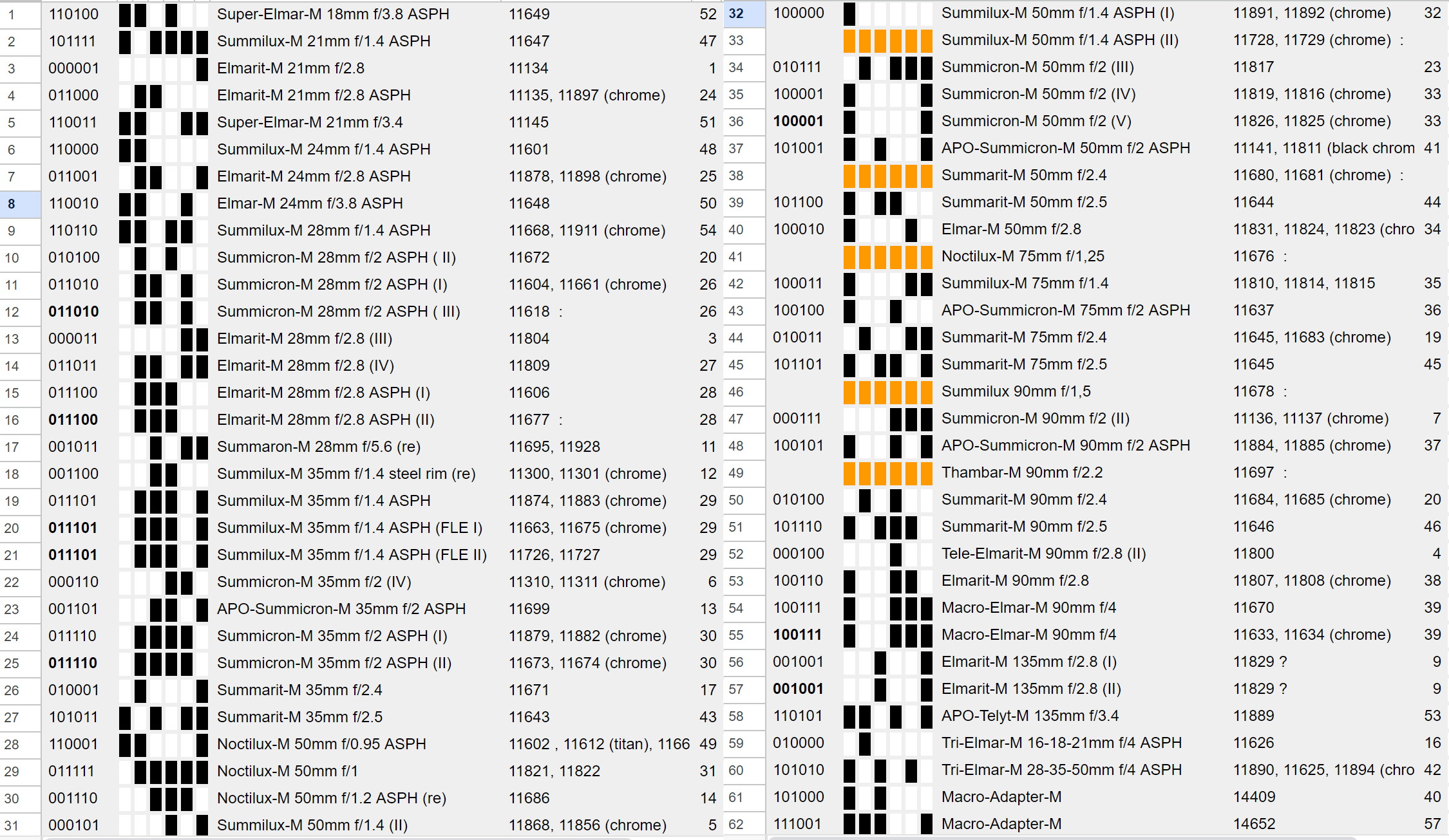
Thury, I've converted your list into a doc with visual list of codes here
May 10, 2024 at 12:35 PM
p.2 #18Leica 6-bit code template tool
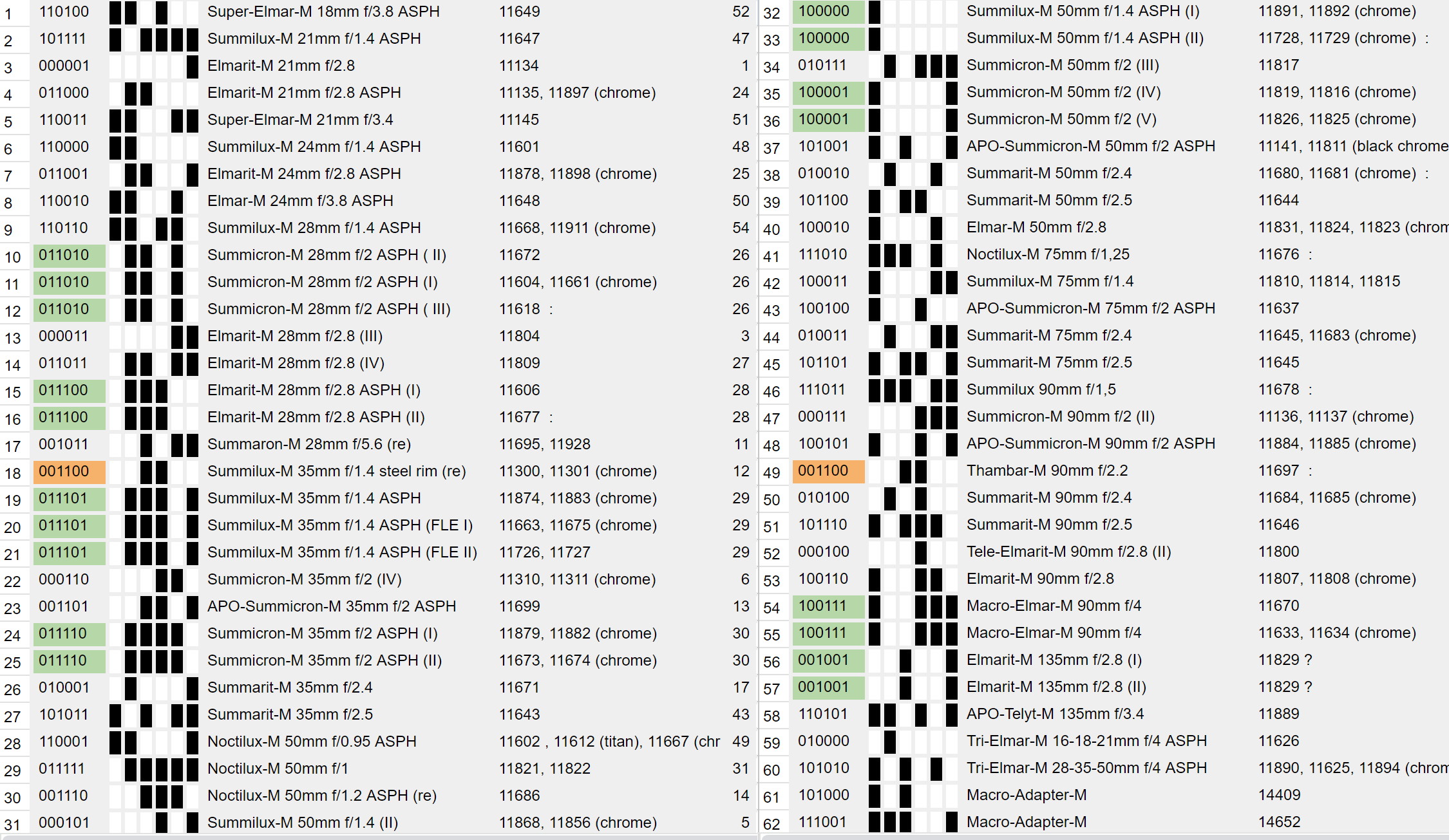
Updated list based on 6bit codes I found on eBay listings of corresponding lenses (marked in orange above).
New list now has 6bit number marked in green indicating duplicates with similar lens, and orange indicating duplicate with very different lens
UPDATE: Corrected typo in 10th row
Edited on May 23, 2024 at 04:52 PM · View previous versions
New list now has 6bit number marked in green indicating duplicates with similar lens, and orange indicating duplicate with very different lens
UPDATE: Corrected typo in 10th row
Edited on May 23, 2024 at 04:52 PM · View previous versions
May 10, 2024 at 01:23 PM
p.2 #19Leica 6-bit code template tool
yukosteel wrote:
I've converted your list into a doc with visual list of codes here
That's a great resource, Yuri! Thanks for making this available!
I've converted your list into a doc with visual list of codes here
That's a great resource, Yuri! Thanks for making this available!
May 10, 2024 at 09:43 PM
p.2 #20Leica 6-bit code template tool
yukosteel wrote:
Updated list based on 6bit codes I found on eBay listings of corresponding lenses (marked in orange above).
New list now has 6bit number marked in green indicating duplicates with similar lens, and orange indicating duplicate with very different lens
Your table is much nicer than my text list.
I have not yet found good pictures of the Thambar and Summarit 90mm/2.4 codes and have no clear idea how the same code applied to 2 wildly different lenses could work on a M240 or on TTArtisan's adapter. Possibly as the M cameras get the 6bit code info and the frame selection info, it could be possible to have the same 6bit code applied to different lenses if the frame selection is different but 28 and 90 bring the same frame lines set in the viewfinder so this would not work with the Summarit 90/2.4 - Summicron 28/2(II). It might open 3*64 possibilities. Maybe... Not sure that older M bodies would work with that. The Leica M to L and the TTArtisan adapters surely would not.
May 11, 2024 at 01:53 AM