LBJ2 wrote:
Yes. I think a lot of people feel certain. Plenty of forum comments in that direction. I just haven't found any Leica reference that describes specialized micro lenses on the SL2...yet. Last I've read/heard Leica describing specialized micro lenses was with the introduction of the M10-R ( by Stefan Daniel)
I am however happy adapting my Leica M lenses ( all made for digital I believe) on the SL2 whether that's due to thinner filter stack and/or specialized micro lenses, I don't know. I also have the same question for the SL3 which no doubt will be a popular Leica M lens adaptable camera too. ...Show more →
+1. Micro lenses make sense on sensor stacks within M-cameras which are only used with rangefinder lenses. Purpose of these lenses is to avoid light refraction especially towards the border of the frame. The micro lenses bundle the light path to avoid some blurriness and potential color fringing in corners. It is not clear to my knowledge how much contribution first the sensor stack thickness and as second micro lenses have to avoid refraction. I suspect a thinner sensor stack contributes significantly more avoiding the issue since light passing through a thicker layer of glass refracts more.
Makes sense to me that SL cameras have no micro lenses like those used in M cameras: the L-lenses are more based on DSLR-like lens designs which cause a different - less steep - refraction angle towards the border of the sensor. Micro lenses could actually be an issue here causing more issues than help. Question is if micro lenses supporting usage of rangefinder lenses are actually a culprit when using different lens designs like L-lenses and if yes to which extent.
retrofocus wrote:
+1. Micro lenses make sense on sensor stacks within M-cameras which are only used with rangefinder lenses. Purpose of these lenses is to avoid light refraction especially towards the border of the frame. The micro lenses bundle the light path to avoid some blurriness and potential color fringing in corners. It is not clear to my knowledge how much contribution first the sensor stack thickness and as second micro lenses have to avoid refraction. I suspect a thinner sensor stack contributes significantly more avoiding the issue since light passing through a thicker layer of glass refracts more.
Makes sense to me that SL cameras have no micro lenses like those used in M cameras: the L-lenses are more based on DSLR-like lens designs which cause a different - less steep - refraction angle towards the border of the sensor. Micro lenses could actually be an issue here causing more issues than help. Question is if micro lenses supporting usage of rangefinder lenses are actually a culprit when using different lens designs like L-lenses and if yes to which extent. ...Show more →
"Question is if micro lenses supporting usage of rangefinder lenses are actually a culprit when using different lens designs like L-lenses and if yes to which extent."
This is on my mind too but apparently counter to many forum comments since the original SL.
I think the benefits of asymmetrical micro lenses were greatly reduced when applied to BSI CMOS sensors. The thinner glass being enough to compensated for the angle of incidence at the edges of the image circle.
Are we sure that Leica is still using non symmetrical micro lenses on the non M cameras (or even the M cameras)?
Here is a very well done paper on optic design that covers many of the issues we are discussing. I think some of us will find it useful. Look under the "Camera" Tab for a good discussion on sensor design.
Recently picked up an SL3 after a long break in digital Leica use.
Like others, I’ve got a significant M lens collection and really wanted a tool to use them. So far I’ve really enjoyed my 50 lux asph, 35 cron asph, and 90 cron (for the first time since owning it I’ve been able to nail focus on the 90). I have a Zeiss 21/4.5 which works better than expected, but I haven’t really taken it out in the field yet. I suspect it’s not going to see much use. Likewise, my V4 50 cron is on the shelf w the 50 lux producing more of what I’m looking for. One shortcoming over newer M & SL glass is the longer (0.7M) minimum focusing distance.
Manual focus peeking is great and the IBIS w M glass is a really nice bonus too.
As for practical use, I’ve been shooting them at the 36.5 MP resolution because I feel these older lenses just don’t resolve to a level that would benefit from 60 MP. I did pick up an SL 50 APO and that lens is on another level. Absolutely stunning IQ although not the same “character” as the M glass… but this is subjective.
So for me, I’m really happy to have the option of M glass which produces a different look to my images as well as putting the camera into a smaller, lighter and more discrete configuration.
kentf wrote:
As for practical use, I’ve been shooting them at the 36.5 MP resolution because I feel these older lenses just don’t resolve to a level that would benefit from 60 MP.
Glad to hear that you are enjoying the SL3 so much. Congratulations on the new camera.
The concept that lenses may not being able to resolve the 60mp sensor is not held up by scientific examination. It is internet rumor and mis-information that keep getting repeated and propagated. Read the article below and you will see that your older lenses will in fact benefit from the higher (60mp) resolution sensor.
1bwana1 wrote:
Glad to hear that you are enjoying the SL3 so much. Congratulations on the new camera.
The concept that lenses may not being able to resolve the 60mp sensor is not held up by scientific examination. It is internet rumor and mis-information that keep getting repeated and propagated. Read the article below and you will see that your older lenses will in fact benefit from the higher (60mp) resolution sensor.
I don't think there is a lens yet that has stopped working due to a higher resolving/MP sensor 😉😉 *nod to the lensrentals article.
There are however relevant design specs/repeatable formulas that point to "optimal" design performance between a specific lens design and various sensor resolution/MPs
I like the way this LUF forum member @beewee, summarized the Peter Karbe lesson on the same, I think you commented some time back you've seen this video too.
"Peter Karbe did a tech talk a while back that went into details of the design targets for M and SL lenses.
TLDR:
-Modern M lenses (pre-APO) were targeting 50% contrast @ 40 lp/mm (pixel level sharp at 24 MP)
-TL and SL (non-APO) were targeting 50% contrast @ 60 lp/mm (pixel level sharp at around 60 MP)
-SL APO lenses are hitting 50% contrast @ 200 lp/mm (pixel level sharp at well above 100 MP)
I fully agree with the above analyses and perhaps am approaching the mid range MP setting more from an end use perspective. If I intended to extensively crop or print in a larger format, I’d certainly shoot these older lenses @ 60 MP.
I will say that subjectively my SL APO lens captures SIGNIFICANTLY more detail than the M ASPH glass which is likely a reflection of the TLDR Peter Karbe reference above. I’m admittedly more interested in my own subjective interpretation of IQ and overall look than the scientific analysis. In the end what I see in my product matters most to me.
Now, I’d be interested to hear the group opinion on the impact of selecting a lower MP setting on noise and higher ISO performance. I seem to recall reading somewhere that it does have an effect.
kentf wrote:
I fully agree with the above analyses and perhaps am approaching the mid range MP setting more from an end use perspective. If I intended to extensively crop or print in a larger format, I’d certainly shoot these older lenses @ 60 MP.
I will say that subjectively my SL APO lens captures SIGNIFICANTLY more detail than the M ASPH glass which is likely a reflection of the TLDR Peter Karbe reference above. I’m admittedly more interested in my own subjective interpretation of IQ and overall look than the scientific analysis. In the end what I see in my product matters most to me.
Now, I’d be interested to hear the group opinion on the impact of selecting a lower MP setting on noise and higher ISO performance. I seem to recall reading somewhere that it does have an effect. ...Show more →
I'm not sure anybody outside of Leica marketing has seen enough evidence to support more DR/better Low Light performance with the medium/small DNG files. I certainly don't see that on the same BSI sensor in the M11 Triple Resolution files using modern but not APO M lenses. The full 60 MP files on the M11 seems to be the best opportunity for maximum DR *with some caveats.
I suggest smaller files/less data/less magnification might appear to look slightly better in some circumstances e.g., less magnification of lens flaws, less perception of noise simply because we can't zoom into magnified details as much as larger files/more data allow aka we might see less details overall. YMMV
However, I don't yet have the SL3 so I am not able to test my SL APO primes between in-camera 60, 36 and 18 MP files and my SL camera is 47MP not 60MP BSI. I am curious to know other's results on this as well with the very high resolution capabilities of the SL APO primes.
The point that Roger was making is that even if a lens cannot resolve everything a higher mp sensor offers, it still performs better with the higher mp sensor than with a lower one. In fact the impact of diffraction in relation to sensor resolution at small apertures will be a bigger IQ limiter than the resolving power of the lenses. All lenses benefit from the higher MPs, some like the SL APOs will benefit more. This is summarized quite clearly in the Appendix section.
"Now, let’s say I get a much better camera with much higher resolution; the camera MTF is 0.9. The system MTF with the same lens also increases: 0.7 X 0.9 = 0.63. On the other hand, I could do the same thing if I bought a much better lens and kept it on the same camera. The camera basically never ‘out resolves the lens."
On to the DR question:
The guys from Leica Store Miami spent considerable time on the subject of DR/Noise between the different SL sensors, and the triple resolution modes in the SL3. Some of you may find this useful.
AS usual it is a very long video so Start watching at around Minute 48 if all you want is the sensor performance comparisons.
(Spoiler there is no advantage to using anything but the full DNG format)
Tried my M 18/3.8 on my SL3 and the corners are amazingly similar to the same lens on my M11. Same scene on both 5-10 minutes a part.To me this was going to be the most challenging test of the SL3 with the M lenses that I own. No worries on my end about using M lenses on my SL3.
1bwana1 wrote:
Glad to hear that you are enjoying the SL3 so much. Congratulations on the new camera.
The concept that lenses may not being able to resolve the 60mp sensor is not held up by scientific examination. It is internet rumor and mis-information that keep getting repeated and propagated. Read the article below and you will see that your older lenses will in fact benefit from the higher (60mp) resolution sensor.
Yeah, that's like saying I don't get as much pepperoni on my pizza when you cut the pepperoni into smaller pieces.
The lens dictates dictates the maximum resolving capability of the optical projection. The sensor just subdivides it.
I mean, if I put 24 pepperoni slices on a 12 inch pizza ... and then cut it into 6, 12 or 24 slices ... does that change how much pepperoni I have in my belly when I eat the whole (or 1/2, etc.) thing? Now, if I cut it into 100 million slices, and only eat one pixel, I mean slice ...
RustyBug wrote:
Yeah, that's like saying I don't get as much pepperoni on my pizza when you cut the pepperoni into smaller pieces.
The lens dictates dictates the maximum resolving capability of the optical projection. The sensor just subdivides it.
I mean, if I put 24 pepperoni slices on a 12 inch pizza ... and then cut it into 6, 12 or 24 slices ... does that change how much pepperoni I have in my belly when I eat the whole (or 1/2, etc.) thing? Now, if I cut it into 100 million slices, and only eat one pixel, I mean slice ...
Well smarter people than me who are optical lens specialist have come up with math that works very differently than your pizza.
Here is Roger's math on the subject. He has thought about it, and done the testing to check the math.
"Lots of people think that will be ‘whichever is less of the camera and lens.’ For example, my camera can resolve 61 megapixels, but my lens can only resolve 30 megapixels, so all I can see is 30 megapixels.
That’s not how it works. How it does work is very simple math: System MTF = Camera MTF x Lens MTF. MTF maxes at 1.0 because 1.0 is perfect. So let’s say my camera MTF is 0.7, and my lens MTF is 0.7, then my system MTF is 0.49 (Lens MTF x Camera MTF). This is actually a pretty reasonable system.
Now, let’s say I get a much better camera with much higher resolution; the camera MTF is 0.9. The system MTF with the same lens also increases: 0.7 X 0.9 = 0.63. On the other hand, I could do the same thing if I bought a much better lens and kept it on the same camera. The camera basically never ‘out resolves the lens.’
You could kind of get that ‘perceptual megapixel’ thing if either the lens (or the camera) really sucks. Let say we were using a crappy kit zoom lens with an MTF of 0.3. With the old camera; 0.3 X 0.7 =.21. Let’s spend a fortune on the newer, better camera, and we get 0.3 X 0.9 = 0.27. So our overall system MTF only went up a bit (0.07) because the lens really sucked. But if it had been just an average lens or a better lens (let say the MTF was 0.6 or 0.8), we’d have gotten a pretty similar improvement."
1bwana1 wrote:
Well smarter people than me who are optical lens specialist have come up with math that works very differently than your pizza.
Here is Roger's math on the subject. He has thought about it, and done the testing to check the math.
"Lots of people think that will be ‘whichever is less of the camera and lens.’ For example, my camera can resolve 61 megapixels, but my lens can only resolve 30 megapixels, so all I can see is 30 megapixels.
That’s not how it works. How it does work is very simple math: System MTF = Camera MTF x Lens MTF. MTF maxes at 1.0 because 1.0 is perfect. So let’s say my camera MTF is 0.7, and my lens MTF is 0.7, then my system MTF is 0.49 (Lens MTF x Camera MTF). This is actually a pretty reasonable system.
Now, let’s say I get a much better camera with much higher resolution; the camera MTF is 0.9. The system MTF with the same lens also increases: 0.7 X 0.9 = 0.63. On the other hand, I could do the same thing if I bought a much better lens and kept it on the same camera. The camera basically never ‘out resolves the lens.’
You could kind of get that ‘perceptual megapixel’ thing if either the lens (or the camera) really sucks. Let say we were using a crappy kit zoom lens with an MTF of 0.3. With the old camera; 0.3 X 0.7 =.21. Let’s spend a fortune on the newer, better camera, and we get 0.3 X 0.9 = 0.27. So our overall system MTF only went up a bit (0.07) because the lens really sucked. But if it had been just an average lens or a better lens (let say the MTF was 0.6 or 0.8), we’d have gotten a pretty similar improvement."
Steve, you missed my point ... 100% of the pizza is still there (i.e. the 1.0 = perfect). The degradation begins from there. I'm very much +1 with Roger and the math. John Colwell has posted the (more complex) formula here at varying times, too.
If I've got a crappy lens with 0.3, then the max I can get is 0.3. If I've got a pizza with three slices of pepperoni, the max I can get is three slices, no matter how small I slice it. The max I can get from a 0.3 lens is 0.3 (theoretically).
OTOH, if I upgrade my 0.3 lens to 0.6, the max I can get is 0.6. How much pepperoni I lay down on the dough dictates the max I can get. How much I project onto the sensor dictates the max I can get ... even if different sensors are differently divided, the max I can ever get is 1.0X of the optical projection (theoretically). Granted, moving from a 0.7 to 0.8 or 0.9 sensor does "reduce less (from the 1.0 theoretical), thus gives more" ... but, it can never surpass the maximum possible from the optical projection. It just reduces, less ... while making finer transitions.
So, yeah, a finer resolving sensor cuts the image up into smaller pieces ... up to the limits of the lens. I think we're saying the same thing, just from different perspective. Some folks are saying it makes it better ... I'm saying it makes it less worse, but the combination of the system can never exceed the limits of the optical projection.
RustyBug wrote:
Steve, you missed my point ... 100% of the pizza is still there (i.e. the 1.0 = perfect). The degradation begins from there. I'm very much +1 with Roger and the math.
If I've got a crappy lens with 0.3, then the max I can get is 0.3. If I've got a pizza with three slices of pepperoni, the max I can get is three slices, no matter how small I slice it. The max I can get from a 0.3 lens is 0.3 (theoretically).
OTOH, if I upgrade my 0.3 lens to 0.6, the max I can get is 0.6. How much pepperoni I lay down on the dough dictates the max I can get. How much I project onto the sensor dictates the max I can get ... even if different sensors are differently divided, the max I can ever get is 1.0X of the optical projection (theoretically). Granted, moving from a 0.7 to 0.8 or 0.9 sensor does "reduce less (from the 1.0 theoretical), thus gives more" ... but, it can never surpass the maximum possible from the optical projection. It just reduces, less. ...Show more →
I see what you are saying with your pizza math now. I AGree you can never excede 1.0. My point was that if you put any lens on a better sensor you do improve the system performance. So the result is not limited to the lower performing component. Increase either and you do get better system performance.
1bwana1 wrote:
Increase either and you do get better system performance.
This ^
Which also means you can get more pepperoni to put on the dough. Getting more light (pepperoni) to put (transmission) on the film plane (dough) will increase your mtf, too. The more acutely (trigonometric, vector forces) concentrated the light, the higher the mtf can be achieved.
LBJ2 wrote:
Is there any official Leica documentation or interview comments describing specialized micro lenses on the SL2 sensor to support M lenses? I see this mentioned many times on the threads, but I don't think I've seen an official description.
Also I think I read somewhere the BSI sensors in the SL2-S and maybe in the SL3 as well, might not require specialized micro lenses for wider M lens performance. But maybe this is just some forum speculation as I can't remember where I read this one.
This is an article on the original SL sensor, but I understand that the same type of microns array is used today. I can tell you that the S1r used a different array than the SL2, wth the M lenses performing significantly better on the SL2.
Planetwide wrote:
This is an article on the original SL sensor, but I understand that the same type of microns array is used today. I can tell you that the S1r used a different array than the SL2, wth the M lenses performing significantly better on the SL2.
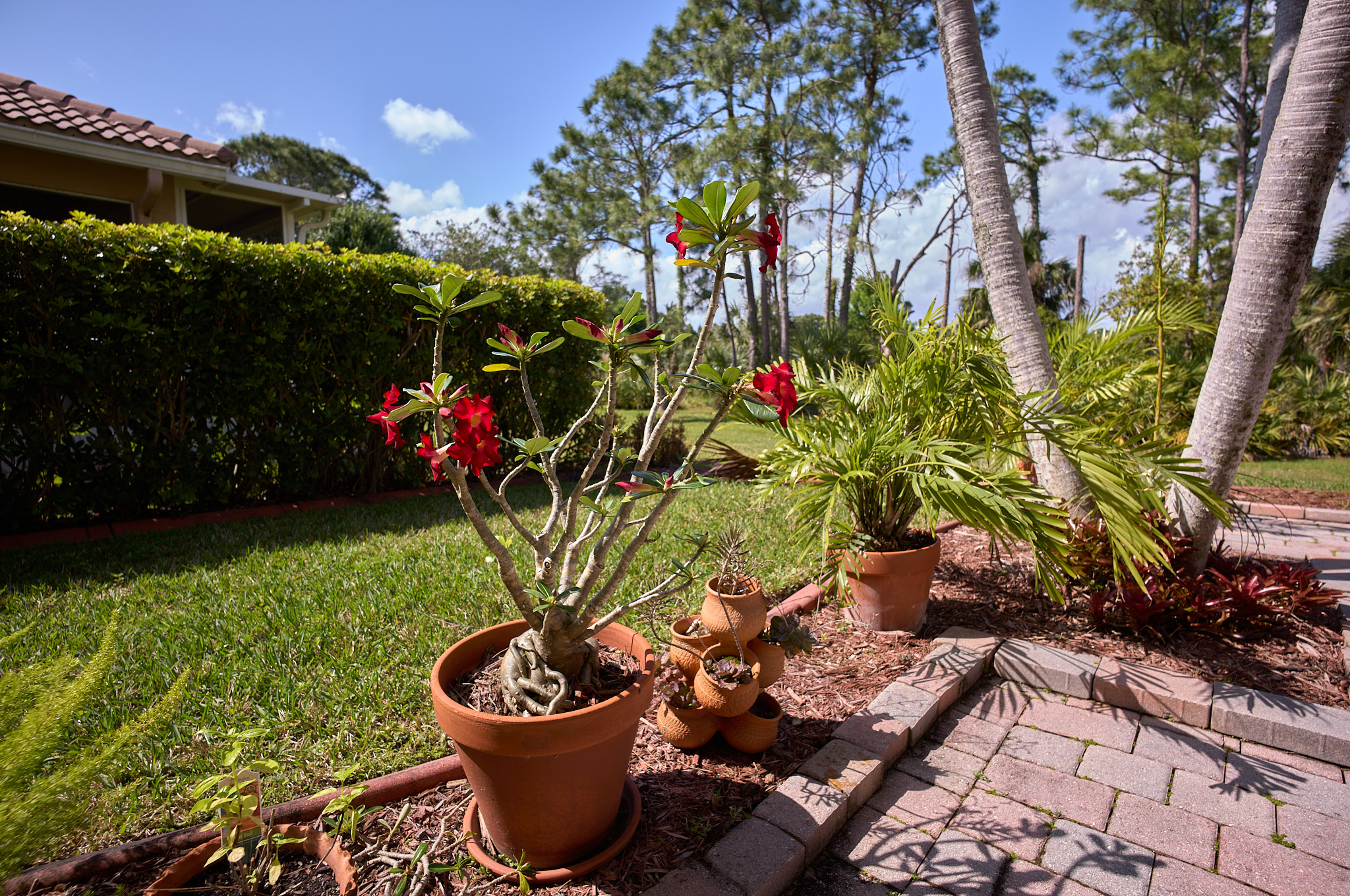
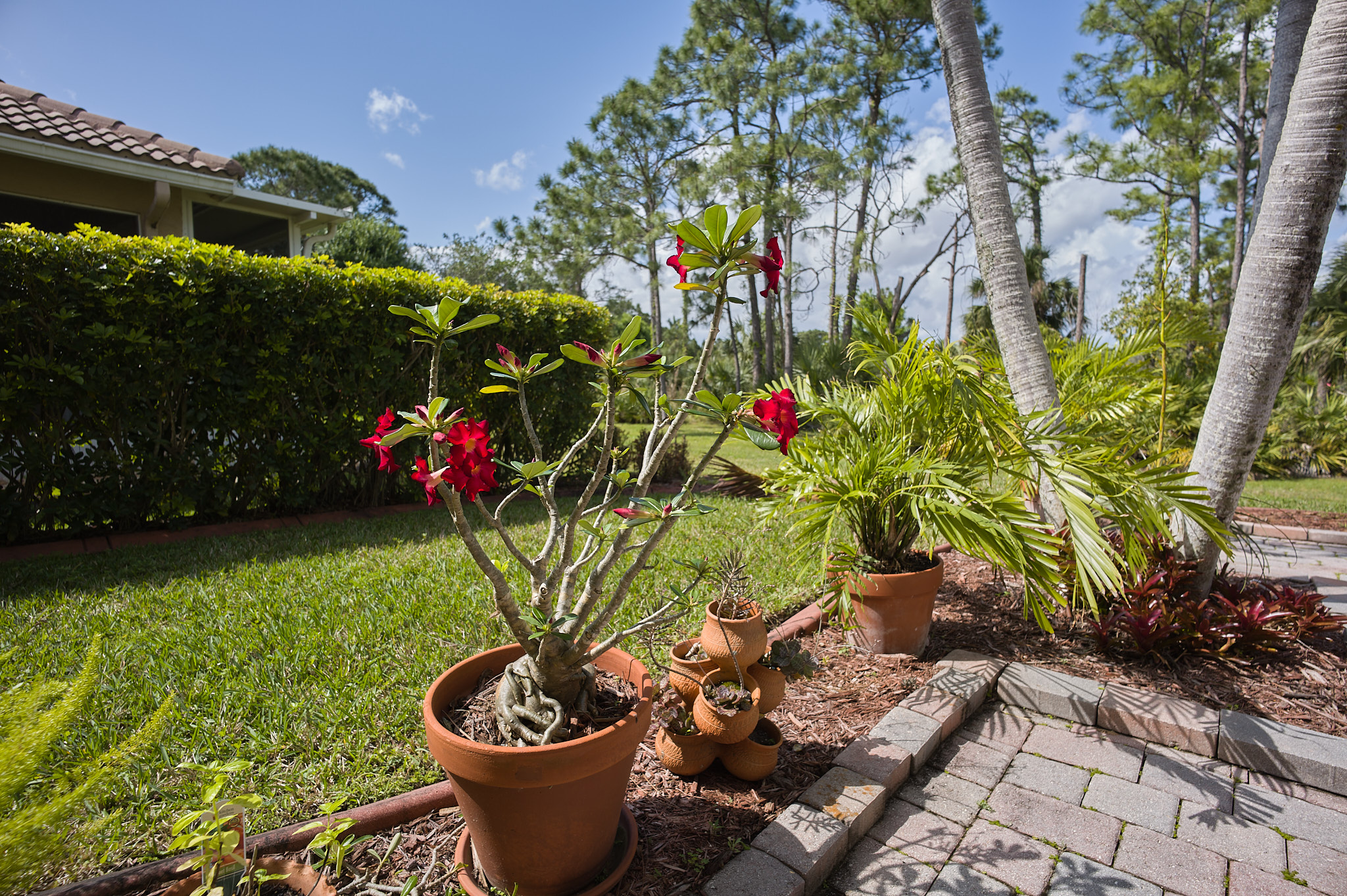
Top Scene 18/3.8 on M11. No processing except to take H/L in C1 to -100 to bring out blue sky. Same with SL3 image. which is the second bottom image.
Comments on what you see AFA sharpness is concerned? BTW at time of processing C1 did not yet have a ProStandard Profile for the SL3 so used generic SL profile.


 ... goes good with Pepperoni.