gdanmitchell
Offline
• • • • • • •
Upload & Sell: Off
|
 p.2 #9 · Will you be buying the upcoming Fujifilm X100VI? p.2 #9 · Will you be buying the upcoming Fujifilm X100VI? | |
Fred Miranda wrote:
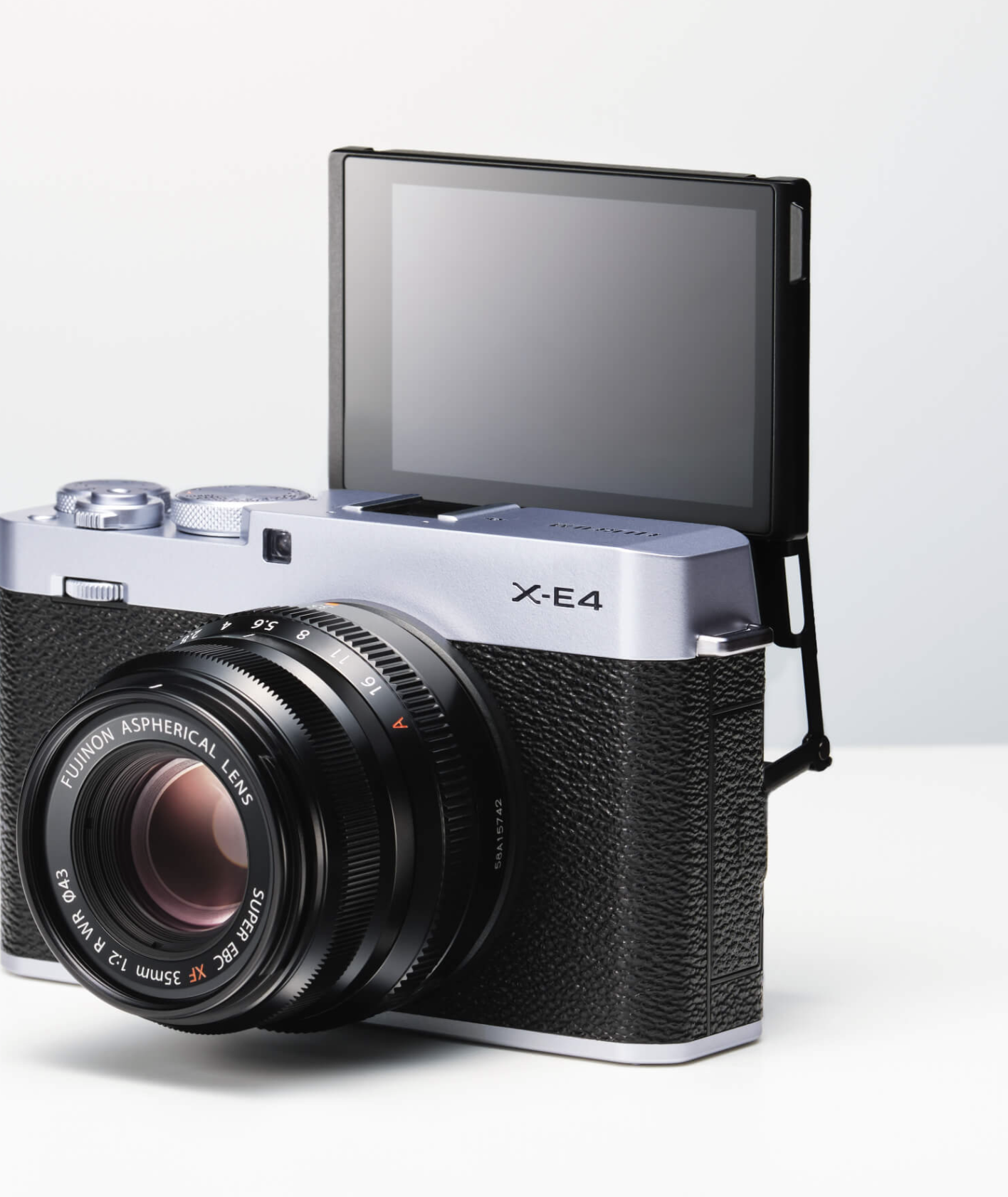
Is the build quality of the X100 series better than that of the X-E series? I view them as similar in terms of build and appearance, but I haven't used an X100 myself. Some people criticize the X-E4 for its lack of dials and features, but I personally appreciate its design simplicity and don't feel the need for extra buttons. However, I do appreciate of the optical viewfinder on the X100/X-Pro, even though it doesn't operate like a traditional rangefinder.
We had a couple of the original XE1 bodies and mostly used them for travel. My wife has the XE4 for travel (along with a Canon R system for other stuff) and I’ve had a chance to use it a bit.
The XE is, in its own way, as “sexy” as the X100 models. It is a very tight design, and it works well for things like travel and street photography. One perceived downside is that Fujifilm chose to position it lower in the model line-up, selling it at a lower price and somewhat decreasing the number of dedicated manual controls.
Logically, for a lot of people who think they want a second body that is smaller and lighter… there’s at least as good of an argument for an XE. It is (slightly) smaller and lighter (with the 27mm f/2.8 attached), its image quality is the same as other Fujifilm cameras of its generation, and it has the flexibility to use any Fujifilm lenses you own.
But there is that sexiness deficiency… ;-)
- - -
On another topic, the idea that Chinese made stuff is inferior to Japanese made stuff requires a bit more nuance. China does produce a lot of cheap (and in some cases, knock off) products. If you shop Amazon for, well almost anything, you are probably aware of this. But China also produces some pretty solid products… like iPhones, etc.
- - -
Fred Miranda wrote:
Indeed, Although the EVF is excellent for most situations, in certain low-light conditions, I find the OVF preferable due to its clarity. This preference also depends on the resolution and refresh rate of the EVF. In the case of the X-E4, while it's decent (2.4MP), it doesn't match the quality of the latest high-resolution EVFs found in other cameras.
That first point (“most situations”) is one of the lines of progress in EVF quality. The first EVF camera I used was the Canon Pro One (anyone else remember that?), and its EVF was abominable. The next one I had was the XE1 and it was not great. It as fine for my purpose — a small, light camera for travel — but its latency issues occasionally caused problems. The XPro2 was better, but one reason I wanted its hybrid viewfinder initially was that EVF latency was still pretty noticeable. The XT5 EVF is so good that I really don’t even think about it at this point. (And, yes, I understand that other brands and cameras are even better. )
I feel differently about the effect of EVF/OVF in low light. In fact, it was with the XPro2 (even with its greater latency) that I “discovered” how much better I can see in very dark situations with an EVF. For night urban street photography, I ended up always using the EVF with that camera. (I had a fair amount of experience doing tripod-based night photography when I started shooting urban subjects with handheld cameras a night. I recall that sometimes it was nearly impossible to focus with a DSLR in very dark situations. I used to carry small lights that I could place near by subject for focusing. Others I knew carries laser points so that the could focus on the laser dot — other wise there simply wasn’t enough of an image to focus in the OVF.)
All of this aside, we certainly do have a whole lot of high quality options these days!
Dan
|