Steve Spencer wrote:
That said thinking about costs it should be noted that total cost of ownership of Leica M lenses is tricky. If you buy Leica lenses used and are patient and don't over pay, you often can use them for years and sell them for very close to what you paid for them. Buying Voigtlander lenses new and selling them used in contrast will cost you a couple hundred dollars. I just recently sold my 28 Ultron Asph II that I bought for $800 new and the cost of a couple of years ownership was almost $250. That isn't bad, but I am not at all sure it would have been higher if I would have bought a Leica 28 Summicron Asph and resold it. Certainly buying Leica lenses new is going to cost you a lot, but buying them used I am less sure is such a bad deal. ...Show more →
I agree to an extent, that if you buy a well priced Leica lens, you will likely lose little on resale. That could be as short as a month or two if you find you don't like the lens, or after many years. Leica pretty consistently raises retail prices, so over years, the replacement cost of the lens will increase a fair amount, which theoretically will also lift used prices. An unknown variable is how much a lens like the VM 28/1.5 will affect 28 Lux resale pricing. Prior to this, there wasn't a 'real' alternative to the Lux for the M system that will appeal to a broad range of M users (unlike the 7A release a few years ago). One could imagine that being considerably cheaper, it will significantly reduce demand for used Lux copies because potential buyers can save a huge amount of money buying a new VM instead. But we're dealing with Leica and the aura of the brand will have relevance. Some will simply only consider the Lux and some subset of those, who are more cost sensitive, will have to opt for used copies.
Another consideration is while cost of ownership may be quite low on an annual basis, one still has to tie up >$5k for that duration. For some this is irrelevant. As the other Steve has mentioned before about buying Leica, it could be considered a form of asset reallocation. But it's worth asking what else could one do with the money saved buying the VM instead. I.e. invest the savings in something that will pay a return instead of depreciating.
rscheffler wrote:
I agree to an extent, that if you buy a well priced Leica lens, you will likely lose little on resale. That could be as short as a month or two if you find you don't like the lens, or after many years. Leica pretty consistently raises retail prices, so over years, the replacement cost of the lens will increase a fair amount, which theoretically will also lift used prices. An unknown variable is how much a lens like the VM 28/1.5 will affect 28 Lux resale pricing. Prior to this, there wasn't a 'real' alternative to the Lux for the M system that will appeal to a broad range of M users (unlike the 7A release a few years ago). One could imagine that being considerably cheaper, it will significantly reduce demand for used Lux copies because potential buyers can save a huge amount of money buying a new VM instead. But we're dealing with Leica and the aura of the brand will have relevance. Some will simply only consider the Lux and some subset of those, who are more cost sensitive, will have to opt for used copies.
Another consideration is while cost of ownership may be quite low on an annual basis, one still has to tie up >$5k for that duration. For some this is irrelevant. As the other Steve has mentioned before about buying Leica, it could be considered a form of asset reallocation. But it's worth asking what else could one do with the money saved buying the VM instead. I.e. invest the savings in something that will pay a return instead of depreciating....Show more →
I believe the sales of the Leica 28/1.4 Lux have declined due to the growing popularity of the Q series. Although I personally prefer using the 28/1.4 Lux on an M camera, many photographers choose an EVF for fast 28mm lenses that obstruct the viewfinder during rangefinder focusing. This is one advantage of the more compact CV 28/1.5 Nokton.
rscheffler wrote:
In respect to rendering, it is surprising how similar they are. But there are some instances where the Lux has less bokeh ball outlining, though not dramatically less. As Steve suggested, the somewhat lower flare resistance of the VM is a bit more concerning but unless you already have the Lux, IMO it would be very difficult to justify it over the VM just for this reason
I agree with this assessment when looking at many comparisons. For those who prefer a more classic rendering, the Voigtländer is slightly more in that camp compared to the Leica. This is mainly due to a very slight higher outlining compared to the Leica. Generally speaking, and for most comparisons, I would say their rendering is very similar.
rscheffler wrote:
I agree to an extent, that if you buy a well priced Leica lens, you will likely lose little on resale. That could be as short as a month or two if you find you don't like the lens, or after many years. Leica pretty consistently raises retail prices, so over years, the replacement cost of the lens will increase a fair amount, which theoretically will also lift used prices. An unknown variable is how much a lens like the VM 28/1.5 will affect 28 Lux resale pricing. Prior to this, there wasn't a 'real' alternative to the Lux for the M system that will appeal to a broad range of M users (unlike the 7A release a few years ago). One could imagine that being considerably cheaper, it will significantly reduce demand for used Lux copies because potential buyers can save a huge amount of money buying a new VM instead. But we're dealing with Leica and the aura of the brand will have relevance. Some will simply only consider the Lux and some subset of those, who are more cost sensitive, will have to opt for used copies.
Another consideration is while cost of ownership may be quite low on an annual basis, one still has to tie up >$5k for that duration. For some this is irrelevant. As the other Steve has mentioned before about buying Leica, it could be considered a form of asset reallocation. But it's worth asking what else could one do with the money saved buying the VM instead. I.e. invest the savings in something that will pay a return instead of depreciating....Show more →
Part of asset allocation is the time/money/opportunity calculation.
In the case of us more senior photgraphers:
Time is calculated in number of days left to enjoy things.
Money is calculated as a ratio of the time.
So, if number of days < money in bank then make the frivolous allocation. Enjoyment is the most valuable asset you have at that point.
At a certain age, opportunity has shrunk to near zero so can be ignored in the calculation. It is only relevant to the estate. Who cares about what price a piece of camera gear will bring at the inevitable garage sale run by people who know nothing about cameras.
Maybe I will be buried with my Leica. Maybe the reason that we know so little about the afterlife is that no one ever took a camera with them. The Instagram will for sure go viral big.
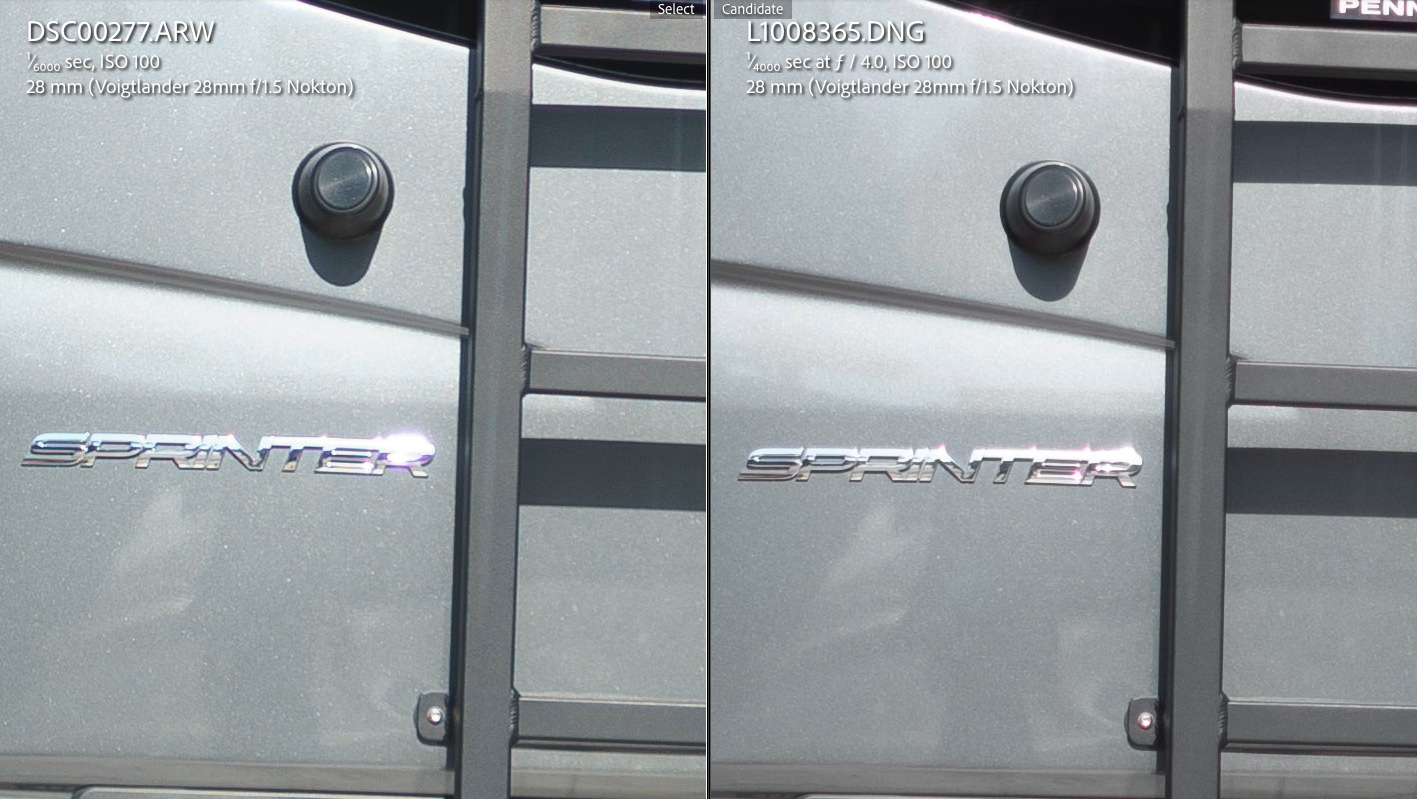
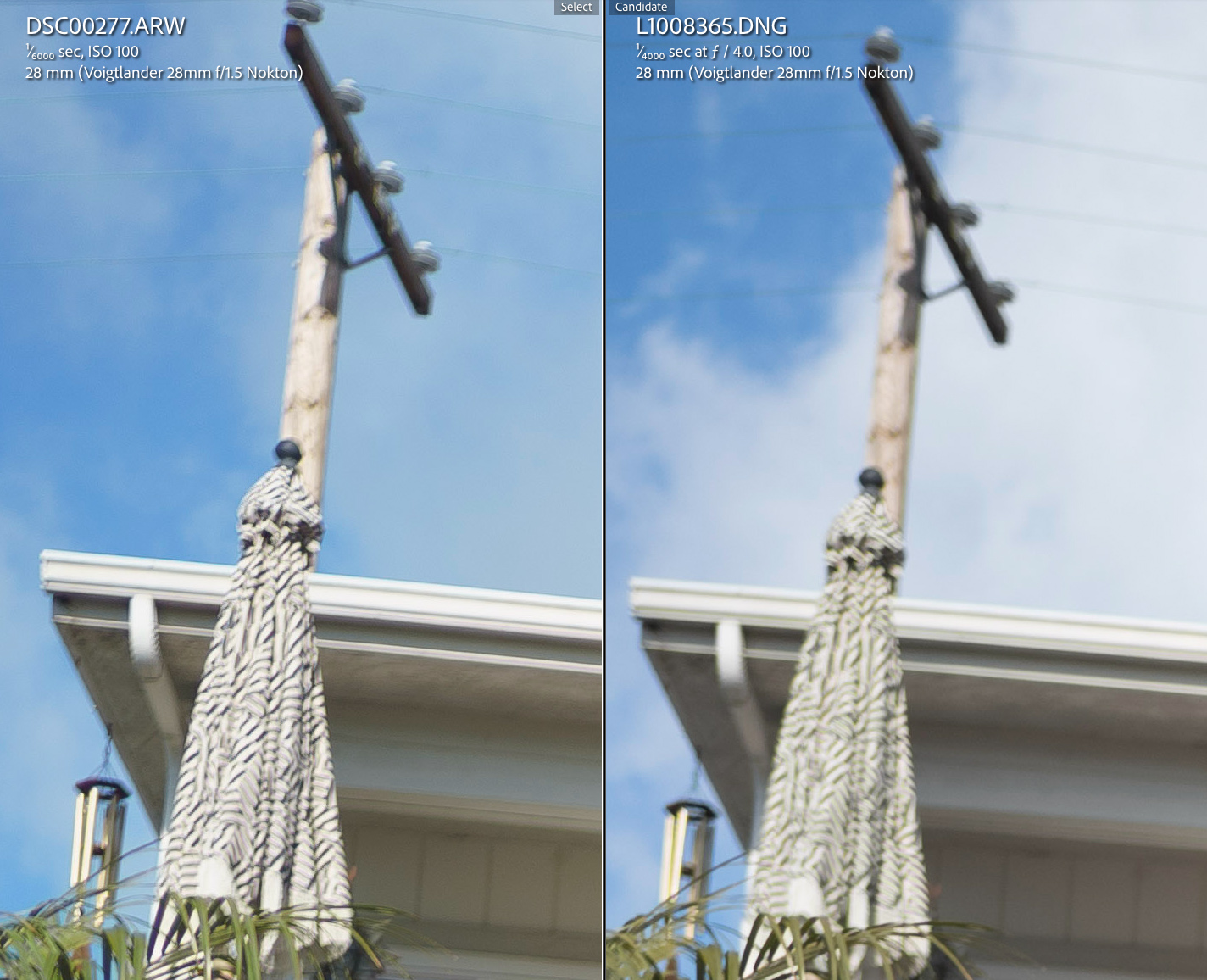
As shown in the infinity resolution and contrast crops presented in this review, adapting the Voigtlander 28mm f/1.5 Nokton on a mirrorless camera with a thicker sensor stack can affect its performance. Now, let's explore how it affects rendering.
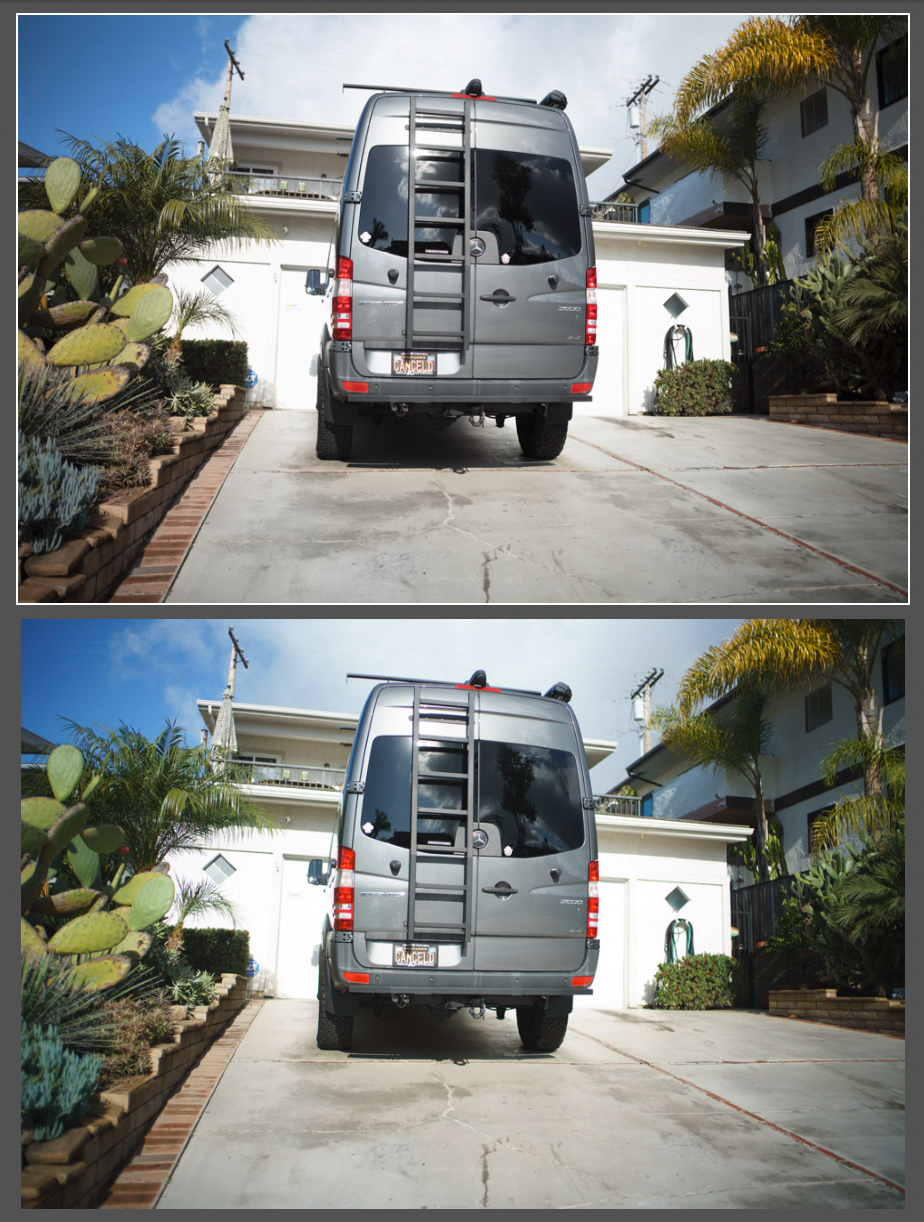
When focusing on a subject at a mid-distance, the out-of-focus background rendering may become uneven due to thicker sensor's induced field curvature, meaning the corners of the image that should be out of focus become more in focus. In simpler terms, when comparing the CV 28/1.5 Nokton wide open on the Leica M10-R and adapted to the Sony A7R II, the focus area appears similar, but the corners of the Sony image look sharper than they should be.
Here is a comparison:
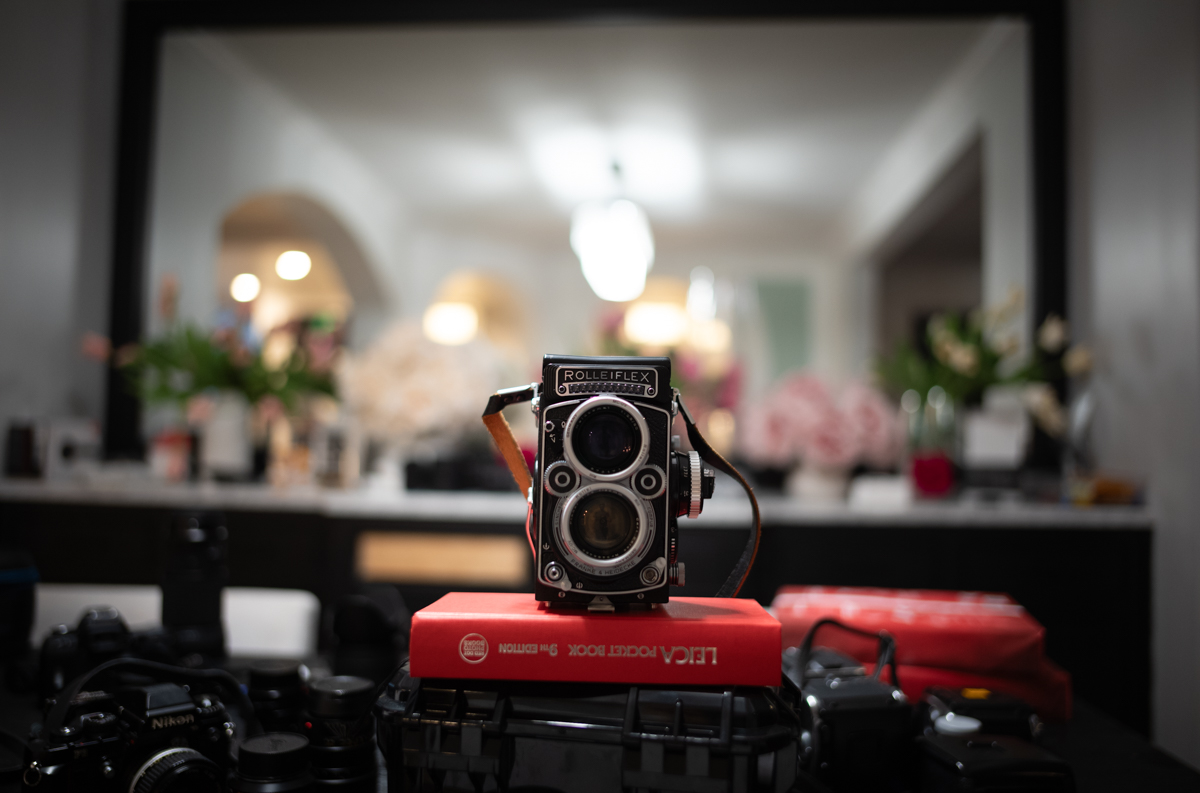
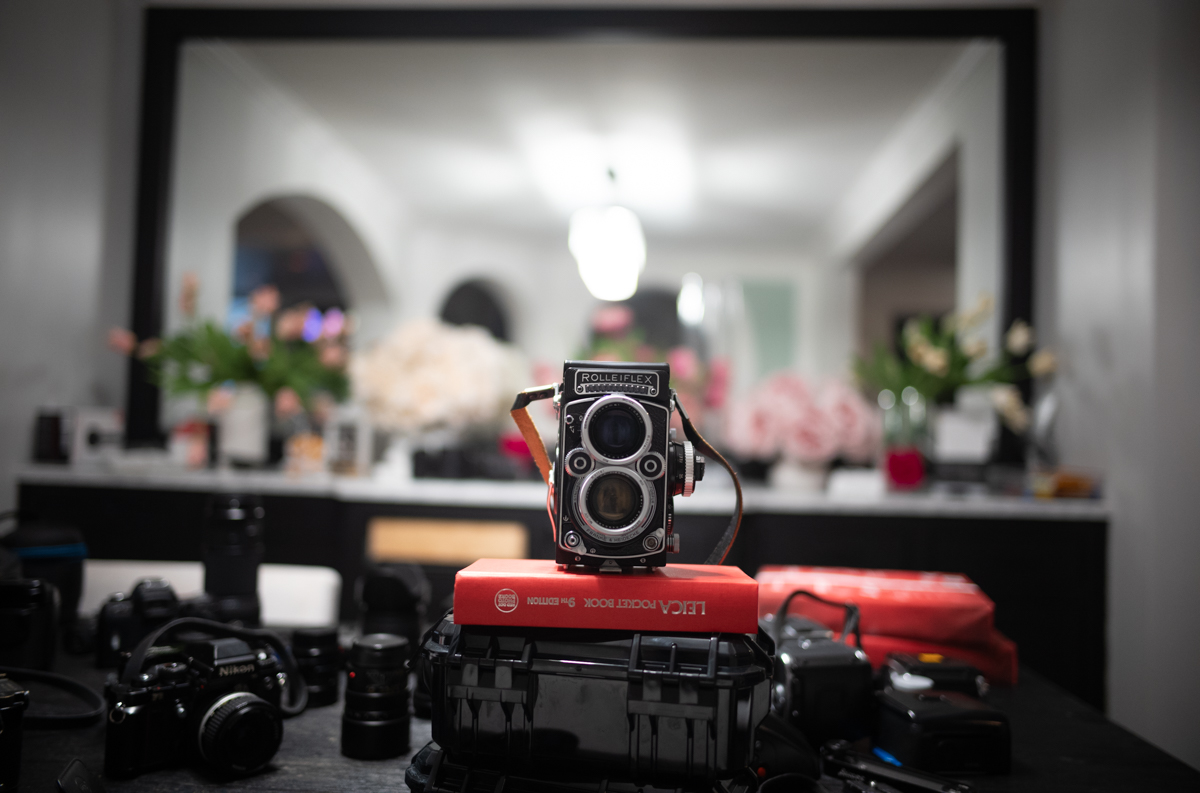
TOP (Leica) | BOTTOM (SONY)
100% magnification (pixel level) displaying the focused area. (Sony at Left)
The corners of the Sony crop image, which should show a similar out-of-focus effect as the Leica crop, appear sharper than intended due to the thicker sensor inducing field curvature.
Interesting fact: at his death, Garry Winogrand left 2,500 rolls of undeveloped film and 300,000 unedited images.
Thank you so much for the infinity Sony images, Fred. I agree with your in-use conclusions, and users get a much broader spectrum lens thanks to the fast aperture, gentle roll-off, colour and bokeh. The adapter weight sees a total of just 285 grams on the Sony bodies (T1) making it the best option by some distance, and at a reasonable price to boot.
Fred Miranda wrote: Rendering on Sony A7R II (42MP)
As shown in the infinity resolution and contrast crops presented in this review, adapting the Voigtlander 28mm f/1.5 Nokton on a mirrorless camera with a thicker sensor stack can affect its performance. Now, let's explore how it affects rendering.
When focusing on a subject at a mid-distance, the out-of-focus background rendering may become uneven due to thicker sensor's induced field curvature, meaning the corners of the image that should be out of focus become more in focus. In simpler terms, when comparing the CV 28/1.5 Nokton wide open on the Leica M10-R and adapted to the Sony A7R II, the focus area appears similar, but the corners of the Sony image look sharper than they should be.
This is a great point of reference when assessing the photos Juha posted in his Google Photos links (in the other thread - maybe those links could be included on the first post of this review?), shot on the a7CII... The big question in my mind was how much did the Sony sensor affect OOF rendering?
Desmolicious wrote:
Any of those very slight differences that some people are seeing in saturation and contrast? That can be ‘fixed’ in post in about 2 seconds.
This is imho where people misinterpreted the result, the lux shows more saturations and contrast only at certain places, more often than not, smaller areas. To put it simply, it's like moving the clarity slider without affecting colors, some people call it microcontrast (I know, people hated that word) but I simply call it "rendering".
Moving the contrast and saturation slider obviously won't achieve this, and for my eyes that little bit of differences usually amplify when I start to edit the images.
All pots and pans look virtually the same until you start to cook with them. I mean, you don't need to agree with me...
Fred Miranda wrote:
<div id="sony2" name="sony2"></div>
<a href=https://www.fredmiranda.com/forum/topic/1842505/0#ql>Back to Quick Links</a>
Rendering on Sony A7R II (42MP)
As shown in the infinity resolution and contrast crops presented in this review, adapting the Voigtlander 28mm f/1.5 Nokton on a mirrorless camera with a thicker sensor stack can affect its performance. Now, let's explore how it affects rendering.
When focusing on a subject at a mid-distance, the out-of-focus background rendering may become uneven due to thicker sensor's induced field curvature, meaning the corners of the image that should be out of focus become more in focus. In simpler terms, when comparing the CV 28/1.5 Nokton wide open on the Leica M10-R and adapted to the Sony A7R II, the focus area appears similar, but the corners of the Sony image look sharper than they should be.
Tonal (colour not brightness) separation and its appearance in images cannot be fixed. Fixes are global and can work crudely on the data, but not the fine separation between colour data, shades of green for example. More saturation means more emphatic colour posterisation - a more obvious loss of continuous tone, like in astroturf or paint.
Zeiss and CV are masters of this colour tone phenomenon, opinions vary of course. It's of great importance to depth perception, and should not be attenuated. Describing his affection for Zeiss lenses, Mike Johnston referred to this as 'microcolour' - the gradation inside colour regions. Colour vision is learned, but it can also be unlearned, as a form of conditioning. Grayscale cars made up 79% of all car sales in 2023. Drab world, drab cars, roofs, etc.
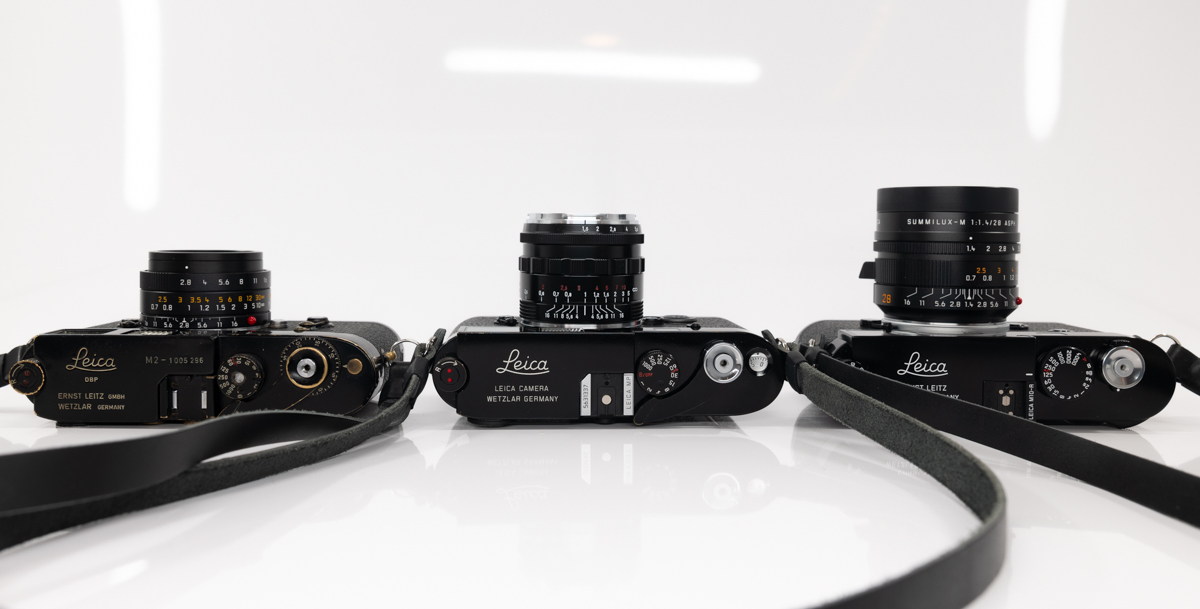
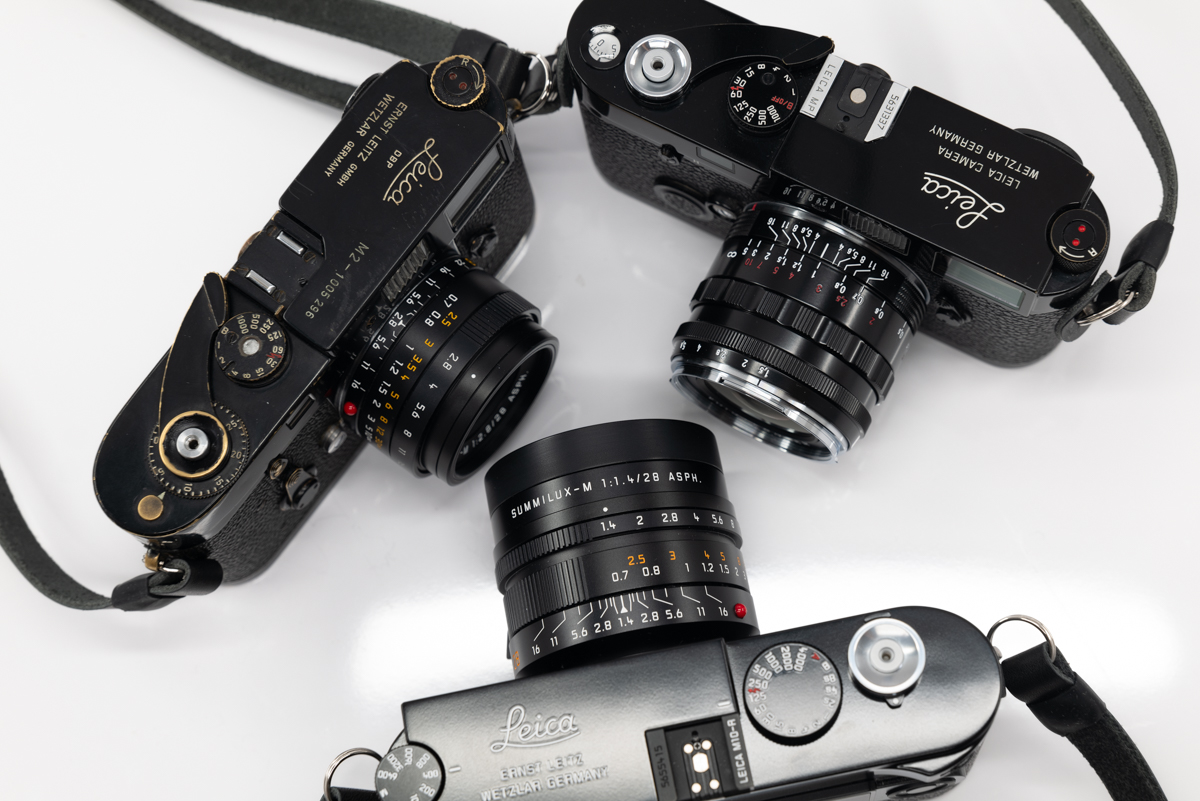
My copy arrived. Will take a few pics tomorrow. For now, a size comparison. It's more balanced than the 28 lux. Hangs forward slightly on a strap. Balances without tipping over when resting on counter, but it's right on the edge of wanting to tip over. Viewfinder blockage is less than the lux.
Terrific!
Share your images here. I will link it to the review.
I see you ended up getting a M10-R BP!
lifeandmylens wrote:
My copy arrived. Will take a few pics tomorrow. For now, a size comparison. It's more balanced than the 28 lux. Hangs forward slightly on a strap. Balances without tipping over when resting on counter, but it's right on the edge of wanting to tip over. Viewfinder blockage is less than the lux.
1) Focusing action is smoother/lighter than the lux. Not as light as the Elmarit.
2) While MFD is .5M, it's actually coupled to the RF on my M10-R and MP @ ~.61M, where my lux is .7M. Here is an example of the rangefinder coupled minimum focus distance on both lenses.
Fred Miranda wrote:
The Voigtlander 28/1.5 Type II in black paint looks awesome on those camera bodies. I also own the MP, and even my M2 is in black paint.
The black paint bodies are beautiful aren’t they. I agree - I think the CV 28 looks fantastic on them!
jeffersoncasey wrote:
This is imho where people misinterpreted the result, the lux shows more saturations and contrast only at certain places, more often than not, smaller areas. To put it simply, it's like moving the clarity slider without affecting colors, some people call it microcontrast (I know, people hated that word) but I simply call it "rendering".
Moving the contrast and saturation slider obviously won't achieve this, and for my eyes that little bit of differences usually amplify when I start to edit the images.
All pots and pans look virtually the same until you start to cook with them. I mean, you don't need to agree with me......Show more →
I understand what you're saying. Folks WAY BACK when, would give me grief about my strong preference for shooting on my Kodak SLR/C ... with NO AA filter. The way I described it was similar to what you're saying about your STARTING place. The closer you are to where you want to be, the LESS you have to "push things", and the fidelity is retained, better. Deming 101 kinda of stuff. For some folks, they notice ... others, not so much.
This can apply to a variety of things ... like how folks can use PP to blur things, but it just isn't the same as a natural optical falloff, since the natural rate of transition is hard to mimic. So, whether it is acuity, saturation, falloff, etc. ... the closer it is where you want it, the better. BUT, good PP can go a long way to make up "small" diff's ... I just wouldn't expect giant leaps to bridge renderings on a regular basis.
As to some of the diffs at near distance, I'm guessing the FLE plays a part in that, too.