This topic is in the 2023 archive. You can read it and like its posts here. It is read only.
Archive 2023*Edited* Denoise software is amazing. Image.
p.3 #1*Edited* Denoise software is amazing. Image.
End of December I evaluated/ compared all 3 noise AI solutions with their trial version. DxO PL6 DeepPRIME XD worked quite well ( I own PL4 and liked DeepPrime ). No Noise AI 2023 gave me similar results. Topaz Denoise was more difficult to use (more parameters to configure for each photo, when No Noise and DeepPrime work well in automatic). And the results with Topaz weren't as nice as with the 2 others with my test pictures.
Decided to buy NoNoise 2023 because it was cheaper and DxO didn't support the A7RV raws at that time. I use it as a plug-in in LR and it really helps for high ISO pictures.
Decided to buy NoNoise 2023 because it was cheaper and DxO didn't support the A7RV raws at that time. I use it as a plug-in in LR and it really helps for high ISO pictures.
Jan 31, 2023 at 03:59 PM
p.3 #2*Edited* Denoise software is amazing. Image.
Donzo98 wrote:
In the following example, the central image was produced by feeding to Topaz a fully corrected (except no denoising) image from DxO Photolab as TIFF, then denoising in Topaz using the default Low Light.
The image on the right for comparison is from DxO PL6, and the image on the left is from Topaz RAW model.Can you post the original??
Let's see if this should work (there are three raw files: ISO 100, 6400, and 12800).
Copy this link and paste it into the address bar
https://1drv.ms/u/s!Am5chmswMfBkgYo7Y9ZRymFlmeXybw?e=f15VjW
ruthenium wrote
It is worth mentioning that the best quality denoising in Topaz is achieved from raw, using the RAW model.In the following example, the central image was produced by feeding to Topaz a fully corrected (except no denoising) image from DxO Photolab as TIFF, then denoising in Topaz using the default Low Light.
The image on the right for comparison is from DxO PL6, and the image on the left is from Topaz RAW model.
Let's see if this should work (there are three raw files: ISO 100, 6400, and 12800).
Copy this link and paste it into the address bar
https://1drv.ms/u/s!Am5chmswMfBkgYo7Y9ZRymFlmeXybw?e=f15VjW
Jan 31, 2023 at 05:08 PM
p.3 #3*Edited* Denoise software is amazing. Image.
I would think a full-frame camera should be capable of much higher ISOs than what I've been seeing from m4/3 - with decent results up to ISO 51,200 using DxO.
https://www.fredmiranda.com/forum/topic/1748839/11#16138294
https://www.fredmiranda.com/forum/topic/1748839/11#16138294
Jan 31, 2023 at 10:58 PM
p.3 #4*Edited* Denoise software is amazing. Image.
DxO PR 2 works well for me.
I am comfortable with ISO up to 12,800.
I import raw files into C1 23 Sessions.
Then have DxO PR 2 do demosaicing, denoising, and sharpening.
File comes back as .DNG.
Then finish editing in C1 23, often reduce sharpening amount.
I recently got also DxO PL6, now have to learn using it.
Never tried Topaz myself.
K-H.
Feb 01, 2023 at 09:21 AM
p.3 #5*Edited* Denoise software is amazing. Image.
molson wrote:
I would think a full-frame camera should be capable of much higher ISOs than what I've been seeing from m4/3 - with decent results up to ISO 51,200 using DxO.
https://www.fredmiranda.com/forum/topic/1748839/11#16138294
This is not only the question of camera capabilities. Whether a high-ISO image is "useable" (or not) depends on the intended viewing media and its size.
Insufficient light (causing high ISO) results in a loss of image information. Thus, a high-ISO image is missing some details.
The practical question is whether the viewer would spot this or would not notice the missing bits?
If the composition is good and the raw file is carefully processed and denoised, I expect a very high-ISO image (the highest native ISO is 32,000 for A1 and A7RV) may look real good on a large cellphone, or if printed small.
It would not look good on a large monitor, or if printed large, unless the viewer is looking from a distance when it should be difficult to see the minute details.
Those examining their work closely (pixel-peeping) most likely do not like high ISOs.
But this does not mean that one cannot produce a reasonably good print of a high-ISO image.
The answer to the question on whether a FF camera should be capable of producing "decent results" at very high ISO depends on the subject (landscape, portrait, wildlife), postprocessing, and importantly, on the intended viewing media and its size. In some of the possible scenarios we can expect decent results, in others - not.
Feb 01, 2023 at 04:02 PM
p.3 #6*Edited* Denoise software is amazing. Image.
ruthenium wrote:
https://www.fredmiranda.com/forum/topic/1748839/11#16138294This is not only the question of camera capabilities. Whether a high-ISO image is "useable" (or not) depends on the intended viewing media and its size.
Insufficient light (causing high ISO) results in a loss of image information. Thus, a high-ISO image is missing some details.
The practical question is whether the viewer would spot this or would not notice the missing bits?
If the composition is good and the raw file is carefully processed and denoised, I expect a very high-ISO image (the highest native ISO is 32,000 for A1 and A7RV) may look real good on a large cellphone, or...Show more →
It's curious how some people like to quote theory instead of just looking at photos and trusting their eyes...
molson wrote
I would think a full-frame camera should be capable of much higher ISOs than what I've been seeing from m4/3 - with decent results up to ISO 51,200 using DxO.https://www.fredmiranda.com/forum/topic/1748839/11#16138294
Insufficient light (causing high ISO) results in a loss of image information. Thus, a high-ISO image is missing some details.
The practical question is whether the viewer would spot this or would not notice the missing bits?
If the composition is good and the raw file is carefully processed and denoised, I expect a very high-ISO image (the highest native ISO is 32,000 for A1 and A7RV) may look real good on a large cellphone, or...Show more →
It's curious how some people like to quote theory instead of just looking at photos and trusting their eyes...
Feb 01, 2023 at 04:08 PM
p.3 #7*Edited* Denoise software is amazing. Image.
molson wrote:
ruthenium wrote
molson wrote
I would think a full-frame camera should be capable of much higher ISOs than what I've been seeing from m4/3 - with decent results up to ISO 51,200 using DxO.https://www.fredmiranda.com/forum/topic/1748839/11#16138294
Insufficient light (causing high ISO) results in a loss of image information. Thus, a high-ISO image is missing some details.
The practical question is whether the viewer would spot this or would not notice the missing bits?
If the composition is good and the raw file is carefully processed and denoised, I expect a very high-ISO image (the highest native ISO is 32,000 for A1 and A7RV) may look real good on a large cellphone, or if printed small.
It would not look good on a large monitor, or if printed large, unless the viewer is looking from a distance when it should be difficult to see the minute details.
Those examining their work closely (pixel-peeping) most likely do not like high ISOs.
But this does not mean that one cannot produce a reasonably good print of a high-ISO image.
The answer to the question on whether a FF camera should be capable of producing "decent results" at very high ISO depends on the subject (landscape, portrait, wildlife), postprocessing, and importantly, on the intended viewing media and its size. In some of the possible scenarios we can expect decent results, in others - not.
I’m honestly curious what you think ruthenium said in his statement above that is incorrect? Everything he said boils down to what you said - trust your eyes. It all depends on the circumstances.
Feb 01, 2023 at 04:25 PM
p.3 #8*Edited* Denoise software is amazing. Image.
I think @molson has a point, take a look at his other post:
https://www.fredmiranda.com/forum/topic/1748839/12#16140856
Even given that they were not taken in the exact same light and framing, I think it's impressive how close they are after denoising. I would not call either clean as there's still a lot of "grain" in the background (and imho some sharpening visible on the feathers, on OM-1 especially), but I think they are ok for viewing on a regular screen.
That's not to take anything away from A1 (or OM-1 for that matter), it's just interesting for me from pure noise / IQ perspective.
Feb 01, 2023 at 06:28 PM
p.3 #9*Edited* Denoise software is amazing. Image.
I think it depends a lot on the subject. I shot at dusk in Kyoto, Japan, and when I used Topaz, the roof tiles of the buildings along the river became one gray blur. I switched to DXO, and it did a much better job in cutting noise but retaining detail on those tiles.
But, yes, overall, the software is amazing.
But, yes, overall, the software is amazing.
Feb 01, 2023 at 06:35 PM
p.3 #10*Edited* Denoise software is amazing. Image.
mudlake wrote:
https://www.fredmiranda.com/forum/topic/1748839/11#16138294This is not only the question of camera capabilities. Whether a high-ISO image is "useable" (or not) depends on the intended viewing media and its size.
Insufficient light (causing high ISO) results in a loss of image information. Thus, a high-ISO image is missing some details.
The practical question is whether the viewer would spot this or would not notice the missing bits?
If the composition is good and the raw file is carefully processed and denoised, I expect a very high-ISO image (the highest native ISO is 32,000 for A1 and A7RV) may look real good on a large cellphone, or if printed small.
It would not look good on a large monitor, or if printed large, unless the viewer is looking from a distance when it should be difficult to see the minute details.
Those examining their work closely (pixel-peeping) most likely do not like high ISOs.
But this does not mean that one cannot produce a reasonably good print of a high-ISO image.
The answer to the question on whether a FF camera should be capable of producing "decent results" at very high ISO depends on the subject (landscape, portrait, wildlife), postprocessing, and importantly, on the intended viewing media and its size. In some of the possible scenarios we can expect decent results, in others - not.It's curious how some people like to quote theory instead of just looking at photos and trusting their eyes...I’m honestly curious what you think ruthenium said in his statement above that is incorrect? Everything he said boils down to what you said - trust your eyes. It all depends on the circumstances.
I never said anything in his statement was incorrect.
molson wrote
ruthenium wrote
molson wrote
I would think a full-frame camera should be capable of much higher ISOs than what I've been seeing from m4/3 - with decent results up to ISO 51,200 using DxO.https://www.fredmiranda.com/forum/topic/1748839/11#16138294
Insufficient light (causing high ISO) results in a loss of image information. Thus, a high-ISO image is missing some details.
The practical question is whether the viewer would spot this or would not notice the missing bits?
If the composition is good and the raw file is carefully processed and denoised, I expect a very high-ISO image (the highest native ISO is 32,000 for A1 and A7RV) may look real good on a large cellphone, or if printed small.
It would not look good on a large monitor, or if printed large, unless the viewer is looking from a distance when it should be difficult to see the minute details.
Those examining their work closely (pixel-peeping) most likely do not like high ISOs.
But this does not mean that one cannot produce a reasonably good print of a high-ISO image.
The answer to the question on whether a FF camera should be capable of producing "decent results" at very high ISO depends on the subject (landscape, portrait, wildlife), postprocessing, and importantly, on the intended viewing media and its size. In some of the possible scenarios we can expect decent results, in others - not.
I never said anything in his statement was incorrect.
Feb 01, 2023 at 06:51 PM
p.3 #11*Edited* Denoise software is amazing. Image.
molson wrote:
https://www.fredmiranda.com/forum/topic/1748839/11#16138294This is not only the question of camera capabilities. Whether a high-ISO image is "useable" (or not) depends on the intended viewing media and its size.
Insufficient light (causing high ISO) results in a loss of image information. Thus, a high-ISO image is missing some details.
The practical question is whether the viewer would spot this or would not notice the missing bits?
If the composition is good and the raw file is carefully processed and denoised, I expect a very high-ISO image (the highest native ISO is 32,000 for A1 and A7RV) may look real good on a large cellphone, or if printed small.
It would not look good on a large monitor, or if printed large, unless the viewer is looking from a distance when it should be difficult to see the minute details.
Those examining their work closely (pixel-peeping) most likely do not like high ISOs.
But this does not mean that one cannot produce a reasonably good print of a high-ISO image.
The answer to the question on whether a FF camera should be capable of producing "decent results" at very high ISO depends on the subject (landscape, portrait, wildlife), postprocessing, and importantly, on the intended viewing media and its size. In some of the possible scenarios we can expect decent results, in others - not.It's curious how some people like to quote theory instead of just looking at photos and trusting their eyes...
Huawei's phone had a moon shot mode, where even when moon is fuzzy, it produces a sharp moon picture.
There is AI in the denoise tools these days. They are not doing denoise anymore, they are inserting pixels into the pictures based on what AI thinks the picture should look like. So maybe indeed the tool doesn't need too much information as we used to think. Maybe just a skeleton and color distribution and some impression of the feather details, and knowing it's a hummingbird, the tool can fill it out all the details realistically. In this regard, m4/3 could do just as well as long as it can provide that coarser level of information for the tool to operate.
And when a tool didn't work well on a particular picture, it's just because AI decided to insert wrong information in it than what the observers think should be.
It's not just noise and ISO. One may not even need sharp lens when using those tools. Isn't that's what Sharpen AI and Gigapixel AI are for? They operate on the same principle that they can fill in the artificial information realistically such that observers can't differentiate with real information.
ruthenium wrote
molson wrote
I would think a full-frame camera should be capable of much higher ISOs than what I've been seeing from m4/3 - with decent results up to ISO 51,200 using DxO.https://www.fredmiranda.com/forum/topic/1748839/11#16138294
Insufficient light (causing high ISO) results in a loss of image information. Thus, a high-ISO image is missing some details.
The practical question is whether the viewer would spot this or would not notice the missing bits?
If the composition is good and the raw file is carefully processed and denoised, I expect a very high-ISO image (the highest native ISO is 32,000 for A1 and A7RV) may look real good on a large cellphone, or if printed small.
It would not look good on a large monitor, or if printed large, unless the viewer is looking from a distance when it should be difficult to see the minute details.
Those examining their work closely (pixel-peeping) most likely do not like high ISOs.
But this does not mean that one cannot produce a reasonably good print of a high-ISO image.
The answer to the question on whether a FF camera should be capable of producing "decent results" at very high ISO depends on the subject (landscape, portrait, wildlife), postprocessing, and importantly, on the intended viewing media and its size. In some of the possible scenarios we can expect decent results, in others - not.
Huawei's phone had a moon shot mode, where even when moon is fuzzy, it produces a sharp moon picture.
There is AI in the denoise tools these days. They are not doing denoise anymore, they are inserting pixels into the pictures based on what AI thinks the picture should look like. So maybe indeed the tool doesn't need too much information as we used to think. Maybe just a skeleton and color distribution and some impression of the feather details, and knowing it's a hummingbird, the tool can fill it out all the details realistically. In this regard, m4/3 could do just as well as long as it can provide that coarser level of information for the tool to operate.
And when a tool didn't work well on a particular picture, it's just because AI decided to insert wrong information in it than what the observers think should be.
It's not just noise and ISO. One may not even need sharp lens when using those tools. Isn't that's what Sharpen AI and Gigapixel AI are for? They operate on the same principle that they can fill in the artificial information realistically such that observers can't differentiate with real information.
Feb 01, 2023 at 07:44 PM
p.3 #12*Edited* Denoise software is amazing. Image.
molson wrote:
I would think a full-frame camera should be capable of much higher ISOs than what I've been seeing from m4/3 - with decent results up to ISO 51,200 using DxO.
https://www.fredmiranda.com/forum/topic/1748839/11#16138294
I saw those yesterday but was on my phone at the time. Viewing them now on my large screen, I'm blown away by the detail at the extreme iso's. I did not think this was possible. Well done. Now you have me looking at the OM-1 and that amazing 150-400 for wildlife.
Feb 01, 2023 at 10:05 PM
p.3 #13*Edited* Denoise software is amazing. Image.
mudlake wrote:
https://www.fredmiranda.com/forum/topic/1748839/11#16138294I saw those yesterday but was on my phone at the time. Viewing them now on my large screen, I'm blown away by the detail at the extreme iso's. I did not think this was possible. Well done. Now you have me looking at the OM-1 and that amazing 150-400 for wildlife.
Sorry!
It seems like the Olympus files respond really well to the DxO software - I can't get the same results with my Sony files, and it really irks me...
molson wrote
I would think a full-frame camera should be capable of much higher ISOs than what I've been seeing from m4/3 - with decent results up to ISO 51,200 using DxO.https://www.fredmiranda.com/forum/topic/1748839/11#16138294
Sorry!
It seems like the Olympus files respond really well to the DxO software - I can't get the same results with my Sony files, and it really irks me...
Feb 01, 2023 at 11:07 PM
p.3 #14*Edited* Denoise software is amazing. Image.
molson wrote:
https://www.fredmiranda.com/forum/topic/1748839/11#16138294I saw those yesterday but was on my phone at the time. Viewing them now on my large screen, I'm blown away by the detail at the extreme iso's. I did not think this was possible. Well done. Now you have me looking at the OM-1 and that amazing 150-400 for wildlife. Sorry!
It seems like the Olympus files respond really well to the DxO software - I can't get the same results with my Sony files, and it really irks me...
I am sorry that you have problems with Sony files.
DxO PR2 seems to work just fine with my Sony raw files.
K-H.
mudlake wrote
molson wrote
I would think a full-frame camera should be capable of much higher ISOs than what I've been seeing from m4/3 - with decent results up to ISO 51,200 using DxO.https://www.fredmiranda.com/forum/topic/1748839/11#16138294
It seems like the Olympus files respond really well to the DxO software - I can't get the same results with my Sony files, and it really irks me...
I am sorry that you have problems with Sony files.
DxO PR2 seems to work just fine with my Sony raw files.
K-H.
Feb 02, 2023 at 01:08 AM
p.3 #15*Edited* Denoise software is amazing. Image.
molson wrote:
https://www.fredmiranda.com/forum/topic/1748839/11#16138294I saw those yesterday but was on my phone at the time. Viewing them now on my large screen, I'm blown away by the detail at the extreme iso's. I did not think this was possible. Well done. Now you have me looking at the OM-1 and that amazing 150-400 for wildlife. Sorry!
It seems like the Olympus files respond really well to the DxO software - I can't get the same results with my Sony files, and it really irks me...
Did you try combining Topaz with DxO (a couple of times I tried DxO -> LR ->Topaz, as I think the two differ a bit in how they handle "splotches" of noise) or some masking? Your posted samples still show quite a bit of grain in the background, which looks like could be removed with another denoising pass (no color noise in my eyes)...
mudlake wrote
molson wrote
I would think a full-frame camera should be capable of much higher ISOs than what I've been seeing from m4/3 - with decent results up to ISO 51,200 using DxO.https://www.fredmiranda.com/forum/topic/1748839/11#16138294
It seems like the Olympus files respond really well to the DxO software - I can't get the same results with my Sony files, and it really irks me...
Did you try combining Topaz with DxO (a couple of times I tried DxO -> LR ->Topaz, as I think the two differ a bit in how they handle "splotches" of noise) or some masking? Your posted samples still show quite a bit of grain in the background, which looks like could be removed with another denoising pass (no color noise in my eyes)...
Feb 02, 2023 at 03:50 AM
p.3 #16*Edited* Denoise software is amazing. Image.
One more from tonight at ISO 4000. Again using Topaz Denoise using the RAW filter.
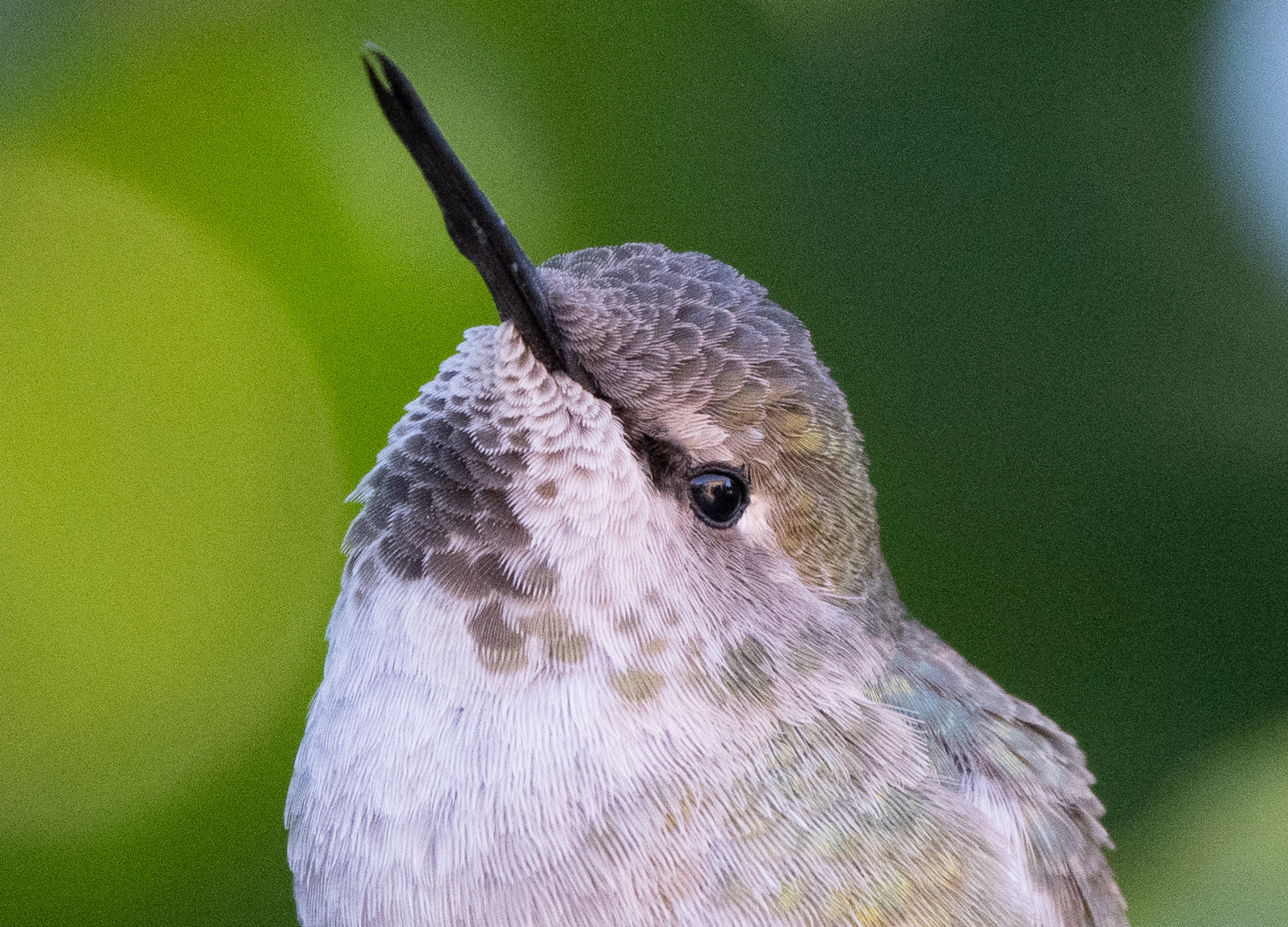
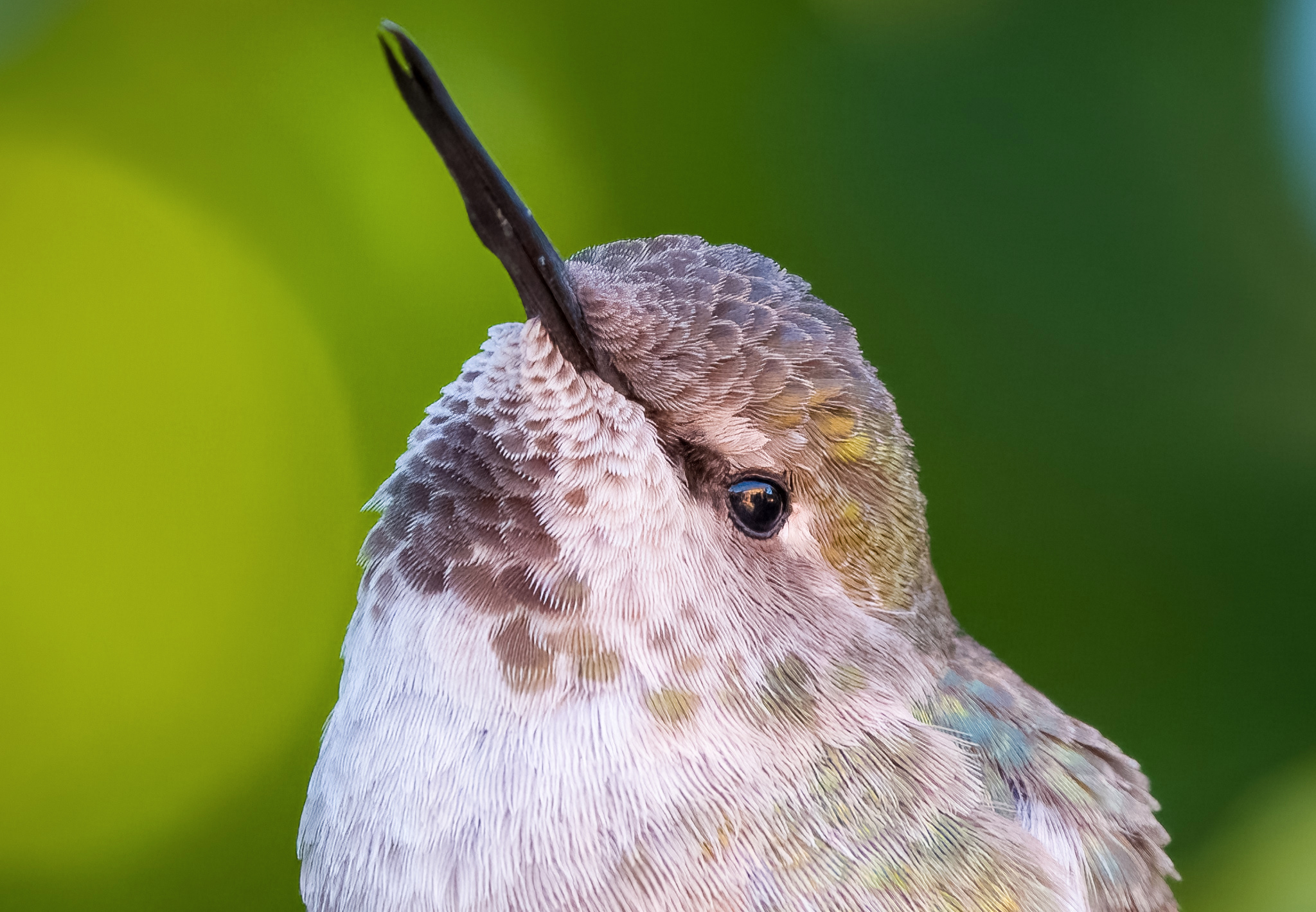
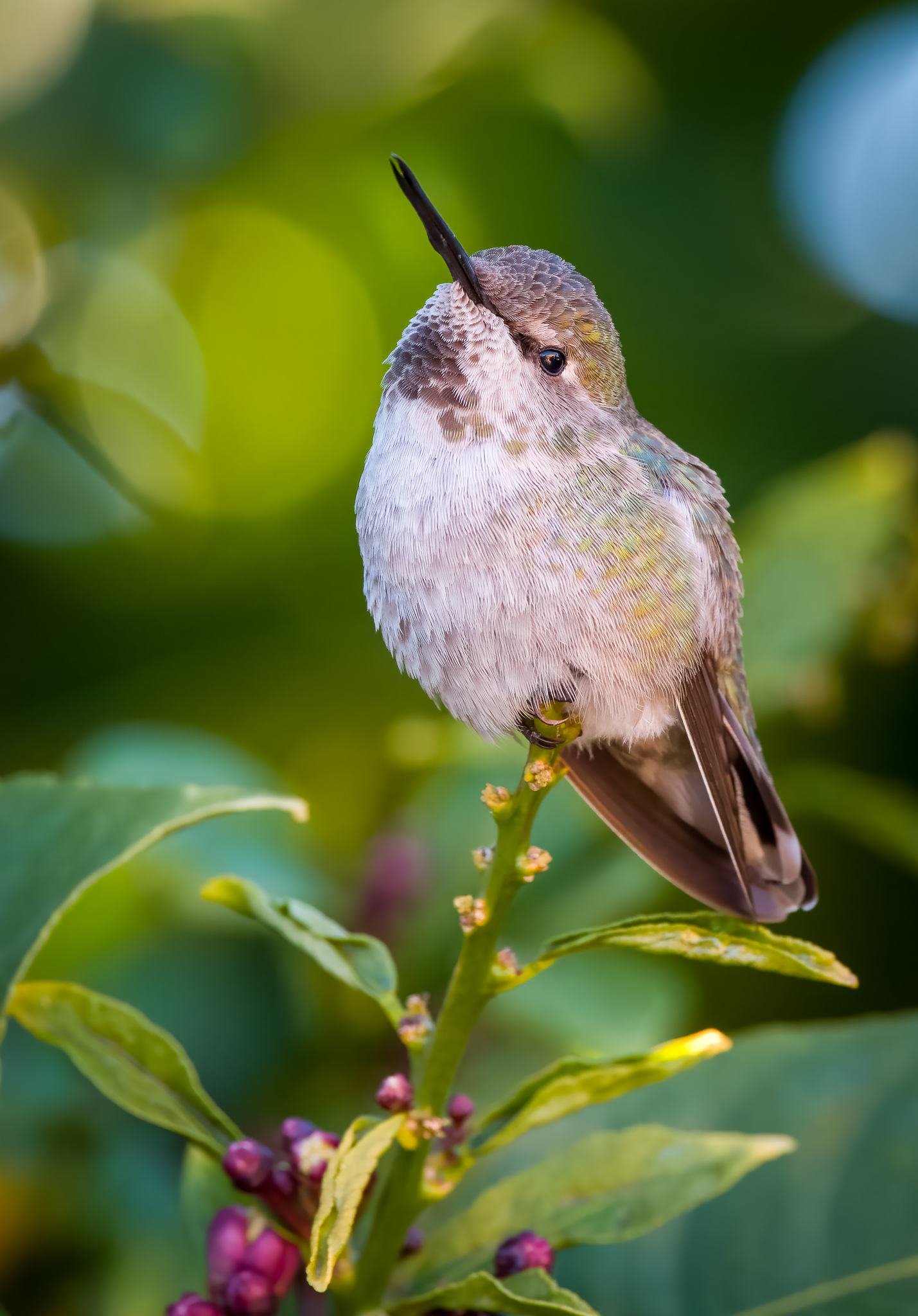
ILCE-7RM5 600mm f/8.0 1/500s 4000 ISO 0.0 EV
600mm f/8.0 1/500s 4000 ISO 0.0 EV
600mm f/8.0 1/500s 4000 ISO 0.0 EV
Feb 02, 2023 at 08:41 PM
p.3 #17*Edited* Denoise software is amazing. Image.
wordfool wrote:
Tonight I took this image of a hummingbird just after sunset in very dim light at ISO 12,800. I'm astounded. I thought I'd share for those who haven't tried one of the software programs available.I also love Topaz, but do have problems at times with random patches of artifacts. I seem to have most success with "Low Light" mode.
I'm curious to know which mode you used and the levels you selected for your sample photo. It certainly cleaned up very well.
Are you feeding it a RAW image? I had similar problems and ended up in email correspondence with Topaz' CEO. He told me that if there is any pre-processing done at all (for example anything you do via photoshop plugin, because Adobe converted the RAW, that counts as processing), it will not work properly. They are not forthcoming with this information in any of their marketing, which admittedly bothered me a bit.
If you feed it an untouched RAW file in the standalone program it usually solves the blotchiness problem, but I still haven't found a solution for all the strange artifacts, and "pastel" look it often gives feathers/fur. Topaz' proposed solution at this juncture was to turn up NR so high that it obliterated all the detail in the image, taking the artifacts with it. I've moved on to their all new "Photo AI" program and am still having all the same issues with artifacting.
I've been using DXO now and every test I have done comes out much better, and perhaps most importantly, you can trust it to batch process, where Topaz requires user input for best results on every individual image. This alone has saved me literally hundreds of hours in post processing time. The downside to DXO is that it is lens specific, so some very popular camera/lens combos are sometimes slow to be supported (such as the Nikon Z 100-400). If you feed it an image with camera support but no lens support, it only applies basic NR.
This is an example of how every photo comes out of Photo AI, and I have tweaked the settings to reduce artifacting as much as possible:
https://photos.smugmug.com/photos/i-58rBC4J/0/ff8867d9/X4/i-58rBC4J-X4.jpg
You can see the white feathers are ruined, NR and sharpening was applied randomly on the black feathers on the head, the snow on the beak is ruined, and it added ugly artifacts in the middle of the eye as well as the eyebrow. DXO has none of these problems, and gives me better results in all other areas as well, but the lens support can be annoying depending what you have.
mudlake wrote
I'm new to the denoise software. I ended up purchasing Topaz Denoise. I'm frankly astounded at how good it is, especially with raw files.Tonight I took this image of a hummingbird just after sunset in very dim light at ISO 12,800. I'm astounded. I thought I'd share for those who haven't tried one of the software programs available.
I'm curious to know which mode you used and the levels you selected for your sample photo. It certainly cleaned up very well.
Are you feeding it a RAW image? I had similar problems and ended up in email correspondence with Topaz' CEO. He told me that if there is any pre-processing done at all (for example anything you do via photoshop plugin, because Adobe converted the RAW, that counts as processing), it will not work properly. They are not forthcoming with this information in any of their marketing, which admittedly bothered me a bit.
If you feed it an untouched RAW file in the standalone program it usually solves the blotchiness problem, but I still haven't found a solution for all the strange artifacts, and "pastel" look it often gives feathers/fur. Topaz' proposed solution at this juncture was to turn up NR so high that it obliterated all the detail in the image, taking the artifacts with it. I've moved on to their all new "Photo AI" program and am still having all the same issues with artifacting.
I've been using DXO now and every test I have done comes out much better, and perhaps most importantly, you can trust it to batch process, where Topaz requires user input for best results on every individual image. This alone has saved me literally hundreds of hours in post processing time. The downside to DXO is that it is lens specific, so some very popular camera/lens combos are sometimes slow to be supported (such as the Nikon Z 100-400). If you feed it an image with camera support but no lens support, it only applies basic NR.
This is an example of how every photo comes out of Photo AI, and I have tweaked the settings to reduce artifacting as much as possible:
https://photos.smugmug.com/photos/i-58rBC4J/0/ff8867d9/X4/i-58rBC4J-X4.jpg
You can see the white feathers are ruined, NR and sharpening was applied randomly on the black feathers on the head, the snow on the beak is ruined, and it added ugly artifacts in the middle of the eye as well as the eyebrow. DXO has none of these problems, and gives me better results in all other areas as well, but the lens support can be annoying depending what you have.
Feb 02, 2023 at 09:10 PM
p.3 #18*Edited* Denoise software is amazing. Image.
I can see what you are talking about, but at a reasonable viewing size, would these things be noticeable? Just wondering. Again, I’m just starting out with this denoise stuff. 🙂
One hesitation I have about DXO is that it only accepts true raw files, correct? So it wouldn’t work when I shoot in crop mode and lossless compressed medium (which is what the A7R5 defaults to using lossless compressed in crop mode) since the file isn’t a “true” raw.
One hesitation I have about DXO is that it only accepts true raw files, correct? So it wouldn’t work when I shoot in crop mode and lossless compressed medium (which is what the A7R5 defaults to using lossless compressed in crop mode) since the file isn’t a “true” raw.
Feb 02, 2023 at 09:40 PM
p.3 #19*Edited* Denoise software is amazing. Image.
I already had DxO PL 4 and did a 30 day test with Topaz and the new DxO PL 6. For me(just my opinion), I greatly preferred DxO. No strange artifacts or issues like Mark shows above. Also, I just did a new PC build and finally built a super speed PC and it's nice to export a raw file or save a copy as a jpeg in a few seconds when it would take 5-7 minutes before.
I also find that a file will often look better if you run it through a denoise process even if there is no visible noise. With the a7rv raw files, I'm getting nice results with just a couple minutes of work.
At first I did not plan to update to v6 of Photo Lab, but they sent me a $69 offer right around Christmas.
Feb 02, 2023 at 09:41 PM
p.3 #20*Edited* Denoise software is amazing. Image.
mudlake wrote:
I can see what you are talking about, but at a reasonable viewing size, would these things be noticeable? Just wondering. Again, I’m just starting out with this denoise stuff. 🙂
One hesitation I have about DXO is that it only accepts true raw files, correct? So it wouldn’t work when I shoot in crop mode and lossless compressed medium (which is what the A7R5 defaults to using lossless compressed in crop mode) since the file isn’t a “true” raw.
I'm shooting lossless compressed and the files work fine in DxO, but I'm not using crop mode.
Feb 02, 2023 at 09:46 PM