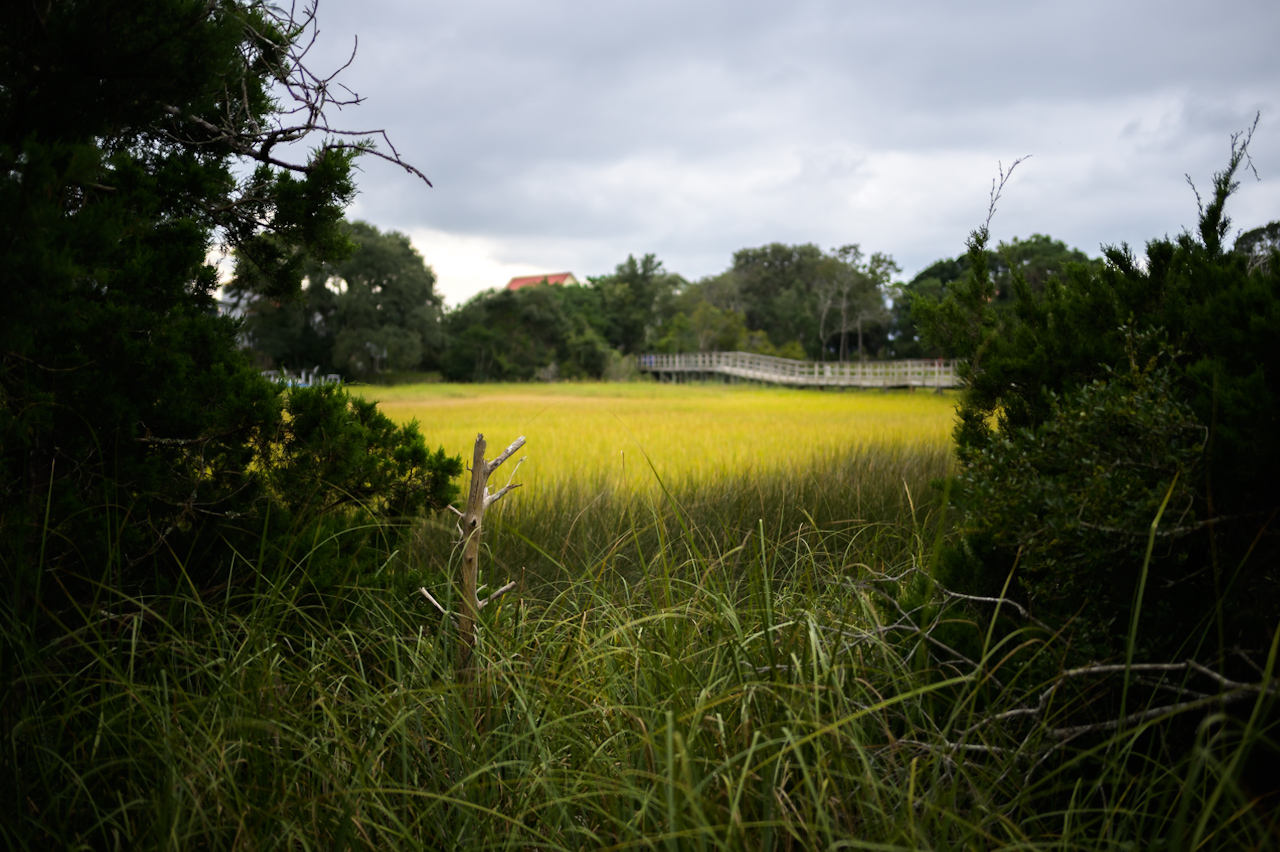
saaketham wrote:
I had better luck on the z6ii .. although I did not shoot the same type of subject as I did with the z7ii.
Enlisted my girlfriend to model for an hour (that's her limit these days before she gives me "the look"), testing the 40 f/2 and a 35 f/1.4 this evening.
Joseph .. you're probably right. The store only has 1 lens in stock, so I may return it and wait a bit for a better copy.
These wide open shots look way better than your wide open shots at MFD. Maybe the lens is optimized at medium to far distances. Some lenses are not very sharp at MFD. Considering the amount of this lens, I won’t be surprised if that’s the case.
Just purchased the lens at a local shop. My first impressions:
* Lightweight
* Sharp in most of the frame (not fully tested)
* Pleasing bokeh
* Some longitudinal chromatic aberrations at f/2, mostly gone by f/2.8
* A bit less contrast than the S lenses
* Absolutely worth the money if you are looking for a small lens
Joseph. wrote:
These wide open shots look way better than your wide open shots at MFD. Maybe the lens is optimized at medium to far distances. Some lenses are not very sharp at MFD. Considering the amount of this lens, I won’t be surprised if that’s the case.
I'll try MFD on the z6 in a few hours and see whether there's any difference there.
You guys are probably right, that this lens is more optimized for medium to longer subject distances.
And as the post above states - it's good value for the $.
saaketham wrote:
I'll try MFD on the z6 in a few hours and see whether there's any difference there.
You guys are probably right, that this lens is more optimized for medium to longer subject distances.
And as the post above states - it's good value for the $.
Without a floating element, it has to be optimized for one distance (or range of distances). On the reciprocal scale, from 1,2 m to infinity is the same distance as from 62,5 cm to 1,2 m, so most such lenses are optimized for "infinity" rather than for minimum focus distance.
AcuteShadows wrote:
Without a floating element, it has to be optimized for one distance (or range of distances). On the reciprocal scale, from 1,2 m to infinity is the same distance as from 62,5 cm to 1,2 m, so most such lenses are optimized for "infinity" rather than for minimum focus distance.
While I suspect the issue is in fact SA only at close focus I didn’t think the 40/2 was a block focus design. There isn’t a patent for it that I’ve seen and I don’t have one in my hands but it sure looks like it focuses with an internal group as most modern mirrorless designs do or that at the very least the front group is fixed. Such designs can optimize over wide ranges of focus distance much like a floating element design. The old Canon FD 200/4 Macro for instance moves just the front groups together with fixed rear groups and gets good infinity to 1:1 performance.
Again, I think the supposition that the design was optimized for more distant performance is probably spot on, I just don’t think it is necessarily down to lack of a floating element as it doesn’t appear to be a block focus design.
You’ve got one in your hands though! Can you tell how it focuses? I’m curious now and couldn’t figure it out from any information available online.
kwalsh wrote:
While I suspect the issue is in fact SA only at close focus I didn’t think the 40/2 was a block focus design. There isn’t a patent for it that I’ve seen and I don’t have one in my hands but it sure looks like it focuses with an internal group as most modern mirrorless designs do or that at the very least the front group is fixed. Such designs can optimize over wide ranges of focus distance much like a floating element design. The old Canon FD 200/4 Macro for instance moves just the front groups together with fixed rear groups and gets good infinity to 1:1 performance.
Again, I think the supposition that the design was optimized for more distant performance is probably spot on, I just don’t think it is necessarily down to lack of a floating element as it doesn’t appear to be a block focus design.
You’ve got one in your hands though! Can you tell how it focuses? I’m curious now and couldn’t figure it out from any information available online. ...Show more →
By floating element, I don't refer to the focus group (which of course is also floating), but to an element or group of elements that is separate from the focus group and moves when the focus distance changes, but in way that is different from the movement of the focus group.
fjablo wrote:
Didn't have time for proper testing today so this is just a very random test shot of the cat & edited on the phone. But looks plenty sharp to me
full size on flickr, but quite aggressively compressed by RNI..
If this lens at minimum can have the quality of the Nikon 50 1.8g while reducing the mass by 15g and the length by 7mm, then it's doing its job for the price range.
To ask this lens to do more at the same price point, size, and weight is to ask an inline 4 engine to perform like a V8 engine without a reduction in MPG, no price increase, and no additional components (turbos, intercooler. . .) that add weight.
Fun facts, an in-line 4 is about 350 lbs and will cost well under $10,000 as a crate engine. A Tesla motor weighs 70 lbs and will run you $30,000.
This video is a really good review with MTF50 ( around 7:20min). It tests rly soft at F2, but sharpens up quickly. The pictures cover some harsher backgrounds(10min) at various distances and I think it looks pretty good for the price.
By floating element, I don't refer to the focus group (which of course is also floating), but to an element or group of elements that is separate from the focus group and moves when the focus distance changes, but in way that is different from the movement of the focus group.
Yes, I understand. My point was that your statement that good close performance requires a “floating element” by your above definition is wrong. Multiple macro lenses with good near and far performance specifically do not have such a “floating element” and instead have a single moving focus group just like the Nikon Z 40/2. The earliest example I could think of was the Canon FD 200/4 Macro. Current examples would be Canon RF 35/1.8 Macro, Canon EF-M 28/3.5 Macro, Canon RF 85/2 Macro, Nikon DX Micro 40/2.8G, Olympus M.Z 30/3.5 Macro amongst others.
Indeed a block focus design (all groups move together) is usually compromised at one distance or another. “Floating Element” designs that moved both the block and shifted a group within the block at the same time were one approach to optimizing across a larger range of distances. But actually leaving most of the block (lens) fixed and just moving one set of groups can achieve similar results as the designs listed above illustrate.
That said, I agree that in such a size optimized design as this probably in fact the design is optimized for other than close focus and we might see more SA at close focus.
Got the lens today but it was a drab day. Agree with others, shows astigmatism and SA wide open up close, much better at f/2.8. But then it gets pretty darn close. Also seemed like focus and recompose is not a good idea. It’s not a bad lens, it’s just not a flawless macro. The Sigma 45/2.8 was similar. Otherwise foreground transition zones seemed a little nervous and focus plane is pretty thin at near limits. OOF is pleasing though and not too busy. Still need to use it more. It’s no 50/1.8 but it’s a great size.
This video is a really good review with MTF50 ( around 7:20min). It tests rly soft at F2, but sharpens up quickly. The pictures cover some harsher backgrounds(10min) at various distances and I think it looks pretty good for the price.
It's great to have these MTF graphs showing contrast vs. frequency. The center/corner comparison makes the lens look as if it's quite unbalanced in resolution. However, 2000 LW/PH is not that bad to begin with, and in my pictures it looks as if the resolution is already improving noticeably if you get from the corners to the edges. The lens is probably intended to be used on the Z5 or Z6, rather than on the Z7. But you can also apply a blur filter in post-processing to even out the resolution before applying sharpening.
A walk in the woods this morning. As noted at close-up it is not really sharp wide open, but I like the way it "draws". Sunstars are not for this lens.
ArendV wrote:
A walk in the woods this morning. As noted at close-up it is not really sharp wide open, but I like the way it "draws". Sunstars are not for this lens.
Nice shots esp the one with the sunburst! I think a super-defined and regular sunstar would have distracted too much, but agree that the sunstar is not as nice those from some other lenses (I really like the ones from the new Fuji 18mm, 23mm & 33mm f1.4)