Voigtlander 35mm f/2 APO-Lanthar Review
p.10 #1Voigtlander 35mm f/2 APO-Lanthar Review
So with the suggestion to take a picture of a road or similar flat surface with some detail in it at an angle, the point is to run the Find Edges filter on the image in PhotoShop to be able to better visualize field curvature.
For example, here is an image I did with a 'vintage' 35/2 lens for Leica M
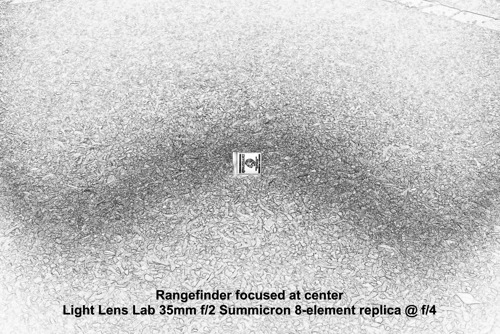
And this is the field curvature data supplied by the manufacturer:
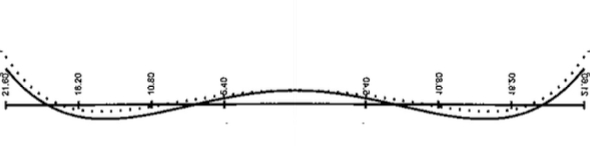
It's pretty close match, though the amplitude in the test image appears different than in the graph.
For example, here is an image I did with a 'vintage' 35/2 lens for Leica M
And this is the field curvature data supplied by the manufacturer:
It's pretty close match, though the amplitude in the test image appears different than in the graph.
Apr 17, 2021 at 11:05 PM
p.10 #2Voigtlander 35mm f/2 APO-Lanthar Review
well my 2 cents...
My VE 35mm apo arrived yesterday, did some shooting with it and just check to see if it is de-centred. It seems ok but I am no lens tester. I just wanted to add to this discussion that mine seems fine (to me).
Shooting with it feels the same as my VE 50mm apo both in terms of ergonomics and visually. My images using a A7R4 look brilliant (as per VE50). Contrasty, bright, clear, sharp...
For comparison I have used over the past year; VE 35mm 1.2, Loxia 35mm 2, ZM 35mm 1.4 and a host of legacy 35mm's. For me these VE apo lenses are brilliant. Maybe they are a little heavy, I would like a rubber gasket or two and sometimes when I read about other lenses I get envious of their 'character' but in the end of the day these are the lens for me.
I know I am getting just about as good an image as I can and the rest is down to me... Recommended.
Apr 18, 2021 at 04:37 AM
p.10 #3Voigtlander 35mm f/2 APO-Lanthar Review
DaveFP wrote:
rji2goleez wrote
More samples, these were posted in the other thread.SOOC or processed a bit?
Hey thanks! These are lightly processed. Mostly a little highlights and shadows. Not much was needed.
Apr 18, 2021 at 05:08 AM


p.10 #5Voigtlander 35mm f/2 APO-Lanthar Review
PM'd you with some RAW files from my CV 35/2 APO and Sigma 65/2. A little quick and dirty as I had limited time to fit this in to a crazy day I have. I hope they are useful. Feel free to analyze and post.
-Tim
inksandpaper wrote:
I usually don't notice Fred posting this information, and virtually all review sites cannot be trusted for their vignetting data since they measure it from OOC JPEGs with contrast curves rather than from linear raw data. Also, no one posts information about the "inner corners" of the lenses, which are important where they overlap if doing stitching for astrophotography. For a single row stitch, I overlap frames by 50%, and the long edge of the sensor is orientated perpendicular to the long edge of the final stitched image. If doing a multi-row stitch, I overlap the frames 50% both on...Show more →
Apr 18, 2021 at 08:47 AM
p.10 #6Voigtlander 35mm f/2 APO-Lanthar Review
Further user report.
Flare resistance is very good. Probably the best 35mm I have tried although still a bit early to be sure. I shoot a lot into the sun and it seems better than the 50mm apo which is decent in this regard. (When using orrect hood on both lenses)
Flare resistance is very good. Probably the best 35mm I have tried although still a bit early to be sure. I shoot a lot into the sun and it seems better than the 50mm apo which is decent in this regard. (When using orrect hood on both lenses)
Apr 18, 2021 at 03:31 PM
p.10 #7Voigtlander 35mm f/2 APO-Lanthar Review
inksandpaper wrote:
.Field curvature is not affected by element spacing or mount issues.
Still 7artisans said their 28/1.4 FE+ was tweaked for Sony by altering the distance between lens elements. However, that is to reduce the effect of the thicker sensor stack, which also gives astigmatism and isn't inherent in the lens design.
Edit: I think many people are confusing mechanical vignetting with backwards curvature of field, because the effectively smaller aperture towards the corners will make DOF deeper, which looks like curvature of field.
Also, I've found that IBIS in one of my cameras can radomly tilt the sensor/field with adapted lenses, which gives very confusing and strange results. Could be a factor if one believes you got a "bad copy".
Edited on Apr 18, 2021 at 04:19 PM · View previous versions
Apr 18, 2021 at 04:03 PM
p.10 #8Voigtlander 35mm f/2 APO-Lanthar Review
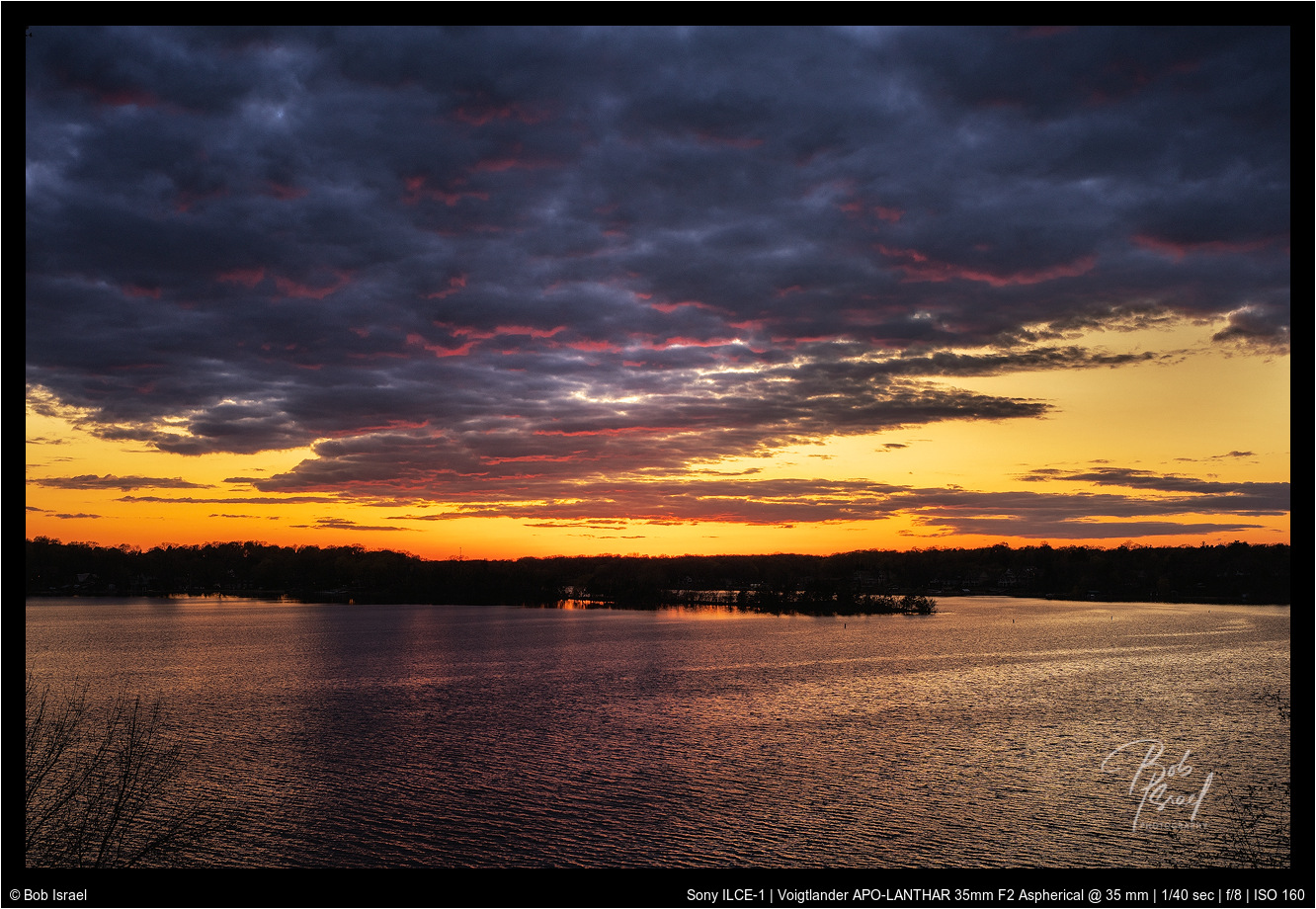
One from last night. I was expecting the skies to light up post sunset but this was about as good as it got.
Apr 18, 2021 at 04:05 PM
p.10 #9Voigtlander 35mm f/2 APO-Lanthar Review
I'm not going to profess I know what I'm doing, but that has never stopped me before. Not sure I framed these 100% perfectly, but i think it's close enougn. First is the CV 35/2 APO @ f/2, the second set is the Sigma 65/2 @ f/2. Both on my a7R III. I did allow the vignetting profile to trigger for the Sigma, but no distortion correction. For the CV shot there is no correction of either.
The second shot in each set is using the Find Edges filter.
CV 35
 |
||
 |
||
|
|
||
 |
||
|
Simga 65
|
||
 |
||
|
|
||
 |
||
|
These look good to me....
-Tim
tsdevine wrote:
PM'd you with some RAW files from my CV 35/2 APO and Sigma 65/2. A little quick and dirty as I had limited time to fit this in to a crazy day I have. I hope they are useful. Feel free to analyze and post.
-Tim
inksandpaper wrote
I usually don't notice Fred posting this information, and virtually all review sites cannot be trusted for their vignetting data since they measure it from OOC JPEGs with contrast curves rather than from linear raw data. Also, no one posts information about the "inner corners" of the lenses, which are important where they overlap if doing stitching for astrophotography. For a single row stitch, I overlap frames by 50%, and the long edge of the sensor is orientated perpendicular to the long edge of the final stitched image. If doing a multi-row stitch, I overlap the frames 50% both on the long edge and short edge. Here are the three sets of vignetting data for those interested. I'm not allowed to post images so the table format is a little wonky, my apologies.Voigtlander 35mm F2 APO-Lanthar, 17 Apr 2021
Extreme Corner Single row Corner Multi-row Corner
Aperture Falloff EV Falloff EV Falloff EV
2 -2.45 -1.94 -0.78
2.2 -2.18 -1.69 -0.54
2.5 -1.89 -1.39 -0.33
2.8 -1.61 -1.15 -0.26
3.2 -1.42 -0.98 -0.26
3.5 -1.24 -0.84 -0.26
4 -1.12 -0.81 -0.25
4.5 -1.06 -0.80 -0.25
5 -1.05 -0.81 -0.25
5.6 -1.05 -0.81 -0.25
6.3 -1.06 -0.81 -0.26
7.1 -1.05 -0.81 -0.25
8 -1.07 -0.81 -0.26
9 -1.07 -0.81 -0.26
10 -1.05 -0.81 -0.25
11 -1.06 -0.80 -0.25
13 -1.06 -0.81 -0.25
14 -1.06 -0.80 -0.26
16 -1.09 -0.83 -0.25
And some notes on the capture process: camera on tripod, pitched roughly 30 degrees up towards heavily overcast sky. Raw uncompressed. ISO 100. Single-shot mode. IBIS off. LENR off. Lens Comp, all off. Lens focused at infinity in Live View using manual focus on distant subject. Using my sanded-to-matte translucent white acrylic "diffuser" filter, 4mm thick. Ensure shutter speed slow enough that falloff pattern is centered in frame. EFCS off, full mechanical shutter used.
Readouts taken from RawTherapee 'save for reference' with no white balance exported TIFFs, linear raw values from G channel. Used Photoshop colour picker 11x11 sampling, 4 sample points averaged for corners, used ruler guides to ensure exact sampling spot across frames
Extreme Corner read out at 50 pixels from image edge.
Single-row stitch corners 50% overlap coordinates in sensor dimensions, origin is top left image corner, are (0,6)(36,6)(0,18)(36,18) in millimetres
Multi-row stitch corners 50% overlap coordinates in sensor dimensions, origin is top left image corner, are (9,6)(27,6)(9,18)(27,18) in millimetres
Apr 18, 2021 at 04:29 PM
p.10 #10Voigtlander 35mm f/2 APO-Lanthar Review
rscheffler wrote:
So with the suggestion to take a picture of a road or similar flat surface with some detail in it at an angle, the point is to run the Find Edges filter on the image in PhotoShop to be able to better visualize field curvature.
For example, here is an image I did with a 'vintage' 35/2 lens for Leica M
https://i.postimg.cc/KvJ8PLs8/20201214-0136.jpg
And this is the field curvature data supplied by the manufacturer:
https://i.postimg.cc/5950tDBv/LLL-field-curvature.jpg
It's pretty close match, though the amplitude in the test image appears different than in the graph.
Nice! They do match quite well indeed. The amplitude is certainly different because we don't know the scale of the x-axis in the Leica-provided graph of field curvature. It may be that the graph predicts the actual field curvature very well. A small shift in microns-worth at the sensor translates into a rather large shift in subject distance. For example, a 20-micron shift (1/5th of the thickness of a sheet of regular 80gsm paper) for a 35mm lens will cause something like a shift from 30 to 35.3 feet in subject distance.
Apr 18, 2021 at 04:49 PM
|
p.10 #11Voigtlander 35mm f/2 APO-Lanthar Review
tsdevine wrote:
PM'd you with some RAW files from my CV 35/2 APO and Sigma 65/2. A little quick and dirty as I had limited time to fit this in to a crazy day I have. I hope they are useful. Feel free to analyze and post.
-Tim
Thanks so much Tim! I'm downloading the files now and will check in a bit.
I just noticed that I missed a PM from @Fred Miranda! I'm so sorry Fred, I just replied to it. I didn't get any notification at all and didn't think to check my PM inbox at all, since I've never gotten a PM here before.
Apr 18, 2021 at 04:52 PM
p.10 #12Voigtlander 35mm f/2 APO-Lanthar Review
tsdevine wrote:
I'm not going to profess I know what I'm doing, but that has never stopped me before. Not sure I framed these 100% perfectly, but i think it's close enougn. First is the CV 35/2 APO @ f/2, the second set is the Sigma 65/2 @ f/2. Both on my a7R III. I did allow the vignetting profile to trigger for the Sigma, but no distortion correction. For the CV shot there is no correction of either.
The second shot in each set is using the Find Edges filter.
CV 35
https://www.devine.photography/img/s/v-10/p2341074958-6.jpg
https://www.devine.photography/img/s/v-10/p2341074957-6.jpg
Simga 65
https://www.devine.photography/img/s/v-10/p2341074989-6.jpg
https://www.devine.photography/img/s/v-10/p2341074975-6.jpg
These look good to me....
-Tim
-Tim
Voigtlander 35mm F2 APO-Lanthar, 17 Apr 2021
Extreme Corner Single row Corner Multi-row Corner
Aperture Falloff EV Falloff EV Falloff EV
2 -2.45 -1.94 -0.78
2.2 -2.18 -1.69 -0.54
2.5 -1.89 -1.39 -0.33
2.8 -1.61 -1.15 -0.26
3.2 -1.42 -0.98 -0.26
3.5 -1.24 -0.84 -0.26
4 -1.12 -0.81 -0.25
4.5 -1.06 -0.80 -0.25
5 -1.05 -0.81 -0.25
5.6 -1.05 -0.81 -0.25
6.3 -1.06 -0.81 -0.26
7.1 -1.05 -0.81 -0.25
8 -1.07 -0.81 -0.26
9 -1.07 -0.81 -0.26
10 -1.05 -0.81 -0.25
11 -1.06 -0.80 -0.25
13 -1.06 -0.81 -0.25
14 -1.06 -0.80 -0.26
16 -1.09 -0.83 -0.25
And some notes on the capture process: camera on tripod, pitched roughly 30 degrees up towards heavily overcast sky. Raw uncompressed. ISO 100. Single-shot mode. IBIS off. LENR off. Lens Comp, all off. Lens focused at infinity in Live View using manual focus on distant subject. Using my sanded-to-matte translucent white acrylic "diffuser" filter, 4mm thick. Ensure shutter speed slow enough that falloff pattern is centered in frame. EFCS off, full mechanical shutter used.
Readouts taken from RawTherapee 'save for reference' with no white balance exported TIFFs, linear raw values from G channel. Used Photoshop colour picker 11x11 sampling, 4 sample points averaged for corners, used ruler guides to ensure exact sampling spot across frames
Extreme Corner read out at 50 pixels from image edge.
Single-row stitch corners 50% overlap coordinates in sensor dimensions, origin is top left image corner, are (0,6)(36,6)(0,18)(36,18) in millimetres
Multi-row stitch corners 50% overlap coordinates in sensor dimensions, origin is top left image corner, are (9,6)(27,6)(9,18)(27,18) in millimetres
Congratulations Tim!! Your CV 35/2 is very flat in its field curvature. There is a very slight amount of swing which falls slightly nearer on the right image edge vs the left image edge, so if one intends to shim it to perfection. My estimate is that you are standing exactly at the edge of the running track? So four lanes plus two feet, let's say 18 feet to the centre of the image. Focus at 19 feet on the left edge, and ~17 feet on the right edge. That puts the left side of your lens ~26 microns too close to the sensor.
But most importantly, this is the first confirmation I have that very flat curvature is possible of this species, which is radically different from the two copies that I tried.
It does appear that the left edge is quite a bit less crispy than the right edge, and I'm not sure if it's due to the light (unlikely?) or actual texture on the running track? It would be unfortunate if this copy was slightly decentered
Your Sigma 65mm does have slight field curvature, bending very slightly nearer off-axis in a gentle parabola (no weird M or W shaped messes). It is also slightly swung, focusing slightly nearer on the right side again than the left. If you are standing the same distance away, that puts the left edge at 20.5 feet and the right edge at 20 feet, meaning the left side of your lens is ~17 microns too close to the sensor.
The field curvature is about half a foot's worth, so about 17 microns, if my distance estimate is correct, or maybe closer to about 15 microns worth, which is sufficient when combined with the swing to make a field of stars/PSFs at infinity to not be perfectly in focus on the left and right edges of the frame when shooting wide open or even stopped down to f/2.8, if the lens was not shimmed straight.
Very nice samples Tim! These are excellent
Edited on Apr 18, 2021 at 05:54 PM · View previous versions
I'm not going to profess I know what I'm doing, but that has never stopped me before. Not sure I framed these 100% perfectly, but i think it's close enougn. First is the CV 35/2 APO @ f/2, the second set is the Sigma 65/2 @ f/2. Both on my a7R III. I did allow the vignetting profile to trigger for the Sigma, but no distortion correction. For the CV shot there is no correction of either.
The second shot in each set is using the Find Edges filter.
CV 35
https://www.devine.photography/img/s/v-10/p2341074958-6.jpg
https://www.devine.photography/img/s/v-10/p2341074957-6.jpg
Simga 65
https://www.devine.photography/img/s/v-10/p2341074989-6.jpg
https://www.devine.photography/img/s/v-10/p2341074975-6.jpg
These look good to me....
-Tim
tsdevine wrote
PM'd you with some RAW files from my CV 35/2 APO and Sigma 65/2. A little quick and dirty as I had limited time to fit this in to a crazy day I have. I hope they are useful. Feel free to analyze and post.-Tim
inksandpaper wrote
I usually don't notice Fred posting this information, and virtually all review sites cannot be trusted for their vignetting data since they measure it from OOC JPEGs with contrast curves rather than from linear raw data. Also, no one posts information about the "inner corners" of the lenses, which are important where they overlap if doing stitching for astrophotography. For a single row stitch, I overlap frames by 50%, and the long edge of the sensor is orientated perpendicular to the long edge of the final stitched image. If doing a multi-row stitch, I overlap the frames 50% both on the long edge and short edge. Here are the three sets of vignetting data for those interested. I'm not allowed to post images so the table format is a little wonky, my apologies.Voigtlander 35mm F2 APO-Lanthar, 17 Apr 2021
Extreme Corner Single row Corner Multi-row Corner
Aperture Falloff EV Falloff EV Falloff EV
2 -2.45 -1.94 -0.78
2.2 -2.18 -1.69 -0.54
2.5 -1.89 -1.39 -0.33
2.8 -1.61 -1.15 -0.26
3.2 -1.42 -0.98 -0.26
3.5 -1.24 -0.84 -0.26
4 -1.12 -0.81 -0.25
4.5 -1.06 -0.80 -0.25
5 -1.05 -0.81 -0.25
5.6 -1.05 -0.81 -0.25
6.3 -1.06 -0.81 -0.26
7.1 -1.05 -0.81 -0.25
8 -1.07 -0.81 -0.26
9 -1.07 -0.81 -0.26
10 -1.05 -0.81 -0.25
11 -1.06 -0.80 -0.25
13 -1.06 -0.81 -0.25
14 -1.06 -0.80 -0.26
16 -1.09 -0.83 -0.25
And some notes on the capture process: camera on tripod, pitched roughly 30 degrees up towards heavily overcast sky. Raw uncompressed. ISO 100. Single-shot mode. IBIS off. LENR off. Lens Comp, all off. Lens focused at infinity in Live View using manual focus on distant subject. Using my sanded-to-matte translucent white acrylic "diffuser" filter, 4mm thick. Ensure shutter speed slow enough that falloff pattern is centered in frame. EFCS off, full mechanical shutter used.
Readouts taken from RawTherapee 'save for reference' with no white balance exported TIFFs, linear raw values from G channel. Used Photoshop colour picker 11x11 sampling, 4 sample points averaged for corners, used ruler guides to ensure exact sampling spot across frames
Extreme Corner read out at 50 pixels from image edge.
Single-row stitch corners 50% overlap coordinates in sensor dimensions, origin is top left image corner, are (0,6)(36,6)(0,18)(36,18) in millimetres
Multi-row stitch corners 50% overlap coordinates in sensor dimensions, origin is top left image corner, are (9,6)(27,6)(9,18)(27,18) in millimetres
Congratulations Tim!! Your CV 35/2 is very flat in its field curvature. There is a very slight amount of swing which falls slightly nearer on the right image edge vs the left image edge, so if one intends to shim it to perfection. My estimate is that you are standing exactly at the edge of the running track? So four lanes plus two feet, let's say 18 feet to the centre of the image. Focus at 19 feet on the left edge, and ~17 feet on the right edge. That puts the left side of your lens ~26 microns too close to the sensor.
But most importantly, this is the first confirmation I have that very flat curvature is possible of this species, which is radically different from the two copies that I tried.
It does appear that the left edge is quite a bit less crispy than the right edge, and I'm not sure if it's due to the light (unlikely?) or actual texture on the running track? It would be unfortunate if this copy was slightly decentered
Your Sigma 65mm does have slight field curvature, bending very slightly nearer off-axis in a gentle parabola (no weird M or W shaped messes). It is also slightly swung, focusing slightly nearer on the right side again than the left. If you are standing the same distance away, that puts the left edge at 20.5 feet and the right edge at 20 feet, meaning the left side of your lens is ~17 microns too close to the sensor.
The field curvature is about half a foot's worth, so about 17 microns, if my distance estimate is correct, or maybe closer to about 15 microns worth, which is sufficient when combined with the swing to make a field of stars/PSFs at infinity to not be perfectly in focus on the left and right edges of the frame when shooting wide open or even stopped down to f/2.8, if the lens was not shimmed straight.
Very nice samples Tim! These are excellent
Edited on Apr 18, 2021 at 05:54 PM · View previous versions
Apr 18, 2021 at 05:20 PM
p.10 #13Voigtlander 35mm f/2 APO-Lanthar Review
Thanks, it was morning light and was coming from the right side of the frame shining left. I was close to the edge of the track, maybe a foot. I was shooting over a hurdle that was moved off right to the side of the track.
Honestly, for my purposes it's close enough. I'm still planning to do a test more like Fred's, but the place I do that test needs to be done in the afternoon...and I've been busy both days this weekend. I've done enough tests to feel pretty comfortable that all 4 corners look good....at least more like Fred's second copy than his first.
Unfortunately I'm really busy right now and the weather for the most part has been crappy....at least when I'm free.
inksandpaper wrote:
The second shot in each set is using the Find Edges filter.
CV 35
https://www.devine.photography/img/s/v-10/p2341074958-6.jpg
https://www.devine.photography/img/s/v-10/p2341074957-6.jpg
Simga 65
https://www.devine.photography/img/s/v-10/p2341074989-6.jpg
https://www.devine.photography/img/s/v-10/p2341074975-6.jpg
These look good to me....
-Tim
-Tim
Voigtlander 35mm F2 APO-Lanthar, 17 Apr 2021
Extreme Corner Single row Corner Multi-row Corner
Aperture Falloff EV Falloff EV Falloff EV
2 -2.45 -1.94 -0.78
2.2 -2.18 -1.69 -0.54
2.5 -1.89 -1.39 -0.33
2.8 -1.61 -1.15 -0.26
3.2 -1.42 -0.98 -0.26
3.5 -1.24 -0.84 -0.26
4 -1.12 -0.81 -0.25
4.5 -1.06 -0.80 -0.25
5 -1.05 -0.81 -0.25
5.6 -1.05 -0.81 -0.25
6.3 -1.06 -0.81 -0.26
7.1 -1.05 -0.81 -0.25
8 -1.07 -0.81 -0.26
9 -1.07 -0.81 -0.26
10 -1.05 -0.81 -0.25
11 -1.06 -0.80 -0.25
13 -1.06 -0.81 -0.25
14 -1.06 -0.80 -0.26
16 -1.09 -0.83 -0.25
And some notes on the capture process: camera on tripod, pitched roughly 30 degrees up towards heavily overcast sky. Raw uncompressed. ISO 100. Single-shot mode. IBIS off. LENR off. Lens Comp, all off. Lens focused at infinity in Live View using manual focus on distant subject. Using my sanded-to-matte translucent white acrylic "diffuser" filter, 4mm thick. Ensure shutter speed slow enough that falloff pattern is centered in frame. EFCS off, full mechanical shutter used.
Readouts taken from RawTherapee 'save for reference' with no white balance exported TIFFs, linear raw values from G channel. Used Photoshop colour picker 11x11 sampling, 4 sample points averaged for corners, used ruler guides to ensure exact sampling spot across frames
Extreme Corner read out at 50 pixels from image edge.
Single-row stitch corners 50% overlap coordinates in sensor dimensions, origin is top left image corner, are (0,6)(36,6)(0,18)(36,18) in millimetres
Multi-row stitch corners 50% overlap coordinates in sensor dimensions, origin is top left image corner, are (9,6)(27,6)(9,18)(27,18) in millimetresCongratulations Tim!! Your CV 35/2 is very flat in its field curvature. There is a very slight amount of swing which falls slightly nearer on the right image edge vs the left image edge, so if one intends to shim it to perfection. My estimate is that you are standing exactly at the edge of the running track? So four lanes plus two feet, let's say 18 feet to the centre of the image. Focus at 19 feet on the left edge, and ~17 feet on the right edge. That puts the left side of your lens ~26 microns too...Show more →
Honestly, for my purposes it's close enough. I'm still planning to do a test more like Fred's, but the place I do that test needs to be done in the afternoon...and I've been busy both days this weekend. I've done enough tests to feel pretty comfortable that all 4 corners look good....at least more like Fred's second copy than his first.
Unfortunately I'm really busy right now and the weather for the most part has been crappy....at least when I'm free.
inksandpaper wrote:
tsdevine wrote
I'm not going to profess I know what I'm doing, but that has never stopped me before. Not sure I framed these 100% perfectly, but i think it's close enougn. First is the CV 35/2 APO @ f/2, the second set is the Sigma 65/2 @ f/2. Both on my a7R III. I did allow the vignetting profile to trigger for the Sigma, but no distortion correction. For the CV shot there is no correction of either.The second shot in each set is using the Find Edges filter.
CV 35
https://www.devine.photography/img/s/v-10/p2341074958-6.jpg
https://www.devine.photography/img/s/v-10/p2341074957-6.jpg
Simga 65
https://www.devine.photography/img/s/v-10/p2341074989-6.jpg
https://www.devine.photography/img/s/v-10/p2341074975-6.jpg
These look good to me....
-Tim
tsdevine wrote
PM'd you with some RAW files from my CV 35/2 APO and Sigma 65/2. A little quick and dirty as I had limited time to fit this in to a crazy day I have. I hope they are useful. Feel free to analyze and post.-Tim
inksandpaper wrote
I usually don't notice Fred posting this information, and virtually all review sites cannot be trusted for their vignetting data since they measure it from OOC JPEGs with contrast curves rather than from linear raw data. Also, no one posts information about the "inner corners" of the lenses, which are important where they overlap if doing stitching for astrophotography. For a single row stitch, I overlap frames by 50%, and the long edge of the sensor is orientated perpendicular to the long edge of the final stitched image. If doing a multi-row stitch, I overlap the frames 50% both on the long edge and short edge. Here are the three sets of vignetting data for those interested. I'm not allowed to post images so the table format is a little wonky, my apologies.Voigtlander 35mm F2 APO-Lanthar, 17 Apr 2021
Extreme Corner Single row Corner Multi-row Corner
Aperture Falloff EV Falloff EV Falloff EV
2 -2.45 -1.94 -0.78
2.2 -2.18 -1.69 -0.54
2.5 -1.89 -1.39 -0.33
2.8 -1.61 -1.15 -0.26
3.2 -1.42 -0.98 -0.26
3.5 -1.24 -0.84 -0.26
4 -1.12 -0.81 -0.25
4.5 -1.06 -0.80 -0.25
5 -1.05 -0.81 -0.25
5.6 -1.05 -0.81 -0.25
6.3 -1.06 -0.81 -0.26
7.1 -1.05 -0.81 -0.25
8 -1.07 -0.81 -0.26
9 -1.07 -0.81 -0.26
10 -1.05 -0.81 -0.25
11 -1.06 -0.80 -0.25
13 -1.06 -0.81 -0.25
14 -1.06 -0.80 -0.26
16 -1.09 -0.83 -0.25
And some notes on the capture process: camera on tripod, pitched roughly 30 degrees up towards heavily overcast sky. Raw uncompressed. ISO 100. Single-shot mode. IBIS off. LENR off. Lens Comp, all off. Lens focused at infinity in Live View using manual focus on distant subject. Using my sanded-to-matte translucent white acrylic "diffuser" filter, 4mm thick. Ensure shutter speed slow enough that falloff pattern is centered in frame. EFCS off, full mechanical shutter used.
Readouts taken from RawTherapee 'save for reference' with no white balance exported TIFFs, linear raw values from G channel. Used Photoshop colour picker 11x11 sampling, 4 sample points averaged for corners, used ruler guides to ensure exact sampling spot across frames
Extreme Corner read out at 50 pixels from image edge.
Single-row stitch corners 50% overlap coordinates in sensor dimensions, origin is top left image corner, are (0,6)(36,6)(0,18)(36,18) in millimetres
Multi-row stitch corners 50% overlap coordinates in sensor dimensions, origin is top left image corner, are (9,6)(27,6)(9,18)(27,18) in millimetres
Apr 18, 2021 at 05:26 PM
p.10 #14Voigtlander 35mm f/2 APO-Lanthar Review
Here's another wide open shot at 100%....left side on the left, right side on the right. The left side is crispy enough for me, at least on the a7R III.
|
||
 |
||
|
-Tim
inksandpaper wrote:
tsdevine wrote
I'm not going to profess I know what I'm doing, but that has never stopped me before. Not sure I framed these 100% perfectly, but i think it's close enougn. First is the CV 35/2 APO @ f/2, the second set is the Sigma 65/2 @ f/2. Both on my a7R III. I did allow the vignetting profile to trigger for the Sigma, but no distortion correction. For the CV shot there is no correction of either.The second shot in each set is using the Find Edges filter.
CV 35
https://www.devine.photography/img/s/v-10/p2341074958-6.jpg
https://www.devine.photography/img/s/v-10/p2341074957-6.jpg
Simga 65
https://www.devine.photography/img/s/v-10/p2341074989-6.jpg
https://www.devine.photography/img/s/v-10/p2341074975-6.jpg
These look good to me....
-Tim
tsdevine wrote
PM'd you with some RAW files from my CV 35/2 APO and Sigma 65/2. A little quick and dirty as I had limited time to fit this in to a crazy day I have. I hope they are useful. Feel free to analyze and post.-Tim
inksandpaper wrote
I usually don't notice Fred posting this information, and virtually all review sites cannot be trusted for their vignetting data since they measure it from OOC JPEGs with contrast curves rather than from linear raw data. Also, no one posts information about the "inner corners" of the lenses, which are important where they overlap if doing stitching for astrophotography. For a single row stitch, I overlap frames by 50%, and the long edge of the sensor is orientated perpendicular to the long edge of the final stitched image. If doing a multi-row stitch, I overlap the frames 50% both on the long edge and short edge. Here are the three sets of vignetting data for those interested. I'm not allowed to post images so the table format is a little wonky, my apologies.Voigtlander 35mm F2 APO-Lanthar, 17 Apr 2021
Extreme Corner Single row Corner Multi-row Corner
Aperture Falloff EV Falloff EV Falloff EV
2 -2.45 -1.94 -0.78
2.2 -2.18 -1.69 -0.54
2.5 -1.89 -1.39 -0.33
2.8 -1.61 -1.15 -0.26
3.2 -1.42 -0.98 -0.26
3.5 -1.24 -0.84 -0.26
4 -1.12 -0.81 -0.25
4.5 -1.06 -0.80 -0.25
5 -1.05 -0.81 -0.25
5.6 -1.05 -0.81 -0.25
6.3 -1.06 -0.81 -0.26
7.1 -1.05 -0.81 -0.25
8 -1.07 -0.81 -0.26
9 -1.07 -0.81 -0.26
10 -1.05 -0.81 -0.25
11 -1.06 -0.80 -0.25
13 -1.06 -0.81 -0.25
14 -1.06 -0.80 -0.26
16 -1.09 -0.83 -0.25
And some notes on the capture process: camera on tripod, pitched roughly 30 degrees up towards heavily overcast sky. Raw uncompressed. ISO 100. Single-shot mode. IBIS off. LENR off. Lens Comp, all off. Lens focused at infinity in Live View using manual focus on distant subject. Using my sanded-to-matte translucent white acrylic "diffuser" filter, 4mm thick. Ensure shutter speed slow enough that falloff pattern is centered in frame. EFCS off, full mechanical shutter used.
Readouts taken from RawTherapee 'save for reference' with no white balance exported TIFFs, linear raw values from G channel. Used Photoshop colour picker 11x11 sampling, 4 sample points averaged for corners, used ruler guides to ensure exact sampling spot across frames
Extreme Corner read out at 50 pixels from image edge.
Single-row stitch corners 50% overlap coordinates in sensor dimensions, origin is top left image corner, are (0,6)(36,6)(0,18)(36,18) in millimetres
Multi-row stitch corners 50% overlap coordinates in sensor dimensions, origin is top left image corner, are (9,6)(27,6)(9,18)(27,18) in millimetres
Apr 18, 2021 at 05:44 PM
p.10 #15Voigtlander 35mm f/2 APO-Lanthar Review
tsdevine wrote:
Thanks, it was morning light and was coming from the right side of the frame shining left. I was close to the edge of the track, maybe a foot. I was shooting over a hurdle that was moved off right to the side of the track.
Honestly, for my purposes it's close enough. I'm still planning to do a test more like Fred's, but the place I do that test needs to be done in the afternoon...and I've been busy both days this weekend. I've done enough tests to feel pretty comfortable that all 4 corners look good....at least more like...Show more →
The second shot in each set is using the Find Edges filter.
CV 35
https://www.devine.photography/img/s/v-10/p2341074958-6.jpg
https://www.devine.photography/img/s/v-10/p2341074957-6.jpg
Simga 65
https://www.devine.photography/img/s/v-10/p2341074989-6.jpg
https://www.devine.photography/img/s/v-10/p2341074975-6.jpg
These look good to me....
-Tim
-Tim
Voigtlander 35mm F2 APO-Lanthar, 17 Apr 2021
Extreme Corner Single row Corner Multi-row Corner
Aperture Falloff EV Falloff EV Falloff EV
2 -2.45 -1.94 -0.78
2.2 -2.18 -1.69 -0.54
2.5 -1.89 -1.39 -0.33
2.8 -1.61 -1.15 -0.26
3.2 -1.42 -0.98 -0.26
3.5 -1.24 -0.84 -0.26
4 -1.12 -0.81 -0.25
4.5 -1.06 -0.80 -0.25
5 -1.05 -0.81 -0.25
5.6 -1.05 -0.81 -0.25
6.3 -1.06 -0.81 -0.26
7.1 -1.05 -0.81 -0.25
8 -1.07 -0.81 -0.26
9 -1.07 -0.81 -0.26
10 -1.05 -0.81 -0.25
11 -1.06 -0.80 -0.25
13 -1.06 -0.81 -0.25
14 -1.06 -0.80 -0.26
16 -1.09 -0.83 -0.25
And some notes on the capture process: camera on tripod, pitched roughly 30 degrees up towards heavily overcast sky. Raw uncompressed. ISO 100. Single-shot mode. IBIS off. LENR off. Lens Comp, all off. Lens focused at infinity in Live View using manual focus on distant subject. Using my sanded-to-matte translucent white acrylic "diffuser" filter, 4mm thick. Ensure shutter speed slow enough that falloff pattern is centered in frame. EFCS off, full mechanical shutter used.
Readouts taken from RawTherapee 'save for reference' with no white balance exported TIFFs, linear raw values from G channel. Used Photoshop colour picker 11x11 sampling, 4 sample points averaged for corners, used ruler guides to ensure exact sampling spot across frames
Extreme Corner read out at 50 pixels from image edge.
Single-row stitch corners 50% overlap coordinates in sensor dimensions, origin is top left image corner, are (0,6)(36,6)(0,18)(36,18) in millimetres
Multi-row stitch corners 50% overlap coordinates in sensor dimensions, origin is top left image corner, are (9,6)(27,6)(9,18)(27,18) in millimetresCongratulations Tim!! Your CV 35/2 is very flat in its field curvature. There is a very slight amount of swing which falls slightly nearer on the right image edge vs the left image edge, so if one intends to shim it to perfection. My estimate is that you are standing exactly at the edge of the running track? So four lanes plus two feet, let's say 18 feet to the centre of the image. Focus at 19 feet on the left edge, and ~17 feet on the right edge. That puts the left side of your lens ~26 microns too close to the sensor.
But most importantly, this is the first confirmation I have that very flat curvature is possible of this species, which is radically different from the two copies that I tried.
It does appear that the left edge is quite a bit less crispy than the right edge, and I'm not sure if it's due to the light (unlikely?) or actual texture on the running track? It would be unfortunate if this copy was slightly decentered
Your Sigma 65mm does have slight field curvature, bending very slightly nearer off-axis in a gentle parabola (no weird M or W shaped messes). It is also slightly swung, focusing slightly nearer on the right side again than the left. If you are standing the same distance away, that puts the left edge at 20.5 feet and the right edge at 20 feet, meaning the left side of your lens is ~17 microns too close to the sensor.
The field curvature is about half a foot's worth, so about 17 microns, if my distance estimate is correct, or maybe closer to about 15 microns worth, which is sufficient when combined with the swing to make a field of stars/PSFs at infinity to not be perfectly in focus on the left and right edges of the frame when shooting wide open or even stopped down to f/2.8, if the lens was not shimmed straight.
Thanks for the distance confirmation and for sending these along despite your schedule. I hope time lets up soon for you to enjoy your new toys :-)
I looked more closely again at your CV35 at F2. Field curvature is very flat indeed. I'm breathing a big sigh of relief, that it is possible for flat curvature copies to exist, as we always expected, based on the published MTF and our experiences with the CV 50/2.
Edit: Just saw your latest message. If it's good enough for you, stop reading here!
==========================================
But if you look closely at the cross-linked fence in the top left and right, you can see a distinct difference in the way they fall out of focus. The right edge is exhibiting more astigmatism, the tangential orientation is more in focus than the sagittal. On the left edge, everything is much more uniformly out of focus despite the plane of focus falling further away on the left edge. I'll be very surprised if all four corners look good, but it depends on one's standard of "good".
Then looking at the region of sharp focus, the right edge also exhibits a wider spread than at the left edge, which is congruent that the S and T plane of focus spreading a little (expected, based on Cosina's MTF graph, but this copy is noticeably asymmetric in its astigmatism). You can see this asymmetric shape better if the Find Edges filtered result is desaturated and contrast enhanced a lot. I can't share images directly here but here is a link to this example: https://www.dropbox.com/s/tlh3crvmmuva6g2/TSD_20210418_2092-CV-35-A-L-at-F2-find-edges.jpg?dl=0
Thanks, it was morning light and was coming from the right side of the frame shining left. I was close to the edge of the track, maybe a foot. I was shooting over a hurdle that was moved off right to the side of the track.
Honestly, for my purposes it's close enough. I'm still planning to do a test more like Fred's, but the place I do that test needs to be done in the afternoon...and I've been busy both days this weekend. I've done enough tests to feel pretty comfortable that all 4 corners look good....at least more like...Show more →
inksandpaper wrote
tsdevine wrote
I'm not going to profess I know what I'm doing, but that has never stopped me before. Not sure I framed these 100% perfectly, but i think it's close enougn. First is the CV 35/2 APO @ f/2, the second set is the Sigma 65/2 @ f/2. Both on my a7R III. I did allow the vignetting profile to trigger for the Sigma, but no distortion correction. For the CV shot there is no correction of either.The second shot in each set is using the Find Edges filter.
CV 35
https://www.devine.photography/img/s/v-10/p2341074958-6.jpg
https://www.devine.photography/img/s/v-10/p2341074957-6.jpg
Simga 65
https://www.devine.photography/img/s/v-10/p2341074989-6.jpg
https://www.devine.photography/img/s/v-10/p2341074975-6.jpg
These look good to me....
-Tim
tsdevine wrote
PM'd you with some RAW files from my CV 35/2 APO and Sigma 65/2. A little quick and dirty as I had limited time to fit this in to a crazy day I have. I hope they are useful. Feel free to analyze and post.-Tim
inksandpaper wrote
I usually don't notice Fred posting this information, and virtually all review sites cannot be trusted for their vignetting data since they measure it from OOC JPEGs with contrast curves rather than from linear raw data. Also, no one posts information about the "inner corners" of the lenses, which are important where they overlap if doing stitching for astrophotography. For a single row stitch, I overlap frames by 50%, and the long edge of the sensor is orientated perpendicular to the long edge of the final stitched image. If doing a multi-row stitch, I overlap the frames 50% both on the long edge and short edge. Here are the three sets of vignetting data for those interested. I'm not allowed to post images so the table format is a little wonky, my apologies.Voigtlander 35mm F2 APO-Lanthar, 17 Apr 2021
Extreme Corner Single row Corner Multi-row Corner
Aperture Falloff EV Falloff EV Falloff EV
2 -2.45 -1.94 -0.78
2.2 -2.18 -1.69 -0.54
2.5 -1.89 -1.39 -0.33
2.8 -1.61 -1.15 -0.26
3.2 -1.42 -0.98 -0.26
3.5 -1.24 -0.84 -0.26
4 -1.12 -0.81 -0.25
4.5 -1.06 -0.80 -0.25
5 -1.05 -0.81 -0.25
5.6 -1.05 -0.81 -0.25
6.3 -1.06 -0.81 -0.26
7.1 -1.05 -0.81 -0.25
8 -1.07 -0.81 -0.26
9 -1.07 -0.81 -0.26
10 -1.05 -0.81 -0.25
11 -1.06 -0.80 -0.25
13 -1.06 -0.81 -0.25
14 -1.06 -0.80 -0.26
16 -1.09 -0.83 -0.25
And some notes on the capture process: camera on tripod, pitched roughly 30 degrees up towards heavily overcast sky. Raw uncompressed. ISO 100. Single-shot mode. IBIS off. LENR off. Lens Comp, all off. Lens focused at infinity in Live View using manual focus on distant subject. Using my sanded-to-matte translucent white acrylic "diffuser" filter, 4mm thick. Ensure shutter speed slow enough that falloff pattern is centered in frame. EFCS off, full mechanical shutter used.
Readouts taken from RawTherapee 'save for reference' with no white balance exported TIFFs, linear raw values from G channel. Used Photoshop colour picker 11x11 sampling, 4 sample points averaged for corners, used ruler guides to ensure exact sampling spot across frames
Extreme Corner read out at 50 pixels from image edge.
Single-row stitch corners 50% overlap coordinates in sensor dimensions, origin is top left image corner, are (0,6)(36,6)(0,18)(36,18) in millimetres
Multi-row stitch corners 50% overlap coordinates in sensor dimensions, origin is top left image corner, are (9,6)(27,6)(9,18)(27,18) in millimetres
But most importantly, this is the first confirmation I have that very flat curvature is possible of this species, which is radically different from the two copies that I tried.
It does appear that the left edge is quite a bit less crispy than the right edge, and I'm not sure if it's due to the light (unlikely?) or actual texture on the running track? It would be unfortunate if this copy was slightly decentered
Your Sigma 65mm does have slight field curvature, bending very slightly nearer off-axis in a gentle parabola (no weird M or W shaped messes). It is also slightly swung, focusing slightly nearer on the right side again than the left. If you are standing the same distance away, that puts the left edge at 20.5 feet and the right edge at 20 feet, meaning the left side of your lens is ~17 microns too close to the sensor.
The field curvature is about half a foot's worth, so about 17 microns, if my distance estimate is correct, or maybe closer to about 15 microns worth, which is sufficient when combined with the swing to make a field of stars/PSFs at infinity to not be perfectly in focus on the left and right edges of the frame when shooting wide open or even stopped down to f/2.8, if the lens was not shimmed straight.
Thanks for the distance confirmation and for sending these along despite your schedule. I hope time lets up soon for you to enjoy your new toys :-)
I looked more closely again at your CV35 at F2. Field curvature is very flat indeed. I'm breathing a big sigh of relief, that it is possible for flat curvature copies to exist, as we always expected, based on the published MTF and our experiences with the CV 50/2.
Edit: Just saw your latest message. If it's good enough for you, stop reading here!
==========================================
But if you look closely at the cross-linked fence in the top left and right, you can see a distinct difference in the way they fall out of focus. The right edge is exhibiting more astigmatism, the tangential orientation is more in focus than the sagittal. On the left edge, everything is much more uniformly out of focus despite the plane of focus falling further away on the left edge. I'll be very surprised if all four corners look good, but it depends on one's standard of "good".
Then looking at the region of sharp focus, the right edge also exhibits a wider spread than at the left edge, which is congruent that the S and T plane of focus spreading a little (expected, based on Cosina's MTF graph, but this copy is noticeably asymmetric in its astigmatism). You can see this asymmetric shape better if the Find Edges filtered result is desaturated and contrast enhanced a lot. I can't share images directly here but here is a link to this example: https://www.dropbox.com/s/tlh3crvmmuva6g2/TSD_20210418_2092-CV-35-A-L-at-F2-find-edges.jpg?dl=0
Apr 18, 2021 at 05:50 PM
p.10 #16Voigtlander 35mm f/2 APO-Lanthar Review
Not saying the corners are perfect wide open, but I won't be shooting wide open where corner performance is critical. This was handheld using Fred's quick and dirty test. These are 100% crops. Not 100% sure which corner is which.
Plan to test more throroughly later.
Out of curiosity, how many lenses to you find absolutely perfect in all regards, and do you find one lens manufacturer better than others?
inksandpaper wrote:
Honestly, for my purposes it's close enough. I'm still planning to do a test more like Fred's, but the place I do that test needs to be done in the afternoon...and I've been busy both days this weekend. I've done enough tests to feel pretty comfortable that all 4 corners look good....at least more like Fred's second copy than his first.
Unfortunately I'm really busy right now and the weather for the most part has been crappy....at least when I'm free.
The second shot in each set is using the Find Edges filter.
CV 35
https://www.devine.photography/img/s/v-10/p2341074958-6.jpg
https://www.devine.photography/img/s/v-10/p2341074957-6.jpg
Simga 65
https://www.devine.photography/img/s/v-10/p2341074989-6.jpg
https://www.devine.photography/img/s/v-10/p2341074975-6.jpg
These look good to me....
-Tim
-Tim
Voigtlander 35mm F2 APO-Lanthar, 17 Apr 2021
Extreme Corner Single row Corner Multi-row Corner
Aperture Falloff EV Falloff EV Falloff EV
2 -2.45 -1.94 -0.78
2.2 -2.18 -1.69 -0.54
2.5 -1.89 -1.39 -0.33
2.8 -1.61 -1.15 -0.26
3.2 -1.42 -0.98 -0.26
3.5 -1.24 -0.84 -0.26
4 -1.12 -0.81 -0.25
4.5 -1.06 -0.80 -0.25
5 -1.05 -0.81 -0.25
5.6 -1.05 -0.81 -0.25
6.3 -1.06 -0.81 -0.26
7.1 -1.05 -0.81 -0.25
8 -1.07 -0.81 -0.26
9 -1.07 -0.81 -0.26
10 -1.05 -0.81 -0.25
11 -1.06 -0.80 -0.25
13 -1.06 -0.81 -0.25
14 -1.06 -0.80 -0.26
16 -1.09 -0.83 -0.25
And some notes on the capture process: camera on tripod, pitched roughly 30 degrees up towards heavily overcast sky. Raw uncompressed. ISO 100. Single-shot mode. IBIS off. LENR off. Lens Comp, all off. Lens focused at infinity in Live View using manual focus on distant subject. Using my sanded-to-matte translucent white acrylic "diffuser" filter, 4mm thick. Ensure shutter speed slow enough that falloff pattern is centered in frame. EFCS off, full mechanical shutter used.
Readouts taken from RawTherapee 'save for reference' with no white balance exported TIFFs, linear raw values from G channel. Used Photoshop colour picker 11x11 sampling, 4 sample points averaged for corners, used ruler guides to ensure exact sampling spot across frames
Extreme Corner read out at 50 pixels from image edge.
Single-row stitch corners 50% overlap coordinates in sensor dimensions, origin is top left image corner, are (0,6)(36,6)(0,18)(36,18) in millimetres
Multi-row stitch corners 50% overlap coordinates in sensor dimensions, origin is top left image corner, are (9,6)(27,6)(9,18)(27,18) in millimetresCongratulations Tim!! Your CV 35/2 is very flat in its field curvature. There is a very slight amount of swing which falls slightly nearer on the right image edge vs the left image edge, so if one intends to shim it to perfection. My estimate is that you are standing exactly at the edge of the running track? So four lanes plus two feet, let's say 18 feet to the centre of the image. Focus at 19 feet on the left edge, and ~17 feet on the right edge. That puts the left side of your lens ~26 microns too close to the sensor.
But most importantly, this is the first confirmation I have that very flat curvature is possible of this species, which is radically different from the two copies that I tried.
It does appear that the left edge is quite a bit less crispy than the right edge, and I'm not sure if it's due to the light (unlikely?) or actual texture on the running track? It would be unfortunate if this copy was slightly decentered
Your Sigma 65mm does have slight field curvature, bending very slightly nearer off-axis in a gentle parabola (no weird M or W shaped messes). It is also slightly swung, focusing slightly nearer on the right side again than the left. If you are standing the same distance away, that puts the left edge at 20.5 feet and the right edge at 20 feet, meaning the left side of your lens is ~17 microns too close to the sensor.
The field curvature is about half a foot's worth, so about 17 microns, if my distance estimate is correct, or maybe closer to about 15 microns worth, which is sufficient when combined with the swing to make a field of stars/PSFs at infinity to not be perfectly in focus on the left and right edges of the frame when shooting wide open or even stopped down to f/2.8, if the lens was not shimmed straight.Thanks for the distance confirmation and for sending these along despite your schedule. I hope time lets up soon for you to enjoy your new toys :-)
I looked more closely again at your CV35 at F2. Field curvature is very flat indeed. I'm breathing a big sigh of relief, that it is possible for flat curvature copies to exist, as we always expected, based on the published MTF and our experiences with the CV 50/2.
Edit: Just saw your latest message. If it's good enough for you, stop reading here!
==========================================
But if you look closely at the cross-linked fence in the top...Show more →
Plan to test more throroughly later.
|
||
 |
||
|
|
||
 |
||
|
|
||
 |
||
|
|
||
 |
||
|
Out of curiosity, how many lenses to you find absolutely perfect in all regards, and do you find one lens manufacturer better than others?
inksandpaper wrote:
tsdevine wrote
Thanks, it was morning light and was coming from the right side of the frame shining left. I was close to the edge of the track, maybe a foot. I was shooting over a hurdle that was moved off right to the side of the track.Honestly, for my purposes it's close enough. I'm still planning to do a test more like Fred's, but the place I do that test needs to be done in the afternoon...and I've been busy both days this weekend. I've done enough tests to feel pretty comfortable that all 4 corners look good....at least more like Fred's second copy than his first.
Unfortunately I'm really busy right now and the weather for the most part has been crappy....at least when I'm free.
inksandpaper wrote
tsdevine wrote
I'm not going to profess I know what I'm doing, but that has never stopped me before. Not sure I framed these 100% perfectly, but i think it's close enougn. First is the CV 35/2 APO @ f/2, the second set is the Sigma 65/2 @ f/2. Both on my a7R III. I did allow the vignetting profile to trigger for the Sigma, but no distortion correction. For the CV shot there is no correction of either.The second shot in each set is using the Find Edges filter.
CV 35
https://www.devine.photography/img/s/v-10/p2341074958-6.jpg
https://www.devine.photography/img/s/v-10/p2341074957-6.jpg
Simga 65
https://www.devine.photography/img/s/v-10/p2341074989-6.jpg
https://www.devine.photography/img/s/v-10/p2341074975-6.jpg
These look good to me....
-Tim
tsdevine wrote
PM'd you with some RAW files from my CV 35/2 APO and Sigma 65/2. A little quick and dirty as I had limited time to fit this in to a crazy day I have. I hope they are useful. Feel free to analyze and post.-Tim
inksandpaper wrote
I usually don't notice Fred posting this information, and virtually all review sites cannot be trusted for their vignetting data since they measure it from OOC JPEGs with contrast curves rather than from linear raw data. Also, no one posts information about the "inner corners" of the lenses, which are important where they overlap if doing stitching for astrophotography. For a single row stitch, I overlap frames by 50%, and the long edge of the sensor is orientated perpendicular to the long edge of the final stitched image. If doing a multi-row stitch, I overlap the frames 50% both on the long edge and short edge. Here are the three sets of vignetting data for those interested. I'm not allowed to post images so the table format is a little wonky, my apologies.Voigtlander 35mm F2 APO-Lanthar, 17 Apr 2021
Extreme Corner Single row Corner Multi-row Corner
Aperture Falloff EV Falloff EV Falloff EV
2 -2.45 -1.94 -0.78
2.2 -2.18 -1.69 -0.54
2.5 -1.89 -1.39 -0.33
2.8 -1.61 -1.15 -0.26
3.2 -1.42 -0.98 -0.26
3.5 -1.24 -0.84 -0.26
4 -1.12 -0.81 -0.25
4.5 -1.06 -0.80 -0.25
5 -1.05 -0.81 -0.25
5.6 -1.05 -0.81 -0.25
6.3 -1.06 -0.81 -0.26
7.1 -1.05 -0.81 -0.25
8 -1.07 -0.81 -0.26
9 -1.07 -0.81 -0.26
10 -1.05 -0.81 -0.25
11 -1.06 -0.80 -0.25
13 -1.06 -0.81 -0.25
14 -1.06 -0.80 -0.26
16 -1.09 -0.83 -0.25
And some notes on the capture process: camera on tripod, pitched roughly 30 degrees up towards heavily overcast sky. Raw uncompressed. ISO 100. Single-shot mode. IBIS off. LENR off. Lens Comp, all off. Lens focused at infinity in Live View using manual focus on distant subject. Using my sanded-to-matte translucent white acrylic "diffuser" filter, 4mm thick. Ensure shutter speed slow enough that falloff pattern is centered in frame. EFCS off, full mechanical shutter used.
Readouts taken from RawTherapee 'save for reference' with no white balance exported TIFFs, linear raw values from G channel. Used Photoshop colour picker 11x11 sampling, 4 sample points averaged for corners, used ruler guides to ensure exact sampling spot across frames
Extreme Corner read out at 50 pixels from image edge.
Single-row stitch corners 50% overlap coordinates in sensor dimensions, origin is top left image corner, are (0,6)(36,6)(0,18)(36,18) in millimetres
Multi-row stitch corners 50% overlap coordinates in sensor dimensions, origin is top left image corner, are (9,6)(27,6)(9,18)(27,18) in millimetres
But most importantly, this is the first confirmation I have that very flat curvature is possible of this species, which is radically different from the two copies that I tried.
It does appear that the left edge is quite a bit less crispy than the right edge, and I'm not sure if it's due to the light (unlikely?) or actual texture on the running track? It would be unfortunate if this copy was slightly decentered
Your Sigma 65mm does have slight field curvature, bending very slightly nearer off-axis in a gentle parabola (no weird M or W shaped messes). It is also slightly swung, focusing slightly nearer on the right side again than the left. If you are standing the same distance away, that puts the left edge at 20.5 feet and the right edge at 20 feet, meaning the left side of your lens is ~17 microns too close to the sensor.
The field curvature is about half a foot's worth, so about 17 microns, if my distance estimate is correct, or maybe closer to about 15 microns worth, which is sufficient when combined with the swing to make a field of stars/PSFs at infinity to not be perfectly in focus on the left and right edges of the frame when shooting wide open or even stopped down to f/2.8, if the lens was not shimmed straight.
I looked more closely again at your CV35 at F2. Field curvature is very flat indeed. I'm breathing a big sigh of relief, that it is possible for flat curvature copies to exist, as we always expected, based on the published MTF and our experiences with the CV 50/2.
Edit: Just saw your latest message. If it's good enough for you, stop reading here!
==========================================
But if you look closely at the cross-linked fence in the top...Show more →
Apr 18, 2021 at 06:11 PM
p.10 #17Voigtlander 35mm f/2 APO-Lanthar Review
Longwood Gardens, with the family and it was really crowded. Not a serious photography outing....
Sony a7R III + CV 35/2 APO

Longwood Gardens by Tim Devine, on Flickr

Longwood Gardens by Tim Devine, on Flickr

Longwood Gardens by Tim Devine, on Flickr

Longwood Gardens by Tim Devine, on Flickr

Longwood Gardens by Tim Devine, on Flickr

Longwood Gardens by Tim Devine, on Flickr

Longwood Gardens by Tim Devine, on Flickr

Longwood Gardens by Tim Devine, on Flickr

Longwood Gardens by Tim Devine, on Flickr

Longwood Gardens by Tim Devine, on Flickr

Longwood Gardens by Tim Devine, on Flickr
-Tim
Apr 18, 2021 at 06:20 PM
p.10 #18Voigtlander 35mm f/2 APO-Lanthar Review
tsdevine wrote:
Longwood Gardens, with the family and it was really crowded. Not a serious photography outing....
-Tim
We're headed there tomorrow. Hoping for slightly smaller crowds.
-Will
Longwood Gardens, with the family and it was really crowded. Not a serious photography outing....
-Tim
We're headed there tomorrow. Hoping for slightly smaller crowds.
-Will
Apr 18, 2021 at 06:32 PM
p.10 #19Voigtlander 35mm f/2 APO-Lanthar Review
tsdevine wrote:
Not saying the corners are perfect wide open, but I won't be shooting wide open where corner performance is critical. This was handheld using Fred's quick and dirty test. These are 100% crops. Not 100% sure which corner is which.
Plan to test more throroughly later.
https://www.devine.photography/img/s/v-10/p2341556574.jpg
https://www.devine.photography/img/s/v-10/p2341556556.jpg
https://www.devine.photography/img/s/v-10/p2341556576.jpg
https://www.devine.photography/img/s/v-10/p2341556544.jpg
Out of curiosity, how many lenses to you find absolutely perfect in all regards, and do you find one lens manufacturer better than others?
Thanks for the corner crops Tim, very informative. Beautiful pictures of Longwood Gardens too!
That's a really good question. My standards for general daytime landscape is very different from astro. I find both my Canon 24-70 f/2.8 II and 70-200 f/4 IS II adapted to my a7R II to be just fine, even though neither is anything near perfect. The 24-70 is pretty crooked and has horrific field curvature from ~35mm onwards and quite soft at 70mm, and is progressively more tilted and swung towards the tele end. Noticeably decentered also. My 70-200 has over 100 microns of swing which varies across the zoom range, so it needed a compromise shimming adjustment. I typically use them stopped down a lot. F11 or 16 is not unusual. I'm happy enough with them, though I would be happier if Sony made a GM 24-70 II that matches or exceeds the 24-70 Z (both F4 and 2.8 are outstanding, and I don't mind either). I also have a set of seven Pentax 645 A lenses to use with my Mirex tilt-shift adapter and none are perfect wide open, but I don't care and always use them stopped down.
The quest to acquire a kit for astro was something else entirely, and it taught me about all kinds of things I never cared for previously. I'm looking for fast-ish prime lenses with low distortion, low field curvature, good PSF rendering off-axis, low LoCA, low vignetting and high resolution all by f/2.8, shouldn't be too large and heavy if possible (a tall order when wanting a fast lens) and should have a very nice manual focus feel. The optical behaviour of the lens must be as radially symmetrical as possible. I decided early on that I wasn't interested in shooting at f/1.2 or 1.4 for the stars. And I don't care at all for AF and don't have enough experience to make useful comments. I don't require weather sealing either.
I don't have much experience with Nikon at all or Canon RF (I'm more familiar with EF lenses). The Z lenses seem to be pretty alright but the by-wire focus feel is dreadful. Plus the Sony system has better prime lenses in all the focal lengths that matter to me. Roger Cicala holds Sigma and Canon in very high regard with regards to consistency, but my own experience has not inspired the same confidence. It depends. On average, I would say they are good and I'm just unlucky. Samyang/Rokinon and the newer Chinese lens companies are less consistent for sure. Cosina definitely stands out among the lens makers as a company I trust. Zeiss picked them to make their Otus lenses after all. Several of the newer Sony releases seem very good (GM50, GM35, GM12-24 etc.), but I don't own any Sony glass yet.
I studied Otus lenses and samples (28, 55, 85) of them for some time while shopping for my own kit, and eventually decided they are far too heavy and expensive and all suffered from poor PSF rendering off-axis. Many Sigma lenses seemed just as good for 1/3 or less of the price (28 1.4, 50 1.4, 40 1.4, 85 1.4), but still large and heavy. Many of those copies were rejected early on because of swing and tilt, before Joseph Holmes discovered that the sensor of these Sony cameras are crooked relative to the bayonet mount, and later we figured out how to shim the lenses in addition to the camera, increasing the otherwise-few-and-far-between number of good copies we can select from.
I also looked at the Leica SL APO lenses, because their MTFs are so beautiful. They are not small or light for what they are and if I were paying those prices, they had better be perfect, but they are not. The 35mm, which is supposed to be the best of the bunch, has awful coma and astigmatism. The PSF rendering gets awful pretty quick as you move off-axis. The 50mm is easily matched by the CV50.
The 35mm focal length family is most vital to me for wide-field astro work (stitching to get a wider field of view rather than use a 24 or 20 or 18 or 14mm lens, none of which I've found to be good enough), but for a long time none seemed to be good enough. The Sigma 35 1.2 changed that. I lucked out and got a great copy on my first try but I really don't like the size and weight. The modest field curvature requires compromise focus for everything to be in focus at F2.8. Field curvature is a nasty problem for astro work. If we could stop down to f/5.6 life would be significantly easier. I've also got the CV 65 and 50 Apo-Lanthar lenses, both were great on the first copy, though I've since looked at 5 more 50mms, because my copy has some asymmetric astigmatism, not unlike your CV35 but much, much less severe. All were very good, with little faults only a maniac would find that made it difficult to say if one copy of the species is better than another, but I still could tell the behaviour of individual copies apart with careful looking. I can live with mine quite happily, it doesn't affect my stars in an obvious way. Both my CV50 and 65 needed correction for tilt and swing adjustments but I no longer consider this a lens defect if I can DIY this. The Cosina A-L lenses have redefined what a great lens is to me, at prices that would still be a screaming deal if they were doubled.
Going by how good actual copies of the CV50 is, its published (measured I gather, not theoretical) MTF, and the CV35's own data, a good copy of the CV 35 should be just as amazing. These are "perfect" lenses to me, I don't need any more. Maybe the falloff could be a bit less for both, but then they will get larger and heavier. They are good enough. Little optical jewels! I'm pretty desperate to get a great copy of the CV35 and complete my kit for good. Shopping for lenses to do this is such a pain.
Apr 19, 2021 at 01:56 AM
p.10 #20Voigtlander 35mm f/2 APO-Lanthar Review
Thanks Samuel or this fantastic comment
you wrote:
I also looked at the Leica SL APO lenses, because their MTFs are so beautiful. They are not small or light for what they are and if I were paying those prices, they had better be perfect, but they are not. The 35mm, which is supposed to be the best of the bunch, has awful coma and astigmatism. The PSF rendering gets awful pretty quick as you move off-axis. The 50mm is easily matched by the CV50.
I really don't know on what camera you test this and as you mentioned in a comment before it will vary from body in use. Did you test the Leica SL lenses on a Leica?
Edited on Apr 19, 2021 at 07:32 PM · View previous versions
Apr 19, 2021 at 02:43 AM