This topic is in the 2021 archive. You can read it and like its posts here. It is read only.
Archive 2021What might replace the recently discontinued CV Ultron 28/2?
p.9 #1What might replace the recently discontinued CV Ultron 28/2?
Recent year I moved from modded Kolari Vision UT or OptoSigma filter to Voigtlander Topaz Labs Sharpen AI or Denoise AI that can be used to all M lenses or beyond. I actually sold out all my Optosigma filters recently that has been used VM, ZM, and Contax G lenses. For amateur like me, do not need such sharp image for corner sharpness. I think professional photographers may need it.
Jun 10, 2021 at 10:11 AM
p.9 #2What might replace the recently discontinued CV Ultron 28/2?
I used VM 35/1.7 and VM 50/1.5, and ZM 35/1.4 and 50/2 on A7R2 and Panasonic S1R.
There are no significant difference between two systems. I heard Leica SL camera is visibly better than Panasonic when they use VM and ZM. Panasonic S system is slightly better than Sony system, but that is tad/bit better insignificantly.
There are no significant difference between two systems. I heard Leica SL camera is visibly better than Panasonic when they use VM and ZM. Panasonic S system is slightly better than Sony system, but that is tad/bit better insignificantly.
Jun 10, 2021 at 10:17 AM
p.9 #3What might replace the recently discontinued CV Ultron 28/2?
Fred Miranda wrote:
Interesting my CVM 35 f/1.7 is much better on my M10 than on my Z7. Lots of field curvature on my Z7, and basically none on my M10.I only appreciated how good the Voigtlander 35/1.7 and Zeiss 35/1.4 ZM were when using them on the thin Leica sensor. Thicker sensors induce field curvature and amplify astigmatism. I've heard that the Leica SL is the best alternative to the M body and works best than another other mirrorless with M lenses.
I found that there was some field curvature induced/accentuated with my 35/1.7 LTM on the a7ii, but not present on my Bessa R, M-240 or Z7. There is veiling flare regardless.... ; - )
Steve Spencer wrote
...Interesting my CVM 35 f/1.7 is much better on my M10 than on my Z7. Lots of field curvature on my Z7, and basically none on my M10.
I found that there was some field curvature induced/accentuated with my 35/1.7 LTM on the a7ii, but not present on my Bessa R, M-240 or Z7. There is veiling flare regardless.... ; - )
Jun 10, 2021 at 10:31 AM

p.9 #4What might replace the recently discontinued CV Ultron 28/2?
mapgraphs wrote:
Interesting my CVM 35 f/1.7 is much better on my M10 than on my Z7. Lots of field curvature on my Z7, and basically none on my M10.I only appreciated how good the Voigtlander 35/1.7 and Zeiss 35/1.4 ZM were when using them on the thin Leica sensor. Thicker sensors induce field curvature and amplify astigmatism. I've heard that the Leica SL is the best alternative to the M body and works best than another other mirrorless with M lenses.I found that there was some field curvature induced/accentuated with my 35/1.7 LTM on the a7ii, but not present on my Bessa R, M-240 or Z7. There is veiling flare regardless.... ; - )
This discussion had a bit of deja vu and I did a little searching and it seems we did cover this ground in an earlier thread. It seems the mapgraphs' and my impression are probably different most due to usage. For infinity sharpness across the frame M mount lenses on the Nikon Z that are problematic on Sony likely will be problematic with Nikon Z: https://www.fredmiranda.com/forum/topic/1665002/2#15356452
Many of these lenses, however, will be acceptable when used as reportage lenses where corners an even edges aren't that important. I think mapgraphs and I generally agree on that point, but when I talk about lenses working on a the Nikon Z7 I am generally thinking about infinity shots and sharpness across the frame and he is thinking generally about using the lenses for reportage type shooting.
Fred Miranda wrote
Steve Spencer wrote
...Interesting my CVM 35 f/1.7 is much better on my M10 than on my Z7. Lots of field curvature on my Z7, and basically none on my M10.
This discussion had a bit of deja vu and I did a little searching and it seems we did cover this ground in an earlier thread. It seems the mapgraphs' and my impression are probably different most due to usage. For infinity sharpness across the frame M mount lenses on the Nikon Z that are problematic on Sony likely will be problematic with Nikon Z: https://www.fredmiranda.com/forum/topic/1665002/2#15356452
Many of these lenses, however, will be acceptable when used as reportage lenses where corners an even edges aren't that important. I think mapgraphs and I generally agree on that point, but when I talk about lenses working on a the Nikon Z7 I am generally thinking about infinity shots and sharpness across the frame and he is thinking generally about using the lenses for reportage type shooting.
Jun 10, 2021 at 12:24 PM
p.9 #5What might replace the recently discontinued CV Ultron 28/2?
Yes, I tend to reportage usage wide open (especially fast lenses) for sharpness across the frame. Environment or landscape tends to be in the f/4, f/5.6, f/8 range depending on the focal length and never to either hard stop. For depth-of-focus control I try to change focal length as appropriate...
Jun 10, 2021 at 01:43 PM
p.9 #6What might replace the recently discontinued CV Ultron 28/2?
Steve Spencer wrote:
New version: 10 elements in 7 groups with one (1) double sided aspherical elements, two (2) with anomalous partial dispersionInterestingly, the new 10/7 28 Ultron seems to be an update of the earlier 9/7 Ultron f/1.9 LTM, or at least it looks closer to the earlier LTM version than to the more recent M version...Indeed!!Isn't that a strange conclusion? Apart from the bulging front of the old 28/2, I find all three about as similar.  Not really both the 28 f/1.9 and the new lens have a rear aspherical element whereas the 28 f/2 does not and the second and third element form a cemented group in both the 28 f/1.9 and the new lens and these elements are not cemented as a group in the first 29 f/2. The new 28 f/2 looks very much like the old 28 f/1.9 with three additions: 1) a new element second to the last: 2) the first element is now an anomalous partial dispersion element; 3) the second element is now an anomalous partial dispersion element....Show more →
This is interesting. I owned both the 28/1.9 and the 28/2 V1 and it's not perfect I preferred the earlier lens (still have one). I'm looking forward to seeing what this new lens is like.
Makten wrote
Fred Miranda wrote
mapgraphs wrote
Fred Miranda wrote
....New version: 10 elements in 7 groups with one (1) double sided aspherical elements, two (2) with anomalous partial dispersion
This is interesting. I owned both the 28/1.9 and the 28/2 V1 and it's not perfect I preferred the earlier lens (still have one). I'm looking forward to seeing what this new lens is like.
Jun 10, 2021 at 02:36 PM
p.9 #7What might replace the recently discontinued CV Ultron 28/2?
Taken with Voigtlander 28mm f2 Vintage Line (V2) with Sony A7R2
Bowen Lake Spartanburg County in June 12, 2021
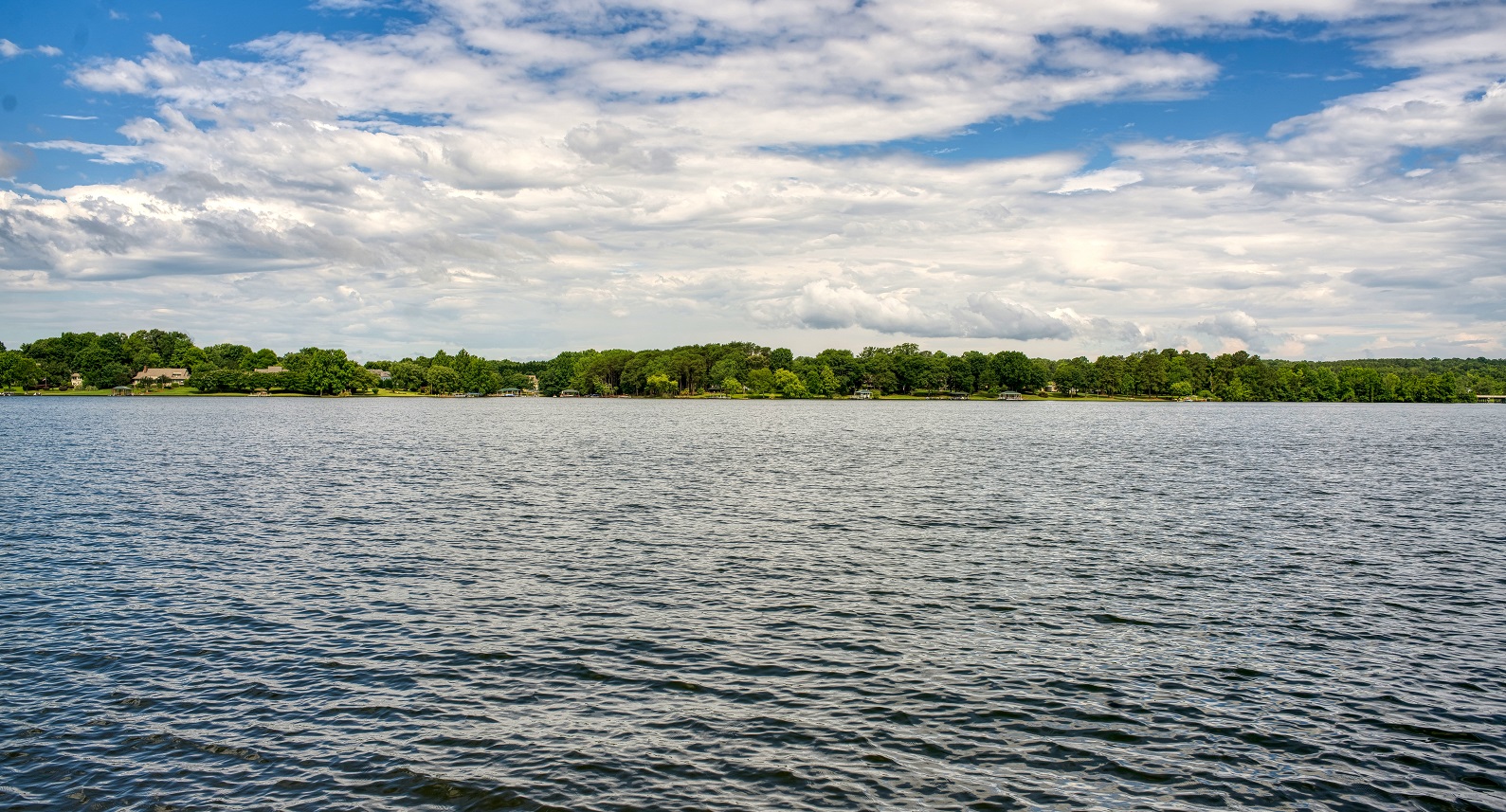
CV 28mm F2 V2
Bowen Lake Spartanburg County in June 12, 2021
CV 28mm F2 V2
Jun 12, 2021 at 01:49 PM
p.9 #8What might replace the recently discontinued CV Ultron 28/2?
Yesterday I did a long walk with my CV 28/2 V2 and my Sigma fp and did plenty of shooting at f5.6 (long distance) and some at f2 (close distance). I prepared 2 color shading compensation profiles for in-camera use before that (one for f5.6 infinity and one for f2 minimum focus distance) and I used those profiles while shooting. Here are lots of samples (SOOC JPEGs, shot at Standard color profile and Auto/Strong Tone curve):
https://photos.app.goo.gl/uNaT7uhY5cDHYnzQ8
I think corner-to-corner sharpness is pretty good at f5.6 on this camera, definitely works for me.
https://photos.app.goo.gl/uNaT7uhY5cDHYnzQ8
I think corner-to-corner sharpness is pretty good at f5.6 on this camera, definitely works for me.
Jun 13, 2021 at 02:45 AM
p.9 #9What might replace the recently discontinued CV Ultron 28/2?
Holy moly some really nice separation going on on those close distance shots. But I do noticed particularly on the pasta shot there seem to be some funky thing happening around the transition zone where they looked like motion blur. Maybe it's a sensor compatibility thing?
Juha Kannisto wrote:
Yesterday I did a long walk with my CV 28/2 V2 and my Sigma fp and did plenty of shooting at f5.6 (long distance) and some at f2 (close distance). I prepared 2 color shading compensation profiles for in-camera use before that (one for f5.6 infinity and one for f2 minimum focus distance) and I used those profiles while shooting. Here are lots of samples (SOOC JPEGs, shot at Standard color profile and Auto/Strong Tone curve):
https://photos.app.goo.gl/uNaT7uhY5cDHYnzQ8
I think corner-to-corner sharpness is pretty good at f5.6 on this camera, definitely works for me.
Jun 13, 2021 at 05:26 AM
p.9 #10What might replace the recently discontinued CV Ultron 28/2?
Thanks! The sensor scanning speed is not that fast and there's only electronic shutter on this camera so it's a possibility that there might have been some slight camera movement during sensor scan as well. It sometimes happens with the fp.
jeffersoncasey wrote:
Holy moly some really nice separation going on on those close distance shots. But I do noticed particularly on the pasta shot there seem to be some funky thing happening around the transition zone where they looked like motion blur. Maybe it's a sensor compatibility thing?
https://photos.app.goo.gl/uNaT7uhY5cDHYnzQ8
I think corner-to-corner sharpness is pretty good at f5.6 on this camera, definitely works for me.
jeffersoncasey wrote:
Holy moly some really nice separation going on on those close distance shots. But I do noticed particularly on the pasta shot there seem to be some funky thing happening around the transition zone where they looked like motion blur. Maybe it's a sensor compatibility thing?
Juha Kannisto wrote
Yesterday I did a long walk with my CV 28/2 V2 and my Sigma fp and did plenty of shooting at f5.6 (long distance) and some at f2 (close distance). I prepared 2 color shading compensation profiles for in-camera use before that (one for f5.6 infinity and one for f2 minimum focus distance) and I used those profiles while shooting. Here are lots of samples (SOOC JPEGs, shot at Standard color profile and Auto/Strong Tone curve):https://photos.app.goo.gl/uNaT7uhY5cDHYnzQ8
I think corner-to-corner sharpness is pretty good at f5.6 on this camera, definitely works for me.
Jun 13, 2021 at 05:43 AM
p.9 #11What might replace the recently discontinued CV Ultron 28/2?
Interesting. Thanks a lot for the pictures! Much appreciated!
Juha Kannisto wrote:
Thanks! The sensor scanning speed is not that fast and there's only electronic shutter on this camera so it's a possibility that there might have been some slight camera movement during sensor scan as well. It sometimes happens with the fp.
https://photos.app.goo.gl/uNaT7uhY5cDHYnzQ8
I think corner-to-corner sharpness is pretty good at f5.6 on this camera, definitely works for me.
Juha Kannisto wrote:
Thanks! The sensor scanning speed is not that fast and there's only electronic shutter on this camera so it's a possibility that there might have been some slight camera movement during sensor scan as well. It sometimes happens with the fp.
jeffersoncasey wrote
Holy moly some really nice separation going on on those close distance shots. But I do noticed particularly on the pasta shot there seem to be some funky thing happening around the transition zone where they looked like motion blur. Maybe it's a sensor compatibility thing?Juha Kannisto wrote
Yesterday I did a long walk with my CV 28/2 V2 and my Sigma fp and did plenty of shooting at f5.6 (long distance) and some at f2 (close distance). I prepared 2 color shading compensation profiles for in-camera use before that (one for f5.6 infinity and one for f2 minimum focus distance) and I used those profiles while shooting. Here are lots of samples (SOOC JPEGs, shot at Standard color profile and Auto/Strong Tone curve):https://photos.app.goo.gl/uNaT7uhY5cDHYnzQ8
I think corner-to-corner sharpness is pretty good at f5.6 on this camera, definitely works for me.
Jun 13, 2021 at 06:18 AM
p.9 #12What might replace the recently discontinued CV Ultron 28/2?
Thanks for these. Sharpness looks very good.
Juha Kannisto wrote:
Yesterday I did a long walk with my CV 28/2 V2 and my Sigma fp and did plenty of shooting at f5.6 (long distance) and some at f2 (close distance). I prepared 2 color shading compensation profiles for in-camera use before that (one for f5.6 infinity and one for f2 minimum focus distance) and I used those profiles while shooting. Here are lots of samples (SOOC JPEGs, shot at Standard color profile and Auto/Strong Tone curve):
https://photos.app.goo.gl/uNaT7uhY5cDHYnzQ8
I think corner-to-corner sharpness is pretty good at f5.6 on this camera, definitely works for me.
Jun 13, 2021 at 10:40 AM
p.9 #13What might replace the recently discontinued CV Ultron 28/2?
Wonderful samples as always Juha. Post your favorites to the review thread. I will link member samples to the review. 
Juha Kannisto wrote:
Yesterday I did a long walk with my CV 28/2 V2 and my Sigma fp and did plenty of shooting at f5.6 (long distance) and some at f2 (close distance). I prepared 2 color shading compensation profiles for in-camera use before that (one for f5.6 infinity and one for f2 minimum focus distance) and I used those profiles while shooting. Here are lots of samples (SOOC JPEGs, shot at Standard color profile and Auto/Strong Tone curve):
https://photos.app.goo.gl/uNaT7uhY5cDHYnzQ8
I think corner-to-corner sharpness is pretty good at f5.6 on this camera, definitely works for me.
Jun 13, 2021 at 10:50 AM
p.9 #14What might replace the recently discontinued CV Ultron 28/2?
Corner test at Panasonic S1R
Spartanburg Cleveland Park Play Ground in June 13, 2021

CV 28mm F2 V2 (Vintage Line)

CV 28mm F2 V2 (Vintage Line) Upper Right Corner

CV 28mm F2 V2 (Vintage Line) Lower Left corner
Spartanburg Cleveland Park Play Ground in June 13, 2021
CV 28mm F2 V2 (Vintage Line)
CV 28mm F2 V2 (Vintage Line) Upper Right Corner
CV 28mm F2 V2 (Vintage Line) Lower Left corner
Jun 13, 2021 at 11:36 AM
p.9 #15What might replace the recently discontinued CV Ultron 28/2?
Juha Kannisto wrote:
Yesterday I did a long walk with my CV 28/2 V2 and my Sigma fp and did plenty of shooting at f5.6 (long distance) and some at f2 (close distance). I prepared 2 color shading compensation profiles for in-camera use before that (one for f5.6 infinity and one for f2 minimum focus distance) and I used those profiles while shooting. Here are lots of samples (SOOC JPEGs, shot at Standard color profile and Auto/Strong Tone curve):
https://photos.app.goo.gl/uNaT7uhY5cDHYnzQ8
I think corner-to-corner sharpness is pretty good at f5.6 on this camera, definitely works for me.
jeffersoncasey wrote:
Holy moly some really nice separation going on on those close distance shots. But I do noticed particularly on the pasta shot there seem to be some funky thing happening around the transition zone where they looked like motion blur. Maybe it's a sensor compatibility thing?
Juha Kannisto wrote:
Thanks! The sensor scanning speed is not that fast and there's only electronic shutter on this camera so it's a possibility that there might have been some slight camera movement during sensor scan as well. It sometimes happens with the fp.
IMO it's the lens. Already only about 10 images into the gallery and I see lots of examples of double edging in OOF background details. It's pretty obvious in the one of the bike against the guardrail. The wires in the upper left are doubled. The signs in the upper right area look like misaligned overlapping double images. The immediate transition area away from the plane of focus in numerous images has IMO some odd qualities.
But the lens looks really sharp in the plane of focus.
I voiced some doubts about it early in Fred's review thread and so far I'm not seeing anything to change my mind. It looks like it will be an awesome lens for sharpness and deeper depth of field images. I don't think it would be my first choice for OOF rendering, especially with the focus transition zone visible.
BTW, thanks for the excellent image gallery, again!!
Jun 13, 2021 at 08:38 PM
p.9 #16What might replace the recently discontinued CV Ultron 28/2?
rscheffler wrote:
https://photos.app.goo.gl/uNaT7uhY5cDHYnzQ8
I think corner-to-corner sharpness is pretty good at f5.6 on this camera, definitely works for me.IMO it's the lens. Already only about 10 images into the gallery and I see lots of examples of double edging in OOF background details. It's pretty obvious in the one of the bike against the guardrail. The wires in the upper left are doubled. The signs in the upper right area look like misaligned overlapping double images. The immediate transition area away from the plane of focus in numerous images has IMO some odd qualities.
But the lens looks really sharp in the plane of focus.
I voiced some doubts about it early in Fred's review thread and so...Show more →
Thanks! Yes, I also think the lens is better for deeper dof images and the bokeh shots I've taken so far didn't look as good to me in terms of background rendering but deep dof images look really nice.
Juha Kannisto wrote
Yesterday I did a long walk with my CV 28/2 V2 and my Sigma fp and did plenty of shooting at f5.6 (long distance) and some at f2 (close distance). I prepared 2 color shading compensation profiles for in-camera use before that (one for f5.6 infinity and one for f2 minimum focus distance) and I used those profiles while shooting. Here are lots of samples (SOOC JPEGs, shot at Standard color profile and Auto/Strong Tone curve):https://photos.app.goo.gl/uNaT7uhY5cDHYnzQ8
I think corner-to-corner sharpness is pretty good at f5.6 on this camera, definitely works for me.
jeffersoncasey wrote
Holy moly some really nice separation going on on those close distance shots. But I do noticed particularly on the pasta shot there seem to be some funky thing happening around the transition zone where they looked like motion blur. Maybe it's a sensor compatibility thing?Juha Kannisto wrote
Thanks! The sensor scanning speed is not that fast and there's only electronic shutter on this camera so it's a possibility that there might have been some slight camera movement during sensor scan as well. It sometimes happens with the fp.But the lens looks really sharp in the plane of focus.
I voiced some doubts about it early in Fred's review thread and so...Show more →
Thanks! Yes, I also think the lens is better for deeper dof images and the bokeh shots I've taken so far didn't look as good to me in terms of background rendering but deep dof images look really nice.
Jun 13, 2021 at 08:55 PM