nandadevieast wrote:
Can someone explain to me how 600/F11 will be different from the 600/F4 lens in Sony RX10 IV, which is 600/F10.8 full frame equivalent.
The 220mm f/4 lens is the Sony RX10 IV has to resolve 2.7 X more lines per mm than the 600 mm f/11 on a FF sensor, because the image is enlarged more after capture to get to the same output size. When it comes to diffraction, the end result is the same, but when it comes to lens design, it should be easier to design the longer lens with better characteristics.
On the sensor side, if you have enough light, the FF sensor will be able to capture a much wider dynamic range at base ISO, with more tonality, and of course if you are resolution hungry there is no substitute for a real 50'ish MP sensor.
alundeb wrote:
The 220mm f/4 lens is the Sony RX10 IV has to resolve 2.7 X more lines per mm than the 600 mm f/11 on a FF sensor, because the image is enlarged more after capture to get to the same output size. When it comes to diffraction, the end result is the same, but when it comes to lens design, it should be easier to design the longer lens with better characteristics.
On the sensor side, if you have enough light, the FF sensor will be able to capture a much wider dynamic range at base ISO, with more tonality, and of course if you are resolution hungry there is no substitute for a real 50'ish MP sensor. ...Show more →
Yes, but it still was a good question for much of the target market for these lenses as both provide about 20 MP at 600mm equivalent when using the more affordable R bodies (that are still much more expensive including the lens). Would be interesting to see how big the IQ difference is in practice (given other contraints like light levels, atmospheric distortion etc.) and if it is worth the extra cost, size and weight. Interestingly, while R has a much bigger sensor the weight difference with RX10 IV isn't huge, about 1450 against 1095 gram.
nandadevieast wrote:
Can someone explain to me how 600/F11 will be different from the 600/F4 lens in Sony RX10 IV, which is 600/F10.8 full frame equivalent.
That 'full frame equivalence' is only in terms of DoF and confuses many photographers.
The '600mm' end of the Sony lens is actually physically 220mm and is indeed f/4; it lets in that amount of light. That's why it takes 72mm filters. There's no 'equivalence', it has a 55mm aperture at that focal length. Basic physics.
The Canon lenses are truly f/11 in terms of exposure.
The leaked UK prices of 699 for the 600DO and 929 for the 800DO are closer to what I thought these would have to come in at to make any sense.
I'm not sure how those prices translate into USD $. I saw that UK price of Canon 100-400II is 1999 pounds and US is $2199 currently. RF70-200/2.8 is $2699 USD and $2599 pounds. So those UK prices are probably really close to the US price.
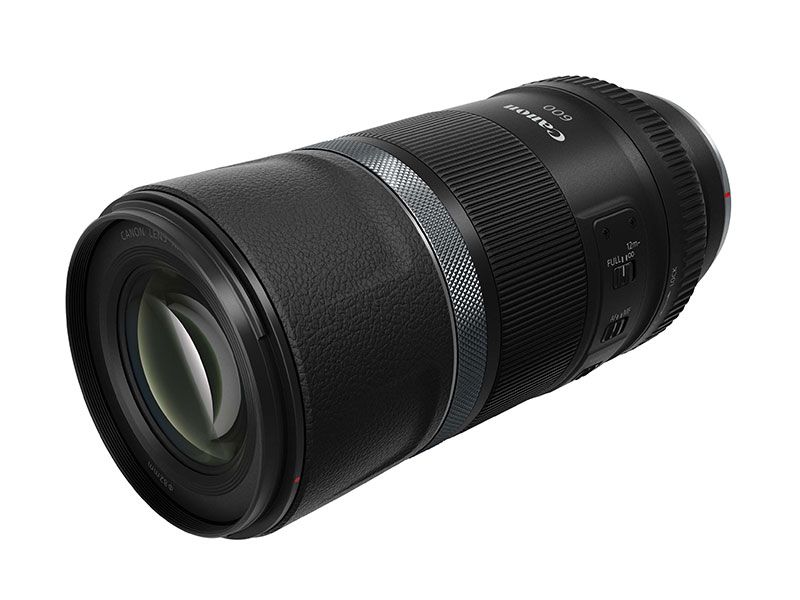
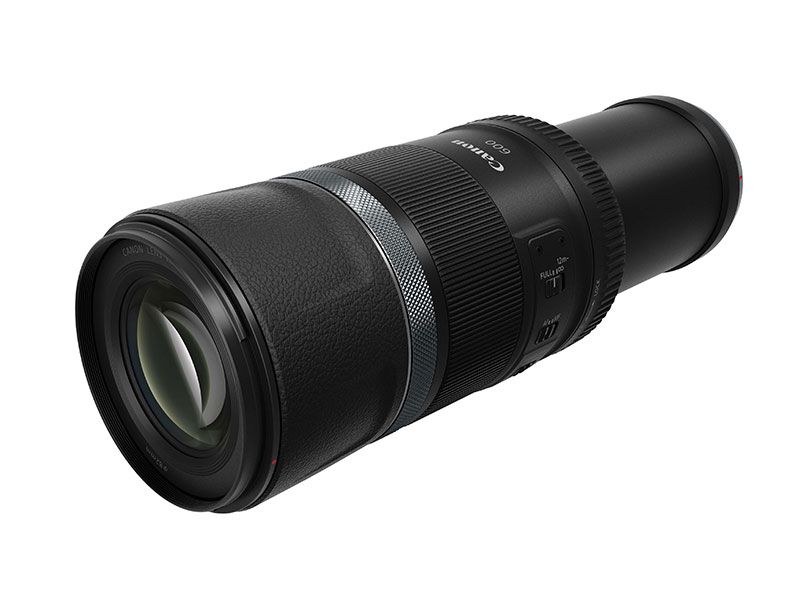
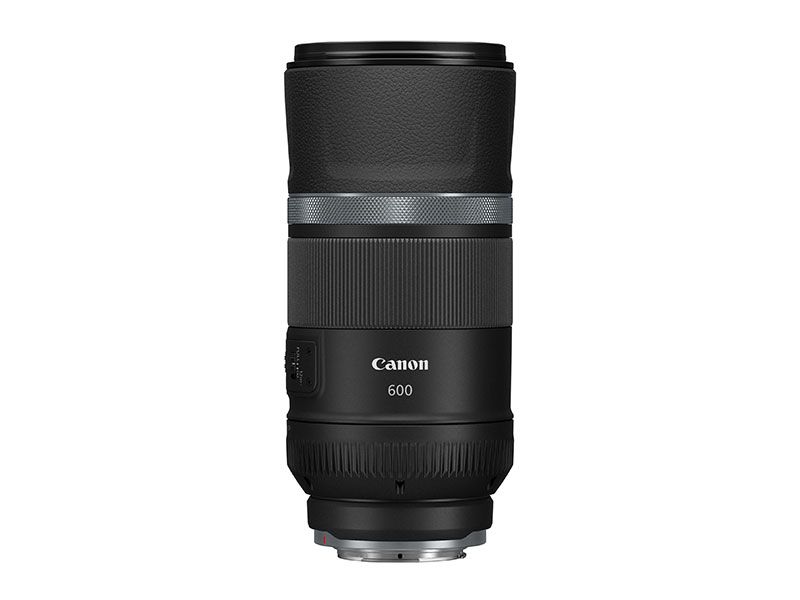
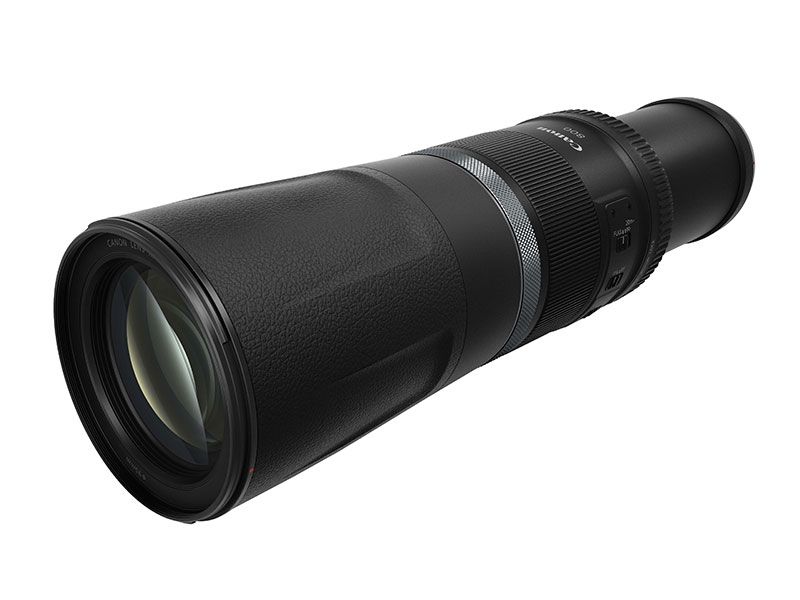
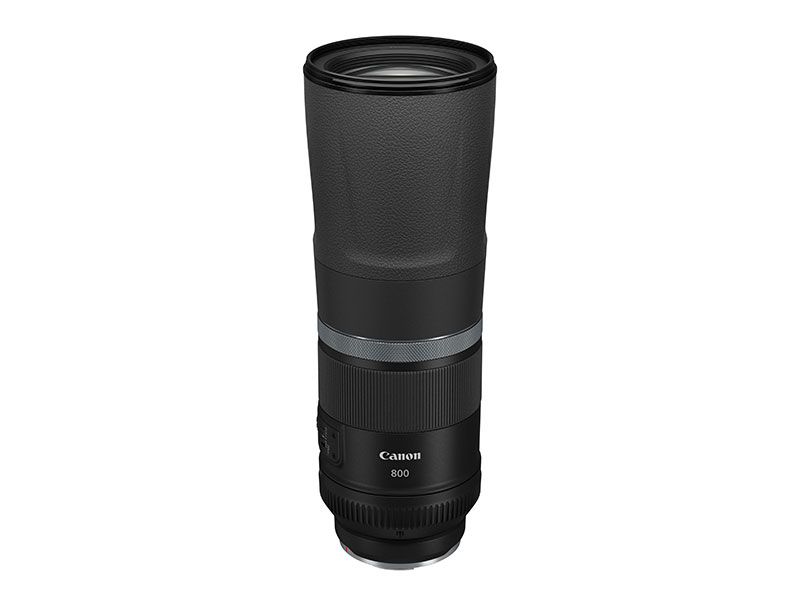
If you zoom in you can now clearly see the word "Lock" for that rear most ring. The silver ring being the control ring and thankfully placed in a proper position for handholding a lightweight super-tele.
If you zoom in you can now clearly see the word "Lock" for that rear most ring. The silver ring being the control ring and thankfully placed in a proper position for handholding a lightweight super-tele.
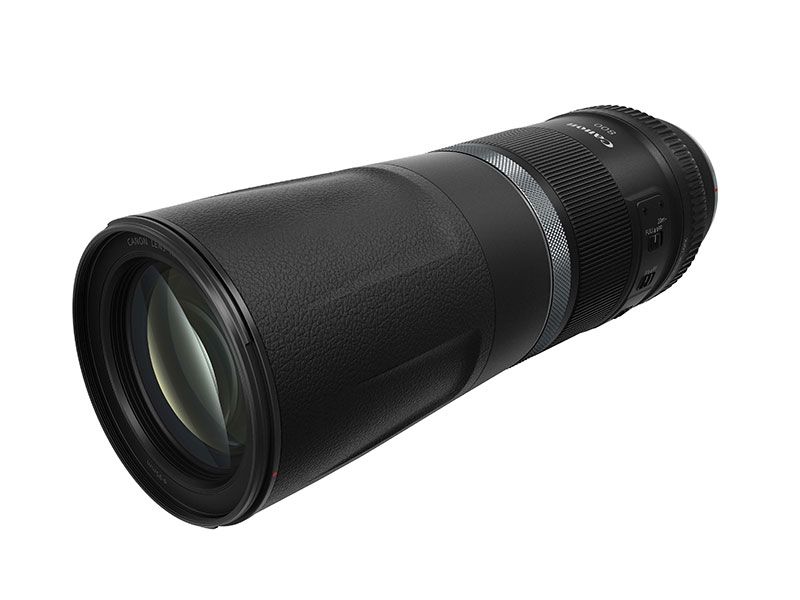
The focus ring (I guess it is a MF ring) is pretty close to the camera which isn't great with such a long and probably front-heavy lens. I have the same problem with the 100-400II, it is very uncomfortable to do hand-held MF because the MF ring is too close to the lens mount. Older primes like the 2.8/200L and 4/300 IS have much better focus ring position.
technic wrote:
The focus ring (I guess it is a MF ring) is pretty close to the camera which isn't great with such a long and probably front-heavy lens. I have the same problem with the 100-400II, it is very uncomfortable to do hand-held MF because the MF ring is too close to the lens mount. Older primes like the 2.8/200L and 4/300 IS have much better focus ring position.
It is not really that close once in extended position for the 600/800. Or were you talking about the 100-500?
I guess the 800 is still not in the best position but the 600 looks pretty good.
Even Canon has 54mm aperture so no difference. If we put the Sony lens in front of a hypothetical full frame sensor, it will be 220/4 but right now its on a cropped sensor to give 600mm/10.8 FOV.
RX10 being F4 will take in more light but has a small sensor so that advantage is negated. (You can use higher ISOs on full frame but its F11).
I thought both packages are similar but there may be differences I don’t understand.
luminaire wrote:
That 'full frame equivalence' is only in terms of DoF and confuses many photographers.
The '600mm' end of the Sony lens is actually physically 220mm and is indeed f/4; it lets in that amount of light. That's why it takes 72mm filters. There's no 'equivalence', it has a 55mm aperture at that focal length. Basic physics.
The Canon lenses are truly f/11 in terms of exposure.
arbitrage wrote:
The leaked UK prices of 699 for the 600DO and 929 for the 800DO are closer to what I thought these would have to come in at to make any sense.
I'm not sure how those prices translate into USD $. I saw that UK price of Canon 100-400II is 1999 pounds and US is $2199 currently. RF70-200/2.8 is $2699 USD and $2599 pounds. So those UK prices are probably really close to the US price.
But those do seem like reasonable prices...
Man! Those are incredibly affordable prices! I hope that's true and if that 800 holds up to reasonable IQ then I'll have a fantastic pocket friendly wildlife lens to go hiking with in the very near future.
Geesh, things are getting exciting in the GAS world. Who would have thought we would have an 800mm lens this tiny just a year ago.
Cheap it certainly is, but remember that you get what you pay for. Some things have to give but we don’t know what yet, aside from the slow aperture and some diffraction penalty. Canon is not being charitable to us! They exist to make money, so those lenses are possibly costing them half as much to make.
lighthound wrote:
Man! Those are incredibly affordable prices! I hope that's true and if that 800 holds up to reasonable IQ then I'll have a fantastic pocket friendly wildlife lens to go hiking with in the very near future.
Geesh, things are getting exciting in the GAS world. Who would have thought we would have an 800mm lens this tiny just a year ago.
If the USA prices are lower than rumored, or even equal, those primes are going to sell many, many copies. I can't imagine the image quality of the 600 and 800 will be anything short of excellent. Canon doesn't really make bad primes these days, at any price point.
arbitrage wrote:
It is not really that close once in extended position for the 600/800. Or were you talking about the 100-500?
I guess the 800 is still not in the best position but the 600 looks pretty good.
You are right: I only looked at the separate lens pictures: in extended position it looks better (but still not great).
---------------------------------------------
lighthound wrote:
Man! Those are incredibly affordable prices! I hope that's true and if that 800 holds up to reasonable IQ then I'll have a fantastic pocket friendly wildlife lens to go hiking with in the very near future.
Geesh, things are getting exciting in the GAS world. Who would have thought we would have an 800mm lens this tiny just a year ago.
Makes you wonder why they are not offering such lens for their EF(S) customers, who number probably 100x more and might be a more suitable audience for such a relatively cheap lens than those who are now rushing to buy into the expensive R system
Obviously Canon wants to lure R customers with these lenses but as they are pretty "niche" it still is weird.
If Canon wants to suggest the EF-M and EF(-S) lines are not yet EOL, they should offer it with at least EF mount as well.
bobbytan wrote:
Cheap it certainly is, but remember that you get what you pay for. Some things have to give but we don’t know what yet, aside from the slow aperture and some diffraction penalty. Canon is not being charitable to us! They exist to make money, so those lenses are possibly costing them half as much to make.
Oh there is no doubt these won't be L class lenses and there will certainly be compromises, but at that price I don't really care. I want a long lens to literally stuff into a pocket (albeit a large one) and not have to worry about trashing a $6k - $12k lens. If you accidentally drop it off a cliff 2 years after purchase just run out and grab another one, with only a small tear in your eye.
Most of my weekend hikes involve driving a fair distance with my wife and mutt and then hiking back in a ways. By that time there is usually lots of light so the f/11 wont kill me too much for this type of shooting. If I were to go out specifically for wildlife, leaving the wife and mutt at home and getting up well before dawn, then I'd take my 500II f/4 and leave the slow glass at home.
I view these lenses like the nifty-fifty but with an extra zero in the price.
technic wrote:
You are right: I only looked at the separate lens pictures: in extended position it looks better (but still not great).
---------------------------------------------
Makes you wonder why they are not offering such lens for their EF(S) customers, who number probably 100x more and might be a more suitable audience for such a relatively cheap lens than those who are now rushing to buy into the expensive R system
Obviously Canon wants to lure R customers with these lenses but as they are pretty "niche" it still is weird.
If Canon wants to suggest the EF-M and EF(-S) lines are not yet EOL, they should offer it with at least EF mount as well....Show more →
With smaller sensors there are equivalent options already, like third party zooms to 400/6.3,. Canon must have something in mind though. There are rumors about EF-M 100-300 mm f/5.6 - f/8 being on the roadmap.
JohanEickmeyer wrote:
If the USA prices are lower than rumored, or even equal, those primes are going to sell many, many copies. I can't imagine the image quality of the 600 and 800 will be anything short of excellent. Canon doesn't really make bad primes these days, at any price point.
As far as I can tell, they traded on all the "right" things. Don't try to make it physically short. Keep the MFD long. This has been the recipe of the excellent old primes like the 400/5.6 and 300/4 non-IS. Further: Perfect use case for DO element. Make the build quality adequate but not L grade. In theory, they have done nothing that should compromise the image quality. I am a bit anxious about the DO element, but on the positive side it has always meant high resolving power wide open, even field and low CA. All good in my book.
Canon always seems to anchor themselves with some kind of bread-and-butter market segment. It was the new-kid/vacationing couple with their rebels, I guess now its.. birders/wild-life enthusiasts? I'm guessing we're going to see some crazy kit pricing with the RP and these lenses. I think Canon did the right thing with these lenses, it doesn't threaten the 1DX and 600 III buyers, and it gives Canon time to deliver a knockout R1 body that can hopefully drive the EF super tele glass like native RF.
bobbytan wrote:
Cheap it certainly is, but remember that you get what you pay for. Some things have to give but we don’t know what yet, aside from the slow aperture and some diffraction penalty. Canon is not being charitable to us! They exist to make money, so those lenses are possibly costing them half as much to make.
A DSLR cannot autofocus an f/11 lens in the normal way, through the viewfinder. Thus, such lenses are not realistically usable on DSLRs for the typical applications (wildlife).
I expect the IQ to be as good as the long end of a great zoom, say 100-400 or the 100-500 that’s coming. The compromise is in F number, shouldn’t be in IQ.