This topic is in the 2020 archive. You can read it and like its posts here. It is read only.
Archive 2020Leica M3 with Sony A7 or NEX sensor
p.1 #1Leica M3 with Sony A7 or NEX sensor
Frankencamera has published detailed steps (including 3D printing) on how to convert an old Leica M3 film body into a digital camera.
TWO MODELS: Full frame A7 or APS-C NEX sensors.
"I started trying to make a version similar to my original Konica conversion but with a Sony A7 sensor. I quickly ran into difficulty with space as the A7 parts were larger and more fiddly than those in the Sony NEX-5. My attempt to shoe-horn the A7 parts in made the camera large, ugly and unreliable. I was not interested in creating a camera that was less than the sum of its parts so I split the project into two models, one using the NEX-5 sensor which essentially just clips onto the back of the Leica, and another with the A7 sensor and parts of the Leica (including the functioning rangefinder of course) but not the body and shutter of the Leica. I felt that these two models should satisfy different priorities: if you want the most authentic, fully manual M3 experience with all the Leica engineering, the NEX model suits you. On the other hand, if you’re mostly interested in the M3 rangefinder and you want a full frame sensor and metering; the A7 model would be best. It may seem ridiculous to only use the rangefinder and disregard the mechanics of the camera but when you consider an external Leica viewfinder (with no rangefinder) is worth £625 it makes more sense, Leica is an optics company after all."
https://frankencamera.wordpress.com/2020/01/27/leica-m3-digital-conversion-kit/
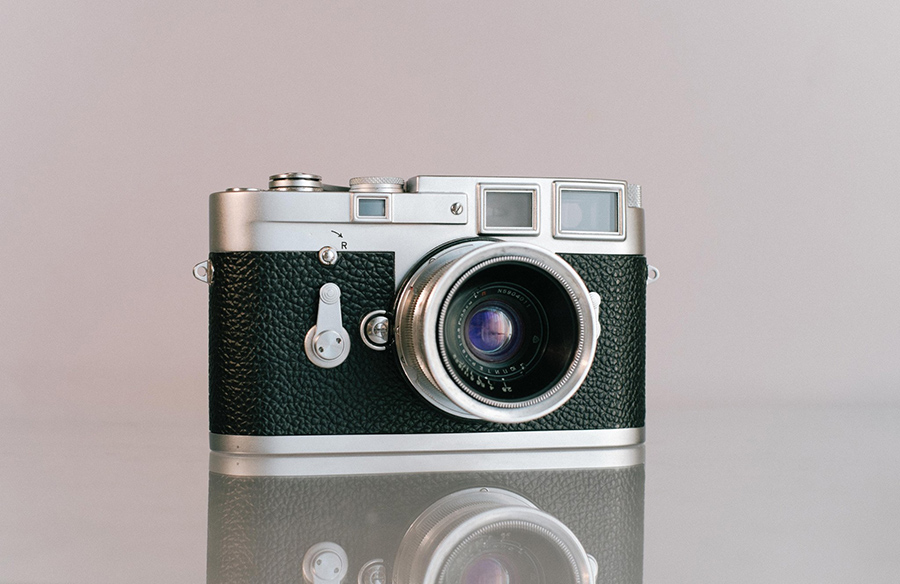
Full Frame model (A7 sensor)
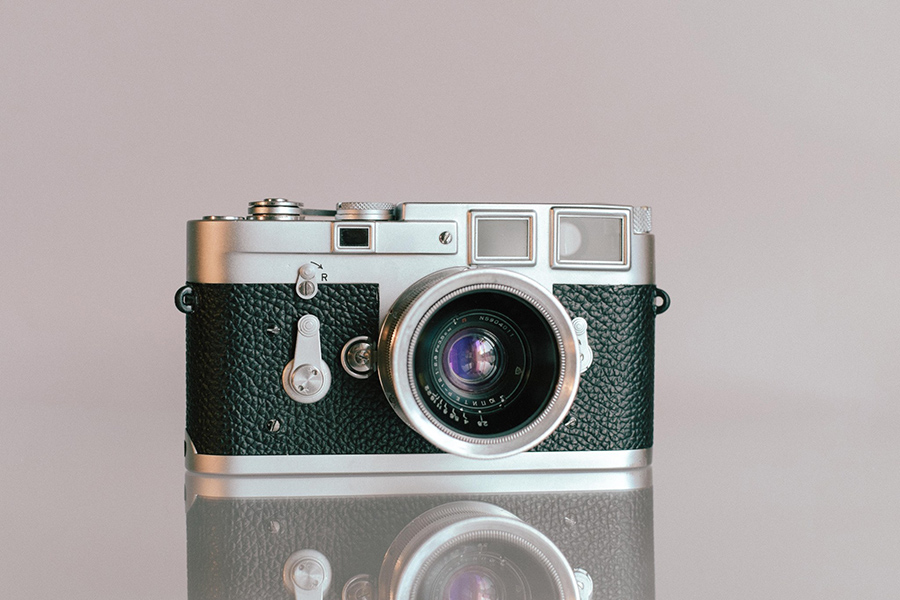
APS-C model: (NEX-5 sensor)
TWO MODELS: Full frame A7 or APS-C NEX sensors.
"I started trying to make a version similar to my original Konica conversion but with a Sony A7 sensor. I quickly ran into difficulty with space as the A7 parts were larger and more fiddly than those in the Sony NEX-5. My attempt to shoe-horn the A7 parts in made the camera large, ugly and unreliable. I was not interested in creating a camera that was less than the sum of its parts so I split the project into two models, one using the NEX-5 sensor which essentially just clips onto the back of the Leica, and another with the A7 sensor and parts of the Leica (including the functioning rangefinder of course) but not the body and shutter of the Leica. I felt that these two models should satisfy different priorities: if you want the most authentic, fully manual M3 experience with all the Leica engineering, the NEX model suits you. On the other hand, if you’re mostly interested in the M3 rangefinder and you want a full frame sensor and metering; the A7 model would be best. It may seem ridiculous to only use the rangefinder and disregard the mechanics of the camera but when you consider an external Leica viewfinder (with no rangefinder) is worth £625 it makes more sense, Leica is an optics company after all."
https://frankencamera.wordpress.com/2020/01/27/leica-m3-digital-conversion-kit/
 |
||
 |
||
|
Full Frame model (A7 sensor)
|
||
 |
||
|
APS-C model: (NEX-5 sensor)
Apr 16, 2020 at 01:41 PM
p.1 #3Leica M3 with Sony A7 or NEX sensor
Wow, I was considering updating my M3s to a newer sensor, Acros II.
Apr 16, 2020 at 03:06 PM
p.1 #4Leica M3 with Sony A7 or NEX sensor
The interchangeable FF conversion is interesting but just clicking on the design description in the manual is already scaring me, and I admittedly don't have the skills nor the tools to do it. The group of users who actually would follow the instruction is likely super small. I can see that some skilled repair shops might see a market niche here to offer for Leica customers. Would love to see some images taken especially with a FF-modified M3 camera (not at all interested to switch a 35 mm film camera against a APS-C sensor, that's at least for me no solution).
Apr 16, 2020 at 03:28 PM
p.1 #5Leica M3 with Sony A7 or NEX sensor
this looks awesome!
i was planning to try sticking an a7 sensor in a leica IIIf. i'll have to look at the details here.
i was planning to try sticking an a7 sensor in a leica IIIf. i'll have to look at the details here.
Apr 16, 2020 at 04:30 PM

p.1 #7Leica M3 with Sony A7 or NEX sensor
Wow.
I don’t see where it stars which A7 models will work. Just the original?
I’d like to see the 3d printed parts. From the pics, they seem pretty complex and would need a sinter based printer?
You have to buy the 3d files from him?
Would be interesting to see what could be done with an old Nikon F3HP, FM2, and a Canon F1New...
Apr 16, 2020 at 07:03 PM
p.1 #8Leica M3 with Sony A7 or NEX sensor
Seriously impressive work. Makes me want to build one despite never being previously interested in Leica before...
Apr 16, 2020 at 08:08 PM
p.1 #12Leica M3 with Sony A7 or NEX sensor
anselwannab wrote:
Wow.
I don’t see where it stars which A7 models will work. Just the original?
I was wondering the same. Looking through the description, it seems no matter which A7 series camera is used, the same unmodified Sony camera sensor is used. This means that potential issues with ultra-wide angle M lenses on unmodified Sony sensors (color casts, blurred corners) will likely remain here as in the original Sony camera with adapted M lenses.
Apr 20, 2020 at 02:50 PM
p.1 #13Leica M3 with Sony A7 or NEX sensor
beautiful project, it's just insane how modern artisans can get around such complex devices and built their own custom product
if I had the funds I would commision him a total rebuild of a7rIV with a new titanium printed chassis in rangefinder style
if I had the funds I would commision him a total rebuild of a7rIV with a new titanium printed chassis in rangefinder style
Apr 20, 2020 at 04:26 PM
p.1 #14Leica M3 with Sony A7 or NEX sensor
retrofocus wrote:
I don’t see where it stars which A7 models will work. Just the original?I was wondering the same. Looking through the description, it seems no matter which A7 series camera is used, the same unmodified Sony camera sensor is used. This means that potential issues with ultra-wide angle M lenses on unmodified Sony sensors (color casts, blurred corners) will likely remain here as in the original Sony camera with adapted M lenses.
It's ok, it's built on a Leica M3 which is meant to be shot with 50mm lenses! Best 50mm viewfinder ever.
anselwannab wrote
Wow.I don’t see where it stars which A7 models will work. Just the original?
It's ok, it's built on a Leica M3 which is meant to be shot with 50mm lenses! Best 50mm viewfinder ever.
Apr 21, 2020 at 11:02 AM
p.1 #15Leica M3 with Sony A7 or NEX sensor
Desmolicious wrote:
I don’t see where it stars which A7 models will work. Just the original?I was wondering the same. Looking through the description, it seems no matter which A7 series camera is used, the same unmodified Sony camera sensor is used. This means that potential issues with ultra-wide angle M lenses on unmodified Sony sensors (color casts, blurred corners) will likely remain here as in the original Sony camera with adapted M lenses.It's ok, it's built on a Leica M3 which is meant to be shot with 50mm lenses! Best 50mm viewfinder ever.
I own a M3 but also use it with wide angle lenses and external viewfinder.....point here is that even if you use a Sony A7 series sensor within a M3 body, you will see the same as with an A7 series camera and adapted M lenses. Difference is only that you can use the M3 ergonomics with rangefinder focusing to get digital images.
retrofocus wrote
anselwannab wrote
Wow.I don’t see where it stars which A7 models will work. Just the original?
I own a M3 but also use it with wide angle lenses and external viewfinder.....point here is that even if you use a Sony A7 series sensor within a M3 body, you will see the same as with an A7 series camera and adapted M lenses. Difference is only that you can use the M3 ergonomics with rangefinder focusing to get digital images.
Apr 21, 2020 at 11:05 AM
p.1 #16Leica M3 with Sony A7 or NEX sensor
Do not forget the 1/1000s cloth shutter.
It is a nice idea but is not really practical.
It is a nice idea but is not really practical.
Apr 21, 2020 at 11:32 AM
p.1 #17Leica M3 with Sony A7 or NEX sensor
realVivek wrote:
Do not forget the 1/1000s cloth shutter.
It is a nice idea but is not really practical.
I shoot a lot of film, and honestly the limit with 1/1000 sec doesn't bother me. I reached it when shooting wide open with my f/1.5 lens, but I normally use slower ISO film in the first place. On my medium format cameras I am even more limited to 1/500 sec - also fine for me.
Apr 21, 2020 at 11:43 AM
p.1 #18Leica M3 with Sony A7 or NEX sensor
realVivek wrote:
Do not forget the 1/1000s cloth shutter.
It is a nice idea but is not really practical.
Negative film likes over exposure.
And as this is an RF kamera, ND filters can be used w/o effecting viewing/focusing.
Do not forget the 1/1000s cloth shutter.
It is a nice idea but is not really practical.
Negative film likes over exposure.
And as this is an RF kamera, ND filters can be used w/o effecting viewing/focusing.
Apr 21, 2020 at 11:44 AM
p.1 #19Leica M3 with Sony A7 or NEX sensor
I know. I used to shoot with Ektar 25 and still have a few bricks.
This is different.
retrofocus wrote:
It is a nice idea but is not really practical.I shoot a lot of film, and honestly the limit with 1/1000 sec doesn't bother me. I reached it when shooting wide open with my f/1.5 lens, but I normally use slower ISO film in the first place. On my medium format cameras I am even more limited to 1/500 sec - also fine for me.
This is different.
retrofocus wrote:
realVivek wrote
Do not forget the 1/1000s cloth shutter.It is a nice idea but is not really practical.
Apr 21, 2020 at 11:48 AM
p.1 #20Leica M3 with Sony A7 or NEX sensor
realVivek wrote:
I know. I used to shoot with Ektar 25 and still have a few bricks.
This is different.
It is a nice idea but is not really practical.I shoot a lot of film, and honestly the limit with 1/1000 sec doesn't bother me. I reached it when shooting wide open with my f/1.5 lens, but I normally use slower ISO film in the first place. On my medium format cameras I am even more limited to 1/500 sec - also fine for me.
You could always use an ND filter too. I think if one opted for this sort of camera you might need a work around on a number of issues. Certainly the max shutter speed would be one of them, but doesn't seem like a deal breaker if you are really interested in this camera.
I would imagine that at some people who opt for this mod would also opt to include a modified sensor with a thin sensor stack as well. Seems like an obvious move and wouldn't add that much to the cost considering the work that would be required anyway.
I know. I used to shoot with Ektar 25 and still have a few bricks.
This is different.
retrofocus wrote
realVivek wrote
Do not forget the 1/1000s cloth shutter.It is a nice idea but is not really practical.
You could always use an ND filter too. I think if one opted for this sort of camera you might need a work around on a number of issues. Certainly the max shutter speed would be one of them, but doesn't seem like a deal breaker if you are really interested in this camera.
I would imagine that at some people who opt for this mod would also opt to include a modified sensor with a thin sensor stack as well. Seems like an obvious move and wouldn't add that much to the cost considering the work that would be required anyway.
Apr 21, 2020 at 11:53 AM