lighthound wrote:
Not that this would be a show stopper by any means, but why isn't this the case? Does the shutter speed increase on other manufactures bodies when in crop mode?
I never followed why Canon wouldn't employ this. When others have employed it, it tugged at me pretty strong ... the prospect of a single body that could switch from "slow" to "go".
I find it odd that in order to achieve certain video parameters, the historic price to pay has been cropped. Yet, the inverse hasn't seemingly been afforded, i.e. crop to increase parameters in fps for stills.
All I can offer is, ummm, it's Canon ... "Can", but just another backwards "no".
RustyBug wrote:
I find it odd that in order to achieve certain video parameters, the historic price to pay has been cropped. Yet, the inverse hasn't seemingly been afforded, i.e. crop to increase parameters in fps for stills.
It would also follw that if anyone offers higher speed in crop mode with e-shutter (m-shutter is unlikely) for stills, people would just call the highest frame rate "crippled". You can't win
alundeb wrote:
I think Nikon had a patent on increased frame rate in crop mode.
For mechanical shutter I think the shutter itself is the limitation anyway.
Yep, I get that for mechanical but I don't understand why we don't get better throughput (FPS) on MILC bodies.
Having less data to crunch seems like it should be a given. I don't see how something like this could be patentable with todays MILC tech.
It's not a big deal I guess, just something I've been pondering. I'm sure I'm missing something here as to why we don't get a little extra .
arbitrage wrote:
No, not any recent ones. There were some Nikon bodies a few generations back that did increase in crop mode. But the D850 doesn't, the A7RIV doesn't...no current bodies do that I'm aware of.
Not quite the same thing but the M6 Mark II increases the raw burst rate to 30fps when cropped to 1.33x of APS-C. But that's limited to about 70 frames, which means it can only support that frame rate to fill up the buffer and can't process the images at that rate through DIGIC.
Jesse Evans wrote:
The Fuji X-T3 and X-T4 both offer a 30fps burst mode that comes with a crop.
So can the M6II from what I understand. It also hits 30 fps in "RAW burst mode". I'm curious if any of the M6II users have utilized this feature. I haven't heard anyone talking about it.
Canon Rumors CR2 from "a very good source" is reporting what most of us assumed...the R5 will have one CFExpress slot and one UHS-II SD slot.
My thoughts on that:
Pros:
If you don't need redundancy then you have a choice to spend $5 on a card or $890 on a card vs starting at a minimum buy in of ~$150.
Even if you do need redundancy but shoot stuff that doesn't need the fastest writes or deep buffer then you can save money on a slower SD slot.
Basically just a lot more flexibility.
Cons:
If you are someone that likes redundancy and someone that wants to burst at full FPS and get as deep as buffer as possible then the benefits of the CFExpress card get dumbed down by the SD slot. And for someone in that scenario you would obviously try to max out the top speed card in the UHS-II slot....well a top spec UHS-II card is about equal price to a CFExpress card now so you don't really save money (unless you already have a good SD collection) but you loose performance compared to a dual CFExpress camera.
Not a good choice in my eyes (not to say crippled). What are you doing with cheap SD cards in this camera - a camera that is supposed to deliver up to 12-20 fps @45Mpix. And as already said, prices for UHS-II 300MB/s SD cards are quite close to those of CFexpress cards (and do only deliver half the write througput or less).
Might be they had good reason to do this way (body size, heat, etc.).
This sounds like a logical solution for those that want/need redundancy. With today's memory card reliability, I have never felt the need for a second card so this is not a big concern. Wedding photogs are the ones that truly NEED an instant back-up and they would likely never hit the buffer on the slowest card.
With that said however, what makes you think that the CFexpress card wont be the primary where the buffer dumps into and then the SD card slowly backs up in the background. I don't see why this wouldn't be done this way and would not have any effect on burst rate or buffer depth.
When I had CF & SD in my SLR/C ... I ran Raw to the CF, jpg to the SD (I preferred small jpg, for easy cull / publish / send), knowing that I had raw in my hip pocket for print or more extensive PP. Seemed like a very pragmatic way of doing things.
It meant that the writing demands were relative well mated to the card. It also meant that for quick files, I pulled the SD card, since they were sooc jpg (set up to my style), whereas a file that I need max capability from, I would use the raw from the CF. I would expect I'll setup the the CF Express / SD II the same way.
Others may not like the concept of having raw & jpg on different cards, but I found it very useful. Culling small jpgs was easier/quick than culling larger raw ... and for the SD card has some universal to pop in different devices.
lighthound wrote:
This sounds like a logical solution for those that want/need redundancy. With today's memory card reliability, I have never felt the need for a second card so this is not a big concern. Wedding photogs are the ones that truly NEED an instant back-up and they would likely never hit the buffer on the slowest card.
With that said however, what makes you think that the CFexpress card wont be the primary where the buffer dumps into and then the SD card slowly backs up in the background. I don't see why this wouldn't be done this way and would not have any effect on burst rate or buffer depth.
Well there is no precedence for that. Every mixed slot camera has been limited by the second slot. However if you just write a JPEG to the second SD slot and not a backup RAW then maybe the hit to max performance wouldn’t be as bad.
However many cameras achieve their fastest write speeds when you shoot full uncompressed RAW with no JPEG. Sony is certainly compromised that way but I don’t think Canon cameras have been affected like that as I recall.
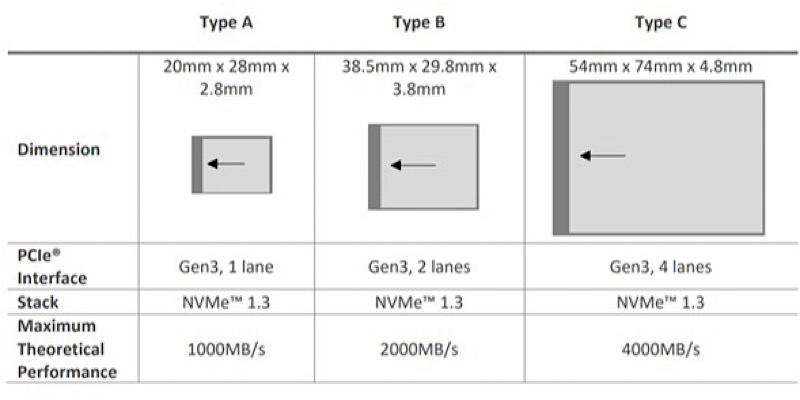
I hope we eventually see the smaller Type A CFExpress card produced and put into mirrorless cameras. That is still a very fast card, rugged card but about SD sized.
RustyBug wrote:
... and for the SD card has some universal to pop in different devices.
That too.
I mean, I can understand why many users would prefer two CFExpress cards, but to say that using one SD card is not a good solution for other users, just the Canon cripple hammer, well I certainly disagree on that.
We would assume that the R5 will support the HEIF file format as well, making for a better backup format than jpg. I would even go as far as to say that HEIF could be more useful than the old sRAW and mRAW formats, that were not true raw formats anyway.
Regarding cards, any move to a newer technology is fraught with pluses and minuses.
- The CFExpress + SD choice provides the most options, but creates cost issues for those who just want redundancy and may (?) create performance issues for a few users.
- A CFExpress-only solution makes the redundancy cost higher but addresses the performance concerns.
- A SD-only solution addresses redundancy costs but is the lowest performance option.
Depending on what sort of user you are, you might think any one of these three options is the best one... or the worst one. There is no way that Canon can make everyone happy.
One thing to keep in mind: Any new technology, such as CFExpress, debuts at a much higher price point. But it typically also drops quickly once it becomes more widely used. Early adopters are going to pay a higher price, but it won't be that long before the cost of cards in sizes that most photographers will want (likely in the 128GB to 256GB range) drops to levels that don't induce heart failure.
I remain un-excited. I am, however, somewhat less discouraged, than I was. Thankfully, my “team” of a 5D IV, a 5Ds R, and a pair of 7D II cameras, plus my older cameras in reserve, should remain viable and relevant for quite some time, while Canon camera development remains lost in The Wilderness. (I have no plans to quit Canon. I just added an EF 28/2.8 IS, and a 600EX II RT, and am strongly considering a locally-available, pre-owned Zeiss Milvus ZE.)
I could see using an R5 for landscape shooting, but convincing myself to spend the money is a going to be a problem, as my 5Ds R and 5D IV show no signs of being claimed by attrition. They may still be serving, a decade from now, or longer. I might rather buy an Otus ZE, for EF, than buy an EOS R-series body, in order to use one of the optically wonderful RF lenses.
The optical quality of the RF lenses is encouraging. I would like to use one or more of them, someday, especially that 28-70mm f/2 zoom.
EGrav wrote:
SD sized cards are to hard to handle with gloves on. Easier to lose, also. IMO.
So very true! I hate handling SD cards over anything except a flat, clean surface, even without gloves. This near-phobia started with my very first digital camera, a gift from my wife. The card was actually one of those proprietary Olympus cards, just a bit smaller than an SD card, which I fumbled while sitting inside a motor vehicle. I thought I would never find it, and, was under pressure, as I needed to photograph evidence, at a crime scene. That Olympus p&s soon belonged to my sister-in-law, and I started using more-suitable gear.
I have fumbled a few SD cards, since then. Gloves were never a factor, that I can recall.
I never bent a pin, while using CF cards, but I can see the problem.
Nikon has been my second system, for a while, largely so my Nikon-shooting wife, an avid photographer, and I can share wildlife/bird-oriented lenses and accessories. The XQD card shortage, in early 2018, was vexing, as that was when we added my D5 and her D850, and the price does not excite joy, but the XQD form factor is nice, and this first version of the CFExpress copies the form factor. (There are other CFExpress card sizes, with different size specs, that may be introduced in the future.)