algrove wrote:
Thanks. Any idea of the Leica hood part number you are using? Sounds interesting.
I am currently unable to find the part number, but I will persist in my search. While it is slightly shorter than the hood of the SPII that comes with it, I believe the latter will be more effective in preventing veiling/ghosting flare due to its slightly longer length. Keep in mind that the hood of the LLL may appear large, but it actually attaches within the lens when mounted.
I will be receiving my Voigtlander 50/1.5 Heliar back next week, but I already know that I greatly prefer the performance and rendering of the SPII. The Heliar lens tends to provide a soft-focus effect and lacks sharpness, particularly at medium and long distances. In contrast, the LLL SPII captures intricate details even when wide open. Additionally, I find the aesthetic quality of the SPII's output more appealing, although the Voigtlander lens also has its own distinctive character. At this point, if I were to make a choice between the two, I would opt for the LLL.
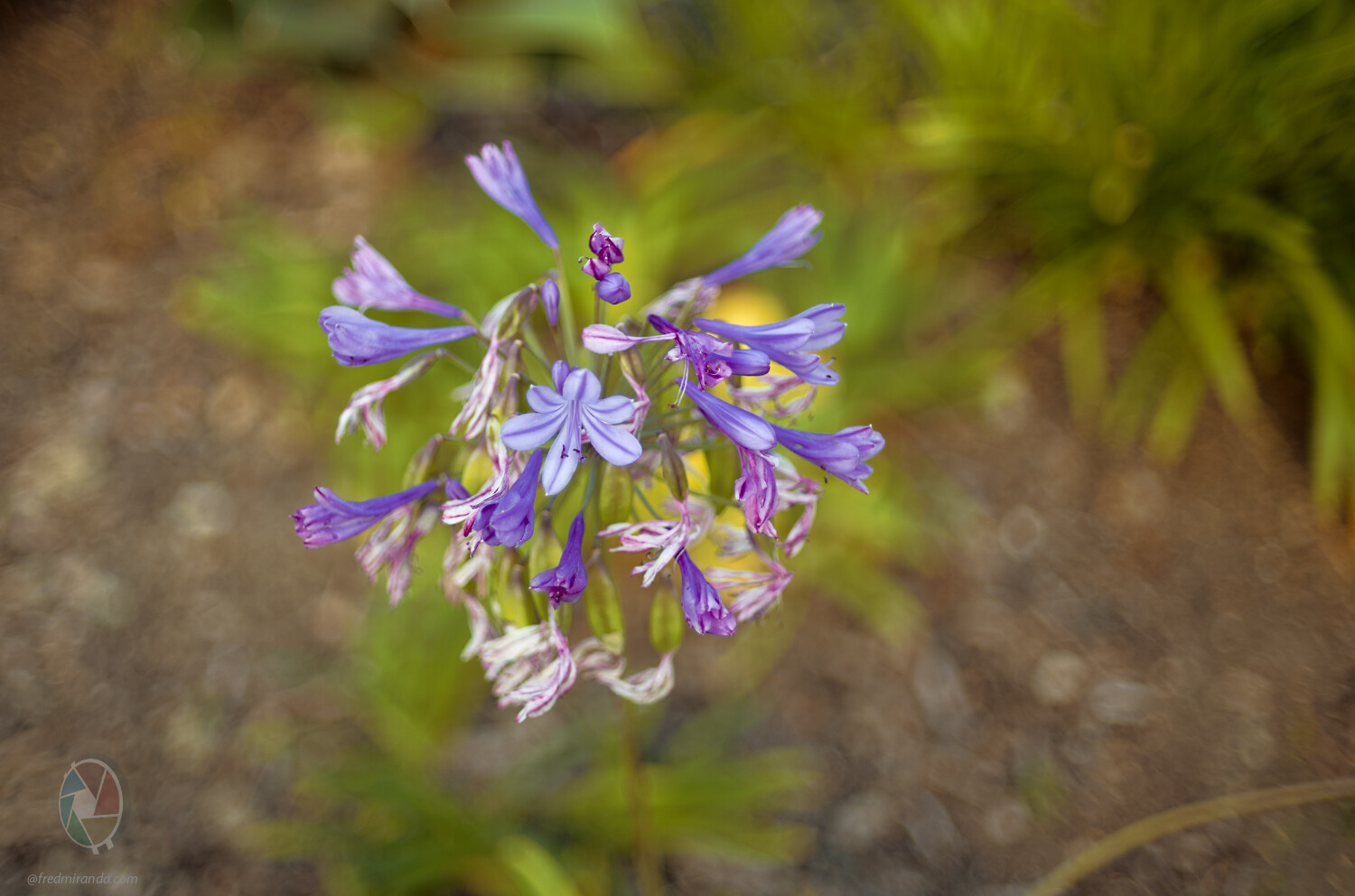
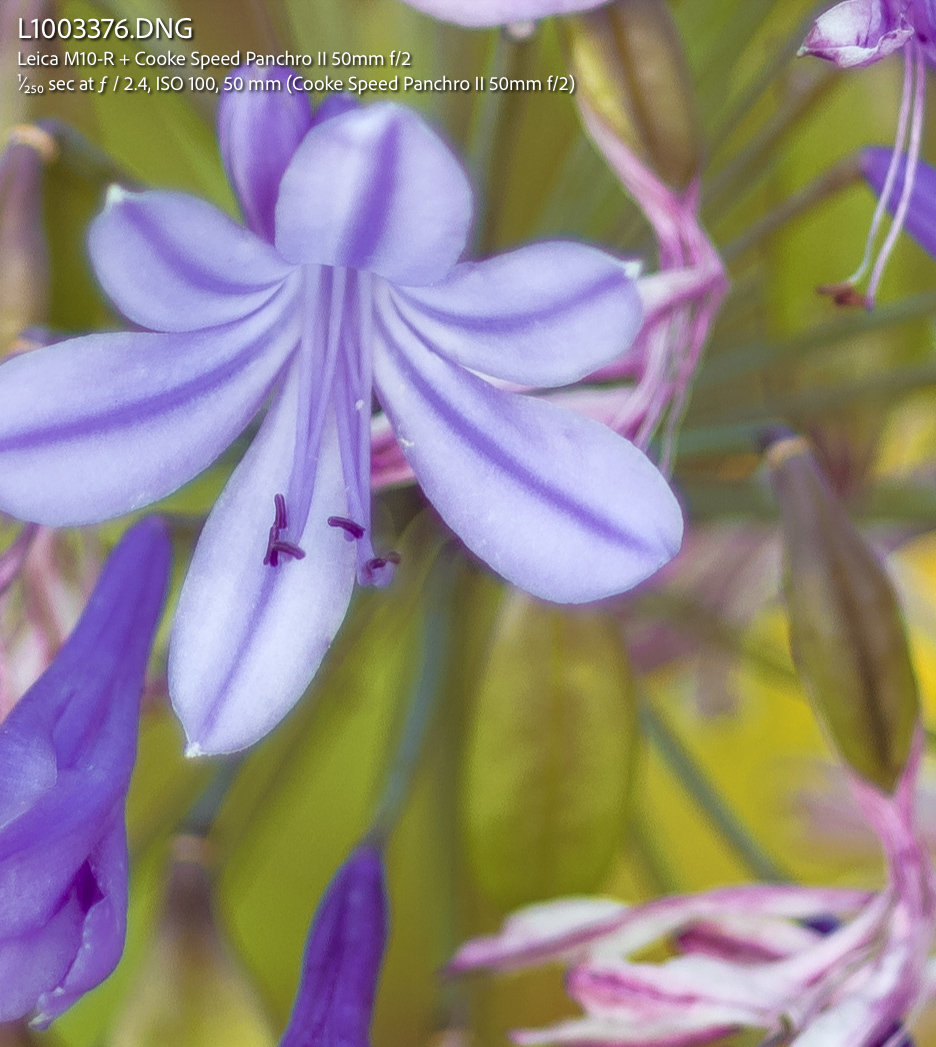
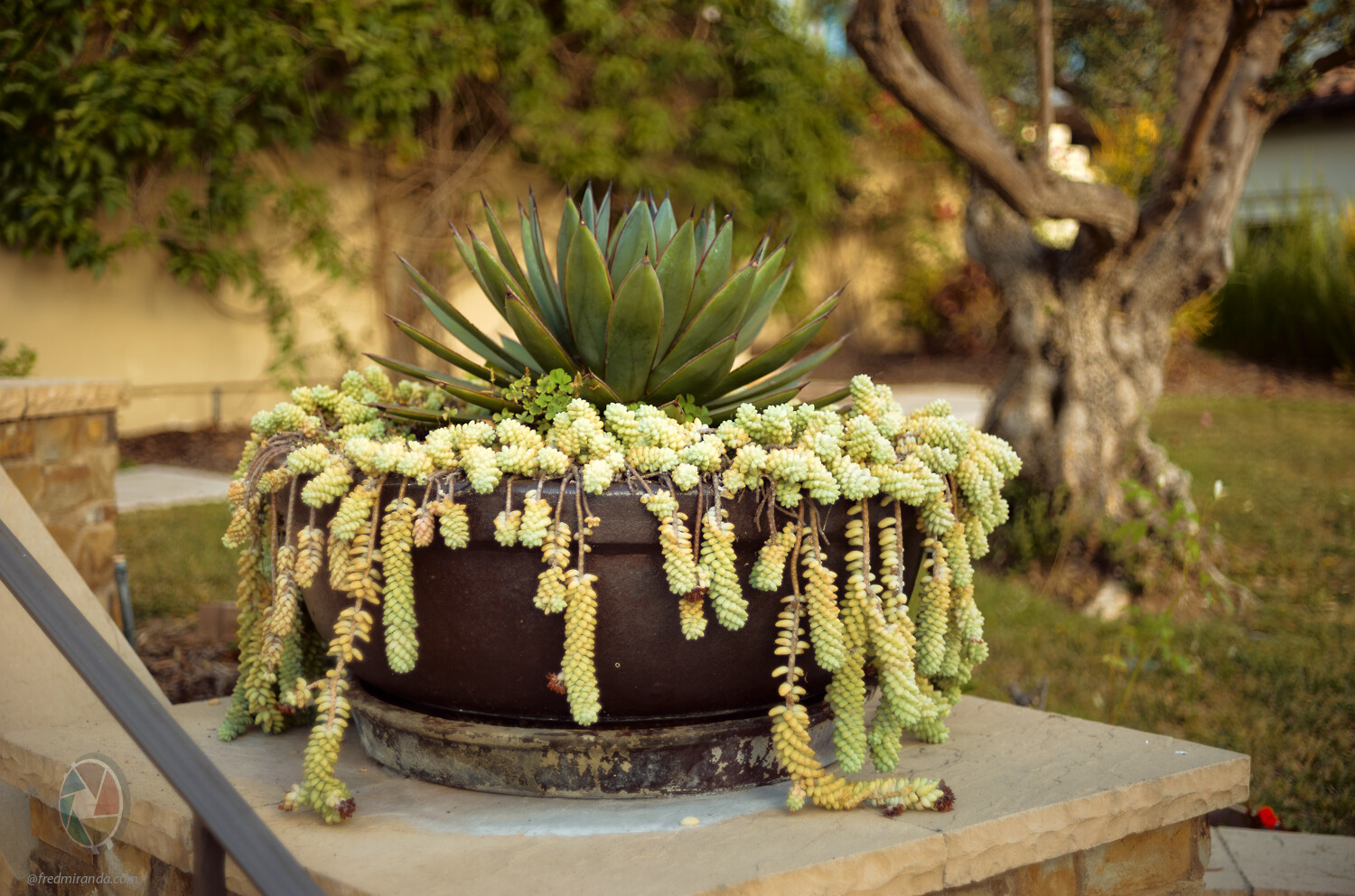
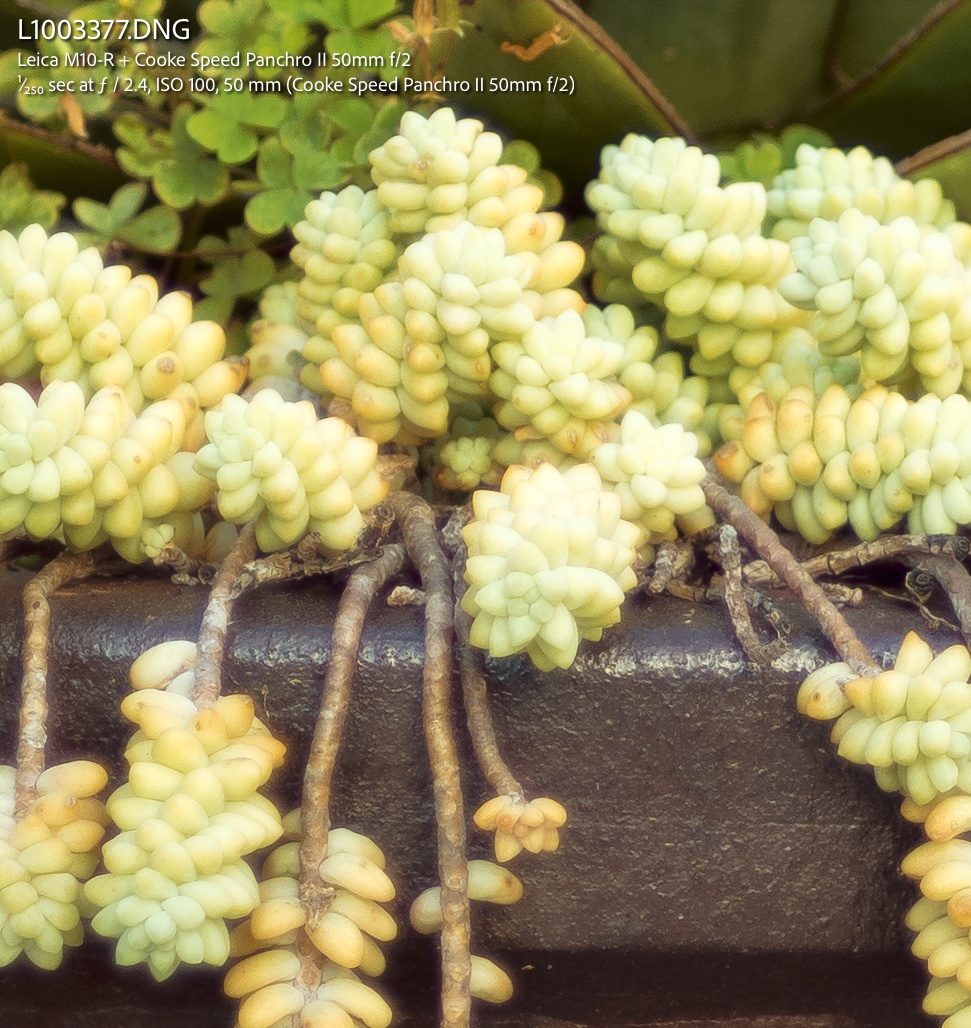
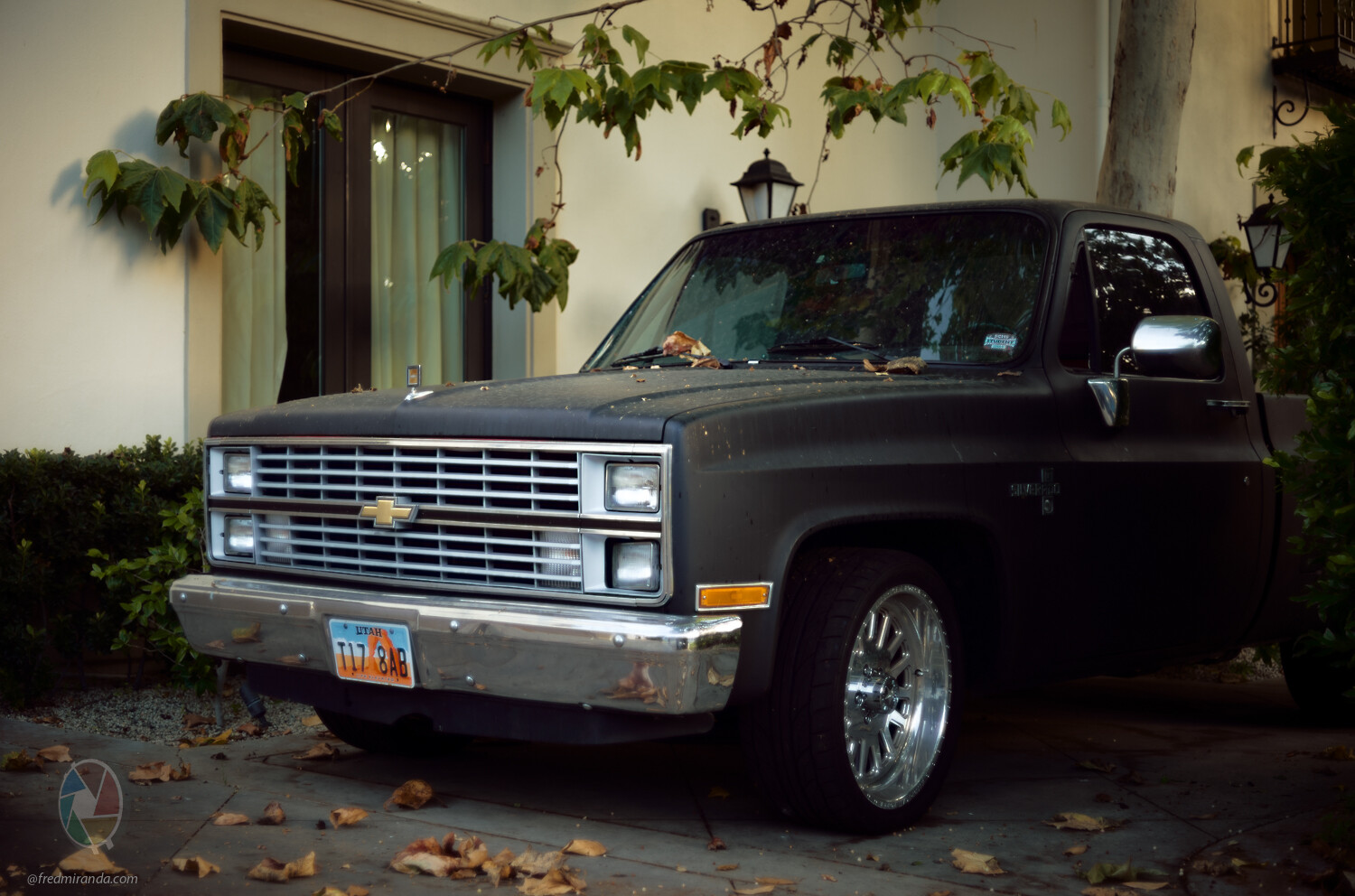
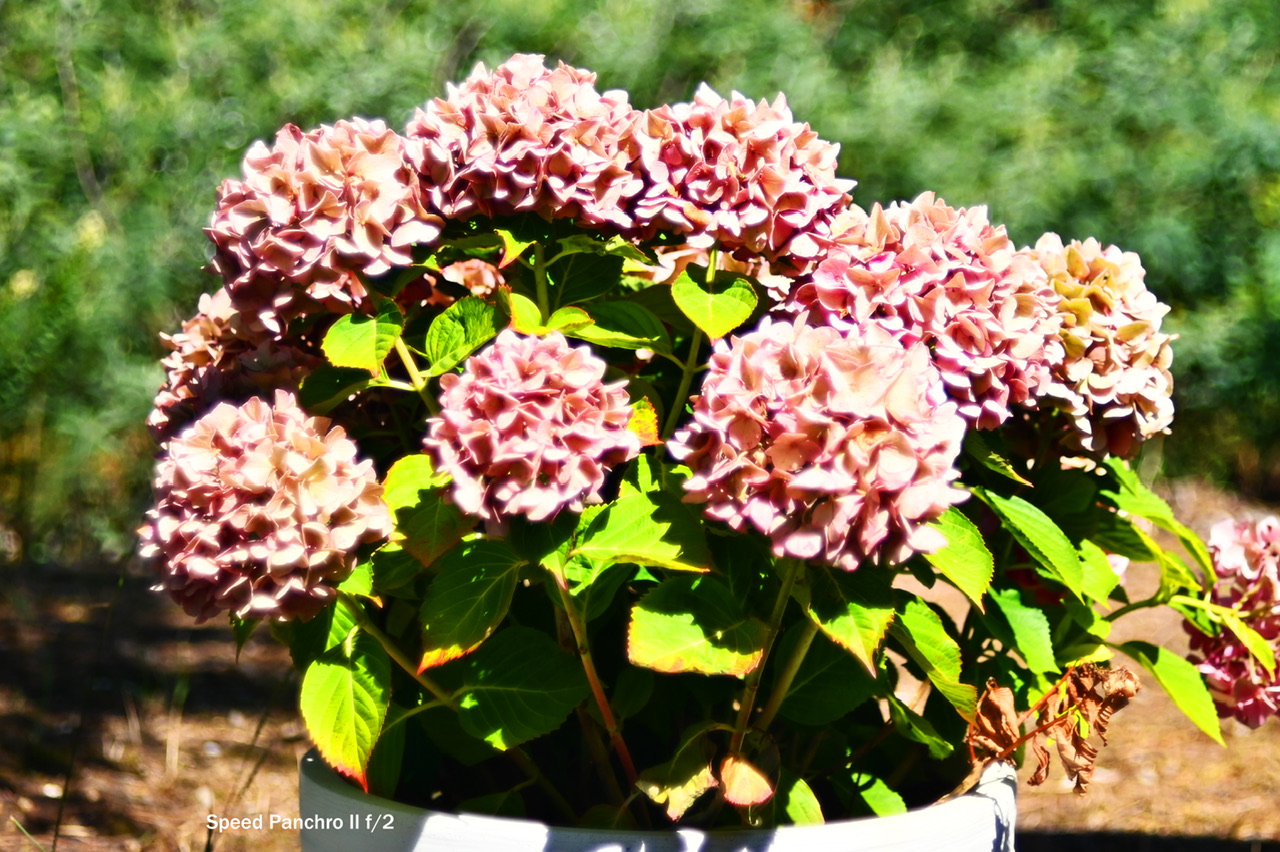
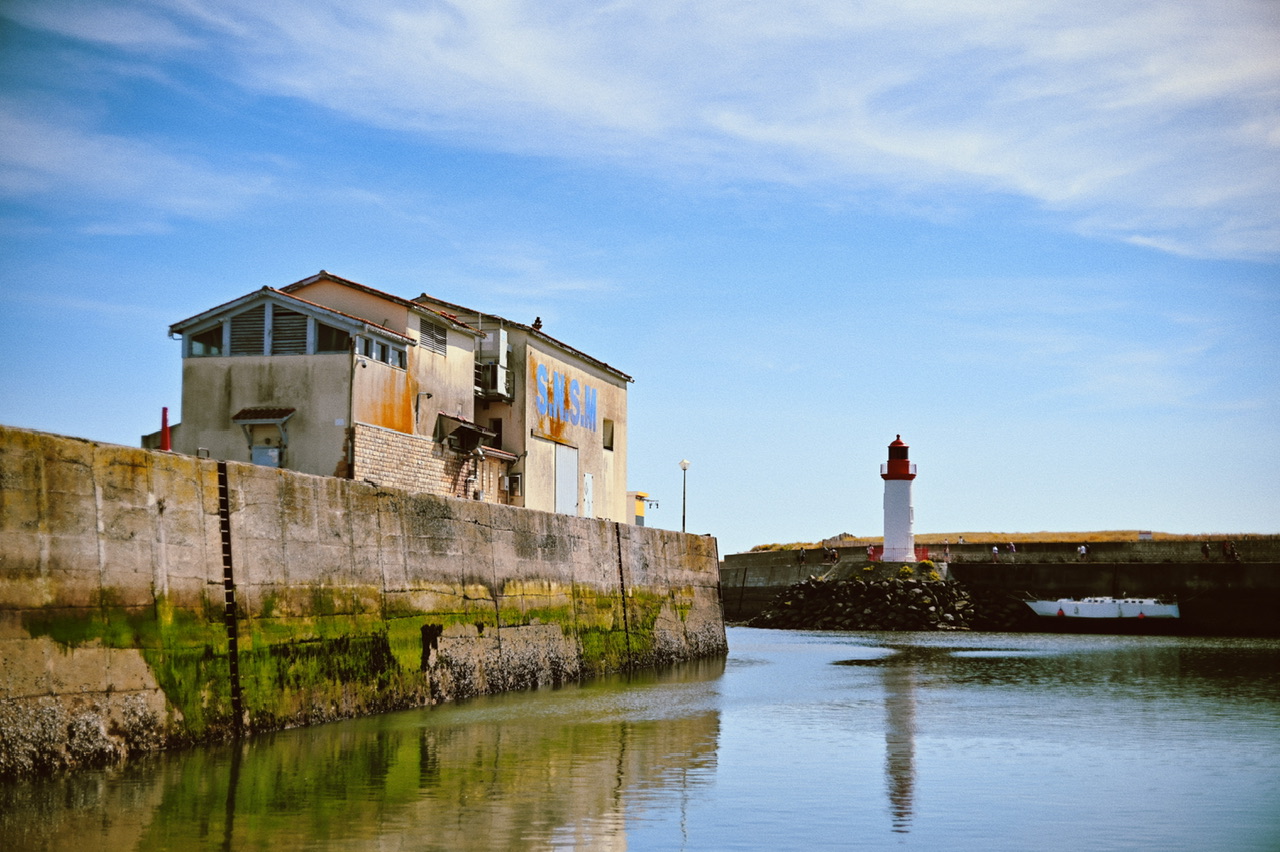
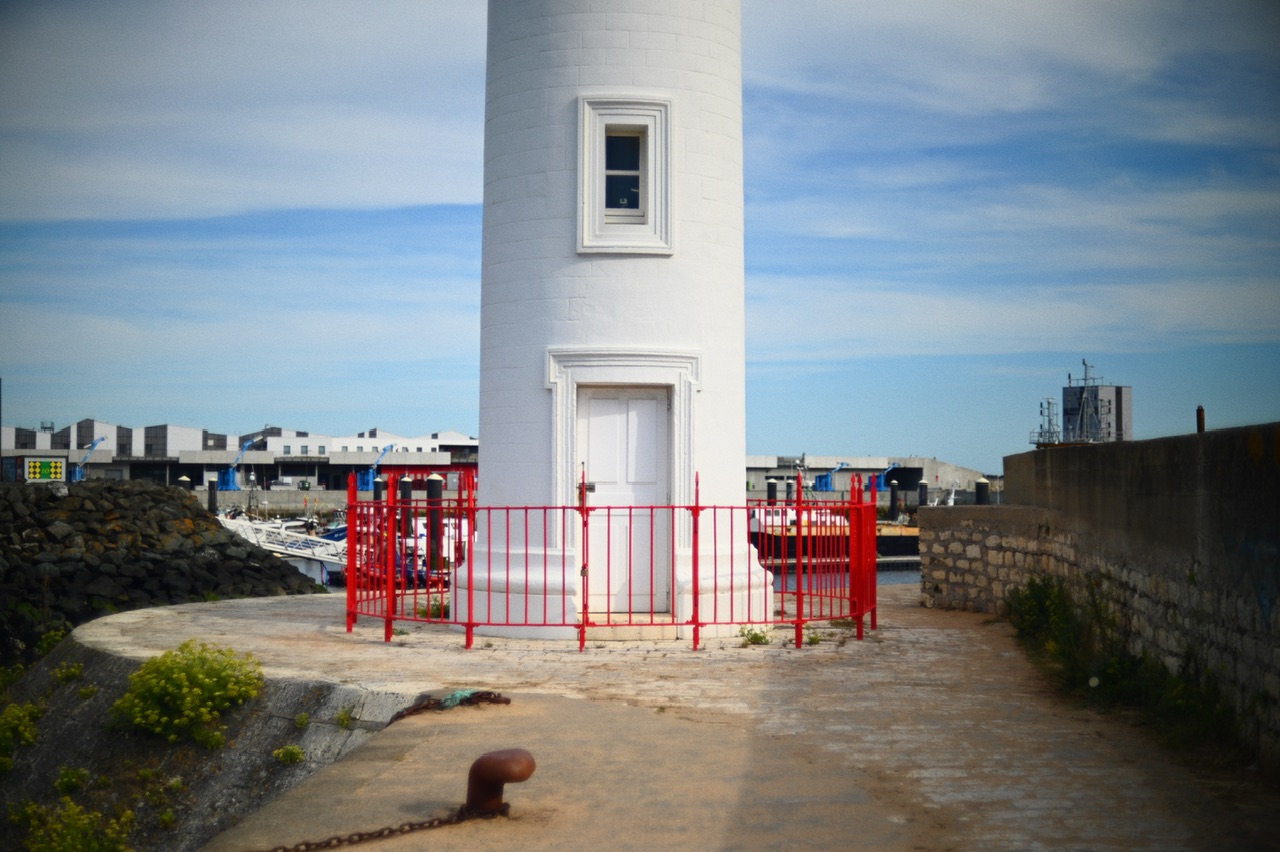
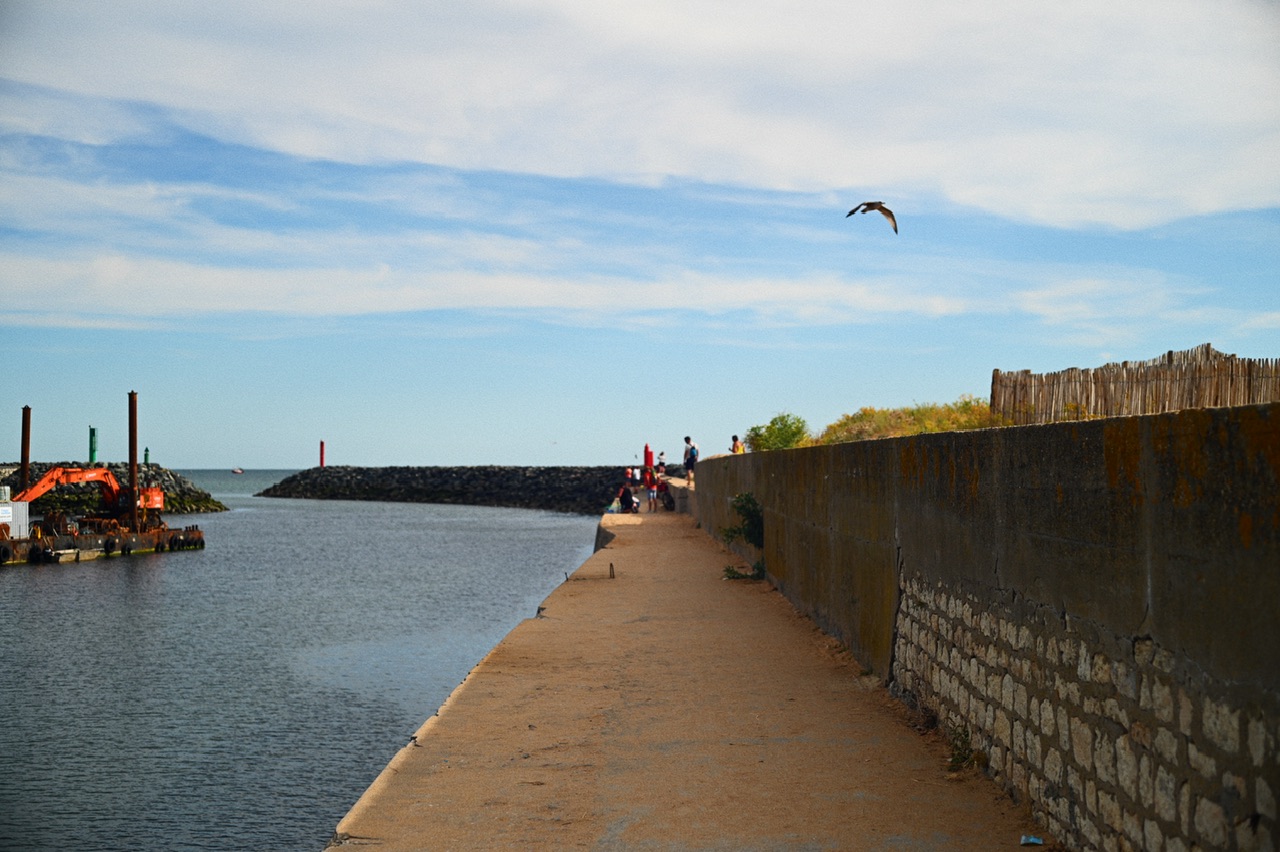
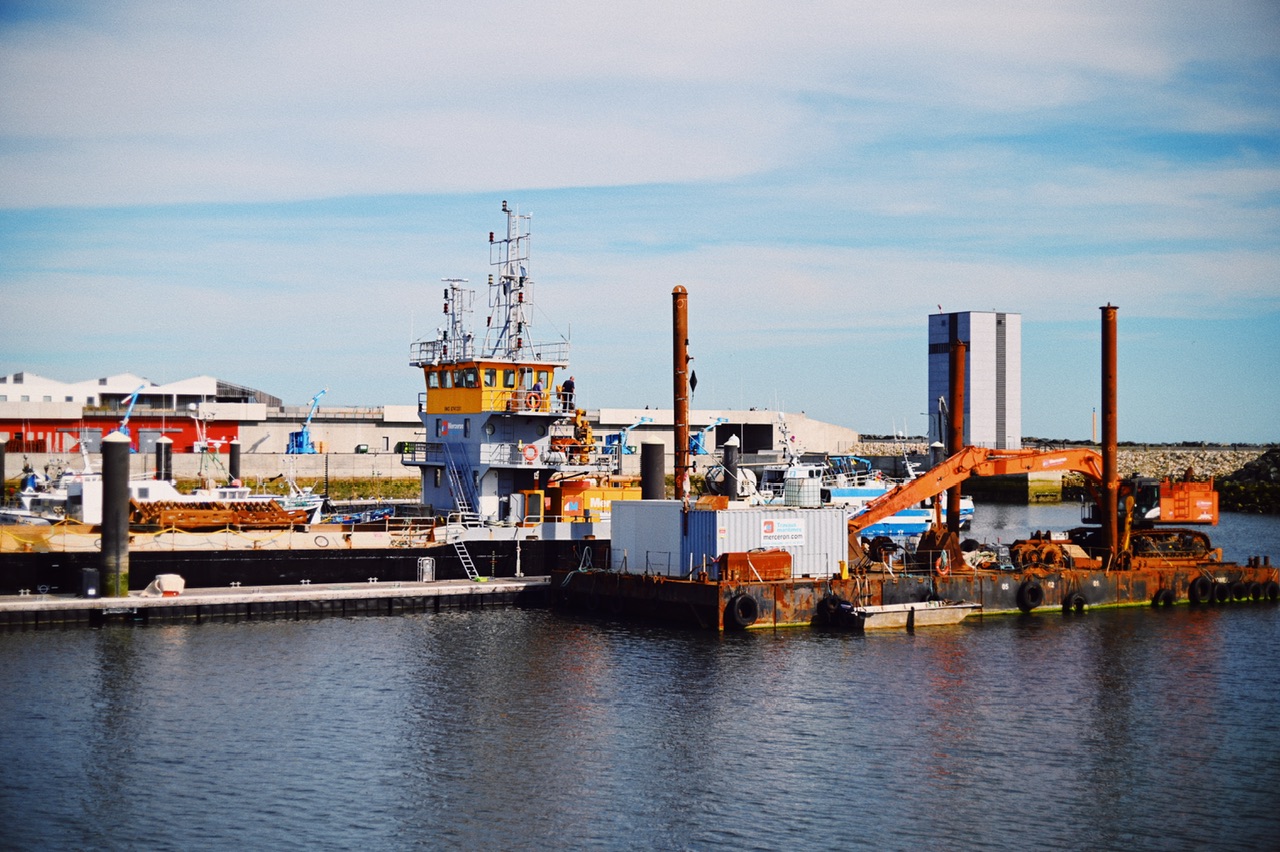
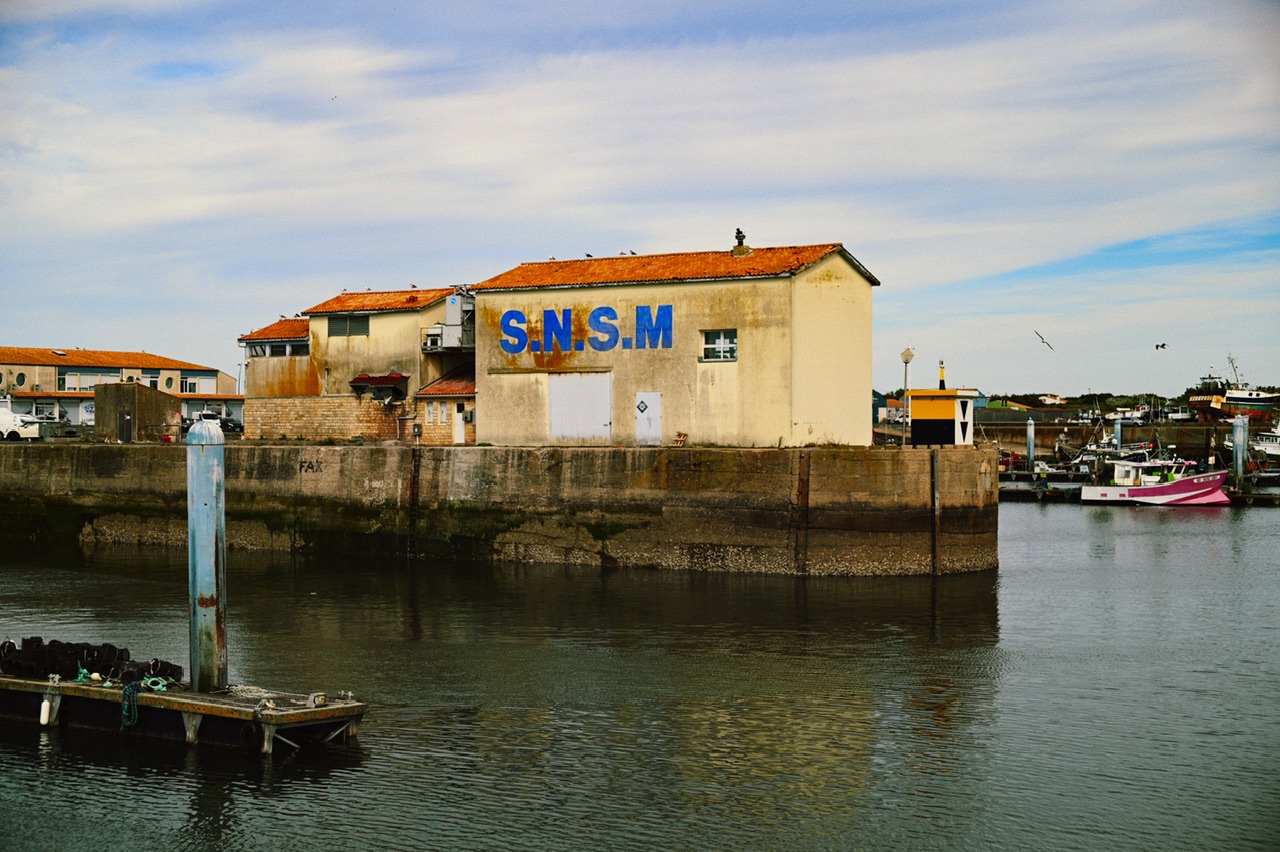
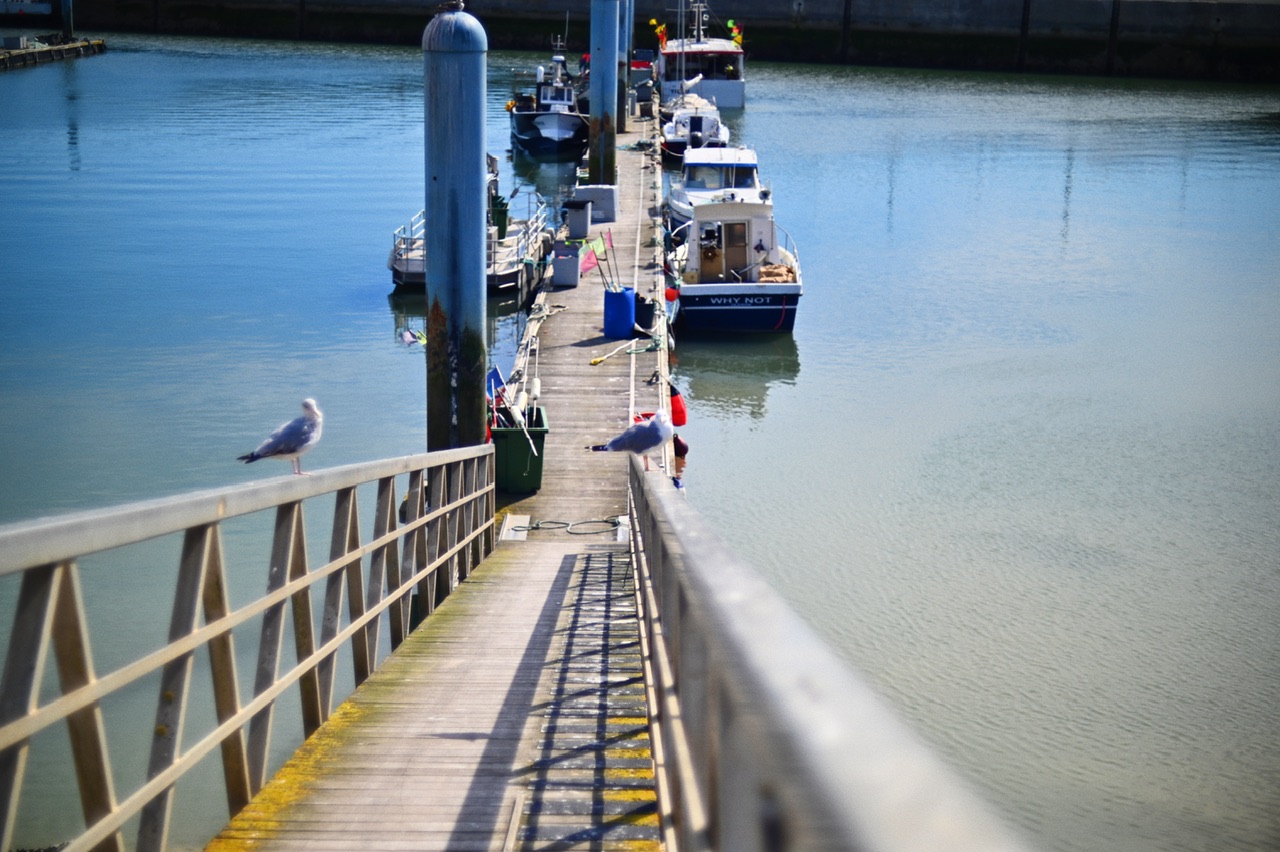
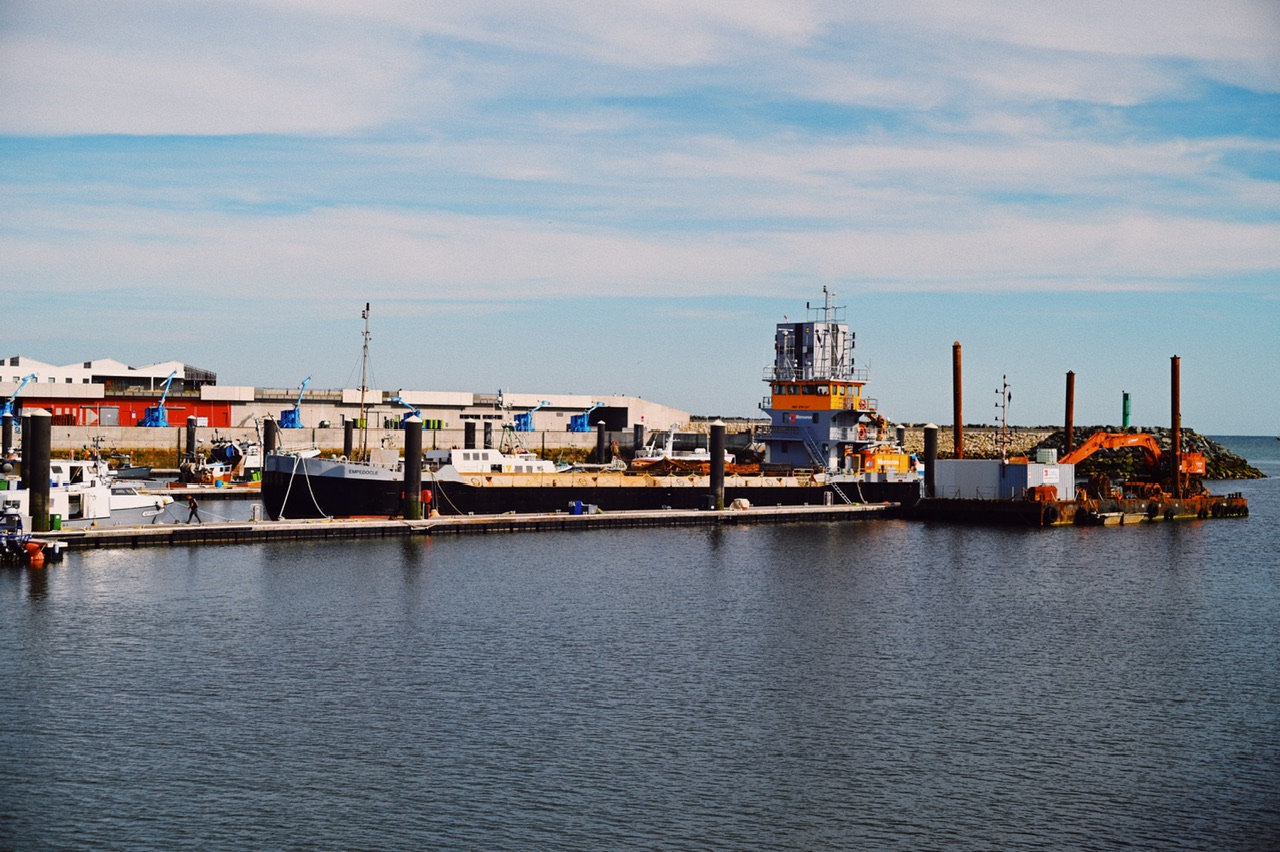
Here are more examples followed by crops showing the focused area at 100% magnification:
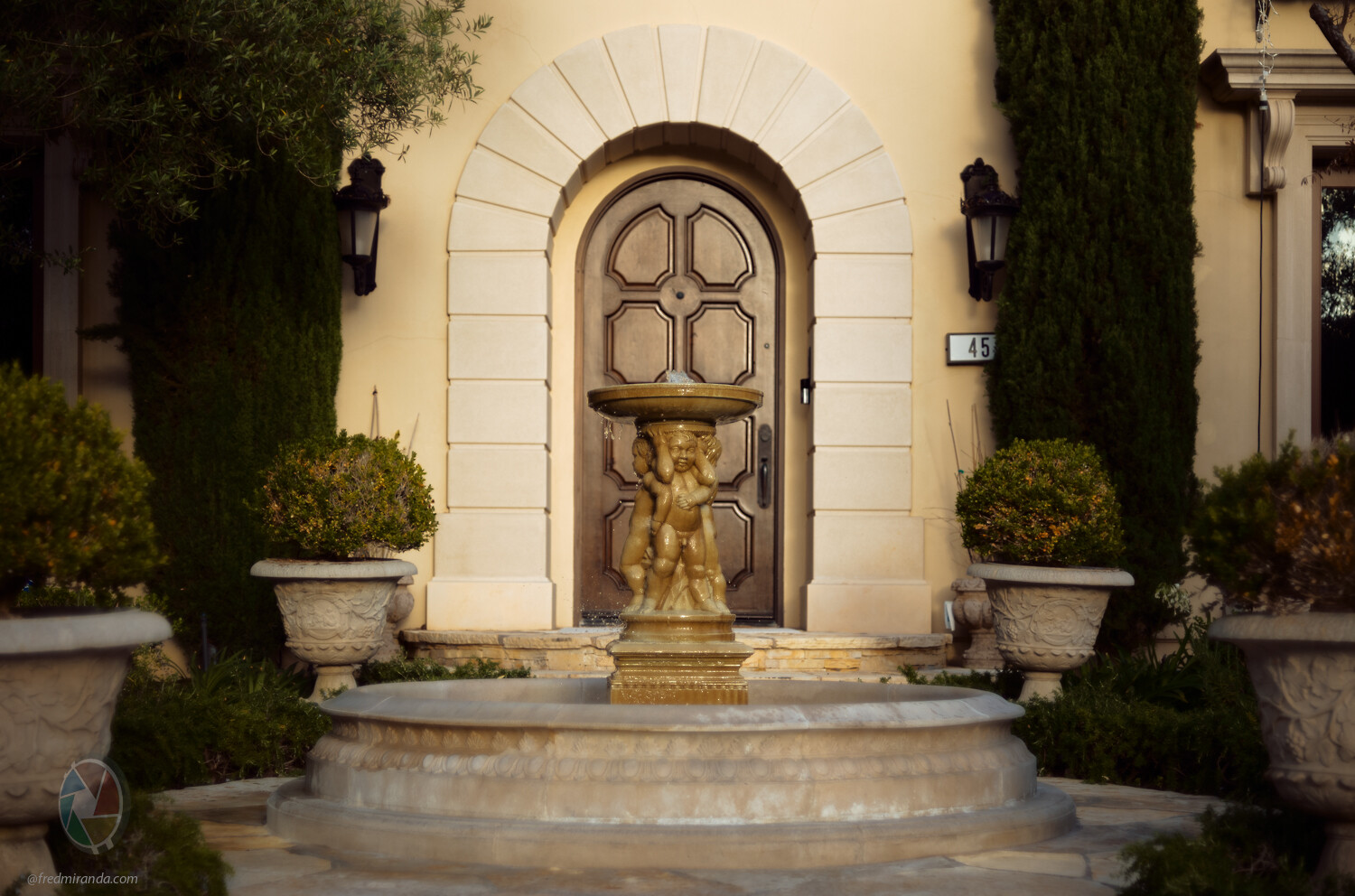
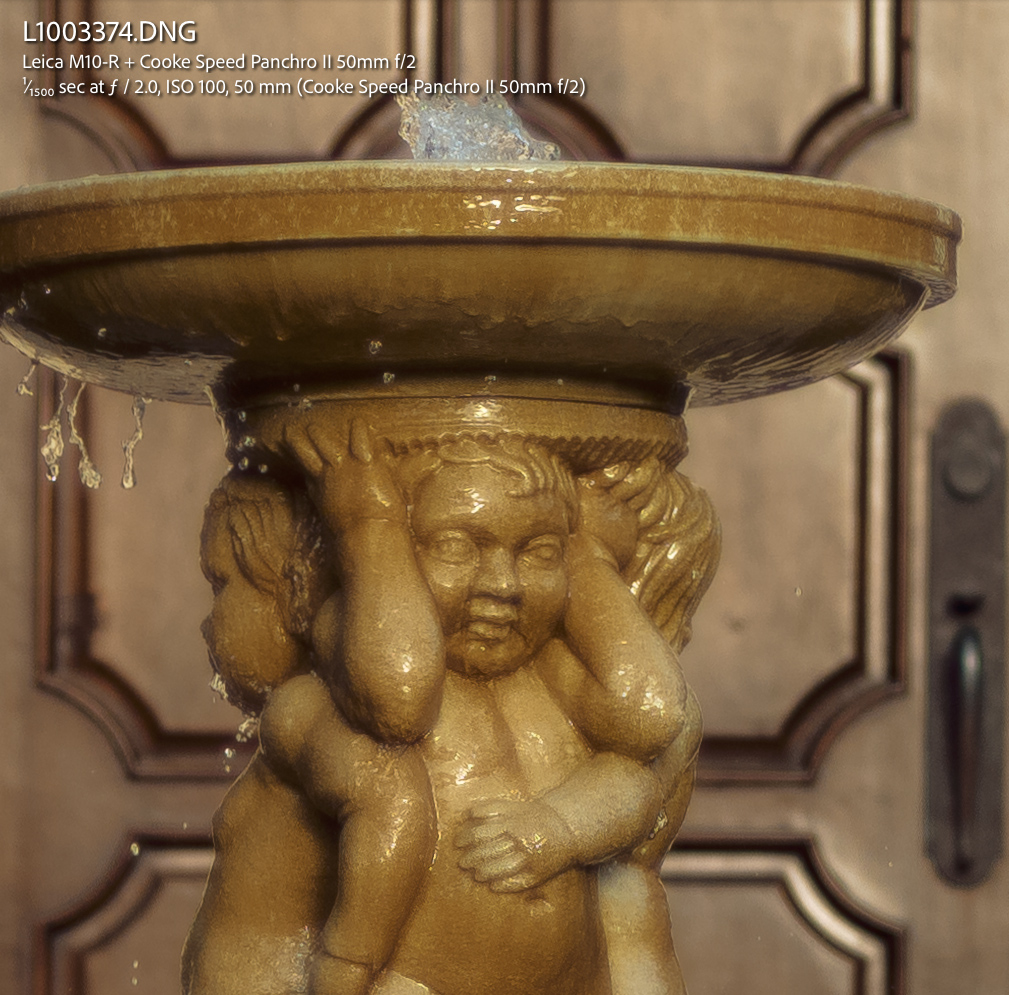
LEICA M10-RCooke Speed Panchro II 50mm f/2 lens50mmf/2.01/1500s100 ISO0.0 EV
100% crop from image above
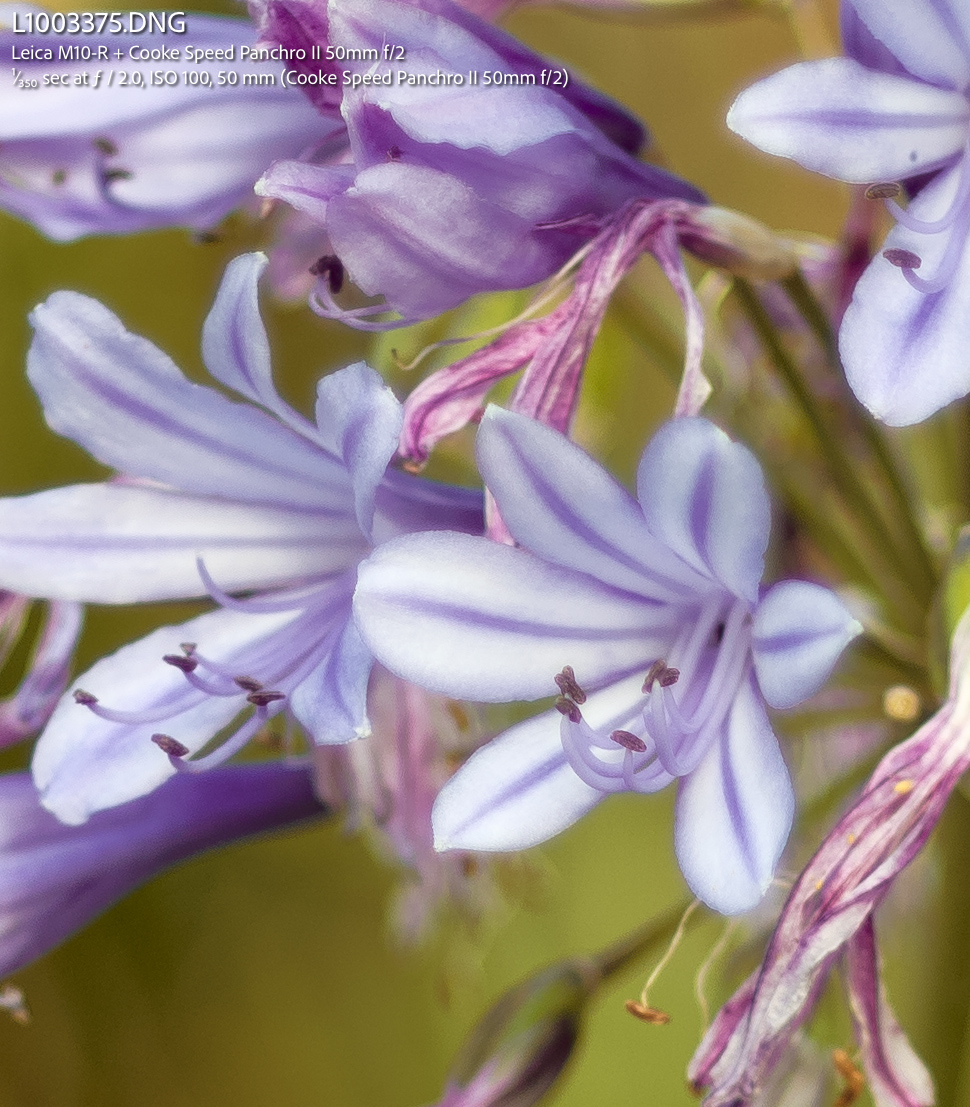
100% crop from image above
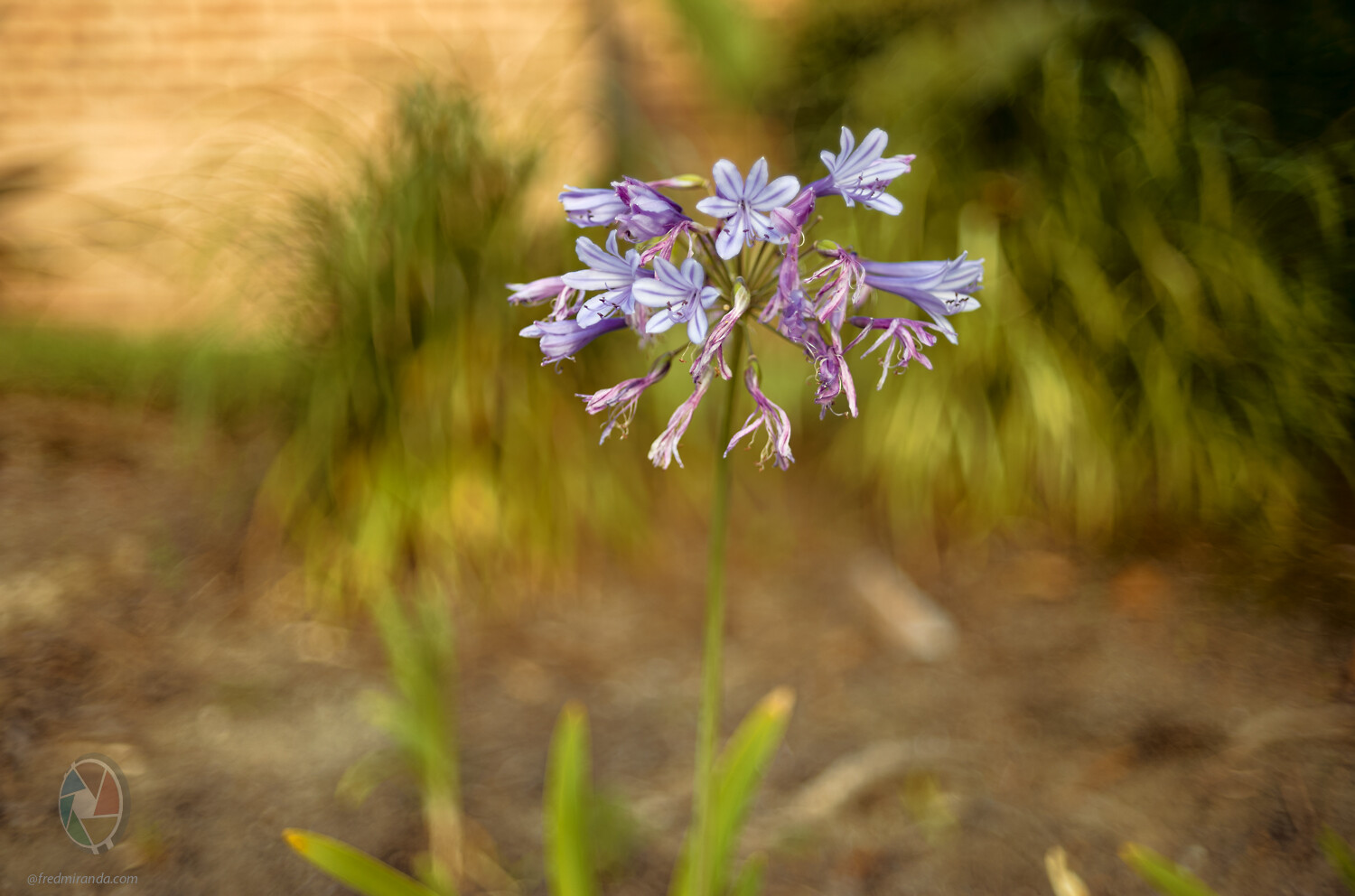
LEICA M10-RCooke Speed Panchro II 50mm f/2 lens50mmf/2.01/350s100 ISO0.0 EV
LEICA M10-RCooke Speed Panchro II 50mm f/2 lens50mmf/2.41/250s100 ISO0.0 EV
100% crop from image above
LEICA M10-RCooke Speed Panchro II 50mm f/2 lens50mmf/2.41/250s100 ISO0.0 EV
100% crop from image above
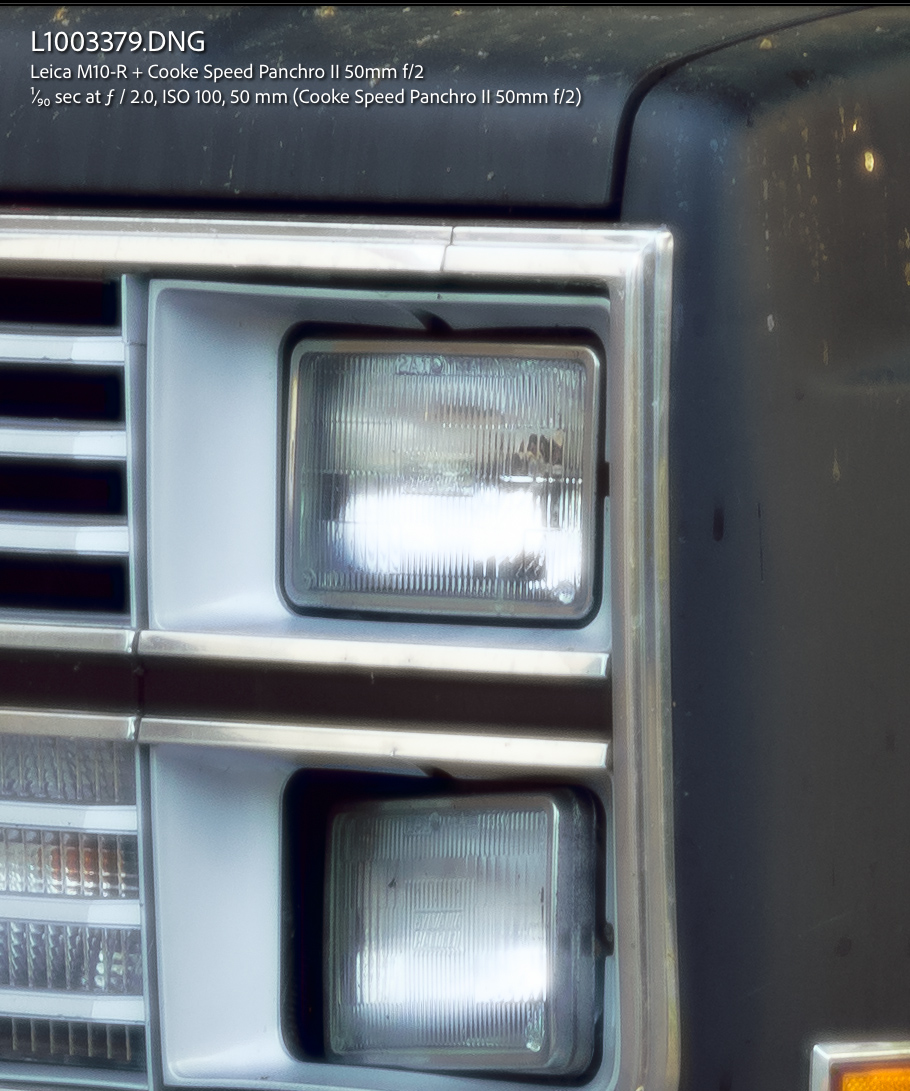
LEICA M10-RCooke Speed Panchro II 50mm f/2 lens50mmf/2.01/90s100 ISO0.0 EV
100% crop from image above
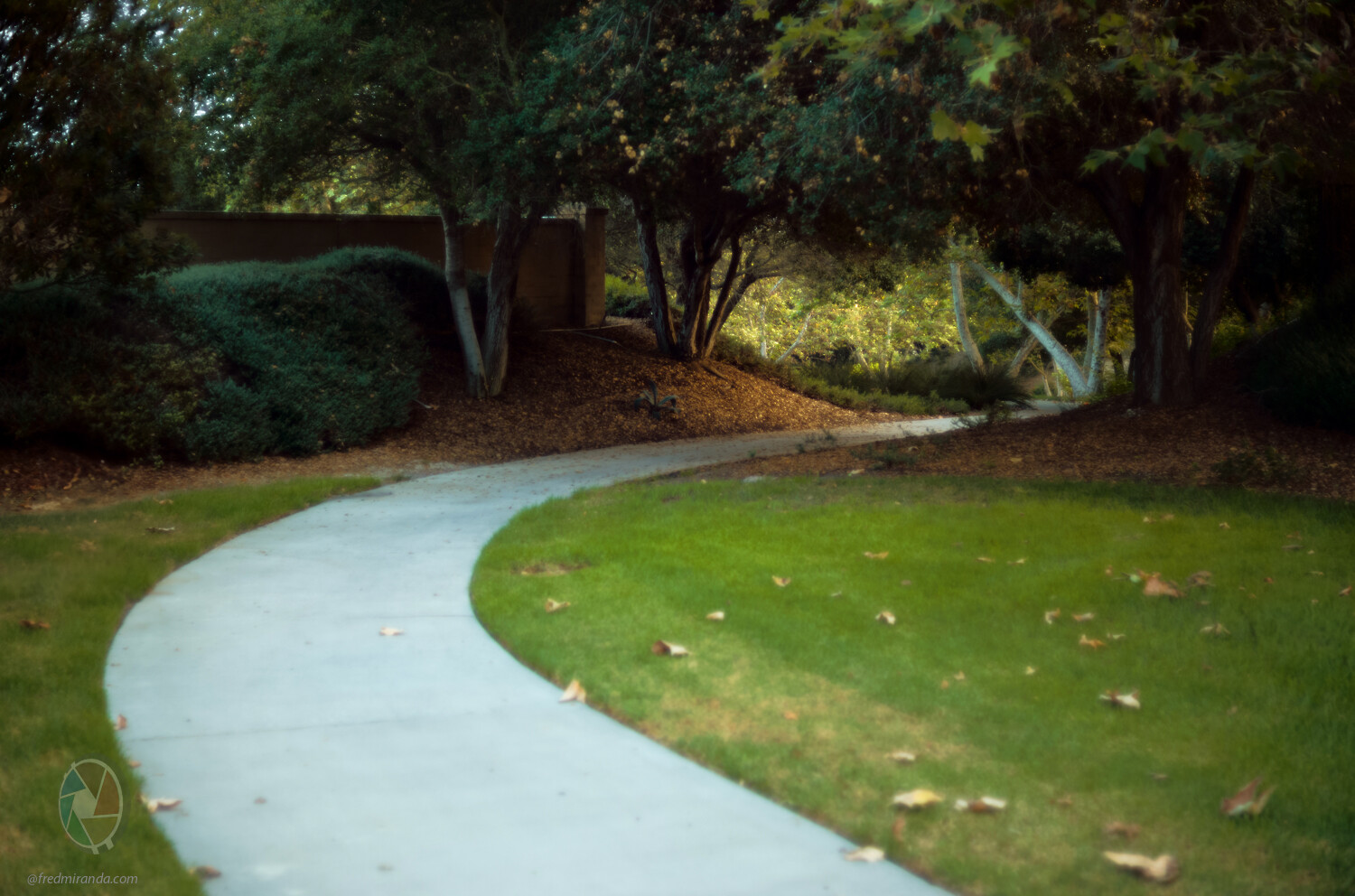
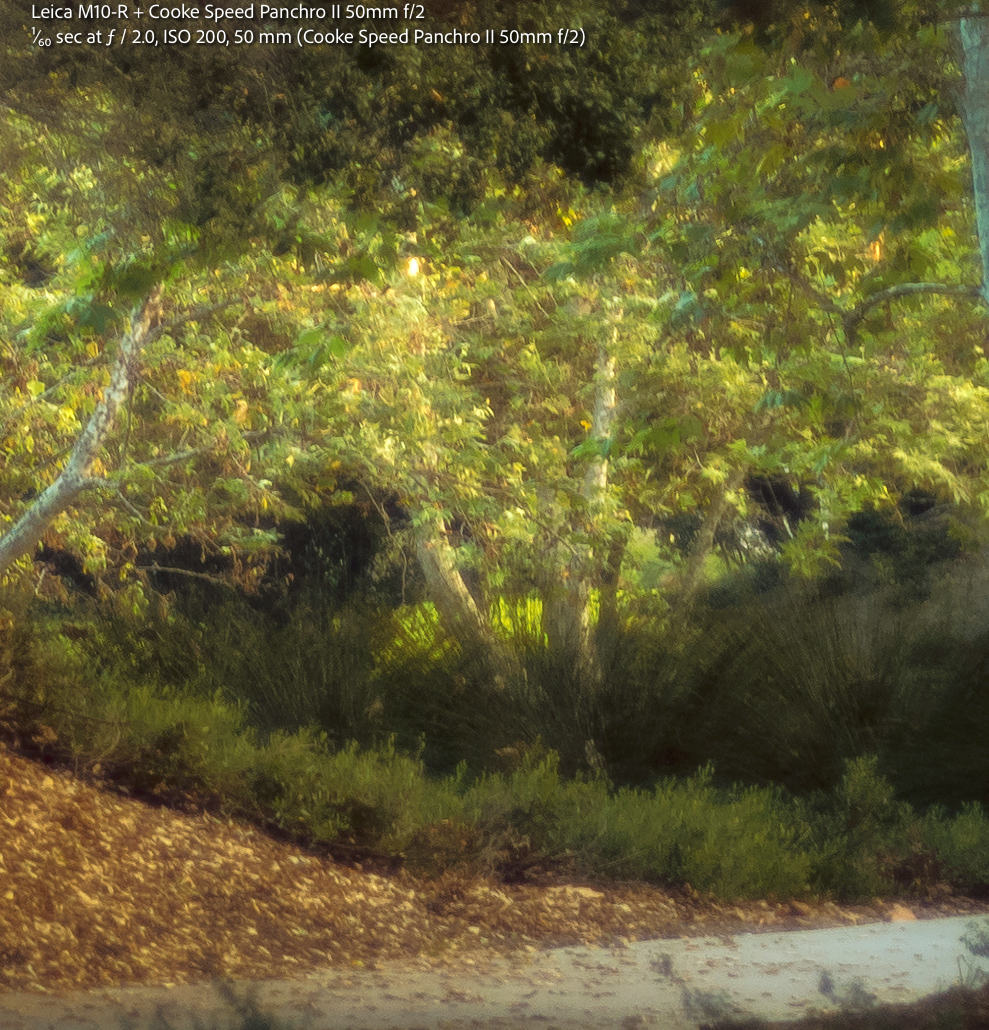
LEICA M10-RCooke Speed Panchro II 50mm f/2 lens50mmf/2.01/60s200 ISO0.0 EV
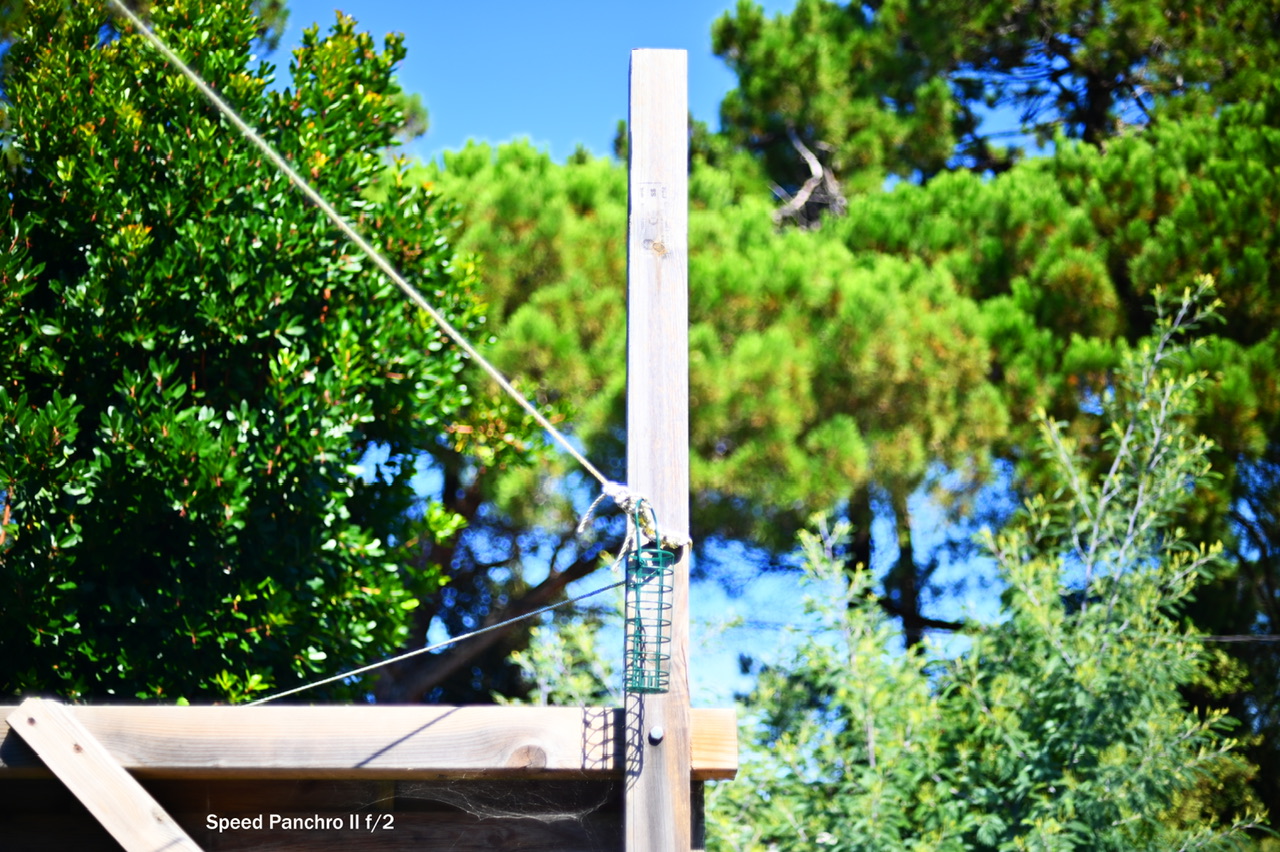
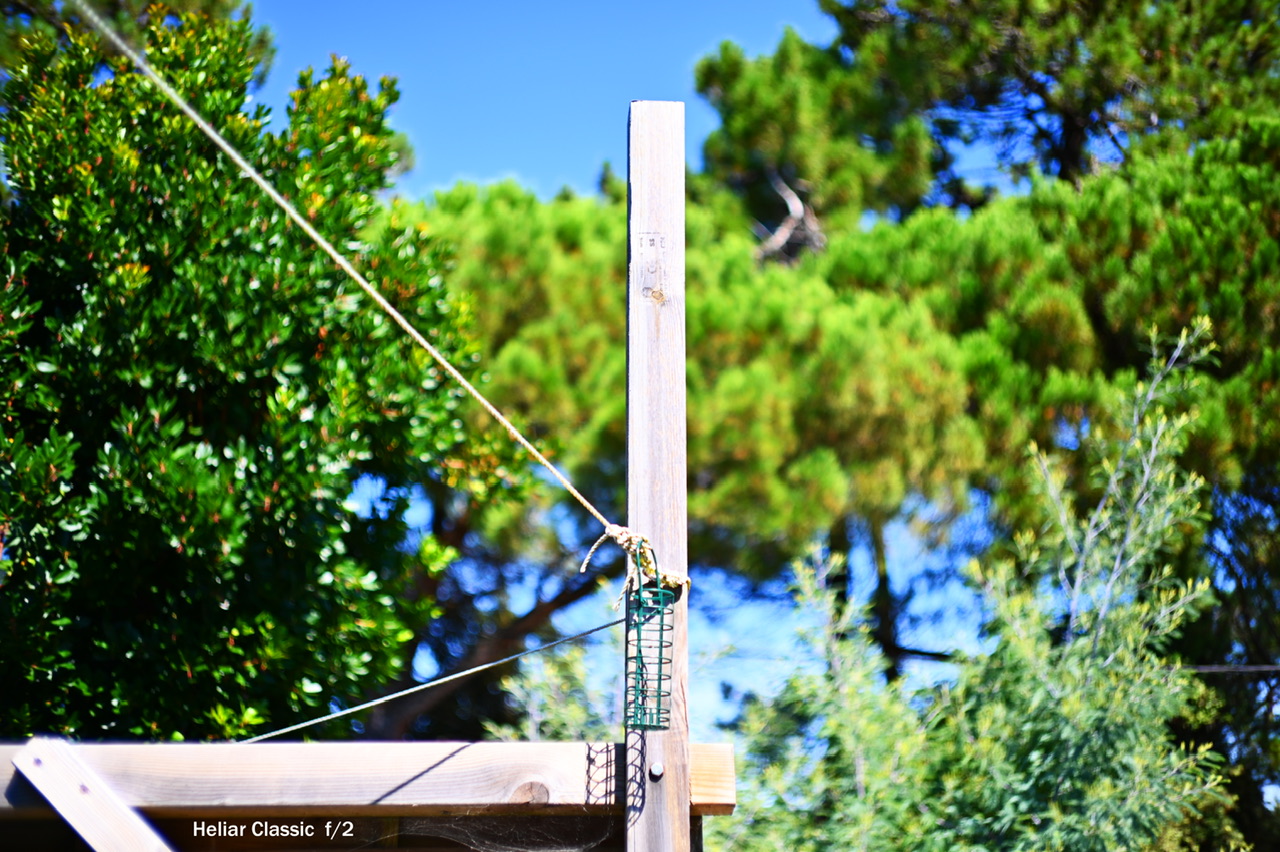
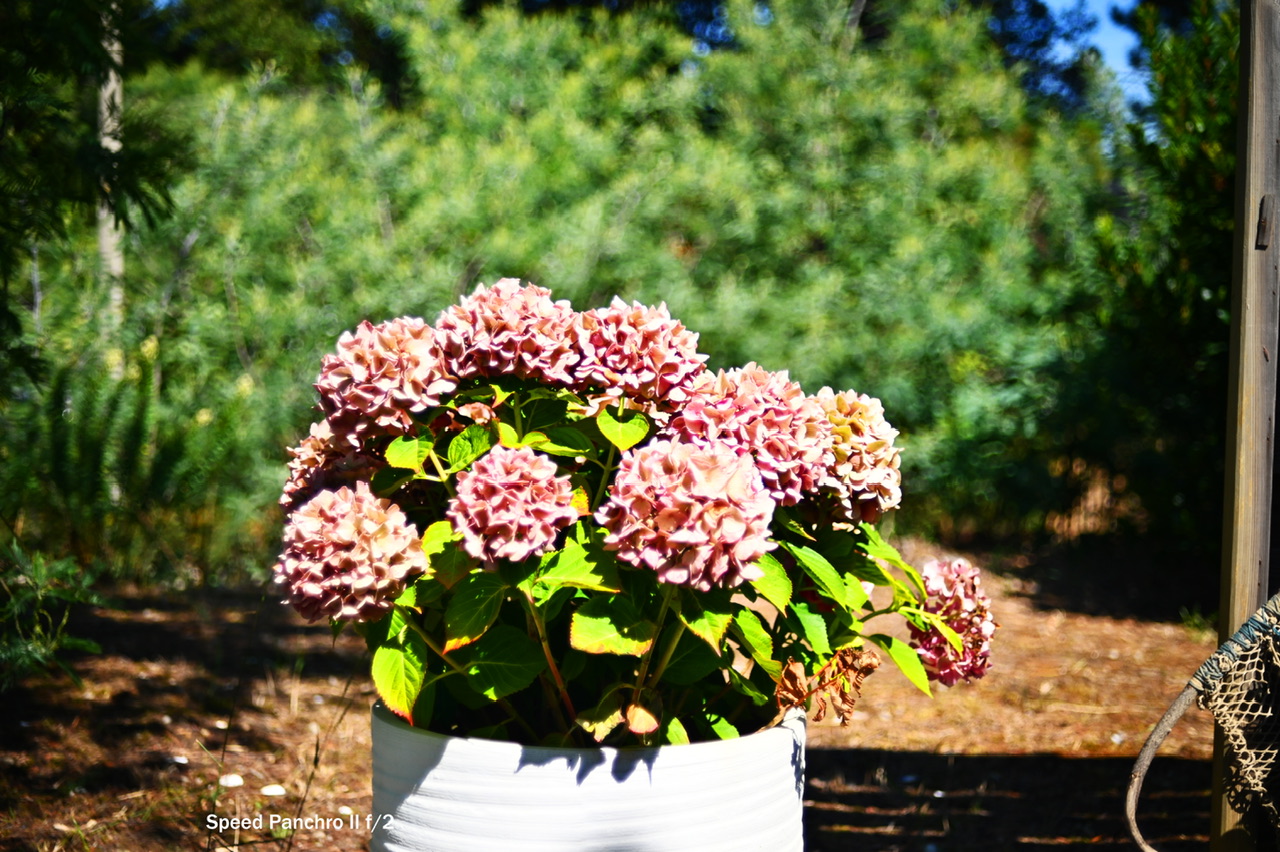
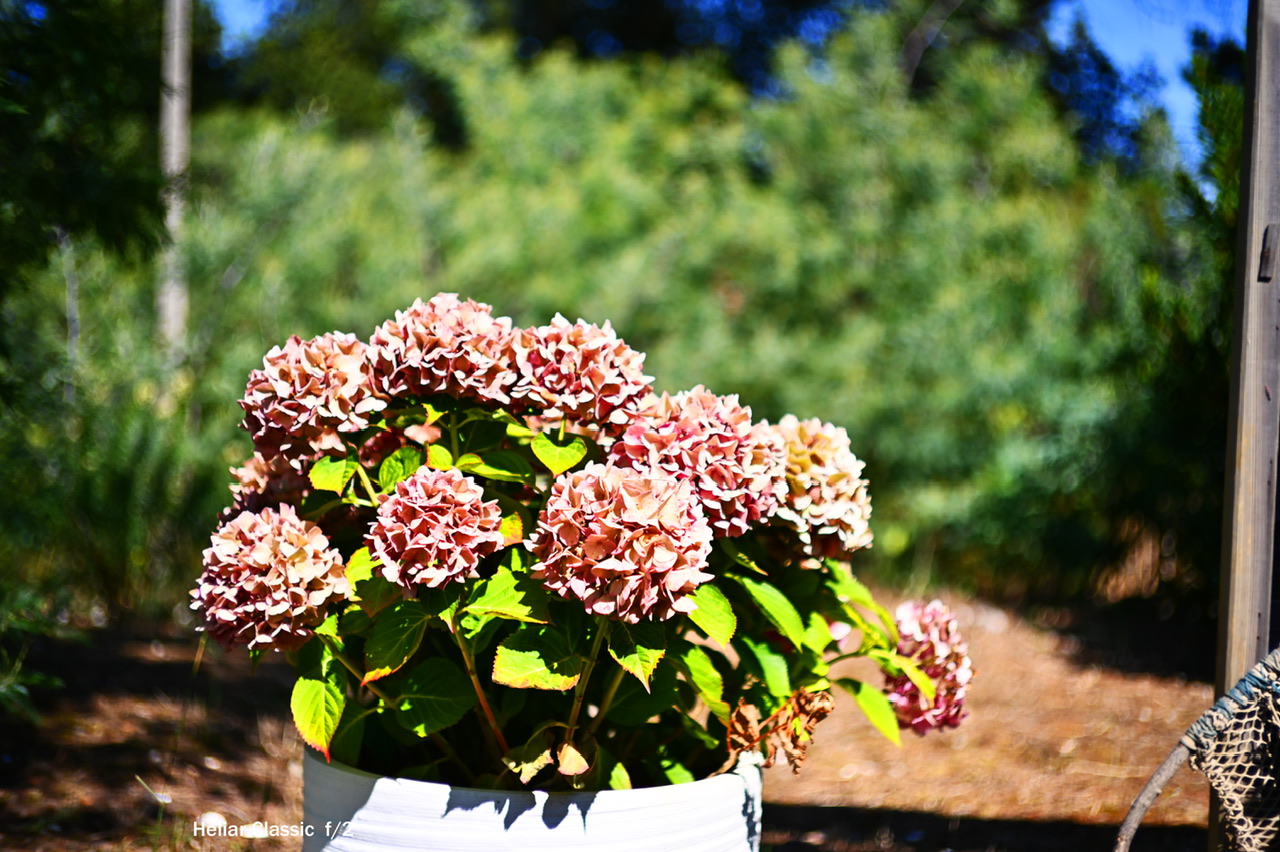
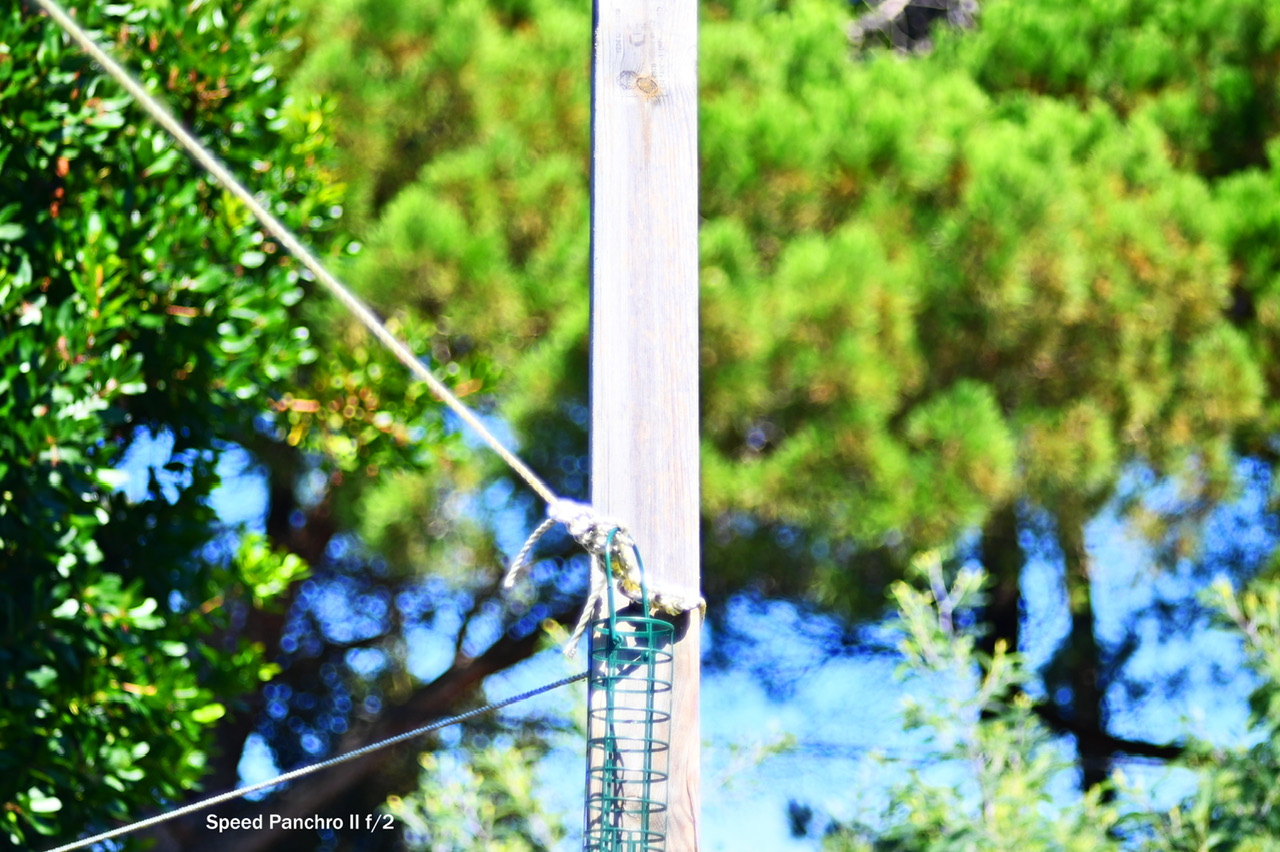
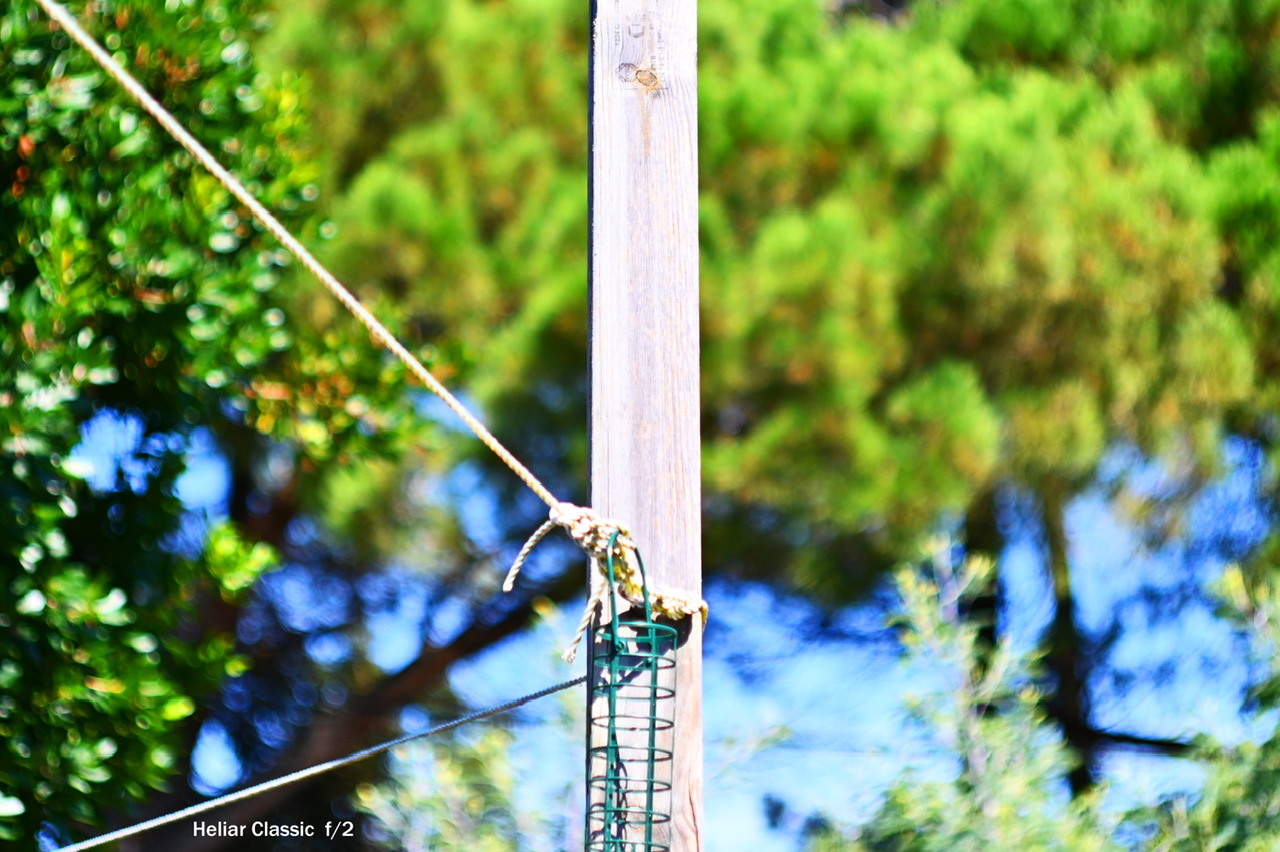
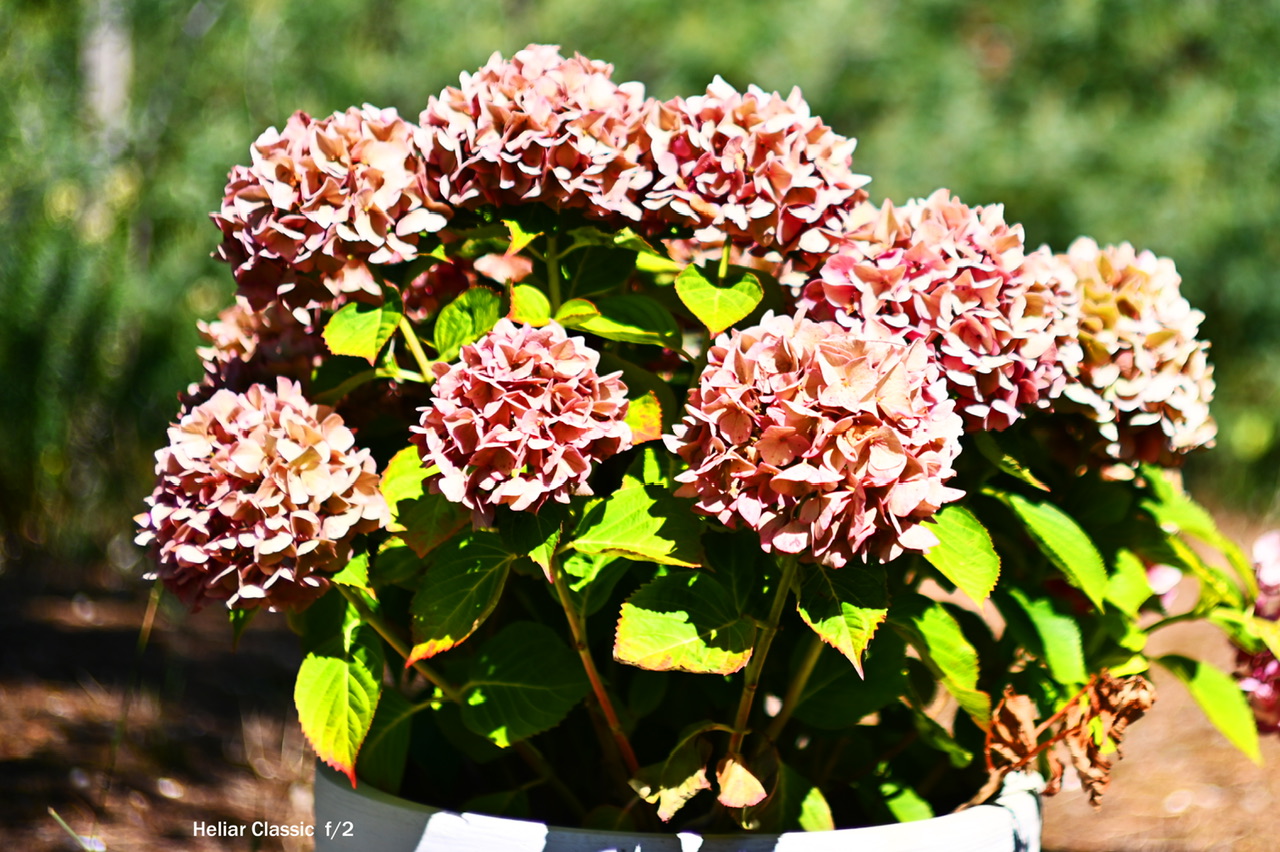
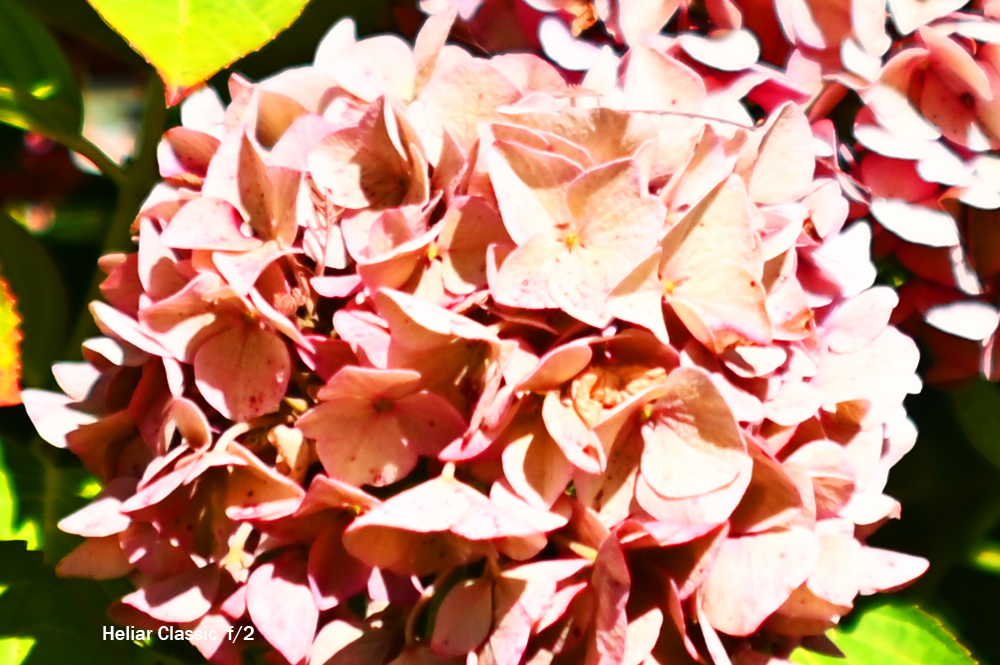
A quick little test I made for myself but might be of interest between the Panchro and the Heliar both at f2, it might not be fair to compare two lenses to that extent but it still helps me understand the properties of each. It’s quite clear that I prefere the Panchro, the blue cast alone is a huge plus I didn’t even thought existed when ordering the lens.
The Heliar still is growing on me the more I use it and understand it a bit better, at portrait distance it is sharp enough and at f2 it’s not that bad either.
It seems to produce more bokeh at similar aperture than the Panchro.
The bubbles of the Panchro are more pleasing to me, you gotta like your busy bokeh though and I do.
There is more to be said surely.
Edit: Also for subject isolation the Heliar seems more effective since its central region produce more blur in the bokeh while the Panchro remains detailed and textured, regarding the separation I don’t mind more texture, I’m not a big believer of creamy overblurred bokeh for the 3d effect.
Pretty sure it was the change of coatings between the prototype and production version that is causing the flare. This change was to make it render more like the original SPII – I guess the central area of flare at smaller f-stops is a side effect of that.
This video displays the re-housed original SPII optics (Now called Cooke Classic), and the out-of-focus rendering and overall appearance closely resemble the version produced by LLL. Nevertheless, there is a distinction in the flare, which appears in shades of orange and red instead of blue and magenta.
Based on this video, I am uncertain if LLL accurately replicated this aspect.
Sonnar-7 wrote:
A quick little test I made for myself but might be of interest between the Panchro and the Heliar both at f2, it might not be fair to compare two lenses to that extent but it still helps me understand the properties of each. It’s quite clear that I prefere the Panchro, the blue cast alone is a huge plus I didn’t even thought existed when ordering the lens.
The Heliar still is growing on me the more I use it and understand it a bit better, at portrait distance it is sharp enough and at f2 it’s not that bad either.
It seems to produce more bokeh at similar aperture than the Panchro.
The bubbles of the Panchro are more pleasing to me, you gotta like your busy bokeh though and I do.
There is more to be said surely.
Edit: Also for subject isolation the Heliar seems more effective since its central region produce more blur in the bokeh while the Panchro remains detailed and textured, regarding the separation I don’t mind more texture, I’m not a big believer of creamy overblurred bokeh for the 3d effect. ...Show more →
Thanks for the comparison!
Could you show a 100% magnified crop comparing the SPII and Heliar at focused area?
Fred Miranda wrote:
This video displays the re-housed original SPII optics (Now called Cooke Classic), and the out-of-focus rendering and overall appearance closely resemble the version produced by LLL. Nevertheless, there is a distinction in the flare, which appears in shades of orange and red instead of blue and magenta.
Based on this video, I am uncertain if LLL accurately replicated this aspect.
Wonder over how many years and versions the SPII went though and/or how individual copies have aged over the years. Given how fastidious LLL was at recreating the 35 8-element, I'd be surprised if they didn't replicate their source lens exactly.
I recently compared three camera lenses: the LLL 50/2 SPII, the Leica 50/2 Summicron 'Rigid,' and the MS Optics 57/2 Petzval. I closely examined the images taken at various distances and made the following observations:
1. The optical formula and coating of the 50/2 SPII lens produce a warmer color temperature and a greener tint when compared to the other two lenses. Adjusting the settings to +11 temperature and -5 tint results in a similar color rendering for all three.
2. The 50/2 SPII lens offers a slightly wider field of view than the Leica 50/2 Rigid lens, while the Petzval lens has a narrower field due to its 57mm focal length.
3. The resolution of the 50/2 SPII lens is comparable to the MS Optics Petzval lens, but the Leica Rigid lens outperforms both in terms of resolution and contrast.
4. Concerning rendering, both the Petzval and SPII lenses share more similarities, showcasing enhanced outlining along the edges of bright highlights. The Leica Rigid lens also presents classic outlining but with less prominence. There's also a bit less contrast in the Rigid's rendering, particularly when compared to the SPII. This gives the Leica the appearance of higher blur.
5. All lenses exhibit a slight glow when fully open, with the SPII having the most, followed by the Petzval and then the Rigid.
6. The SPII lens has the lowest optical vignetting and therefore produces the roundest specular highlights, extending to the edges of the frame. On the other hand, both the Petzval and Rigid lenses create more cat's-eye-shaped bokeh, leading to swirling patterns depending on the distance of the subject.
I compared the weights of the lenses: MS Optics 57/2 Petz weighs 117g, LLL SPII weighs 349g, and Leica 50/2 Rigid weighs 257g.
In conclusion, these lenses produce similar images in terms of resolution, contrast, and rendering style. However, through side-by-side comparison, I could still distinguish their distinct characteristics.
highdesertmesa wrote:
Wonder over how many years and versions the SPII went though and/or how individual copies have aged over the years. Given how fastidious LLL was at recreating the 35 8-element, I'd be surprised if they didn't replicate their source lens exactly.
I believe they managed to replicate a similar look, which is evident from the sample images and videos from the original version. However, my main observation was that the blue flare appears to be an exclusive feature of the LLL version, at least as far as my observations go. This is the only aspect of the lens that I'm not particularly fond of up to this point.
When I mention the 'blue flare,' I'm discussing the ghosting flare that emerges at any aperture while capturing scenes with backlighting.
Fred Miranda wrote:
I believe they managed to replicate a similar look, which is evident from the sample images and videos from the original version. However, my main observation was that the blue flare appears to be an exclusive feature of the LLL version, at least as far as my observations go. This is the only aspect of the lens that I'm not particularly fond of up to this point.
When I mention the 'blue flare,' I'm discussing the ghosting flare that emerges at any aperture while capturing scenes with backlighting.
I just noticed the video you posted was of a remake of the original with modern glass
Fred Miranda wrote:
Thanks for the comparison!
Could you show a 100% magnified crop comparing the SPII and Heliar at focused area?
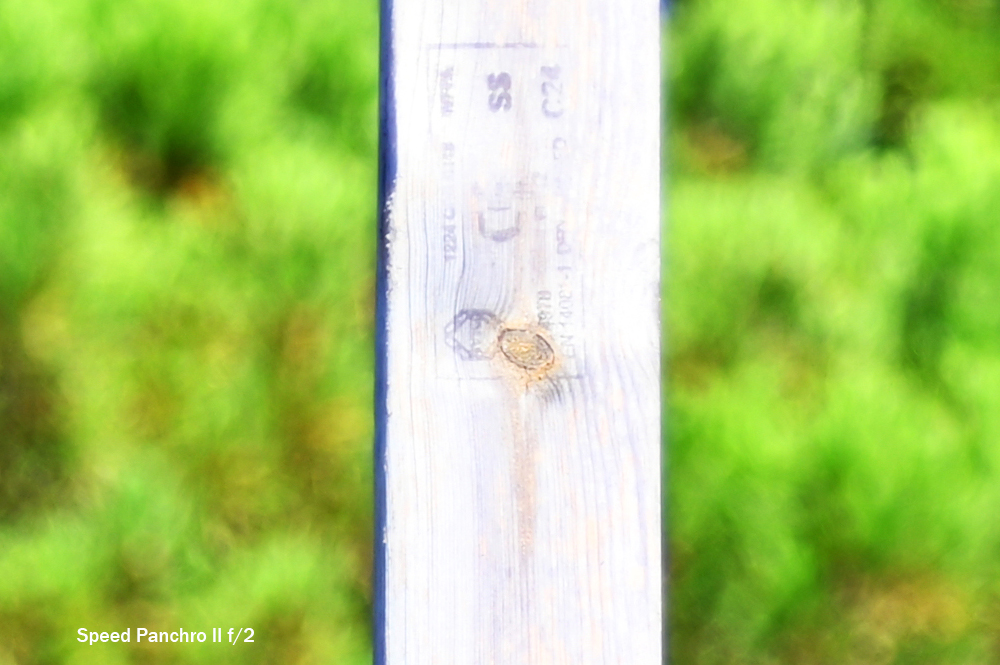
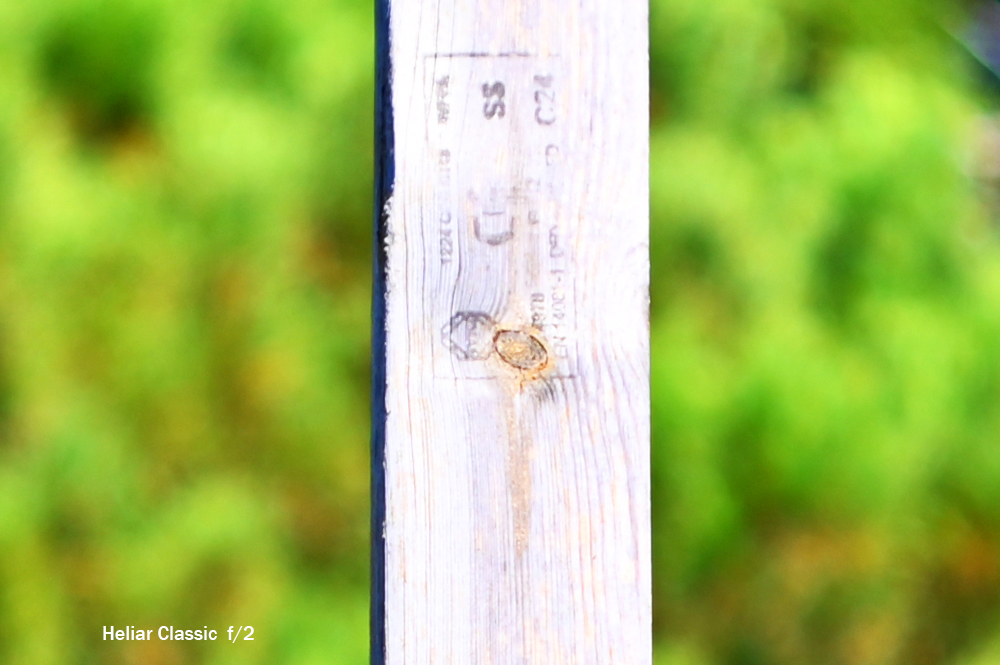
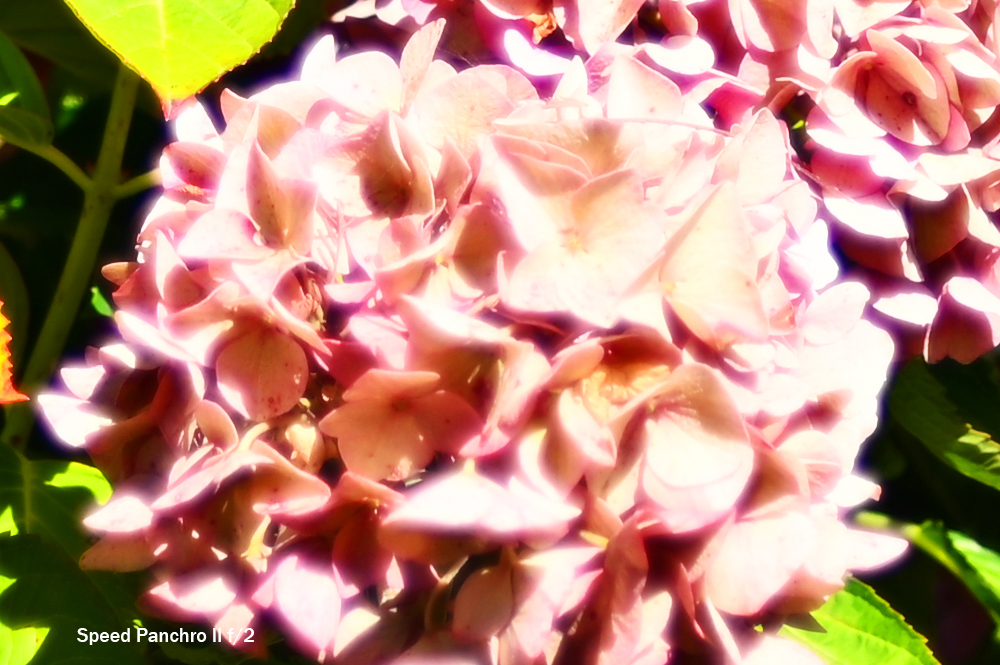
Thanks, I made a few crops. My test is a bit messy, the focus area may not be super accurate, I’ll try to do some more precise comparisons but the crops may still provide some clues regarding the two lenses rendering at that apeture.
There are quite some differences in the output of each lens.
Fred Miranda wrote:
Nice observation!
The question remains: Does the original Speed Panchro II produce a ghosting flare with a blue hue?
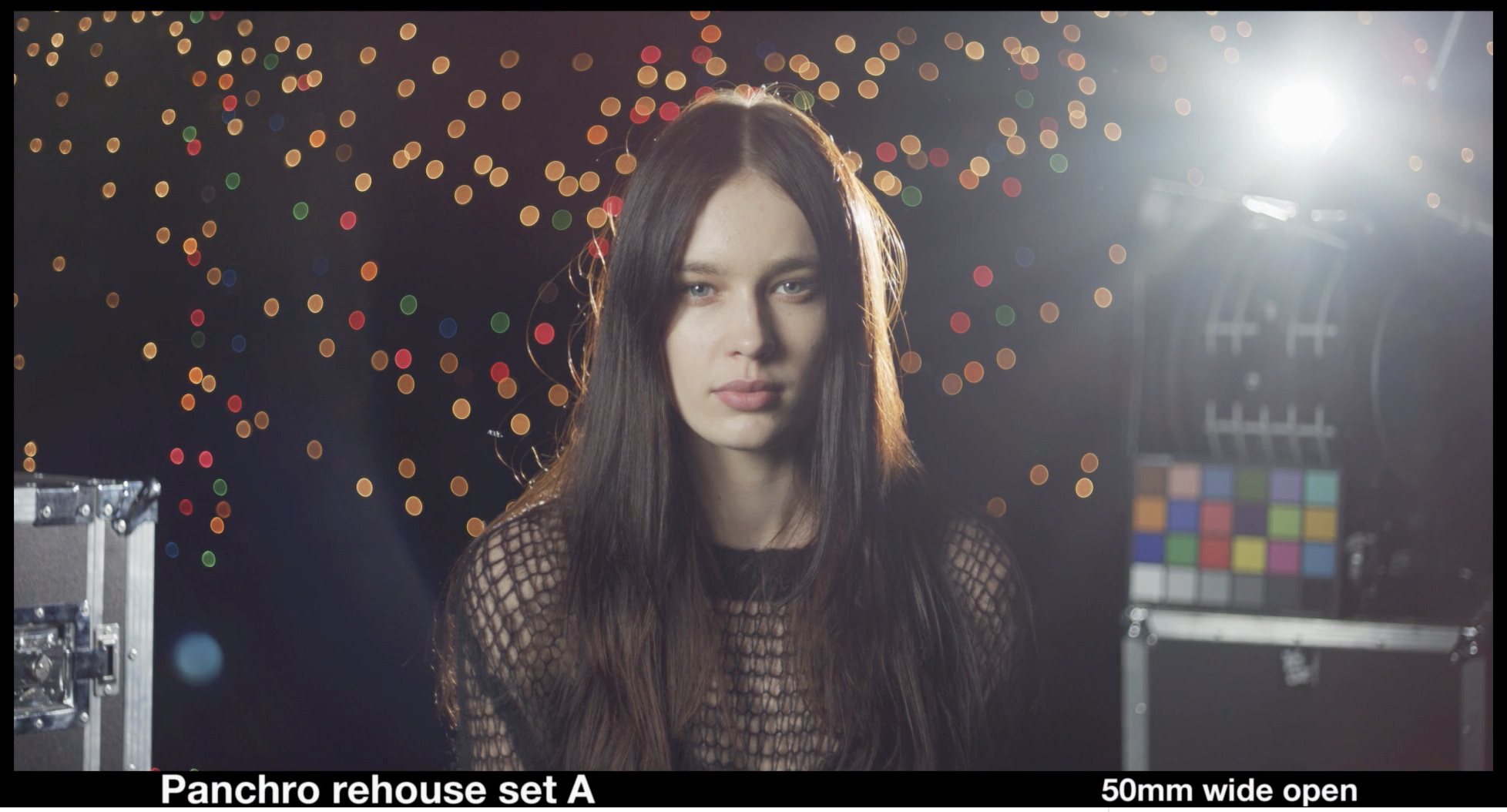
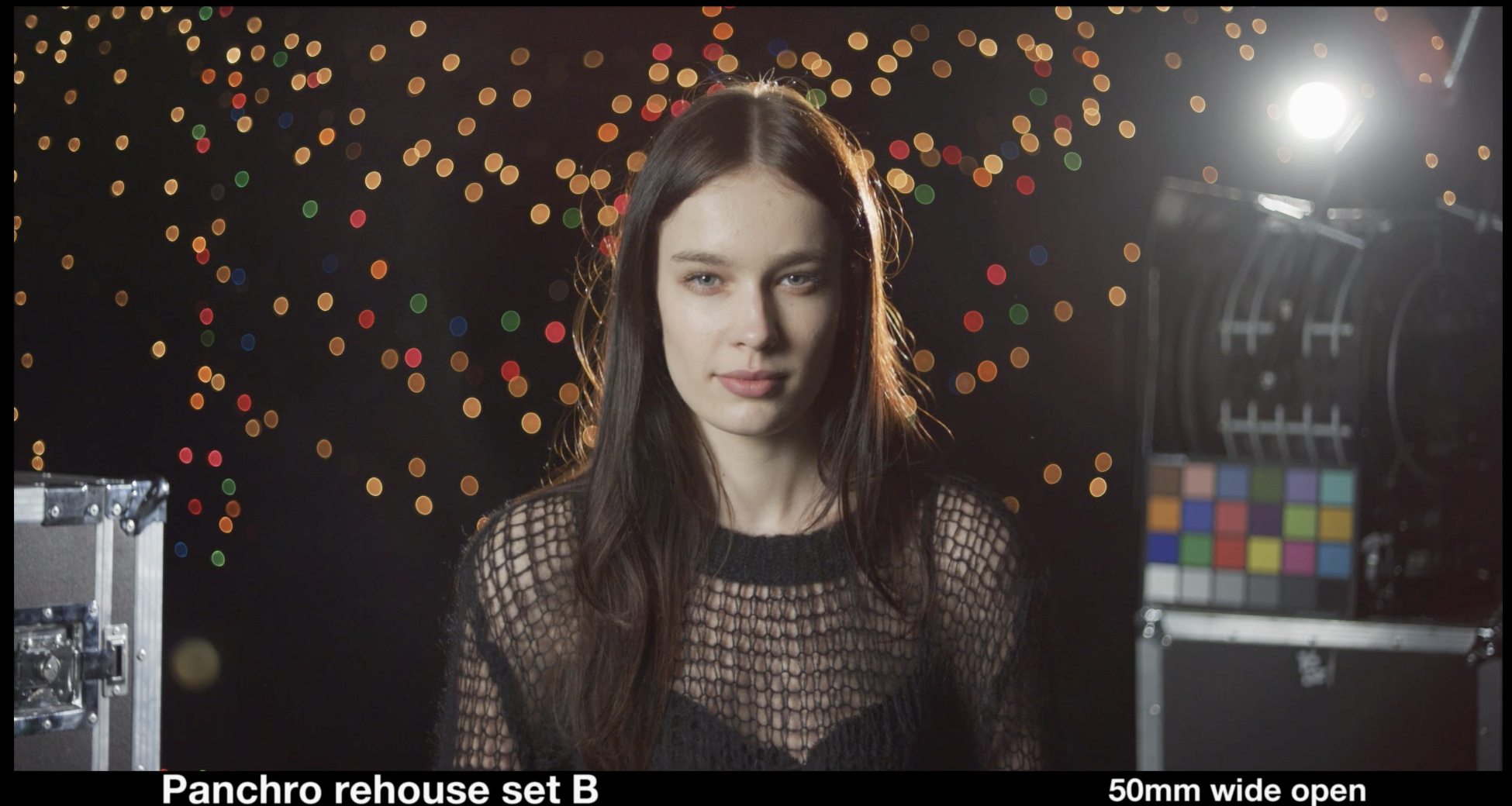
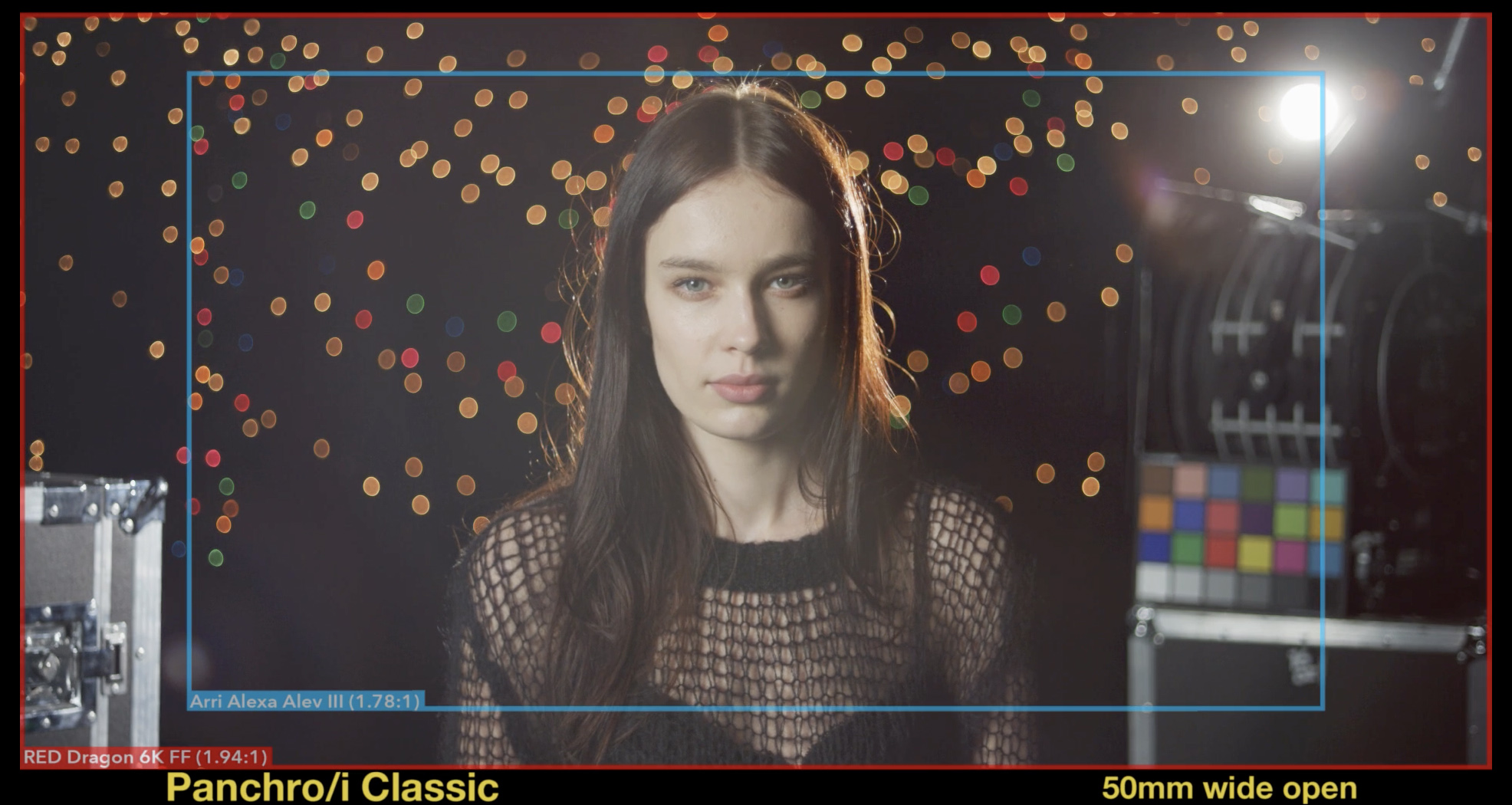
Ok, looks like they show two rehoused original sets A and B (glass from original lenses) compared to the iClassic (with modern glass). Get this: rehoused set A has blue flare, set B has warm flare, and iClassic has a ton of white/neutral veiling flare much like I see with some Voigtlander lenses like the 35 1.5.
algrove wrote:
@highdesertmesa@
Any idea of the sensor in that Red Dragon? And were all images shot on the same system, if you know?
They don't actually say it was shot on the Red Dragon 6K, just that the frame line markers align with that and the other sensor with regard to size/coverage. It could have been shot on anything with the same sensor size I guess.
The video is also about the 75mm, and they don't say if the intro footage with all the red ring flare was shot on the 50, 75 or both. That could all be with the 75mm.
highdesertmesa wrote:
Exhibit A for a "dual character" lens
Both shots:
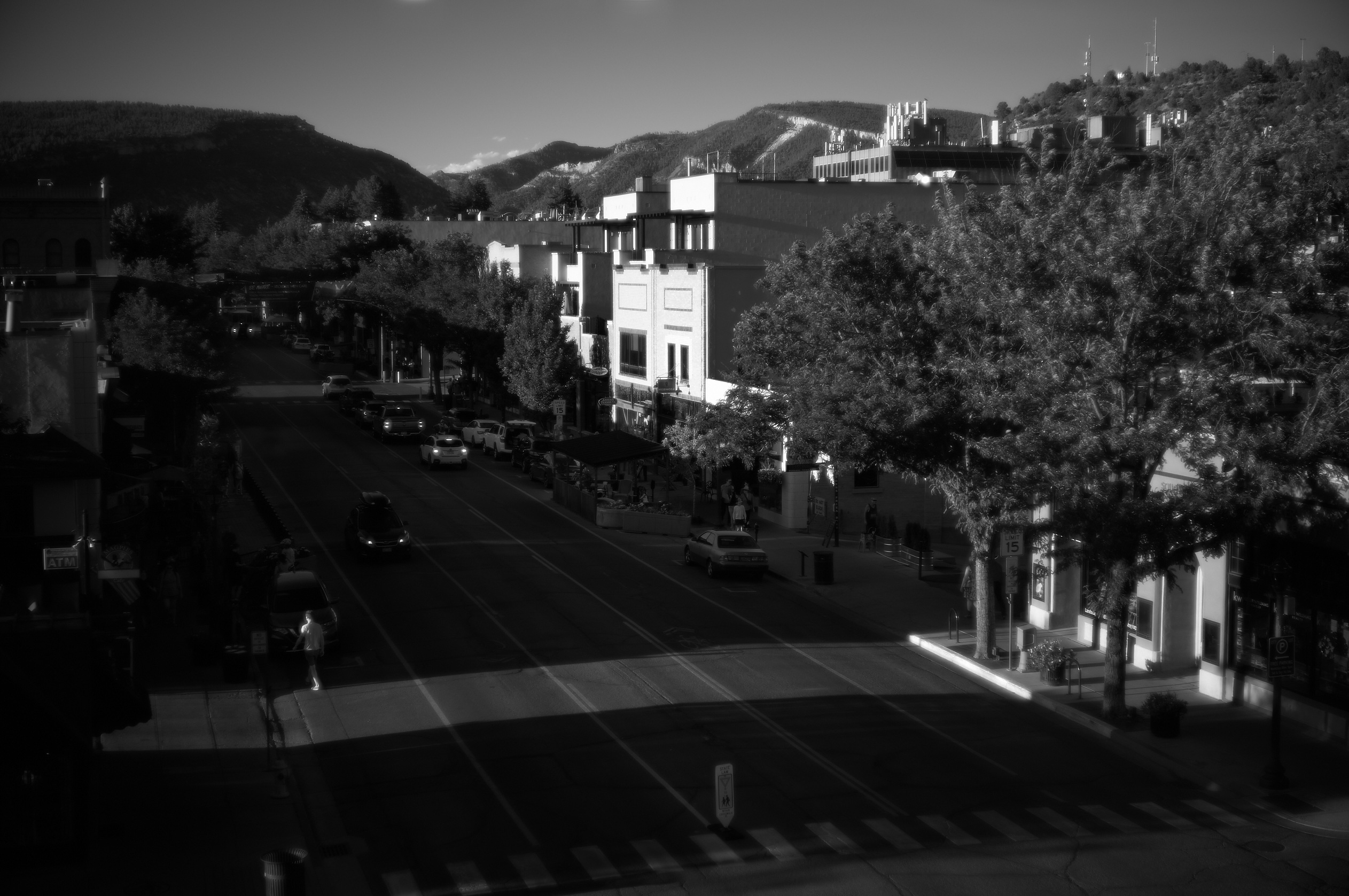
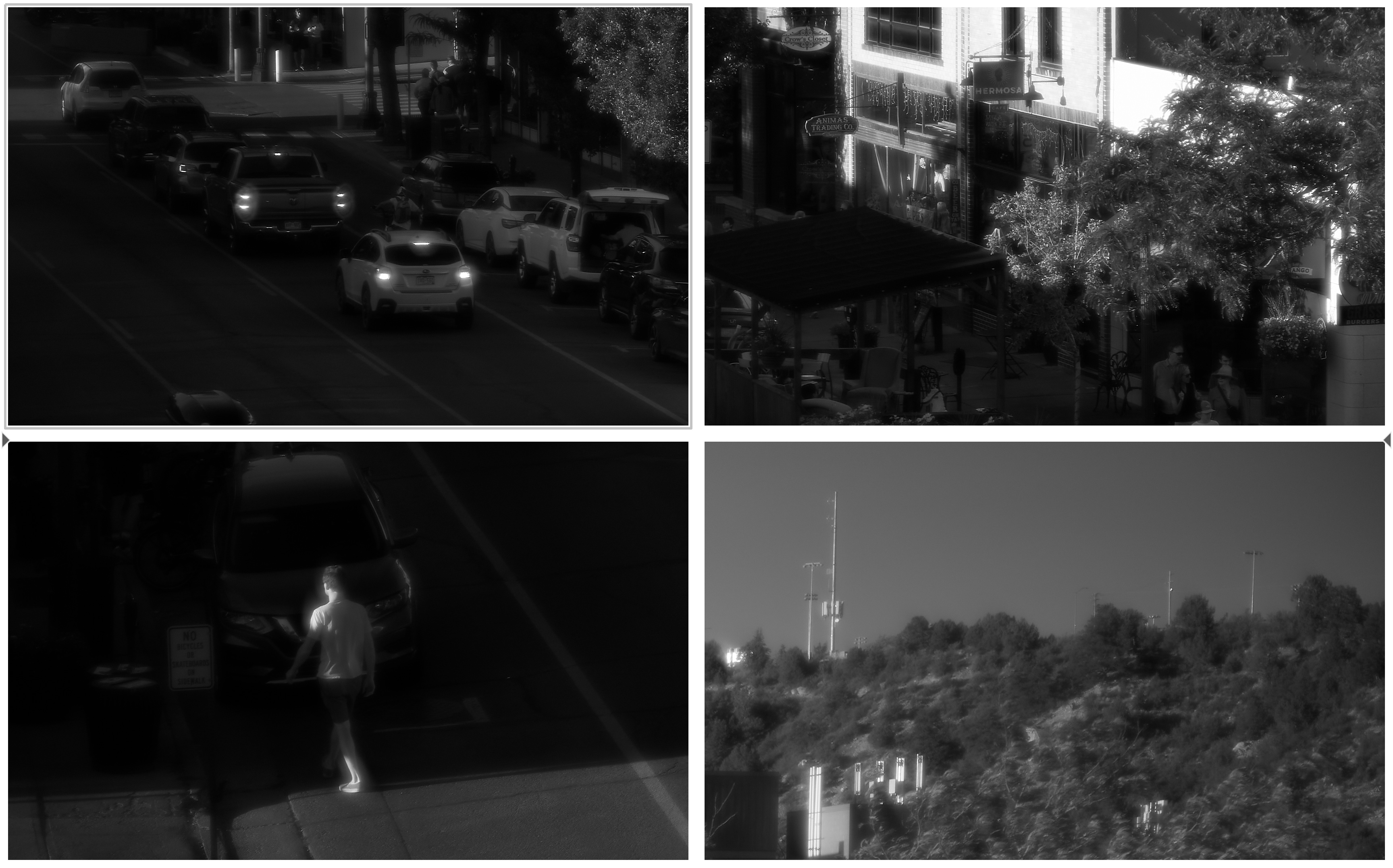
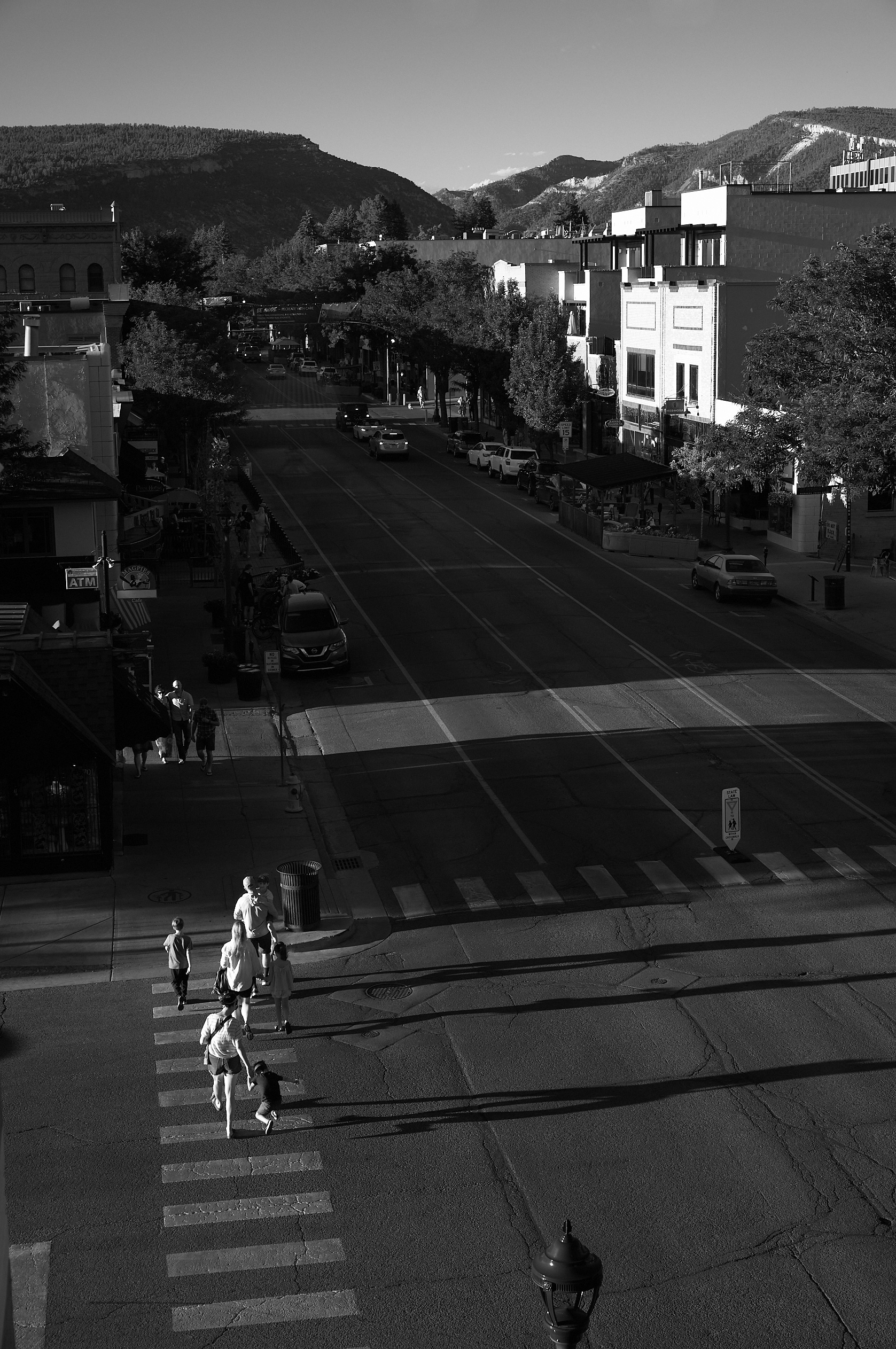
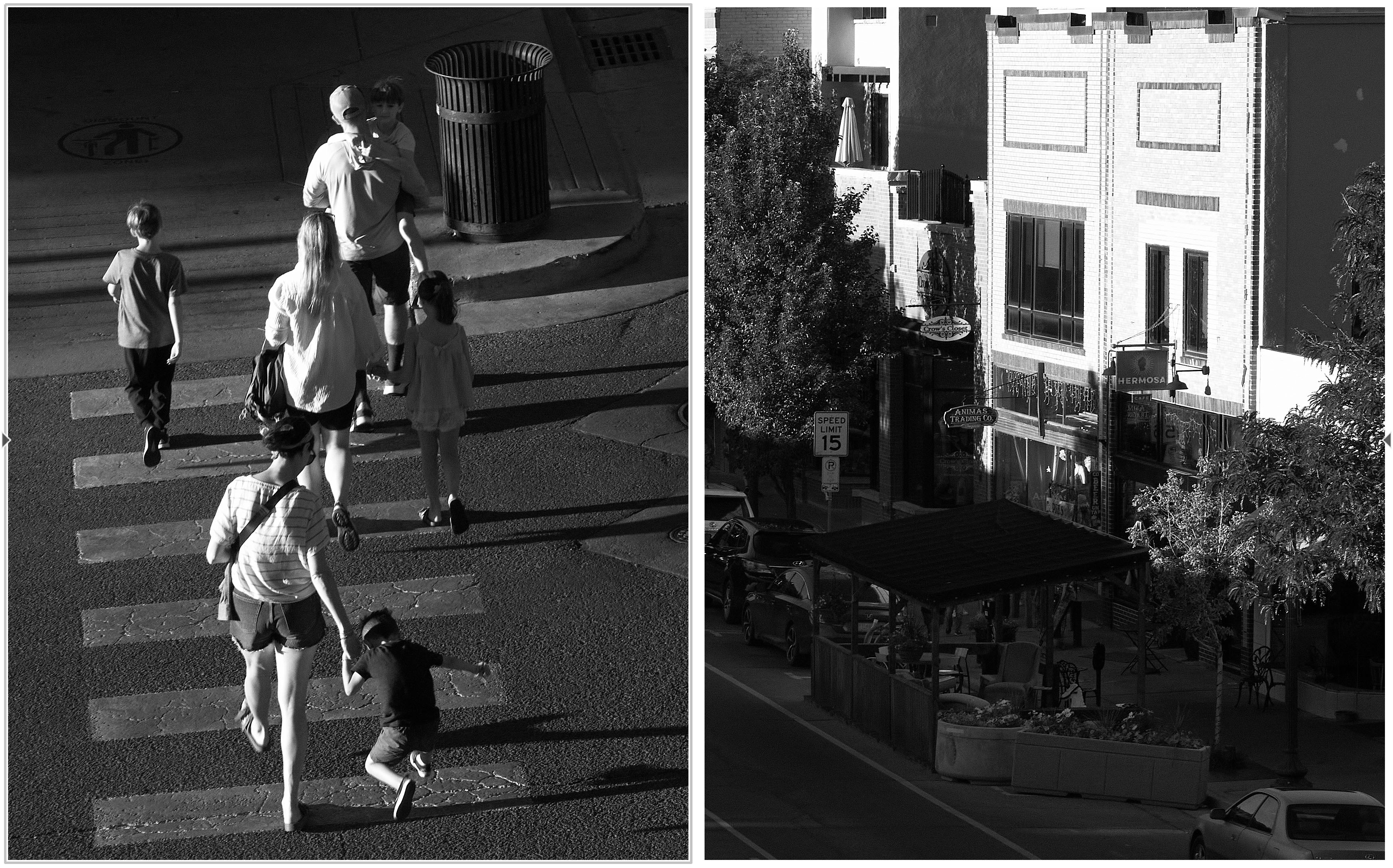
LLL SPII -|- M11M -|- B+W Light Red filter
It renders beautifully on the monochrome sensor! The glow, low contrast and surprisingly great resolution wide open are unique characteristics of this lens.