Fred Miranda wrote:
If Sony could somehow match the 24/1.4 GM's coma performance in a 15mm lens at f/2, I'm sure you would be happy. It would be way more compact than the Sigma while perhaps offering better performance for nightscapes. Is that what you use the Sigma for?
Yes and for Aurora...
14 f/1.4 at least, better f/1.2.
pdmphoto wrote:
Seems to do much better with the sum behind a thin cloud or haze. Post some pics with a clear bright sun, unobstructed, in different locations of the frame, and post please. If I have a bad sample it a simple matter of sending it back to BH. I don't think that is the case though. Even with a clear sky in full sun I can find a place to put the sun in the frame and get little flare. Much easier to get flare, sometimes loads of it, as my post showed. I find my Loxia 21, and even my Zeiss ZF 25/2.8, are in a different class. Regardless, I do like the lens....Show more →
Took these quickly a little while ago. Hopefully it suffices for what you were requesting. Please excuse the complete lack of photographic aesthetics in the shots as I was just moving the sun around the frame. lol.
I was surprised to see that the 1.8/24 was the lens that I took most of my images in the last year with.
As an owner of the 1.4/24, I must state that the GM is superior, especially in
- bokeh (by quite a big amount)
- build quality and handling
- speed
- sharpness, especially wide open where it matters.
- CA
Nevertheless, the 1.8/24 is a fine, small, light and versatile lens. You can't go really wrong with it.
Cheers, Jannik
Thanks Jannik, that's good to hear you were pretty pleased with the 24/1.8. I just ordered a used one for his a6000. I'm sure he'll be pleased, especially coming from the 16-50mm pancake.
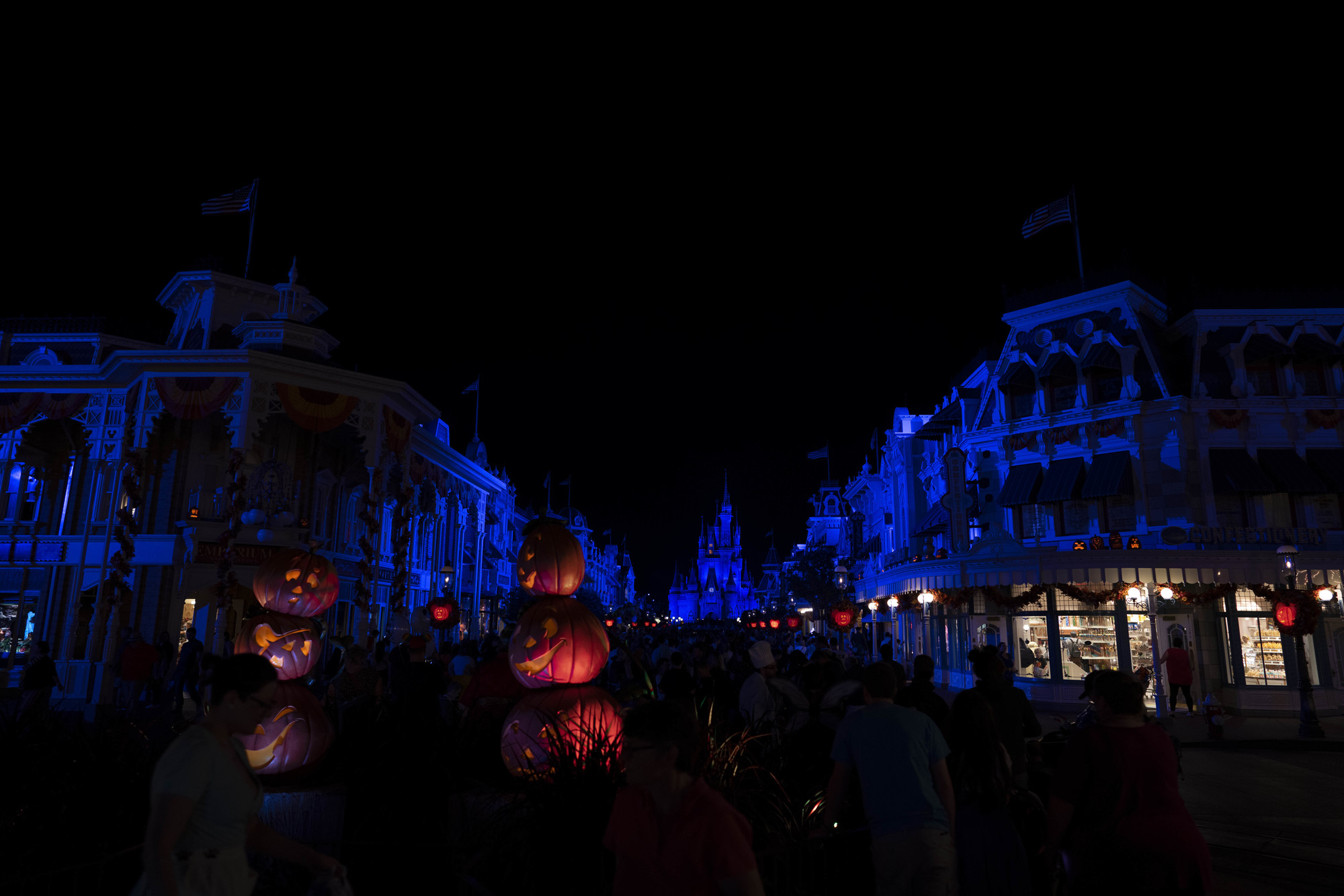
I've been pretty happy with the 24GM, here's some shots from Disney this past week. The 24GM works very well for family captures and even some environ. portraiture (aside of course landscapes). I really didn't think the 24mm focal length would be so versatile, but I've been enjoying it more than 28mm (albeit a 28 Lux).
Also, here’s a crop wide open to show that here the bokeh looks pretty busy here, but the bokeh may be busy due to the 7r3 shot at 1/8000 second. Not sure.
JohnDizzo15 wrote:
I haven't really had an opportunity to shoot with the GM yet as it arrived yesterday amidst my being booked with work/family for most of it (always seems to be the case on lens arrival day ).
Based on some quick preliminary playtime snaps though, it is a solid optic. Appears to be plenty sharp across the entire frame, distortion control is better than anticipated, flare isn't quite the issue it was made out to be by some, and OOF areas look softer than most 24's I have shot (including the XF 16). This may be largely due to the sensor size though when comparing to the XF.
The XF 16/1.4 was my favorite lens I had ever shot at that focal length and was the reason I retired the Canon 24 II and shipped the Sigma Art 24 back. The only real optical issue I had with the lens was that in harsh lighting conditions, you could get some purple fringing (but was not all that common in my shooting). Otherwise, it was the sharpest 24 FL lens I had ever shot and rendered beautifully (when in good light). This is why I'll also be keeping this lens.
The other issue with the XF lens when compared to the Sony is that the XF is for an APSC system. This is inherently the choke point for usability and performance for me. I shoot a lot in less than desirable light. Having the GM in front of these Sony ff sensors is key as I can now shoot at one of my favorite focal lengths in every kind of light I like to shoot in (in a comparably sized package).
I hope to be able to get some time to shoot my regular subjects with the GM soon so that I can get a real feel for it to be able to give you a verdict as to which one I like better overall.
Thank you for your input! I think you are having the best 24mm lenses in both systems.
I just got my 24GM copy today and like it so far. I'm glad that Sony now cares both small size and image quality.
Newtographer504 wrote:
Also, here’s a crop wide open to show that here the bokeh looks pretty busy here, but the bokeh may be busy due to the 7r3 shot at 1/8000 second. Not sure.
At 1/8000s you should turn EFCS "off" or use "silent shutter" otherwise rendering will be definitely be harsh.
Newtographer504 wrote:
Also, here’s a crop wide open to show that here the bokeh looks pretty busy here, but the bokeh may be busy due to the 7r3 shot at 1/8000 second. Not sure.
Looks like you used EFCS for sure.
Those busy "half balls" are the result of EFCS and high shutter speeds.
You can either use a lower shutter speed (you mentioned that it was 1/8K)
But if you need to use 1/8K the ether mechanical shutter or full electronic (silent) shutter should give you fine bokeh too. So there is no reason to reduce your shutter speed unless you want to for other reason. It's only the combination of shutter speeds above 1/2K and EFCS that gives result like yours, and there is never any reason to have both these features in play.
DavidBM wrote:
Looks like you used EFCS for sure.
Those busy "half balls" are the result of EFCS and high shutter speeds.
You can either use a lower shutter speed (you mentioned that it was 1/8K)
But if you need to use 1/8K the ether mechanical shutter or full electronic (silent) shutter should give you fine bokeh too. So there is no reason to reduce your shutter speed unless you want to for other reason. It's only the combination of shutter speeds above 1/2K and EFCS that gives result like yours, and there is never any reason to have both these features in play.
First thing I noticed out of the box (much like everyone else) was how shockingly light and small it feels in hand. This, after reading about how others felt this way already.
Anyhow, attaching a sizing comparison of the other two rigs I was previously using for that FL range.
Sorry, your pictures do not look like really stopped down (no sunstar at all).
But honestly, what do you want to show?
Depending on the situation, every millimeter can change the result. Sometimes my GM shows very strong flares, sometimes none at all. I find the behaviour when taking pictures with the sun in the picture or close to the picture below average compared to my other lenses.
There are enough examples with heavy flares on the internet. Now if someone comes and shows a picture without flares, then congratulations, but what does that prove?
As proof of a negative characteristic, the existing negative examples are already sufficient, regardless of the fact that very positive examples are also possible depending on the situation.
Gunzorro wrote:
So, it's an anti-sunstar lens?
I actually pasted the wrong second shot as that one was WO. The first shot is at 7.1 and the last is at 5.6. I meant to post the following one which was at f/16 for my previous post. GM 24 - Sun by John Dizzo, on Flickr
IsabellaR wrote:
Sorry, your pictures do not look like really stopped down (no sunstar at all).
But honestly, what do you want to show?
Depending on the situation, every millimeter can change the result. Sometimes my GM shows very strong flares, sometimes none at all. I find the behaviour when taking pictures with the sun in the picture or close to the picture below average compared to my other lenses.
There are enough examples with heavy flares on the internet. Now if someone comes and shows a picture without flares, then congratulations, but what does that prove?
As proof of a negative characteristic, the existing negative examples are already sufficient, regardless of the fact that very positive examples are also possible depending on the situation....Show more →
As stated above, the first was at 7.1, third was at 5.6 from my previous post. The one above in this post is at 16. Also, the set I posted before that were also all at least 5.6 and smaller.
I understand what you are saying and do not disagree that the behaviors can change with slight shifts in the way you take your shot. However, I have been actively trying to induce it so as to replicate what others have shown.
To answer your question of what I wanted to show, I was merely responding to your first post about stopping down for some shots. I am not an expert flare inducer which is also why I inquired as to what else I could do to maximize my potential for producing flare.
I have seen many of the examples that you are probably referring to and I am personally not trying to prove anything. I am honestly trying to figure out how that flare is occurring for other people. Nothing more. If that is potentially coming off like I'm trying to make a case for the lens being better than it is, then my message is being received wrong.
IsabellaR wrote:
Sorry, your pictures do not look like really stopped down (no sunstar at all).
But honestly, what do you want to show?
Depending on the situation, every millimeter can change the result. Sometimes my GM shows very strong flares, sometimes none at all. I find the behaviour when taking pictures with the sun in the picture or close to the picture below average compared to my other lenses.
There are enough examples with heavy flares on the internet. Now if someone comes and shows a picture without flares, then congratulations, but what does that prove?
As proof of a negative characteristic, the existing negative examples are already sufficient, regardless of the fact that very positive examples are also possible depending on the situation.
Similarly when people made a claim that this lens can flare so easily despite others are observing otherwise. Like you said, it needs only a subtle change to induce that big flare, but same goes for avoiding it.
Assessing how flare resistance a lens is has to do with how easily you can get that, not whether you can get flare since no lens is flare immune after all. For the two voices in this thread claiming this lens has a below average flare resistance, there are way too many others saying otherwise.
hiepphotog wrote:
Similarly when people made a claim that this lens can flare so easily despite others are observing otherwise. Like you said, it needs only a subtle change to induce that big flare, but same goes for avoiding it.
Assessing how flare resistance a lens is has to do with how easily you can get that, not whether you can get flare since no lens is flare immune after all. For the two voices in this thread claiming this lens has a below average flare resistance, there are way too many others saying otherwise.
I hope people are assessing flare without using UV of other filter as that can affect the flare performance. People should shoot the lens naked for accuracy in this regard.
On a more general note, this is a real win for Sony. So far, Sony’s been up and down with lenses in my book. Their consumer lenses have been fine, but nothing crazy (70-200 f4, 28 f2, FE 85 1.8, FE 50 1.4). I wasn’t as impressed with most people with the 85 GM. I ordered one at launch. The focus was slow and a little noisy, the lens is large, the price wasn’t as aggressive like the 24GM, and while the bokeh is nice, there are other 85 1.4’s with similar bokeh. I did appreciate the fringing control wide open though and rendering generlaly. The 85 GM isn’t offering me anything other current 85s aren’t. While I like the 35 ZA, it’s massive and somewhat negates mirrorless camera size advantage. Same with the 50 ZA. Both these lenses have similarly sized rivals as well in their respective range. I haven’t shot a the 24-70 or 16-35 GM, but the 16-35 looks nice from an optics/size perspective.
The two best lenses that Sony has offered so far have been the 55 ZA and 24 GM. These are the type of lenses I switched to mirrorless for. Both are very small given their terrific optical performance, fast , focus quickly, offer quite smooth bokeh with pleasant renderings and are well corrected for astro. The 24GM astro correction is fabulous even WO, and the price and size are terrific. You can't get a lens like this for any other system! I hope Sony kills it with this lens, and can figure out a way to make more smaller versatile, fast focusing lenses. I’d love to see Sony put out a 35 f2 GM (thought that would be slow by a GM standard), and a 100 f2 of the same ilk.
Do you guys think it might be some coating defects on a few of these? I remember a few got problems with the AF motor. At least so far we have very low Optical variance.




 ).
). 


