highdesertmesa wrote:
Great observations about the Q. That b&w car shot really demonstrates the dimensional rendering the Q lens gives at close to medium distance. I'm convinced this is a benefit of using a lens left mostly uncorrected for distortion then correcting it in software. To my eye the result is like a de-fished fisheye with a hint of a de-squeezed anamorphic
I know many say this level of distortion correction results in an observable loss of micro contrast, but if there is any, I just can't see it. Same with sharpness across the frame. Amazing results considering the amount of distortion being corrected.
The f/2.8 limit in macro mode is due to the IQ loss you'd see if they let you shoot at f/2 or 1.7. Leica didn't want us to get soft results at macro distances. If you've ever tried to use the Fujifilm X100F at f/2 and MFD, that's what I think they were trying to prevent. Ever put the 28 Lux on a macro adapter on mirrorless and shot it at macro distance wide open? It looks terrible. But the 28 Lux at f/2.8 looks great at macro distances, just like the Q. If you want more shallow DOF than what the Q provides at f/2.8 in macro mode, then leave it at f/1.7 in non-macro mode and crop instead – results are pretty good from doing that....Show more →
Lovely photo. Yes, I don't really see any detriment to sharpness or micro-contrast in the "stretched" areas of the frame. But I also didn't look overly hard. Though I did crop pretty extensively at times, and noticed no issues. I find the colors and microcontrasts to be good and preferable to much modern glass, though not as good as the FLE or even the 50 Lux.
Yeah, I too think Leica wants to insulate itself from criticism. And most lenses, or many, are soft at MFD (the RX1 is not!). But I'd like to have the option to control my rendering and IQ loss. I personally enjoy some softness, and I want control of the bokeh and focal plane for macro situations. The Q is premium enough that I don't like not having full control of my data. I expect those type of restrictions on cheaper products.
Edit: I should mention, I do enjoy the Q’s MFD pre-macro setting offers decent magnification, so that’s a positive.
Today I've tested the coma settings on the Sonnetar and here are my observations:
The differences in the coma settings are subtle but have a noticeable impact on rendering and resolution. When changing the coma settings, the framing shifts slightly while the camera remains unchanged on a tripod. To ensure accuracy, I refocused for every coma setting change.
With coma setting "1" at all distances, there is a stronger outlining on specular highlights. The highlights also appear less rounded and more 'cut' (not completely rounded). This setting exhibits a slight higher glow, but the resolution outside the center area is lower. On the positive side, there is less axial chromatic aberration (CA) at setting "1". This setting amplifies the lens' character.
When using the coma setting "INF" the background rendering becomes smoother, and the focused subject shows higher resolution. However, there is a noticeable increase in axial CA, and specular highlights become rounder with reduced outlining.
Coma setting "3" appears to strike a balance between the characteristics of settings "1" and "INFINITY." It shows more CA than setting "1," but less than setting "INF" Specular highlights have some outlining, creating an effect that lies between settings "1" and "INF". The manual in Japanese suggests using coma setting "3" when focusing with the rangefinder. Changing the coma setting should not be used to align the lens to RF, that's a different adjust in the lens.
Based on my observations, I believe coma setting "3" is the best compromise, offering a blend of desirable features from the other settings. If one prefer a bit more character in the form of glow and more outlining, switching to setting "1" and using LV (Live View) for focusing is a great alternative, especially since axial CA is lower. I've tested this at 1.5m, 3m and 1.7m distance.
These observations are subjective and may vary depending on individual preferences and shooting scenarios.
Here are some pictures that show two different situations at the 1-meter mark and INF mark. In the first case (1m), the focus area is not corrected enough for SA, so there is less contrast, more glow, and the rendering has too much outlining. In the second case (INF), the focused area is corrected too much, so we get higher resolution/contrast, less CA and the rendering is smoother with less outlining.
Example 1: Subject at 2m
1m coma setting
Focused area at 100% magnification from image above
INF. coma setting
Focused area at 100% magnification from image above
I also took pictures using different coma settings like "2", "3", and "5", but the differences are more subtle. The best way to understand the changes is to compare "1" and "INF" because they are the extreme settings.
As I mentioned before, the "3" (default) setting seems to be the best compromise between "1" and "INF," but it's fun to experiment and see how this lens can create different looks.
Has anyone tried using the Sonnetar 73/1.5 lens on a Sony camera with the Techart EA9 adapter? Certain 75mm lenses, such as the CV 75/1.9 Ultron and CV 75/1.8 Heliar Classic, perform nicely with autofocus tracking, even in the corners.
Yeah Fred--it worked well. I tried it a little with my LM-EA9 before it died. Was impressed, centrally and further out. I just popped my LM-EA7 on my A7c with the Sonnetar. It can accurately and quickly focus into the utmost corner using the Sonnetar even WO, which is excellent. You're going to have to prefocus a bit because it's a tele as you know.
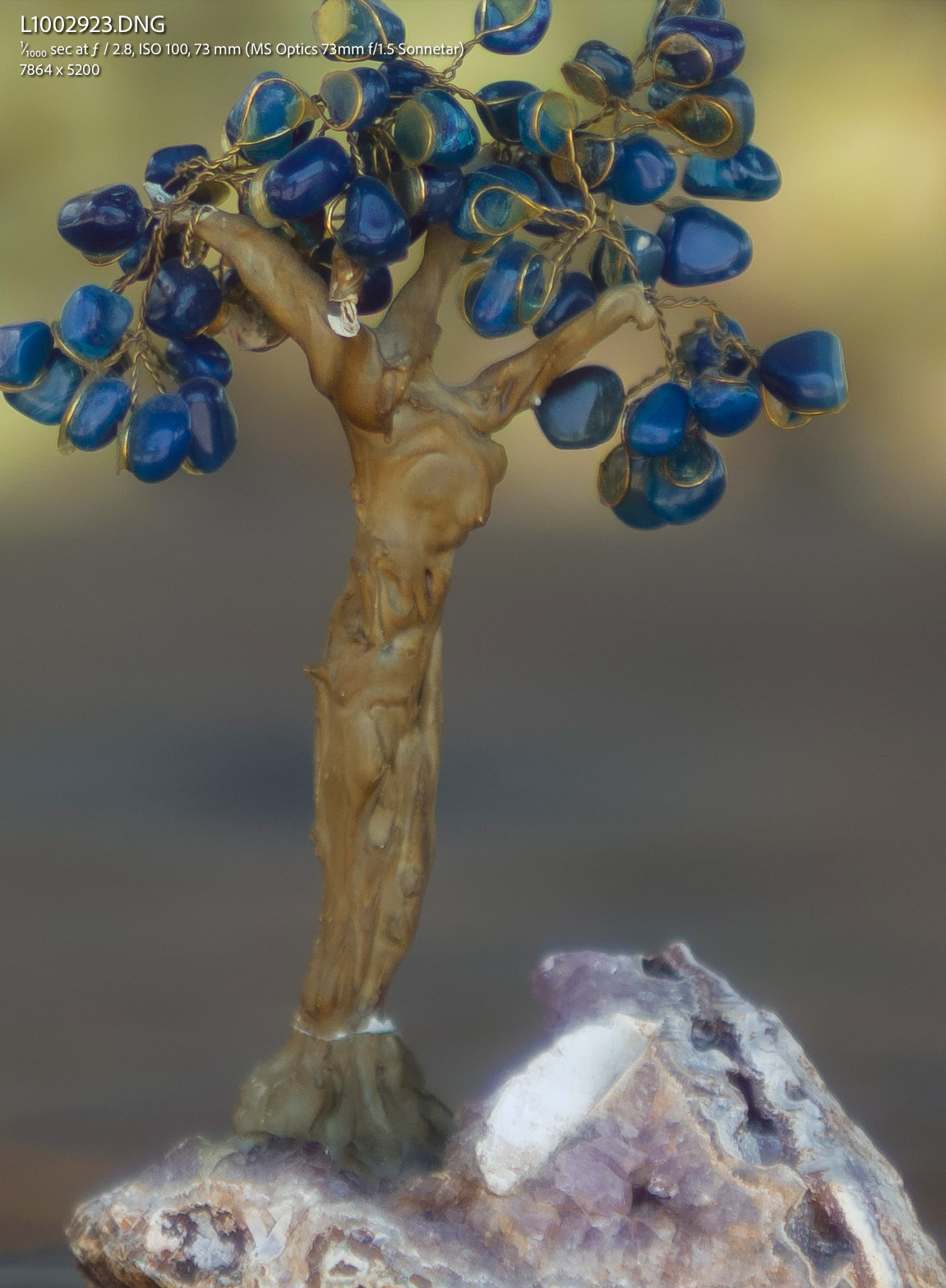
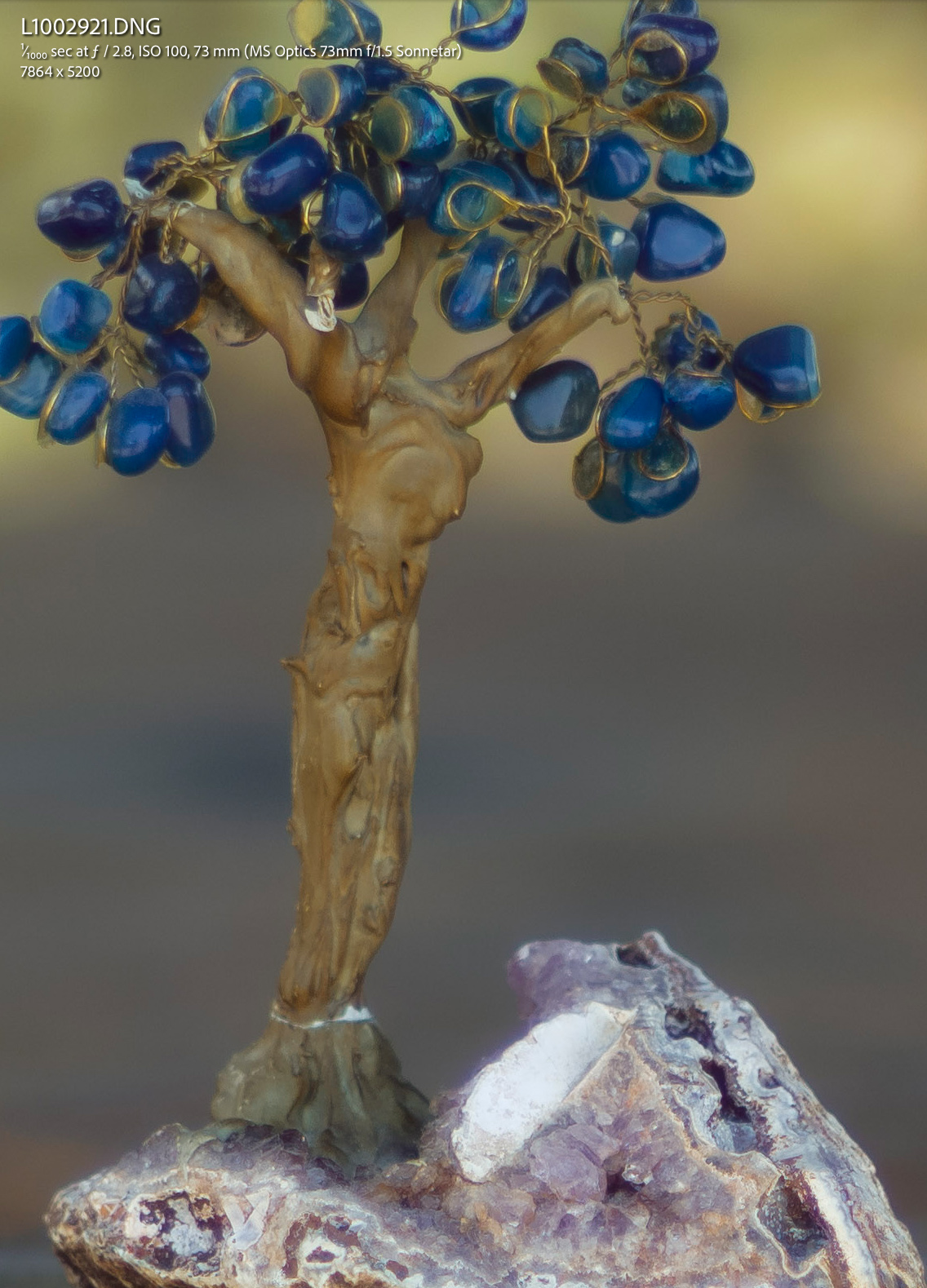
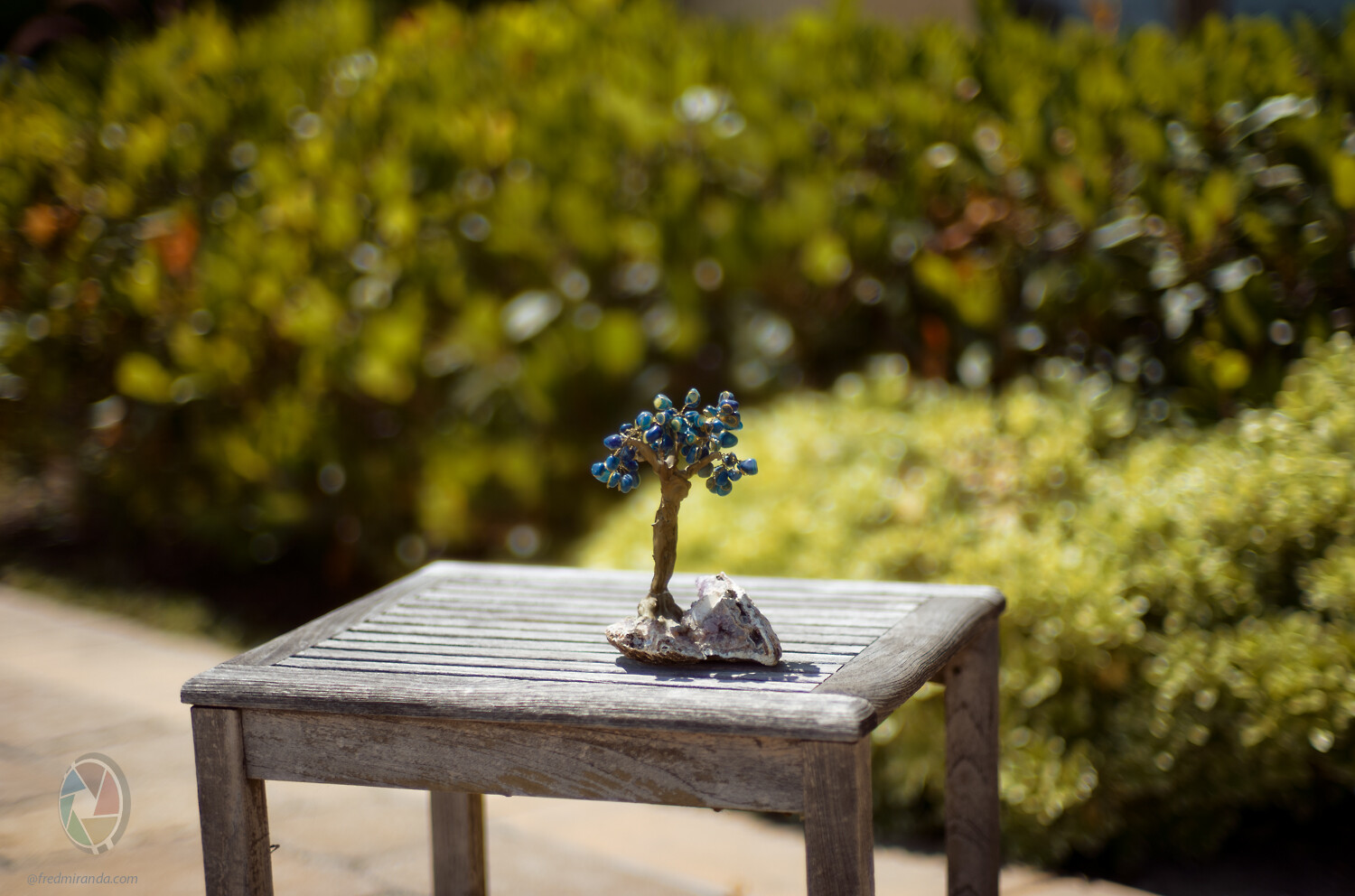
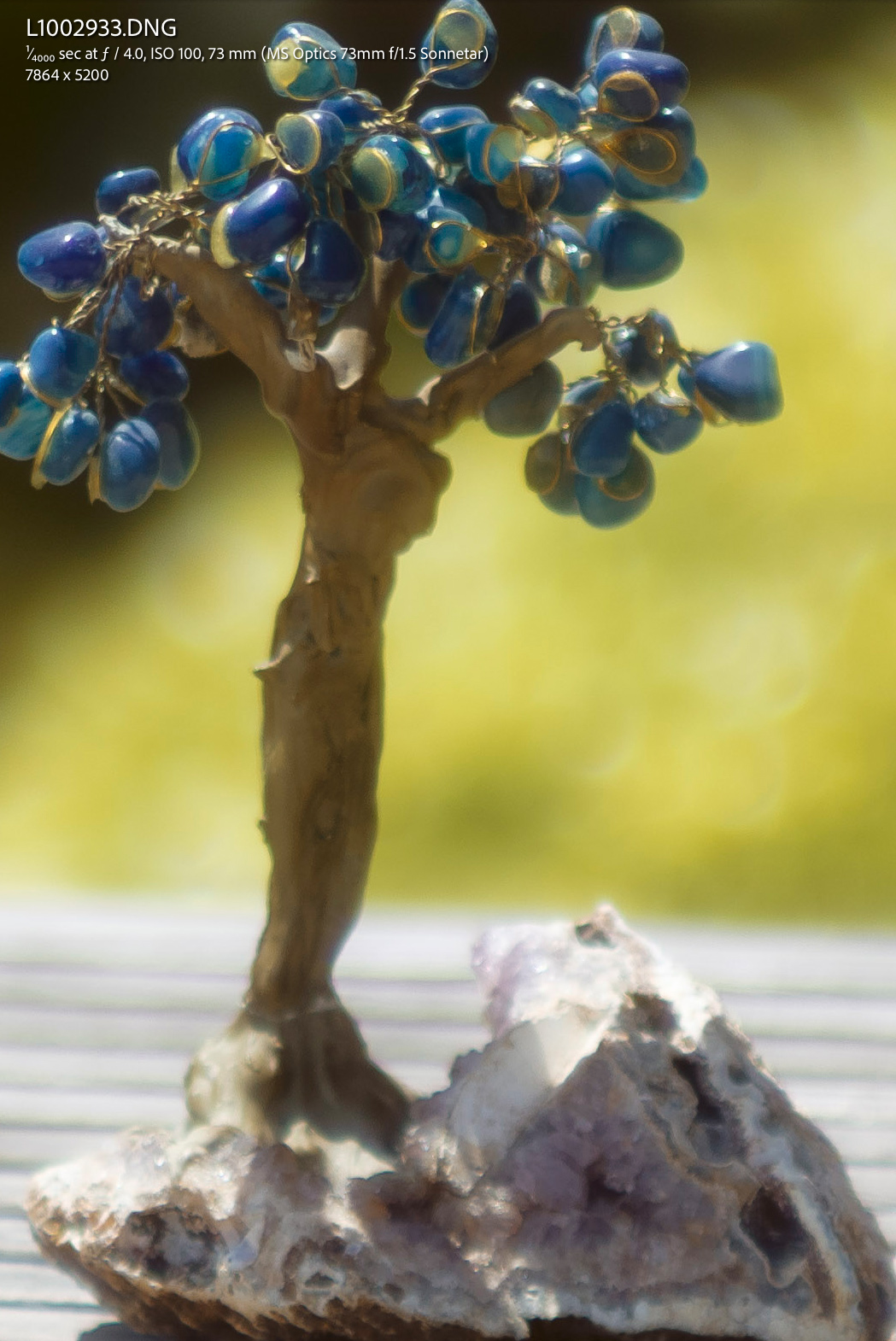
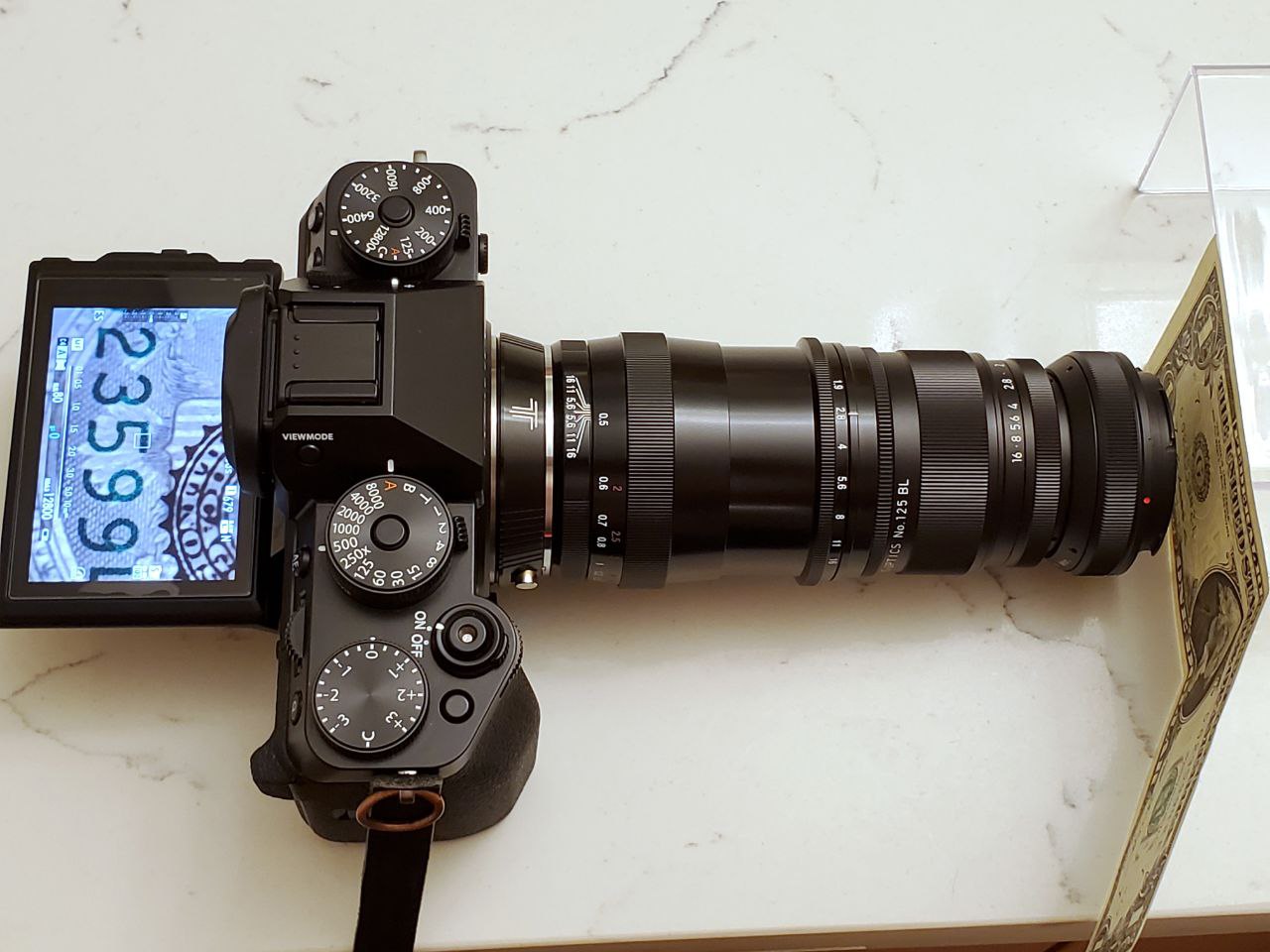
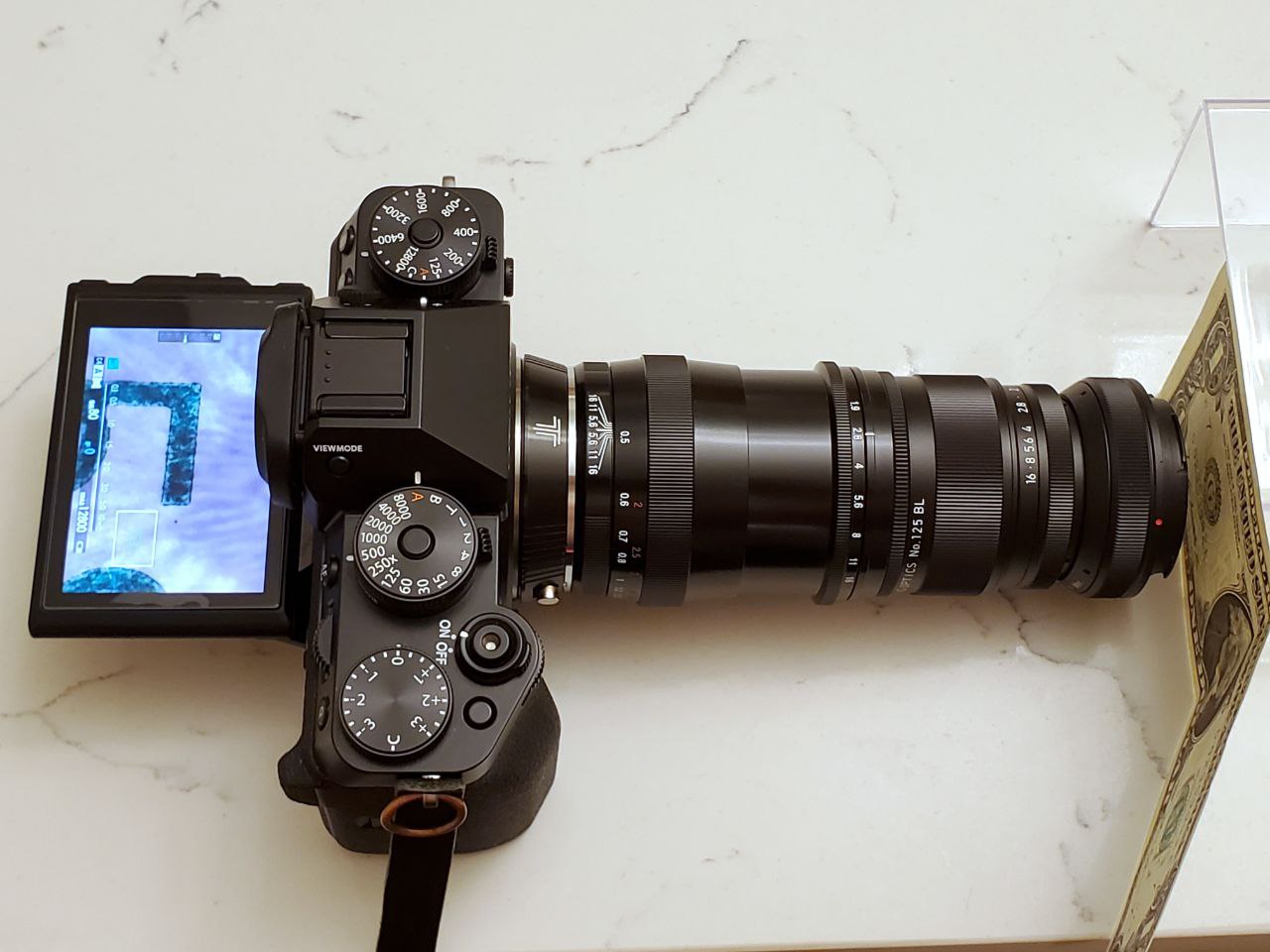
If someone has both the Voigtlander 75/1.9 Ultron and the MS Optics 73/1.5 lenses, they can create a strong macro lens combination. The Ultron can be connected directly to the Sonnetar without the need for an adapter. It doesn't have to be specifically the Ultron; any lens with a 49mm thread will work.
Now I furthermore need a Sonnetar 73mm for discreet Macro Streetphotography.
On another note, it may be trivial but that simple TTartisan adapter is great, I have the Nikon Z version and it’s the best of the many I have, any adapter even the costly ones tend to give me issues with one lens or the other but that adapter just take any lens without issue and gives me infinity accuratly. And it looks good.
nehemiahphoto wrote:
lol didn’t know MS Optics made a macro lens.
I have not tried this yet but I found it interesting that the MS Optics Sonnetar can attach directly to any lens with 49mm thread lens for macro shooting.
Fred Miranda wrote:
I have not tried this yet but I found it interesting that the MS Optics Sonnetar can attach directly to any lens with 49mm thread lens for macro shooting.
Yeah--one of those things when I saw it: why didn't I think of this?
I dont understand how you attach.. If both lenses are M mount-- how do they attach to each other
Fred Miranda wrote:
I have not tried this yet but I found it interesting that the MS Optics Sonnetar can attach directly to any lens with 49mm thread lens for macro shooting.
mark1958 wrote:
I dont understand how you attach.. If both lenses are M mount-- how do they attach to each other
They attach front to front. I just tried it: using my Minolta Rokkor MD 50/1.4 as the lens that mounts to my camera, and I screwed the front of the MS Optics Sonnetar 73/1.5 into the front of the Minolta. So now I have an M&M (Minolta and Miyazaki) Macro lens, or M3. Got to go find buy some M&Ms to photograph now.
Note that there's extreme vignetting with this particular setup.
Fred Miranda wrote:
Does anyone know if it's possible to attach the included hood with a UV filter
Yes! You just have to mount the filter upside down. I use a B+W 49mm UV filter, mounted upside down, and the hood screws into the threads on the back end of the filter (which are facing the front since you've mounted it upside down).
bjhurley wrote:
Yes! You just have to mount the filter upside down. I use a B+W 49mm UV filter, mounted upside down, and the hood screws into the threads on the back end of the filter (which are facing the front since you've mounted it upside down).
Thank you! I just did that yesterday and it worked great!
stgrove wrote:
I know this is way off subject, but has anyone tried the Leitz LTM 73/1.9 Hector with adapter on an M or SL versus the main subject of this thread?
That's a lens I've never tried and hasn't really crossed my radar. Is there something unique about it that I might be missing?