This topic is in the 2018 archive. You can read it and like its posts here. It is read only.
Archive 2018Loxia 25 VS Batis 25mm Big Bronco
p.5 #1Loxia 25 VS Batis 25mm Big Bronco
zugzwang2 wrote:
I'm having some trouble visualizing this. Roger Ciala offered a good way to display field curvature (scroll down) using Photoshop's "find edges" filter on a grassy slope:
https://www.lensrentals.com/blog/2016/09/fun-with-field-of-focus-part-1/
Unfortunately, I have only the 25 and not both the 21 and the 25, and I can't find a convenient grassy slope in my drougt-stricken area that would allow me to attempt Ciala's analysis--but I hope someone will.
Thanks for the link. Somehow I had missed this article.
So, I took my lox 25 to a grass area and focused about 30 meters away...lo and behold I see the exact wavy FC I was describing above. The wave is slight but happens exactly on the area I'm calling "Mid-zone".
Another Lox lens I think has similar FC shape is the Lox 35/2.
See before and after with "Find edges":
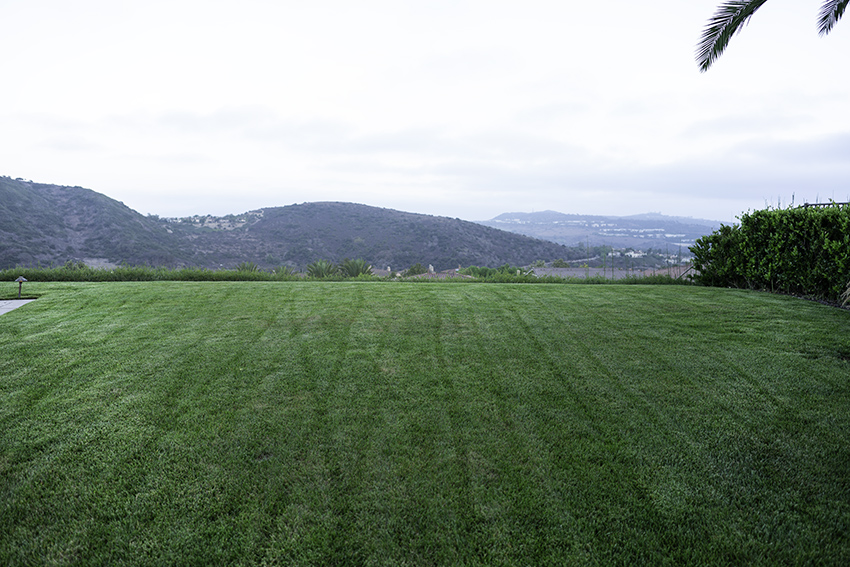
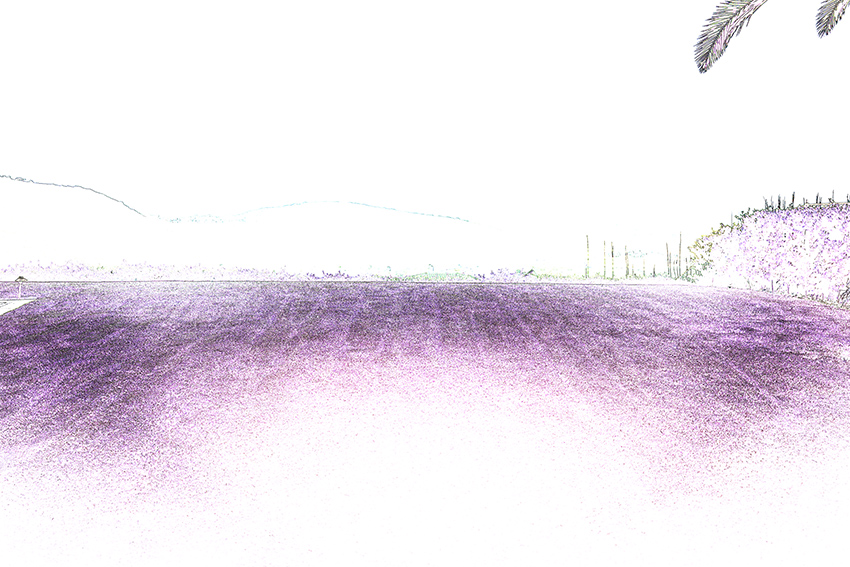
Lox 25mm field curvature shape (Wavy)
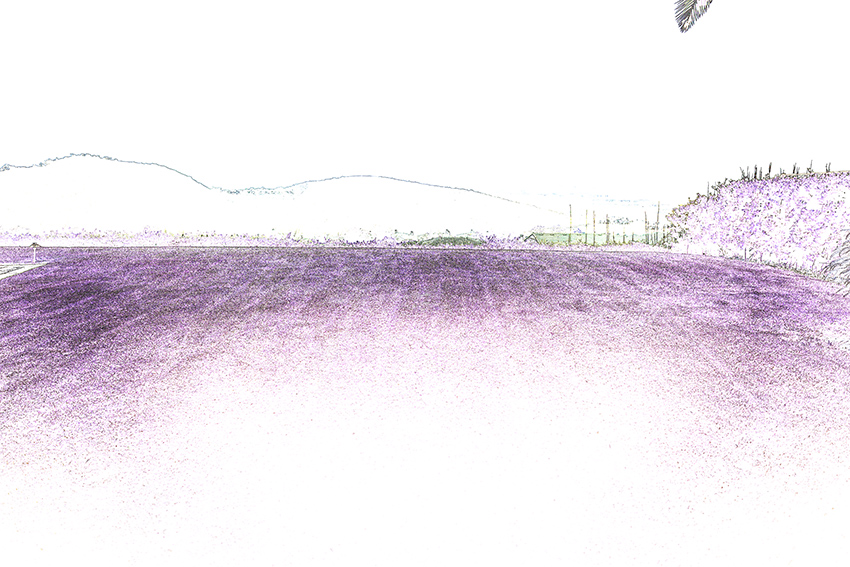
Lox 21mm field curvature shape (Curved)
I'm having some trouble visualizing this. Roger Ciala offered a good way to display field curvature (scroll down) using Photoshop's "find edges" filter on a grassy slope:
https://www.lensrentals.com/blog/2016/09/fun-with-field-of-focus-part-1/
Unfortunately, I have only the 25 and not both the 21 and the 25, and I can't find a convenient grassy slope in my drougt-stricken area that would allow me to attempt Ciala's analysis--but I hope someone will.
Thanks for the link. Somehow I had missed this article.
So, I took my lox 25 to a grass area and focused about 30 meters away...lo and behold I see the exact wavy FC I was describing above. The wave is slight but happens exactly on the area I'm calling "Mid-zone".
Another Lox lens I think has similar FC shape is the Lox 35/2.
See before and after with "Find edges":
Lox 25mm field curvature shape (Wavy)
Lox 21mm field curvature shape (Curved)
Aug 17, 2018 at 08:26 PM
p.5 #2Loxia 25 VS Batis 25mm Big Bronco
To compare extreme corner (~21mm distance from center) and your "midzone" area (16mm), you may be better off placing the horizon diagonally. On a related note, I went back to the MTF curves and don't see evidence of wavy curvature wide open.
Aug 17, 2018 at 09:41 PM
p.5 #3Loxia 25 VS Batis 25mm Big Bronco
On Big Bronco I did not notice any mid zone issues. But I’m not at infinity either with a 25 although I’m pretty close
Aug 17, 2018 at 09:51 PM
p.5 #4Loxia 25 VS Batis 25mm Big Bronco
Fred Miranda wrote:
So, I took my lox 25 to a grass area and focused about 30 meters away...lo and behold I see the exact wavy FC I was describing above. The wave is slight but happens exactly on the area I'm calling "Mid-zone".:
That's interesting. Thanks for doing that test.
Do your results suggest that the best overall image quality near infinity might be with the 25mm lens near the hard stop to bring the corners as well as the (outer) mid-zone into focus while still catching the center?
Aug 17, 2018 at 11:08 PM
p.5 #5Loxia 25 VS Batis 25mm Big Bronco
Fred Miranda wrote:
The area I'm referring is not quite mid-field though. (check my thumbnail).
Here is what I see @f/2.4 (Wide open). Same behavior fo at all 4 corners:
"Center" = focused at center. (A slight tad before the hard stop)
"Hard stop" = focusing ring positioned at lens' hard stop (infinity)
@DavidBM@, what say you?
Interesting! Yes I thought it had a very slight mid zone dip, and looks like you have nailed it down to FC rather than absolute performance. Also helps explain why when used wide open with a subject and background there is no sign of the dip - because you are focussed on the subject and wherever you focus it's razor sharp. I thought that might be down to there being no dip at closer distance, but of course wavy FC would explain it just fine.
Relatedly, one thing I recall finding with the CV40 is that there is a difference between the extreme corner and the almost extreme corner at wide apertures. Literally the last mm or less, and then the very next bit. Much more pushed into the corners than the Loxia. But I didn't follow it up because, well, who cares about the difference between the last few mm at f1.2?
I guess we are seeing this sort of thing more on high rez sensors because that's how you correct for FC; introduce corrections that give you less curvature but make what there is a bit alternate in concentric circles. And the sensors we have now are good enough to detect this residual FC.
Aug 18, 2018 at 05:42 AM
p.5 #6Loxia 25 VS Batis 25mm Big Bronco
DavidBM wrote:
Here is what I see @f/2.4 (Wide open). Same behavior fo at all 4 corners:
"Center" = focused at center. (A slight tad before the hard stop)
"Hard stop" = focusing ring positioned at lens' hard stop (infinity)
@DavidBM@@, what say you?Interesting! Yes I thought it had a very slight mid zone dip, and looks like you have nailed it down to FC rather than absolute performance. Also helps explain why when used wide open with a subject and background there is no sign of the dip - because you are focussed on the subject and wherever you focus it's razor sharp. I thought that might be down to there being no dip at closer distance, but of course wavy FC would explain it just fine.
Relatedly, one thing I recall finding with the CV40 is that there is a difference between...Show more →
I will do the grass test with the 40/1.2 today so we can see its FC shape. What I see with the 40/1.2, aside from a curved FC is some astigmatism at the "very extreme edge". ...Is that a new word?
Here is a f/4 example demonstrating this: (It's been compared to the Samy 35/1.4 AF)
https://www.fredmiranda.com/forum/topic/1512530/144#14562956
Fred Miranda wrote
The area I'm referring is not quite mid-field though. (check my thumbnail).Here is what I see @f/2.4 (Wide open). Same behavior fo at all 4 corners:
"Center" = focused at center. (A slight tad before the hard stop)
"Hard stop" = focusing ring positioned at lens' hard stop (infinity)
@DavidBM@@, what say you?
Relatedly, one thing I recall finding with the CV40 is that there is a difference between...Show more →
I will do the grass test with the 40/1.2 today so we can see its FC shape. What I see with the 40/1.2, aside from a curved FC is some astigmatism at the "very extreme edge". ...Is that a new word?
Here is a f/4 example demonstrating this: (It's been compared to the Samy 35/1.4 AF)
https://www.fredmiranda.com/forum/topic/1512530/144#14562956
Aug 18, 2018 at 10:56 AM
p.5 #7Loxia 25 VS Batis 25mm Big Bronco
Fred Miranda wrote:
Here is what I see @f/2.4 (Wide open). Same behavior fo at all 4 corners:
"Center" = focused at center. (A slight tad before the hard stop)
"Hard stop" = focusing ring positioned at lens' hard stop (infinity)
@DavidBM@@@, what say you?Interesting! Yes I thought it had a very slight mid zone dip, and looks like you have nailed it down to FC rather than absolute performance. Also helps explain why when used wide open with a subject and background there is no sign of the dip - because you are focussed on the subject and wherever you focus it's razor sharp. I thought that might be down to there being no dip at closer distance, but of course wavy FC would explain it just fine.
Relatedly, one thing I recall finding with the CV40 is that there is a difference between the extreme corner and the almost extreme corner at wide apertures. Literally the last mm or less, and then the very next bit. Much more pushed into the corners than the Loxia. But I didn't follow it up because, well, who cares about the difference between the last few mm at f1.2?
I guess we are seeing this sort of thing more on high rez sensors because that's how you correct for FC; introduce corrections that give you less curvature but make what there is a bit alternate in concentric circles. And the sensors we have now are good enough to detect this residual FC.I will do the grass test with the 40/1.2 today so we can see its FC shape. What I see with the 40/1.2, aside from a curved FC is some astigmatism at the "very extreme edge". ...Is that a new word?
Here is a f/4 example demonstrating this: (It's been compared to the Samy 35/1.4 AF)
https://www.fredmiranda.com/forum/topic/1512530/144#14562956
Sometimes the test won't reveal aspects of FC; because a kind of FC is one of the causes of astigmatism: where the FC is different in the tangential and saggitall directions. So what happens is as you change the focus setting the image changes in how it looks at a particular location, depending on which kind of structure comes into focus.
The difference between the very extreme edge and the edge that I was talking about was of that kind. At one focus setting one would be better than the other, and at another vice versa. But neither would be great. If it really is FC-astigmatism I guess we'd photograph a grid and see how settings and locations affect saggitall and tangential structures.
Anyone reading: the take home message is not that there are "issues" with the CV 40 that should deter you. This is just me, Fred and others geeking out on minutiae of how it performs!
DavidBM wrote
Fred Miranda wrote
The area I'm referring is not quite mid-field though. (check my thumbnail).Here is what I see @f/2.4 (Wide open). Same behavior fo at all 4 corners:
"Center" = focused at center. (A slight tad before the hard stop)
"Hard stop" = focusing ring positioned at lens' hard stop (infinity)
@DavidBM@@@, what say you?
Relatedly, one thing I recall finding with the CV40 is that there is a difference between the extreme corner and the almost extreme corner at wide apertures. Literally the last mm or less, and then the very next bit. Much more pushed into the corners than the Loxia. But I didn't follow it up because, well, who cares about the difference between the last few mm at f1.2?
I guess we are seeing this sort of thing more on high rez sensors because that's how you correct for FC; introduce corrections that give you less curvature but make what there is a bit alternate in concentric circles. And the sensors we have now are good enough to detect this residual FC.
Here is a f/4 example demonstrating this: (It's been compared to the Samy 35/1.4 AF)
https://www.fredmiranda.com/forum/topic/1512530/144#14562956
Sometimes the test won't reveal aspects of FC; because a kind of FC is one of the causes of astigmatism: where the FC is different in the tangential and saggitall directions. So what happens is as you change the focus setting the image changes in how it looks at a particular location, depending on which kind of structure comes into focus.
The difference between the very extreme edge and the edge that I was talking about was of that kind. At one focus setting one would be better than the other, and at another vice versa. But neither would be great. If it really is FC-astigmatism I guess we'd photograph a grid and see how settings and locations affect saggitall and tangential structures.
Anyone reading: the take home message is not that there are "issues" with the CV 40 that should deter you. This is just me, Fred and others geeking out on minutiae of how it performs!
Aug 18, 2018 at 04:36 PM
p.5 #8Loxia 25 VS Batis 25mm Big Bronco
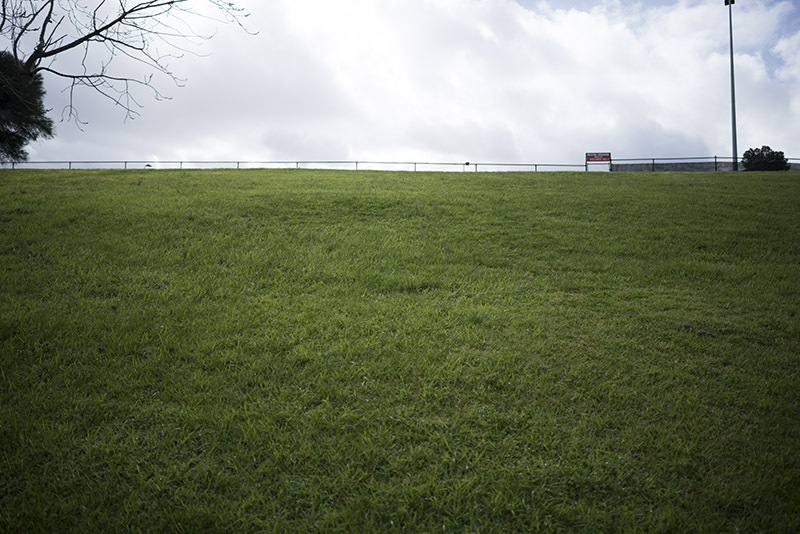
Grass test with my Loxia 25 @f2.4 seems to show a simple curve, with focus getting closer towards the edges. Not seeing the field inversion shown in fred's version.
original
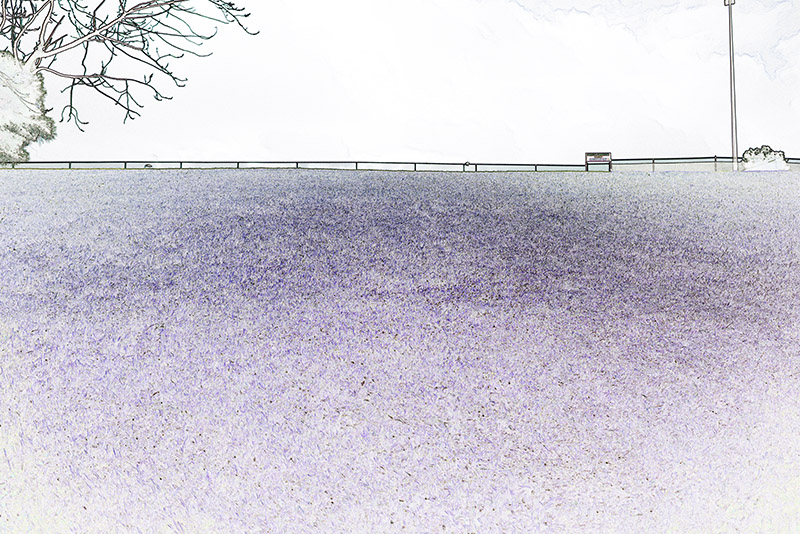
find edges
original
find edges
Aug 18, 2018 at 10:00 PM
p.5 #9Loxia 25 VS Batis 25mm Big Bronco
MrTMan wrote:
Incidentally.... one of the corners on my 25 is a touch off. Would you guys consider this to be acceptable? (I'm inclined to think so, but never quite know how picky I should be).
bad copy
My first Loxia25 is a bad copy, and Zeiss changed one for me. Now this is perfect.
Incidentally.... one of the corners on my 25 is a touch off. Would you guys consider this to be acceptable? (I'm inclined to think so, but never quite know how picky I should be).
bad copy
My first Loxia25 is a bad copy, and Zeiss changed one for me. Now this is perfect.
Aug 21, 2018 at 10:03 AM