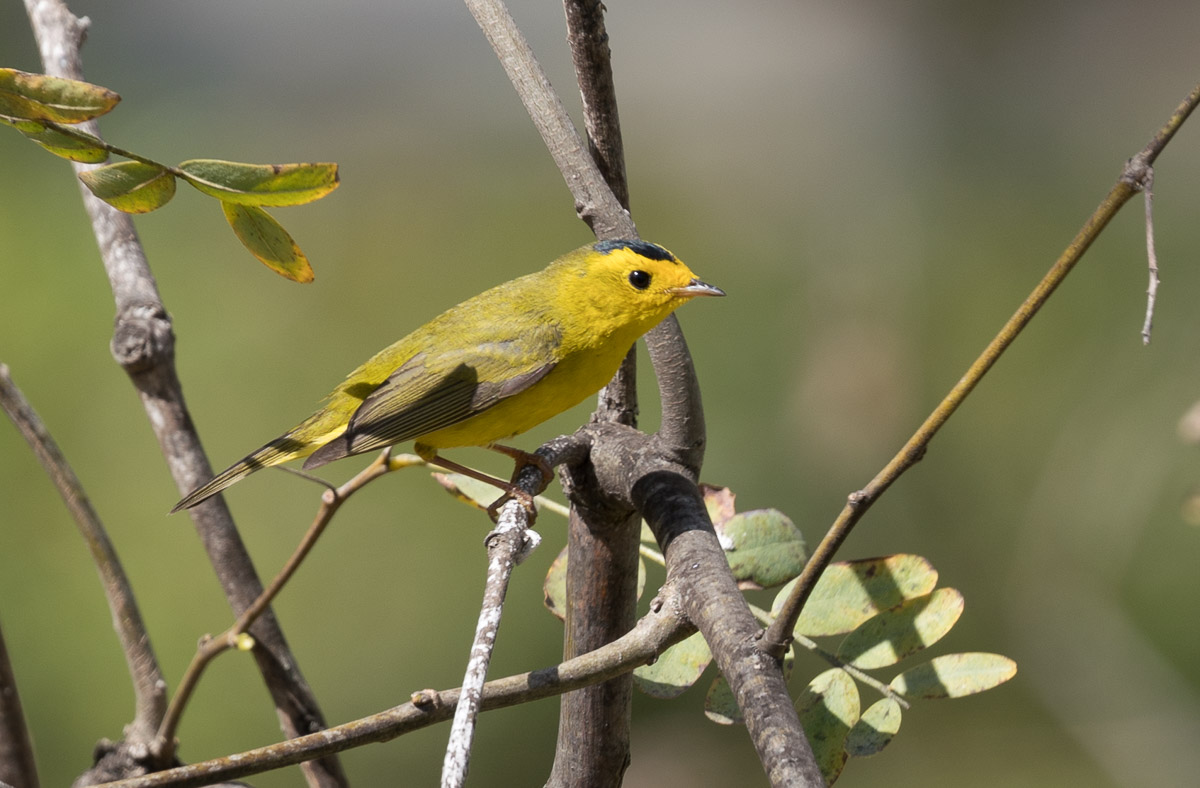
Parariss wrote:
And, generally, using my a6300 is better than using the 1.4x on a7rii/iii.
I had the opposite experience. I did a lot of comparisons between my A6300 and my A7Riii and when I closely examined the results, the A7Riii was slightly sharper.
NIH NSF wrote:
If my math is correct, with the 2.0X, 100-400GM becomes a 800mm f11 macro lens with 0.7x magnification , pretty handy
Yes, and I've been using it around the yard for flowers and bugs all handheld (the combined IBIS and OSS are fairly impressive)...will post some samples soon....pretty handy little combo for semi-macro....
I just got the 2X. I am surprised. I tested it and shot some cactus blooms about 125 feet away, went to 100% and there was a fly that was clearly made out in the image! A fly. Obviously with no cropping, this is very sharp. Also did some inside stuff, rather dark and it still focussed but would have to use a high ISO. I was hand holding at ISO 640 with no issue at f13. Should be good for daylight images and give great reach with minimal penalty and even though it is an 800 f11, still practical IMO.
Thanks for the further posts about the adapter. I would not have given it a try, having read some negative comments about it.
I thought that A7riii can't focus before f/8, but both A9 and A7iii can. In fact on an adapted combo, f/9 did not work on my A7R III. Is the restriction only for adapted lenses?
indusphoto wrote:
I thought that A7riii can't focus before f/8, but both A9 and A7iii can. In fact on an adapted combo, f/9 did not work on my A7R III. Is the restriction only for adapted lenses?
With the A7R2 and A7R3, PDAF only works to f/8. The A7R3 seems to work differently than the A7R2 with smaller than f/8 apertures though. With the former, using AF-C, the lens focuses at f/8 using PDAF and than closes down to working aperture (eg. f/11 or smaller). The A7R2 at f/11, would use CDAF only and focus at working aperture.
Now, in the case of the 100-400GM + 2x TC, only CDAF will be used since the largest aperture available is f/11 but contrast detection has improved over the A7R2. (425 vs 25 points). Even with the A7R3's improved CDAF, I'm afraid, this combination can only be used for stationary subjects. (perhaps slow moving as well)
However, both A9 and A7III bodies use PDAF at f/11 and therefore the 100-400GM + 2x TC will allow tracking during higher speed bursts. So, if one is tracking a bird (100-400 + 2TC), during continuous shooting at f/11, only the A9 or A7III will be up to the task. The A7R2 and R3 will only offer contrast detection and therefore miss the target when tracking.
Schlotkins wrote:
I do wonder how this woud compare to the 100-400 gm + 1.4 on the a7riii. You can’t shoot f11 on that camera but pixel density is higher
42Mp give you a 1.75x digital zoom over 24mp. So 1.75x1.4 is equivalent to 2.45x TC. Theoretically better than 2.0x.
The following image, shot at 400mm and 42MP, fully cropped, has more magnification then 24Mp body at 600mm.
jamato8 wrote:
I just got the 2X. I am surprised. I tested it and shot some cactus blooms about 125 feet away, went to 100% and there was a fly that was clearly made out in the image! A fly. Obviously with no cropping, this is very sharp. Also did some inside stuff, rather dark and it still focussed but would have to use a high ISO. I was hand holding at ISO 640 with no issue at f13. Should be good for daylight images and give great reach with minimal penalty and even though it is an 800 f11, still practical IMO.
Thanks for the further posts about the adapter. I would not have given it a try, having read some negative comments about it. ...Show more →
indusphoto wrote:
42Mp give you a 1.75x digital zoom over 24mp. So 1.75x1.4 is equivalent to 2.45x TC. Theoretically better than 2.0x.
The following image, shot at 400mm and 42MP, fully cropped, has more magnification then 24Mp body at 600mm.
If you crop 42MP down to same number of pixels as 24MP you get a crop factor of 7952/6000 = 1.325.. Crop factor is a one dimensional entity whereas number of pixels are 2 dimensional.
indusphoto wrote:
42Mp give you a 1.75x digital zoom over 24mp. So 1.75x1.4 is equivalent to 2.45x TC. Theoretically better than 2.0x.
The following image, shot at 400mm and 42MP, fully cropped, has more magnification then 24Mp body at 600mm.
That math is incorrect. 42/24=1.75 but then you have to take the square root of that number for 1.32x factor. Therefore the 2x on A9 is more reach. 560mm would be ~740mm FOV compared to the true 800mm FOV on the A9. Still, it would probably be close enough and you'd benefit from the one stop more of light. Too bad the A7R3 is too laggy and "blackouty" for my use or I'd seriously consider that option. Here's hoping a A6500 replacement comes in an A9 body with A9 sensor tech and lag/blackout free VF with a high pixel density.
arbitrage wrote:
That math is incorrect. 42/24=1.75 but then you have to take the square root of that number for 1.32x factor. Therefore the 2x on A9 is more reach. 560mm would be ~740mm FOV compared to the true 800mm FOV on the A9. Still, it would probably be close enough and you'd benefit from the one stop more of light. Too bad the A7R3 is too laggy and "blackouty" for my use or I'd seriously consider that option. Here's hoping a A6500 replacement comes in an A9 body with A9 sensor tech and lag/blackout free VF with a high pixel density.
EDIT^ I see the math was pointed out already......Show more →
Well, I'd also assume that between a stop light and the fact that generally 1.4x extenders are sharper than 2.0x extenders that it would probably be a wash. But yes, the AF on the A9 is better I'm sure.
Chris
With the A7RIII, the focusing will be CDAF which is indeed very accurate and fast. The only issue is that it won't track moving subjects like PDAF. If someone wants to use the 100-400GM + 2x TC on moving subjects (like birds in flight), currently, I would recommend the A9 or A7III bodies since they can do PDAF at f/11.