zaphodm wrote:
Not sure how different it is to the B60 Proxar 1m in terms of size, but what worked great for me is a 67mm-62mm step-down ring, lens into that, then a 67mm-52mm step-up ring screwed into that. The retaining ring from the Proxar fits into the step-down ring perfectly on top of the lens, and then the 67-52mm screws that all together tight.
I think the issue is that the Proxar 2m does not have a retaining ring. One needs to break the lens assembly to remove it.
Fred Miranda wrote:
I think the issue is that the Proxar 2m does not have a retaining ring. One needs to break the lens assembly to remove it.
Even a 62mm rubber o-ring would do the job, there's not a lot of space to fill between the lens and the step-up ring. Or a retaining ring from a cheap 62mm filter. That said, the 2m would be thicker than the 1m anyway (I think?), so you may not need anything.
zaphodm wrote:
Not sure how different it is to the B60 Proxar 1m in terms of size, but what worked great for me is a 67mm-62mm step-down ring, lens into that, then a 67mm-52mm step-up ring screwed into that. The retaining ring from the Proxar fits into the step-down ring perfectly on top of the lens, and then the 67-52mm screws that all together tight.
That said, not seeing much difference with the 1m, which is not surprising. Just had one laying around.
That is in fact what I did as described earlier in the thread, all except re-using the Proxar retaining ring. Turns out a 1/16" (0.0623") diameter o-ring works just fine to softly hold it in place and keep it centered in the 62-67 step up ring.
I put the lens at the 0.5 m mark and then used a macro slider to obtain "fine" focus which was really difficult. Measuring the distance from the target to the imaging plane showed it was within a few inches, which is not bad.
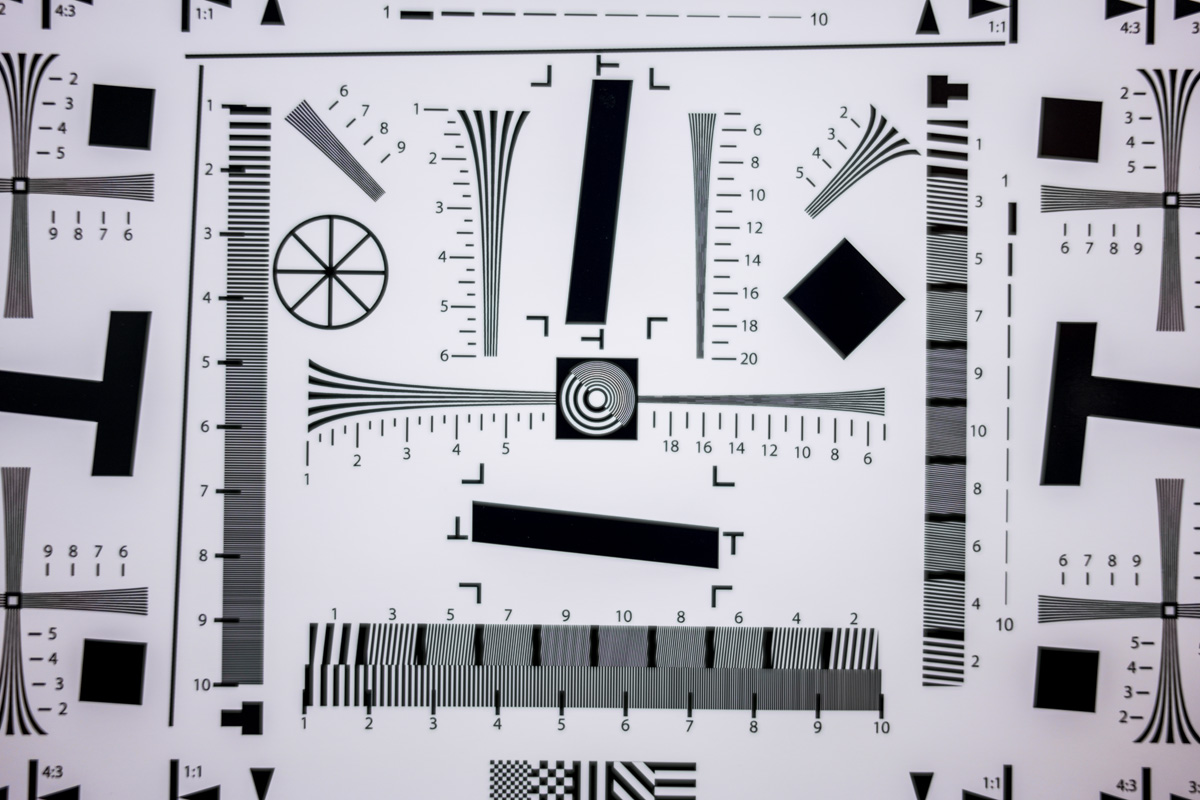
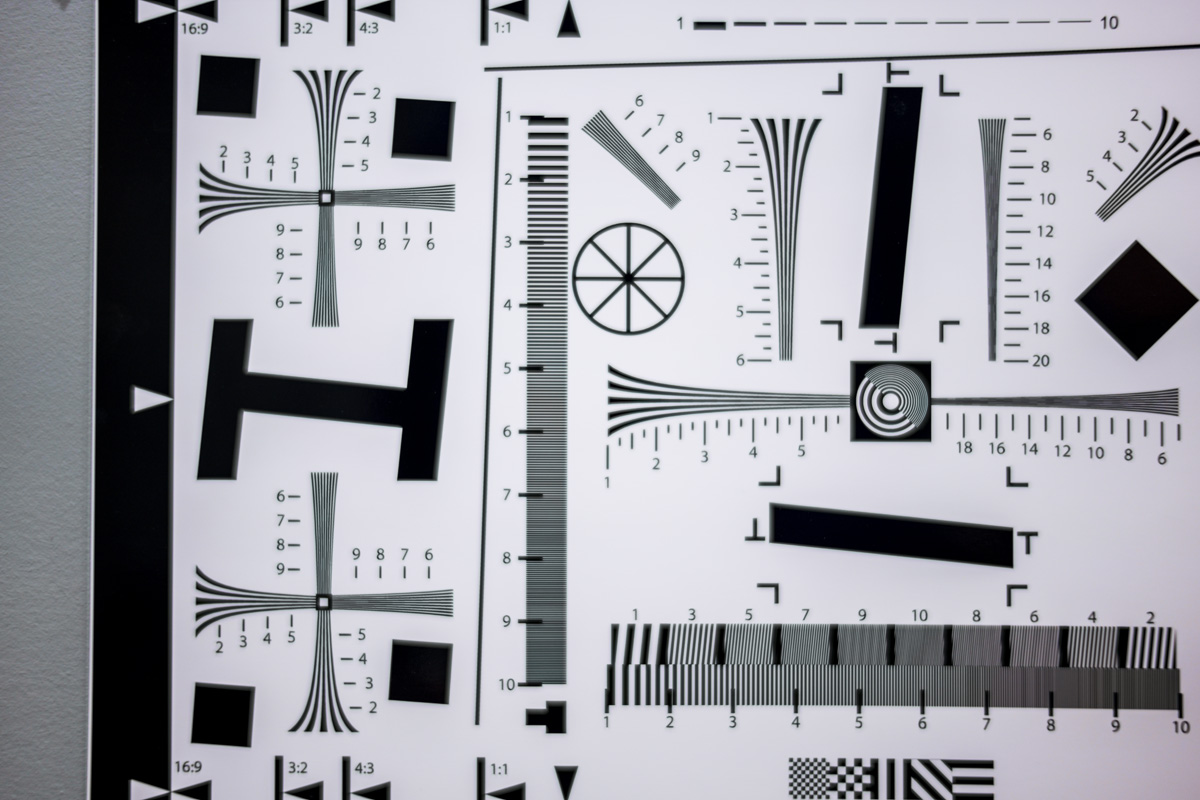
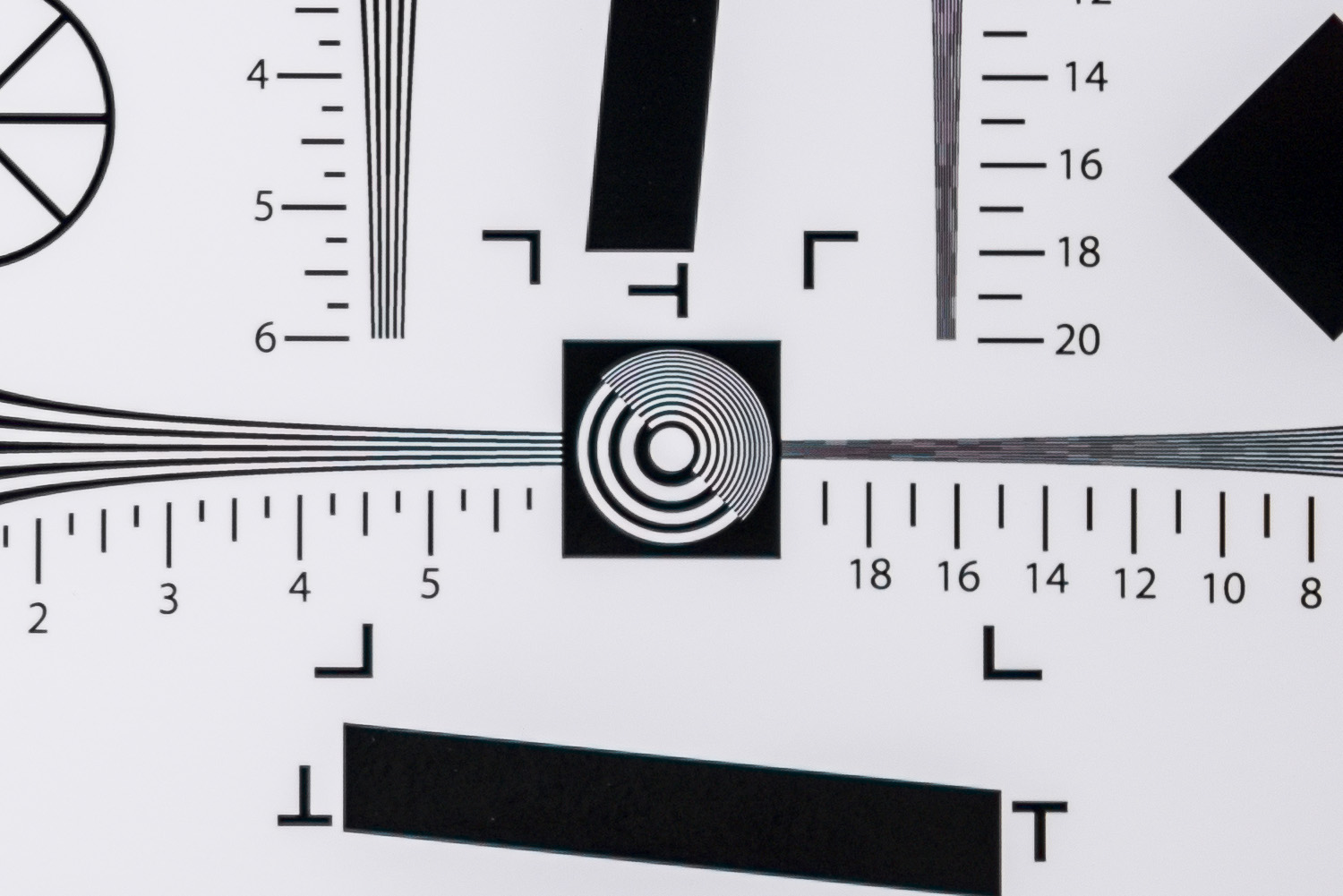
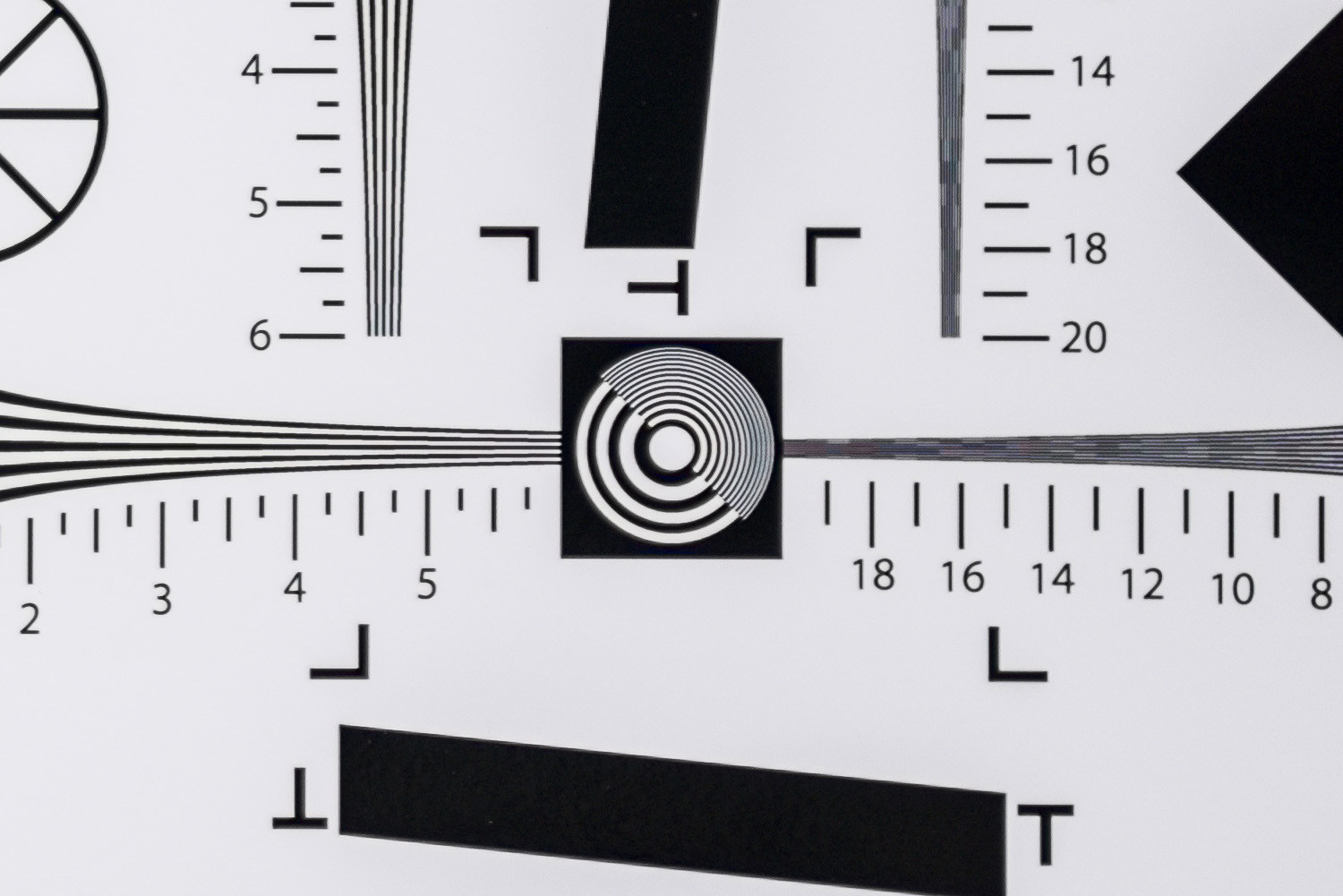
First is the overall full image with the center of the target centered on the image sensor.
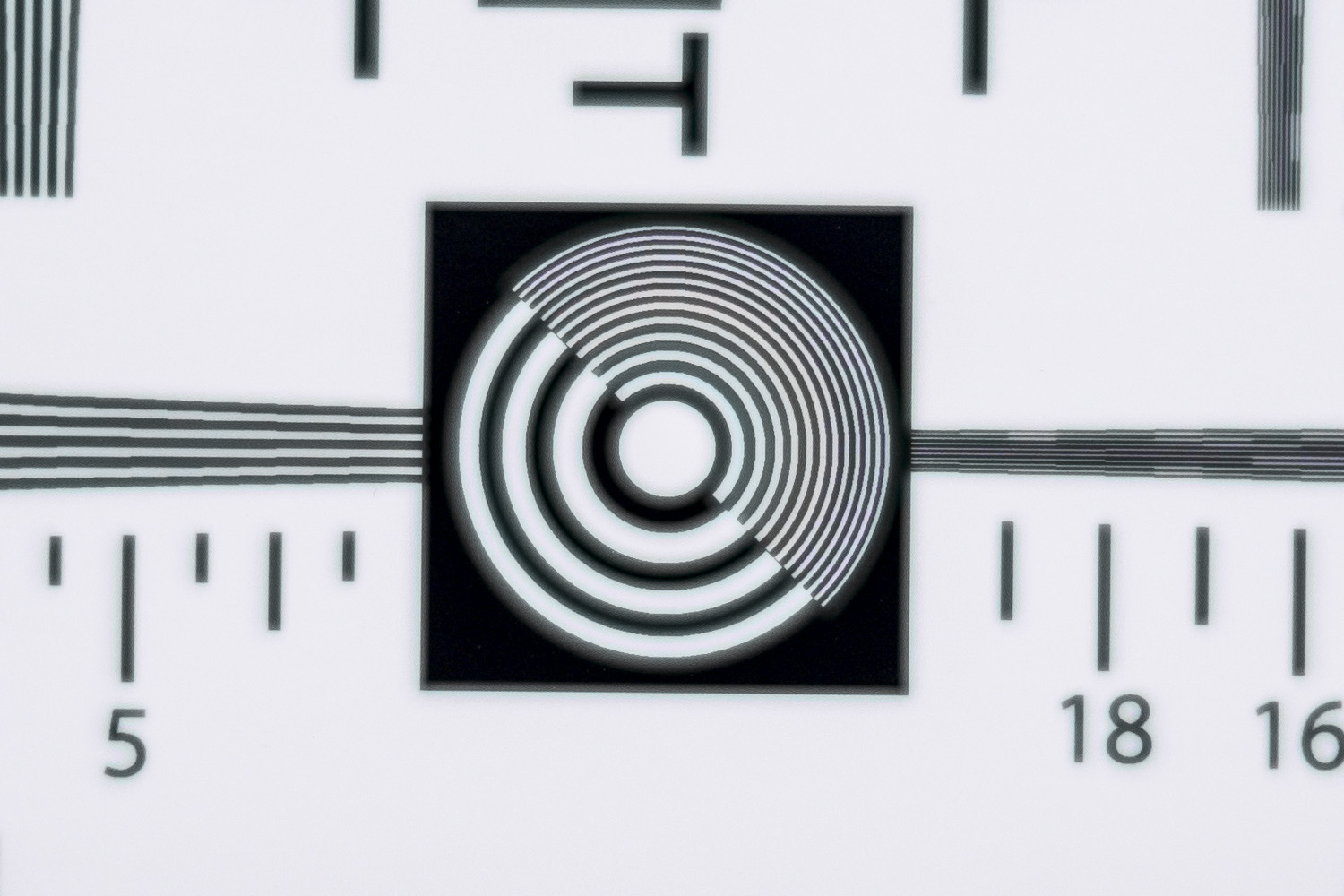
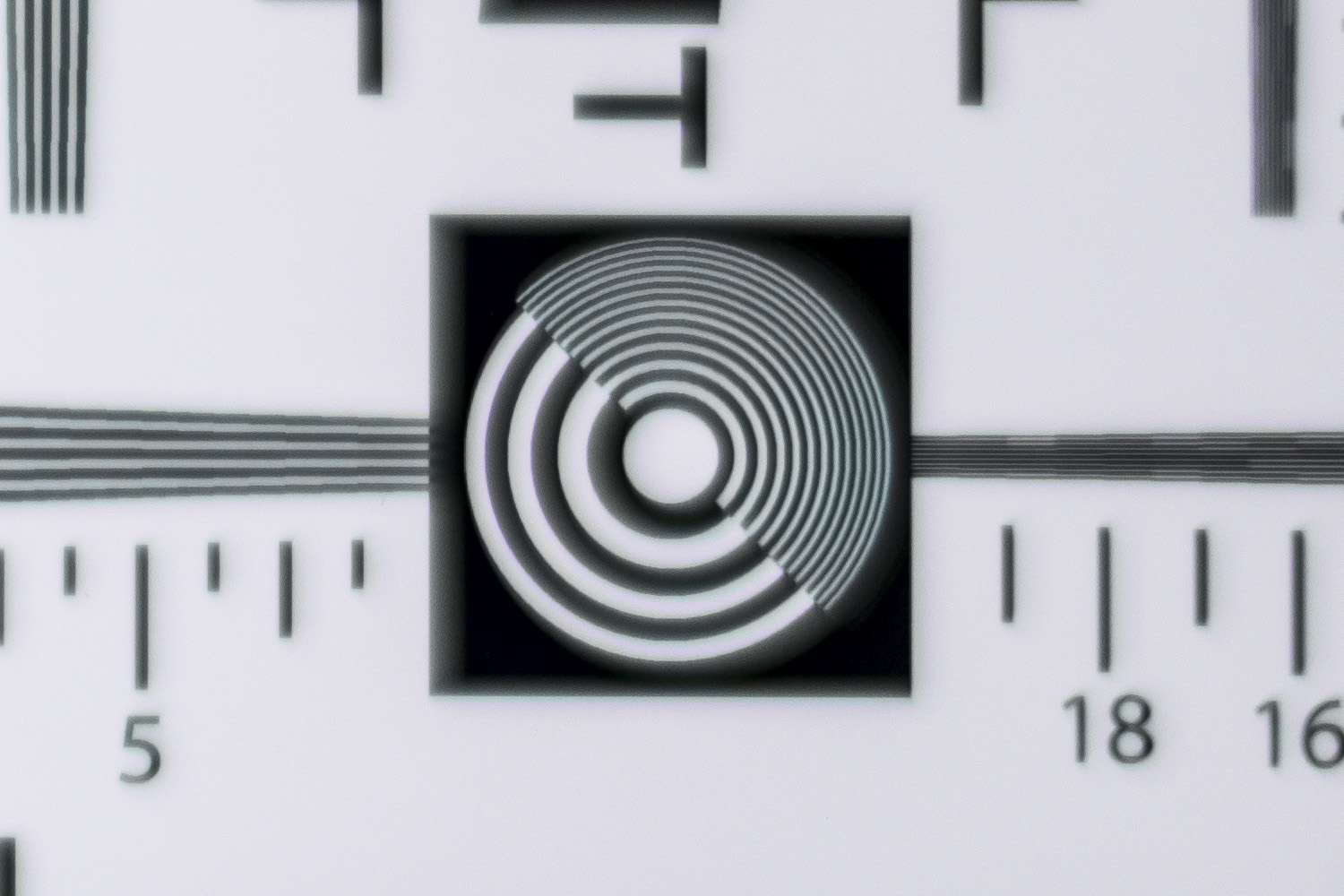
Next is the naked 40/1.2 CV @f=1.2
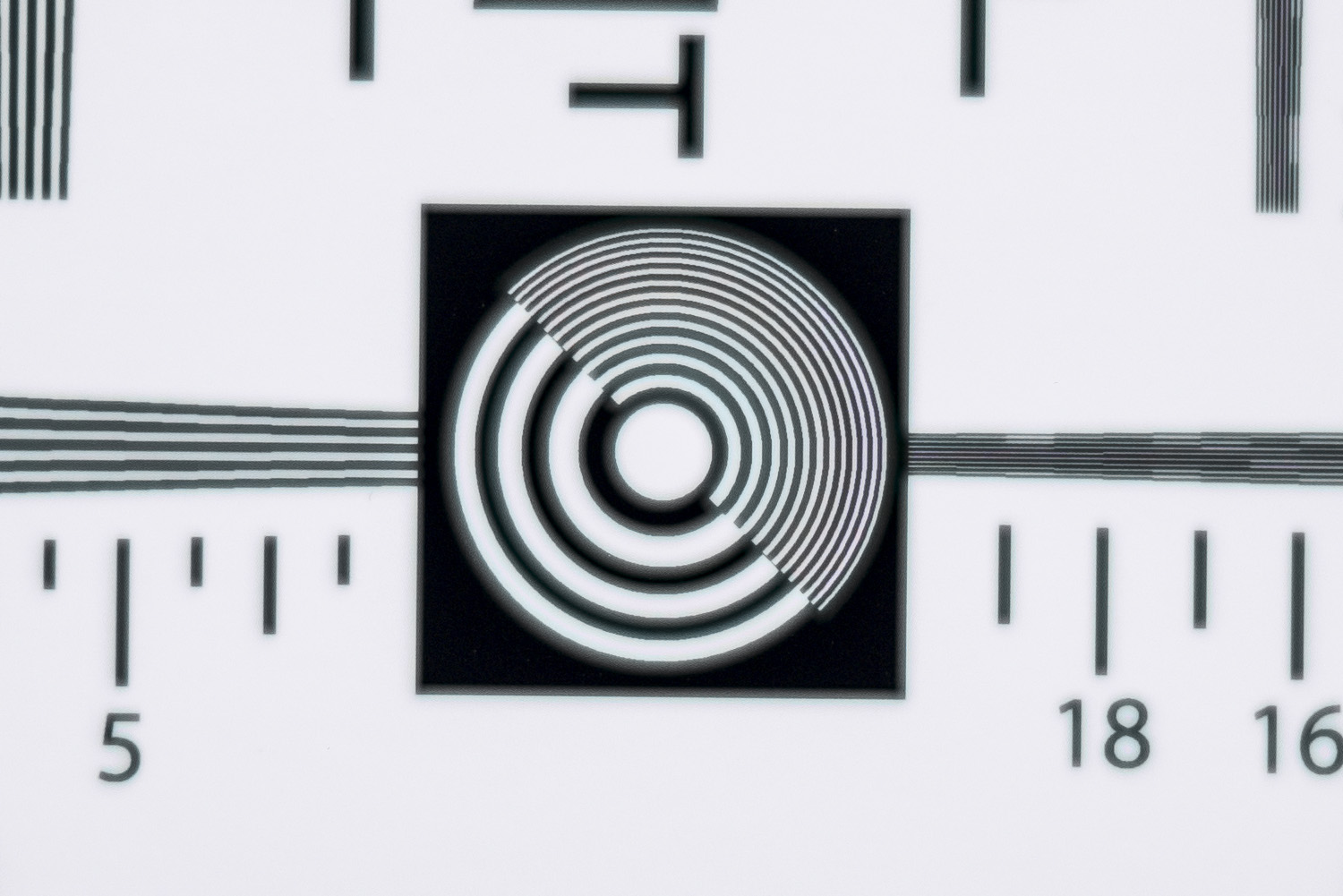
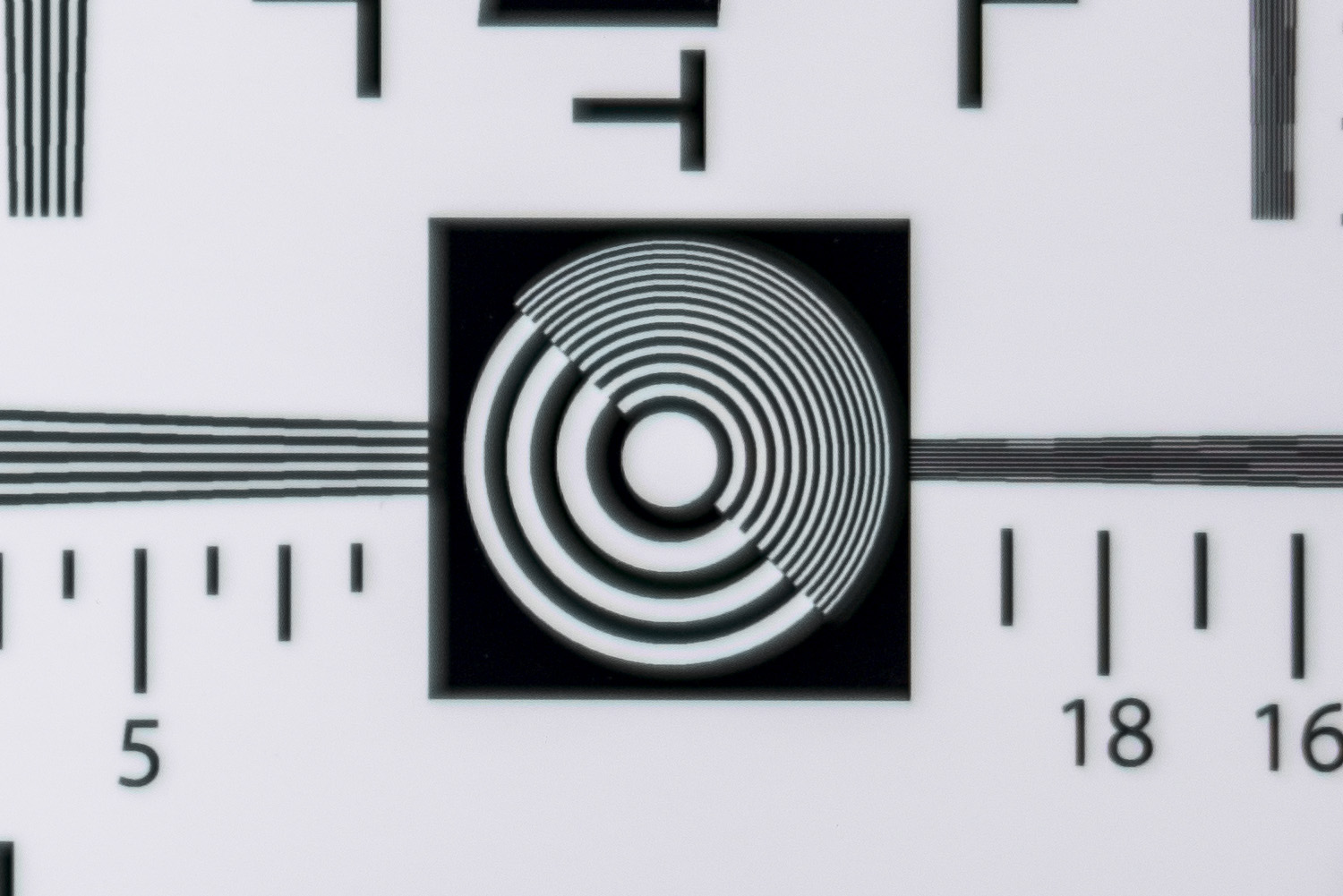
Then the f=2m Proxar re-focused using the lens
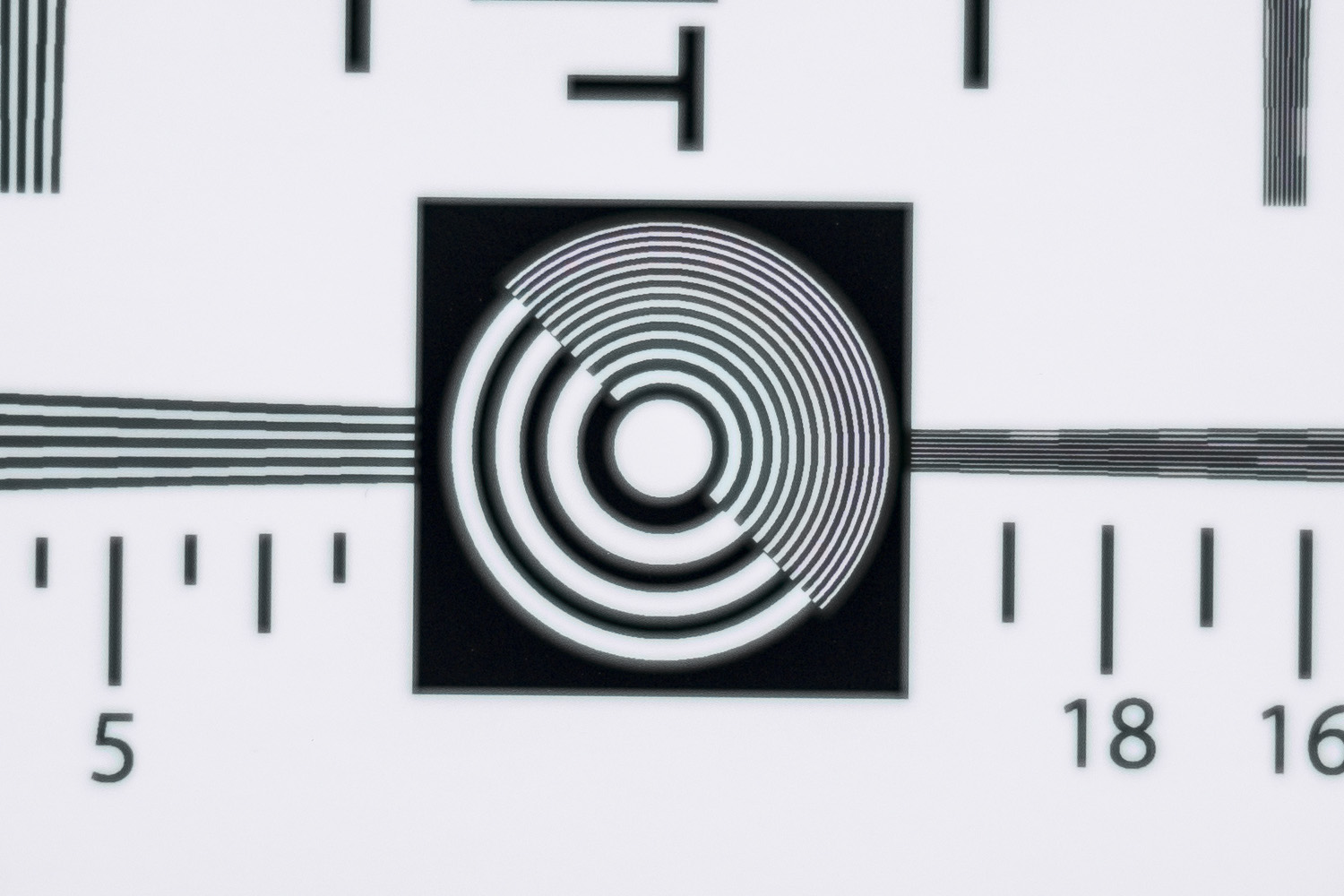
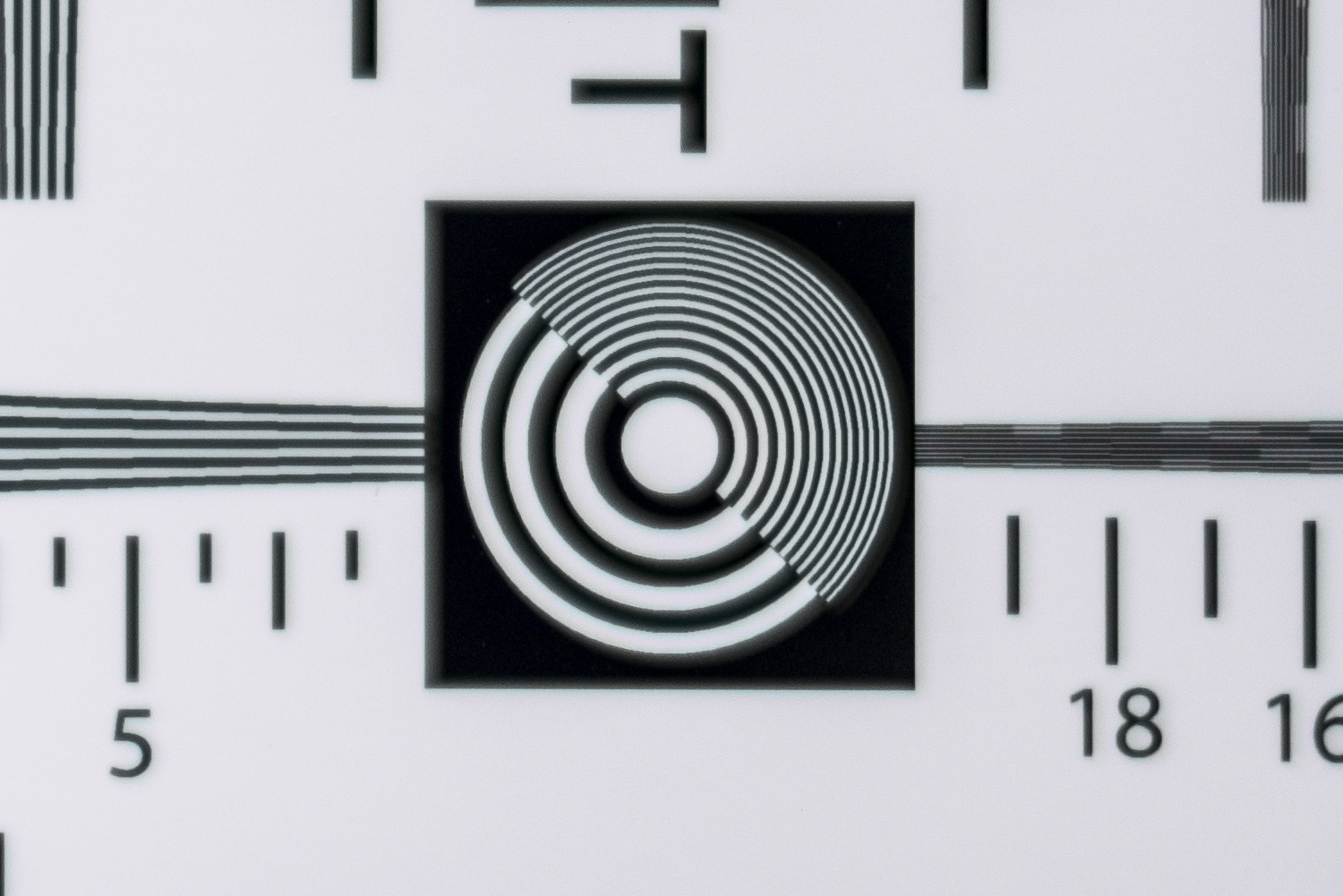
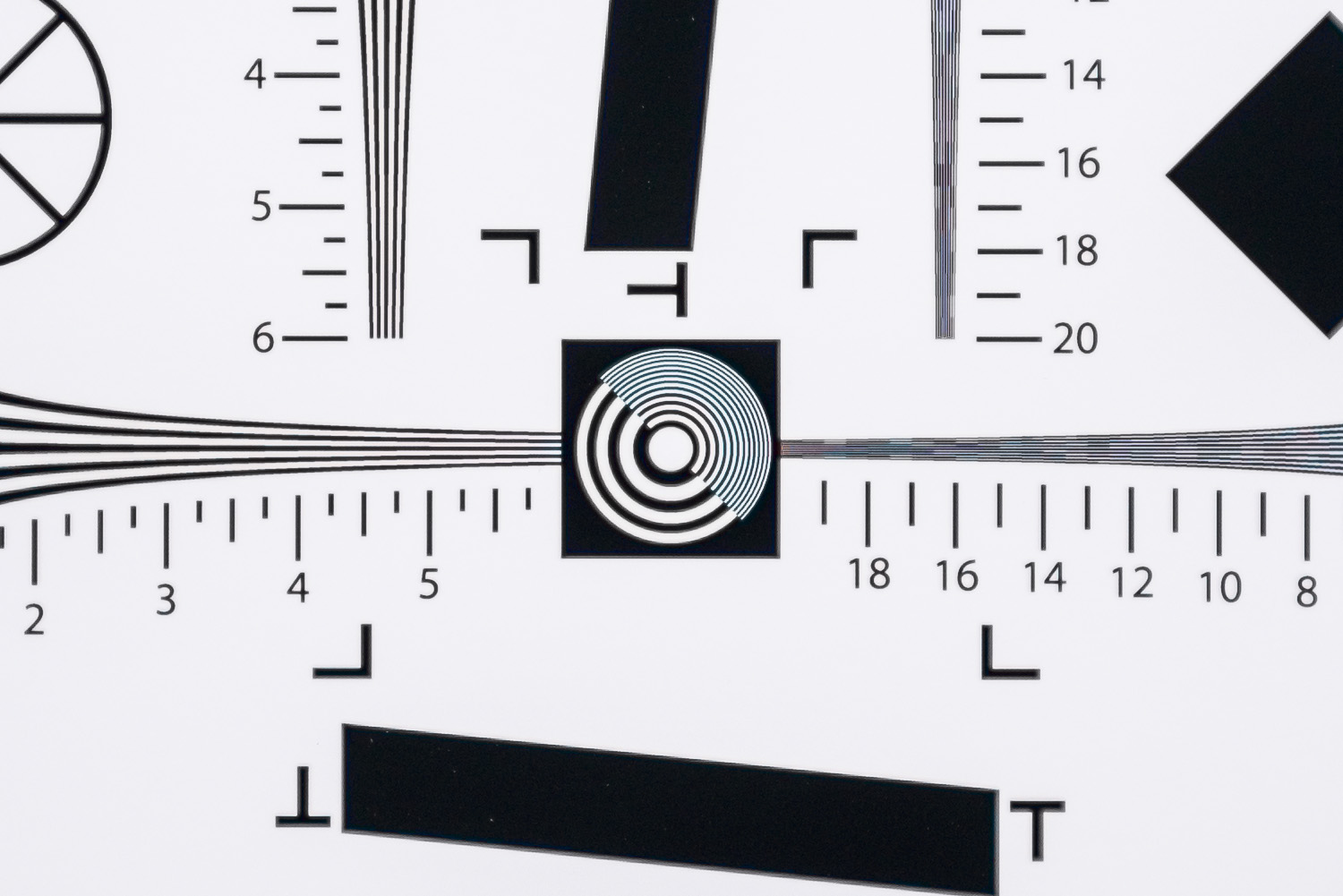
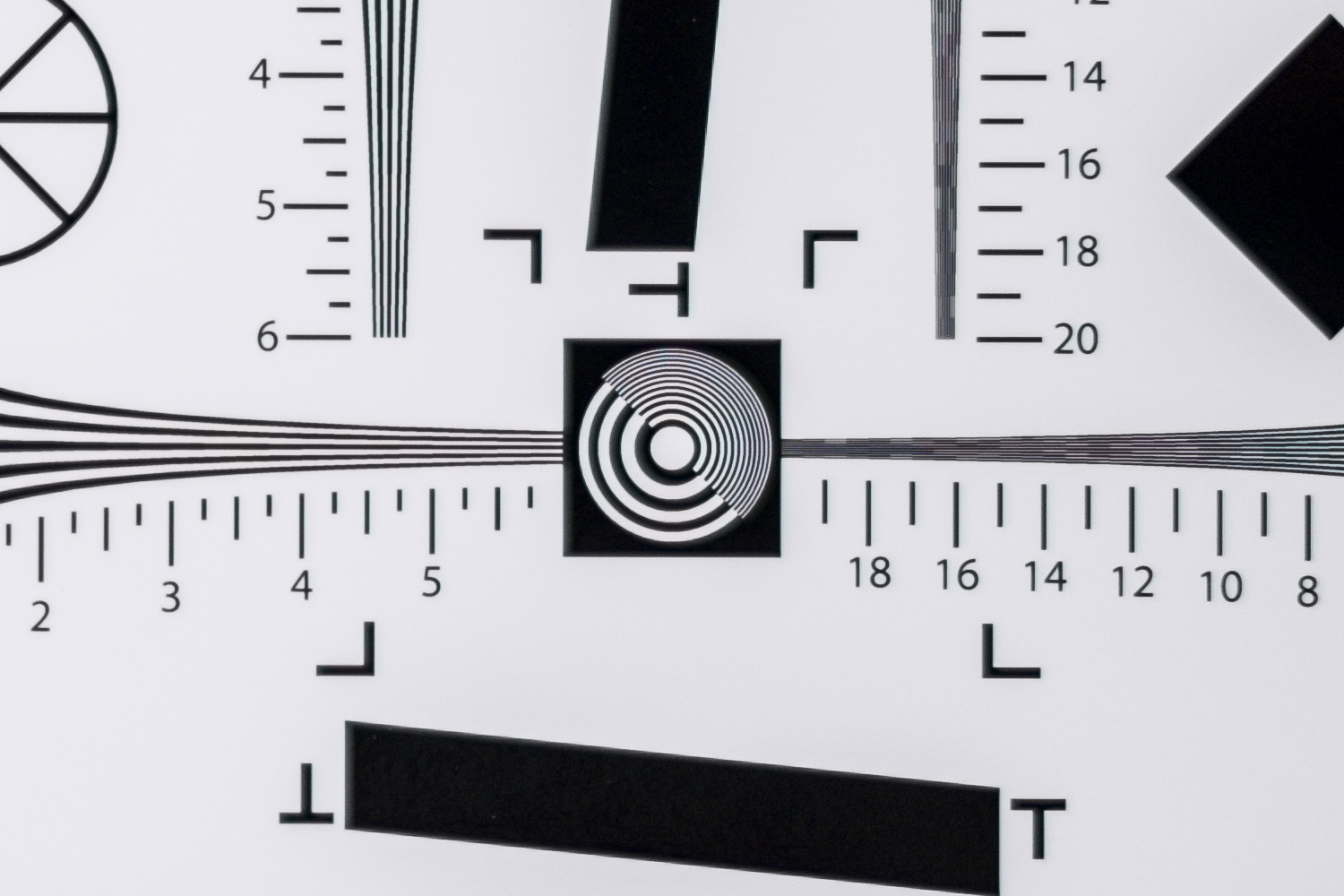
Finally the Elpro4 re-focused using the lens
Note that the image size is not the same between images due to maintaining the distance to the target, thus the magnification slightly increases going from the naked CV, Proxar, then Elpro4.
Note again that best focus was NOT where the least axial color showed. The black letters could be gotten to be completely black, but the image was not the sharpest, so I elected to focus such that the image was sharpest which produced a lot of green axial CA.
All images post-processed from 14 bit uncompressed RAW files with some heavy post-processing that was the same for all. So I cleaned up each image, but equally so between them all.
I would say that the Elpro 4 is marginally better than the naked 40CV and the Proxar.
Full Image Of Centered ISO Target - 0.5m Distance
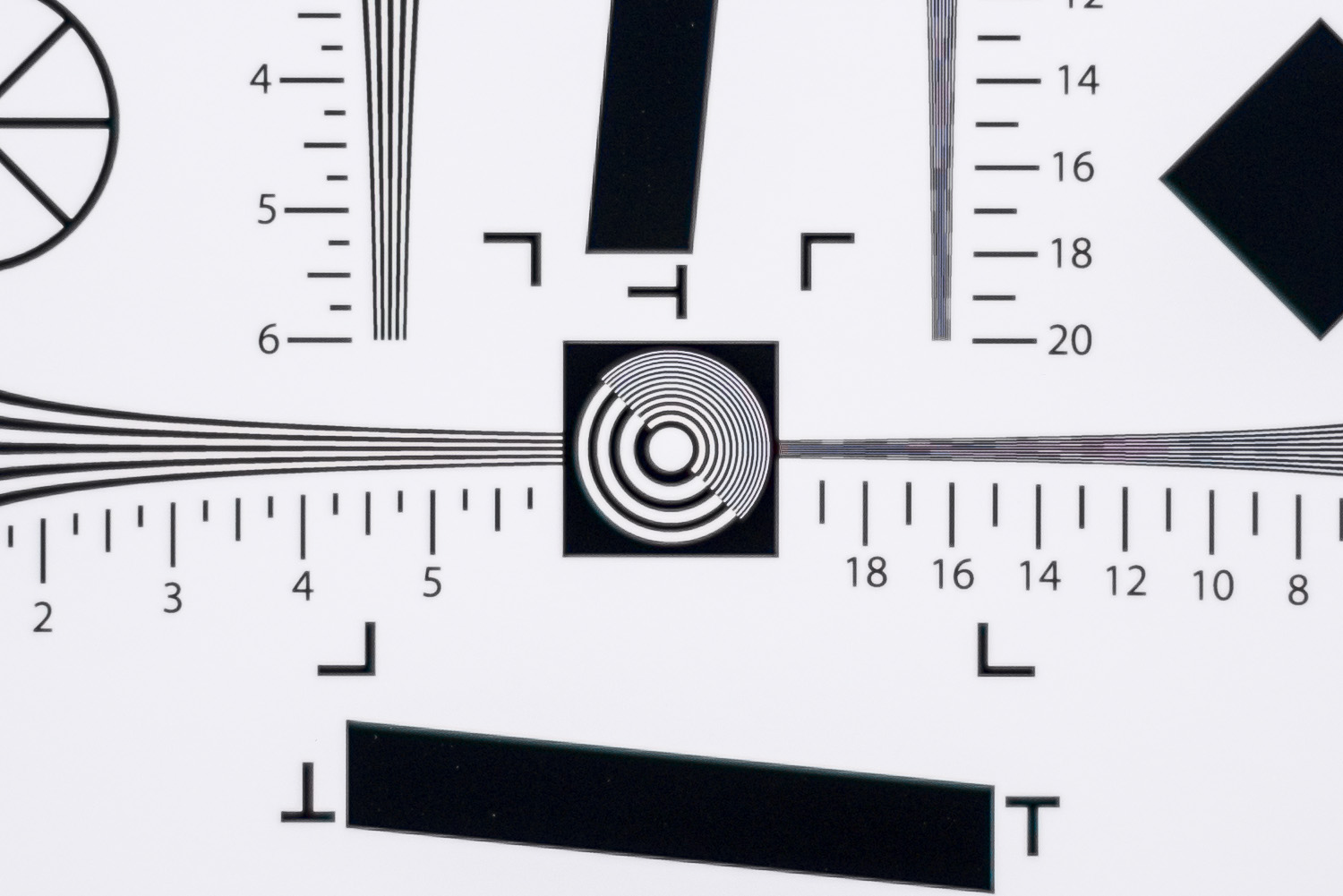
100% Crop From Center - 40CV Only - 0.5m Distance
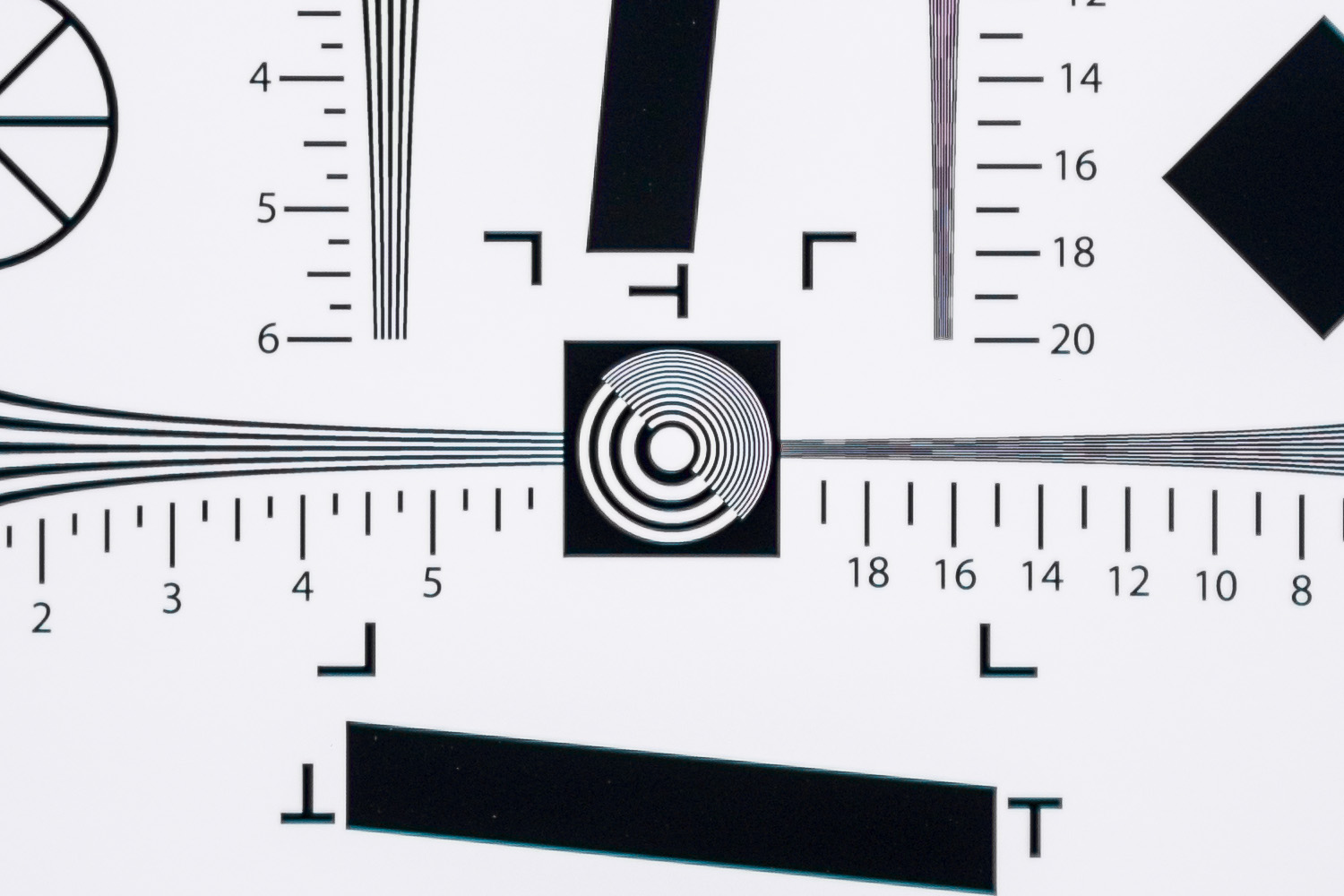
100% Crop From Center - f=2m Proxar - 0.5m Distance
First image is of the full test target and you can see that the center of the target is half-way from the center to the right border. This it typically where I might put something interesting, like an eye for a candid.
You can clearly see that both the Proxar and Elpro4 greatly clean up the image.
Now you might say that the naked 40CV image is a focusing error, but I tried several times and could not get a sharp image. The slight amount green axial CA that matches the other shots is also an indicator of best focus.
One could argue that the Elpro4 is very so slightly better, but it could be down to focusing accuracy.
Full Image Of Offset ISO Target - 0.5m Distance
100% Crop From Right Side - 40CV Only - 0.5m Distance
100% Crop From Right Side - f=2m Proxar - 0.5m Distance
100% Crop From Right Side - Elpro4 - 0.5m Distance
Nokton has more blur in the background and seems to hold the highlights nicer. They both have nice pop to them. The blur could be because it’s longer. Personally rather have the Nokton because it’s native.
sebbe wrote:
Thanks for that. It looks like it is not worth the hassle but I should consider to create a LCC for that lens.
Yeah, I will do a quick repeat and perhaps show the difference between best sharp focus and least axial color. It appears that the add-on lenses are very good for up close and off-axis where the 40CV is not good.
jhinkey wrote:
Yeah, I will do a quick repeat and perhaps show the difference between best sharp focus and least axial color. It appears that the add-on lenses are very good for up close and off-axis where the 40CV is not good.
John,
I've tested many close-up lenses on the 40/1.2 Nokton and my take on it is that it's not really worth it at mid-distances.
(Starting at 1m)
The reason is because they don't help much after 1m where the lens starts getting sharp. Below 1m, they do help but the worse distances are really from MDF until about 0.5m. Just by stopping the lens down to f/1.8 or smaller (One full stop at least), improves resolution/contrast noticeably at these distances...that's my recommendation.
If one want to shoot from MDF until about 0.8m "wide open" with much higher IQ (resolution and contrast), the best close-up front-lens is the Elpro 3 (1.66 diopter). It makes a huge difference since it allows the lens to focus close to infinity at these very short distances. It's actually noticeably better than stopping the lens down to f/1.8 or f/2...
So...if you want to shoot at very close distances (like flower close-ups, etc...), it may be worth to attach the Elpro 3 lens just for that need.
Thanks again jhinkey, for the images and comparisons.
Hmm... I can see some difference as well. When looking at the finer details you can also see something hinting about better resolution when the close-up lenses. The test chart looks a little odd though there.
It is even easier to see in the series of images of USAF charts. This is at page 44. If following the link there you'll find 100% crops of the center results from different distances, at f/1.2 and f/2, with and without the Elpro 4.
The differences can be estimated to equal something like 75 lpmm compared to 85 lpmm at roughly the same contrast. The result from the naked lens is somewhat muddled by the SA which lowers the contrast and "blurs" the finest lines (in the smallest readable group and pair of the USAF chart).
At the same time the portrait of my better half shows this difference is mainly academic. Real world shooting and images reduced to smaller than 100% size means the difference is somewhere beyond the scale of interest.
But sure... when checking the lens this kind of technical way I can identify improved results at all different shooting distances I tried up to "infinity" at 1.43 meters with the Elpro 4.
So I forgot to mention this. Back when I was trying front filters on some Zeiss lenses I bought a Hassy B60 and I think it was a Proxar . Anyway I had to cut the filter tread off with a Dremel than stuck it in a 58 to 67mm step up ring to mount it , I just tried it on the 40. I took a shot of my 24-105 standing up. Without filter I get the whole lens at the MFD with the filter on I get only Half the lens , so I do get in a lot closer to subject. I’ll try to figure out what I exactly bought and post but seems to work pretty good.
Added a few shots with the VM version on the A7rII from a recent pony club day. First time I had the lens out, but still came home with some keepers (I think, anyway). Cropped and slightly edited, but nothing drastic. Also, haven't done much photography at pony club type events, so it was mostly mucking about trying to find the right angles and camera settings.
Photos of a painting on canvas from approx 1m with the Voigtlander 40mm f/1.2 Nokton VM on an A7rII. While there is extra vignetting at f/1.2, there's not really any issues with smearing or colour cast that I can see. Detail is also great in the centre and good at the corner. By f/2.0, I'm happy across the frame. At 1m, anyway. Landscapes at infinity may be very different.
Not sure if the FE-mount version is better than this, it likely is, but I don't need any better than this.
Photos are imported into Lightroom and all exposure and other settings zeroed. Slight sharpen. Built-in Lightroom profile applied. Exposures are also a bit different, was just using natural lighting and it was a cloudy day so it kept changing.