p.38 #1 · Official: Canon Announces the EOS 6D Mark II
alundeb wrote:
That being said, my next camera upgrade will be in search for more dynamic range than the 5DS R. And surprise, lower shadow noise like in the 5D IV is not what I am looking for. What I want is more headroom. Higher saturation or larger sensor (medium format). Lower shadow noise like what we expected to get in the 6D II will not give me that anyway.
I'm sorry to burst your bubble, such a camera does no longer exist and probably will not come into existence any more - as that would require the manufacturer to build leeway into the sensor which has no benefit outside your limited application. The shadow DR is a byproduct of noise reduction of the technical components involved. Increased headroom would mean that the sensor isn't driven at it's full potential and thus performance for the main use case is sacrificed...
You can already enforce the camera to do so by loading a picture style that ramps up contrast and underexpose - you then get punchy JPEG and in post processing the RAW you get your headroom...
p.38 #2 · Official: Canon Announces the EOS 6D Mark II
Just for the hell of it I sent an email to Canon asking specifically about the DR of the 6DII and made note of the fact that the all the recent models such as the 1DXII, 5DIV, 80D and 77D have all seen a bump up in base ISO DR. Yet the early test results of the 6DII are showing an actual drop in DR from it's predecessor.
I didn't expect much of an answer but thought I'd give it a shot. This was the reply I received for what it's worth.
"I can tell you that the ISO performance of the 6D Mark II has many of the ISO improvements of our other DSLRs using the DIGIC 7 image processor. Capable of sensitivities ranging from ISO 100 to ISO 40000 (expandable to L: 50 and H2: 102400), the EOS 6D Mark II’s sensor captures images of 6240 x 4160 pixels with a pixel size of 5.67 µm square for outstanding detail and a superb signal-to-noise ratio."
p.38 #3 · Official: Canon Announces the EOS 6D Mark II
lighthound wrote:
Just for the hell of it I sent an email to Canon asking specifically about the DR of the 6DII and made note of the fact that the all the recent models such as the 1DXII, 5DIV, 80D and 77D have all seen a bump up in base ISO DR. Yet the early test results of the 6DII are showing an actual drop in DR from it's predecessor.
I didn't expect much of an answer but thought I'd give it a shot. This was the reply I received for what it's worth.
"I can tell you that the ISO performance of the 6D Mark II has many of the ISO improvements of our other DSLRs using the DIGIC 7 image processor. Capable of sensitivities ranging from ISO 100 to ISO 40000 (expandable to L: 50 and H2: 102400), the EOS 6D Mark II’s sensor captures images of 6240 x 4160 pixels with a pixel size of 5.67 µm square for outstanding detail and a superb signal-to-noise ratio."...Show more →
What a bullshit answer! Either he/she didn't understand the question or didn't want to answer. I guess the DIGIC CPU is of more importance for denoising of jpegs.
Jul 11, 2017 at 08:26 AM
Guest
Guest
p.38 #4 · Official: Canon Announces the EOS 6D Mark II
lighthound wrote:
I didn't expect much of an answer but thought I'd give it a shot. This was the reply I received for what it's worth.
Thanks for giving Canon a try to calm down the forum storm
Well, after all I've read for past two days I must admit "time will tell".
Jul 11, 2017 at 08:28 AM
Guest
Guest
p.38 #5 · Official: Canon Announces the EOS 6D Mark II
Широкий динамический диапазон сохранит детали даже в сильно затененных и ярко освещенных местах, а большой диапазон экспозиции даст больше возможностей при постобработке.
Wide dynamic range (of the new camera) keeps details even in deep shadows and highlights, while large exposure latitude gives more opportunities in post-processing.
p.38 #6 · Official: Canon Announces the EOS 6D Mark II
charlyw wrote:
I'm sorry to burst your bubble, such a camera does no longer exist and probably will not come into existence any more - as that would require the manufacturer to build leeway into the sensor which has no benefit outside your limited application. The shadow DR is a byproduct of noise reduction of the technical components involved. Increased headroom would mean that the sensor isn't driven at it's full potential and thus performance for the main use case is sacrificed...
You can already enforce the camera to do so by loading a picture style that ramps up contrast and underexpose - you then get punchy JPEG and in post processing the RAW you get your headroom......Show more →
That wouldn't help at all, what I am after is:
1) high SNR in the whole tonal range.
2) longer exposure times.
Both can be had with a larger sensor (medium format) when exposing for equivalent DOF. So I am not in a bubble.
There are also small differences in saturation between sensors, like 1/3 to 2/3 EV. It is almost never talked about. But if the shadow noise takes 1 EV The sky falls down....
Der neu entwickelte 26,2-Megapixel-Vollformat-Sensor der EOS 6D Mark II setzt hinsichtlich Bildqualität und Leistung neue Maßstäbe und ist besonders für Anwender interessant, die von einer Kamera mit kleinerem Sensor aufsteigen möchten. Sein hoher Dynamikumfang ermöglicht einen großzügigen Belichtungsspielraum – was bei kontrastreichen Aufnahmesituationen vorteilhaft ist.
Translation:
The newly developed 26.2 megapixel full-format sensor of the EOS 6D Mark II sets new standards with regard to image quality and performance and is especially interesting for users who want to get up from a camera with a smaller sensor. Its high dynamic range allows a wide exposure latitude - which is advantageous in high-contrast shooting situations.
p.38 #8 · Official: Canon Announces the EOS 6D Mark II
sebasan wrote:
Sometimes it seems that some people was cheated with somebody with a 5D3 in the hand.
So much lies on its IQ (IQ <> DR) only could be maintened if you were very emotionaly damaged.
I loved my 5D3 and shot it as my main body beside my 1DX for 3 years or so. For me it wasn't a DR issue per se because I was shooting above 400ISO for the most part. The biggest limitation was I shot a lot of bald eagles and would expose for the white head leaving the dark brown feathers underexposed by 1-2 stops depending on light conditions. This then required lifting the shadows a certain amount. The main issue was the banding and patchy noise. This has been eliminated in the newer bodies and is a nice improvement. Even the 6D eliminated this issue a short while after the 5D3. The newer chips have improved low ISO DR on top of that.
Just checked LR and I have a bit over 15,000 keeper 5D3 files and I cull down a lot. I would never say the camera isn't a great camera for making images. Things have just moved on and improved and in relation to what we have now from Canon and even more so from other companies the 5D3 has been left behind. Doesn't mean it will matter to 99% of shooters out there. Even with my eagle images it didn't often result in me deleting the file.
My reference above to the 5D3 was in regard to the DPR severe shadow lifting showing the banding and colour noise. Which if compared against all the newer sensors and the 6D looks pretty bad. (although the 6D is still not great).
This was what I was referencing in calling the 5D3 abysmal or whatever sensational term I used....
p.38 #9 · Official: Canon Announces the EOS 6D Mark II
Banding is the worst thing with older Canon sensors. I still spend a lot of time to walk-around this issue with my 5D (original) files in post-processing. Thanks God 6d is not "infected" by it.
Patchy noise is less obstructing and ACR easily mitigates it with Color smoothness adjustment (Detail / Noise Reduction).
p.38 #10 · Official: Canon Announces the EOS 6D Mark II
bclaff_too wrote:
...
FWIW, you describe one way that read noise can be determined.
From read noise one gets pixel ("engineering") dynamic range (EDR).
And, with normalization, measurements like DxOMark's Landscape Score.
However, this is not how something like the PhotonsToPhotos Photographic Dynamic Range (PDR) is measured; that's done with something more like a wedge rather than black frames.
Bill, I much appreciate your comments.
I have been digging a bit about your PDR measure and just found an interesting comment in Jim Kasson's blog. Maybe there are better explanations, but this is not too much technical and at the same time not too high level:
Lower read noise as a fraction of full scale means a greater engineering dynamic range, where the noise floor limiting the dynamic range is the noise in an area of the image that receives no light at all. However, there is another source of noise in shadows that aren’t that deep, and that is the noise from the light itself. Increasing the FWC decreases the visual contribution of this kind of noise, called photon noise or shot noise, to the image. In practice, if you are particular about how much noise there is in the shadows, photon noise may be the long opole in the tent, and FWC may be more important than read noise. There is a measurement that puts both of these things together, photographic dynamic range (PDR). You can search for references here, or go to Bill Claff’s site ...Show more →
My interest in sensor analysis started when I found some sites measuring the FWC (likely in Roger N. Clark web) which at first sounded magical to me. Taking advantage of the things learned here and there I ended writting my own code in C++ (there may be several other tools out there, but closed source... I also like the formulas and the code). During the long waiting times for Canon improving the shadows, we were all ansious to know the results of the new released (or about to) cameras without waiting for the reviewers, so I also ended estimating the DR (the quick way) on each new camera release.
I think that it is interesting for photographers to have certain scientific background enough to understand how things work, but it is a difficult thing without delving too much in the technical area. And it is a difficult matter prone to misconceptions, errors, or partial (not the best) information.
In photonstophotos.net I have found a useful index. I'm not sure if there are another similar resources. Please let me know; I'm specially interested on the PDR estimation internals if it'd happen to be explained in a place (surely digging in the forums there is a lot of info, but usually very spread over).
p.38 #11 · Official: Canon Announces the EOS 6D Mark II
cgarcia wrote:
Bill, I much appreciate your comments.
I have been digging a bit about your PDR measure and just found an interesting comment in Jim Kasson's blog. Maybe there are better explanations, but this is not too much technical and at the same time not too high level:
My interest in sensor analysis started when I found some sites measuring the FWC (likely in Roger N. Clark web) which at first sounded magical to me. Taking advantage of the things learned here and there I ended writting my own code in C++ (there may be several other tools out there, but closed source... I also like the formulas and the code). During the long waiting times for Canon improving the shadows, we were all ansious to know the results of the new released (or about to) cameras without waiting for the reviewers, so I also ended estimating the DR (the quick way) on each new camera release.
I think that it is interesting for photographers to have certain scientific background enough to understand how things work, but it is a difficult thing without delving too much in the technical area. And it is a difficult matter prone to misconceptions, errors, or partial (not the best) information.
In photonstophotos.net I have found a useful index. I'm not sure if there are another similar resources. Please let me know; I'm specially interested on the PDR estimation internals if it'd happen to be explained in a place (surely digging in the forums there is a lot of info, but usually very spread over)....Show more →
Thanks for the nice post.
I'm pleased in your interest and that you're willing to do the required research to master the subject.
(As if we ever master something.)
If you work through the Sensor Analysis Primer you cited above you will probably come to understand PDR without my help.
But if you hit any roadblocks please feel free to touch base off-line.
p.38 #18 · Official: Canon Announces the EOS 6D Mark II
Thanks for the review. You kind stepped back with the image quality topic, but after all those discussions, it is understandable. In just 9 days, we will know for sure, as all those "but it is only a pre-production sample", will be moot :-)
Great review! Even though I havent used one yet, your thoughts kind of mirror what I am thinking. With all the useability upgrades, if it does manage to have improved DR and IQ over the 6D it sounds like a definite winner. Without the IQ upgrades, well we will have to see. Hopefully we should be learning more soon!
p.38 #20 · Official: Canon Announces the EOS 6D Mark II
-pekr- wrote:
In just 9 days, we will know for sure, as all those "but it is only a pre-production sample", will be moot :-)
9 days? That would be the 21st. B&H shows the estimated availability as the 27th?
Do folks across the pond get their hands on them before the US does?
Great review Rob! Thank you!
One thing you had mentioned that I had not even thought about was the touch screen focusing and the ease of doing focus stacking using this feature. Now that is a big plus for me personally as that's something I could really use.


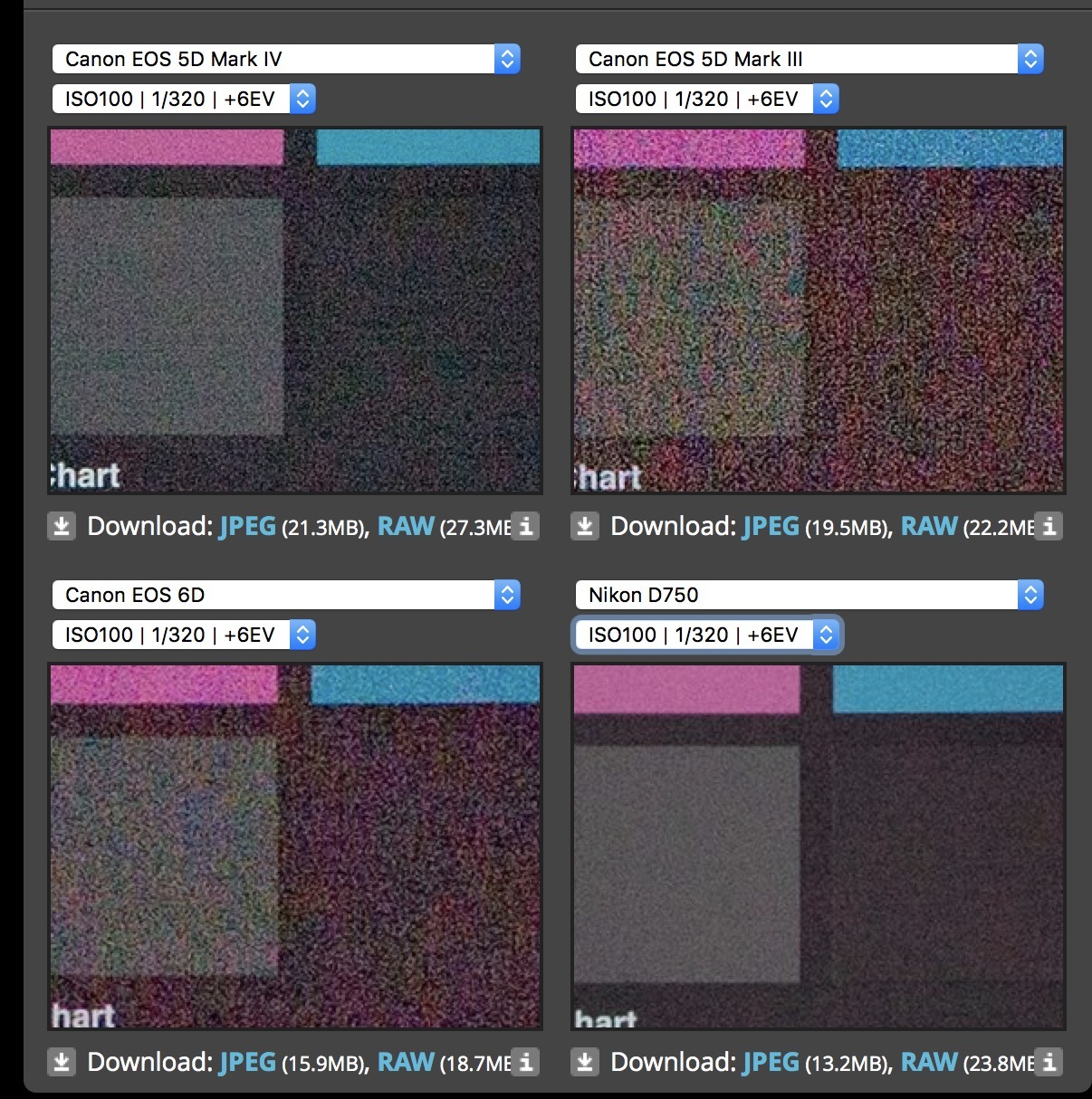


 That would be the 21st. B&H shows the estimated availability as the 27th?