gear-nut wrote:
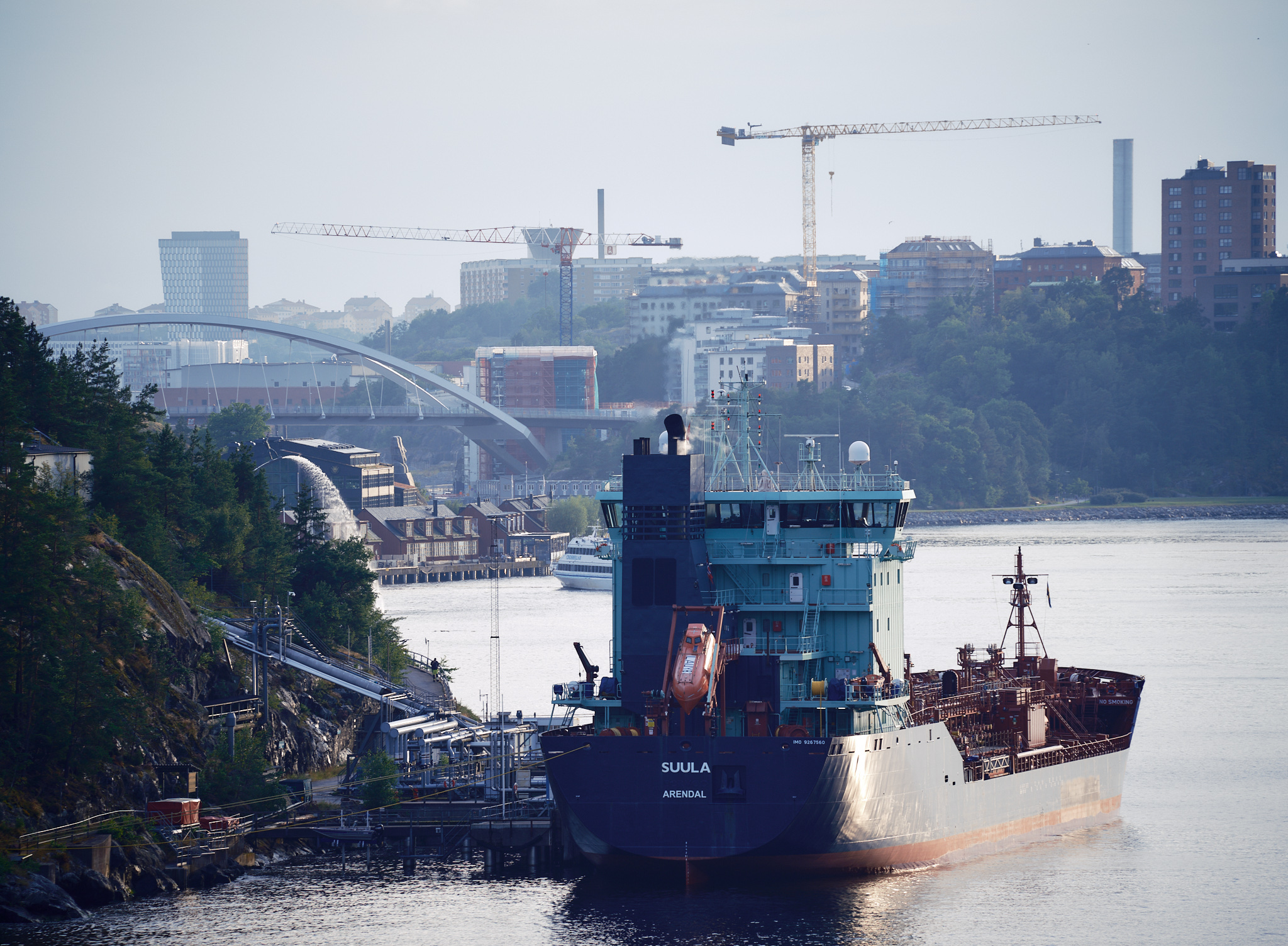
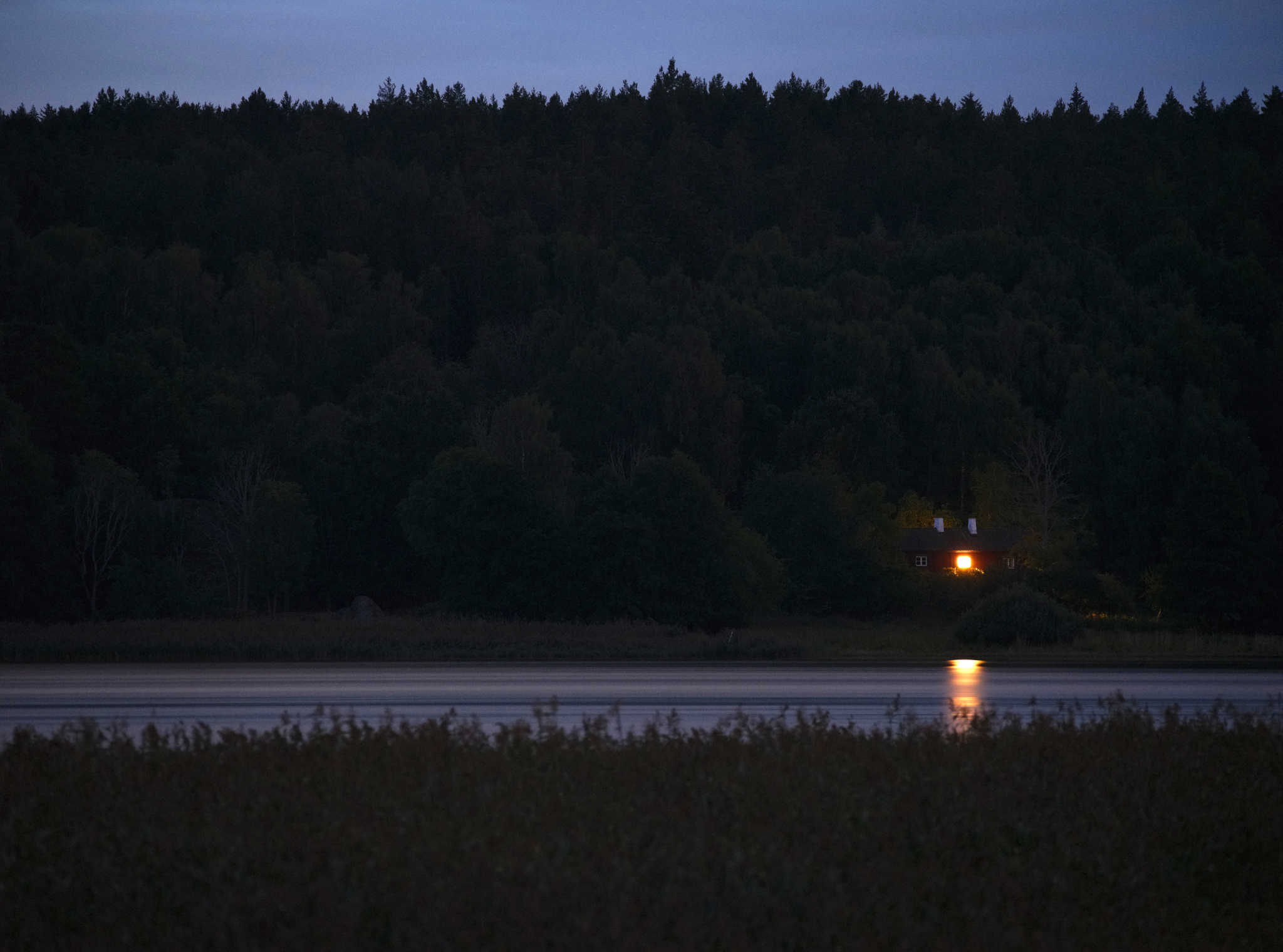
Okay, more with the Nikkor 58 and 105 1.4's. Simple comparisons showing falloff and resolution as best I can. The crops are from the center frame wide open. Both lenses sharpen up to as good as or better than the sensor centrally by f2. At f4 both lenses exceed/meet sensor to the Fx frame and extend usefully beyond that. Note these were taken with the hoods removed. In both cases the hood adds vignette. The 58 front element is recessed enough to not need it most of the time, but the 110's front element needs something. If I keep the 105 I will find an aftermarket hood or possibly sand the original down about ½" to remove the vignette.
Conclusions for *my uses*:
58. IMHO this lens is as good as the native GF 55 except for the extreme corners as shown wide open. The vignette does not appreciably change at f1.8, the closest aperture I can set to the 55's f1.7, but it does fade after that to what you see in the f4 image, and can be further corrected in post; but cannot be fully removed, FWIW. Given the 58 focuses faster than the native 55, and given how excellent it is optically over roughly 90% of the frame, I will call this a viable alternative to the native 55 with some added character and great bokeh. In short, it's a keeper for me over the 55. (Note -- the 58 does render some light purple fringing along high-contrast edges. Obviously easy to deal with in post, but I did not do any lens corrections of any kind for these images.)
105. Also as good as the sensor centrally, however this lens does not cover as well or as fully as the 58. The vignette never goes completely away. If I crop this lens to about the 110 effective focal, it still isn't going to match the native 110 corners at infinity; they show a bit smeary. At Fx frame of course it's great; but somewhere in between, it starts lagging behind the 110 -- call it 75% of the frame, maybe 80%. HOWEVER, at closer portrait distances, the IC improves to where it is probably a non-issue for most users even at full GFX frame. Hence a conundrum. If you use a 105/110 at infinity and need optimum corners and need the full GFX frame, this is not your lens. However if you're looking for a viable, cheaper and smaller alternative for portrait type distance uses and prefer the character and bokeh as I do to the 110, and/or can live with a net 70 or 80 MP cropped frame and slightly longer effective focal, then this lens becomes quite viable. (Note, AF is not quite as fast on the 105 as the native LM 110, but it's pretty close and certainly faster than say the 85.)
Speaking only for myself, I rarely need perfect corners -- if I do, I'll use a different lens or crop these to Fx if I ever decide to do something critical like stitch with them. Hence, given my uses and the fact I was able to purchase the Fringer and both of these lenses used for about what I sold my 110 for, I feel I am well set with this pairing for the reasons I wanted both these prime focal lengths. Obviously your needs may be different, but I hope this quick synopsis and example images help. ...Show more →
Your experience matches mine. I really enjoy the 58 and 105 on the GFX. I have the 110 but not the 55 to compare with. Another sleeper (but no AF) is the 180/2.8 ED Ais.
More Sigma 100-400. It's very usable at all focal lengths in ~16:9 crop, which is nice for distant landscapes.
I might just have to get a decent adapter.
Edit: This is obviously more cropped than 16:9, but you get the idea...
GFX50S IIViltrox Sigma 100-400mm f/5-5.7 DG lens177mmf/8.01/110s400 ISO-0.3 EV
widi5006 wrote:
Nice shot....I tried that lens with my GFX100s and it would hunt a lot....how is your experience with it ?
Thanks... I didn't have much luck with C-AF, but single point was pretty stable & accurate. Not the same as a current full-frame mirrorless, but very usable. Were you also using the Fringer adapter? I previously had the Metabones EF-GFX adapter and it was terrible.
helimat wrote:
Thanks... I didn't have much luck with C-AF, but single point was pretty stable & accurate. Not the same as a current full-frame mirrorless, but very usable. Were you also using the Fringer adapter? I previously had the Metabones EF-GFX adapter and it was terrible.
I never use C-AF with my GFX, single point is so much better. And yes, I used the Fringer Pro EF-GFX adapter and the Canon 100L was just horrible with it. I love my Sigma Art lenses with that adapter, very reliable and about the same AF speed as the GF80....the Tamron lenses are decent also, a tad slower. The only bad experience I had was with the Canon lens.
Yes the baffle is pretty easy to remove. Be careful of the ribbon cable it hides as that is a bit fragile. But yes it is really worth doing on GFX.
It's the same as removing the baffle from the 100-400 II, and really improves vignetting on both lenses. Where there was hard vignetting now there is what I would call strong vignetting, mostly at infinity at longer focal lengths.
I have done it with my 70-300L, I really love using this lens on the full GFX sensor, it's such a versatile range, from normal to proper tele. Sometimes I pull back a few mm on the focal length once I've framed the shot, in order to minimise the vignette around the composition, but usually only where there is a lot of sky in shot.
CKrueger wrote:
No, not for me. I was not aware the 70-300L had a baffle to remove.
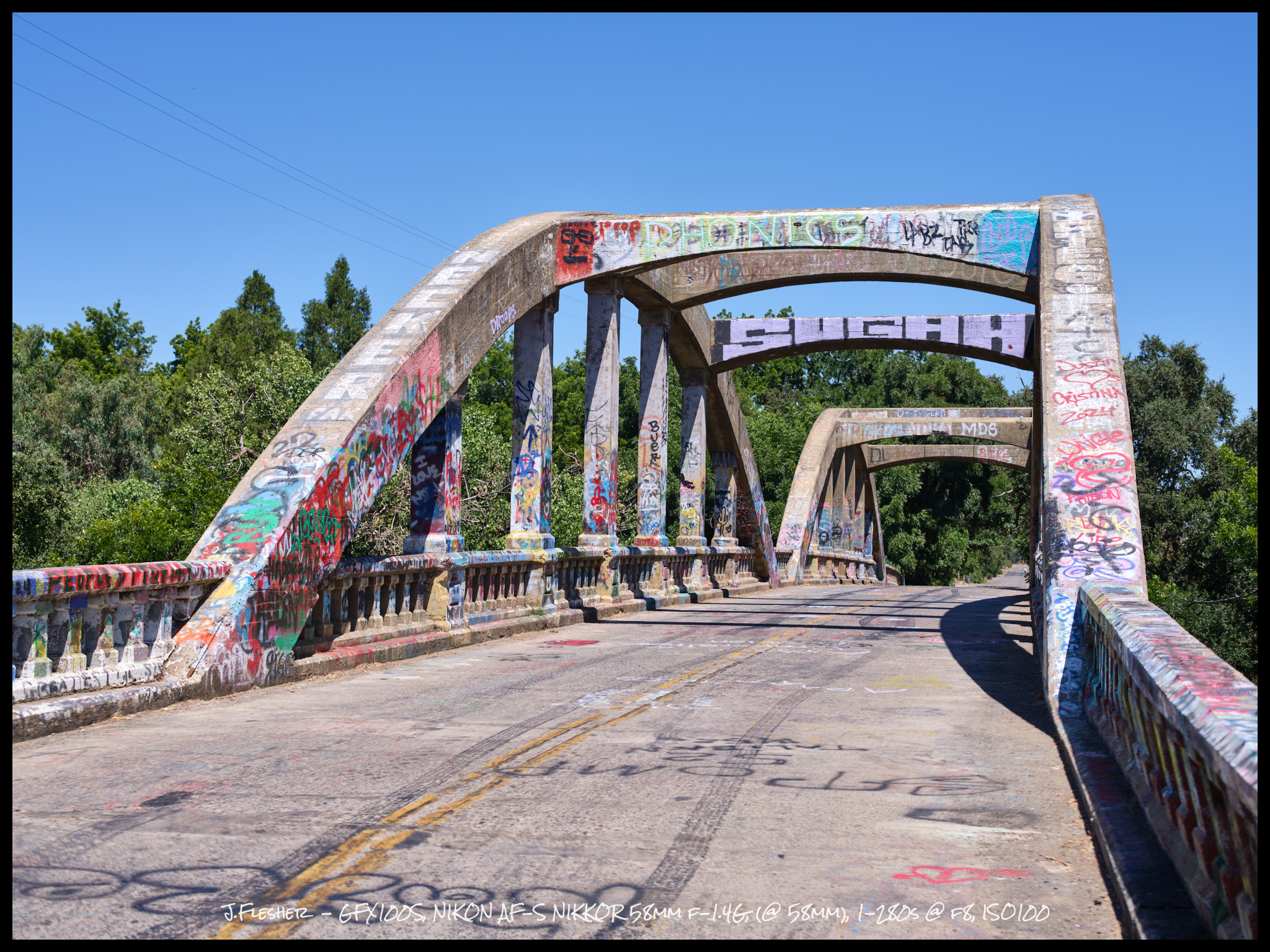
Full frame as shot capture with the Nikkor 58/1.4 at f8. (Obviously the reason to use this lens on the GFX is the bokeh and oof character at wider apertures. I am sharing this just to show that the lens is fully usable with it's hood removed full-frame on the GFX.) :
widi5006 wrote:
I never use C-AF with my GFX, single point is so much better. And yes, I used the Fringer Pro EF-GFX adapter and the Canon 100L was just horrible with it. I love my Sigma Art lenses with that adapter, very reliable and about the same AF speed as the GF80....the Tamron lenses are decent also, a tad slower. The only bad experience I had was with the Canon lens.
Odd....Only other think I can think of is firmware status....? My Fringer is up-to-date. Otherwise there must be some copy variation.
Here's another with the 50S II + Fringer + Canon 100L
And now for something completely different! I've more or less written off the Metabones Expander + Sigma 100-400 combo because of unreliable (AF?) behavior. Which is a pity, because optically it's exactly what I've been wanting.
However, the Expander seems to fulfil an other purpose: I now have the "character" standard lens that I've always wanted! Zeiss 50/1.4 ZF Planar + Expander becomes a dreamy 63/1.8 lens that sharpens up to near perfection at f/5.6 if you want to shoot landscapes or whatever. But from f/1.4 (on the lens, which means f/1.8 with the expander) to f/2.4 (f/3) it produces some very unique results.
Halation, coma, spherical aberration and chaotic bokeh, hell yes! A whole lot like the Mamiya 80/1.9 but with much better colors, contrast and also with a more usable focal length. I'm a bit surprised by how little the original character of the Planar is affected. The field is much flatter than without the Expander and I even think sharpness is better than on a Sony FF sensor.
Maybe the Expander was designed with the thick GFX sensor stack in mind?
One major flaw though. IBIS does not work with manual lenses. Unless you tape the contacts, or unscrew the adapter a tiny bit (yikes!). Quite annoying.
Edit: "Why not use it on an FF camera instead?" Well, because I don't want to lug around multiple cameras. And I really dislike the 3:2 aspect ratio.
GFX50S II63 mm f/-- lens63mmf/1.01/2700s100 ISO-1.3 EV
GFX50S II63 mm f/-- lens63mmf/1.01/400s200 ISO0.0 EV
More money out the window: Canon EF 70-300L with Metabones Expander
...nope.
Just like with the Sigma 100-400, focus is completely random. Sometimes perfect, but often just a tiny bit off, making the images useless. But it's so little that it's impossible to detect in the viewfinder.
Also, the image plane seems to be tilting all over the place. Probably due to OIS and/or IBIS. Such a pity, because when it works, the image quality is great. So are the colors and bokeh is much, much nicer than with the GF 100-200.
Now, could you use it with manual focus? Yes and no. Problem is, even with stabilisation "always active", the camera now ignores that setting and only stabilises the image with the shutter half-pressed. Which means you don't get stabilisation with magnified view, making it extremely difficult to focus at the long end. On a tripod, sure. But I do whatever I can to never use tripods.
Oh well. Will probably have to stick to the GF 100-200 and just crop. Sigh.
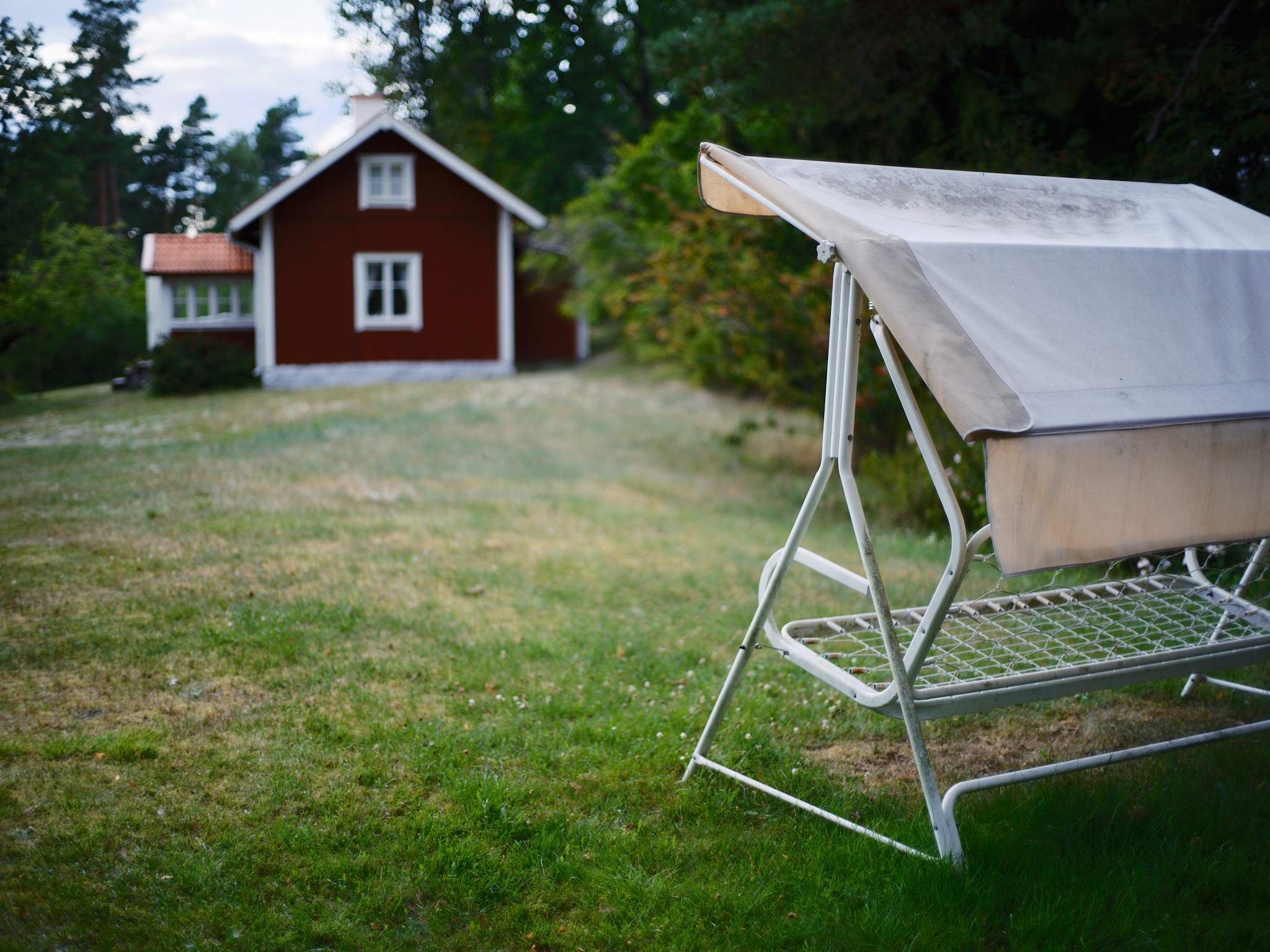
Edit: Maaaybe there's a workaround that I just found. It seems that if you switch OIS to off on the lens, you still get continouos IBIS! Which means you can now focus manually with a stabilised image. It's obvious that the stabilisation isn't as effective as OIS + IBIS, but getting focus in the right spot is a lot more important. The lens is very nice to focus manually, which is really uncommon with AF lenses. Will investigate further.
GFX50S II1.26x EF70-300mm f/4-5.6L IS USM lens378mmf/7.11/75s100 ISO+0.3 EV
I found the image circle varied considerably with the 70-300L with the lens’ IS turned on, too. If I panned while shooting, each frame would have a different result for hard vignette.
CKrueger wrote:
I found the image circle varied considerably with the 70-300L with the lens’ IS turned on, too. If I panned while shooting, each frame would have a different result for hard vignette.
Interesting! Even if the image circle should not be a problem in my case thanks to the Metabones Expander, it could be the reason for strange/crappy/random edge/corner performance sometimes. The optics of the Expander might not fare well with OIS lenses either; who knows?
I've shot some more and at least concluded that the results are way less problematic than with the Sigma 100-400. The Sigma is actually sharper and has even "better" bokeh, but the colors and general character of the Canon is nicer. The Canon is also physically shorter and has the center of gravity closer to the camera, which makes it handle nicer. And if you turn off OIS, the Canon can be focused manually and the results seem nice and sharp. But IBIS isn't super effective. Less so than with pure manual focus lenses at the same focal lengths, for some reason.
But, the GF 100-200 is in most cases more convenient. Lighter (because no Expander or adapter), more uniform across the field even though the Canon _can_ be sharper at ~200 mm, focuses accurately almost every time, and IBIS+OIS works like a charm. It's just a bit too short now and then, unfortunately.
Edit: It would be interesting to try the Canon + Expander on a GFX camera with phase detection AF. Could possibly work better. But the random sharpness because of (?) OIS would of course not be affected.
Ooookay, so just when I thought I found out how to use the lens (manual focus, no OIS), I found new problems. Really, really bizarre ones too.
The lens now works as per above when light is good or moderately low. But when it's really low, the damn camera gets almost completely unresponsive. ONLY with this particular lens!?&"#% What the actual...
It took me like half an hour to take this picture because the camera just refused to change settings. I couldn't even magnify the view to be able to focus.
When I got home I tried again indoors, and everything worked fine. Without me changing anything since it didn't, outdoors in the dark.
How on earth is this even possible? How can the camera be unresponsive because of low light?
Edit: As you can see, EXIF is now suddenly not complete either. But I think it was shot at ~300 mm and f/7 or so (wide open).
That sure seems like a bug in the adapters' code. I wonder if there's a certain exposure value threshold where it starts to fail? Maybe take it into a dark room and increase light levels until the problem goes away? Do you have any other EF lenses you can put in the same situation and see if they also fail?
FWIW, I'm looking at a photo with a GFX100S, Fringer EF adapter, and Tamron 45/1.8 right now that is 4sec, f/1.8, ISO6400, so I can say it's not a larger GFX issue or an issue with EF mount lenses in general. It must be either this specific lens or the adapter, it seems.
I use this lens with the Fringer adapter and have no such issues. Am I right in thinking that you are using the Viltrox adapter? I initially had this but found so many buggy, and intermittent issues with it that I upgraded to the Fringer and haven't looked back. It's so superior that it's not even close.
FWIW I even find that the 70-300 OIS works nicely in tandem with IBIS, when IBIS is set to continuous. I know that this is not "recommended" (that only one or the other should be used) but it really does work nicely with this lens. It is as though the OIS helps steady my hand and the IBIS adds those last few stops of sharpness.
The same is not true when I use both IBIS and OIS on my Tamron VC lenses (35,45,85) - the two stabilisers seem to work against one another, creating a jerky, sticky viewfinder display, so I use only IBIS.
Makten wrote:
Ooookay, so just when I thought I found out how to use the lens (manual focus, no OIS), I found new problems. Really, really bizarre ones too.
The lens now works as per above when light is good or moderately low. But when it's really low, the damn camera gets almost completely unresponsive. ONLY with this particular lens!?&"#% What the actual...
It took me like half an hour to take this picture because the camera just refused to change settings. I couldn't even magnify the view to be able to focus.
When I got home I tried again indoors, and everything worked fine. Without me changing anything since it didn't, outdoors in the dark.
How on earth is this even possible? How can the camera be unresponsive because of low light?
Edit: As you can see, EXIF is now suddenly not complete either. But I think it was shot at ~300 mm and f/7 or so (wide open). ...Show more →
itsmrjack wrote:
I use this lens with the Fringer adapter and have no such issues. Am I right in thinking that you are using the Viltrox adapter? I initially had this but found so many buggy, and intermittent issues with it that I upgraded to the Fringer and haven't looked back. It's so superior that it's not even close.
No, I use it with a Metabones Expander. It's a short teleconverter that expands the image circle so that FF lenses cover the sensor, and I suppose the electronics are the same as in Metabones "bare" adapters (from EF to GFX).
I borrowed a Viltrox from a friend though, and when I used it together with a Sigma 100-400, I experienced very similar issues. Though I didn't think about that it could be related to how much light the camera gets, because it's so unintuitive.
FWIW I even find that the 70-300 OIS works nicely in tandem with IBIS, when IBIS is set to continuous. I know that this is not "recommended" (that only one or the other should be used) but it really does work nicely with this lens. It is as though the OIS helps steady my hand and the IBIS adds those last few stops of sharpness.
OIS and IBIS works great together if you shoot something with a blurred background. But if you want the whole frame sharp, it seems to introduce enough tilt of the image plane to make sharpness very random across the frame. Or if it's something else; it's not suited for landscape in any case.
I thought I had solved this issue by using only IBIS when shooting stuff where I want sharpness from corner to corner. It seems to work. But now I obviously can't use the lens at all in low light instead.
Maybe if I could "trick" the camera by shining a light into the lens to be able to do my settings, or something. Because at least the shutter button works.
------------
I also think that the combo of the EF 70-300L and the Metabones Expander shows that a native lens in this range would NOT have to be huge and expensive. Optically it's pretty damn good and without OIS it could be a 90-380 mm GF lens, no question. It's a tad soft at 380 mm wide open, but still very usable.
All the other problems are only because of trying to electronically adapt a lens from a different brand. It's not related to optical performance.






 It's obvious that the stabilisation isn't as effective as OIS + IBIS, but getting focus in the right spot is a lot more important. The lens is very nice to focus manually, which is really uncommon with AF lenses. Will investigate further.