Makten, you could try the Canon 70-300 IS USM, the old one with micro USM and not ring USM. It is one of the smallest and lightest 70-300 mm lenses. It does not fully cover 4:3 at any focal length, and unfortunately it performs worst at 300 mm on all accounts. But from 70 to 200 it should cover 7:6. Because it does not cover the full sensor, I haven't really tried it out and not posted anything yet.
gear-nut wrote:
As re adapters, I reco Fringer. They just work. Personally I’ve decided to go with Nikon lenses so will be selling my Fringer EF to GFX in a few weeks.
I'm sure they do with Canon or Nikon lenses, but this is a Sigma. And I'm not buying something that expensive unless I _know_ it's gonna work with the specific lens I'm gonna use.
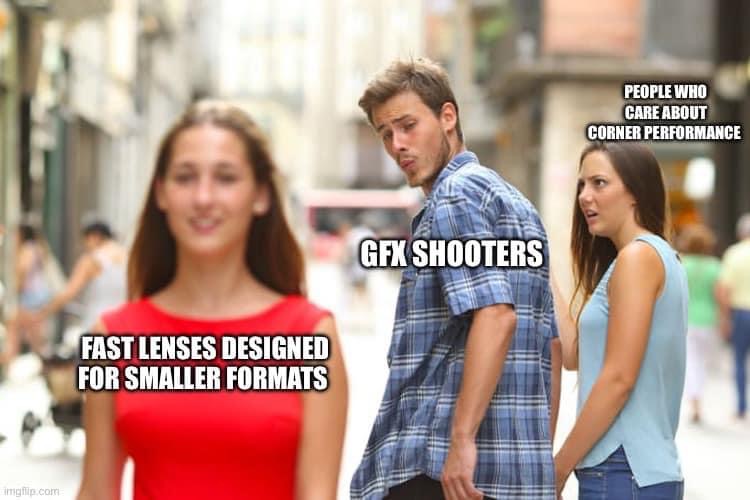
As re adapting Fx telezooms, I think you’re going to be disappointed unless you plan on shooting some cropped ratio and settling for a net of 60 or so MP — I just don’t see the optical physics working out well there much beyond the Fx IC. Fx tele primes, I think you might have better luck, but still expect at least some crop. Heck, you should anticipate crop on any FX lens if corner quality is a concern.
Thing is, I don't use tele lenses much at all. And I'm not interested in resolution, only some sort of decent image quality. I could actually use the 24x36 mode if we're talking fairly long teles, because then it's more about reach than anything else. And at least I don't have to keep my Sony that I never use for anything else than the 100-400 nowadays.
But, still need a lens and adapter that work well together.
Makten wrote:
I'm sure they do with Canon or Nikon lenses, but this is a Sigma. And I'm not buying something that expensive unless I _know_ it's gonna work with the specific lens I'm gonna use.
Thing is, I don't use tele lenses much at all. And I'm not interested in resolution, only some sort of decent image quality. I could actually use the 24x36 mode if we're talking fairly long teles, because then it's more about reach than anything else. And at least I don't have to keep my Sony that I never use for anything else than the 100-400 nowadays.
But, still need a lens and adapter that work well together. ...Show more →
I’ve used the Fringer with a EF Sigma ART 50 and it worked flawlessly, AF’d as fast and accurately on my 100s as it did on a Canon D body.
Canon 100-400 II with a Fringer works. As far as I know there’s nothing better like it on GFX—you’d have to compare it to the 100-200, 250, and TC all at once. But some corner cropping may be necessary, depends on focal length and focus distance.
I don’t know about the Viltrox adapter at all, but I’m using a Canon 70-200/4L (the original, not the IS version) with a Fringer. It sounds much like what you get from your Sigma 100-400–it performs well enough, but doesn’t always cover the sensor in all shooting conditions. I’m happy with it because I now have a small, light, and cheap telezoom for GFX. When IBIS sometimes blackens my corners around 135mm, I just crop down to 90mpix and think to myself “at least I didn’t have to carry a 100-200!”.
Just realized that I had the hood on the Sigma 100-400 when using it!
Not that it changes the behaviour of the adapter, but maybe the coverage is a bit better. Will try again soon.
Regarding focal length, I'm pretty happy with manual primes (Mamiya 150 and 210) up to ~200 mm. It's for the even longer stuff I want a zoom. Not necessarily working AF, if only there is decent MF (which the Sigma provides).
I wonder if there are any adapters that only control electronic aperture, and transmits focal length to the camera.
The Canon 100-400ii L with rear baffle removed is supposed to very good on the GFX and is probably worth checking out if you’re unhappy with the Sigma. I am planning to test out the Canon 70-300 L, I dont need the reach of the 100-400 and it is smaller / lighter…and I would be okay if it does not cover the entire sensor as long as it performs well in full frame mode at 60MP in my 100s.
Ros
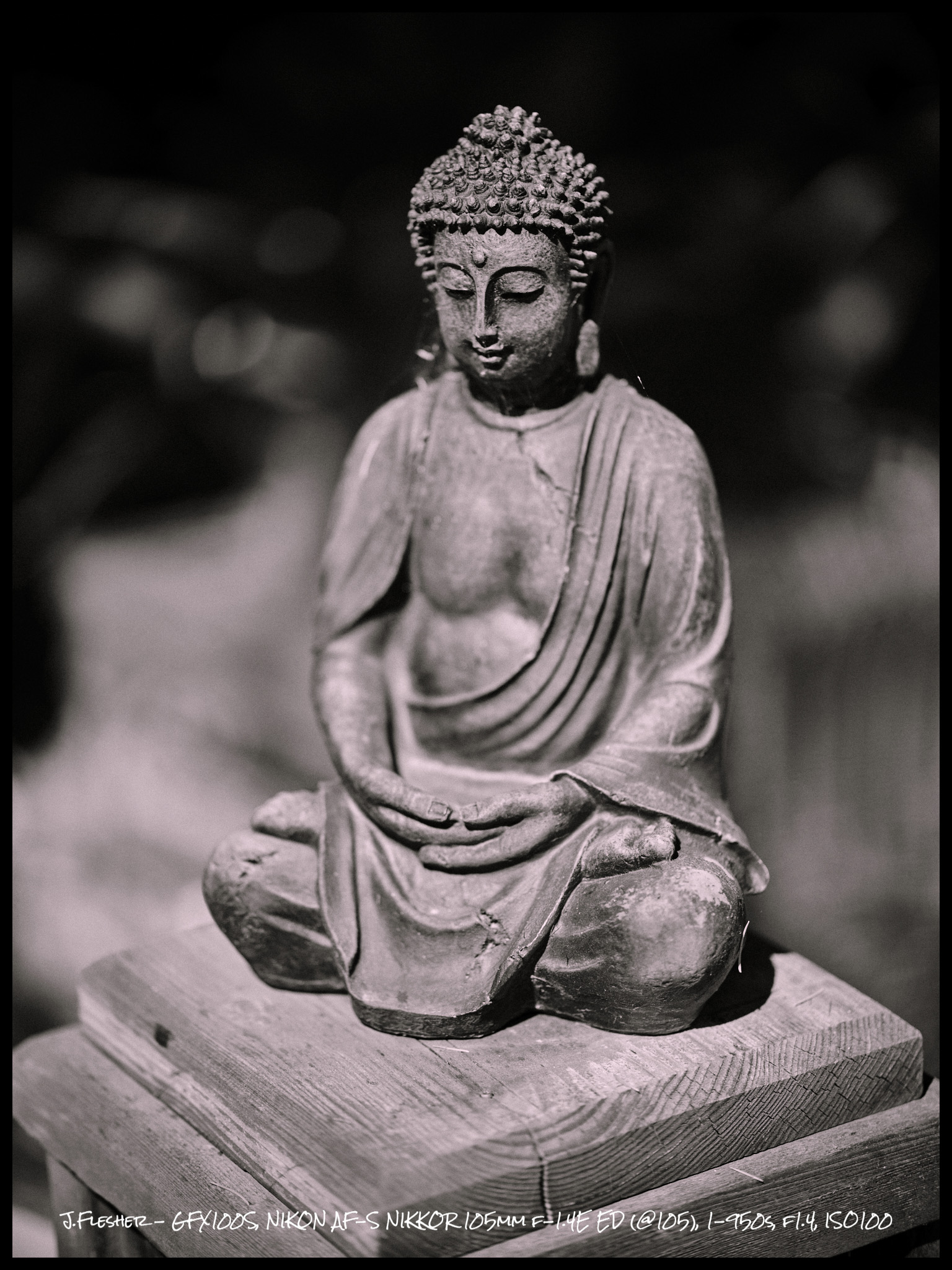
Just picked up a Nikon 105/1.4 today -- this is full frame at f1.4 via Fringer. Nothing special as an image, but it shows the illumination and bokeh of this lens. It appears about a +.75 stop vignette corrects the falloff at infinity, but needs some more experimentation -- it is NOT corrected in this image. It's also incredibly sharp even wide open, as good as and possibly even better than the GF110 at least centrally. Need to use it more to really investigate corner performance, but so far it appears fully usable full frame and so I am optimistic. For reference, the statue is about 14 inches tall. It af's fast and well, not quite as fast as the 110 but close, although a little noisier. I processed the image to split-tone in an attempt to at least make it a little more interesting.
Nice, I would really like to see some photos taken at a longer distances, like focused 5-6 meters away and at infinity.
gear-nut wrote:
Just picked up a Nikon 105/1.4 today -- this is full frame at f1.4 via Fringer. Nothing special as an image, but it shows the illumination and bokeh of this lens. It appears about a +.75 stop vignette corrects the falloff at infinity, but needs some more experimentation -- it is NOT corrected in this image. It's also incredibly sharp even wide open, as good as and possibly even better than the GF110 at least centrally. Need to use it more to really investigate corner performance, but so far it appears fully usable full frame and so I am optimistic. For reference, the statue is about 14 inches tall. It af's fast and well, not quite as fast as the 110 but close, although a little noisier. I processed the image to split-tone in an attempt to at least make it a little more interesting....Show more →
I've looked through this thread and I haven't seen any mention of the Heliar 40mm f2.8 on the GFX. This thread is over 100 pages long so I could be mistaken . If anyone has both and knows or better yet has F2.8 examples I curious to see the coverage.
I've looked through this thread and I haven't seen any mention of the Heliar 40mm f2.8 on the GFX. This thread is over 100 pages long so I could be mistaken . If anyone has both and knows or better yet has F2.8 examples I curious to see the coverage.
Not gonna work. It has M mount but no helicoid, since it's intended to use with a helicoid adapter on Sony. Which means you either will only have focus at infinity, or the lens won't mount at all because Sony has shorter register distance than GFX.
Considering the performance and vignetting on 24x36, I wouldn't bother regardless.
I've looked through this thread and I haven't seen any mention of the Heliar 40mm f2.8 on the GFX. This thread is over 100 pages long so I could be mistaken . If anyone has both and knows or better yet has F2.8 examples I curious to see the coverage.
Somewhat ironically, the Canon EF 40 pancake actually illuminates the GFX frame, and AF's and AE's with the Fringer. It illuminates fully, but given the one I adapted to a Nikon Z before they released their own 40, I can tell you it was already hurting in the extreme corners on Fx, so don't expect any gold on the GFX...
The 70-300L hard vignettes at various vocal lengths. Not 100% of the time, but enough that if you want full coverage you’re not going to enjoy it. Especially if you use the OIS, which only makes it worse.
I found the 70-200/4L vignetted less (mostly at 135mm), and performance was about equal, so I went with that instead.
The 100-400 II seems the best option for a telezoom, but I haven’t pulled the trigger to test one for myself, yet.
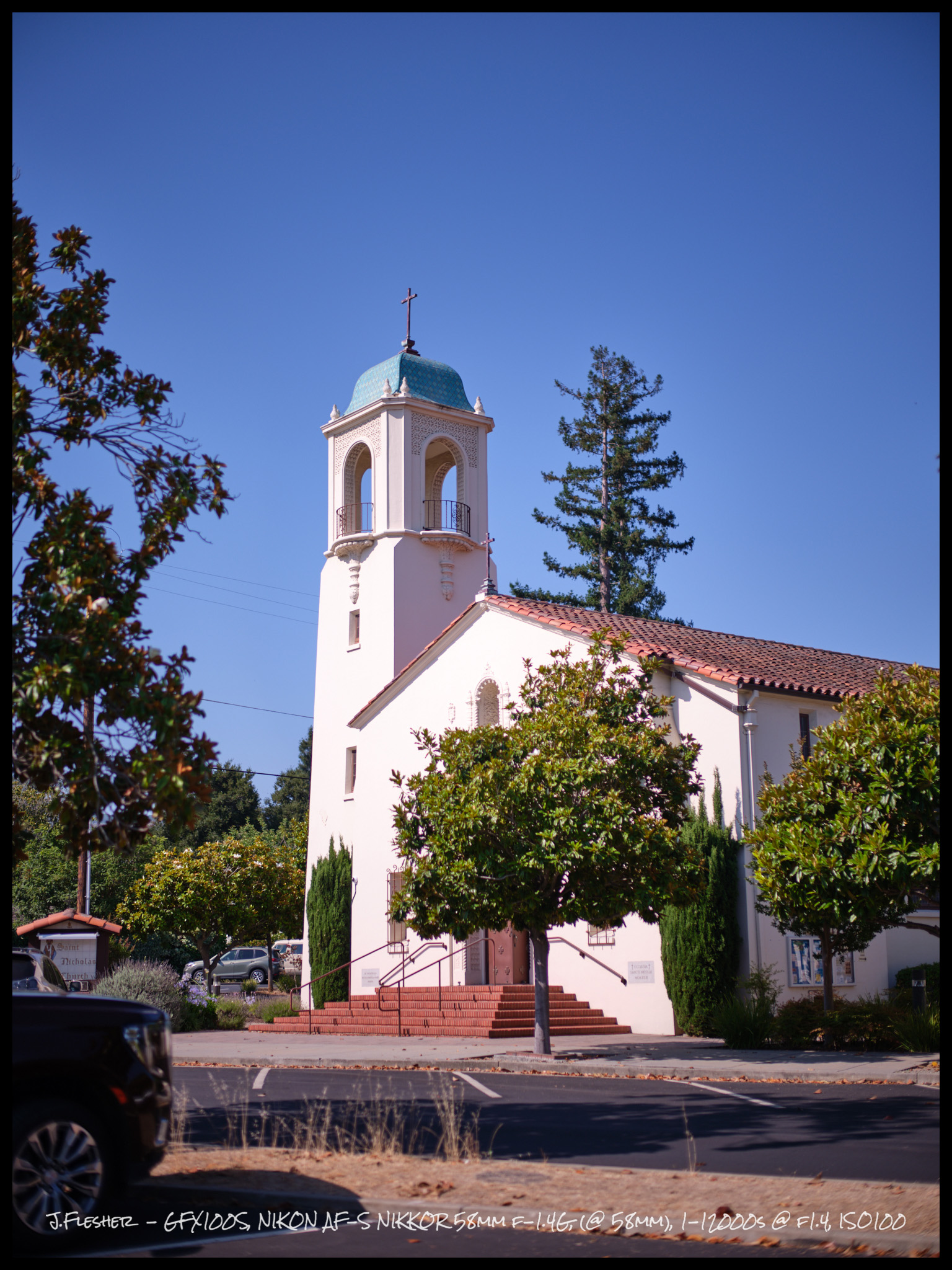
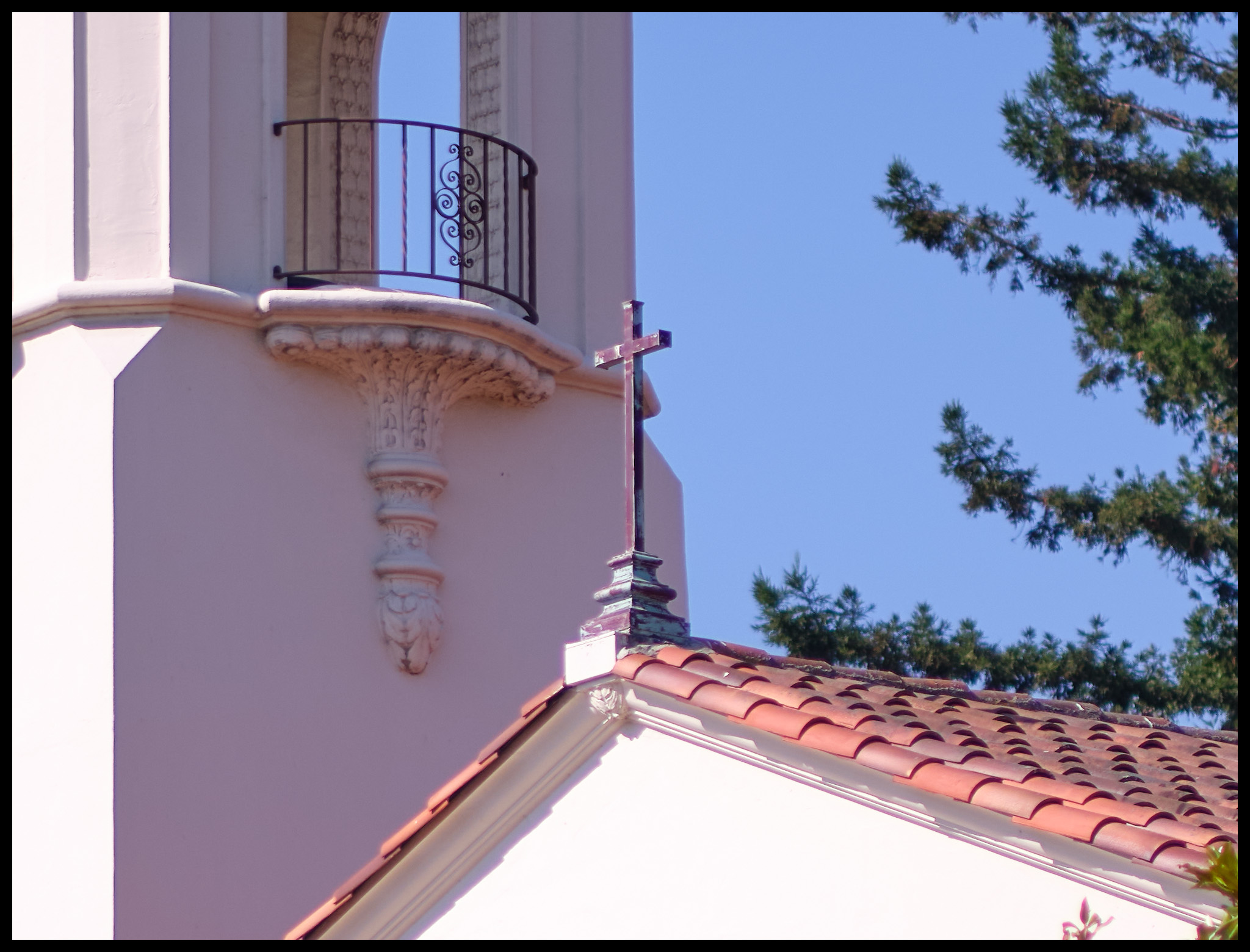
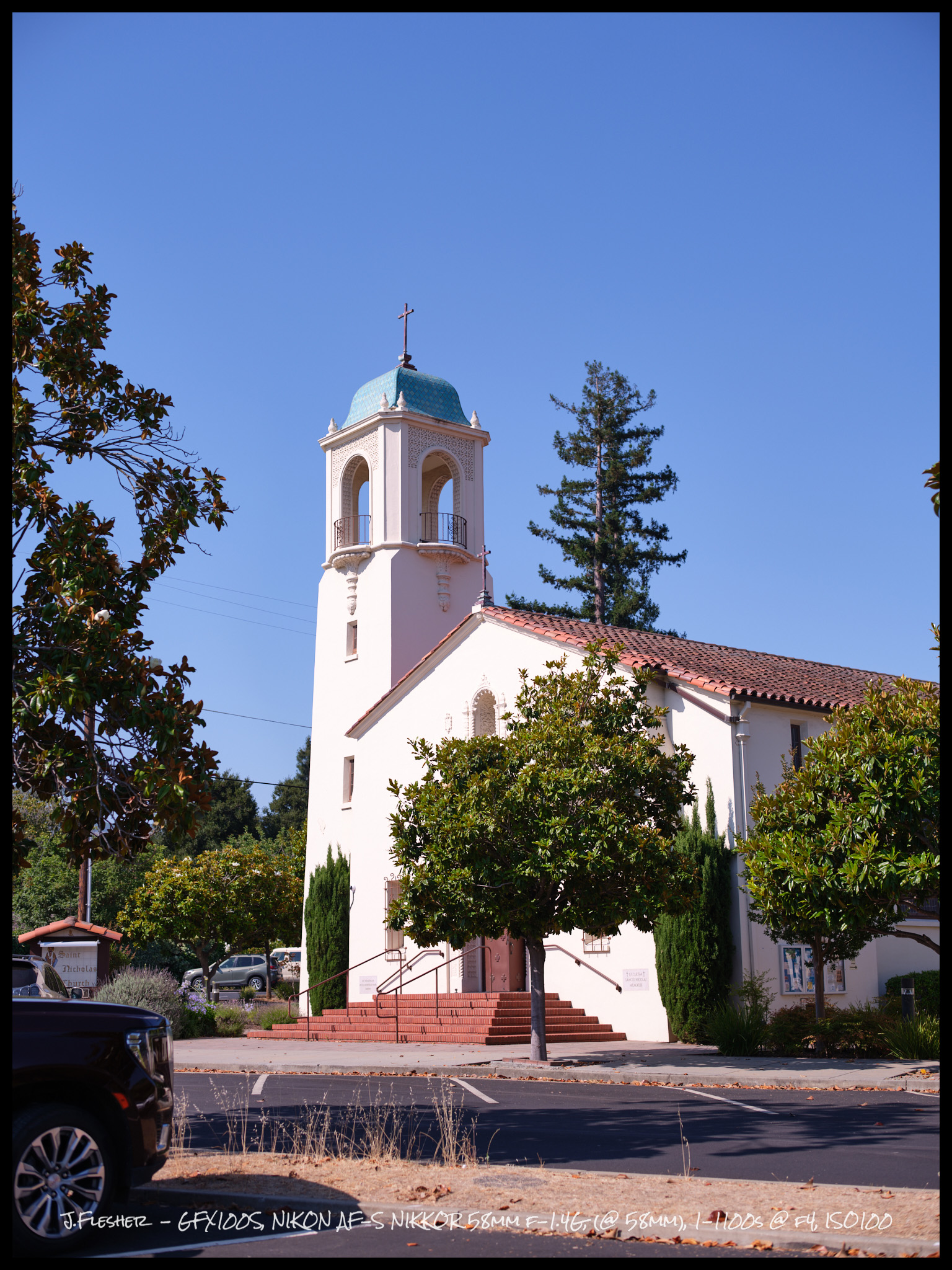
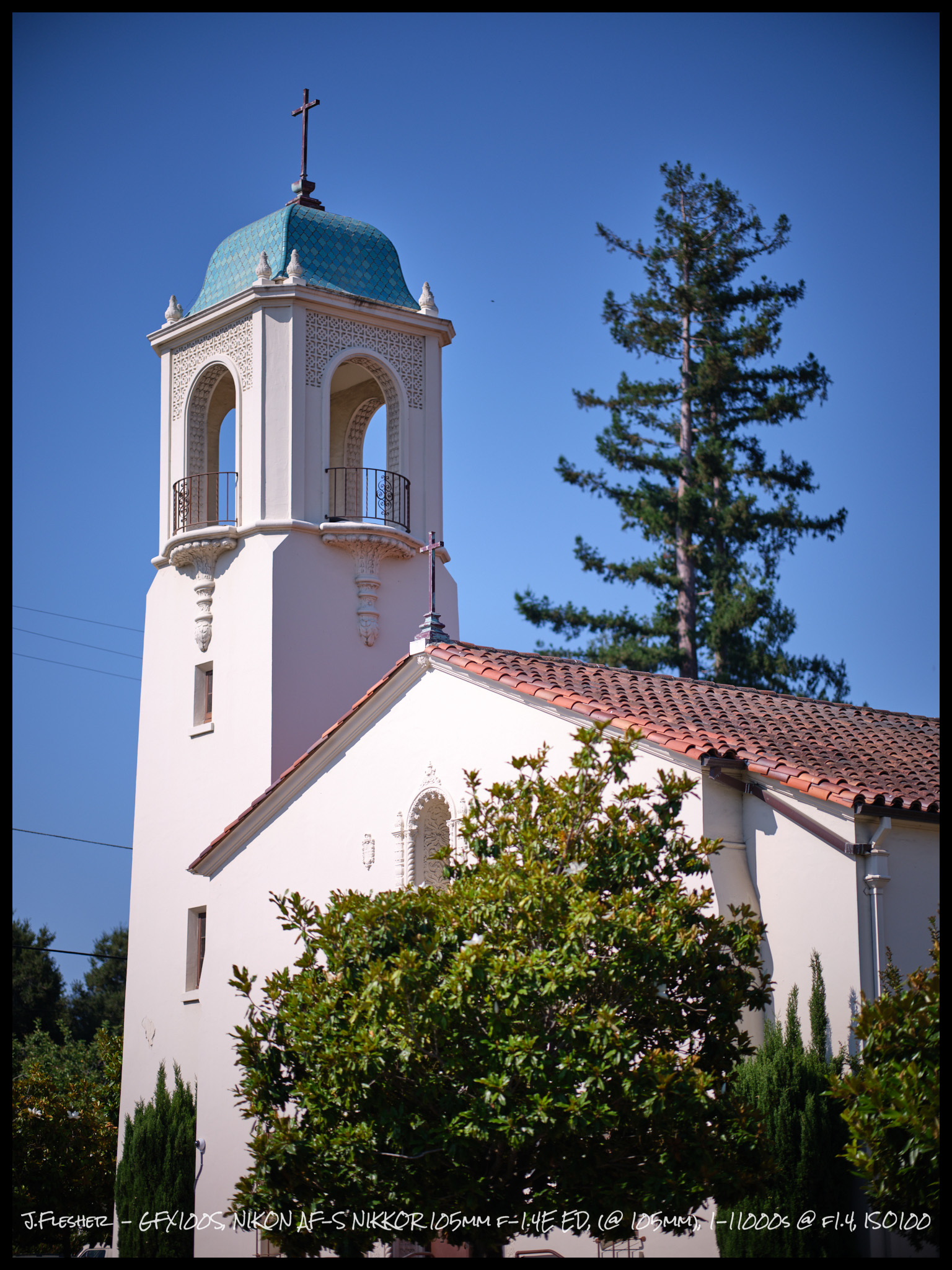
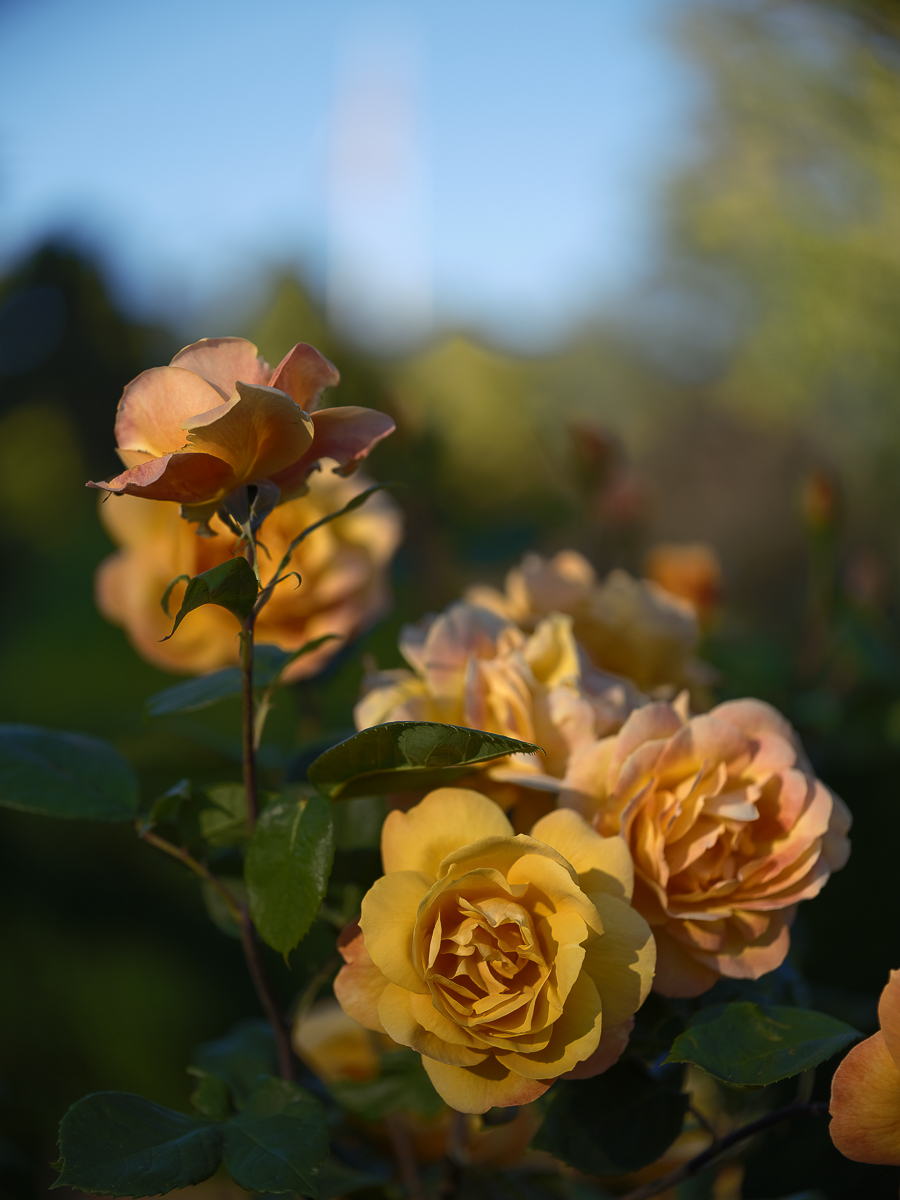
Okay, more with the Nikkor 58 and 105 1.4's. Simple comparisons showing falloff and resolution as best I can. The crops are from the center frame wide open. Both lenses sharpen up to as good as or better than the sensor centrally by f2. At f4 both lenses exceed/meet sensor to the Fx frame and extend usefully beyond that. Note these were taken with the hoods removed. In both cases the hood adds vignette. The 58 front element is recessed enough to not need it most of the time, but the 110's front element needs something. If I keep the 105 I will find an aftermarket hood or possibly sand the original down about ½" to remove the vignette.
Conclusions for *my uses*:
58. IMHO this lens is as good as the native GF 55 except for the extreme corners as shown wide open. The vignette does not appreciably change at f1.8, the closest aperture I can set to the 55's f1.7, but it does fade after that to what you see in the f4 image, and can be further corrected in post; but cannot be fully removed, FWIW. Given the 58 focuses faster than the native 55, and given how excellent it is optically over roughly 90% of the frame, I will call this a viable alternative to the native 55 with some added character and great bokeh. In short, it's a keeper for me over the 55. (Note -- the 58 does render some light purple fringing along high-contrast edges. Obviously easy to deal with in post, but I did not do any lens corrections of any kind for these images.)
105. Also as good as the sensor centrally, however this lens does not cover as well or as fully as the 58. The vignette never goes completely away. If I crop this lens to about the 110 effective focal, it still isn't going to match the native 110 corners at infinity; they show a bit smeary. At Fx frame of course it's great; but somewhere in between, it starts lagging behind the 110 -- call it 75% of the frame, maybe 80%. HOWEVER, at closer portrait distances, the IC improves to where it is probably a non-issue for most users even at full GFX frame. Hence a conundrum. If you use a 105/110 at infinity and need optimum corners and need the full GFX frame, this is not your lens. However if you're looking for a viable, cheaper and smaller alternative for portrait type distance uses and prefer the character and bokeh as I do to the 110, and/or can live with a net 70 or 80 MP cropped frame and slightly longer effective focal, then this lens becomes quite viable. (Note, AF is not quite as fast on the 105 as the native LM 110, but it's pretty close and certainly faster than say the 85.)
Speaking only for myself, I rarely need perfect corners -- if I do, I'll use a different lens or crop these to Fx if I ever decide to do something critical like stitch with them. Hence, given my uses and the fact I was able to purchase the Fringer and both of these lenses used for about what I sold my 110 for, I feel I am well set with this pairing for the reasons I wanted both these prime focal lengths. Obviously your needs may be different, but I hope this quick synopsis and example images help.
CKrueger wrote:
The 70-300L hard vignettes at various vocal lengths. Not 100% of the time, but enough that if you want full coverage you’re not going to enjoy it. Especially if you use the OIS, which only makes it worse.
I found the 70-200/4L vignetted less (mostly at 135mm), and performance was about equal, so I went with that instead.
The 100-400 II seems the best option for a telezoom, but I haven’t pulled the trigger to test one for myself, yet.


 And I'm not buying something that expensive unless I _know_ it's gonna work with the specific lens I'm gonna use.

 . If anyone has both and knows or better yet has F2.8 examples I curious to see the coverage.