This topic is in the 2016 archive. You can read it and like its posts here. It is read only.
Archive 2016Official: Loxia 85mm f/2.4 Sonnar
p.21 #1Official: Loxia 85mm f/2.4 Sonnar
Luvwine wrote:
I am tempted by the new Loxia due to optical excellence and having the same filter thread with the 21 and 50. It is heavier and slower than the Leica 90/2 AA, however, with a less well designed hood. Don't know if there is a meaningful difference in optical quality between them. I could conceivably sell my Leica 75/2 apo and 90/2AA and use the money for the next great Sony body, but I am torn due to the above considerations. TAP compatibility is secondary.
The 90/2 AA is indeed amazing at infinity distances. When comparing it to ZM 85/4, 85/1.4GM and CY 100/3.5, I was surprised how noticeably better it performed throughout the frame (even the center area).
However, wide-open and close distances it was disappointing. There is a weird bokeh shape (looks like a wheel structure) in many of my images and noticeable onion ring patterns. Yes, the aspherical element contributes to its amazing IQ but there is no free lunch.
Here is a bokeh comparison between the Leica 90/2 AA (LEFT) versus Leica 90/2.5 (RIGHT). the "wheel" structure is somewhat visible on this sample but I've seen worse in other images from this lens.
_https://www.fredmiranda.com/Buzz/Leica-comparison.jpg
Stepped down to f/2.8 or smaller and you get a 'crown' shape bokeh which I also disliked.
BTW: The Leica 90/2.5 Summarit performs better a close distances and much worse at infinity. Very different lenses.
The 85/1.4GM has asphericals but almost perfect bokeh balls. Sony did an amazing job and it was not marketing hype. It was actually free lunch.
The Loxia 85/2.4 and the absence of asphericals should have a very nice rendering at close distances and based on the released MTF graph, should be amazing at long distances. Perhaps the Loxia 85 could be the perfect complement to the 85/1.4 GM AF lens.
Nov 06, 2016 at 11:16 AM
p.21 #2Official: Loxia 85mm f/2.4 Sonnar
Fred Miranda wrote:
The 90/2 AA is indeed amazing at infinity distances. When comparing it to ZM 85/4, 85/1.4GM and CY 100/3.5, I was surprised how noticeably better it performed throughout the frame (even the center area).
However, wide-open and close distances it was disappointing. There is a weird bokeh shape (looks like a wheel structure) in many of my images and noticeable onion ring patterns. Yes, the aspherical element contributes to its amazing IQ but there is no free lunch.
Here is a bokeh comparison between the Leica 90/2 AA (LEFT) versus Leica 90/2.5 (RIGHT). the "wheel" structure is somewhat visible on...Show more →
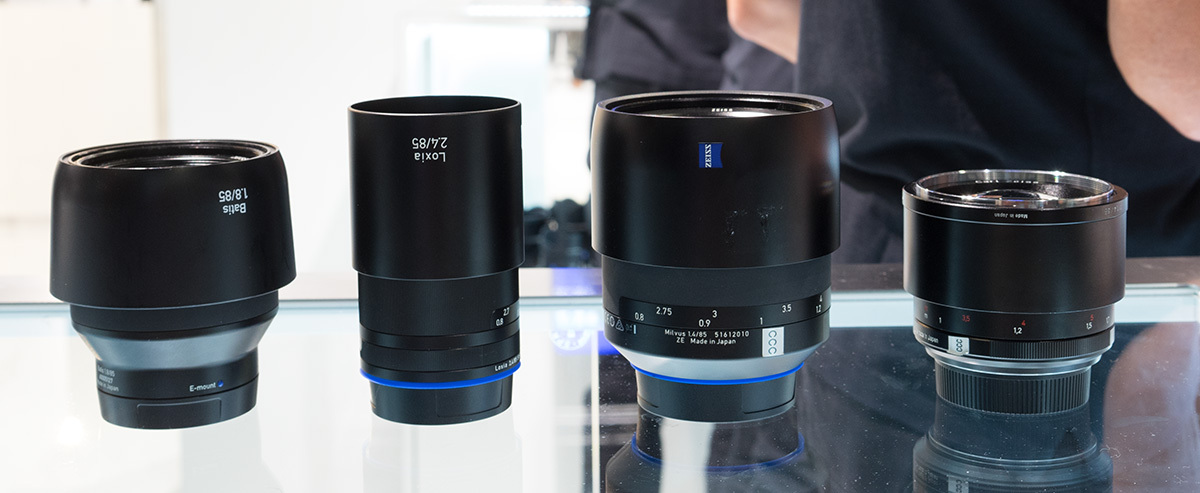
Thanks for your thoughts on this Fred. I will quibble a bit and say that there is no free lunch even with the 85 GM assuming that size is a relevant consideration! All these lenses have pros and cons. The Loxia will lack AF and has a pricey and long and poorly designed hood (or at least I am guessing so from the images).
Luvwine wrote
I am tempted by the new Loxia due to optical excellence and having the same filter thread with the 21 and 50. It is heavier and slower than the Leica 90/2 AA, however, with a less well designed hood. Don't know if there is a meaningful difference in optical quality between them. I could conceivably sell my Leica 75/2 apo and 90/2AA and use the money for the next great Sony body, but I am torn due to the above considerations. TAP compatibility is secondary.However, wide-open and close distances it was disappointing. There is a weird bokeh shape (looks like a wheel structure) in many of my images and noticeable onion ring patterns. Yes, the aspherical element contributes to its amazing IQ but there is no free lunch.
Here is a bokeh comparison between the Leica 90/2 AA (LEFT) versus Leica 90/2.5 (RIGHT). the "wheel" structure is somewhat visible on...Show more →
Thanks for your thoughts on this Fred. I will quibble a bit and say that there is no free lunch even with the 85 GM assuming that size is a relevant consideration! All these lenses have pros and cons. The Loxia will lack AF and has a pricey and long and poorly designed hood (or at least I am guessing so from the images).
Nov 06, 2016 at 11:41 AM
p.21 #3Official: Loxia 85mm f/2.4 Sonnar
Luvwine wrote:
The 90/2 AA is indeed amazing at infinity distances. When comparing it to ZM 85/4, 85/1.4GM and CY 100/3.5, I was surprised how noticeably better it performed throughout the frame (even the center area).
However, wide-open and close distances it was disappointing. There is a weird bokeh shape (looks like a wheel structure) in many of my images and noticeable onion ring patterns. Yes, the aspherical element contributes to its amazing IQ but there is no free lunch.
Here is a bokeh comparison between the Leica 90/2 AA (LEFT) versus Leica 90/2.5 (RIGHT). the "wheel" structure is somewhat visible on this sample but I've seen worse in other images from this lens.
_https://www.fredmiranda.com/Buzz/Leica-comparison.jpg
Stepped down to f/2.8 or smaller and you get a 'crown' shape bokeh which I also disliked.
BTW: The Leica 90/2.5 Summarit performs better a close distances and much worse at infinity. Very different lenses.
The 85/1.4GM has asphericals but almost perfect bokeh balls. Sony did an amazing job and it was not marketing hype. It was actually free lunch.
The Loxia 85/2.4 and the absence of asphericals should have a very nice rendering at close distances and based on the released MTF graph, should be amazing at long distances. Perhaps the Loxia 85 could be the perfect complement to the 85/1.4 GM AF lens.Thanks for your thoughts on this Fred. I will quibble a bit and say that there is no free lunch even with the 85 GM assuming that size is a relevant consideration! All these lenses have pros and cons. The Loxia will lack AF and has a pricey and long and poorly designed hood (or at least I am guessing so from the images).
Yes, the 85GM is bigger and heavier but let's not forget it's a f/1.4!
Why do you think the hood has a bad design? Too long? The main purpose of a lens hood is to reduce flare which maximizes contrast but if it's not long enough, it won't do a good job preventing stray light from hitting the elements. Take the built-in hood from the Leica 90/2 AA for example. it's pretty and convenient but it's too short and therefore inefficient preventing flare.
The Loxia 85/2.4 hood gives the impression of being longer than usual because it covers the front part of the lens just like the other Loxia lenses. The good news is that it's reversible so it will be easy to store it. (Unlike the ZM 85/4 hood)
Fred Miranda wrote
Luvwine wrote
I am tempted by the new Loxia due to optical excellence and having the same filter thread with the 21 and 50. It is heavier and slower than the Leica 90/2 AA, however, with a less well designed hood. Don't know if there is a meaningful difference in optical quality between them. I could conceivably sell my Leica 75/2 apo and 90/2AA and use the money for the next great Sony body, but I am torn due to the above considerations. TAP compatibility is secondary.However, wide-open and close distances it was disappointing. There is a weird bokeh shape (looks like a wheel structure) in many of my images and noticeable onion ring patterns. Yes, the aspherical element contributes to its amazing IQ but there is no free lunch.
Here is a bokeh comparison between the Leica 90/2 AA (LEFT) versus Leica 90/2.5 (RIGHT). the "wheel" structure is somewhat visible on this sample but I've seen worse in other images from this lens.
_https://www.fredmiranda.com/Buzz/Leica-comparison.jpg
Stepped down to f/2.8 or smaller and you get a 'crown' shape bokeh which I also disliked.
BTW: The Leica 90/2.5 Summarit performs better a close distances and much worse at infinity. Very different lenses.
The 85/1.4GM has asphericals but almost perfect bokeh balls. Sony did an amazing job and it was not marketing hype. It was actually free lunch.
The Loxia 85/2.4 and the absence of asphericals should have a very nice rendering at close distances and based on the released MTF graph, should be amazing at long distances. Perhaps the Loxia 85 could be the perfect complement to the 85/1.4 GM AF lens.
Yes, the 85GM is bigger and heavier but let's not forget it's a f/1.4!
Why do you think the hood has a bad design? Too long? The main purpose of a lens hood is to reduce flare which maximizes contrast but if it's not long enough, it won't do a good job preventing stray light from hitting the elements. Take the built-in hood from the Leica 90/2 AA for example. it's pretty and convenient but it's too short and therefore inefficient preventing flare.
The Loxia 85/2.4 hood gives the impression of being longer than usual because it covers the front part of the lens just like the other Loxia lenses. The good news is that it's reversible so it will be easy to store it. (Unlike the ZM 85/4 hood)
Nov 06, 2016 at 12:23 PM
p.21 #4Official: Loxia 85mm f/2.4 Sonnar
Well this is the 64k question for sure. Is it a better compliment to the GM than the ZM is today for me. If you need my ZM bud to test when the Loxia comes in . Let me know I'll ship it over
Fred Miranda wrote:
The 90/2 AA is indeed amazing at infinity distances. When comparing it to ZM 85/4, 85/1.4GM and CY 100/3.5, I was surprised how noticeably better it performed throughout the frame (even the center area).
However, wide-open and close distances it was disappointing. There is a weird bokeh shape (looks like a wheel structure) in many of my images and noticeable onion ring patterns. Yes, the aspherical element contributes to its amazing IQ but there is no free lunch.
Here is a bokeh comparison between the Leica 90/2 AA (LEFT) versus Leica 90/2.5 (RIGHT). the "wheel" structure is somewhat visible on...Show more →
Fred Miranda wrote:
Luvwine wrote
I am tempted by the new Loxia due to optical excellence and having the same filter thread with the 21 and 50. It is heavier and slower than the Leica 90/2 AA, however, with a less well designed hood. Don't know if there is a meaningful difference in optical quality between them. I could conceivably sell my Leica 75/2 apo and 90/2AA and use the money for the next great Sony body, but I am torn due to the above considerations. TAP compatibility is secondary.However, wide-open and close distances it was disappointing. There is a weird bokeh shape (looks like a wheel structure) in many of my images and noticeable onion ring patterns. Yes, the aspherical element contributes to its amazing IQ but there is no free lunch.
Here is a bokeh comparison between the Leica 90/2 AA (LEFT) versus Leica 90/2.5 (RIGHT). the "wheel" structure is somewhat visible on...Show more →
Nov 06, 2016 at 12:43 PM
p.21 #5Official: Loxia 85mm f/2.4 Sonnar
Fred Miranda wrote:
The 90/2 AA is indeed amazing at infinity distances. When comparing it to ZM 85/4, 85/1.4GM and CY 100/3.5, I was surprised how noticeably better it performed throughout the frame (even the center area).
However, wide-open and close distances it was disappointing. There is a weird bokeh shape (looks like a wheel structure) in many of my images and noticeable onion ring patterns. Yes, the aspherical element contributes to its amazing IQ but there is no free lunch.
Here is a bokeh comparison between the Leica 90/2 AA (LEFT) versus Leica 90/2.5 (RIGHT). the "wheel" structure is somewhat visible on this sample but I've seen worse in other images from this lens.
_https://www.fredmiranda.com/Buzz/Leica-comparison.jpg
Stepped down to f/2.8 or smaller and you get a 'crown' shape bokeh which I also disliked.
BTW: The Leica 90/2.5 Summarit performs better a close distances and much worse at infinity. Very different lenses.
The 85/1.4GM has asphericals but almost perfect bokeh balls. Sony did an amazing job and it was not marketing hype. It was actually free lunch.
The Loxia 85/2.4 and the absence of asphericals should have a very nice rendering at close distances and based on the released MTF graph, should be amazing at long distances. Perhaps the Loxia 85 could be the perfect complement to the 85/1.4 GM AF lens.Thanks for your thoughts on this Fred. I will quibble a bit and say that there is no free lunch even with the 85 GM assuming that size is a relevant consideration! All these lenses have pros and cons. The Loxia will lack AF and has a pricey and long and poorly designed hood (or at least I am guessing so from the images).Yes, the 85GM is bigger and heavier but let's not forget it's a f/1.4!
Why do you think the hood has a bad design? Too long? The main purpose of a lens hood is to reduce flare which maximizes contrast but if it's not long enough, it won't do a good job preventing stray light from hitting the elements. Take the built-in hood from the Leica 90/2 AA for example. it's pretty and convenient but it's too short and therefore inefficient preventing flare.
The Loxia 85/2.4 hood gives the impression of being longer than usual because it covers the front...Show more →
I thought I had read it was not reversible. Also, one has to pay separately for it....I do oike the Leica hoods as you cannot drop them and I had not noticed the 90 AA hood being inadequate.
Luvwine wrote
Fred Miranda wrote
Luvwine wrote
I am tempted by the new Loxia due to optical excellence and having the same filter thread with the 21 and 50. It is heavier and slower than the Leica 90/2 AA, however, with a less well designed hood. Don't know if there is a meaningful difference in optical quality between them. I could conceivably sell my Leica 75/2 apo and 90/2AA and use the money for the next great Sony body, but I am torn due to the above considerations. TAP compatibility is secondary.However, wide-open and close distances it was disappointing. There is a weird bokeh shape (looks like a wheel structure) in many of my images and noticeable onion ring patterns. Yes, the aspherical element contributes to its amazing IQ but there is no free lunch.
Here is a bokeh comparison between the Leica 90/2 AA (LEFT) versus Leica 90/2.5 (RIGHT). the "wheel" structure is somewhat visible on this sample but I've seen worse in other images from this lens.
_https://www.fredmiranda.com/Buzz/Leica-comparison.jpg
Stepped down to f/2.8 or smaller and you get a 'crown' shape bokeh which I also disliked.
BTW: The Leica 90/2.5 Summarit performs better a close distances and much worse at infinity. Very different lenses.
The 85/1.4GM has asphericals but almost perfect bokeh balls. Sony did an amazing job and it was not marketing hype. It was actually free lunch.
The Loxia 85/2.4 and the absence of asphericals should have a very nice rendering at close distances and based on the released MTF graph, should be amazing at long distances. Perhaps the Loxia 85 could be the perfect complement to the 85/1.4 GM AF lens.
Why do you think the hood has a bad design? Too long? The main purpose of a lens hood is to reduce flare which maximizes contrast but if it's not long enough, it won't do a good job preventing stray light from hitting the elements. Take the built-in hood from the Leica 90/2 AA for example. it's pretty and convenient but it's too short and therefore inefficient preventing flare.
The Loxia 85/2.4 hood gives the impression of being longer than usual because it covers the front...Show more →
I thought I had read it was not reversible. Also, one has to pay separately for it....I do oike the Leica hoods as you cannot drop them and I had not noticed the 90 AA hood being inadequate.
Nov 06, 2016 at 01:54 PM
p.21 #6Official: Loxia 85mm f/2.4 Sonnar
Luvwine wrote:
I thought I had read it was not reversible. Also, one has to pay separately for it....I do oike the Leica hoods as you cannot drop them and I had not noticed the 90 AA hood being inadequate.
No, the hood is included with the lens, same as other Loxia. (It's not included with the ZM 85, IIRC)
I thought I had read it was not reversible. Also, one has to pay separately for it....I do oike the Leica hoods as you cannot drop them and I had not noticed the 90 AA hood being inadequate.
No, the hood is included with the lens, same as other Loxia. (It's not included with the ZM 85, IIRC)
Nov 06, 2016 at 02:10 PM
p.21 #7Official: Loxia 85mm f/2.4 Sonnar
Fred Miranda wrote:
In regard to dearth of reviews, I found much the same attitude for another class - though markedly different - lens: the zeiss 85 f/4 which many here have known and loved even if they may leave it behind for the loxia. For myself, I will keep all three, the Otus for studio/tripod mainly on the canon 5dsr and both the zeiss 85 f/4 and new Loxia 85 f2.4 on Sony. I'm too lens crazy to part with any of the others. Having already preordered the Loxia 85/2.4, I recently bought a Tele-Tessar 85/4, wondering if I would be happy enough with that lens to cancel the Loxia purchase. As much as I like the TT 85 (especially since it provides AF via the TAP), I understand now that the Loxia complements rather than replaces the slower 85. So I'll probably keep both and sell my Sonnar 85/2.8 and 100/3.5 lenses.I don't naturally play the role of the voice of moderation, but if you get the Loxia, unless you do a lot iof wilderness expeditions where every gram counts, I'll sell the TT lovely though it is. It does have the advantage of working on TAP; but that matters more for people pics, where you might want a faster aperture anyway....The ZM 85/4 is definitely high IQ and one of the lightest options but when considering the weight of adapters like TAP (134 grams), it becomes only 150g lighter than the new Loxia. It's significant but not very substantial. Of course one can use lighter adapters but there goes the AF advantage...
I agree that for most purposes including regular travel the weight difference is irrelevant.
But for long wilderness hiking trips I pack to a weight limit. It's then all about opportunity costs. For wilderness landscape purposes I don't use TAP so the weight difference is a bit more than 200g. For that I could have:
An extra freeze dried meal
Or an extra merino warmth layer
Or take the sturdier tent poles
Or take an extra 200ml of water (not trivial on a hot desert day)
0r take a macro lens!
For everything else I'd prefer the Loxia, but it's an open question how domestic harmony would be affected by trying to have both....
DavidBM wrote
genji wrote
tunisia wrote
I've had my order when first available. I also wish there were more reviews but the one posted above was enough for me. I've been waiting for just this focal length in a smaller package (than say the Otus 85 which I have) while not losing too much in terms of speed and sharpness. and, the fact that it is a sonar based on classic designs is a major plus for rendering and color - if it lives up. If not, I don't believe it will be that far off.In regard to dearth of reviews, I found much the same attitude for another class - though markedly different - lens: the zeiss 85 f/4 which many here have known and loved even if they may leave it behind for the loxia. For myself, I will keep all three, the Otus for studio/tripod mainly on the canon 5dsr and both the zeiss 85 f/4 and new Loxia 85 f2.4 on Sony. I'm too lens crazy to part with any of the others.
I agree that for most purposes including regular travel the weight difference is irrelevant.
But for long wilderness hiking trips I pack to a weight limit. It's then all about opportunity costs. For wilderness landscape purposes I don't use TAP so the weight difference is a bit more than 200g. For that I could have:
An extra freeze dried meal
Or an extra merino warmth layer
Or take the sturdier tent poles
Or take an extra 200ml of water (not trivial on a hot desert day)
0r take a macro lens!
For everything else I'd prefer the Loxia, but it's an open question how domestic harmony would be affected by trying to have both....
Nov 06, 2016 at 02:52 PM
p.21 #8Official: Loxia 85mm f/2.4 Sonnar
Luvwine wrote:
The 90/2 AA is indeed amazing at infinity distances. When comparing it to ZM 85/4, 85/1.4GM and CY 100/3.5, I was surprised how noticeably better it performed throughout the frame (even the center area).
However, wide-open and close distances it was disappointing. There is a weird bokeh shape (looks like a wheel structure) in many of my images and noticeable onion ring patterns. Yes, the aspherical element contributes to its amazing IQ but there is no free lunch.
Here is a bokeh comparison between the Leica 90/2 AA (LEFT) versus Leica 90/2.5 (RIGHT). the "wheel" structure is somewhat visible on this sample but I've seen worse in other images from this lens.
_https://www.fredmiranda.com/Buzz/Leica-comparison.jpg
Stepped down to f/2.8 or smaller and you get a 'crown' shape bokeh which I also disliked.
BTW: The Leica 90/2.5 Summarit performs better a close distances and much worse at infinity. Very different lenses.
The 85/1.4GM has asphericals but almost perfect bokeh balls. Sony did an amazing job and it was not marketing hype. It was actually free lunch.
The Loxia 85/2.4 and the absence of asphericals should have a very nice rendering at close distances and based on the released MTF graph, should be amazing at long distances. Perhaps the Loxia 85 could be the perfect complement to the 85/1.4 GM AF lens.Thanks for your thoughts on this Fred. I will quibble a bit and say that there is no free lunch even with the 85 GM assuming that size is a relevant consideration! All these lenses have pros and cons. The Loxia will lack AF and has a pricey and long and poorly designed hood (or at least I am guessing so from the images).Yes, the 85GM is bigger and heavier but let's not forget it's a f/1.4!
Why do you think the hood has a bad design? Too long? The main purpose of a lens hood is to reduce flare which maximizes contrast but if it's not long enough, it won't do a good job preventing stray light from hitting the elements. Take the built-in hood from the Leica 90/2 AA for example. it's pretty and convenient but it's too short and therefore inefficient preventing flare.
The Loxia 85/2.4 hood gives the impression of being longer than usual because it covers the front part of the lens just like the other Loxia lenses. The good news is that it's reversible so it will be easy to store it. (Unlike the ZM 85/4 hood)I thought I had read it was not reversible. Also, one has to pay separately for it....I do oike the Leica hoods as you cannot drop them and I had not noticed the 90 AA hood being inadequate.
Here is a picture of the included metal hood reversed on it:
(As far as I can tell, nothing will stop you from using the Loxia 50/2 or 35/2 hoods on it)
Image from verybiglobo.com
Fred Miranda wrote
Luvwine wrote
Fred Miranda wrote
Luvwine wrote
I am tempted by the new Loxia due to optical excellence and having the same filter thread with the 21 and 50. It is heavier and slower than the Leica 90/2 AA, however, with a less well designed hood. Don't know if there is a meaningful difference in optical quality between them. I could conceivably sell my Leica 75/2 apo and 90/2AA and use the money for the next great Sony body, but I am torn due to the above considerations. TAP compatibility is secondary.However, wide-open and close distances it was disappointing. There is a weird bokeh shape (looks like a wheel structure) in many of my images and noticeable onion ring patterns. Yes, the aspherical element contributes to its amazing IQ but there is no free lunch.
Here is a bokeh comparison between the Leica 90/2 AA (LEFT) versus Leica 90/2.5 (RIGHT). the "wheel" structure is somewhat visible on this sample but I've seen worse in other images from this lens.
_https://www.fredmiranda.com/Buzz/Leica-comparison.jpg
Stepped down to f/2.8 or smaller and you get a 'crown' shape bokeh which I also disliked.
BTW: The Leica 90/2.5 Summarit performs better a close distances and much worse at infinity. Very different lenses.
The 85/1.4GM has asphericals but almost perfect bokeh balls. Sony did an amazing job and it was not marketing hype. It was actually free lunch.
The Loxia 85/2.4 and the absence of asphericals should have a very nice rendering at close distances and based on the released MTF graph, should be amazing at long distances. Perhaps the Loxia 85 could be the perfect complement to the 85/1.4 GM AF lens.
Why do you think the hood has a bad design? Too long? The main purpose of a lens hood is to reduce flare which maximizes contrast but if it's not long enough, it won't do a good job preventing stray light from hitting the elements. Take the built-in hood from the Leica 90/2 AA for example. it's pretty and convenient but it's too short and therefore inefficient preventing flare.
The Loxia 85/2.4 hood gives the impression of being longer than usual because it covers the front part of the lens just like the other Loxia lenses. The good news is that it's reversible so it will be easy to store it. (Unlike the ZM 85/4 hood)
Here is a picture of the included metal hood reversed on it:
(As far as I can tell, nothing will stop you from using the Loxia 50/2 or 35/2 hoods on it)
 |
||
 |
||
|
Image from verybiglobo.com
Nov 06, 2016 at 02:58 PM
p.21 #9Official: Loxia 85mm f/2.4 Sonnar
Fred Miranda wrote:
The 90/2 AA is indeed amazing at infinity distances. When comparing it to ZM 85/4, 85/1.4GM and CY 100/3.5, I was surprised how noticeably better it performed throughout the frame (even the center area).
However, wide-open and close distances it was disappointing. There is a weird bokeh shape (looks like a wheel structure) in many of my images and noticeable onion ring patterns. Yes, the aspherical element contributes to its amazing IQ but there is no free lunch.
Here is a bokeh comparison between the Leica 90/2 AA (LEFT) versus Leica 90/2.5 (RIGHT). the "wheel" structure is somewhat visible on this sample but I've seen worse in other images from this lens.
_https://www.fredmiranda.com/Buzz/Leica-comparison.jpg
Stepped down to f/2.8 or smaller and you get a 'crown' shape bokeh which I also disliked.
BTW: The Leica 90/2.5 Summarit performs better a close distances and much worse at infinity. Very different lenses.
The 85/1.4GM has asphericals but almost perfect bokeh balls. Sony did an amazing job and it was not marketing hype. It was actually free lunch.
The Loxia 85/2.4 and the absence of asphericals should have a very nice rendering at close distances and based on the released MTF graph, should be amazing at long distances. Perhaps the Loxia 85 could be the perfect complement to the 85/1.4 GM AF lens.Thanks for your thoughts on this Fred. I will quibble a bit and say that there is no free lunch even with the 85 GM assuming that size is a relevant consideration! All these lenses have pros and cons. The Loxia will lack AF and has a pricey and long and poorly designed hood (or at least I am guessing so from the images).Yes, the 85GM is bigger and heavier but let's not forget it's a f/1.4!
Why do you think the hood has a bad design? Too long? The main purpose of a lens hood is to reduce flare which maximizes contrast but if it's not long enough, it won't do a good job preventing stray light from hitting the elements. Take the built-in hood from the Leica 90/2 AA for example. it's pretty and convenient but it's too short and therefore inefficient preventing flare.
The Loxia 85/2.4 hood gives the impression of being longer than usual because it covers the front part of the lens just like the other Loxia lenses. The good news is that it's reversible so it will be easy to store it. (Unlike the ZM 85/4 hood)I thought I had read it was not reversible. Also, one has to pay separately for it....I do oike the Leica hoods as you cannot drop them and I had not noticed the 90 AA hood being inadequate.Here is a picture of the included metal hood reversed on it:
Thanks. I am glad to be wrong about that. I still think the hoods on my Loxia lenses could have a more secure connection. It is one of the few areas--hoods and lens caps--that I don't think the Zeiss build quality is quite up there with Leica. You guys may be talking me into trying the 85 Loxia... 😳
Luvwine wrote
Fred Miranda wrote
Luvwine wrote
Fred Miranda wrote
Luvwine wrote
I am tempted by the new Loxia due to optical excellence and having the same filter thread with the 21 and 50. It is heavier and slower than the Leica 90/2 AA, however, with a less well designed hood. Don't know if there is a meaningful difference in optical quality between them. I could conceivably sell my Leica 75/2 apo and 90/2AA and use the money for the next great Sony body, but I am torn due to the above considerations. TAP compatibility is secondary.However, wide-open and close distances it was disappointing. There is a weird bokeh shape (looks like a wheel structure) in many of my images and noticeable onion ring patterns. Yes, the aspherical element contributes to its amazing IQ but there is no free lunch.
Here is a bokeh comparison between the Leica 90/2 AA (LEFT) versus Leica 90/2.5 (RIGHT). the "wheel" structure is somewhat visible on this sample but I've seen worse in other images from this lens.
_https://www.fredmiranda.com/Buzz/Leica-comparison.jpg
Stepped down to f/2.8 or smaller and you get a 'crown' shape bokeh which I also disliked.
BTW: The Leica 90/2.5 Summarit performs better a close distances and much worse at infinity. Very different lenses.
The 85/1.4GM has asphericals but almost perfect bokeh balls. Sony did an amazing job and it was not marketing hype. It was actually free lunch.
The Loxia 85/2.4 and the absence of asphericals should have a very nice rendering at close distances and based on the released MTF graph, should be amazing at long distances. Perhaps the Loxia 85 could be the perfect complement to the 85/1.4 GM AF lens.
Why do you think the hood has a bad design? Too long? The main purpose of a lens hood is to reduce flare which maximizes contrast but if it's not long enough, it won't do a good job preventing stray light from hitting the elements. Take the built-in hood from the Leica 90/2 AA for example. it's pretty and convenient but it's too short and therefore inefficient preventing flare.
The Loxia 85/2.4 hood gives the impression of being longer than usual because it covers the front part of the lens just like the other Loxia lenses. The good news is that it's reversible so it will be easy to store it. (Unlike the ZM 85/4 hood)
Thanks. I am glad to be wrong about that. I still think the hoods on my Loxia lenses could have a more secure connection. It is one of the few areas--hoods and lens caps--that I don't think the Zeiss build quality is quite up there with Leica. You guys may be talking me into trying the 85 Loxia... 😳
Nov 06, 2016 at 03:15 PM
p.21 #10Official: Loxia 85mm f/2.4 Sonnar
Luvwine wrote:
However, wide-open and close distances it was disappointing. There is a weird bokeh shape (looks like a wheel structure) in many of my images and noticeable onion ring patterns. Yes, the aspherical element contributes to its amazing IQ but there is no free lunch.
Here is a bokeh comparison between the Leica 90/2 AA (LEFT) versus Leica 90/2.5 (RIGHT). the "wheel" structure is somewhat visible on this sample but I've seen worse in other images from this lens.
_https://www.fredmiranda.com/Buzz/Leica-comparison.jpg
Stepped down to f/2.8 or smaller and you get a 'crown' shape bokeh which I also disliked.
BTW: The Leica 90/2.5 Summarit performs better a close distances and much worse at infinity. Very different lenses.
The 85/1.4GM has asphericals but almost perfect bokeh balls. Sony did an amazing job and it was not marketing hype. It was actually free lunch.
The Loxia 85/2.4 and the absence of asphericals should have a very nice rendering at close distances and based on the released MTF graph, should be amazing at long distances. Perhaps the Loxia 85 could be the perfect complement to the 85/1.4 GM AF lens.Thanks for your thoughts on this Fred. I will quibble a bit and say that there is no free lunch even with the 85 GM assuming that size is a relevant consideration! All these lenses have pros and cons. The Loxia will lack AF and has a pricey and long and poorly designed hood (or at least I am guessing so from the images).Yes, the 85GM is bigger and heavier but let's not forget it's a f/1.4!
Why do you think the hood has a bad design? Too long? The main purpose of a lens hood is to reduce flare which maximizes contrast but if it's not long enough, it won't do a good job preventing stray light from hitting the elements. Take the built-in hood from the Leica 90/2 AA for example. it's pretty and convenient but it's too short and therefore inefficient preventing flare.
The Loxia 85/2.4 hood gives the impression of being longer than usual because it covers the front part of the lens just like the other Loxia lenses. The good news is that it's reversible so it will be easy to store it. (Unlike the ZM 85/4 hood)I thought I had read it was not reversible. Also, one has to pay separately for it....I do oike the Leica hoods as you cannot drop them and I had not noticed the 90 AA hood being inadequate.Here is a picture of the included metal hood reversed on it:Thanks. I am glad to be wrong about that. I still think the hoods on my Loxia lenses could have a more secure connection. It is one of the few areas--hoods and lens caps--that I don't think the Zeiss build quality is quite up there with Leica. You guys may be talking me into trying the 85 Loxia... 😳
The above picture is from Christophe Casenave's hands-on review: (It's worth a read)
http://www.verybiglobo.com/zeiss-loxia-85mm-f2-4-hands-on-photokina-2016
Fred Miranda wrote
Luvwine wrote
Fred Miranda wrote
Luvwine wrote
Fred Miranda wrote
The 90/2 AA is indeed amazing at infinity distances. When comparing it to ZM 85/4, 85/1.4GM and CY 100/3.5, I was surprised how noticeably better it performed throughout the frame (even the center area).However, wide-open and close distances it was disappointing. There is a weird bokeh shape (looks like a wheel structure) in many of my images and noticeable onion ring patterns. Yes, the aspherical element contributes to its amazing IQ but there is no free lunch.
Here is a bokeh comparison between the Leica 90/2 AA (LEFT) versus Leica 90/2.5 (RIGHT). the "wheel" structure is somewhat visible on this sample but I've seen worse in other images from this lens.
_https://www.fredmiranda.com/Buzz/Leica-comparison.jpg
Stepped down to f/2.8 or smaller and you get a 'crown' shape bokeh which I also disliked.
BTW: The Leica 90/2.5 Summarit performs better a close distances and much worse at infinity. Very different lenses.
The 85/1.4GM has asphericals but almost perfect bokeh balls. Sony did an amazing job and it was not marketing hype. It was actually free lunch.
The Loxia 85/2.4 and the absence of asphericals should have a very nice rendering at close distances and based on the released MTF graph, should be amazing at long distances. Perhaps the Loxia 85 could be the perfect complement to the 85/1.4 GM AF lens.
Why do you think the hood has a bad design? Too long? The main purpose of a lens hood is to reduce flare which maximizes contrast but if it's not long enough, it won't do a good job preventing stray light from hitting the elements. Take the built-in hood from the Leica 90/2 AA for example. it's pretty and convenient but it's too short and therefore inefficient preventing flare.
The Loxia 85/2.4 hood gives the impression of being longer than usual because it covers the front part of the lens just like the other Loxia lenses. The good news is that it's reversible so it will be easy to store it. (Unlike the ZM 85/4 hood)
The above picture is from Christophe Casenave's hands-on review: (It's worth a read)
http://www.verybiglobo.com/zeiss-loxia-85mm-f2-4-hands-on-photokina-2016
Nov 06, 2016 at 03:27 PM
p.21 #11Official: Loxia 85mm f/2.4 Sonnar
The hoods are sort of fiddly to attach on Loxia, I've noticed; I've fumbled around trying to get them lined up exactly before they'll attach. Never have that problem with ZE lenses.
Nov 06, 2016 at 04:05 PM
p.21 #12Official: Loxia 85mm f/2.4 Sonnar
Speaking of lens caps, I replaced the crappy old style on ZE lenses with new-style Milvus caps. Very glad I changed them. I haven't seen Leica caps, so I have no basis of comparison...
Nov 06, 2016 at 04:07 PM
p.21 #13Official: Loxia 85mm f/2.4 Sonnar
DavidBM wrote:
I don't naturally play the role of the voice of moderation, but if you get the Loxia, unless you do a lot iof wilderness expeditions where every gram counts, I'll sell the TT lovely though it is. It does have the advantage of working on TAP; but that matters more for people pics, where you might want a faster aperture anyway....
---------------------------------------------
Fred Miranda wrote:
The ZM 85/4 is definitely high IQ and one of the lightest options but when considering the weight of adapters like TAP (134 grams), it becomes only 150g lighter than the new Loxia. It's significant but not very substantial. Of course one can use lighter adapters but there goes the AF advantage...
Two strong arguments -- aperture and weight -- for selling the TT 85/4. So I guess I could use a Hexanon, Rokkor, or Zuiko 85 with the TAP.
Also, it might be helpful in these camera/lens announcement threads to have a Designated Voice of Moderation.
Nov 06, 2016 at 04:43 PM
p.21 #14Official: Loxia 85mm f/2.4 Sonnar
I really like Cristophe, an old school CZ gentleman. Key words from him: '(user) in full control'; 'perfect balance between size and speed'; *'very expensive glass inside'*; 'wide open close to optical peak'; 'emotional aspect'; 'distinguished Zeiss color interpretation'. Slow lenses are a great gift to lens designers, enabling them to deliver more performance with fewer elements and simpler designs.
Nov 06, 2016 at 05:39 PM
p.21 #15Official: Loxia 85mm f/2.4 Sonnar
philip_pj wrote:
I really like Cristophe, an old school CZ gentleman.
Is this Christophe Casenave you are talking about? I'll tell him, and we'll have a beer on you!
Also, someone wondered earlier why Zeiss didn't deploy their usual multiple reviews, which they get from paid bloggers. I don't know about other bloggers getting paid for reviews, but IMHO getting paid compromises integrity. And I emphatically deny that DearSusan ever got paid for this review or any other in any way, shape or form. They (Zeiss) didn't even pay for return postage (I did). To my mind, the fact that there aren't many reviews strengthens the idea that CZ aren't waving cheques at bloggers, And I am certainly not ready to label Ming Then, Lloyd Chambers, Reeve, Hackbarth, Steele et al. "paid reviewers".
I really like Cristophe, an old school CZ gentleman.
Is this Christophe Casenave you are talking about?
I'll tell him, and we'll have a beer on you!Also, someone wondered earlier why Zeiss didn't deploy their usual multiple reviews, which they get from paid bloggers. I don't know about other bloggers getting paid for reviews, but IMHO getting paid compromises integrity. And I emphatically deny that DearSusan ever got paid for this review or any other in any way, shape or form. They (Zeiss) didn't even pay for return postage (I did). To my mind, the fact that there aren't many reviews strengthens the idea that CZ aren't waving cheques at bloggers, And I am certainly not ready to label Ming Then, Lloyd Chambers, Reeve, Hackbarth, Steele et al. "paid reviewers".
Nov 06, 2016 at 10:54 PM
p.21 #16Official: Loxia 85mm f/2.4 Sonnar
I and Bastian have had one pleasant one hour Talk with Christoph Rieß at Photokina where we made it very clear that we would love to review that Loxia and we have written Zeiss two mails since but they have had a change of personell and so far we haven't come any closer to that Loxia.
Nov 07, 2016 at 01:14 AM
p.21 #17Official: Loxia 85mm f/2.4 Sonnar
DannyBurkPhoto wrote:
The hoods are sort of fiddly to attach on Loxia, I've noticed; I've fumbled around trying to get them lined up exactly before they'll attach. Never have that problem with ZE lenses.
I think the hoods work pretty well, but they size seems a little overkill to me, I would like an extra 35 hood to use on my 50 (a little less bulk, and the lens could be focussed with hood in reverse position), and the 50 hood could then be used on the 85.
Nov 07, 2016 at 03:49 AM
p.21 #18Official: Loxia 85mm f/2.4 Sonnar
twoeye wrote:
I think the hoods work pretty well, but they size seems a little overkill to me, I would like an extra 35 hood to use on my 50 (a little less bulk, and the lens could be focussed with hood in reverse position), and the 50 hood could then be used on the 85.
There's always a tradeoff with hoods. Little hoods are much more convenient, but a lot less effective.
I prefer a decent hood that is maximum size (i.e. as large as you can go without vignetting). You can always get a cheap little one for the occasions when bulk matters for almost free on Ebay
DannyBurkPhoto wrote
The hoods are sort of fiddly to attach on Loxia, I've noticed; I've fumbled around trying to get them lined up exactly before they'll attach. Never have that problem with ZE lenses.There's always a tradeoff with hoods. Little hoods are much more convenient, but a lot less effective.
I prefer a decent hood that is maximum size (i.e. as large as you can go without vignetting). You can always get a cheap little one for the occasions when bulk matters for almost free on Ebay
Nov 07, 2016 at 03:54 AM
p.21 #19Official: Loxia 85mm f/2.4 Sonnar
twoeye wrote:
I think the hoods work pretty well, but they size seems a little overkill to me, I would like an extra 35 hood to use on my 50 (a little less bulk, and the lens could be focussed with hood in reverse position), and the 50 hood could then be used on the 85.
There's always a tradeoff with hoods. Little hoods are much more convenient, but a lot less effective.
I prefer a decent hood that is maximum size (i.e. as large as you can go without vignetting). You can always get a cheap little one for the occasions when bulk matters for almost free on Ebay
DannyBurkPhoto wrote
The hoods are sort of fiddly to attach on Loxia, I've noticed; I've fumbled around trying to get them lined up exactly before they'll attach. Never have that problem with ZE lenses.There's always a tradeoff with hoods. Little hoods are much more convenient, but a lot less effective.
I prefer a decent hood that is maximum size (i.e. as large as you can go without vignetting). You can always get a cheap little one for the occasions when bulk matters for almost free on Ebay
Nov 07, 2016 at 03:54 AM
p.21 #20Official: Loxia 85mm f/2.4 Sonnar
DavidBM wrote:
There's always a tradeoff with hoods. Little hoods are much more convenient, but a lot less effective.
I prefer a decent hood that is maximum size (i.e. as large as you can go without vignetting). You can always get a cheap little one for the occasions when bulk matters for almost free on Ebay
Sure. But the interchangeability between the Loxia hoods is pretty nice in my opinion.
Nov 07, 2016 at 04:06 AM