This topic is in the 2016 archive. You can read it and like its posts here. It is read only.
Archive 2016The mystery of the Zeiss look?
p.13 #1The mystery of the Zeiss look?
gdanmitchell wrote:
Ah, you imagine that my message is to insult such people. It isn't. I believe that they, too, can focus that enthusiasm on photography rather than cameras. I've seen it happen. I've seen some of them transformed, they have made beautiful work.
That is a message of hope, not a dismissal of pride. :-)
As to having relationships with cellists, the only thing more complex might be finding oneself married to an oboist. Oh, wait. ;-)
But then again, violists...
I don't know, Dan. If that was meant to be a message of hope, you've made some interesting choices with language, eye rolls and all. I was giving you the benefit of the doubt in thinking you were pointing out a specific behavior in group dynamics with a bad example, but even your explanation sounds more like you're making a judgement than providing a message of hope.
Though it does make me wonder, if you have no interest in the gear, why are you hanging out in the gear forums?
freaklikeme wrote
Tools are rarely distributed according to talent or necessity, and there will always be people who will use money to try and buy status within a group when their talent can't but their pride demands it. However, I often see enthusiasm, excitement, and a desire to share and learn unfairly dismissed as pride. A side dish for your banquet...That is a message of hope, not a dismissal of pride. :-)
As to having relationships with cellists, the only thing more complex might be finding oneself married to an oboist. Oh, wait. ;-)
But then again, violists...
I don't know, Dan. If that was meant to be a message of hope, you've made some interesting choices with language, eye rolls and all. I was giving you the benefit of the doubt in thinking you were pointing out a specific behavior in group dynamics with a bad example, but even your explanation sounds more like you're making a judgement than providing a message of hope.
Though it does make me wonder, if you have no interest in the gear, why are you hanging out in the gear forums?
Mar 05, 2016 at 05:15 PM
p.13 #2The mystery of the Zeiss look?
jcolwell wrote:
...shoot it through the five hole. 
Oh, come on. Go for the water bottle!
chez wrote
...everyone should puck whatever wine or lens that makes them happy and..Oh, come on. Go for the water bottle!
Mar 05, 2016 at 05:18 PM

p.13 #3The mystery of the Zeiss look?
adamdewilde wrote:
Does this happen only with Zeiss? No. But it does happen more frequently with certain Zeiss lenses. And it happens far less if at all with other lenses.
+1
Adam, I'd be interested in reading your essay. I'd like to compare your notes on the subject with my studies back in 2009.
I think there are multiple camps on the subject ... those who are fans of it and seek to understand how to achieve it, those who are fans of it and lean their understanding onto the brand name, those who don't see it or don't care or just want to bash against those who do see it and do strive to understand it, in the name of anti-fan-boy-ism.
To me, a painter who has the skill to produce a "3D-ish" image (i.e trompe loeill) in a 2D medium with the utility of his multitude of tools is of little difference than the "multitude of tools" available to us to do the same.
The rates of transition between focus / defocus ... coupled with spatial relationships that harness the transition areas, micro-contrast, tonal values, hues, etc. all can be components of achieving the effect to varying degree(s). The lens design is a component of it, yet it is not the sole attribute, nor is it the sole guarantor of its success to yielding the effect. However, certain lens designs do lend themselves much more capable of contributing to the effect (regardless of brand name) ... especially when used deftly with the other contributing attributes.
As to the Zeiss namesake, they have lenses that don't stand a snowball's chance of achieving it, and lenses that are well suited. Imo, they just have a greater proportion of "do's" vs. "don'ts" than most other mfr's as they simply use that design approach a bit more than other mfr's do.

Edited on Mar 05, 2016 at 05:45 PM · View previous versions
Does this happen only with Zeiss? No. But it does happen more frequently with certain Zeiss lenses. And it happens far less if at all with other lenses.
+1
Adam, I'd be interested in reading your essay. I'd like to compare your notes on the subject with my studies back in 2009.
I think there are multiple camps on the subject ... those who are fans of it and seek to understand how to achieve it, those who are fans of it and lean their understanding onto the brand name, those who don't see it or don't care or just want to bash against those who do see it and do strive to understand it, in the name of anti-fan-boy-ism.
To me, a painter who has the skill to produce a "3D-ish" image (i.e trompe loeill) in a 2D medium with the utility of his multitude of tools is of little difference than the "multitude of tools" available to us to do the same.
The rates of transition between focus / defocus ... coupled with spatial relationships that harness the transition areas, micro-contrast, tonal values, hues, etc. all can be components of achieving the effect to varying degree(s). The lens design is a component of it, yet it is not the sole attribute, nor is it the sole guarantor of its success to yielding the effect. However, certain lens designs do lend themselves much more capable of contributing to the effect (regardless of brand name) ... especially when used deftly with the other contributing attributes.
As to the Zeiss namesake, they have lenses that don't stand a snowball's chance of achieving it, and lenses that are well suited. Imo, they just have a greater proportion of "do's" vs. "don'ts" than most other mfr's as they simply use that design approach a bit more than other mfr's do.
Edited on Mar 05, 2016 at 05:45 PM · View previous versions
Mar 05, 2016 at 05:38 PM
p.13 #4The mystery of the Zeiss look?
CGrindahl wrote:
With over 5400 pages of posts in the Manual Focus Nikon Glass thread, I'd probably hazard a yes.  compared to the hundreds of thousands of pages of posts with AF lenses in the Nikon forum?
i don't shoot AF but i'm under no illusion that manual focus is anything other than a tiny niche for a few eccentric folks. 99 percent of dslr users shoot exclusively AF and 99.999999999 percent of all camera users shoot exclusively AF.I agree with you and frankly, when I started the Manual Focus Nikon Glass thread five and a half years ago, I fully expected it to end after a couple of weeks. In fact, at one point, on page 13 to be exact, I wrote a valedictory piece thanking everyone. There hadn't been a post in five days... Well obviously I was wrong about that.
ha, that was right after my one and only post in that thread. i figured it was dying too or maybe i killed it.
CGrindahl wrote:
But clearly, as beautifully crafted as these old lenses are, and despite the fact they can be bought for a song... still most folks want the latest and greatest, which usually means plastic AF lenses that don't have aperture rings. So folks shooting manual focus, regardless of the origin of their lenses, will always be a distinct minority. We MAY be a bit snobbish about it, but I guess as humans we need something to cheer about, especially when topics like politics and religion generally turn to ranting and raving. You'd NEVER expect that among photographers...
whenever someone seemingly dismisses something another person really likes it tends to trigger some animosity, whether it's the new uber lens from nikon, the beautifully made zeiss, or the ability to manual focus.
sebboh wrote
jancohen wrote
sebboh wrote
there are popular manual focus lenses?i don't shoot AF but i'm under no illusion that manual focus is anything other than a tiny niche for a few eccentric folks. 99 percent of dslr users shoot exclusively AF and 99.999999999 percent of all camera users shoot exclusively AF.
ha, that was right after my one and only post in that thread. i figured it was dying too or maybe i killed it.
CGrindahl wrote:
But clearly, as beautifully crafted as these old lenses are, and despite the fact they can be bought for a song... still most folks want the latest and greatest, which usually means plastic AF lenses that don't have aperture rings. So folks shooting manual focus, regardless of the origin of their lenses, will always be a distinct minority. We MAY be a bit snobbish about it, but I guess as humans we need something to cheer about, especially when topics like politics and religion generally turn to ranting and raving. You'd NEVER expect that among photographers...
whenever someone seemingly dismisses something another person really likes it tends to trigger some animosity, whether it's the new uber lens from nikon, the beautifully made zeiss, or the ability to manual focus.
Mar 05, 2016 at 05:39 PM
p.13 #5The mystery of the Zeiss look?
https://www.fredmiranda.com/forum/topic/530337/0
Lots of image / links are dead, but scroll down to Rico @ #18.
Lots of image / links are dead, but scroll down to Rico @ #18.
Mar 05, 2016 at 06:00 PM
p.13 #6The mystery of the Zeiss look?
And here the Zeiss I use the most, which if any lens is attributed to have this Zeiss "look", it would be this one

L1020280 by unoh7, on Flickr

Hello D by unoh7, on Flickr

Artist by unoh7, on Flickr
Though I like those, this is why I bought it:

Whitebarks near Sunset by unoh7, on Flickr
Edited on Mar 05, 2016 at 06:12 PM · View previous versions
L1020280 by unoh7, on Flickr
Hello D by unoh7, on Flickr
Artist by unoh7, on Flickr
Though I like those, this is why I bought it:
Whitebarks near Sunset by unoh7, on Flickr
Edited on Mar 05, 2016 at 06:12 PM · View previous versions
Mar 05, 2016 at 06:09 PM
p.13 #7The mystery of the Zeiss look?
jcolwell wrote:
...shoot it through the five hole.
With today's goalie pads...there is no five hole. It's top shelf all the way...need to make that net flutter for the spectators.
chez wrote
...everyone should puck whatever wine or lens that makes them happy and..With today's goalie pads...there is no five hole. It's top shelf all the way...need to make that net flutter for the spectators.
Mar 05, 2016 at 06:10 PM
p.13 #8The mystery of the Zeiss look?
the solitaire wrote:
I find the write-up interesting, refreshing and above all an appeal to common sense to stop overrating corner sharpness in lenses used at wide open Aperture.
Personally I choose to use vintage lenses on my cameras. I choose to use these because of their small size, low weight, 52mm filter size and low cost. All these elements combined allow me to bring two cameras and 3-4 lenses in a small bag. When cherry picking your lenses these vintage lenses can be as sharp as (or sharper then) modern glass, but due to the low count of glass elements abberations are...Show more →
Be careful not to confuse you own perfectly sensible views with the BS in that article.
Want to use classic optics because they are pretty good and cheap? Perfectly sensible.
Don't really mind certain aberrations, and in fact sometimes like them? Fine, that's a matter of taste, and sometimes I do to.
Corner sharpness wide open overrated, and results in lenses much bigger than they need be in some modern optics? Probably so for some applications. Sometimes (astro) I really care about corner sharpness wide open, but an otherwise no compromise lens stopped down with killer central sharpness wide open and crap corners would, for many purposes be a better bet than one which is much larger, and maybe has other compromises, to get the corner sharpness.
All of the above is either a matter of taste or pretty much true. But believing those things shouldn't put one in the camp of believing mysterious stuff about glow and unmeasurable goodness. And while it might be true, for example, that some modern lenses could be better in other respects if they didn't pursue corner sharpness wide open, that doesn't mean the best aren't better in all respects (bar size and cost) than the hallowed lenses the OP is going on about. Unless of course, you like aberrations, which is fine but then say so.
Mar 05, 2016 at 06:11 PM
p.13 #9The mystery of the Zeiss look?
CGrindahl wrote:
This is why solid empirical studies matter - they give us a good sample size to even out such effects across a large number of observations, sufficiently large to enable statistical validity to be inferred.
Luka (denoir) did just such a study here, to verify that a large proportion of viewers could identify Zeiss lenses from near equivalent Canon lenses. Empirical data is never enough to dispel the feedback each person may experience from their own vision ('seeing is believing' right?) but these two factors - individual variability and study results - might give people cause to reflect.
It's a personal view, but it seems a reasonable expectation that people with long exposure to situations requiring excellent depth perception are more likely to see the presence or absence of cues in images that indicate depth or three dimensionality than those without such experience.Well said Philip. Our perception of things in life change as we get more experience with them. The subtle flavours of different wines is an acquired taste that many just don't posses...yet it is very real. Many people will just guzzle their wine while others will swish it around their mouth and tongue to experience the sensations. If I did not have an aquired taste for wines, I might think people were nuts with the way they drank wine. I believe this is the same issue we have with being able to see the minute differences in the way lenses render. It's an learned and acquired talent that many just either don't take the time to acquire or maybe people's perception differs enough such that some just cannot see these features of different lenses.
In the end, it really should not matter if one can make out subtle differences between fine wines or fine lenses...everyone should pick whatever wine or lens that makes them happy and not really care about what others use and why they use them. I find the constant lecturing on people justifying their purchase by seeing the Zeiss 3d pop, getting a little old and pushing towards childish banter.And you forgot to mention the change that comes with getting older and losing acuity of vision. It seems as we become more WISE we also lose our hearing and eyesight... I wonder what that means?
Hey I use that loss of hearing to "selectively" not hear my wife at times...especially when my Doberman pup and I are watching hockey.
chez wrote
philip_pj wrote
for henry - it rarely gets discussed but it is a reasonable case that humans vary widely in many critical aspects of vision, as we see resulting from many factors such as diet, experience, health, lifestyle and demographics. So much so that many individuals at one end of the distribution struggle to see (figuratively or literally) what those at the other end are talking about.This is why solid empirical studies matter - they give us a good sample size to even out such effects across a large number of observations, sufficiently large to enable statistical validity to be inferred.
Luka (denoir) did just such a study here, to verify that a large proportion of viewers could identify Zeiss lenses from near equivalent Canon lenses. Empirical data is never enough to dispel the feedback each person may experience from their own vision ('seeing is believing' right?) but these two factors - individual variability and study results - might give people cause to reflect.
It's a personal view, but it seems a reasonable expectation that people with long exposure to situations requiring excellent depth perception are more likely to see the presence or absence of cues in images that indicate depth or three dimensionality than those without such experience.
In the end, it really should not matter if one can make out subtle differences between fine wines or fine lenses...everyone should pick whatever wine or lens that makes them happy and not really care about what others use and why they use them. I find the constant lecturing on people justifying their purchase by seeing the Zeiss 3d pop, getting a little old and pushing towards childish banter.
I wonder what that means? Hey I use that loss of hearing to "selectively" not hear my wife at times...especially when my Doberman pup and I are watching hockey.
Mar 05, 2016 at 06:13 PM




p.13 #12The mystery of the Zeiss look?
Spherical aberration, distortion, field curvature, corner astigmatism, strong vignetting, etc..do give our images a certain character but I think it's different than drawing/rendering. Lenses can be well corrected and still draw beautifully. We have so many modern examples. (E.g. 35/2 Sonnar, 21/2.8 Distagon, etc.)
Modern optical designs significantly reduced aberrations by increasing lens elements and I think it's actually a good thing. Why? Because today's software post-processing gives us the freedom to create different looks depending on subject and photography needs.
Can a modern lens have nice rendering, be well-corrected and offer high IQ in a small size? I thought it would not be quite possible but was surprised by the new Loxia 21/2.8 Distagon. I'm hoping this trend continues.
Mar 05, 2016 at 07:31 PM
p.13 #13The mystery of the Zeiss look?
Fred Miranda wrote:
Can a modern lens have nice rendering, be well-corrected and offer high IQ (resolution/contrast center to corner even wide open) in a small size? I thought it would not be quite possible but was surprised by the new Loxia 21/2.8 Distagon. I'm hoping this trend continues.
Even smaller and absolutely stellar is the 2011 design of the SEM 21.

Fat Boy by unoh7, on Flickr

L1020024 by unoh7, on Flickr
A case could be made it's the best landscape 21 in world today.
But it only has 8 elements so maybe the blog guy would approve
To be fair the ZM 18/4 is right there, but it takes 10 elements for Zeiss. That lens is so good they discontinued it. I was so mad in 2013 when my new A7 smeared it's edges, I bought a M9.
Edited on Mar 05, 2016 at 08:08 PM · View previous versions
Can a modern lens have nice rendering, be well-corrected and offer high IQ (resolution/contrast center to corner even wide open) in a small size? I thought it would not be quite possible but was surprised by the new Loxia 21/2.8 Distagon. I'm hoping this trend continues.
Even smaller and absolutely stellar is the 2011 design of the SEM 21.
Fat Boy by unoh7, on Flickr
L1020024 by unoh7, on Flickr
A case could be made it's the best landscape 21 in world today.
But it only has 8 elements so maybe the blog guy would approve
To be fair the ZM 18/4 is right there, but it takes 10 elements for Zeiss. That lens is so good they discontinued it. I was so mad in 2013 when my new A7 smeared it's edges, I bought a M9.
Edited on Mar 05, 2016 at 08:08 PM · View previous versions
Mar 05, 2016 at 07:48 PM
p.13 #14The mystery of the Zeiss look?
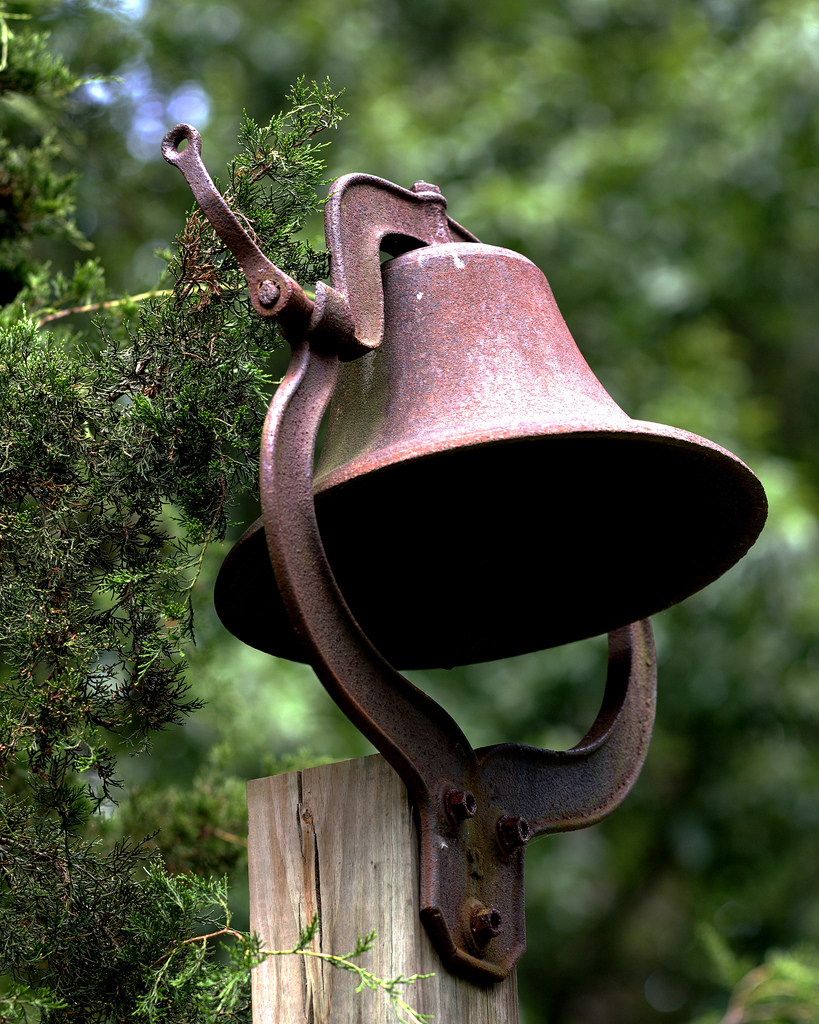
A couple borrowed from PSquared63 (with permission) ... shot with something of the "Red Dot" persuasion, iirc.
And one of my test shots from the M645 150/2.8 A


Edited on Mar 05, 2016 at 08:39 PM · View previous versions
And one of my test shots from the M645 150/2.8 A
Edited on Mar 05, 2016 at 08:39 PM · View previous versions
Mar 05, 2016 at 07:59 PM
p.13 #15The mystery of the Zeiss look?
as do others. lots of outstanding modern lenses when used properly perform.
lens: Sigma 17-70/2.8-4


Edited on Mar 05, 2016 at 09:16 PM · View previous versions
lens: Sigma 17-70/2.8-4
Edited on Mar 05, 2016 at 09:16 PM · View previous versions
Mar 05, 2016 at 07:59 PM
p.13 #16The mystery of the Zeiss look?
Here's how to get the "Magical Zeiss" look without shooting Zeiss. Shoot top notch glass from at least half dozen manufacturers out there, find nice light, and be sure to do a great job post processing the files.
Do all things above and you can make a $50 lens look better than a $5000 lens. Of course its lot easier to buy a $5000 lens and talk about having a magical look.
Do all things above and you can make a $50 lens look better than a $5000 lens. Of course its lot easier to buy a $5000 lens and talk about having a magical look.
Mar 05, 2016 at 08:18 PM
p.13 #17The mystery of the Zeiss look?
Josef Isayo wrote:
Here's how to get the "Magical Zeiss" look without shooting Zeiss. Shoot top notch glass from at least half dozen manufacturers out there, find nice light, and be sure to do a great job post processing the files.
Do all things above and you can make a $50 lens look better than a $5000 lens. Of course its lot easier to buy a $5000 lens and talk about having a magical look.
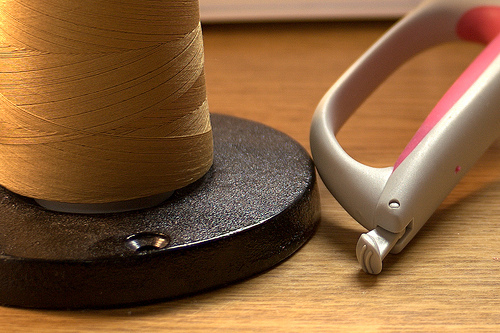
While there may be a micro-nugget of exaggerated, semi-truth in that ... what $50 lens would you recommend to take on such a $5,000 lens to produce such a look?
The Oly 28/3.5 is about as close as I've seen to qualifying as a $50 lens that I could put some 3D-ishness into with PP. Maybe about a 2.8-ish would be a better assessment. But, I tend to think there are a few other reasons for buying a $5,000 lens over a $50 lens (i.e. much faster, and much better corrected @ much faster). And of course, there are plenty of non-$5,000 lens options that come from the Zeiss camp and still produce as noted.
If we want to get into "bang / buck" territory, well ... that's a whole 'nother matter. Actually, I've spent far more on my Canon glass than I have on my Zeiss glass ... and yet, my Canon glass doesn't produce the "Zeiss look". So, $$$ really isn't the point ... it is lens design yields different drawing styles and different levels of correction. Laws of diminishing returns / escalating costs apply as you start chasing optical correction of the highest magnitude (i.e. Coastal Optics, etc.).
So, to suggest that a $50 lens can simply be PP'd to the level of a $5,000 lens ... well, apparently nobody bothered to tell those who make / buy $5,000 lenses.
Edited on Mar 05, 2016 at 08:57 PM · View previous versions
Here's how to get the "Magical Zeiss" look without shooting Zeiss. Shoot top notch glass from at least half dozen manufacturers out there, find nice light, and be sure to do a great job post processing the files.
Do all things above and you can make a $50 lens look better than a $5000 lens. Of course its lot easier to buy a $5000 lens and talk about having a magical look.
While there may be a micro-nugget of exaggerated, semi-truth in that ... what $50 lens would you recommend to take on such a $5,000 lens to produce such a look?
The Oly 28/3.5 is about as close as I've seen to qualifying as a $50 lens that I could put some 3D-ishness into with PP. Maybe about a 2.8-ish would be a better assessment. But, I tend to think there are a few other reasons for buying a $5,000 lens over a $50 lens (i.e. much faster, and much better corrected @ much faster). And of course, there are plenty of non-$5,000 lens options that come from the Zeiss camp and still produce as noted.
If we want to get into "bang / buck" territory, well ... that's a whole 'nother matter. Actually, I've spent far more on my Canon glass than I have on my Zeiss glass ... and yet, my Canon glass doesn't produce the "Zeiss look". So, $$$ really isn't the point ... it is lens design yields different drawing styles and different levels of correction. Laws of diminishing returns / escalating costs apply as you start chasing optical correction of the highest magnitude (i.e. Coastal Optics, etc.).
So, to suggest that a $50 lens can simply be PP'd to the level of a $5,000 lens ... well, apparently nobody bothered to tell those who make / buy $5,000 lenses.
Edited on Mar 05, 2016 at 08:57 PM · View previous versions
Mar 05, 2016 at 08:29 PM
p.13 #18The mystery of the Zeiss look?
Josef Isayo wrote:
Here's how to get the "Magical Zeiss" look without shooting Zeiss. Shoot top notch glass from at least half dozen manufacturers out there, find nice light, and be sure to do a great job post processing the files.
Do all things above and you can make a $50 lens look better than a $5000 lens. Of course its lot easier to buy a $5000 lens and talk about having a magical look.
I see you picked up the Canon 200 f2 lens ( $5699.00 at B&H ). Is this your $50 lens you are talking about.
Sounds very hypocritical to me. What look are you after that the nifty fifty with some PS can't produce.
Yeh...shoe on the other foot huh?
Mar 05, 2016 at 08:44 PM
p.13 #19The mystery of the Zeiss look?
freaklikeme wrote:
Though it does make me wonder, if you have no interest in the gear, why are you hanging out in the gear forums?
I addressed that misconception ("you have no interest in gear") in an earlier reply in this thread, so I won't repost it.
Dan
Though it does make me wonder, if you have no interest in the gear, why are you hanging out in the gear forums?
I addressed that misconception ("you have no interest in gear") in an earlier reply in this thread, so I won't repost it.
Dan
Mar 05, 2016 at 09:15 PM
p.13 #20The mystery of the Zeiss look?
When Jack London had his portrait made by the noted San Francisco photographer Arnold Genthe, London began the encounter with effusive praise for the photographic art of his friend and fellow bohemian, Genthe. "you must have a wonderful camera...It must be the best camera in the world...You must show me your camera." Genthe then used his standard studio camera to make what has since become a classic picture of Jack London. When the sitting was finished, Genthe could not contain himself: "I have read your books, Jack, and I think they are important works of art. You must have a wonderful typewriter." - Anonymous
Mar 05, 2016 at 09:47 PM