This topic is in the 2016 archive. You can read it and like its posts here. It is read only.
Archive 2016The mystery of the Zeiss look?

p.14 #1The mystery of the Zeiss look?
jancohen wrote:
You must have a wonderful typewriter." - Anonymous
And a wonderful stash of "correction tape".
You must have a wonderful typewriter." - Anonymous
And a wonderful stash of "correction tape".
Mar 05, 2016 at 10:03 PM
p.14 #2The mystery of the Zeiss look?
RustyBug wrote:
And a wonderful stash of "correction tape".

jancohen wrote
You must have a wonderful typewriter." - Anonymous Mar 05, 2016 at 10:10 PM
p.14 #3The mystery of the Zeiss look?
The Zeiss look, *to me*, is a particular balance of sharpness, contrast / micro contrast, clarity, colours and bokeh rendering. The differentiating factor of this look to me is micro contrast.
Micro contrast is just a characteristic. It can be desirable in some situations, and can be detrimental in others. It's not magic pixie dust. Altering the amount of micro contrast may impact other elements of the image, positively or negatively.
I think the term Zeiss look is very subjective, but can be helpful in describing a particular look, nothing else. In the alt forum at least, it is part of the forum vocabulary. Non Zeiss lenses can also have this look, some more so than some Zeiss lenses.
Here are some examples of what I think the Zeiss look may look like (from dubaiphil, with 35 ZE / ZF):
https://500px.com/photo/15133355/pakistani-porter-by-phil-page?ctx_page=1&from=user&user_id=503229
https://500px.com/photo/6237234/the-haggle-by-phil-page?ctx_page=2&from=user&user_id=503229
https://500px.com/photo/45834446/stall-owner-deira-by-phil-page?ctx_page=1&from=user&user_id=503229
https://500px.com/photo/45834434/ghost-in-the-souk-by-phil-page?ctx_page=1&from=user&user_id=503229
https://500px.com/photo/14502589/onion-seller-by-phil-page?ctx_page=1&from=user&user_id=503229
Mar 05, 2016 at 11:32 PM
p.14 #4The mystery of the Zeiss look?
I do believe that certain lenses render light in a more pleasing and dimensional way, but first and foremost the all important factor is quality of light. Once you have beautiful light, then we can compare the rendering of the lens. Most people try to compare lenses in boring lighting, and thus no 3D effect is observed.
Mar 05, 2016 at 11:53 PM
p.14 #5The mystery of the Zeiss look?
chez wrote:
This is why solid empirical studies matter - they give us a good sample size to even out such effects across a large number of observations, sufficiently large to enable statistical validity to be inferred.
Luka (denoir) did just such a study here, to verify that a large proportion of viewers could identify Zeiss lenses from near equivalent Canon lenses. Empirical data is never enough to dispel the feedback each person may experience from their own vision ('seeing is believing' right?) but these two factors - individual variability and study results - might give people cause to reflect.
It's a personal view, but it seems a reasonable expectation that people with long exposure to situations requiring excellent depth perception are more likely to see the presence or absence of cues in images that indicate depth or three dimensionality than those without such experience.Well said Philip. Our perception of things in life change as we get more experience with them. The subtle flavours of different wines is an acquired taste that many just don't posses...yet it is very real. Many people will just guzzle their wine while others will swish it around their mouth and tongue to experience the sensations. If I did not have an aquired taste for wines, I might think people were nuts with the way they drank wine. I believe this is the same issue we have with being able to see the minute differences in the way lenses render. It's an learned and acquired talent that many just either don't take the time to acquire or maybe people's perception differs enough such that some just cannot see these features of different lenses.
In the end, it really should not matter if one can make out subtle differences between fine wines or fine lenses...everyone should pick whatever wine or lens that makes them happy and not really care about what others use and why they use them. I find the constant lecturing on people justifying their purchase by seeing the Zeiss 3d pop, getting a little old and pushing towards childish banter.And you forgot to mention the change that comes with getting older and losing acuity of vision. It seems as we become more WISE we also lose our hearing and eyesight... I wonder what that means?  Hey I use that loss of hearing to "selectively" not hear my wife at times...especially when my Doberman pup and I are watching hockey.
Yes, but… I believe most men refine that particular skill LONG before their hearing is diminished in reality…
CGrindahl wrote
chez wrote
philip_pj wrote
for henry - it rarely gets discussed but it is a reasonable case that humans vary widely in many critical aspects of vision, as we see resulting from many factors such as diet, experience, health, lifestyle and demographics. So much so that many individuals at one end of the distribution struggle to see (figuratively or literally) what those at the other end are talking about.This is why solid empirical studies matter - they give us a good sample size to even out such effects across a large number of observations, sufficiently large to enable statistical validity to be inferred.
Luka (denoir) did just such a study here, to verify that a large proportion of viewers could identify Zeiss lenses from near equivalent Canon lenses. Empirical data is never enough to dispel the feedback each person may experience from their own vision ('seeing is believing' right?) but these two factors - individual variability and study results - might give people cause to reflect.
It's a personal view, but it seems a reasonable expectation that people with long exposure to situations requiring excellent depth perception are more likely to see the presence or absence of cues in images that indicate depth or three dimensionality than those without such experience.
In the end, it really should not matter if one can make out subtle differences between fine wines or fine lenses...everyone should pick whatever wine or lens that makes them happy and not really care about what others use and why they use them. I find the constant lecturing on people justifying their purchase by seeing the Zeiss 3d pop, getting a little old and pushing towards childish banter.
I wonder what that means? Yes, but… I believe most men refine that particular skill LONG before their hearing is diminished in reality…
Mar 06, 2016 at 12:22 AM
p.14 #6The mystery of the Zeiss look?
DavidBM wrote:
Personally I choose to use vintage lenses on my cameras. I choose to use these because of their small size, low weight, 52mm filter size and low cost. All these elements combined allow me to bring two cameras and 3-4 lenses in a small bag. When cherry picking your lenses these vintage lenses can be as sharp as (or sharper then) modern glass, but due to the low count of glass elements abberations are more obvious.
Most of todays "plastic fantastic" Nikon f1,8 AF-S G lenses do nothing for me. I can imagine they are a blessing for pros because they are light, well corrected, predictable and optically excellent. Some of todays lenses that do tickle my fancy are the Meyer Optik Goerlitz lenses recently released, some of the Cosina Voigtlander lenses and Nikons current 300mm f2,8 prime.
 Be careful not to confuse you own perfectly sensible views with the BS in that article.
Want to use classic optics because they are pretty good and cheap? Perfectly sensible.
Don't really mind certain aberrations, and in fact sometimes like them? Fine, that's a matter of taste, and sometimes I do to.
Corner sharpness wide open overrated, and results in lenses much bigger than they need be in some modern optics? Probably so for some applications. Sometimes (astro) I really care about corner sharpness wide open, but an otherwise no compromise lens stopped down with killer central sharpness wide open and crap corners...Show more →
Good point. I noticed that for a few photos in that article the 85mm f1,8 AF-D was used, and I did own that lens but sold it because I could not like the way it rendered double lines and very busy backgrounds on medium distances. The older 85mm f1,8 Nikkor-H pre-Ai lens does better in that regard in that it renders a nice swirly background, but the 85mm f1,8 Af-S Nikkor does better alltogether when it comes to backgrounds. Of course it renders heavy magenta/green CA's in front of/behind the focal plane wide open, the AF-D lens focuses faster, but optically both the older non-Ai and the newer AF-S are better lenses optically.
I guess it's a matter of cherry picking the right tools for the kind of photography you like.
As for a comparison of a $50 vs a $5000 lens, why not try the $50 200mm f4 Nikkor-Q vs the $5000 200mm f2 AF-S Nikkor, both at f4. I bet the AF-S lens focuses faster, but for the size and weight I do think the f4 lens does pretty well.
 DSC_9458 by b j, on Flickr
the solitaire wrote
I find the write-up interesting, refreshing and above all an appeal to common sense to stop overrating corner sharpness in lenses used at wide open Aperture.Personally I choose to use vintage lenses on my cameras. I choose to use these because of their small size, low weight, 52mm filter size and low cost. All these elements combined allow me to bring two cameras and 3-4 lenses in a small bag. When cherry picking your lenses these vintage lenses can be as sharp as (or sharper then) modern glass, but due to the low count of glass elements abberations are more obvious.
Most of todays "plastic fantastic" Nikon f1,8 AF-S G lenses do nothing for me. I can imagine they are a blessing for pros because they are light, well corrected, predictable and optically excellent. Some of todays lenses that do tickle my fancy are the Meyer Optik Goerlitz lenses recently released, some of the Cosina Voigtlander lenses and Nikons current 300mm f2,8 prime.
Want to use classic optics because they are pretty good and cheap? Perfectly sensible.
Don't really mind certain aberrations, and in fact sometimes like them? Fine, that's a matter of taste, and sometimes I do to.
Corner sharpness wide open overrated, and results in lenses much bigger than they need be in some modern optics? Probably so for some applications. Sometimes (astro) I really care about corner sharpness wide open, but an otherwise no compromise lens stopped down with killer central sharpness wide open and crap corners...Show more →
Good point. I noticed that for a few photos in that article the 85mm f1,8 AF-D was used, and I did own that lens but sold it because I could not like the way it rendered double lines and very busy backgrounds on medium distances. The older 85mm f1,8 Nikkor-H pre-Ai lens does better in that regard in that it renders a nice swirly background, but the 85mm f1,8 Af-S Nikkor does better alltogether when it comes to backgrounds. Of course it renders heavy magenta/green CA's in front of/behind the focal plane wide open, the AF-D lens focuses faster, but optically both the older non-Ai and the newer AF-S are better lenses optically.
I guess it's a matter of cherry picking the right tools for the kind of photography you like.
As for a comparison of a $50 vs a $5000 lens, why not try the $50 200mm f4 Nikkor-Q vs the $5000 200mm f2 AF-S Nikkor, both at f4. I bet the AF-S lens focuses faster, but for the size and weight I do think the f4 lens does pretty well.
DSC_9458 by b j, on FlickrMar 06, 2016 at 01:32 AM
p.14 #7The mystery of the Zeiss look?
the solitaire wrote:
As for a comparison of a $50 vs a $5000 lens, why not try the $50 200mm f4 Nikkor-Q vs the $5000 200mm f2 AF-S Nikkor, both at f4. I bet the AF-S lens focuses faster, but for the size and weight I do think the f4 lens does pretty well.
I wonder how they compare @ f/2 or f/2.8
+100 @ cherry picking your tools to what you like. Imo, lenses are to photographers as brushes are to painters. They afford us a diverse way of applying our light to our canvas ... complete with all the varying attributes of drawing styles. For some, the nuance of drawing style in lenses is the holy grail, while for others it is inconsequential.
Some painters rely on a single brush, while others have a cadre to choose from, intimately knowing the difference among their tools. Does it matter whether you use one brush or twenty brushes, a $50 lens or a $5,000 lens, a Zeiss or an Olympus, micro-contrast or not so much ... it's your tool, it's your call. How we get to our desired end product is up to us @ your pic, your call.

Edited on Mar 06, 2016 at 08:30 AM · View previous versions
As for a comparison of a $50 vs a $5000 lens, why not try the $50 200mm f4 Nikkor-Q vs the $5000 200mm f2 AF-S Nikkor, both at f4. I bet the AF-S lens focuses faster, but for the size and weight I do think the f4 lens does pretty well.
I wonder how they compare @ f/2 or f/2.8
+100 @ cherry picking your tools to what you like. Imo, lenses are to photographers as brushes are to painters. They afford us a diverse way of applying our light to our canvas ... complete with all the varying attributes of drawing styles. For some, the nuance of drawing style in lenses is the holy grail, while for others it is inconsequential.
Some painters rely on a single brush, while others have a cadre to choose from, intimately knowing the difference among their tools. Does it matter whether you use one brush or twenty brushes, a $50 lens or a $5,000 lens, a Zeiss or an Olympus, micro-contrast or not so much ... it's your tool, it's your call. How we get to our desired end product is up to us @ your pic, your call.
Edited on Mar 06, 2016 at 08:30 AM · View previous versions
Mar 06, 2016 at 08:16 AM
p.14 #8The mystery of the Zeiss look?
RustyBug wrote:
I wonder how they compare @ f/2 or f/2.8
They don't, but I wonder how often I will use the 200 f2 vs. the 200 f4, or better said, how many photos I can make with the 200 f4 before I can finally afford a 200 f2
the solitaire wrote
As for a comparison of a $50 vs a $5000 lens, why not try the $50 200mm f4 Nikkor-Q vs the $5000 200mm f2 AF-S Nikkor, both at f4. I bet the AF-S lens focuses faster, but for the size and weight I do think the f4 lens does pretty well.They don't, but I wonder how often I will use the 200 f2 vs. the 200 f4, or better said, how many photos I can make with the 200 f4 before I can finally afford a 200 f2
Mar 06, 2016 at 08:23 AM
p.14 #9The mystery of the Zeiss look?
SKumar25 wrote:
The Zeiss look, *to me*, is a particular balance of sharpness, contrast / micro contrast, clarity, colours and bokeh rendering. The differentiating factor of this look to me is micro contrast.
Micro contrast is just a characteristic. It can be desirable in some situations, and can be detrimental in others. It's not magic pixie dust. Altering the amount of micro contrast may impact other elements of the image, positively or negatively.
I think the term Zeiss look is very subjective, but can be helpful in describing a particular look, nothing else. In the alt forum at least, it is part of...Show more →
Okay, now please explain what I'm looking at. I'm not being a smart ass, just trying to understand.
Mar 06, 2016 at 08:34 AM
p.14 #10The mystery of the Zeiss look?
henry albert wrote:
Okay, now please explain what I'm looking at. I'm not being a smart ass, just trying to understand.
Well Henry, Duh!
It's like the Harley thing. If you have to ask, you wouldn't understand!
Okay, now please explain what I'm looking at. I'm not being a smart ass, just trying to understand.
Well Henry, Duh!
It's like the Harley thing. If you have to ask, you wouldn't understand!
Mar 06, 2016 at 08:36 AM
p.14 #11The mystery of the Zeiss look?
the solitaire wrote:
I wonder how they compare @ f/2 or f/2.8 They don't, but I wonder how often I will use the 200 f2 vs. the 200 f4, or better said, how many photos I can make with the 200 f4 before I can finally afford a 200 f2
I understand ... but if you wouldn't use it anyway (size / weight @ application), or simply it is a $$$ issue, then it really isn't a question of being able to produce the same end product as the $5,000 lens, now is it? I mean, if we're gonna say that we can use a $50 lens to produce the same end product as a $5,000 lens ... ummm, shifting gears to economics, when it can't produce the same end product is kinda
I get bang / buck glass ... I've got some sweet ones too. But, I'm not gonna try and say that my Oly is on par with an Otus and then argue bang / buck when someone points out that it can't handle flare as well, or it can't get to 1.4 and remain well corrected. Case in point, my Oly 24/2.8 (a very good lens) cost a pittance compared to my Canon 24L TS-E, but it just isn't in the same league in regards to being better corrected. Gee, I wonder it the 65 pounds of extra glass (which means extra $$$) has anything to do with that (ummm f/4 vs. f/2) ? Sure, I shot the Oly 24 until I could afford the TS-E and it served me well.
But, somehow I haven't shot the Oly 24 any (other than test shots for comparison @ how close the Oly could get) since then. BTW, it isn't the TS part that I like so much about the TS-E, it is the quality of the image I get from shooting it "straight", particularly @ how it transitions. Once you find a lens (tool, motorcycle, camera, etc.) that delivers what you want it to deliver ... you tend to not go back to something that doesn't deliver it the same. For those who like what a given lens (Zeiss, Nikon or otherwise) delivers, they tend to stick by it ... pretty simple, really.
You don't see it, don't like it, or don't want it ... then don't get it.
Your pic, your tools, your money ... your call.
Edited on Mar 06, 2016 at 09:03 AM · View previous versions
RustyBug wrote
the solitaire wrote
As for a comparison of a $50 vs a $5000 lens, why not try the $50 200mm f4 Nikkor-Q vs the $5000 200mm f2 AF-S Nikkor, both at f4. I bet the AF-S lens focuses faster, but for the size and weight I do think the f4 lens does pretty well.I understand ... but if you wouldn't use it anyway (size / weight @ application), or simply it is a $$$ issue, then it really isn't a question of being able to produce the same end product as the $5,000 lens, now is it? I mean, if we're gonna say that we can use a $50 lens to produce the same end product as a $5,000 lens ... ummm, shifting gears to economics, when it can't produce the same end product is kinda
I get bang / buck glass ... I've got some sweet ones too. But, I'm not gonna try and say that my Oly is on par with an Otus and then argue bang / buck when someone points out that it can't handle flare as well, or it can't get to 1.4 and remain well corrected. Case in point, my Oly 24/2.8 (a very good lens) cost a pittance compared to my Canon 24L TS-E, but it just isn't in the same league in regards to being better corrected. Gee, I wonder it the 65 pounds of extra glass (which means extra $$$) has anything to do with that (ummm f/4 vs. f/2) ? Sure, I shot the Oly 24 until I could afford the TS-E and it served me well.
But, somehow I haven't shot the Oly 24 any (other than test shots for comparison @ how close the Oly could get) since then. BTW, it isn't the TS part that I like so much about the TS-E, it is the quality of the image I get from shooting it "straight", particularly @ how it transitions. Once you find a lens (tool, motorcycle, camera, etc.) that delivers what you want it to deliver ... you tend to not go back to something that doesn't deliver it the same. For those who like what a given lens (Zeiss, Nikon or otherwise) delivers, they tend to stick by it ... pretty simple, really.
You don't see it, don't like it, or don't want it ... then don't get it.
Your pic, your tools, your money ... your call.
Edited on Mar 06, 2016 at 09:03 AM · View previous versions
Mar 06, 2016 at 08:37 AM
p.14 #12The mystery of the Zeiss look?
uhoh7 wrote:
Deconstruction of the biogon's "Zeiss Look" with Kolari A7 and Hawks close focus M adapter:
https://farm2.staticflickr.com/1592/25447089491_8c5df0e1b6_b.jpg
elle by unoh7, ZM 35/2 WO
note huge DOF in the googles
Please explain.
Deconstruction of the biogon's "Zeiss Look" with Kolari A7 and Hawks close focus M adapter:
https://farm2.staticflickr.com/1592/25447089491_8c5df0e1b6_b.jpg
elle by unoh7, ZM 35/2 WO
note huge DOF in the googles
Please explain.
Mar 06, 2016 at 08:39 AM
p.14 #13The mystery of the Zeiss look?
CGrindahl wrote:
This is why solid empirical studies matter - they give us a good sample size to even out such effects across a large number of observations, sufficiently large to enable statistical validity to be inferred.
Luka (denoir) did just such a study here, to verify that a large proportion of viewers could identify Zeiss lenses from near equivalent Canon lenses. Empirical data is never enough to dispel the feedback each person may experience from their own vision ('seeing is believing' right?) but these two factors - individual variability and study results - might give people cause to reflect.
It's a personal view, but it seems a reasonable expectation that people with long exposure to situations requiring excellent depth perception are more likely to see the presence or absence of cues in images that indicate depth or three dimensionality than those without such experience.Well said Philip. Our perception of things in life change as we get more experience with them. The subtle flavours of different wines is an acquired taste that many just don't posses...yet it is very real. Many people will just guzzle their wine while others will swish it around their mouth and tongue to experience the sensations. If I did not have an aquired taste for wines, I might think people were nuts with the way they drank wine. I believe this is the same issue we have with being able to see the minute differences in the way lenses render. It's an learned and acquired talent that many just either don't take the time to acquire or maybe people's perception differs enough such that some just cannot see these features of different lenses.
In the end, it really should not matter if one can make out subtle differences between fine wines or fine lenses...everyone should pick whatever wine or lens that makes them happy and not really care about what others use and why they use them. I find the constant lecturing on people justifying their purchase by seeing the Zeiss 3d pop, getting a little old and pushing towards childish banter.And you forgot to mention the change that comes with getting older and losing acuity of vision. It seems as we become more WISE we also lose our hearing and eyesight... I wonder what that means? Hey I use that loss of hearing to "selectively" not hear my wife at times...especially when my Doberman pup and I are watching hockey.
Yes, but… I believe most men refine that particular skill LONG before their hearing is diminished in reality…
But it doesn't hurt to have a valid excuse to fall back on.
chez wrote
CGrindahl wrote
chez wrote
philip_pj wrote
for henry - it rarely gets discussed but it is a reasonable case that humans vary widely in many critical aspects of vision, as we see resulting from many factors such as diet, experience, health, lifestyle and demographics. So much so that many individuals at one end of the distribution struggle to see (figuratively or literally) what those at the other end are talking about.This is why solid empirical studies matter - they give us a good sample size to even out such effects across a large number of observations, sufficiently large to enable statistical validity to be inferred.
Luka (denoir) did just such a study here, to verify that a large proportion of viewers could identify Zeiss lenses from near equivalent Canon lenses. Empirical data is never enough to dispel the feedback each person may experience from their own vision ('seeing is believing' right?) but these two factors - individual variability and study results - might give people cause to reflect.
It's a personal view, but it seems a reasonable expectation that people with long exposure to situations requiring excellent depth perception are more likely to see the presence or absence of cues in images that indicate depth or three dimensionality than those without such experience.
In the end, it really should not matter if one can make out subtle differences between fine wines or fine lenses...everyone should pick whatever wine or lens that makes them happy and not really care about what others use and why they use them. I find the constant lecturing on people justifying their purchase by seeing the Zeiss 3d pop, getting a little old and pushing towards childish banter.
I wonder what that means? But it doesn't hurt to have a valid excuse to fall back on.
Mar 06, 2016 at 08:54 AM
p.14 #14The mystery of the Zeiss look?
RustyBug wrote:
I wonder how they compare @ f/2 or f/2.8
+100 @ cherry picking your tools to what you like. Imo, lenses are to photographers as brushes are to painters. They afford us a diverse way of applying our light to our canvas ... complete with all the varying attributes of drawing styles. For some, the nuance of drawing style in lenses is the holy grail, while for others it is inconsequential.
Some painters rely on a single brush, while others have a cadre to choose from, intimately knowing the difference among their tools. Does it matter whether you use one...Show more →
Bang on Rusty...why do people care so much what tools others use?
the solitaire wrote
As for a comparison of a $50 vs a $5000 lens, why not try the $50 200mm f4 Nikkor-Q vs the $5000 200mm f2 AF-S Nikkor, both at f4. I bet the AF-S lens focuses faster, but for the size and weight I do think the f4 lens does pretty well.+100 @ cherry picking your tools to what you like. Imo, lenses are to photographers as brushes are to painters. They afford us a diverse way of applying our light to our canvas ... complete with all the varying attributes of drawing styles. For some, the nuance of drawing style in lenses is the holy grail, while for others it is inconsequential.
Some painters rely on a single brush, while others have a cadre to choose from, intimately knowing the difference among their tools. Does it matter whether you use one...Show more →
Bang on Rusty...why do people care so much what tools others use?
Mar 06, 2016 at 08:59 AM
p.14 #15The mystery of the Zeiss look?
aren't there enough "holy wars" going on in this world?
Mar 06, 2016 at 09:26 AM
p.14 #16The mystery of the Zeiss look?
henry albert wrote:
https://farm2.staticflickr.com/1592/25447089491_8c5df0e1b6_b.jpg
elle by unoh7, ZM 35/2 WO
note huge DOF in the googlesPlease explain.
Personally, I like the shot, but you can see the unruly bokeh, which may horrify some. The "zeiss look" of the biogon is made extreme in the shot, but certainly it has not lost it's sharpness, seen best on the skier's lips. The google lens is also more or less in focus, and the large apparent DOF in that plastic lens is in stark contrast to the small DOF of the shot in general.
Bottomline, by F/4 it's one of the top 4 lenses which can mount on a Leica M, and for landscape, one of the top two. As soon as the M9 was released this became the only lens of many shooters.
It is terrible on a stock Sony A7x, worse than the 28 cron, I don't know why, and the E mount version, which is better on the edges by far, lacks the top shelf punch of the M biogon.
jancohen wrote:
When Jack London had his portrait made by the noted San Francisco photographer Arnold Genthe, London began the encounter with effusive praise for the photographic art of his friend and fellow bohemian, Genthe. "you must have a wonderful camera...It must be the best camera in the world...You must show me your camera." Genthe then used his standard studio camera to make what has since become a classic picture of Jack London. When the sitting was finished, Genthe could not contain himself: "I have read your books, Jack, and I think they are important works of art. You must have a...Show more →
Great line but poor metaphor. Obviously most of the world think a cell phone camera is fine, and we know great shots are made with them.
A better metaphor would be to consider the huge gamut of mediums in art that can go on a wall.
The most famous 35mm photography in history, whose work looks great today, HCB, shot 90% at F/8, where the Leiss and Leica "looks" are no longer easily defined by various aberrations, and color signature starts to dominate.
But lenses will have unique looks at F8 and you are not going to make them true in post with any lens. My favorite personal lens at f/8 is the 28 cron:

Guest Cottages by unoh7, on Flickr
Edited on Mar 06, 2016 at 11:05 AM · View previous versions
uhoh7 wrote
Deconstruction of the biogon's "Zeiss Look" with Kolari A7 and Hawks close focus M adapter:https://farm2.staticflickr.com/1592/25447089491_8c5df0e1b6_b.jpg
elle by unoh7, ZM 35/2 WO
note huge DOF in the googles
Personally, I like the shot, but you can see the unruly bokeh, which may horrify some. The "zeiss look" of the biogon is made extreme in the shot, but certainly it has not lost it's sharpness, seen best on the skier's lips. The google lens is also more or less in focus, and the large apparent DOF in that plastic lens is in stark contrast to the small DOF of the shot in general.
Bottomline, by F/4 it's one of the top 4 lenses which can mount on a Leica M, and for landscape, one of the top two. As soon as the M9 was released this became the only lens of many shooters.
It is terrible on a stock Sony A7x, worse than the 28 cron, I don't know why, and the E mount version, which is better on the edges by far, lacks the top shelf punch of the M biogon.
jancohen wrote:
When Jack London had his portrait made by the noted San Francisco photographer Arnold Genthe, London began the encounter with effusive praise for the photographic art of his friend and fellow bohemian, Genthe. "you must have a wonderful camera...It must be the best camera in the world...You must show me your camera." Genthe then used his standard studio camera to make what has since become a classic picture of Jack London. When the sitting was finished, Genthe could not contain himself: "I have read your books, Jack, and I think they are important works of art. You must have a...Show more →
Great line but poor metaphor. Obviously most of the world think a cell phone camera is fine, and we know great shots are made with them.
A better metaphor would be to consider the huge gamut of mediums in art that can go on a wall.
The most famous 35mm photography in history, whose work looks great today, HCB, shot 90% at F/8, where the Leiss and Leica "looks" are no longer easily defined by various aberrations, and color signature starts to dominate.
But lenses will have unique looks at F8 and you are not going to make them true in post with any lens. My favorite personal lens at f/8 is the 28 cron:
Guest Cottages by unoh7, on Flickr
Edited on Mar 06, 2016 at 11:05 AM · View previous versions
Mar 06, 2016 at 10:48 AM
p.14 #17The mystery of the Zeiss look?
uhoh7 wrote:
https://farm2.staticflickr.com/1592/25447089491_8c5df0e1b6_b.jpg
elle by unoh7, ZM 35/2 WO
note huge DOF in the googlesPlease explain.Personally, I like the shot, but you can see the unruly bokeh, which may horrify some. The "zeiss look" of the biogon is made extreme in the shot, but certainly it has not lost it's sharpness, seen best on the skier's lips. The google lens is also more or less in focus, and the large apparent DOF in that plastic lens is in stark contrast to the small DOF of the shot in general.
Bottomline, by F/4 it's one of the top 4 lenses which can mount on a Leica M, and for landscape, one of the top two. As...Show more →
I vote we ban the term "zeiss-look" as hate speech. This thread is wacked. 10 minutes of my life wasted before I figured out it was a bottomless pit.
henry albert wrote
uhoh7 wrote
Deconstruction of the biogon's "Zeiss Look" with Kolari A7 and Hawks close focus M adapter:https://farm2.staticflickr.com/1592/25447089491_8c5df0e1b6_b.jpg
elle by unoh7, ZM 35/2 WO
note huge DOF in the googles
Bottomline, by F/4 it's one of the top 4 lenses which can mount on a Leica M, and for landscape, one of the top two. As...Show more →
I vote we ban the term "zeiss-look" as hate speech. This thread is wacked. 10 minutes of my life wasted before I figured out it was a bottomless pit.
Mar 06, 2016 at 11:03 AM
p.14 #18The mystery of the Zeiss look?
sjms wrote:
aren't there enough "holy wars" going on in this world?
Obviously . . . no!
aren't there enough "holy wars" going on in this world?
Obviously . . . no!
Mar 06, 2016 at 11:10 AM
p.14 #19The mystery of the Zeiss look?
gdsf2 wrote:
https://farm2.staticflickr.com/1592/25447089491_8c5df0e1b6_b.jpg
elle by unoh7, ZM 35/2 WO
note huge DOF in the googlesPlease explain.Personally, I like the shot, but you can see the unruly bokeh, which may horrify some. The "zeiss look" of the biogon is made extreme in the shot, but certainly it has not lost it's sharpness, seen best on the skier's lips. The google lens is also more or less in focus, and the large apparent DOF in that plastic lens is in stark contrast to the small DOF of the shot in general.
Bottomline, by F/4 it's one of the top 4 lenses which can mount on a Leica M, and for landscape, one of the top two. As soon as the M9 was released this became the only lens of many shooters.
It is terrible on a stock Sony A7x, worse than the 28 cron, I don't know why, and the E mount version, which is better on the edges by far, lacks the top shelf punch of the M biogon.I vote we ban the term "zeiss-look" as hate speech. This thread is wacked. 10 minutes of my life wasted before I figured out it was a bottomless pit.
Humans naturally make up stories to explain highly complex and often random events. You can't ban what's hard coded, and some would argue it's the whole key to civilization:
The power of widespread belief in fiction
Another from my favorite all around lens, stopped down:

cans by unoh7, 28 cron on M9
What look is that?
uhoh7 wrote
henry albert wrote
uhoh7 wrote
Deconstruction of the biogon's "Zeiss Look" with Kolari A7 and Hawks close focus M adapter:https://farm2.staticflickr.com/1592/25447089491_8c5df0e1b6_b.jpg
elle by unoh7, ZM 35/2 WO
note huge DOF in the googles
Bottomline, by F/4 it's one of the top 4 lenses which can mount on a Leica M, and for landscape, one of the top two. As soon as the M9 was released this became the only lens of many shooters.
It is terrible on a stock Sony A7x, worse than the 28 cron, I don't know why, and the E mount version, which is better on the edges by far, lacks the top shelf punch of the M biogon.
Humans naturally make up stories to explain highly complex and often random events. You can't ban what's hard coded, and some would argue it's the whole key to civilization:
The power of widespread belief in fiction
Another from my favorite all around lens, stopped down:
cans by unoh7, 28 cron on M9
What look is that?
Mar 06, 2016 at 11:15 AM
p.14 #20The mystery of the Zeiss look?
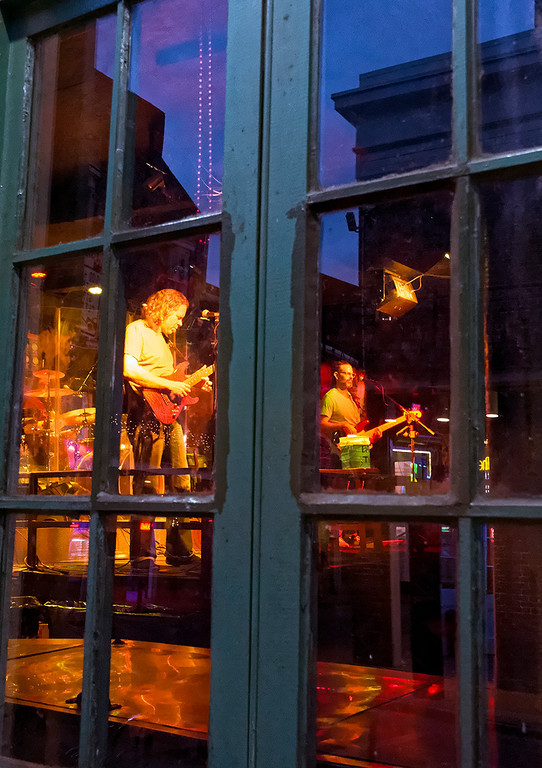
i personally like the reverse bokeh of the Nikon 16-80 with the excellent thru window effect.
Mar 06, 2016 at 11:41 AM