This topic is in the 2015 archive. You can read it and like its posts here. It is read only.
Archive 2015Zeiss Unveils the Loxia 21mm f/2.8
p.38 #1Zeiss Unveils the Loxia 21mm f/2.8
I like the 21 focal length too, and I have a 28mm lens I already like to use and that's part of the reason the Batis probably sees less use. I have other lenses with field curvature, and with those lenses I'm not so much concerned with focusing using the corners. I more go after focusing on the distant object that I want to remain in focus, and the field curvature often takes care of the foreground (and I stop down further if need be to get that depth of field.)
That's a bummer about the decentering, always one of my worst fears when buying a lens.
Jochenb wrote:
I agree Tim, but my biggest reason for already having sold the Batis is because the 21mm focal length is more to my taste than 25mm for landscape shooting. I was waiting for a smaller alternative than the big 21/2.8 ZE/ZF. The reactions were very good so I didn't really expect to be disappointed.
I'm just disappointed by the way the focus/field curvature shifts towards you at the edges when you stop the lens down (the mild decentering of my Loxia is not responsable for this). The Batis doesn't do this at all.
Guy, that's great. Getting a good copy...Show more →
Feb 13, 2016 at 11:34 AM
p.38 #2Zeiss Unveils the Loxia 21mm f/2.8
It almost seems like they got the characteristics the wrong way round. A flat field would be more useful on an mf 21/2.8 more likely to be used for landscape/architecture whereas you could put up with a bit of curvature of field in a fast af 25mm for social/pr/news stuff.
Gerry
Gerry
Feb 13, 2016 at 11:36 AM
p.38 #3Zeiss Unveils the Loxia 21mm f/2.8
I'll see what I can do...we're in the dead of winter here and there just isn't a lot of shooting opportunities for me. This tends to be the slowest time of the year from a photography perspective.
I'll see what I can come up with though. I wish it wasn't sub-arctic here this weekend.
-Tim
MIRANDA1 wrote:
tsdevine wrote
I almost never sell a lens I'm going to replace with another, before trying the new one first hand. I still have my 21 ZE for example. Pick about any lens and you'll find differing opinions from people here.At some point I'll try to compare the Loxia 21, ZE 21, FE 16-35, and Batis 25.....but I don't do the "hill overlooking a city" and shoot everything at infinity comparison, which I know gets some people bent out of shape. It's just not the shooting I normally do.
It's 0 degree Fahrenheit wind chills this weekend here, so I don't know when I'll have a chance to get out and shoot. It may be a few weeks.
-Tim
Feb 13, 2016 at 11:42 AM
p.38 #4Zeiss Unveils the Loxia 21mm f/2.8
GMPhotography wrote:
Actually I had thoughts of all three loxia lenses than for AF 24-70 2.8 and the 85 1.4. I would have 5 small lenses and two bazokas.
 Im sick just bought a Loxia 50. Honestly I love how these handle.
Actually I had thoughts of all three loxia lenses than for AF 24-70 2.8 and the 85 1.4. I would have 5 small lenses and two bazokas.
Im sick just bought a Loxia 50. Honestly I love how these handle. Feb 13, 2016 at 12:17 PM

p.38 #5Zeiss Unveils the Loxia 21mm f/2.8
Well, I've found one big weakness with the Loxia, though I guess it's the Loxia in combination with the A7 II. Into the sun...which is both a strength and a weakness. On the positive side, the sunstars are pretty sweet. On the down side, it illuminates the pixel wells around and reflects off the rear element to produce an enlarged green pixel grid flare radiating away from the center of the image. This is the first lens with which I've really seen sensor reflection with my A7II, and it's in every shot with the sun in the frame. I saw this in much smaller form in some night shots near a streetlight, but in broad daylight: wow....
http://www.jordansteele.com/2016/loxia_flare.jpg
Edited on Feb 13, 2016 at 12:26 PM · View previous versions
http://www.jordansteele.com/2016/loxia_flare.jpg
Edited on Feb 13, 2016 at 12:26 PM · View previous versions
Feb 13, 2016 at 12:18 PM
p.38 #6Zeiss Unveils the Loxia 21mm f/2.8
Jordan, I think this is more a function of the camera/sensor than the lens itself. I've seen some evidence with this and other lenses and it varies from shot to shot. I can't say I figured it out but I'm sure it's the thickness of the sensor cover or something of that sort. The original A7/A7r were far worse for showing these sensor reflections. It is much improved in the series II.
Feb 13, 2016 at 12:26 PM
p.38 #7Zeiss Unveils the Loxia 21mm f/2.8
Yeah, it's definitely a sensor reflection, but it's odd that it is SO much more visible with the Loxia than it is with my other lenses. I'm looking back through old shots, and I can see some small amount of it in a few shots with my 16-35, but I really have to pull down the area around the sun to see it, and even then it's nowhere near as prominent as it is here. I had to go looking for it with my other lenses.
Feb 13, 2016 at 12:28 PM
p.38 #8Zeiss Unveils the Loxia 21mm f/2.8
Jman13 wrote:
Yeah, it's definitely a sensor reflection, but it's odd that it is SO much more visible with the Loxia than it is with my other lenses. I'm looking back through old shots, and I can see some small amount of it in a few shots with my 16-35, but I really have to pull down the area around the sun to see it, and even then it's nowhere near as prominent as it is here. I had to go looking for it with my other lenses.
I have found a lot of variation even with shots using the same lens. We'll have to play more and see what we find.
Feb 13, 2016 at 12:29 PM
p.38 #9Zeiss Unveils the Loxia 21mm f/2.8
rji2goleez wrote:
Jordan, I think this is more a function of the camera/sensor than the lens itself. I've seen some evidence with this and other lenses and it varies from shot to shot. I can't say I figured it out but I'm sure it's the thickness of the sensor cover or something of that sort. The original A7/A7r were far worse for showing these sensor reflections. It is much improved in the series II.
Hi Bob,
I can't comment regarding the Loxia 21, but to the best of my knowledge, the A7 had much worse problems with reflections than the A7r. I know that the problem with the A7 was improved with the A7II and the A7rII cameras. They may also be better than the A7r.
As to my A7rM V3 sensor cover, I will be compaing reflections with Mike's A7rM V2 sensor cover when it gets a little warmer. We are not as cold as Minneapolis here in Allentown, but it is quite cold especially with the wind and chill factor.
Rich
Feb 13, 2016 at 12:32 PM
p.38 #10Zeiss Unveils the Loxia 21mm f/2.8
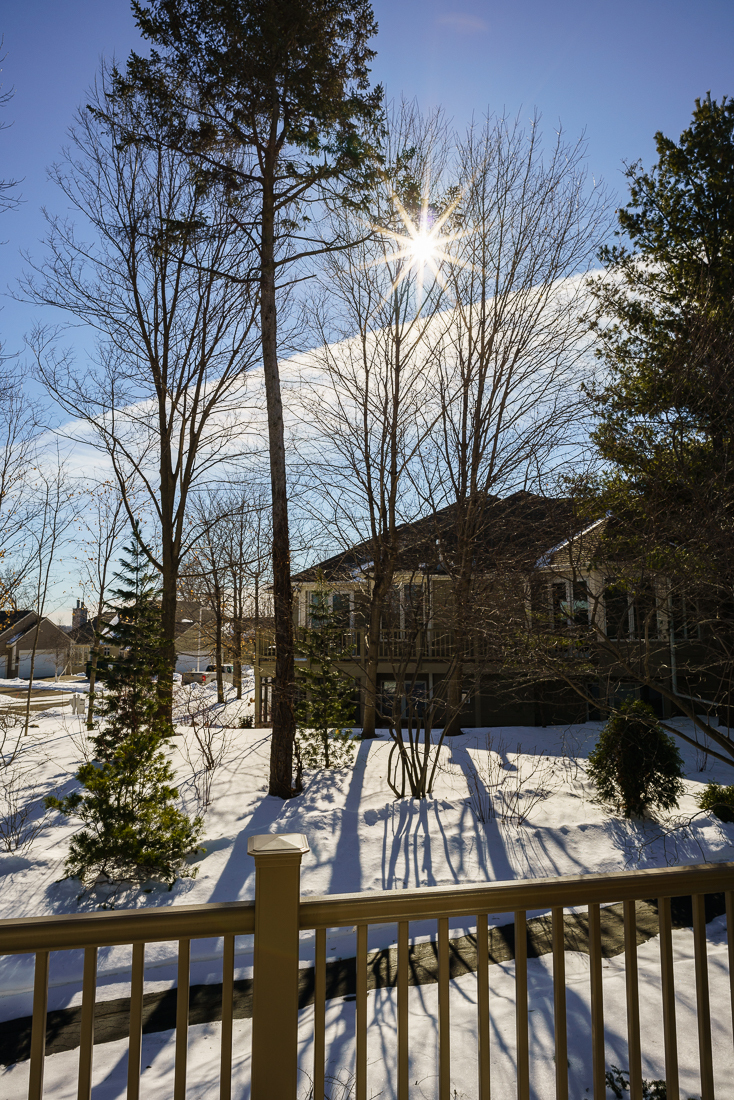
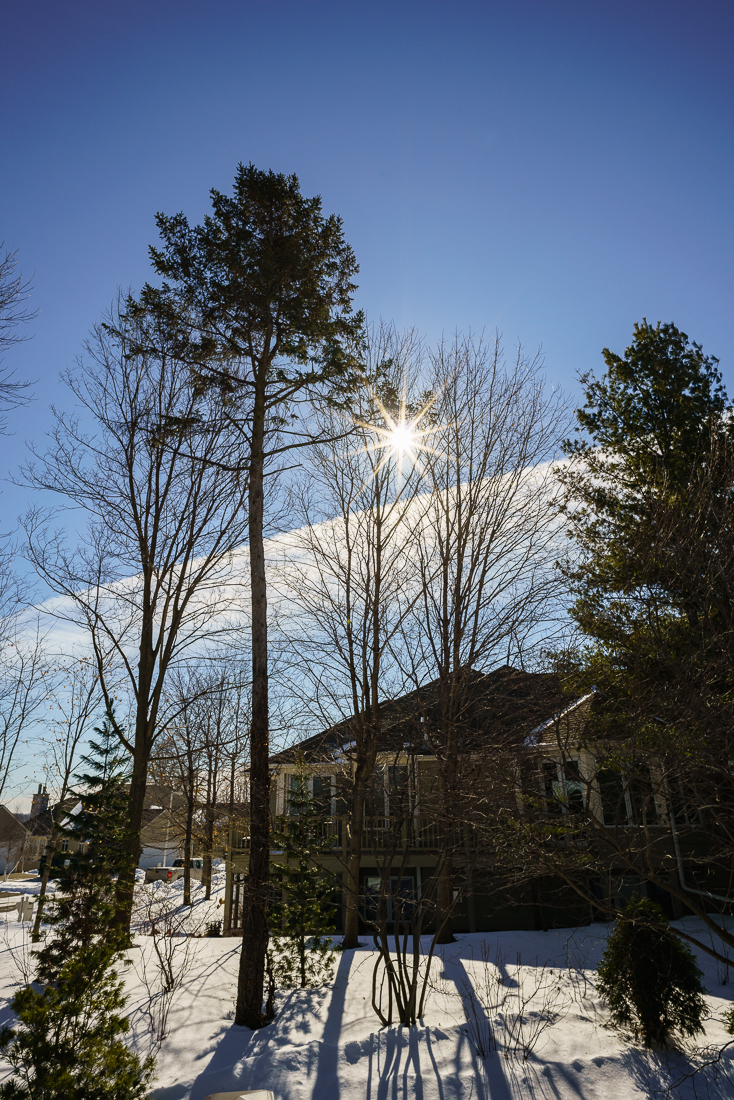
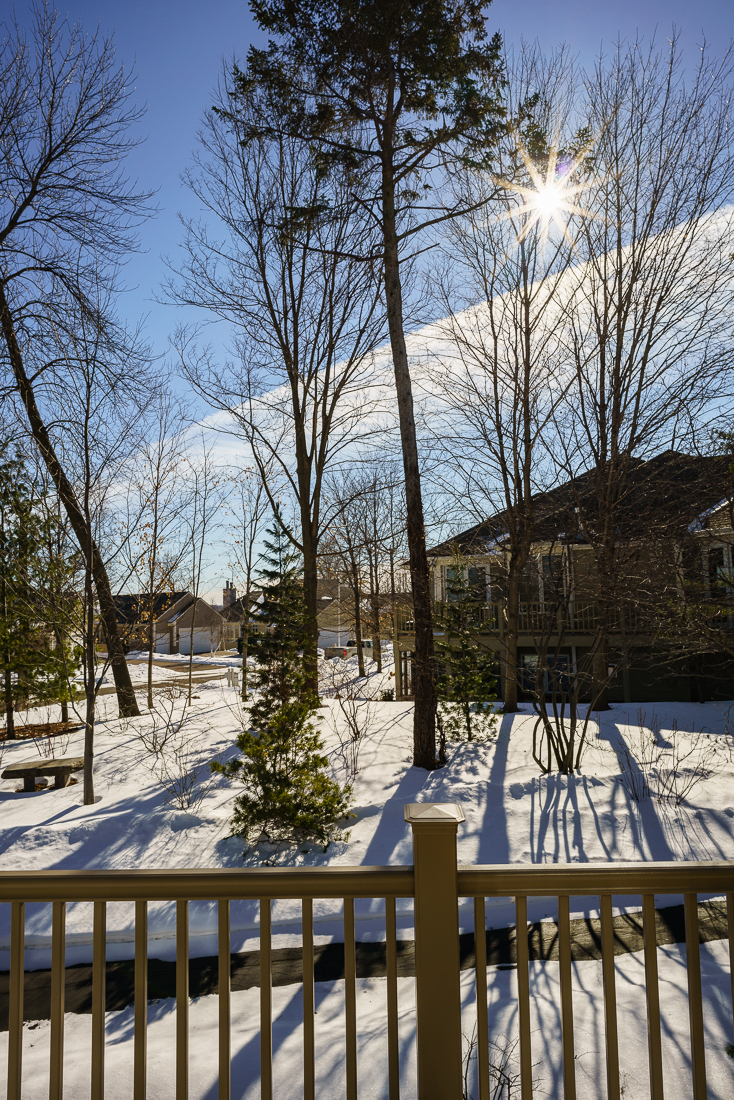
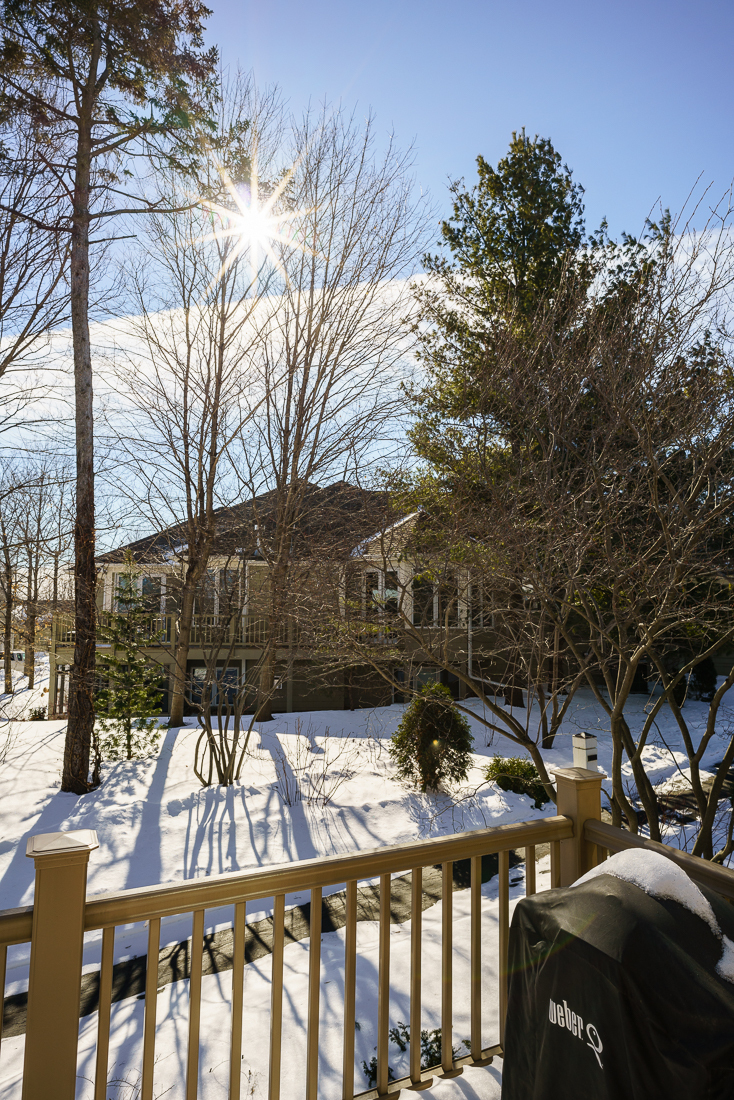
I took a couple of quick images putting the sun in a couple of different locations. I realize the trees are also there but I don't see as much reflection in these. It seems there's a bit more flare when the sun is closer to the corners but I'm not seeing sensor reflection here except for the last, some appears. All at f/8.
Feb 13, 2016 at 12:37 PM
p.38 #11Zeiss Unveils the Loxia 21mm f/2.8
rji2goleez wrote:
I took a couple of quick images putting the sun in a couple of different locations. I realize the trees are also there but I don't see as much reflection in these. It seems there's a bit more flare when the sun is closer to the corners but I'm not seeing sensor reflection here except for the last, some appears. All at f/8.
Hi Bob,
I may be seeing a little purple reflection in the 3rd image just to the left of the 2nd ray (near 2:00) from the top ray (which is near 1:00).
Rich
Edited on Feb 13, 2016 at 12:48 PM · View previous versions
Feb 13, 2016 at 12:42 PM
p.38 #12Zeiss Unveils the Loxia 21mm f/2.8
The third one definitely shows it. Going through my images, when the sun is alone in the frame with the Loxia 21, it is pretty bad. Most other lights are fine, but this image below shows it quite prominently on the streetlight to the left (and a little on the right most light). Other night shots have mostly looked fine. I wonder if it's somewhat a function of where you're focused too. In any case, I have seen it here far more prominently than with any of my other lenses, though in searching for it, I've found it in a few images (though much more subtle).
http://www.jordansteele.com/2016/columbus_winter_concrete.jpg
http://www.jordansteele.com/2016/columbus_winter_concrete.jpg
Feb 13, 2016 at 12:44 PM
p.38 #13Zeiss Unveils the Loxia 21mm f/2.8
May sound weird but I like the star look.
In the old days we would put window screen over the lens. Lol
In the old days we would put window screen over the lens. Lol
Feb 13, 2016 at 12:56 PM
p.38 #14Zeiss Unveils the Loxia 21mm f/2.8
It's not the stars that are a problem: it's the grid sensor reflection.
Feb 13, 2016 at 01:03 PM
p.38 #15Zeiss Unveils the Loxia 21mm f/2.8
Sensor reflections have probably been on every lens which I tested on the old A7 anyway 
so it's bad
so it's bad
Feb 13, 2016 at 01:32 PM
p.38 #16Zeiss Unveils the Loxia 21mm f/2.8
Would this grid pattern be easier to clone out than other reflection problems?
Feb 13, 2016 at 02:48 PM
p.38 #17Zeiss Unveils the Loxia 21mm f/2.8
Ronny Olsson wrote:
Sensor reflections have probably been on every lens which I tested on the old A7 anyway
so it's bad
Jordan is using the A7II, which was much improved for sensor reflections from the original A7.
Sensor reflections have probably been on every lens which I tested on the old A7 anyway
so it's bad
Jordan is using the A7II, which was much improved for sensor reflections from the original A7.
Feb 13, 2016 at 03:00 PM
p.38 #18Zeiss Unveils the Loxia 21mm f/2.8
I do not think A7II is much better than the original A7 when it comes to sensor reflections. I have used the classic 21mm Distagon with A7, A7II, A7r and A7r2 and only the r2 comes clean out of the bunch. So I guess this Loxia is not that much different, or any other lens...
Feb 13, 2016 at 04:56 PM
p.38 #19Zeiss Unveils the Loxia 21mm f/2.8
A bit disappointing to see sensor reflections on the A7ii also. I was of the impression that is a camera issue alone, but that it gets worse when the camera is used with lenses that are more prone to flaring? In that case, shouldn't the Loxia 21 do quite well?
Here's a shot with the Loxia 21 on the A7. Reflections are much much better on the A7ii...
https://c2.staticflickr.com/2/1588/24865897236_1b7a197583_h.jpg
Ole
Here's a shot with the Loxia 21 on the A7. Reflections are much much better on the A7ii...
https://c2.staticflickr.com/2/1588/24865897236_1b7a197583_h.jpg
Ole
Feb 13, 2016 at 06:28 PM
p.38 #20Zeiss Unveils the Loxia 21mm f/2.8
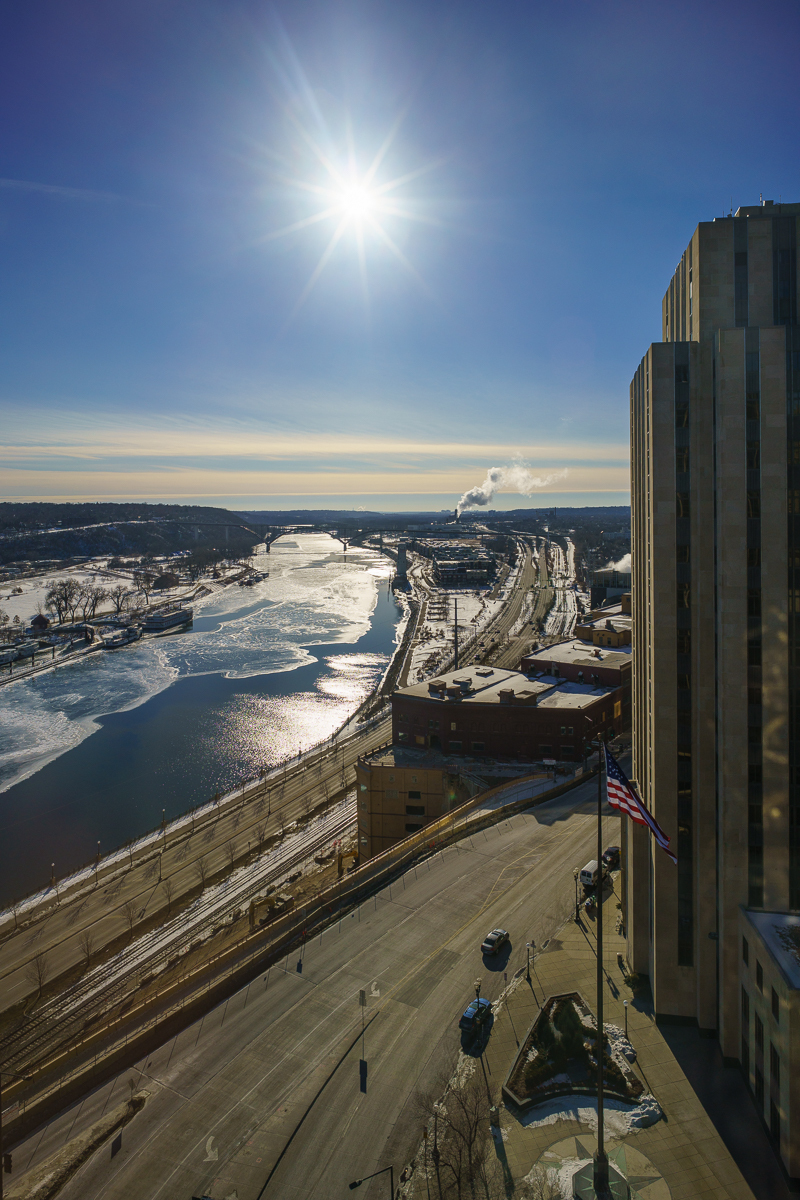
No time for some more rigorous testing but here's an image taken through a dirty hotel window. It seems to show less reflection but I don't know how valid this image is.
Feb 13, 2016 at 06:46 PM