This topic is in the 2015 archive. You can read it and like its posts here. It is read only.
Archive 2015No DR improvement = no 5Ds for me
p.5 #1No DR improvement = no 5Ds for me
Stoffer wrote:
Hmmm...!
Check out this interview about the 2:00 mark.
http://www.fotosidan.se/cldoc/video-interview-canon-eos-5ds-and.htm
Okay, first the Canon man states that DR are like 5D Mark III but he then goes on to states that there is "a much lower noise floor so therefore there is more ability to pull out details in shadows and highlights".
What to make of this? Is there still a bit of hope?

I think he means that if you look at the ISO curve, where the main difference between canon/nikon/sony is up to ISO 800, and from there they are pretty similar, is that the 5Ds will start at the same point as the 5D3 in terms of DR, but at higher ISO it might mean a bit cleaner and a bit higher DR to be able to pull the data from there.
But, Chuck Westfall said that the 5Ds will have a similar noise as the 7D2, which is not as clear at high ISO as the 5D3. So its kinda hard to tell. He might mean that the 5Ds because of the higher MP, will still be able to give a bit more data so you can pull it in post over the 5D3.
Hmmm...!
Check out this interview about the 2:00 mark.
http://www.fotosidan.se/cldoc/video-interview-canon-eos-5ds-and.htm
Okay, first the Canon man states that DR are like 5D Mark III but he then goes on to states that there is "a much lower noise floor so therefore there is more ability to pull out details in shadows and highlights".
What to make of this? Is there still a bit of hope?
I think he means that if you look at the ISO curve, where the main difference between canon/nikon/sony is up to ISO 800, and from there they are pretty similar, is that the 5Ds will start at the same point as the 5D3 in terms of DR, but at higher ISO it might mean a bit cleaner and a bit higher DR to be able to pull the data from there.
But, Chuck Westfall said that the 5Ds will have a similar noise as the 7D2, which is not as clear at high ISO as the 5D3. So its kinda hard to tell. He might mean that the 5Ds because of the higher MP, will still be able to give a bit more data so you can pull it in post over the 5D3.
Feb 06, 2015 at 02:13 PM
p.5 #2No DR improvement = no 5Ds for me

Why not just wait and see how the camera reviews instead of bashing Canon now?
Feb 06, 2015 at 02:17 PM
p.5 #3No DR improvement = no 5Ds for me
MarshallG wrote:
I pushed this +5 in Photoshop
http://g4.img-dpreview.com/2F174EC3BA754834876260F33571344F.jpg
Mike EnglesI don't quite understand. You pushed a JPG +5 stops?
Hello
Yes I increased the exposure in Photoshop by 5 stops, to show what was in the very dark areas of the chair. Seems pretty clean.
Mike Engles
mikeengles wrote
HelloI pushed this +5 in Photoshop
http://g4.img-dpreview.com/2F174EC3BA754834876260F33571344F.jpg
Mike Engles
Hello
Yes I increased the exposure in Photoshop by 5 stops, to show what was in the very dark areas of the chair. Seems pretty clean.
Mike Engles
Feb 06, 2015 at 02:23 PM
p.5 #4No DR improvement = no 5Ds for me
rattlebonez wrote:
Why not just wait and see how the camera reviews instead of bashing Canon now?
Canon deserves to be critiqued for releasing yet another sensor that falls short of the bar set a handful of years ago by Sony with the original D800 sensor in terms of dynamic range. It isn't some obscure metric to many people on this forum who would much rather capture an image in one exposure than have to stack and waste even more time in post than they would have to if they jumped ship.
It is absolutely unreasonable for Canon to have stalled on updating its sensor fabrication for 3 years with no signs of real improvement other than small reductions in shadow noise.
Feb 06, 2015 at 02:30 PM
p.5 #5No DR improvement = no 5Ds for me
mikeengles wrote:
I pushed this +5 in Photoshop
http://g4.img-dpreview.com/2F174EC3BA754834876260F33571344F.jpg
Mike EnglesI don't quite understand. You pushed a JPG +5 stops?Hello
Yes I increased the exposure in Photoshop by 5 stops, to show what was in the very dark areas of the chair. Seems pretty clean.
Mike Engles
JPEGs clip and compress the tonal values in the shadows so they're not representative of a sensor's shadow noise performance.
MarshallG wrote
mikeengles wrote
HelloI pushed this +5 in Photoshop
http://g4.img-dpreview.com/2F174EC3BA754834876260F33571344F.jpg
Mike Engles
Yes I increased the exposure in Photoshop by 5 stops, to show what was in the very dark areas of the chair. Seems pretty clean.
Mike Engles
JPEGs clip and compress the tonal values in the shadows so they're not representative of a sensor's shadow noise performance.
Feb 06, 2015 at 02:32 PM
p.5 #6No DR improvement = no 5Ds for me
I'm reminded why I hate JPEGs when looking at those samples at 100%...
Feb 06, 2015 at 02:52 PM
p.5 #7No DR improvement = no 5Ds for me
mikeengles wrote:
I pushed this +5 in Photoshop
http://g4.img-dpreview.com/2F174EC3BA754834876260F33571344F.jpg
Mike EnglesI don't quite understand. You pushed a JPG +5 stops?Hello
Yes I increased the exposure in Photoshop by 5 stops, to show what was in the very dark areas of the chair. Seems pretty clean.
Mike Engles
So many thoughts going through my head...
The main one being that this is why the internet sucks: you can never know for certain if the person you are reading has any damn idea what they are talking about.
MarshallG wrote
mikeengles wrote
HelloI pushed this +5 in Photoshop
http://g4.img-dpreview.com/2F174EC3BA754834876260F33571344F.jpg
Mike Engles
Yes I increased the exposure in Photoshop by 5 stops, to show what was in the very dark areas of the chair. Seems pretty clean.
Mike Engles
So many thoughts going through my head...
The main one being that this is why the internet sucks: you can never know for certain if the person you are reading has any damn idea what they are talking about.
Feb 06, 2015 at 03:01 PM
p.5 #8No DR improvement = no 5Ds for me
Kezeka,
If Canon products are so horrible for dynamic range why are you using Canon?
Just buy a Nikon D800 or D810 and sell off you Canon gear.
If I expose properly, I find the 1D X and 6D serve me just fine.
I do not expect mid-day images to look like the golden hour light.
If I underexpose I do not expect to pull out an far under-exposed shot from the shadows.
I bracket the exposures.
Feb 06, 2015 at 03:01 PM
p.5 #9No DR improvement = no 5Ds for me
alundeb wrote:
It seems to me that some Sony A7 / A7r users are willing to take any quirk with a camera as long as it is not less than 14 stops dynamic range:
- Shutter shock at long focal lengths and certain shutter speeds
- Sensor cover glass reflections around bright spots
- Sensor cover glass induced corner smearing
- Adapter thickness and alignment issues with floating elements UWA lenses
- Compressed raw artifacts around bright spots / high contrast detail
- Less dynamic range at very high ISO
- No weather sealing
- Slow startup time
- Short battery life
Not to mention the almost unusable autofocus with the latest Metabones IV + EF glass. Dynamic range means nothing if can't capture a moving subject with the AF system.
I love my a7s, but I consider it a manual focus only camera with Canon glass.
Feb 06, 2015 at 03:04 PM

p.5 #10No DR improvement = no 5Ds for me
Sneakyracer wrote:
Samples Images from the 5DS3 posted HERE FWIW.
Thanks.
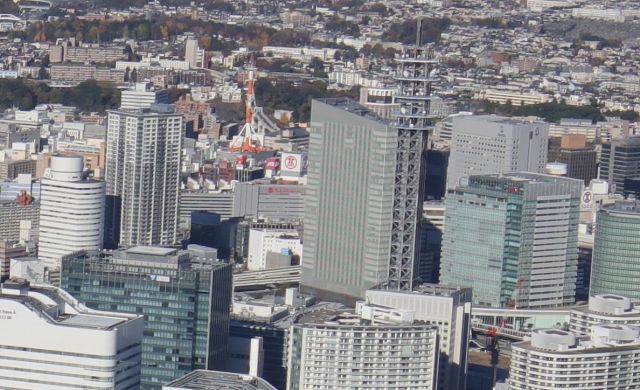
Here's a crop ... I'm a bit surprised to see the pink & green at this resolution with the WA. I guess it speaks well to the glass.
16-35 / 4 IS @ f11, 1/500, ISO 200
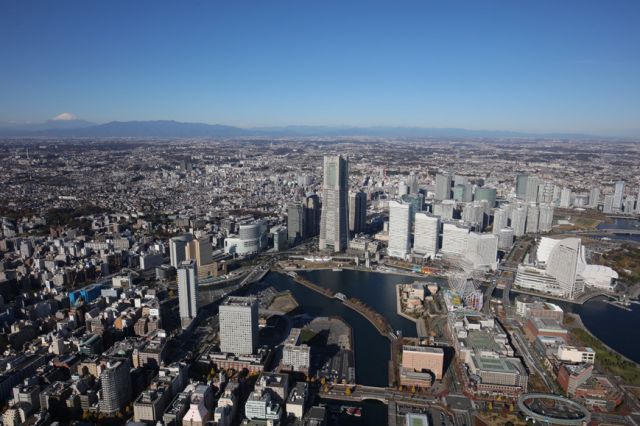
And the full scene from downsized to 10%.
Samples Images from the 5DS3 posted HERE FWIW.
Thanks.
Here's a crop ... I'm a bit surprised to see the pink & green at this resolution with the WA. I guess it speaks well to the glass.
16-35 / 4 IS @ f11, 1/500, ISO 200
And the full scene from downsized to 10%.
Feb 06, 2015 at 03:34 PM
p.5 #11No DR improvement = no 5Ds for me
RustyBug wrote:
Glass vs. sensor ... I prefer Canon's glass and dig the lower base ISO. Of course, the lower base ISO means that compared to SoNikon you aren't going to get the same results on the high end of things due to the different starting point.
Going back to my film days, I've always been a low ISO junkie for max IQ. But, I'm beginning to wonder how much diff the lower base IQ today matters (compared to 5 or 10 years ago) in IQ terms. Granted, it affords additional shutter speed / aperture options that might skip out on an ND...Show more →
I augmented my gear with an A7R and still use my existing Canon mount glass. Don't have to give up your Canon glass to use a great sensor.
Glass vs. sensor ... I prefer Canon's glass and dig the lower base ISO. Of course, the lower base ISO means that compared to SoNikon you aren't going to get the same results on the high end of things due to the different starting point.
Going back to my film days, I've always been a low ISO junkie for max IQ. But, I'm beginning to wonder how much diff the lower base IQ today matters (compared to 5 or 10 years ago) in IQ terms. Granted, it affords additional shutter speed / aperture options that might skip out on an ND...Show more →
 or wait / hope for something diff in years to follow. But, I have to wonder if the LOW BASE ISO is really the critical path forward anymore ... given the advances in software algorithms.
I augmented my gear with an A7R and still use my existing Canon mount glass. Don't have to give up your Canon glass to use a great sensor.
Feb 06, 2015 at 03:54 PM
p.5 #12No DR improvement = no 5Ds for me
The endless chase for better gear is understandable but I have yet to see a real improvement in the cat photos on Facebook.
Feb 06, 2015 at 03:58 PM
p.5 #13No DR improvement = no 5Ds for me
M_J_Helin wrote:
I'm quite sure there will be lots of people jumping on the bandwagon, including some who jumped to Nikon for 36MP jumping back to Canon for 50MP because MP is all their care about.
Frankly I'd rather have 16MP with more DR.Yes and if you think of this:
(73.56cm x 49.04cm at 300dpi),
compared with the D810’s 7360×4912 pixels
(62.31cm x 41.59cm at 300dpi).The actual improvement is next to insignificant imo.
How are you doing your math? The difference is a 39% increase in area at 300dpi.
Dave_EP wrote
It's not for me either.I'm quite sure there will be lots of people jumping on the bandwagon, including some who jumped to Nikon for 36MP jumping back to Canon for 50MP because MP is all their care about.
Frankly I'd rather have 16MP with more DR.
Earlier quote
At maximum resolution, this means the 5DS and 5DS R capture an image size of 8688×5792 pixels(73.56cm x 49.04cm at 300dpi),
compared with the D810’s 7360×4912 pixels
(62.31cm x 41.59cm at 300dpi).
How are you doing your math? The difference is a 39% increase in area at 300dpi.
Feb 06, 2015 at 04:00 PM
p.5 #14No DR improvement = no 5Ds for me
rattlebonez wrote:
Kezeka,
If Canon products are so horrible for dynamic range why are you using Canon?
Just buy a Nikon D800 or D810 and sell off you Canon gear.
Actually, if you feel Canon is so bad you should give it away. You would not want bad karma for selling bad equipment.
Oh, I will help you find new homes for it too!
Feb 06, 2015 at 04:03 PM
p.5 #15No DR improvement = no 5Ds for me
Chez,
Good point @ augment for the sensor only ... although it does present some additional logistics aperture control for EF glass. BTW ... can you confirm if the A7R is a true non-AA or is it merely the "cancelling AA" like the Nikon D800E. I never was able to find confirmation of that one way or the other ... then I lost interest in the A7R @ the controls / ergonomics (at least for a primary camera platform).
Good point @ augment for the sensor only ... although it does present some additional logistics aperture control for EF glass. BTW ... can you confirm if the A7R is a true non-AA or is it merely the "cancelling AA" like the Nikon D800E. I never was able to find confirmation of that one way or the other ... then I lost interest in the A7R @ the controls / ergonomics (at least for a primary camera platform).
Feb 06, 2015 at 04:03 PM
p.5 #16No DR improvement = no 5Ds for me
Enough already - I'll wait for the various tests but as it stands I think the next Sony update to the A7r will be more suited to my requirements. Until then I'll continue to enjoy the best of Canon's lenses on my A7r. Now on the topic of lenses - where the hell is the long promised update to the 45mm TS-E...........
Feb 06, 2015 at 04:06 PM
p.5 #17No DR improvement = no 5Ds for me
mikeengles wrote:
Hello
I pushed this +5 in Photoshop
Mike Engles
Mike,
Try making that adjustment on a RAW file. It will blow your mind.
There are two ways to apply adjustments: Whole-image (easier) and area (work). I don't know if you shoot Nikon or Canon, but both have free RAW image editors. Open that picture, and instead of pushing brightness +5 (which totally wipes out the left side of the image), move the "Shadows" slider +3 or so. This will brighten the darker areas, bringing out all sorts of hidden details, without affecting the bright areas.
Feb 06, 2015 at 04:08 PM
p.5 #18No DR improvement = no 5Ds for me
RustyBug wrote:
Chez,
Good point @ augment for the sensor only ... although it does present some additional logistics aperture control for EF glass. BTW ... can you confirm if the A7R is a true non-AA or is it merely the "cancelling AA" like the Nikon D800E. I never was able to find confirmation of that one way or the other ... then I lost interest in the A7R @ the controls / ergonomics (at least for a primary camera platform).
Yeh, I'm not that excited about the A7R controls, but I am getting used to them. I shoot mainly off a tripod so the control layout is not that important. I am starting to use the camera for some non landscape work...will be getting the Sony 16-35 zoom for my trip to New Mexico and Prauge in the next few months as a walk around street scape setup.
Feb 06, 2015 at 04:13 PM
p.5 #19No DR improvement = no 5Ds for me
alundeb wrote:
It might be in place to nuance the picture regarding dynamic range. Something has actually happened with Canon sensors since the 5DII. Using the 7DII pixels as reference and assuming the same pixel quality in the 5Ds: The banding is almost completely eliminated, increasing the useful dynamic range by a lot compared to the 5DII. This also means that downsampling the image will reduce the noise and increase the dynamic range. In theory, the 5Ds will have about 0.7 Ev higher dynamic range than the 5DIII when downsampled to the 5DIII resolution.
That is not close to Exmor territory, but for some people, like me, it is enough to reduce the number of situations when limited dynamic range is a problem. So I will get the 5Ds.
I repsect everyone's decision, and look forward to hear your experience about Canon lenses used with Sony cameras, or with a Nikon system. There are a lot of interesting options now and coming soon.The lack of improvement in DR is a clear disappointment to me. I just wonder whether the higher color fidelity with the stronger CFA filter might result in better colors in the shadows too, so they wont look as washed out as we are used to with Canon when we lift them?
Maybe this is a small step up? The noise might still be there, but if the shadow colors hold up better in post, things might look a bit less dire.
What do you think about this?If you are not shutter speed limited, a stronger CFA will actually reduce the perceived noise also in the shadows. As long as you can allow more light hitting the sensor, and the resulting converted photons after the CFA stays the same, the demosaic algorithms will not have to apply as much color channel amplification to get the correct color saturation. How much it will be, is unknown, but when raw files are available from imaging-resource.com, those can be used for valid comparison. You may have to use the ISO 50 files from the 5Ds to get maximum exposure.
Just to expand a little. For the technically inclined, here is a nice illustration of the problem associated with CFAs, spectral responses and noise during colour balance/ processing. It also illustrates why the "Canon red channel" has had problems, due to the lack of selectivity over green in some CFAs. Improved selectivity comes usually at the expense of decreased sensitivity but can yield "truer colours" and may result in less noise. A "stronger/better" CFA might then be beneficial at low ISOs but cause the engineers to lower the top end of the ISO range because of the noise (and the target demographic who are assumed not to need high ISO - you know who you are - or not)
Stoffer wrote
alundeb wrote
Higher dynamic range was on my wishlist as well, and I have a Sony A7r and enjoy it dispite some small quirks and the lack of fast and dependable AF, especially with Canon lenses.It might be in place to nuance the picture regarding dynamic range. Something has actually happened with Canon sensors since the 5DII. Using the 7DII pixels as reference and assuming the same pixel quality in the 5Ds: The banding is almost completely eliminated, increasing the useful dynamic range by a lot compared to the 5DII. This also means that downsampling the image will reduce the noise and increase the dynamic range. In theory, the 5Ds will have about 0.7 Ev higher dynamic range than the 5DIII when downsampled to the 5DIII resolution.
That is not close to Exmor territory, but for some people, like me, it is enough to reduce the number of situations when limited dynamic range is a problem. So I will get the 5Ds.
I repsect everyone's decision, and look forward to hear your experience about Canon lenses used with Sony cameras, or with a Nikon system. There are a lot of interesting options now and coming soon.
Maybe this is a small step up? The noise might still be there, but if the shadow colors hold up better in post, things might look a bit less dire.
What do you think about this?
Just to expand a little. For the technically inclined, here is a nice illustration of the problem associated with CFAs, spectral responses and noise during colour balance/ processing. It also illustrates why the "Canon red channel" has had problems, due to the lack of selectivity over green in some CFAs. Improved selectivity comes usually at the expense of decreased sensitivity but can yield "truer colours" and may result in less noise. A "stronger/better" CFA might then be beneficial at low ISOs but cause the engineers to lower the top end of the ISO range because of the noise (and the target demographic who are assumed not to need high ISO - you know who you are - or not
)Feb 06, 2015 at 04:33 PM
p.5 #20No DR improvement = no 5Ds for me
RustyBug wrote:
Thanks.
Here's a crop ... I'm a bit surprised to see the pink & green at this resolution with the WA. I guess it speaks well to the glass.
16-35 / 4 IS @ f11, 1/500, ISO 200
And the full scene from downsized to 10%.
As I type this, my printer is in the process of spitting out a letter sized test print cropped from a 30" x 45" resize of this image at 300 dpi. I took the area around the ferris wheel and the buildings just above it. (In other words, I'm printing a small section of the image at the same magnification that you would see in the full print.)
Waiting... waiting... (printer decided it was time to run a self-cleaning cycle)... waiting... ah, done.
OK, that is a very fine 30" x 45" image. The buildings look uniformly excellent — I would not guess that this small print came from such a large print. I can make out individual people on the sidewalks along the highway. I'm not seeing any smearing of detail anywhere. A potentially problematic area would be the spokes of the ferris wheel, especially where they overlay the lines of the buildings behind behind the wheel. Man, it really looks fine.
I've made prints this size before — not just crops — and if you print this large I think you are going to like the results.
Dan
Sneakyracer wrote
Samples Images from the 5DS3 posted HERE FWIW.Here's a crop ... I'm a bit surprised to see the pink & green at this resolution with the WA. I guess it speaks well to the glass.
16-35 / 4 IS @ f11, 1/500, ISO 200
And the full scene from downsized to 10%.
As I type this, my printer is in the process of spitting out a letter sized test print cropped from a 30" x 45" resize of this image at 300 dpi. I took the area around the ferris wheel and the buildings just above it. (In other words, I'm printing a small section of the image at the same magnification that you would see in the full print.)
Waiting... waiting... (printer decided it was time to run a self-cleaning cycle)... waiting... ah, done.
OK, that is a very fine 30" x 45" image. The buildings look uniformly excellent — I would not guess that this small print came from such a large print. I can make out individual people on the sidewalks along the highway. I'm not seeing any smearing of detail anywhere. A potentially problematic area would be the spokes of the ferris wheel, especially where they overlay the lines of the buildings behind behind the wheel. Man, it really looks fine.
I've made prints this size before — not just crops — and if you print this large I think you are going to like the results.
Dan
Feb 06, 2015 at 04:37 PM