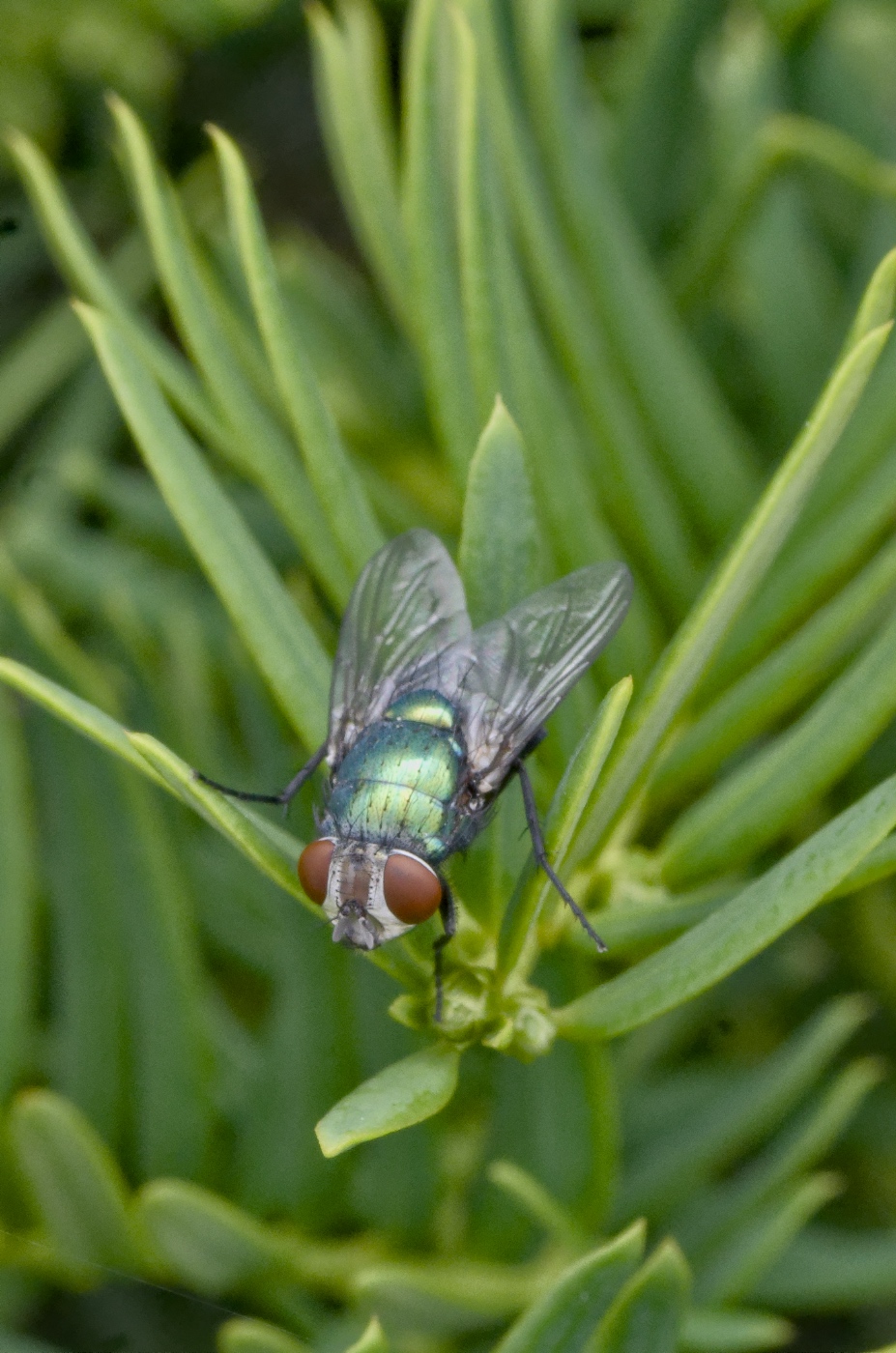
This weevil hitched a ride from the store to my house, clinging to my dirty windshield all the way home. It was about a 5 mile trip, much of that being over 55 mph. Strong little guy!
Little test session with my new Novoflex belows last night. I found a dead dragonfly in the backyard and had to photograph it. This is a composite image of the wings. Background details are overlaid to help provide a little more interest since the depth of field was so shallow. Will try focus stacking next time. I like the abstract qualities of this one though.
This is an older shot that I reprocessed using my new and much faster computer. Please feel free to give an honest but impersonal critique. K-50, Tamron 90, ISO 800, F/11, 1/160, extremely cropped. Thanks for looking.
This is an older shot that I reprocessed using my new and much faster computer. Please feel free to give an honest but impersonal critique. K-50, Tamron 90, ISO 800, F/11, 1/160, extremely cropped. Thanks for looking.
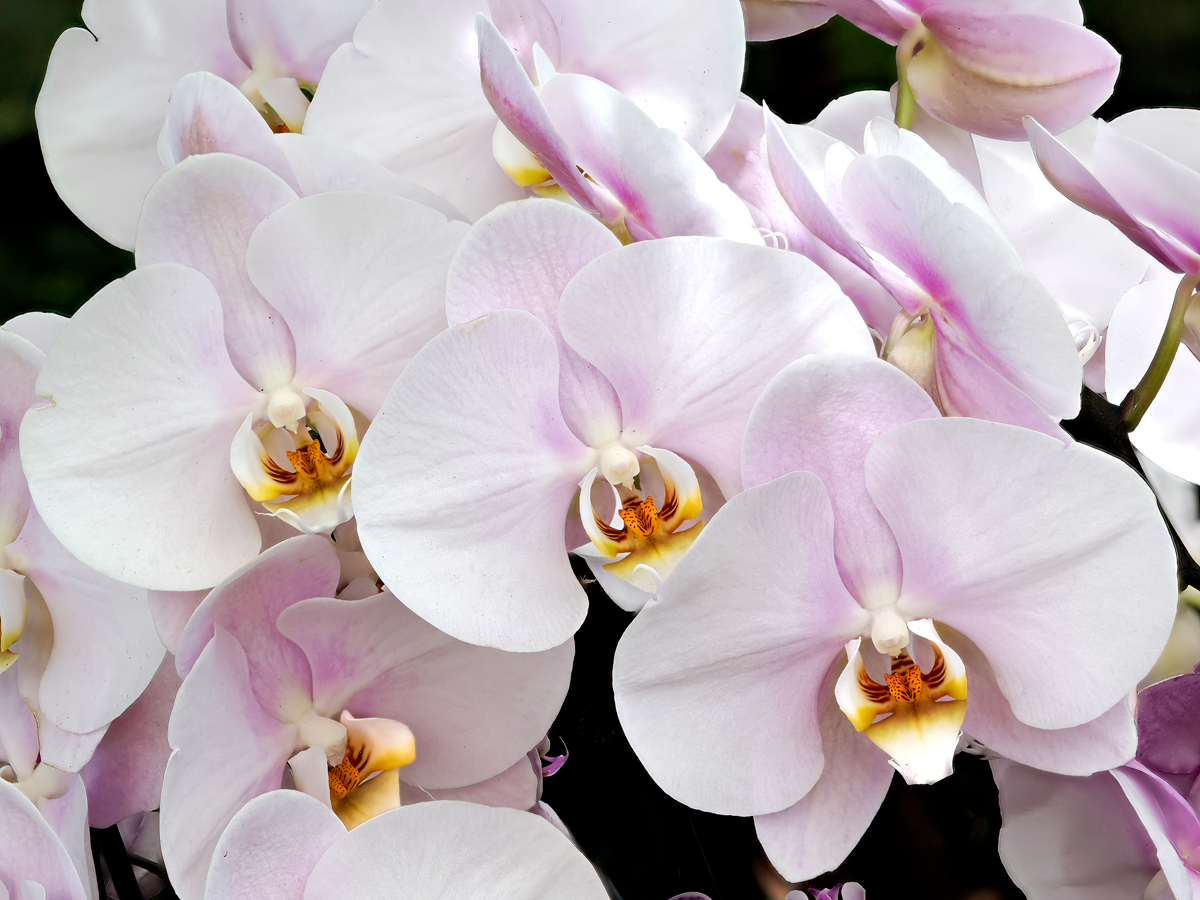
There's a fantastic Spring orchid show going on now at the NYC Bronx Botanical Garden. It was an opportunity for me to take out my Olympus 60mm F 2.8 Macro Lens that I rarely use. I employed the focus stacking setting on my OM 1 Mark 2 camera. Any comments/suggestions are appreciated.
Elijah Aasand wrote:
What's a budget friendly lens for someone wanting to get into macro? I'm shooting on the R5.
Elijah:
If you could clarify what you're saying, that would be helpful. Based on my orchid photo, are you saying that a $550.00 macro lens is not sufficient to give good results? Re: your R5, it's fairly close in price to my OM 1 mark 2 camera.
Steve
Sorry, I wasn't clear. Your picture is lovely, and all the photos in this thread are making me want to start shooting macro. I was looking for a recommendation to use with my R5
Elijah Aasand wrote:
Sorry, I wasn't clear. Your picture is lovely, and all the photos in this thread are making me want to start shooting macro. I was looking for a recommendation to use with my R5
If you are happy with a manual lens an adapted legacy Kiron 105mm is excellent.
eeneryma wrote:
There's a fantastic Spring orchid show going on now at the NYC Bronx Botanical Garden. It was an opportunity for me to take out my Olympus 60mm F 2.8 Macro Lens that I rarely use. I employed the focus stacking setting on my OM 1 Mark 2 camera. Any comments/suggestions are appreciated.
Sorry, I had to leave while posting the three flower photos in my previous post, so did not have time to tell how they were taken.
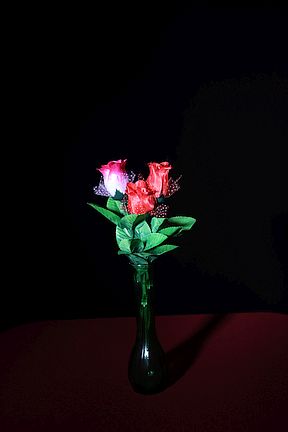
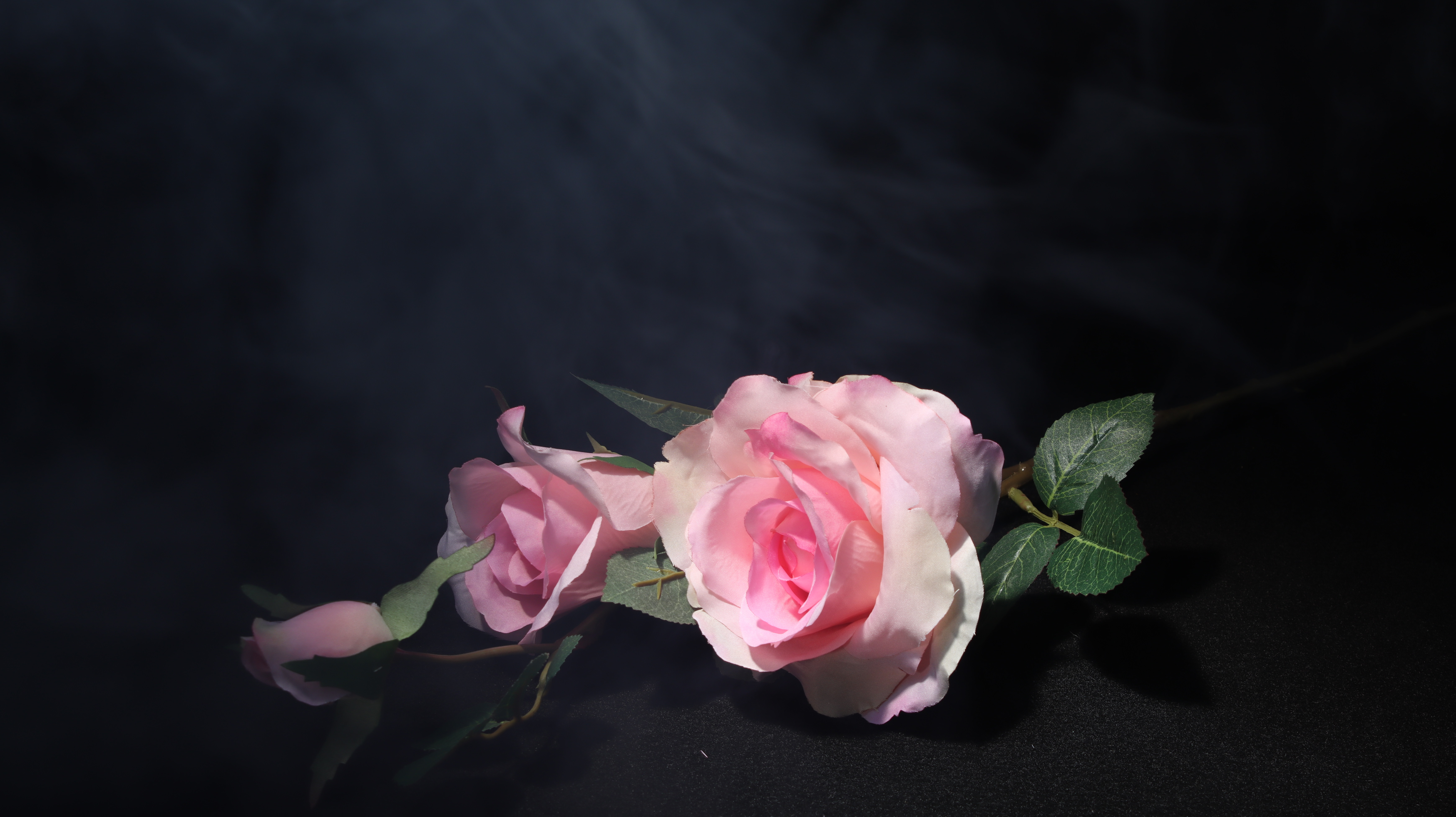
The roses in the 1st and 3rd photos were taken with similar lighting. A Godox SK400 II located camera left with 7"reflector and a 10 deg grid on photo #1, a 20 deg grid on the light for photo # 3. A black table cover, and I depended on the inverse square law to keep the surroundings out of the shots. The camera used was one of my 77D or 90D cameras with likely a 24-70 lens.
The Cherry Blossoms in the second photo were back lit, as well as front lit, from a single light source behind the Cherry Blossoms. For this shot I used the same SK400 II light with a Godox square 32" soft box pointed straight at the camera from behind the table. A small square of black cloth in front of the soft box, but behind the blossoms provided the black background, but allowed light from the soft box around it to light the back side of the blossoms. Two small 8 X 10" pieces of white mat board clamped to short pieces of 1 X 2" wood were placed on the table, one to each side of the camera lens, and angled to reflect light from the soft box back on the front side of the blossoms. To minimize glare from the soft box on the camera lens, I used an aperture mask, a piece of black foam core with a 3 X 5" hole cut in the center, also sitting on the camera edge of the table, but steadied using another piece of 1 X 2" wood and clamps so it would stand on the table and unsupported otherwise.
The camera, one of my 77D or 90D cameras, was located on a camera stand behind this aperture mask with a 24-70 mm lens looking through the aperture mask to stop the lens flare. This was a more difficult shot and I spent time over several days getting it set up and everything right, with about a dozen test shots to get it right. The inverse square law was very important for this shot as my ceiling "work light" was left ON during the shoot too.
I have two 6' camera stands, one for video and one for still shooting, both bought very well used and in rough condition, that I re-built and they are serving me well. They work far better for still shooting as they have wheel locks and don't require the space needed for a tripod (less trip hazard too ). Though I have good several Pro level and very stable tripods, these camera stands have proven far better for me in my small 19 X 26' studio shooting room, especially when doing "Still Life" and "Macro" work and stacking many shots for ultra sharp and increased depth of focus and other reasons in Post. I frequently also use a wireless trigger with my cameras when doing this.
CharleyL wrote:
Sorry, I had to leave while posting the three flower photos in my previous post, so did not have time to tell how they were taken.
The roses in the 1st and 3rd photos were taken with similar lighting. A Godox SK400 II located camera left with 7"reflector and a 10 deg grid on photo #1, a 20 deg grid on the light for photo # 3. A black table cover, and I depended on the inverse square law to keep the surroundings out of the shots. The camera used was one of my 77D or 90D cameras with likely a 24-70 lens.
The Cherry Blossoms in the second photo were back lit, as well as front lit, from a single light source behind the Cherry Blossoms. For this shot I used the same SK400 II light with a Godox square 32" soft box pointed straight at the camera from behind the table. A small square of black cloth in front of the soft box, but behind the blossoms provided the black background, but allowed light from the soft box around it to light the back side of the blossoms. Two small 8 X 10" pieces of white mat board clamped to short pieces of 1 X 2" wood were placed on the table, one to each side of the camera lens, and angled to reflect light from the soft box back on the front side of the blossoms. To minimize glare from the soft box on the camera lens, I used an aperture mask, a piece of black foam core with a 3 X 5" hole cut in the center, also sitting on the camera edge of the table, but steadied using another piece of 1 X 2" wood and clamps so it would stand on the table and unsupported otherwise.
The camera, one of my 77D or 90D cameras, was located on a camera stand behind this aperture mask with a 24-70 mm lens looking through the aperture mask to stop the lens flare. This was a more difficult shot and I spent time over several days getting it set up and everything right, with about a dozen test shots to get it right. The inverse square law was very important for this shot as my ceiling "work light" was left ON during the shoot too.
I have two 6' camera stands, one for video and one for still shooting, both bought very well used and in rough condition, that I re-built and they are serving me well. They work far better for still shooting as they have wheel locks and don't require the space needed for a tripod (less trip hazard too ). Though I have good several Pro level and very stable tripods, these camera stands have proven far better for me in my small 19 X 26' studio shooting room, especially when doing "Still Life" and "Macro" work and stacking many shots for ultra sharp and increased depth of focus and other reasons in Post. I frequently also use a wireless trigger with my cameras when doing this.