Gunzorro wrote:
Great shot David! Love the tonal gradations.
Ronny -- That first shot is so dramatic and architectural with the looming mountain! One of your best, IMO.
**************
This shot would make a terrific 2000 piece jigsaw puzzle.
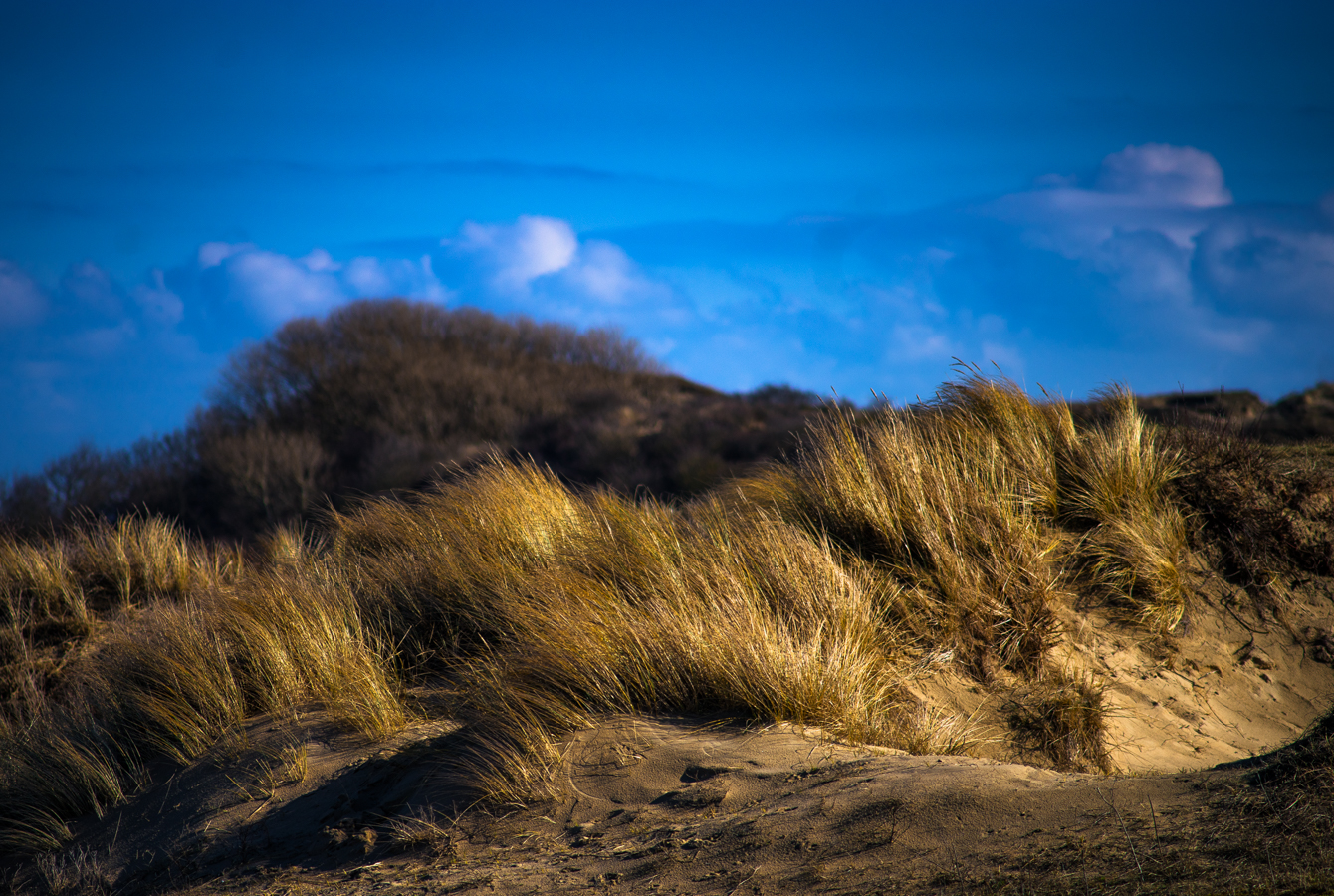
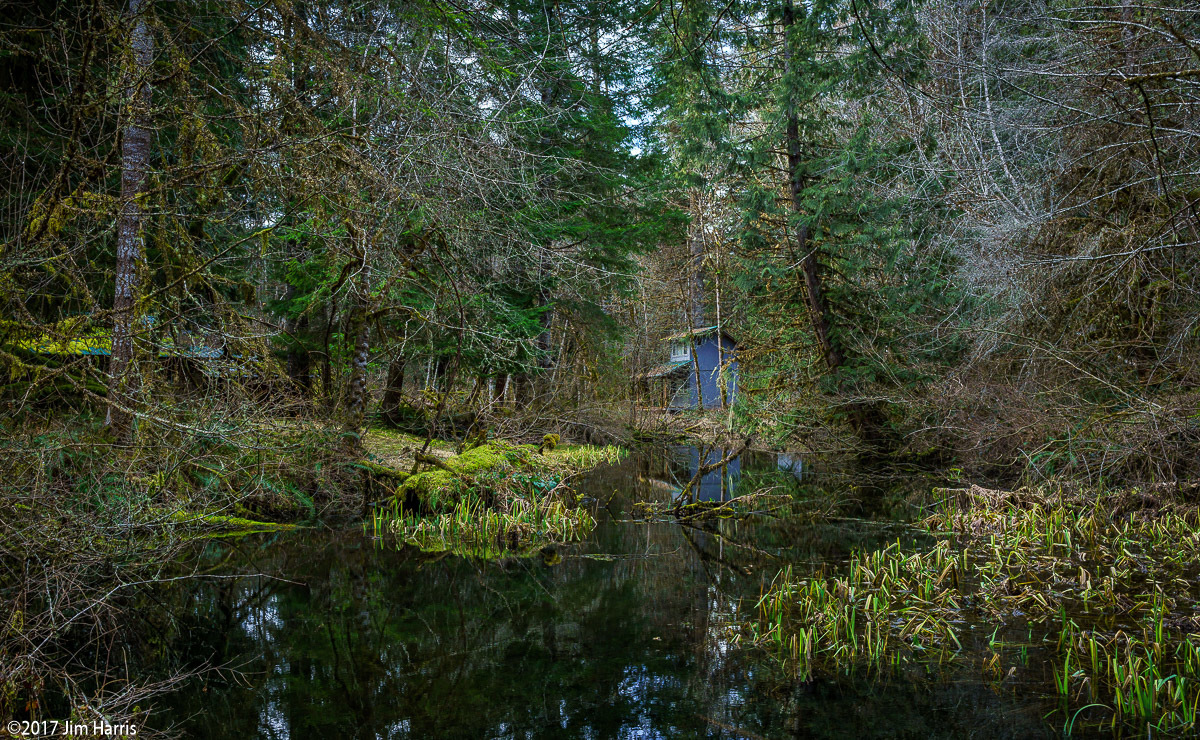
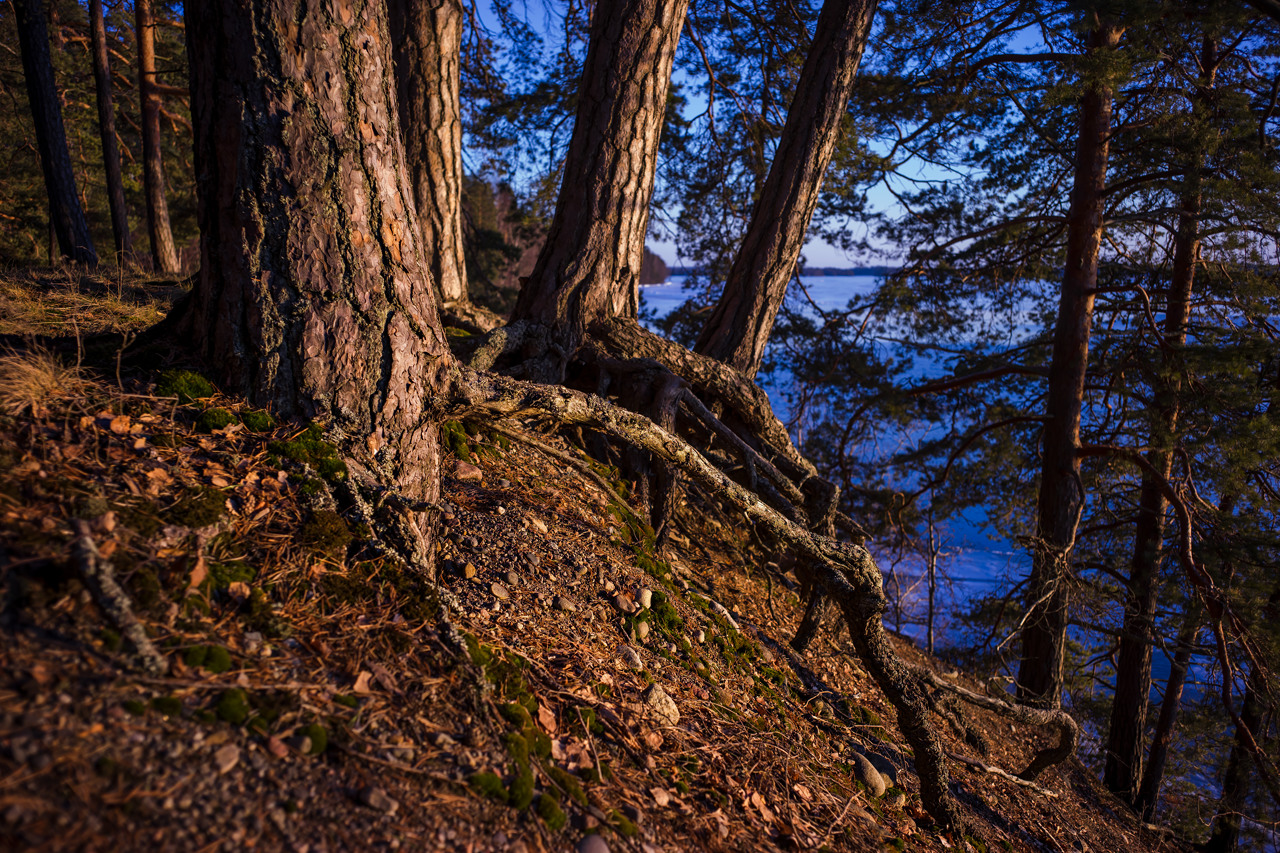
Same M.O. -- Loxia 35, hand held, LRCC (lots of discrete PP to separate tones resulting from shadowed scenery and semi-overcast lighting).
Jim, I gave the Loxia 35mm a try and returned it, but you're giving me second thoughts. It's the color rendition - yours and Gregg's results mirror my own - that really appeals to me. It's not super-great wide open, but has other virtues that I really like.
Thanks David. I appreciate hearing your experiences.
Yes, I bought it in the hopes for its subtle tonal separations. Essentially, I look at the Loxia 35 as providing a highly detailed negative, that is then best interpreted in PP (without going overboard with a fake looking HDR). I strive to produce a "You are there!" effect without jarring artificiality or theatrics. This lens is doing better than I expected. I've even had some good luck wide open for certain subjects, but I like to stick to its best aperture range, which I find is f/5.6-10.0, usually concentrating on the smaller apertures of f/8-11 for best DOF on these types of shots.
I'll be posting more than woodsy shots (already have some up), including some gritty urban stuff and architectural home exteriors and landscaping. The range of shots should give a good idea of how the lens handles available lighting and subject matter.
But this lens is not the 24 TSE II, or CV 12/5.6, where we look for strong contrasts for dramatic statements in architecture and studio types of work. In other words, I don't consider this a clinical looking lens. Neither is it a "dreamy" lens. Sort of right in the middle, which suits me fine, as I have other lenses that fill those needs. This may be just about the perfect hand held outdoor lens for me, and it performs well on tripod, too.
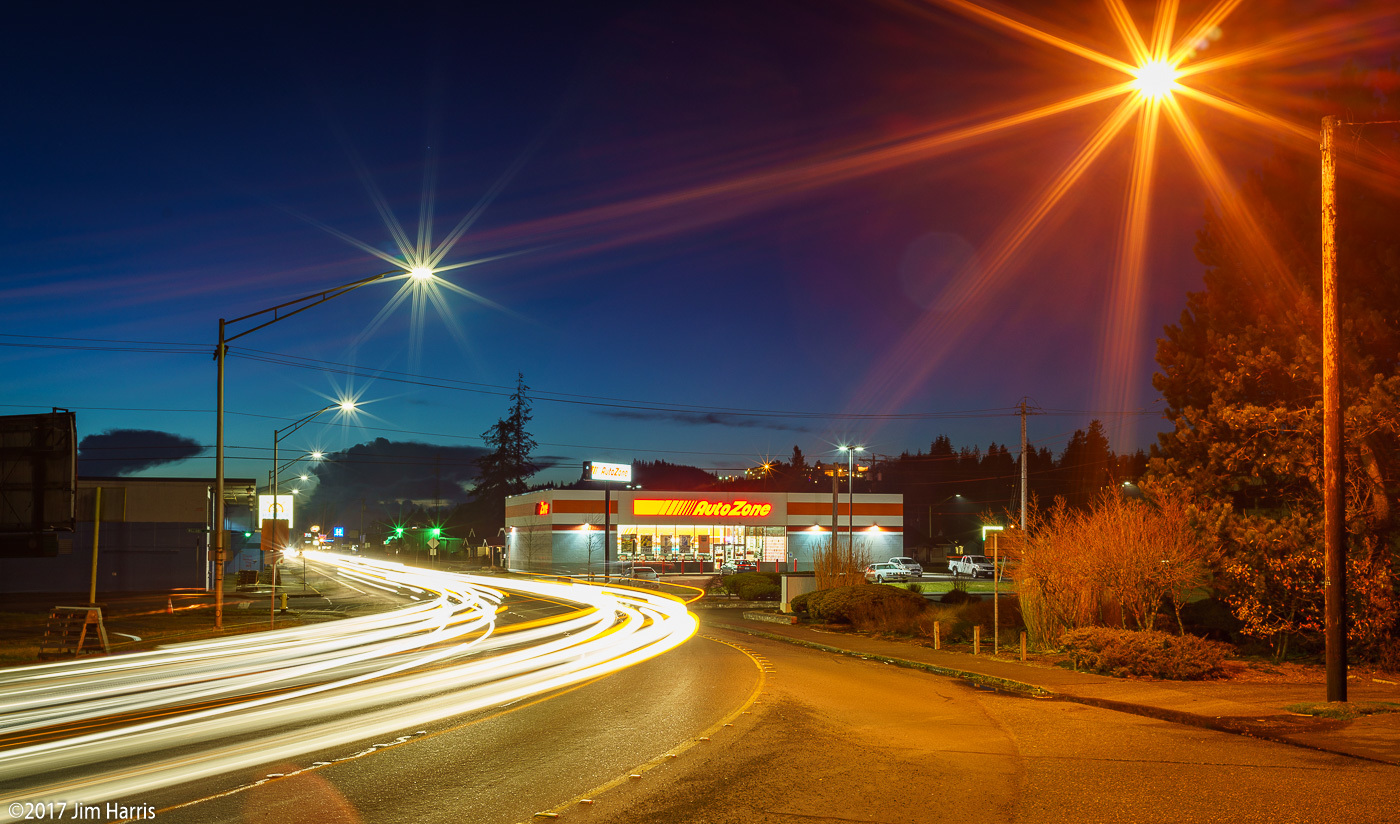
Here's one from a series I did at deep twilight. Pretty strong starbursts and flare bubbles, but color and sharpness are very good -- here at f/13 to reduce shutter speed for headlights. I was very curious how it would perform for night shots -- I find it best if the light sources are smaller or further away -- this is an extreme example of prominent lights and mixed color balance.
darbo wrote:
Jim, I gave the Loxia 35mm a try and returned it, but you're giving me second thoughts. It's the color rendition - yours and Gregg's results mirror my own - that really appeals to me. It's not super-great wide open, but has other virtues that I really like.
David -- Sorry to derail the thread into a bunch of technical examples.
I'm wondering if you had a slightly bum copy, or maybe it just wasn't the right time for you to play with the Loxia 35. After your previous comment about poor wide open performance, I went to another section of my trip involving the local area museum, where I had done comparisons of various apertures, including wide open, right after I recieved the lens from Chuck Coyne. Keep in mind, I wasn't able to properly evaluate at that time, due to no computer there. So now is the first I've seen them and played with images in LR.
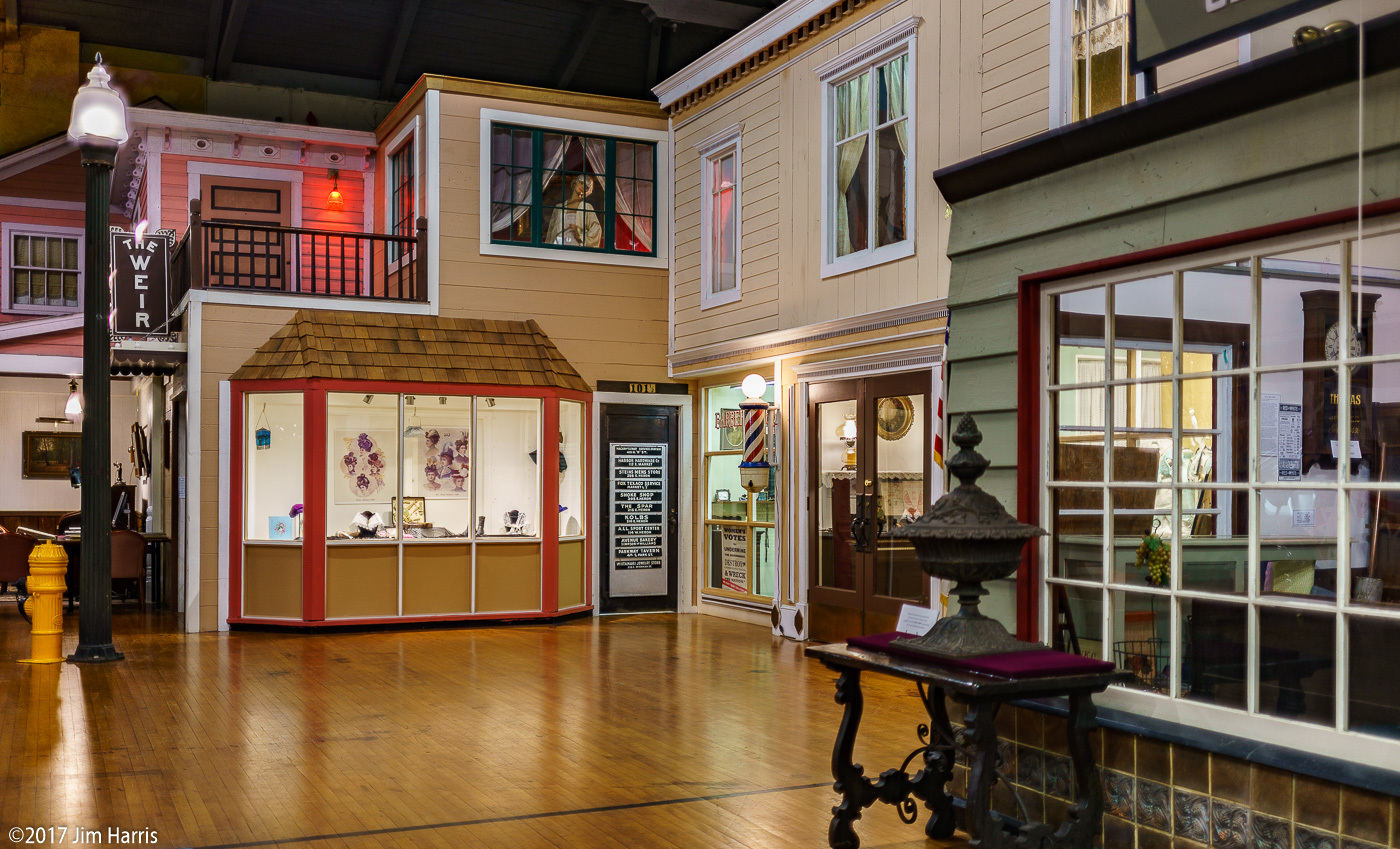
Here is a shot wide open that I find pretty impressive, at least for my expectations. Focus was at the window on the far wall of the "town". There is slight haloing veil around bright objects in the center window (when I looked at 100% in LR) and tall lamp in upper left corner (due to strong coma when shot wide open -- see other light smears directly below at the "Weir" sign), and there is evidence of slight forward curvature on the sides (see through the closest window, clock on the wall, etc). It should be fairly apparent even at this 1400px size. Otherwise, it's pretty darned good performance, don't you think?
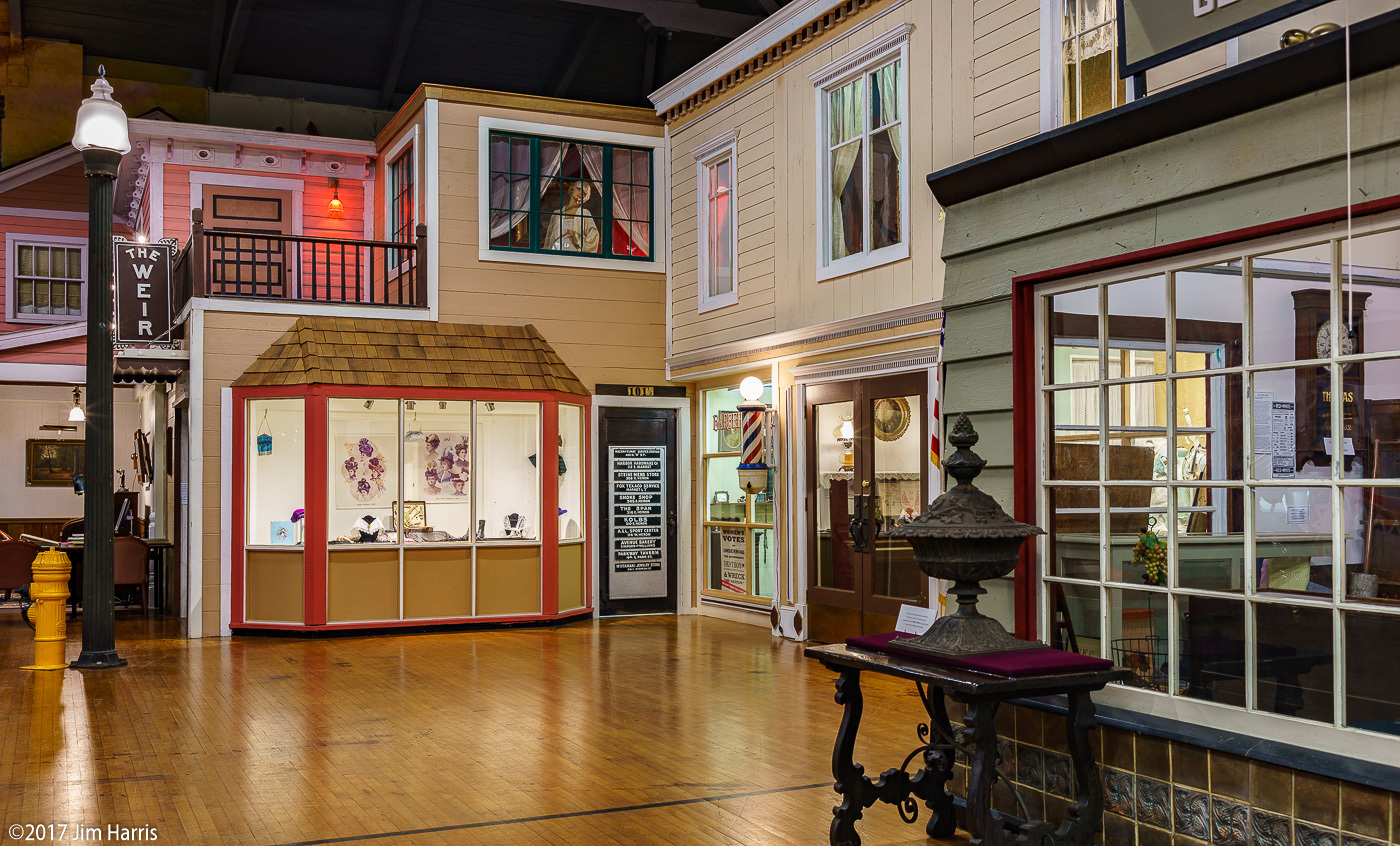
The second shot is at f/5.6, and it virtually eliminates all concern -- see the lack of halo and coma, and added brightness (same PP settings as f/2.0). Curvature is minimal -- note that the urn on the table to the right isn't completely brought into focus through DOF.







 .
.