ManuelLaMantia wrote:
Ok guys, I realized Joshua, besides to be a great photographer (my personal opinion is more near to consider him a genius) is also addicted to this thread
Manuel
Manuel, thank you but I saw your images earlier today and yours are as good, if not better than mine. Don't sell yourself short, buddy!
Peter T wrote:
Wonderful!
And at the other end of the scale of females wearing heavy make up or masks, here is a ewe (pronounced oooo in the local dialect) that has somehow managed to apply some of the blue numbering colour as eye
ManuelLaMantia wrote:
Ok guys, I realized Joshua, besides to be a great photographer (my personal opinion is more near to consider him a genius) is also addicted to this thread
Manuel
Jochenb wrote:
I didn't expect any difference either, but sadly there is. I quickly vizualised the issue. A test shot on the original A7, @ F8. Focused on the trees in the background. Everything that's in focus is painted over with red: example field curvature
Look how curved the plane of focus is. Almost the whole center is out of focus. When I focus more to the foreground the opposite happens: everything that's now painted in red (in focus) will be out of focus. So annoying.
When I examine my old 5DII photos with this lens things look completely different. A much milder forward field curvature. The lens was already useful at F5.6 for landscapes.
The FE55 has almost no field curvature. That makes it very easy to use for landscapes. I really dislike the focus by wire and strong vignetting of it though. Maybe I should give the Loxia a try too. ...Show more →
i know i've seen this before, but the more i see it the crazier it seems.
here's an aperture series with my rollei zeiss 50/1.4 planar (seems to perform comparably to the c/y:
for what it's worth here is the aperture series with my rollei: f/1.4 f/2 f/2.8 f/4 f/5.6 f/8 f/11
seems good enough for me at f/5.6, just a bit behind the g45, and no major field curvature. i don't know why zeiss would make the ZE so much worse.
Samuli Vahonen wrote:
I have tried this scientifical approach and it's quaranteed to kill my interest to photography - and in record time. Reminds me of sitting on the boring glassed on technical university...yawn... When I have done this I find I always "prefer" the lens which is better at 100% pixel peeping, but which I may hate in real life shooting because it doesn't deliver what I actually want.
But I know people who can do this all day and get kicks from it. So as usual what makes world interesting is people and how different we are. From the tests people have done this way I have never found anything what really interests me - for sure it may reveal some things regarding sharpness (generally great interest withing photographers, not mine). For photographer like me whom doesn't care sharpness as long as there is enough of it, I pay attention >95% to other stuff. What I have seen by attempts of doing this scientifically 80% fail because they chosen scene which is controlled (=indoors) but extreme boring and not at all telling anything about real life outdoor rendering. The remain 20% fail because they have tried to do it outdoors and the minute differences in light cause the images to be not comparable even would have been shoot with same lens.
I see people all the time killing their lenses interesting rendering style features by their processing, but never seen for example anyone been able to change DOF to boke transition or something else really interesting via systematical/practical method (for one photo it can be done by gigantic work drawing masks for hours etc.).
Thanks for the response, Samuli, and it looks from the 'likes' that other folks are with you - but I've also used this approach to try and get at things like bokeh transitions and overall rendering, and I've learned a lot from it, so to me it is a bit of 'both-and' rather than 'either-or'. Perhaps you could come down to NZ with just a small selection from your lens collection and we could do some 'both-and' field testing in our landscapes - no boring inside setups...
Gary Clennan wrote:
I love this last shot Joshua! Do you mind sharing your focus settings used?
Thanks, Gary! The camera was on Face Detection AF and the mode I used was "Wide". I just had to make sure that the hand of Anne-Sophie and as such, also the pigeon to be parallel to her head. Frankly, I didn't dare to keep the aperture to be completely wide open in this case.
bobbytan wrote:
Exactly right, Manuel!
yeah, guilty as charged! Like right now when at 4:00AM when I woke up early, 2 hours earlier than I planned, I had to go on-line. Well, I will be going through images I took earlier yesterday but indeed,
I was this last weekend in Portugal in a town called Guarda, to have some good time and see their Carnival, it was very fun and the people very friendly.
I used mostly the Batis 85 and the Sony 35 2.8 with the A7RII in these shots:
Samuli Vahonen wrote:
Question: have you knocked the lens hard or dropped it to hard surface between shooting with 5DII and A7?
Why I'm asking? I have seen this exact same behaviour earlier, but with 5DmkII. A fellow Finnish photographer had ZE 1.4/50, which worked exactly this way with his 5DmkII few years ago. To demonstrate he made similar picture, but he used ripe cornfield (quite homogenous) and sharpened the image 10+ times and it clearly visualized identical field curvature as your red overlay. He had a loooooooong fight with the Finnish importing company and Zeiss - that ended up sadly, when importing company finally agreed to send it to Zeiss, Zeiss just returned the lens and said it's according to the spec!!! That lens was clearly defective, some misalignment of lens elements or something else broken. At that time I counted this as a outlier as at that time Zeiss service still had great reputation.
My own ZE1.4/50 (with 5DmkII) was sharp over whole image area already at f/4.5 - There was really strong wind on mountain pass when I took this (sorry little small for our standards in 2016, but it's from 2011...) and whole frame is VERY sharp. The 1/1250s shutter speed was needed because I took the shot in conditions I needed to lean ~30 degrees to not fall in the wind and was barely able to walk few meters from car - tripod did not stand on ground without supporting it 100% of time - it was weird experience as I moved half kilometer for next shot, there suddenly was not much wind (photo has GPS coordinates in case somebody wants to study geography, it identifies pretty exact shooting location, of course there can be slight time sync issue with GPS and camera timestamps, but it can't be far off).
I installed ZE 1.4/50 to A7r, and take it with me when I go next time shooting - it will be hard time to find suitable test scenario at this time of year, but I'll see what I can do on weekend if there is any change to get outdoors while there is daylight. ...Show more →
Interesting story about your fellow Finnish photographer. I tried 2 different copies of the 50/1.4 ZF.2 on my A7 cameras and both were exactly the same. No misalignment or decentering, only that more pronounced curved focus plane. Even on the 12MP A7S. Because of this I also tried more than one adapter... but still the same results.
It's also very noticeable when shooting in portrait orientation. For example: when I shoot a larger free standing tree that's at a distance of +15m and focus on the center of the tree... The zone of focus goes from almost my feet to the center of the tree and back towards me at the top. The bottom and top of the tree are out of focus. With careful focus you can get the whole tree in focus, but the focal plane is always much more curved than when I used the lens on a Canon camera. I hardly had any weird surprised, just like you. It was great for landscapes. Most ZE/ZF lenses that I shot on the A7 were fine, but this one and the 18 are most problematic for me.
It'll be interesting to see how the lens works for you on the A7 cameras.
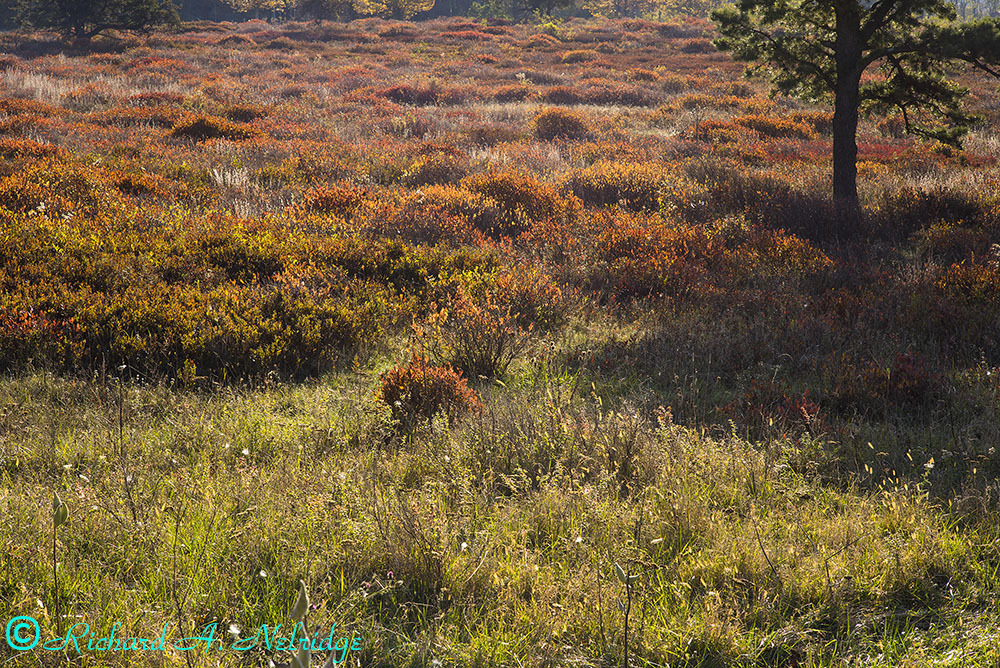
Photo taken October 17, 2015 at 8:55 AM, Big Meadows, Shenandoah NP, Virginia. Image taken with my tripod mounted A7r and my Leica M 90mm f2.5 Summarit lens, ISO 100, lens set to f11 for 1/25 second. Exposure corrected by +0.12 stops. Processed in LR6.




 yeah, guilty as charged! Like right now when at 4:00AM when I woke up early, 2 hours earlier than I planned, I had to go on-line. Well, I will be going through images I took earlier yesterday but indeed,