p.3 #1 · I think Canon solved the shadow recovery issue in their sensors with the 6D sensor!
Look guys its obvious than in fast changing photojournalistic type situations (run and gun) where one is shooting from the hip sorta speak one just shoots and registers the shot as best one can and then deal with the file later. Quite a few times the exposure and lighting are obviously not perfect. More DR helps in those situations.
Thats why before digital quite a few people used color negative film instead of transparencies. The motion picture industry also. In fact, Kodak continuously developed their Vision series of motion picture color negative film stock to increase its usable dynamic range and cleaner grain for better scanning and post production. Since even in a film production its not always possible to control everything!
p.3 #3 · I think Canon solved the shadow recovery issue in their sensors with the 6D sensor!
pompo wrote:
I have to agree with you, I think most people that knows how to properly expose, advanced amateurs and pros, don't care too much about shadow recovery, I'm sure they wouldn't mind the extra DR, yet do not lose sleep over it. On the other hand, low end user can benefit a lot from it in post.
I think just about every landscape photographer I know either uses GND filters to get more dynamic range or takes multiple images and merges in post...so yeah, more dynamic range in a sensor is a huge benefit and exposing properly does NOT solve this problem. I am getting tired of hearing this expose properly BS.
That's sort of like saying why did you need the 5d3, you should have just learned how to focus properly with the 5d2.
p.3 #5 · I think Canon solved the shadow recovery issue in their sensors with the 6D sensor!
chez wrote:
I think just about every landscape photographer I know either uses GND filters to get more dynamic range or takes multiple images and merges in post...so yeah, more dynamic range in a sensor is a huge benefit and exposing properly does NOT solve this problem. I am getting tired of hearing this expose properly BS.
That's sort of like saying why did you need the 5d3, you should have just learned how to focus properly with the 5d2.
That's what I said.
It is funny how the comments about "proper exposure" are always coming from the hardcore 5D2 / 5D3 fans. I guess it is some kind of psychological defence mechanism?.. Emotional investment can be a biatch.
p.3 #9 · I think Canon solved the shadow recovery issue in their sensors with the 6D sensor!
chez wrote:
Can you please elaborate on this...or are you just trying to be a wise ass?
Believe me, he is always trying.
Probably the rudest and most bumptious user I've seen here on FM. Funny thing is that he always ends his BS-comments with claiming how "professional" he is.
I just decided to put him on my ignore list. Just click the hide button bellow his post and he's gone.
p.3 #10 · I think Canon solved the shadow recovery issue in their sensors with the 6D sensor!
dhphoto wrote:
If you can't see the irony in your comment I really can't help you
Accurate exposure *IS* the essence of photography
But even with accurate exposure, there are many scenes where you need to either expose for the highlights and let the shadows go dark or expose for the shadows and blow out the highlights. Wouldn't it be nice to be able to stretch this decision by two stops out in the field. Hope you can understand this or I really can't help you.
Having more dynamic range has ZERO to do with proper exposure.....
p.3 #11 · I think Canon solved the shadow recovery issue in their sensors with the 6D sensor!
Rickuz wrote:
Multiple exposures aren't always practical - often, there will be moving elements in a scene (leaves rustling in the wind, grass moving a bit, or a fishing boat rocking on the waves), and this make it impossible to stack them. Many public places (including many national monuments, and famous buildings) won't allow tripods.. GND-filters are not always useable, because of extremely uneven horizons.
Just to make it clear, I did not bring up the comment on exposure. And I agree there are situations when shadow recovery is necessary.
However, the % of shots requiring such treatment should only be a small fraction in anyone's collection. So, it's not inconceivable for Canon to slide such a 'small' improvement under the carpet.
Sigh. I've been hoping for Canon to make some significant improvements in their sensor design (particularly low ISO dynamic range) for the longest time. I refuse to update any of my APS-C cameras until Canon is able to demonstrate some substantial improvement here.
p.3 #12 · I think Canon solved the shadow recovery issue in their sensors with the 6D sensor!
Rickuz wrote:
Probably the rudest and most bumptious user I've seen here on FM.
Sorry mate but you're just being a hypocrite here with your insults. "thick skull" and "simpleton" ring a bell? Pretty abrasive for a forum newbie.
Anyway, I personally don't think the 6D will be better for shadow recovery... but then again I thought the 6D would have at least the 650D 9 cross type AF.
p.3 #13 · I think Canon solved the shadow recovery issue in their sensors with the 6D sensor!
krickett wrote:
This is par or the course, guys. Plus, as mentioned, what you can do with JPEG is not representative of what you can do with raw. See below. I would never do this with my Canon camera. Instead, I resign myself to either blowing highlights or leaving shadows as shadows.
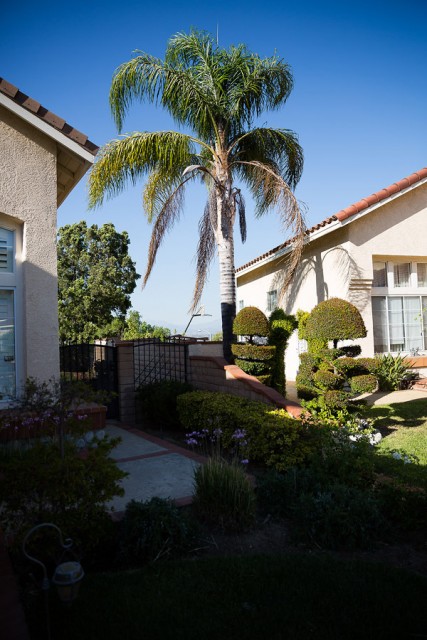
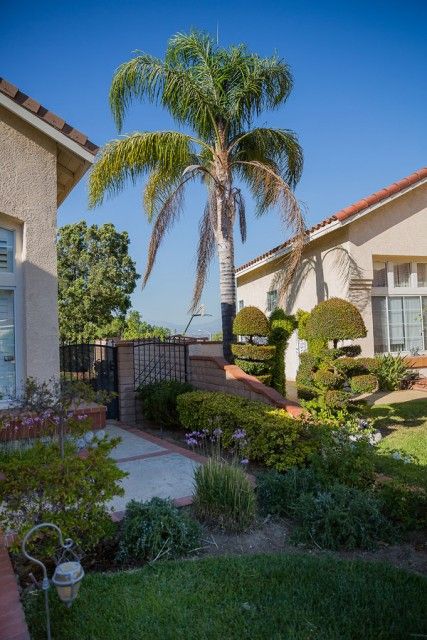
I am not defending Canon but believe me, the rendition from a Canon camera is not that bad . Here is a test shot that I took the other day, not more than a test shot of a series that doesn't have anything to do with shadow recovery, but strictly when I was trying something out with my lowly Canon camera. With just a few slider changes in LR, I could recover the shadow to my liking. I could even go further but it would look too unnatural to my eyes. I made the changes after I have seen your "comparison" and read your opinion.
p.3 #14 · I think Canon solved the shadow recovery issue in their sensors with the 6D sensor!
IMHO the new LR and PS6's Raw make a tremendous difference in what I feel I can effectively do with shadows. I can see a difference between what I can do with the 5DIII vs the 7D but I feel this software still does it more effectively on either.
p.3 #16 · I think Canon solved the shadow recovery issue in their sensors with the 6D sensor!
You are welcome, Daan! Anything to make your life easier, buddy .
Hey, I may see you and Chris again in February. You will get your D800 by then, I hope. We can compare notes then. I will send you a note when it gets closer to the time.
p.3 #17 · I think Canon solved the shadow recovery issue in their sensors with the 6D sensor!
AGeoJO wrote:
You are welcome, Daan! Anything to make your life easier, buddy .
Hey, I may see you and Chris again in February. You will get your D800 by then, I hope. We can compare notes then. I will send you a note when it gets closer to the time.
Looking forward to seeing you again buddy. Keep me posted. Don't know about the D800 haha
p.3 #18 · I think Canon solved the shadow recovery issue in their sensors with the 6D sensor!
Thanks Joshua! Nice demonstration.
Even with the 1Ds2 and 5D2 I can get a bit more DR in LR, as I'm sure most on this forum know. Commonly, I use simple settings of at least -10 in Highlights, +10 in Shadows, and often +10 in Clarity to boost mid/low range contrast. Nothing excessive, but it helps. I try not to have to use these controls, and to keep to a minimum when I do.
The point is well taken that for many/most outdoor subjects, we do need more DR. Hopefully, Canon has this on top of their to-do list. When it is improved, I hope it is user adjustable to how much or how little DR adjustment we want, not a comprehensive setting like Nikon's D-Lighting (which is better than nothing, but hoping for something more advanced).
I'm sure we are moving toward more and more in-camera HDR, and probably taken for brief "clips" of video to eliminate most motion "noise". It should be an interesting couple years coming up for camera software and features.
p.3 #19 · I think Canon solved the shadow recovery issue in their sensors with the 6D sensor!
dhphoto wrote:
If you can't see the irony in your comment I really can't help you
Accurate exposure *IS* the essence of photography
The point is that there are times when dynamic range in the scene is so large that "expose properly" doesn't get you the photo you want without further processing in post, and getting the lighting right in-camera isn't possible due to any number of factors. In other words even the best exposure in such a situation would need help in post-processing. Not all photos are controlled shoots with carefully configured lighting. Is this really so hard to understand, or are you just here to put down people who have different shooting styles than you?
p.3 #20 · I think Canon solved the shadow recovery issue in their sensors with the 6D sensor!
AGeoJO wrote:
I am not defending Canon but believe me, the rendition from a Canon camera is not that bad . Here is a test shot that I took the other day, not more than a test shot of a series that doesn't have anything to do with shadow recovery, but strictly when I was trying something out with my lowly Canon camera. With just a few slider changes in LR, I could recover the shadow to my liking. I could even go further but it would look too unnatural to my eyes. I made the changes after I have seen your "comparison" and read your opinion. ...Show more →
Would you mind describing your process a little more? How far up did you have the various sliders? And could you post links to full res versions? Maybe even the original Raw file so I can mess around with it in LR4 for myself? I know I'm asking for a lot, but help a brother out please


 . Here is a test shot that I took the other day, not more than a test shot of a series that doesn't have anything to do with shadow recovery, but strictly when I was trying something out with my lowly Canon camera. With just a few slider changes in LR, I could recover the shadow to my liking. I could even go further but it would look too unnatural to my eyes. I made the changes after I have seen your "comparison"