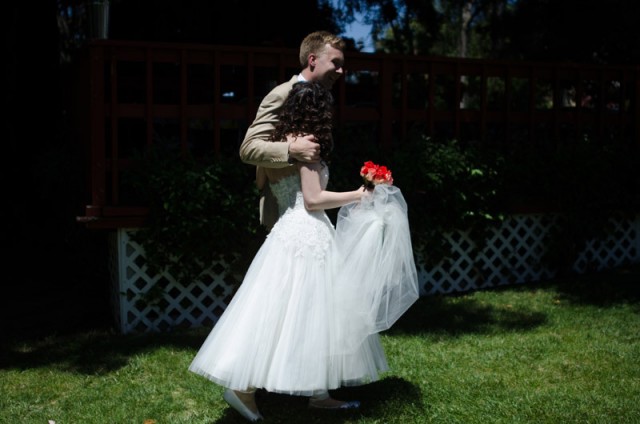
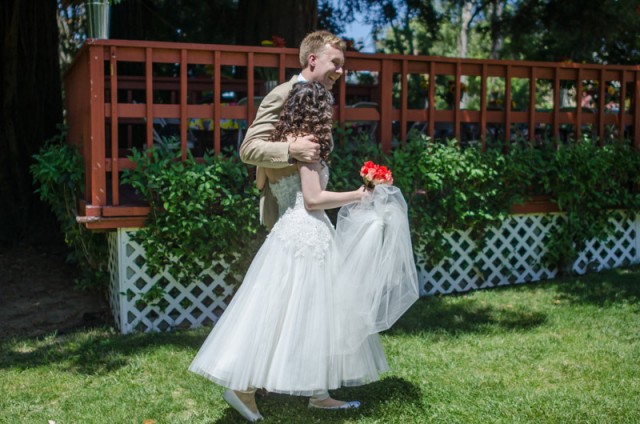
p.2 #4 · I think Canon solved the shadow recovery issue in their sensors with the 6D sensor!
yeah, no. its not possible. 1dx was just released, and canon will not put a sensor in 6d which will out perform its 7K camera (not to mention 5d3). unless they are using a sony sensor, which is highly unlikely.
p.2 #5 · I think Canon solved the shadow recovery issue in their sensors with the 6D sensor!
kevindar wrote:
yeah, no. its not possible. 1dx was just released, and canon will not put a sensor in 6d which will out perform its 7K camera (not to mention 5d3). unless they are using a sony sensor, which is highly unlikely.
Eh, Nikon does this. (if you want to consider the d800 sensor their best -- not on the most expensive camera)
p.2 #6 · I think Canon solved the shadow recovery issue in their sensors with the 6D sensor!
I am fully aware of the limitations of a JPG file vs the RAW file. But, jpgs are the only 6D files available at the moment. And, again, obviously this is not a strict test following the internet's police's DSLR's testing protocols. :sarcasm: But, just a quick exercise on a VERY typical adjustment a LOT of people make on image files constantly.
p.2 #7 · I think Canon solved the shadow recovery issue in their sensors with the 6D sensor!
snapsy wrote:
Shhhhh...it's snapsy. JPEGs usually don't have enough tonal information in the shadows to properly judge banding or the lack thereof.
Agree, can't wait for the raw files to be available.
I just find it odd that Canon would go through all the trouble of designing or at the very least making a downgraded version of the 5D3 sensor just to have a slight marketing diferentiation in their entry level full frame dslr.
p.2 #9 · I think Canon solved the shadow recovery issue in their sensors with the 6D sensor!
kevindar wrote:
yeah, no. its not possible. 1dx was just released, and canon will not put a sensor in 6d which will out perform its 7K camera (not to mention 5d3). unless they are using a sony sensor, which is highly unlikely.
I agree this jpeg test is hardly an indication of actual sensor performance (but it makes me wonder if the RAW files from the competition have been carefully tweaked to produce clean shadows...).
However, it's not impossible that a lower end camera has a slightly better sensor than one from a higher end. Nikon used to do this back in the D1-D2 days. Besides, only a small fraction of users really care about shadow recovery... and the performance difference between the 1Dx and 6D is astronomical.
p.2 #10 · I think Canon solved the shadow recovery issue in their sensors with the 6D sensor!
thw2 wrote:
only a small fraction of users really care about shadow recovery... and the performance difference between the 1Dx and 6D is astronomical.
I have to agree with you, I think most people that knows how to properly expose, advanced amateurs and pros, don't care too much about shadow recovery, I'm sure they wouldn't mind the extra DR, yet do not lose sleep over it. On the other hand, low end user can benefit a lot from it in post.
p.2 #11 · I think Canon solved the shadow recovery issue in their sensors with the 6D sensor!
pompo wrote:
I have to agree with you, I think most people that knows how to properly expose, advanced amateurs and pros, don't care too much about shadow recovery, I'm sure they wouldn't mind the extra DR, yet do not lose sleep over it. On the other hand, low end user can benefit a lot from it in post.
Depends what you shoot. I can think of a million and one landscape shots that would benefit from being able to modify shadows without taking a big image quality hit. I also shoot in situations with lots of variable lighting in an environment where you often don't have time to setup a tripod or spend time pondering your composition. Again, a big help if I can lift shadows on some of my darker images.
p.2 #13 · I think Canon solved the shadow recovery issue in their sensors with the 6D sensor!
This is par or the course, guys. Plus, as mentioned, what you can do with JPEG is not representative of what you can do with raw. See below. I would never do this with my Canon camera. Instead, I resign myself to either blowing highlights or leaving shadows as shadows.
p.2 #14 · I think Canon solved the shadow recovery issue in their sensors with the 6D sensor!
Funny thing about these tests... they always result in images that look very undesirable and pseudo-ugly-HDR to me.
I'd prefer a real-world test where lifting the shadows produces a better image than the "before" shot. Otherwise it's about as good as shooting a lens cap. And I know where I stand on that.
p.2 #15 · I think Canon solved the shadow recovery issue in their sensors with the 6D sensor!
justruss wrote:
Funny thing about these tests... they always result in images that look very undesirable and pseudo-ugly-HDR to me.
I'd prefer a real-world test where lifting the shadows produces a better image than the "before" shot. Otherwise it's about as good as shooting a lens cap. And I know where I stand on that.
I agree, although having a slightly odd looking shot is possibly better than not having a shot at all?
I'd also like to see a landscape example where the shadows have been pushed on a single image, over an image made up of combined exposures.
p.2 #16 · I think Canon solved the shadow recovery issue in their sensors with the 6D sensor!
pompo wrote:
I have to agree with you, I think most people that knows how to properly expose, advanced amateurs and pros, don't care too much about shadow recovery..
Ah! Here we go again with the ridiculous comments about "proper exposure". Once and for all, please get this through your thick skull: Sometimes it is impossible to get the proper exposure, due to tricky lighting conditions. Having high DR allows us capture and reveal important shadow details at very contrasty scenes, while still preserving the highlights.
Sure, there are other ways, like HDR-bracketing and filters, but those tricks doesn't work all the time.
Multiple exposures aren't always practical - often, there will be moving elements in a scene (leaves rustling in the wind, grass moving a bit, or a fishing boat rocking on the waves), and this make it impossible to stack them. Many public places (including many national monuments, and famous buildings) won't allow tripods.. GND-filters are not always useable, because of extremely uneven horizons.
Is this really that hard to understand, or is it because high DR sensors are too "new school"?
If you really don't care about clean shadow recovery, then fine, but please keep your BS comments about "proper exposure" to yourselves. They are not even funny anymore.
p.2 #17 · I think Canon solved the shadow recovery issue in their sensors with the 6D sensor!
Well, I am a professional photographer and even though a lot of times I can control the contrast range of a scene with lighting, quite a few times I am at the very limits of the dynamic range of the camera even when using filters (ND grads) when photographing landscapes. You can link below to see the landscape images I have produced.
I tell you, quite a few times I am limited to what I can creatively do to the file due to the noise in the shadows (and some banding) at iso 100. So, a lot of times I have to leave the adjustments at a happy medium, a compromise so to speak, to get good, clean results good enough for large prints. Other times I need to do multiple exposures and create an HDR file and work with that. But, there are some situations that only work with a single shot due to having elements that move and therefore wont register on multiple shots. Cleaner shadows is by no means a substitute for the vision one has for a scene and carefully evaluating its values by metering (I do have and use a spot meter) but it helps in expanding the possibilities of a single image capture.
Those who constantly push the limits of their gear to get a desired result know what I mean.
p.2 #19 · I think Canon solved the shadow recovery issue in their sensors with the 6D sensor!
Sneakyracer wrote:
Well, I am a professional photographer and even though a lot of times I can control the contrast range of a scene with lighting, quite a few times I am at the very limits of the dynamic range of the camera even when using filters (ND grads) when photographing landscapes. You can link below to see the landscape images I have produced.
So you'd already be using a fill flash in this situation then (white dress on bright contrasty day), not relying on the camera to get you out of trouble?
That's what I'd have done and I'm a professional too
This constant whinge about the fact we don't need to worry about the tried and tested techniques because the camera will get me out of trouble make me nauseous, it's an excuse for poor workmanship (not you, the guy who pasted the examples)


 .
.