Nippi wanted to check out some of the famous landmarks in DC, so off we went south on a drive today. Here's Nippi's take on the Lincoln Memorial in summer morning light. Camera was Z7 II with MB-N11 grip.
There's more pictures I need to sort through from the trip.
I thought people here might like to see the core camera from the very first professional portable digital camera (the NC2000 AP) which was based on the Nikon N90 (and later the N90s) SLR. The body is quite sophisticated for the1992-1994 period and even the N90s continued until 2004. I went through 3.5 bodies on the NC 2000 AP, of the three film bodies that failed - all were shutter failures at about 150,000 actuations. The last body I purchased in the late 1990s was $1175 "on sale". It took merely a couple minutes to switch out bodies. Anyway, I looked online what they were going for, and found a complete working one with motor winder for $53. That is less than the sales tax I paid on the last copy I had purchased. So, I bought it, and refreshed my memory reading the 194 page manual. It may be more capable than some may want, but you can use it like a fully auto point and shoot - if you choose. It is a real professional work horse camera, for a really low initial cost. Works with ai, ais, af , afd, and afs (in manual mode) lenses plus my modified TC-16a, and even has AF on some lenses with an unmodified TC-16a. Almost 4fps, runs on AA batteries, 92% viewfinder coverage, auto bracketing the controls are very much the same as Nikon's DSLR cameras. Apparently a sticky substance on the backs and missing or corroded battery compartment units are some of the age afflictions they suffer. If you see some for $10-15 missing the back and battery unit - pass. It likely was used on the digital back until spent.
Shot with the Nikkor-P.C 55mm f3.5 ai'd micro
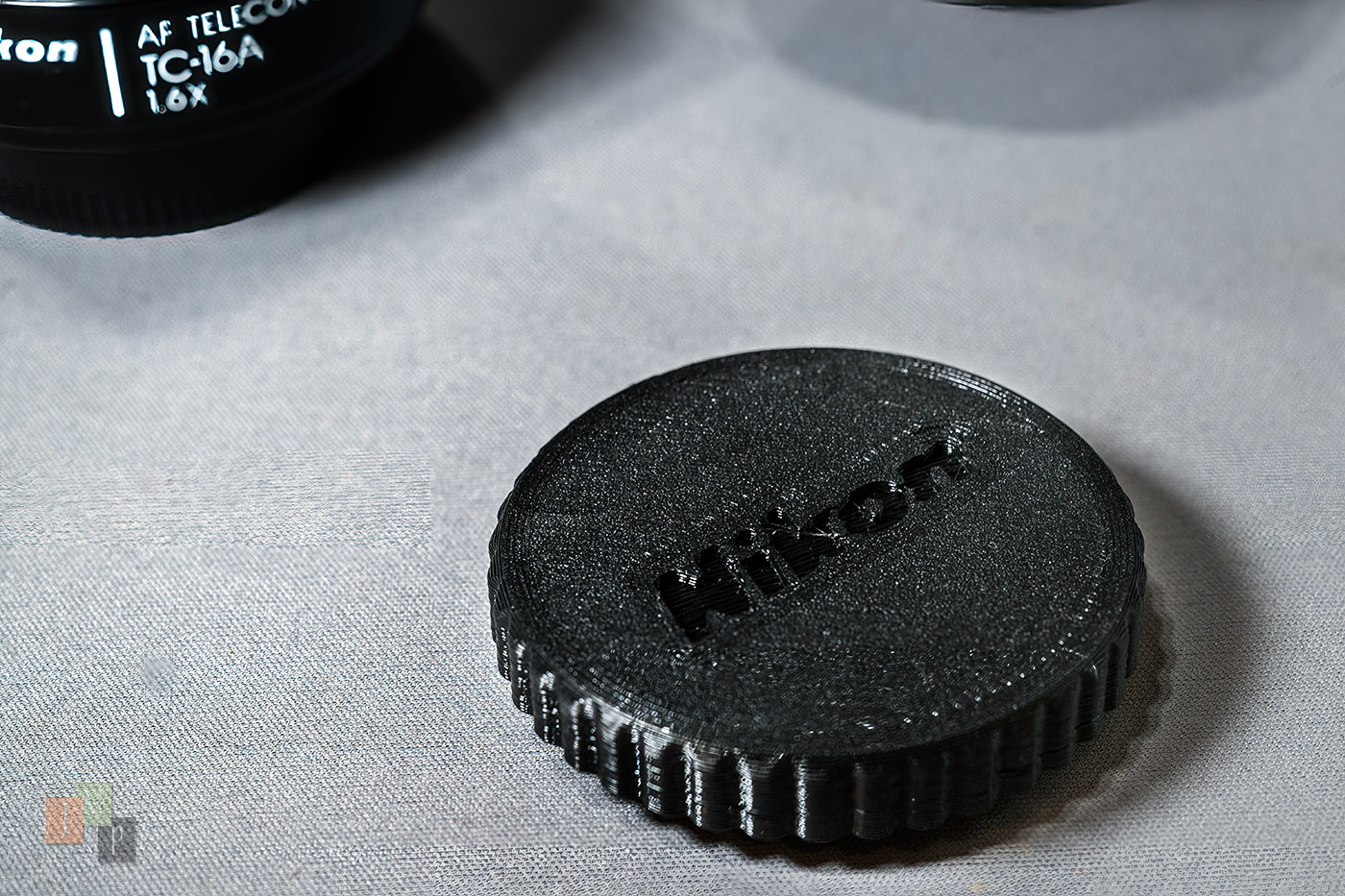
Came with a cool 3D printed body cap - bonus!
saph wrote:
Love the N90s being part of your harvest!!
I thought people here might like to see the core camera from the very first professional portable digital camera (the NC2000 AP) which was based on the Nikon N90 (and later the N90s) SLR. The body is quite sophisticated for the1992-1994 period and even the N90s continued until 2004. I went through 3.5 bodies on the NC 2000 AP, of the three film bodies that failed - all were shutter failures at about 150,000 actuations. The last body I purchased in the late 1990s was $1175 "on sale". It took merely a couple minutes to switch out bodies. Anyway, I looked online what they were going for, and found a complete working one with motor winder for $53. That is less than the sales tax I paid on the last copy I had purchased. So, I bought it, and refreshed my memory reading the 194 page manual. It may be more capable than some may want, but you can use it like a fully auto point and shoot - if you choose. It is a real professional work horse camera, for a really low initial cost. Works with ai, ais, af , afd, and afs (in manual mode) lenses plus my modified TC-16a, and even has AF on some lenses with an unmodified TC-16a. Almost 4fps, runs on AA batteries, 92% viewfinder coverage, auto bracketing the controls are very much the same as Nikon's DSLR cameras. Apparently a sticky substance on the backs and missing or corroded battery compartment units are some of the age afflictions they suffer. If you see some for $10-15 missing the back and battery unit - pass. It likely was used on the digital back until spent.
Almost the same angle as 3min 20 second mark of this movie
?si=tHer1ipvYvp0CAOA
saph wrote:
Nippi wanted to check out some of the famous landmarks in DC, so off we went south on a drive today. Here's Nippi's take on the Lincoln Memorial in summer morning light. Camera was Z7 II with MB-N11 grip.
There's more pictures I need to sort through from the trip.
The digital part was an ugly box on the bottom and back of the body - all held together with a 4 inch screw that threaded into the N90's tripod mount. The plastic bits were tongue and groove pieces that firmed up once the screw was tightened. Inside was an exposed ruby red sensor, a pcmcia drive slot, and a nicad battery attached to an external port. Loosening the screw it would almost self destruct into 3 or 4 pieces. You could tell an engineer made it for dummies in the field with a quarter in their pocket to self service - if needed.
saph wrote:
Love the N90s being part of your harvest!!
James Markus wrote:
Thanks Samy.
I thought people here might like to see the core camera from the very first professional portable digital camera (the NC2000 AP) which was based on the Nikon N90 (and later the N90s) SLR. The body is quite sophisticated for the1992-1994 period and even the N90s continued until 2004. I went through 3.5 bodies on the NC 2000 AP, of the three film bodies that failed - all were shutter failures at about 150,000 actuations. The last body I purchased in the late 1990s was $1175 "on sale". It took merely a couple minutes to switch out bodies. Anyway, I looked online what they were going for, and found a complete working one with motor winder for $53. That is less than the sales tax I paid on the last copy I had purchased. So, I bought it, and refreshed my memory reading the 194 page manual. It may be more capable than some may want, but you can use it like a fully auto point and shoot - if you choose. It is a real professional work horse camera, for a really low initial cost. Works with ai, ais, af , afd, and afs (in manual mode) lenses plus my modified TC-16a, and even has AF on some lenses with an unmodified TC-16a. Almost 4fps, runs on AA batteries, 92% viewfinder coverage, auto bracketing the controls are very much the same as Nikon's DSLR cameras. Apparently a sticky substance on the backs and missing or corroded battery compartment units are some of the age afflictions they suffer. If you see some for $10-15 missing the back and battery unit - pass. It likely was used on the digital back until spent.
James Markus wrote:
The digital part was an ugly box on the bottom and back of the body - all held together with a 4 inch screw that threaded into the N90's tripod mount. The plastic bits were tongue and groove pieces that firmed up once the screw was tightened. Inside was an exposed ruby red sensor, a pcmcia drive slot, and a nicad battery attached to an external port. Loosening the screw it would almost self destruct into 3 or 4 pieces. You could tell an engineer made it for dummies in the field with a quarter in their pocket to self service - if needed.
I did happen to look down into the water today along the way, no coke cans. Hopefully no ones doing that anymore. James Markus wrote:
Almost the same angle as 3min 20 second mark of this movie
That camera is 9-10 years after the NC2000. I wanted one of those, because it was the first full frame Nikon mount digital camera. Canon pipped Kodak at the post by one day in the spring of 2003 with the unsuccessful Canon N. Nikon didn't respond with a FX camera until the D3X, and D3 years later. Kodak financially had a very rough time of it during this period. The rumor was that building digital sensor fabrication plants was the cause of Kodak money problems, but I don't know if that is true.
saph wrote:
Cool history, I got hold of some evolution along this track, the Kodak Pro 14n.
I was always hoping that Contax could have continued with what they had with the N Digital. Contax was what pulled me away from Nikon for a time in the film days. I would always grab one (with those Zeiss lenses) vs Canon from our work lab to take on extended field work on the ships.
James Markus wrote:
That camera is 9-10 years after the NC2000. I wanted one of those, because it was the first full frame Nikon mount digital camera. Canon pipped Kodak at the post by one day in the spring of 2003 with the unsuccessful Canon N. Nikon didn't respond with a FX camera until the D3X, and D3 years later. Kodak financially had a very rough time of it during this period. The rumor was that building digital sensor fabrication plants was the cause of Kodak money problems, but I don't know if that is true.
At the Washington DC Wharf. Plaubel Makina W67, Kodak Vision3 250D. A bit of a story about the apparent light leak at the edges, but will leave that alone DCWharf by Maryland Photos, on Flickr
A more common scene for me. Plaubel Makina W67 fitted with a 62mm Tiffen 85B filter, Kodak Vision3 500T. BaltimoreInnerHarbor by Maryland Photos, on Flickr
Both rolls developed quite ably by NYC Film Lab. A bit expensive, but I have not found another dependable place yet doing ECN-2 development
Recently I got off on a tangent reading the Contax Aria manual. It has impressive specs, and I believe one source claimed it was the smallest and lightest AF SLR ever made. Did you ever use one?
GeorgeBo wrote:
I was always hoping that Contax could have continued with what they had with the N Digital. Contax was what pulled me away from Nikon for a time in the film days. I would always grab one (with those Zeiss lenses) vs Canon from our work lab to take on extended field work on the ships.
My N90s had the sticky back and grip issue. I was very careful with some 99% IPA and a microfiber cloth and got it all off without damaging the surrounding plastic. The AA battery holder had a little corrosion on it, easily cleaned, but it’s cracked and no longer holds batteries securely. I’ve been looking for one for years.
James Markus wrote:
Thanks Samy.
I thought people here might like to see the core camera from the very first professional portable digital camera (the NC2000 AP) which was based on the Nikon N90 (and later the N90s) SLR. The body is quite sophisticated for the1992-1994 period and even the N90s continued until 2004. I went through 3.5 bodies on the NC 2000 AP, of the three film bodies that failed - all were shutter failures at about 150,000 actuations. The last body I purchased in the late 1990s was $1175 "on sale". It took merely a couple minutes to switch out bodies. Anyway, I looked online what they were going for, and found a complete working one with motor winder for $53. That is less than the sales tax I paid on the last copy I had purchased. So, I bought it, and refreshed my memory reading the 194 page manual. It may be more capable than some may want, but you can use it like a fully auto point and shoot - if you choose. It is a real professional work horse camera, for a really low initial cost. Works with ai, ais, af , afd, and afs (in manual mode) lenses plus my modified TC-16a, and even has AF on some lenses with an unmodified TC-16a. Almost 4fps, runs on AA batteries, 92% viewfinder coverage, auto bracketing the controls are very much the same as Nikon's DSLR cameras. Apparently a sticky substance on the backs and missing or corroded battery compartment units are some of the age afflictions they suffer. If you see some for $10-15 missing the back and battery unit - pass. It likely was used on the digital back until spent.
GeorgeBo wrote:
I was always hoping that Contax could have continued with what they had with the N Digital. Contax was what pulled me away from Nikon for a time in the film days. I would always grab one (with those Zeiss lenses) vs Canon from our work lab to take on extended field work on the ships.
I almost bought a Contax back in my film days, but I decided to pay rent and eat instead.
They have them online, but they are as much s I paid for the camera. The MB-10 does add a vertical shutter release, and holds the same 4 AA batteries - is one work-around.
kwoodard wrote:
My N90s had the sticky back and grip issue. I was very careful with some 99% IPA and a microfiber cloth and got it all off without damaging the surrounding plastic. The AA battery holder had a little corrosion on it, easily cleaned, but it’s cracked and no longer holds batteries securely. I’ve been looking for one for years.
I personally owned a 167MT, but would grab the RTS III from our pool of gear at work when ever I could.
James Markus wrote:
Recently I got off on a tangent reading the Contax Aria manual. It has impressive specs, and I believe one source claimed it was the smallest and lightest AF SLR ever made. Did you ever use one?
I only held a stringer's RTS III once, because he was sure the RTV (Real Time Vaccume?) wasn't sucking the film flat to a ceramic back plate. I asked if it sounded different - "no", then how do you kmow it isn't work? Couldn't answer that one. So I told him to bring it to Peter's camera repair. An amazing man that seemed to know everything about all camera brands. Plus he had tons of neat testing equipment. Never saw him or the camera again, but the idea of having the film pulled flat during the exposure, yet release it in time for the next exposure - mechanically no less - sounded like an amazing engeering dance.
GeorgeBo wrote:
I personally owned a 167MT, but would grab the RTS III from our pool of gear at work when ever I could.