gdanmitchell
Offline
• • • • • • •
Upload & Sell: Off
|
 p.1 #11 · Concert Photography - Help Me Decide Please p.1 #11 · Concert Photography - Help Me Decide Please | |
I'm currently working on a long-term project with a slightly different sort of musicians - a couple of professional "classical" orchestras. But the issues are similar in many ways.
Although I'm usually a zoom kinda' guy, for this stuff I mostly shoot large aperture primes. My main go-to lenses are the 24mm f/1.4, the 50mm f/1.4, and the 135mm f/2. And, yes, I crank the ISO well beyond what I might do for other types of shooting. Yes, you'll get more noise - but you can improve that a lot in post, and frankly a little bit of noise in shots of such subjects isn't really a problem and can even produce a nice effect.
If I were using two bodies - typically I'm not - and shooting primes, I might put the 24mm lens on one and the 135mm on the other. With one body, oddly, my first-choice starting lens is often the 50mm, with the others ready to go if I decide to approach things a different way.
Since you have backstage access - and I suspect you may not be subject to some of the awful controls in place at high-end professional performances regarding time and shooting location and ownership of images - take advantage of that. Some of the most interesting stuff happens backstage, and there you can often work with more freedom, perhaps engaging performers in conversation to gain their trust. Plus, the backstage images can create a sense of giving your viewer access to what they otherwise don't see when the acts are on stage, and this creates an added level of intimacy and interest. The wings can also be a great location from which to shoot stage action - you might shoot into the lighting (directly or slightly from the side) to get dramatic effects and to potentially create a POV that seems like that of a performer on stage rather than a listener in the audience.
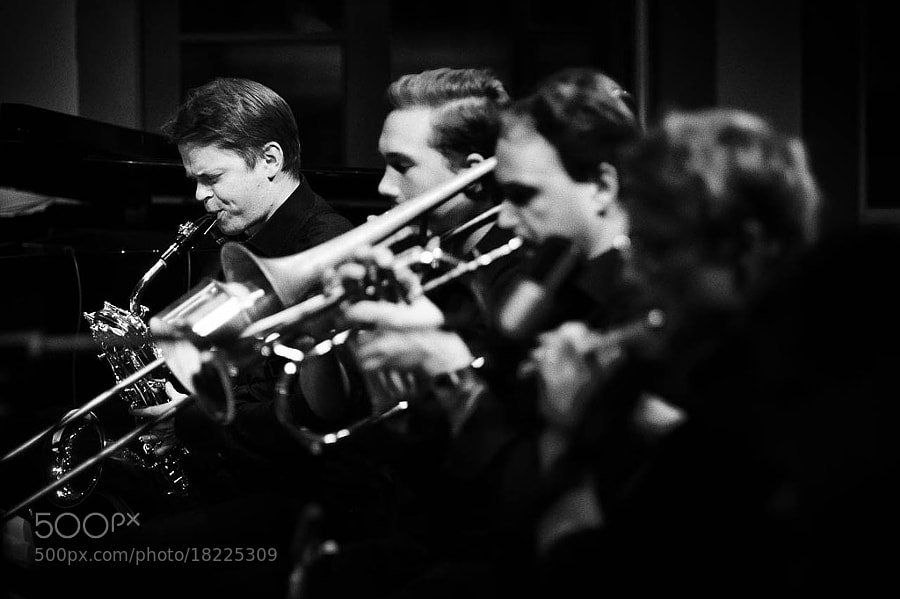
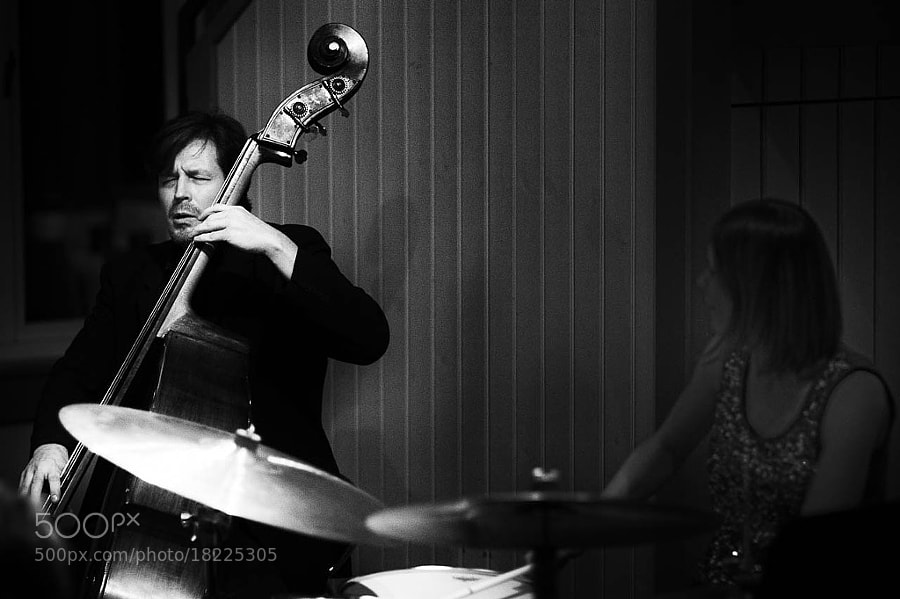
When it comes to photographing performers "in the act," timing is everything. (Well, OK, lighting and position are important, too.) Really watch them and start to try to anticipate those instants when you see an expression, a position of hands and body, a glance, and so forth. Otherwise you just end up with snapshot of people making music. (It isn't easy, and you'll have a lot of miscues.)
Finally, don't neglect a lot of "other stuff" that can be photographically interesting in this environment - equipment, bits of things suggesting the world of performance (small items, etc), the people watching the show, folks involved in the performance who are not the performers (stage crew, managers, etc), and more.
Good luck!
Dan
|