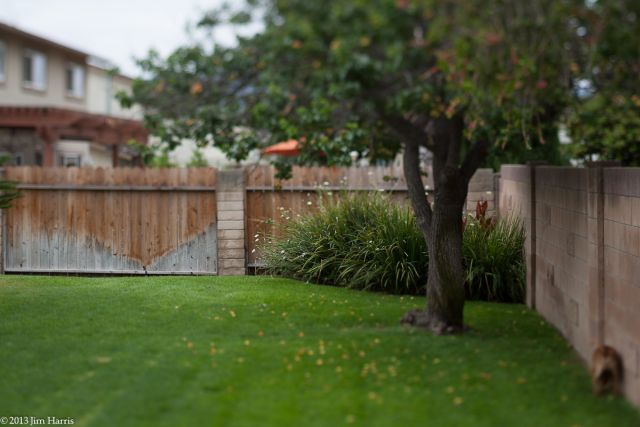
I've been reading and watching videos on tilt shift lenses and my goddess wife has ordered me a - Canon TS-E 45mm f/2.8 as an early pre-open and play with and place under the Christmas tree later gift.
One of the things that people keep saying about this particular lens is that they take it apart and rotate it so that the tilt and shift are on the same plane instead of 90 degrees to one another. Why? I don't understand why they do this.
If anyone has some before/after shots to help visualize I'd appreciate it.
It depends on whether you want the tilt and shift in the same directions or at right angles, and that depends on the subject and camera placement. More often than not I use them in the same direction, for example with landscapes.
Fortunately the newer TSE lenses allow for independent movement.
I don't use tilt as often as I use shift, and I don't often use both features together, so the 45 TS-E being at right angles as it comes is not an issue for me. If it does bother you, and you don't want to do it yourself, you can send to Canon and they will make the adjustment for you.
If you've never used a t/s lens before, I wouldn't worry about this too much. Get used to the lens and you'll learn soon enough whether you need to rotate. The new lenses are great, but in ten years of using all of the t/s glass, I've never needed to rotate the mount on either the 45 or 90. The 17 and 24 are a different story though. Maybe it's the type of images I'm more likely to shoot with them that makes me more likely to need the independent rotation.
After all my talk about not often using the tilt feature, naturally, I have to start using it more!
I did have Canon change my 45 and 90 to tilt "up and down" instead of the norm "side to side". I don't really like the shift and tilt adjustment knobs nearly touching each other, but they can be mastered. I'll try getting used to it before asking to have it returned to original (a no-charge service offered by Canon).
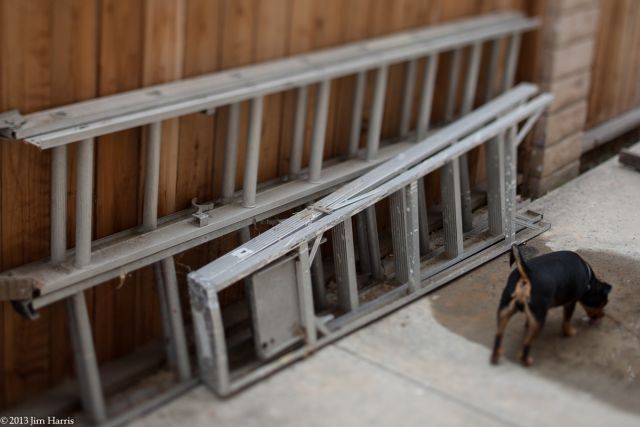
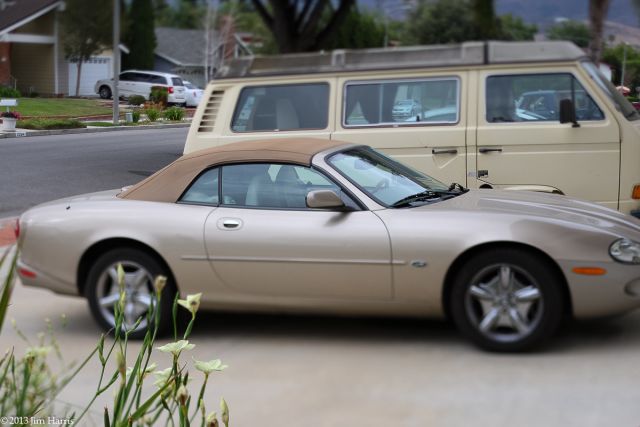
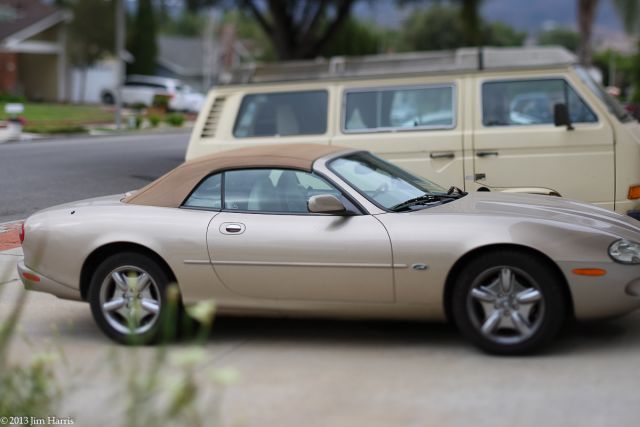
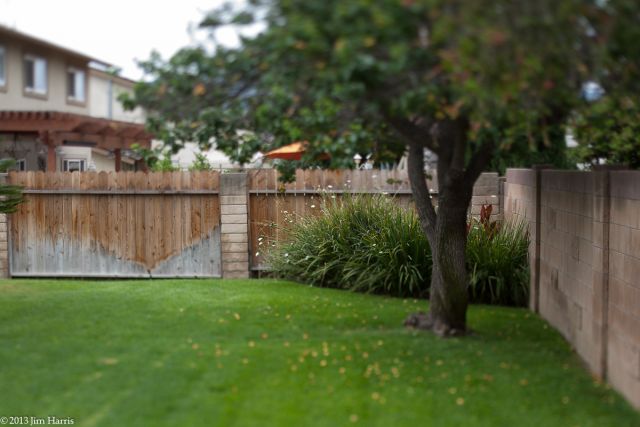
Just playing, wide open at f/2.8. Shot on the 1D3 (APS-H 1.3X sensor), the size is equiv. to 58.5mm -- nice focal length.
Some shots tilted fully one way, and then fully the other (up & down). Interesting how it plays with the "look".
Also -- I tried using Av mode with the tilts, and found the same slight under-exposure and severe over-exposure as happens with shifting (might even compound, but I didn't try both functions at once). Manual exposure is the way to go, but you can get usable stuff with EC and chimping the shots.
The 45 TSE is fun, versatile lens. You can use it on full frame and crop bodies and with a Canon tele-extender. It has some purple fringing CA when shifted but that is fixable in post. Its great for making three pano stitches while avoiding a wide angle look...
I've been reading and watching videos on tilt shift lenses and my goddess wife has ordered me a - Canon TS-E 45mm f/2.8 as an early pre-open and play with and place under the Christmas tree later gift.
One of the things that people keep saying about this particular lens is that they take it apart and rotate it so that the tilt and shift are on the same plane instead of 90 degrees to one another. Why? I don't understand why they do this.
If anyone has some before/after shots to help visualize I'd appreciate it.
There are times when you want more or less foreground/background before tilting for maximum depth of field. If you orient the shift in the same direction as the tilt instead of 90 degrees out, you have greater control over your landscape and architectural images.
If you are looking to join three images for a panorama, then leaving the shift and tilt 90 degrees out might be more useful to you. However, many landscapes don't require a tilt at all. In that case simply reorienting the lens so you can shift right and left while your camera is oriented in landscape proves quite effective.
There is a silver tab on the lens mount that allows you to turn the whole lens incrementally up to 90 degrees without changing the horizontal/vertical position of the camera. This is perfect for taking an vertical panorama of a tall building with the camera in portrait orientation and the shift also in portrait orientation. Use the tilt to control the buildings perspective as desired.
The new 17mm TS-E and the 24mm TS-E II also let you change the tilt/shift orientation without removing screws, adding more versatility in the field.