p.67 #1 · Sigma DP2 Merrill: Have any of you tried it?
glacierpete wrote:
There was a posting on dpreview with a highly interesting link to a jap website offering putting various mounts on a dpxx for changeable lenses.
The images show ad dpxx with leica lenses and a cv15.
I often thought I would love to use my Leica 90 TE on my dp2m. Preferable on a Sony mount with a helicoid adapter for closer focusing.
One dp2m body with its orignal lens and a second modified body with a Leica 90 TE and a CV15 would be a perfectly portable package.
p.67 #2 · Sigma DP2 Merrill: Have any of you tried it?
Guys, i ordered 2 ricoh db-65 from keyboardshop.in, well, without reading the fine print.
Today i got the batteries of the similar specs, but not the original ricoh ones.
Worst thing is, they have somewhat different grooves at the bottom, so the battery goes in but doesn't lock itself in.
Sigma BP41 has 2 grooves at the bottom which are bigger area wise...
Is there a solution? How do i cut the grooves to make it fit in...
someone who has done this?
p.67 #4 · Sigma DP2 Merrill: Have any of you tried it?
I've trimmed an off-brand Ricoh battery replacement to fit the Sigma DP2M. You can hold the battery side-by-side with the Sigma one to see how much material to remove. Using a sharp knife, whittle away plastic chips until you've cleared the area, and the battery fits in the DP2M. Note, unfortunately, that this opens holes into the plastic cavity around the battery inside (be careful not to cut too deep and nick the interior), so you'll want to be extra careful about getting moisture/dust inside.
p.67 #11 · Sigma DP2 Merrill: Have any of you tried it?
Time for me to join this thread. Here in Japan on my final day on a holiday, I was in Yobadashi, which operates a camera store where you can play with just about everything. What a toy land. One could spend hours in there. I played with a Canon 1DX w/50mm f/1.2 lens on it, a Nikon D800 w/ Zeiss 18mm lens on it, all the Fuji X lenses and finally, the Sigma DP2m.
For this camera I slipped in my own SD card and then shot off about 20 raw files. I got home, downloaded the mac version of SPP and started to look around. Very very impressive resolution. And the lens seems absolutely top notch. I love shooting with high end glass and this Sigma seems very impressive. The camera seems adequate at best, but I know Sigma designs terrible cameras that are outclassed by just about everything ever made. My old Fuji F10 seems faster and more modern. But a poor camera does not bother me if the glass and output is good.
So I'm tempted to jump into this world of Sigma. I live in urban Shanghai and wonder if a camera like this is suitable. Not really a landscape environment, more like cityscape/street photography. I know that ISO400 and up is not good for this camera. I am ready to limit my ISO use and am actually quite used to that since I shoot a lot of film still. I rarely use anything higher than ISO400 film and my cameras have a maximum aperture of f/4, so the Sigma already has a 1 stop advantage.
Very tempting......
My other option is the Fuji X-E1 which also has an interesting look to it....
p.67 #12 · Sigma DP2 Merrill: Have any of you tried it?
I just got the viewfinder today - I know there was no AF-point (of course not) and not perfect parallel, and that is OK, I knew that, but
... There is no dioptri, so I can not see clear - even I do not wear glasses, only for reading = This is bad, I would rather pay more and get the dioptri.
I was not aware that I needed this so much - all my other cameras (4) has it, so I did not pay attention to this problem, when I ordered it.
This is the problem with this camera - the handling is not good, but the IQ is worldclass, and also very fine menus, does that I love it and forgive the rest - I even think about getting the 19mm also
p.67 #13 · Sigma DP2 Merrill: Have any of you tried it?
Rattymouse:
I think you would do very well with the XE-1. It has some very nice lenses already and some more to come. I have been eyeballing it with the 14mm lens. However I have seen conflicting samples from the 14mm (CA, corner resolution etc).
The Sigma cameras are limited and what they do well they do really well. I have both the DP1M and DP2M and personally I have always been a wide angle person for that type of camera. However I find that the DP2M lens is really capable. Both are sluggish and the Fuji cameras are probably a lot snappier as such. But in reality they work fine. I did find it a little hard to do well timed shots though the type of shots that suit the Sigma cameras are in my case seldom in need of impeccable timing on my behalf.
I really need to get some printing done. I do think the Sigma - within its limitations - will perform really well. Sigma software could use some refinement too though it does a pretty good job - a little on the slow side and tuning WB / using the color wheel is awkward at best.
p.67 #15 · Sigma DP2 Merrill: Have any of you tried it?
rattymouse wrote:
Time for me to join this thread. Here in Japan on my final day on a holiday, I was in Yobadashi, which operates a camera store where you can play with just about everything. What a toy land. One could spend hours in there. I played with a Canon 1DX w/50mm f/1.2 lens on it, a Nikon D800 w/ Zeiss 18mm lens on it, all the Fuji X lenses and finally, the Sigma DP2m.
For this camera I slipped in my own SD card and then shot off about 20 raw files. I got home, downloaded the mac version of SPP and started to look around. Very very impressive resolution. And the lens seems absolutely top notch. I love shooting with high end glass and this Sigma seems very impressive. The camera seems adequate at best, but I know Sigma designs terrible cameras that are outclassed by just about everything ever made. My old Fuji F10 seems faster and more modern. But a poor camera does not bother me if the glass and output is good.
So I'm tempted to jump into this world of Sigma. I live in urban Shanghai and wonder if a camera like this is suitable. Not really a landscape environment, more like cityscape/street photography. I know that ISO400 and up is not good for this camera. I am ready to limit my ISO use and am actually quite used to that since I shoot a lot of film still. I rarely use anything higher than ISO400 film and my cameras have a maximum aperture of f/4, so the Sigma already has a 1 stop advantage.
Very tempting......
My other option is the Fuji X-E1 which also has an interesting look to it....
I have both cameras you mention (they are actually my only digital cameras) and they are almost complete opposites of each other. That's not to say you couldn't accomplish the same result with either camera (in a situation where each camera can operate within its means), but frankly they are more complimentary than they are similar.
p.67 #16 · Sigma DP2 Merrill: Have any of you tried it?
Actually the DP2M is fantastic for cityscapes as it particularly good at resolving edges and textures. In fact I think I prefer it for this rather than for country landscapes where the detail resolved can be a bit overwhelming and demand a better than 50% view to gain the full 'foveon' effect.
p.67 #18 · Sigma DP2 Merrill: Have any of you tried it?
I entered the DP2M train 2 weeks ago. Still learning but so satisfied that tomorrow I´ll get my DP3M as well. Both will accompany me to Portugal next week. I hope to making some showable results. Unfortunately my Nikon D800e will stay at home.
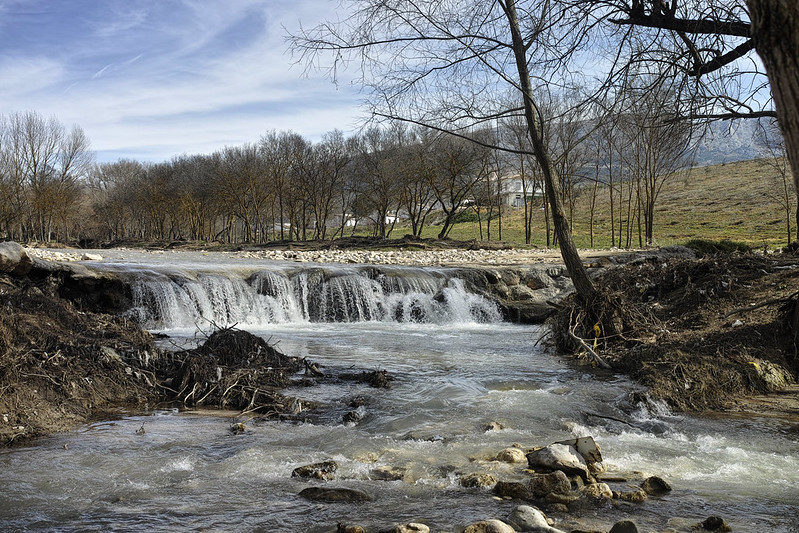
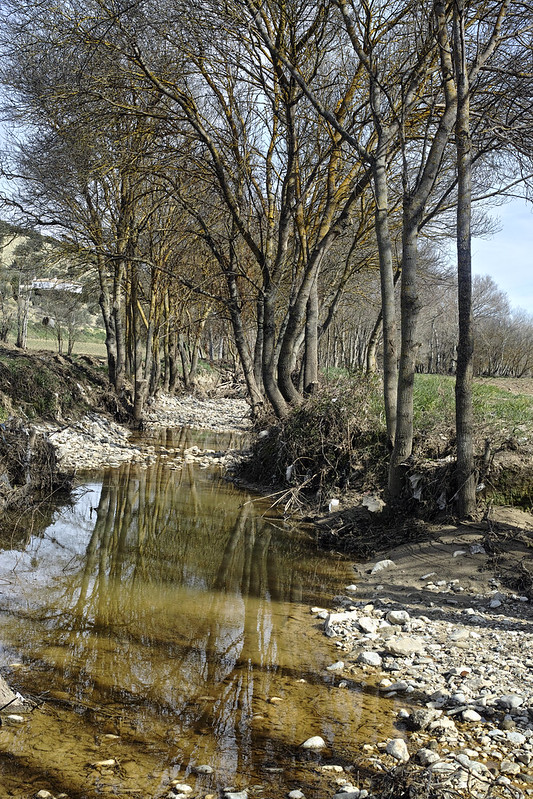
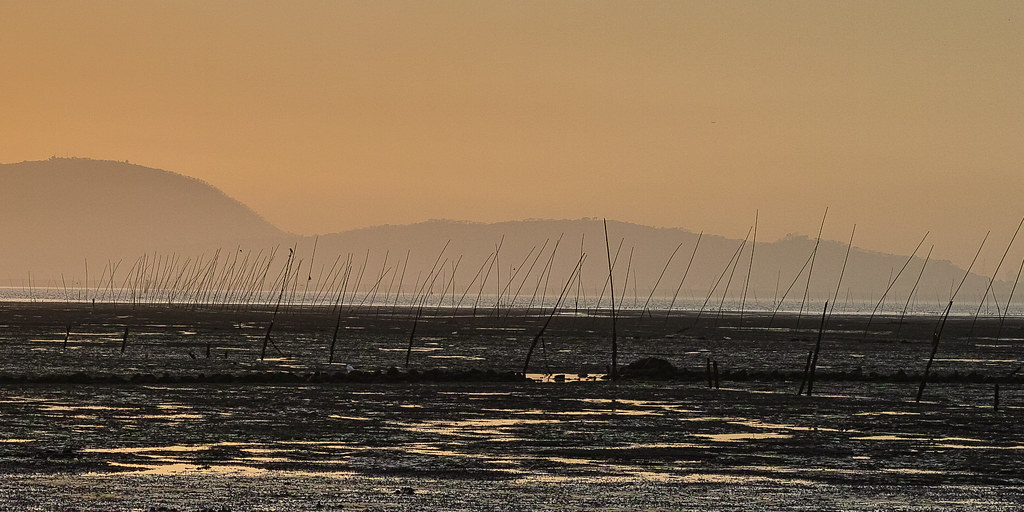
One of the very first photos without post processing. I feel like in analog times. Take the photo and enjoy the result.