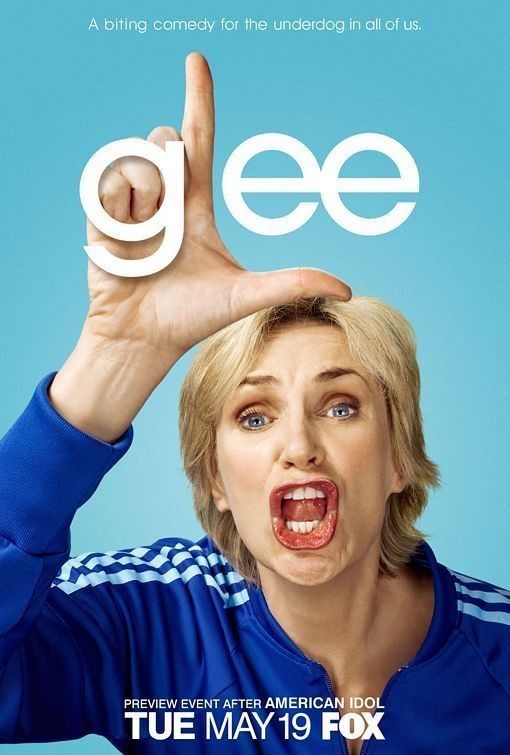
I got an assignment to shoot several people and produce pictures that look like the Glee series posters. These posters seem to have a consistent lighting/processing, especially a similar background:
I wonder if the process behind is a Photoshop clipping. I am not really sure about it. Could someone confirm this?
If this is the result of clipping, I would be really grateful if someone could share a lighting setup and background that makes clipping easier, especially considering rim light in the hair.
If not the case, did someone shoot in similar conditions for character/background lighting?
I would use colored seemless paper with a umbrella to light the paper, then add a light with a snoot a stops higher with a colored gel to make a circle on the back. A striplight light on each side from behind for the rim lights a few stops higher then my key light.
AbSamarobriva wrote:
...I wonder if the process behind is a Photoshop clipping. I am not really sure about it. Could someone confirm this?
If this is the result of clipping, I would be really grateful if someone could share a lighting setup and background that makes clipping easier, especially considering rim light in the hair.
It could have been done with colored backgrounds, and #1 and #3 could have used a background spot centered behind the subjects to give a brighter center.
It could also have been done in Photoshop. There are actually many ways to get the same look, so only the people with inside information on the Glee shoot know for sure how they did it.
One way you could do something similar is to shoot your subjects with a pure white background. Then you can use Photoshop layers to insert any background you want.
Here's a link to some tutorials on shooting white knockout backgrounds:
Can also use a grey or white background and gels on two lights for the background to get any color you can imagine without buying a bunch of seamless rolls.
These were all shot using a white background. That's how it's done in entertainment advertising. Creative Directors like the option of exploring different colors, so the backgrounds are kept generic for these purposes.
photosymbol wrote:
Even though the catchlights don't show it, i'm fairly certain there was a ringflash used on this one...
My guess would be one light to the camera's upper left, and one light each at lower left and lower right, close enough to the lens axis to give a sort-of ring light look, but not quite.
#1 - This appears to be a composite of two separate shots. If shot together the subject in back would have shaded the accents seen in the hair of the subject in front. Judging from the catchlights and shadows on the lower full face subject the key light is about 45° to the left and 45° above her eye line. The subject on top, in similar key lighting is turned towards the light more. Fill source catch light indicates it is low and to the right. Accent lights from behind from both sides. Background added in Photoshop which is easy to do with masking plug-ins or by hand if you have some patience. Just fill a layer on top with solid color and use a mask to knock out the subject.
#2 - Getting light in the mouth like that requires near axis fill which appears from the catchlight to be coming from two softboxes placed just below the lens on either side. The shadow angle clues and a faint catchlight up at 11 o'clock indicate a key light about 45° to the left of the nose. As with the first shot the background appears to have been added with masking. Don't see any evidence the back rim lighting as in the first shot.
#3 - Key lighting on the face is similar to the others, above and to the left. Shadows are even and open, an indication of near axis fill but tone of the shadows on the arm being darker than those on the face would seem to indicate one or the other, or both, were adjusted in PP. No accent lighting appears to have been used and as with the others think the background was added in PP with masking.
Watched the BTS video and learned a few things - most interesting to me was the live DJ working it for the models - totaly want to do that for my next shoot!
It's extremely rare to see a colored background on special shoots. I've worked on over a 1000 entertainment projects over the years and have never once seen any photography come in with colored backgrounds. Given that all the printed explorations were created in photoshop I'm curious at to why they would go through all the bother of using colored backgrounds. Nor have I ever seen multiple photographers on the same shoot. Leaves me scratching my head. I have contacts at Fox, I'll see if I can get an answer on that one.
Never heard of a DJ on set - cool idea. Most photoshoots have some form of music, usually an ipod plugged in somewhere to create the appropriate ambience.
The video on youtube is a bit misleading for this particular thread as the shots from Miranda Penn Turin probably weren't used in the above shots. I'm not sure who the guy is shooting them on the white background in the video but that's probably the setup used for the shots above and as Deezie says replaced with whatever color they want with the flavor of that second ;-). A dj is an awesome addition to any shoot but most of the time music playing is always a big help to loosen the models up. Also, the interview shots w/ blue backdrop was a different setup from the actual photoshoot.
It's a bit hard to look at shots like those posted above to faithfully replicate because these are wonders of compositing in PS. Yes, the top shot is probably a composite. I've taken classes with a few top industry retouchers and the finished products they show us are truly mind bending as they have hundreds of layers.