which lens has the most 3D POP?

p.79 #1which lens has the most 3D POP?
gdanmitchell wrote:
What I came up with at the end of the research phase were eight criteria for 3D, or in cinespeak: 'dimensionality'. They work together to create the look. Before listing them, there are other excellent resources for this material, in particular the Dirty photography club, a YouTube account. We are all finding our way along the path less trodden.
The point outlined above, of linear focus fade, is my criterion #1: *The first and most important criterion of image dimensionality deals with the transition zone and its critical role in displaying image depth.* The Transition Zone and the handling of its contents are key to a lifelike longitudinal (or axial/on-axis) representation of the real world in our image content. As discussed and shown above.
The other criteria are, in order:
2. Bokeh Structure Retention. This attribute describes the ability of lenses to image background elements (contents: objects, motifs) sufficiently that they retain their shape and are still recognisable, even in moderate-to-deep bokeh. Very important to deep scene 3D, even in well advanced bokeh.
3. Iris (aperture) Blade Counts should be sufficiently high; most cutting-edge lens makers now use 14-15-16 blades. This range is the new sweet spot. The producers receive no complaints for adopting high blade irises, only kudos for bokeh quality. A few recent longer focal length lenses are now fitted with 18-blade iris mechanisms. Image content in the out-of-focus zones that, by design, remains clearly identifiable and pleasantly soft can be further enhanced by a gorgeous soft haloing fade that surrounds them, using 'designer bokeh'. Leica, one of many, do not actually design for bokeh quality - at all! Circularity of irises is very probably a very important factor in the shaping of objects in the bokeh field, and you then get to avoid the jagged edges we see so commonly. Zeiss now fits 16 blade apertures to their Supreme Primes, for example.
4. Particularly in stills photography but also in cinema, curvature of field (or field curvature) was long-considered to be a major obstacle that must be overcome. Obviously, it should have been otherwise and should have been better understood, that curvature is an attribute of the human visual system – of perception, if you will. There was also the long experience cinema had accumulated with Cooke lenses, and their natural field curvature and field shaping.
5. Micro-contrast, so beloved of pixel-level fans and image croppers. It is an understandable preoccupation for the (proportionately few) large print makers, who desire fine detail in for example, landscape prints. Taken to extremes, however, high micro-contrast (high frequency spatial data) images of human faces are as repulsive as macro images of hairy spiders – you just see too much, skin pores, discolouration and imperfections. It’s the reason why advocates of naturalistic, deep imagery advise those new to the debate to stay away from modern APO lenses. Many such lenses use recently developed special glass formulations to deliver very high fine detail at the focal plane. I'll add that ARRI engineers actively reduce micro-contrast to meet with greater favor in the movies they are used to film.
6. The sixth criterion of dimensionality relates to the human preference for warm images over cool images. Even the perception of colour is difficult to ascertain in many edge cases. Some lenses appear warm but are actually on the cool side of the line in technical tests. In the stills world, many Voigtlander lenses are simply too cool for attractive people photography, while at the same time being well-regarded for uses they excel at, notably landscape and street photography. Image warmth needs to be handled well, to work effectively. It is not always as simple as dialling up a profile in post-processing or moving white balance a little.
An example is shown in Matt Osborne’s comparison of the Voigtlander 28mm F1.4 and the Thypoch Simera equivalent lens. Bleak European days never looked bleaker. YouTube video: ‘THYPOCH vs VOIGTLANDER (Simera 28mm 1.4 vs Nokton 28mm 1.5)’
7. The seventh criterion of dimensionality is the value of, and proportionate use of vignette. In the stills photography realm, the unquenchable pursuit of aberration eradication has led to the review community awarding kudos to lenses – even those of F1–F1.4 – that lack all traces of vignette in wide open usage, while sharply criticising lenses that incorporate some degree of vignette, even by design.
It’s a further example of unreasonable and unrealistic demands being made in ignorance of several countervailing factors. These factors have serious impacts on the utility, cost, design effort and size/weight of the lens in question – in particular, fast lenses. As evidenced here, natural human vision is best emulated in many high-end cine lenses by judicious use of artistic vignette, together with ‘focus fade’, lower contrast and softness of detail in the outer sections of image frames.
Drawing attention to centrally-oriented subject matter, surrounded by gracefully fading image content, is very much an established principle in cine lens design. It permits designers to get the best, most impactful and dramatic performance in the image segment that most photographers use for their main focus.
8. The eighth criterion of dimensionality is controversial but very important. It is the way lenses treat tonal variation, particularly how light is reflected from human faces. This issue deals with the ability of, and variation between, lenses to record the tonal range of the material being photographed.
Dear reader, do you think that all lenses pass the tonal range of the composition to the sensor in a more-or-less uniform way, every lens the same? Or is it true, or at least plausible, that some lenses produce more graceful highlights and greater detail in their shadows? The very fact that the question may be asked tells us how little we know about our cherished optical instruments.
We are talking here, not of micro-contrast that occurs within the overall tonal scale, but of the distribution of tones within each major section of that overall tone range captured in the image: the shadows, the midtones and highlights. Tonal gradation matters greatly to the apprehension of 3D.I like what you say here.
I find that for me one of the best ways to understand photographic images and the qualities that make an image and a rendering beautiful is to look at paintings. Lately, I have been especially looking at 17th Century Dutch painting, which both relates to the subjects I like to photograph and whose "rendering" I find especially beautiful. Spending time looking at Vermeer's faces, bodies, postures, and gestures, his spatial organization (or "dimensionality"), composition, rendering of light and color, his rooms, walls, and fabrics, his handling of windows, reflections, and translucency, his evocation of meaning and emotion, etc., is for me a way to learn a great deal about how to see photographs better and how to improve the images that I make, as well as a great pleasure in its own right.Useful to ask, "What makes a painting 'pop'?" 
At the end of the day ... it is the mastery of understanding regarding human physiological cues. Then, using the various tools of your discipline to develop those cues.
This holds true in all 2D disciplines trying to develop depth cues ... painting, drawing, photographic, cinematic, etc.
Which, then begs the question of "What are the human physiological cues for perceiving depth?" ... the foundation of the subject, as we aspire for human (i.e. the viewer) perception of depth in our work. Largely, the answer is rooted in rates of transition variance in multiple attributes ... tonal, scale, saturation, hue, contrast, detail, focus, etc.
Where care is taken to align the differing attributes, the effect is enhanced. Where a mismatch of attributes are incongruous with each other, the effect is diminished. Having a complete understanding of these attributes affords the creator to present the effect in varying degrees ... ultimately being a matter of Trompe' Loeil, via the understanding of those human physiological response cues for rendering "3D" (depth cues) in a 2D medium.
chiron wrote
philip_pj wrote
It's all provisional, and many different ways to learn by seeing.What I came up with at the end of the research phase were eight criteria for 3D, or in cinespeak: 'dimensionality'. They work together to create the look. Before listing them, there are other excellent resources for this material, in particular the Dirty photography club, a YouTube account. We are all finding our way along the path less trodden.
The point outlined above, of linear focus fade, is my criterion #1: *The first and most important criterion of image dimensionality deals with the transition zone and its critical role in displaying image depth.* The Transition Zone and the handling of its contents are key to a lifelike longitudinal (or axial/on-axis) representation of the real world in our image content. As discussed and shown above.
The other criteria are, in order:
2. Bokeh Structure Retention. This attribute describes the ability of lenses to image background elements (contents: objects, motifs) sufficiently that they retain their shape and are still recognisable, even in moderate-to-deep bokeh. Very important to deep scene 3D, even in well advanced bokeh.
3. Iris (aperture) Blade Counts should be sufficiently high; most cutting-edge lens makers now use 14-15-16 blades. This range is the new sweet spot. The producers receive no complaints for adopting high blade irises, only kudos for bokeh quality. A few recent longer focal length lenses are now fitted with 18-blade iris mechanisms. Image content in the out-of-focus zones that, by design, remains clearly identifiable and pleasantly soft can be further enhanced by a gorgeous soft haloing fade that surrounds them, using 'designer bokeh'. Leica, one of many, do not actually design for bokeh quality - at all! Circularity of irises is very probably a very important factor in the shaping of objects in the bokeh field, and you then get to avoid the jagged edges we see so commonly. Zeiss now fits 16 blade apertures to their Supreme Primes, for example.
4. Particularly in stills photography but also in cinema, curvature of field (or field curvature) was long-considered to be a major obstacle that must be overcome. Obviously, it should have been otherwise and should have been better understood, that curvature is an attribute of the human visual system – of perception, if you will. There was also the long experience cinema had accumulated with Cooke lenses, and their natural field curvature and field shaping.
5. Micro-contrast, so beloved of pixel-level fans and image croppers. It is an understandable preoccupation for the (proportionately few) large print makers, who desire fine detail in for example, landscape prints. Taken to extremes, however, high micro-contrast (high frequency spatial data) images of human faces are as repulsive as macro images of hairy spiders – you just see too much, skin pores, discolouration and imperfections. It’s the reason why advocates of naturalistic, deep imagery advise those new to the debate to stay away from modern APO lenses. Many such lenses use recently developed special glass formulations to deliver very high fine detail at the focal plane. I'll add that ARRI engineers actively reduce micro-contrast to meet with greater favor in the movies they are used to film.
6. The sixth criterion of dimensionality relates to the human preference for warm images over cool images. Even the perception of colour is difficult to ascertain in many edge cases. Some lenses appear warm but are actually on the cool side of the line in technical tests. In the stills world, many Voigtlander lenses are simply too cool for attractive people photography, while at the same time being well-regarded for uses they excel at, notably landscape and street photography. Image warmth needs to be handled well, to work effectively. It is not always as simple as dialling up a profile in post-processing or moving white balance a little.
An example is shown in Matt Osborne’s comparison of the Voigtlander 28mm F1.4 and the Thypoch Simera equivalent lens. Bleak European days never looked bleaker. YouTube video: ‘THYPOCH vs VOIGTLANDER (Simera 28mm 1.4 vs Nokton 28mm 1.5)’
7. The seventh criterion of dimensionality is the value of, and proportionate use of vignette. In the stills photography realm, the unquenchable pursuit of aberration eradication has led to the review community awarding kudos to lenses – even those of F1–F1.4 – that lack all traces of vignette in wide open usage, while sharply criticising lenses that incorporate some degree of vignette, even by design.
It’s a further example of unreasonable and unrealistic demands being made in ignorance of several countervailing factors. These factors have serious impacts on the utility, cost, design effort and size/weight of the lens in question – in particular, fast lenses. As evidenced here, natural human vision is best emulated in many high-end cine lenses by judicious use of artistic vignette, together with ‘focus fade’, lower contrast and softness of detail in the outer sections of image frames.
Drawing attention to centrally-oriented subject matter, surrounded by gracefully fading image content, is very much an established principle in cine lens design. It permits designers to get the best, most impactful and dramatic performance in the image segment that most photographers use for their main focus.
8. The eighth criterion of dimensionality is controversial but very important. It is the way lenses treat tonal variation, particularly how light is reflected from human faces. This issue deals with the ability of, and variation between, lenses to record the tonal range of the material being photographed.
Dear reader, do you think that all lenses pass the tonal range of the composition to the sensor in a more-or-less uniform way, every lens the same? Or is it true, or at least plausible, that some lenses produce more graceful highlights and greater detail in their shadows? The very fact that the question may be asked tells us how little we know about our cherished optical instruments.
We are talking here, not of micro-contrast that occurs within the overall tonal scale, but of the distribution of tones within each major section of that overall tone range captured in the image: the shadows, the midtones and highlights. Tonal gradation matters greatly to the apprehension of 3D.
I find that for me one of the best ways to understand photographic images and the qualities that make an image and a rendering beautiful is to look at paintings. Lately, I have been especially looking at 17th Century Dutch painting, which both relates to the subjects I like to photograph and whose "rendering" I find especially beautiful. Spending time looking at Vermeer's faces, bodies, postures, and gestures, his spatial organization (or "dimensionality"), composition, rendering of light and color, his rooms, walls, and fabrics, his handling of windows, reflections, and translucency, his evocation of meaning and emotion, etc., is for me a way to learn a great deal about how to see photographs better and how to improve the images that I make, as well as a great pleasure in its own right.
At the end of the day ... it is the mastery of understanding regarding human physiological cues. Then, using the various tools of your discipline to develop those cues.
This holds true in all 2D disciplines trying to develop depth cues ... painting, drawing, photographic, cinematic, etc.
Which, then begs the question of "What are the human physiological cues for perceiving depth?" ... the foundation of the subject, as we aspire for human (i.e. the viewer) perception of depth in our work. Largely, the answer is rooted in rates of transition variance in multiple attributes ... tonal, scale, saturation, hue, contrast, detail, focus, etc.
Where care is taken to align the differing attributes, the effect is enhanced. Where a mismatch of attributes are incongruous with each other, the effect is diminished. Having a complete understanding of these attributes affords the creator to present the effect in varying degrees ... ultimately being a matter of Trompe' Loeil, via the understanding of those human physiological response cues for rendering "3D" (depth cues) in a 2D medium.
Oct 21, 2025 at 07:31 AM
p.79 #2which lens has the most 3D POP?
nehemiahphoto wrote:
I have followed this thread on and off for some years. Have any helpful a/b controlled comparison been posted?
No.
I have followed this thread on and off for some years. Have any helpful a/b controlled comparison been posted?
No.
Oct 21, 2025 at 09:05 AM
p.79 #3which lens has the most 3D POP?
Daran wrote:
No.
lol my man—appreciate the brevity.
@mudlake Thanks for sharing your thoughts and video—I have see it before. I think I’m quite familiar with most of the concepts people here are talking about here. I have thoughts of my own and am particularly sensitive to lens’ color, contrast and dimensionality (which is where most of a lenses magic reside IMO).
At this point in time, I am more interested in intelligent comps than theory though
nehemiahphoto wrote
I have followed this thread on and off for some years. Have any helpful a/b controlled comparison been posted?lol my man—appreciate the brevity.
@mudlake Thanks for sharing your thoughts and video—I have see it before. I think I’m quite familiar with most of the concepts people here are talking about here. I have thoughts of my own and am particularly sensitive to lens’ color, contrast and dimensionality (which is where most of a lenses magic reside IMO).
At this point in time, I am more interested in intelligent comps than theory though
Oct 21, 2025 at 09:17 AM
p.79 #4which lens has the most 3D POP?
DDD or not?
Click on the link for a sharp view.
 DSC05250 by Werner Wurst, on Flickr
Edited on Oct 21, 2025 at 09:57 AM · View previous versions
Click on the link for a sharp view.
DSC05250 by Werner Wurst, on FlickrEdited on Oct 21, 2025 at 09:57 AM · View previous versions
Oct 21, 2025 at 09:44 AM
p.79 #5which lens has the most 3D POP?
DDD or not?
Click on the link for a sharp view.
 DSC07702 (1) by Werner Wurst, on Flickr
Edited on Oct 21, 2025 at 09:57 AM · View previous versions
Click on the link for a sharp view.
DSC07702 (1) by Werner Wurst, on FlickrEdited on Oct 21, 2025 at 09:57 AM · View previous versions
Oct 21, 2025 at 09:47 AM
p.79 #6which lens has the most 3D POP?
DDD or not?
Click on the link for a sharp view.
 DSC06887~2 by Werner Wurst, on Flickr
Edited on Oct 21, 2025 at 09:56 AM · View previous versions
Click on the link for a sharp view.
DSC06887~2 by Werner Wurst, on FlickrEdited on Oct 21, 2025 at 09:56 AM · View previous versions
Oct 21, 2025 at 09:49 AM
p.79 #7which lens has the most 3D POP?
DDD or not?
Click on the link for a sharp view.
 DSC06371 by Werner Wurst, on Flickr
Click on the link for a sharp view.
DSC06371 by Werner Wurst, on FlickrOct 21, 2025 at 09:55 AM
p.79 #8which lens has the most 3D POP?
DDD or not?
Click on the link for a sharp view.
 DSC06352 by Werner Wurst, on Flickr
Click on the link for a sharp view.
DSC06352 by Werner Wurst, on FlickrOct 21, 2025 at 09:59 AM
p.79 #9which lens has the most 3D POP?
"The use of modern photography lenses for beautiful cinematography is rare, mostly because many modern photo lenses lack a distinct and artistic character, instead prioritizing sharp images that can feel devoid of life."
"Images captured with the Thalia 65 lenses can appear to have an added depth and dimensionality, especially on large sensors, due to a gradual focus fall off curve. Rather than even, flat layers of focus across the frame..."
That is some background to the strong emphasis Sonderoptic placed on Aesthetic Image Design, with the pursuit of beauty leading them to adopt: 'gradual focus fall-off', 'image depth' and 'out-of-focus elements maintaining their structure' as the driving forces of their lens design.
Image rendering is targeted as being: deep, smooth and informative, therefore.
Some may wonder: why do we need a large number of aperture blades? (The Thalias have 15 blade irises). It seems to be because they play a part in the ultra smoothing of still vibrantly visible image motifs that 'maintain their structure' in what is euphemistically called 'bokeh':
"And the newly designed circular iris keeps the bokeh smooth and beautiful through all stops while maintaining structure in the out-of-focus details. The innovative iris design of the Thalia lenses maintains a circular iris through all aperture stops, creating a cinematic bokeh that comes alive with character. Out of focus elements maintain their structure, which further adds to the sense of dimensionality of the image."
through all aperture stops..
creating cinematic bokeh..
adds to dimensionality..
These are the effects of circular irises, according to not just CW Sonderoptic, but many industry insiders as well. It's not a new idea, either, there were many high blade count lenses made deep back into last century. Maybe the industry decided to cheap out, around the time cameras were changing from beloved scientific instruments into consumer goods. Still, better late than never.
https://www.leitz-cine.com/product/thalia
https://cvp.com/pdf/cw-sonderoptic-leica-cine-lens-brochure-2016--2-.pdf
Oct 21, 2025 at 11:37 PM
p.79 #10which lens has the most 3D POP?
Is it actually permissible to broadcast continuous advertising in this forum without labeling it as such? This intrusiveness is almost unbearable.
Oct 22, 2025 at 12:01 AM
|
p.79 #11which lens has the most 3D POP?
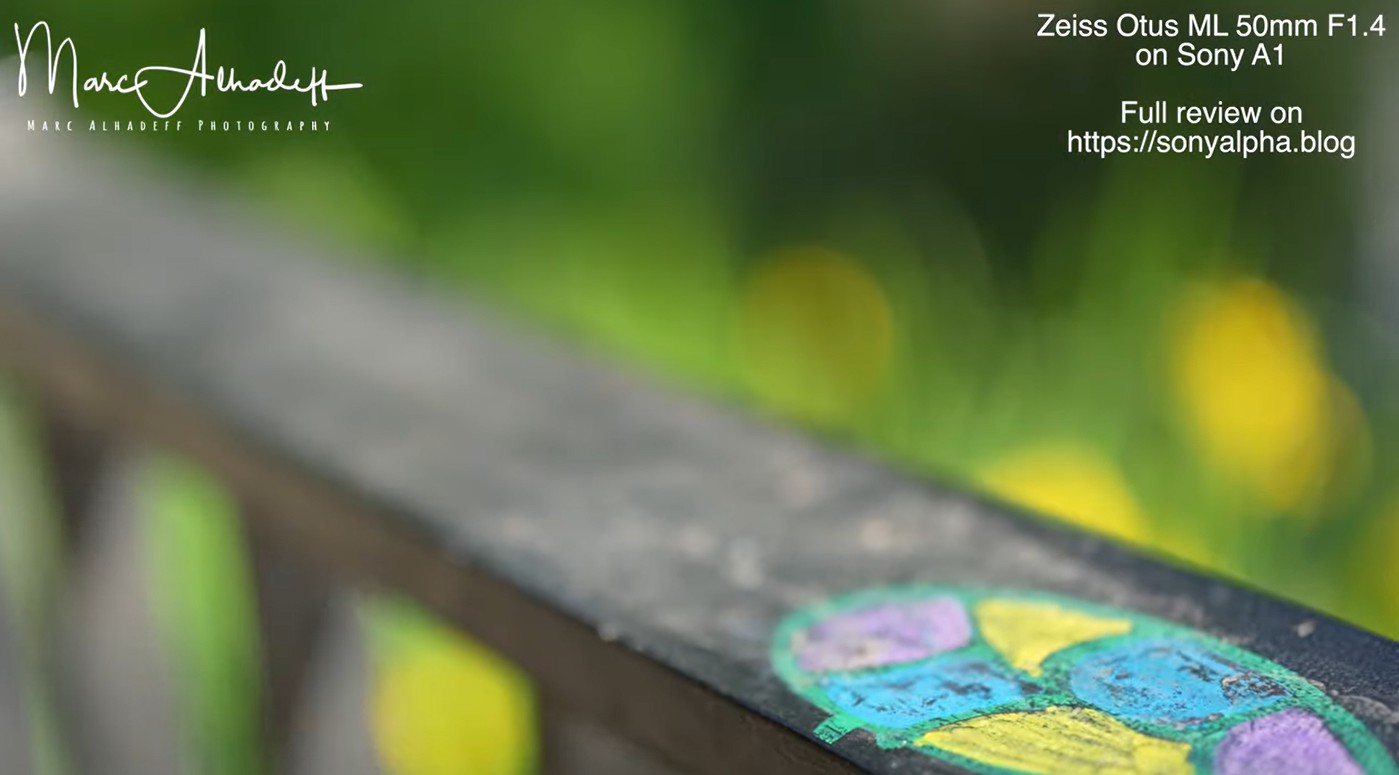
Marc Alhadeff does these short but informative videos, no talk, just images left up for seconds, lots of people, tests for flares, aperture function etc. These image snips are from four 50mm f1.4/f1.2 lenses. Ignore or look past the differences in scale, color, tone, exact angle. Things to look for:
the rate of onset of what you would call 'bokeh' from the focal plane to that threshold;
how soon after the focal plane is left is bokeh beginning to appear?
how easy on the eye is looking on the most abstracted bokeh in each image;
how about the retention of image structures (objects, motifs) into the bokeh field and how well they are maintained;
what information can you glean from the bokeh field? Is it intended as 'art' in itself, or is there more to the approach?
how straight is the rail in its journey from focus to edge-of-frame, how realistic does it look?
which one(s) 'describe' the fence best?
..
..
Viltrox Pro 50/1.4
the rate of onset of what you would call 'bokeh' from the focal plane to that threshold;
how soon after the focal plane is left is bokeh beginning to appear?
how easy on the eye is looking on the most abstracted bokeh in each image;
how about the retention of image structures (objects, motifs) into the bokeh field and how well they are maintained;
what information can you glean from the bokeh field? Is it intended as 'art' in itself, or is there more to the approach?
how straight is the rail in its journey from focus to edge-of-frame, how realistic does it look?
which one(s) 'describe' the fence best?
 |
||
 |
||
|
..
|
||
 |
||
|
..
|
||
 |
||
|
Viltrox Pro 50/1.4
|
||
 |
||
|
Oct 22, 2025 at 12:14 AM
p.79 #12which lens has the most 3D POP?
philip_pj wrote:
Marc Alhadeff does these short but informative videos, no talk, just images left up for seconds, lots of people, tests for flares, aperture function etc. These image snips are from four 50mm f1.4/f1.2 lenses. Ignore or look past the differences in scale, color, tone, exact angle. [...]
Can we put a stop to these comparisons which either are setup to favor for a certain brand or are posted despite not containing any useful material?!
Oct 22, 2025 at 01:03 AM
p.79 #13which lens has the most 3D POP?
philip_pj wrote:
Ignore or look past the differences in scale, color, tone, exact angle.
This is precisely the cardinal error. Compare different scales, colors, tones, angles, and apertures and then draw conclusions from them.
Ignore or look past the differences in scale, color, tone, exact angle.
This is precisely the cardinal error. Compare different scales, colors, tones, angles, and apertures and then draw conclusions from them.
Oct 22, 2025 at 01:04 AM
p.79 #14which lens has the most 3D POP?
Nifty Fifty wrote:
This is precisely the cardinal error. Compare different scales, colors, tones, angles, and apertures and then draw conclusions from them.
Why those comps weren't shot from a tripod ...
Personally, I don't find the min focus distance, WO a good indicator of depth cues modeling that the optic brings to the table, per se. There are some things that can be gleaned from it (although, these fence comps are widely varied, so it limits that as well) ... mostly about bokeh structure, etc. but, that's not the "only" thing that imparts the cues. Lots of folks dig on that (I did too, at one time),
Imo, the rendering that I prefer is where the acutance is significantly crisp, prior to the transition into the bokeh. The difference in acutance (impacted by SA, etc.), etc. An optic that is in focus, but lacks excellent acutance can have all the bokeh it wants, but it doesn't call to me in quite the same way.
None of those images did anything to convey dimensionality cues for me. They largely present DOF at min focus distance for a micro-skinny focal plane. A study of the bokeh extremes that those optics offer ... I reckon, but none of them caught my attention as presented.
philip_pj wrote
Ignore or look past the differences in scale, color, tone, exact angle.Why those comps weren't shot from a tripod ...
Personally, I don't find the min focus distance, WO a good indicator of depth cues modeling that the optic brings to the table, per se. There are some things that can be gleaned from it (although, these fence comps are widely varied, so it limits that as well) ... mostly about bokeh structure, etc. but, that's not the "only" thing that imparts the cues. Lots of folks dig on that (I did too, at one time),
Imo, the rendering that I prefer is where the acutance is significantly crisp, prior to the transition into the bokeh. The difference in acutance (impacted by SA, etc.), etc. An optic that is in focus, but lacks excellent acutance can have all the bokeh it wants, but it doesn't call to me in quite the same way.
None of those images did anything to convey dimensionality cues for me. They largely present DOF at min focus distance for a micro-skinny focal plane. A study of the bokeh extremes that those optics offer ... I reckon, but none of them caught my attention as presented.
Oct 22, 2025 at 06:14 AM
p.79 #15which lens has the most 3D POP?
philip_pj wrote:
"The use of modern photography lenses for beautiful cinematography is rare, mostly because many modern photo lenses lack a distinct and artistic character, instead prioritizing sharp images that can feel devoid of life."
"The use of modern pianos for beautiful music is rare, mostly because many modern pianos lack a distinct and artistic character, instead prioritizing accurate tuning that can feel devoid of life."
"The use of modern knives for beautiful cooking is rare, mostly because many modern knives lack a distinct and artistic character, instead prioritizing sharpness that can feel devoid of life."
"The use of modern automobiles for auto racing is rare, mostly because many modern automobiles lack a distinct and artistic character, instead prioritizing comfort and performance that can feel devoid of life."
There are two (more, actually, but not relevant here) forms of gear fixation. One is the presumption that only the newest thing is good enough and the other is the presumption that the newest thing is never as good.
;-)
Oct 22, 2025 at 08:04 AM
p.79 #16which lens has the most 3D POP?
gdanmitchell wrote:
"The use of modern pianos for beautiful music is rare, mostly because many modern pianos lack a distinct and artistic character, instead prioritizing accurate tuning that can feel devoid of life."
"The use of modern knives for beautiful cooking is rare, mostly because many modern knives lack a distinct and artistic character, instead prioritizing sharpness that can feel devoid of life."
"The use of modern automobiles for auto racing is rare, mostly because many modern automobiles lack a distinct and artistic character, instead prioritizing comfort and performance that can feel devoid of life."
There are two (more, actually, but not relevant here) forms...Show more →
Fred Miranda's testing and perhaps even his very successful career on this site is built around the proposition that there are meaningful differences among lenses and sensors. Some people can see the differences and others can't. Some people care about the differences and others don't. But there are differences and some of them run along the dimension of when the lenses were designed and built. I would think this would be obvious and non-controversial.
philip_pj wrote
"The use of modern photography lenses for beautiful cinematography is rare, mostly because many modern photo lenses lack a distinct and artistic character, instead prioritizing sharp images that can feel devoid of life.""The use of modern knives for beautiful cooking is rare, mostly because many modern knives lack a distinct and artistic character, instead prioritizing sharpness that can feel devoid of life."
"The use of modern automobiles for auto racing is rare, mostly because many modern automobiles lack a distinct and artistic character, instead prioritizing comfort and performance that can feel devoid of life."
There are two (more, actually, but not relevant here) forms...Show more →
Fred Miranda's testing and perhaps even his very successful career on this site is built around the proposition that there are meaningful differences among lenses and sensors. Some people can see the differences and others can't. Some people care about the differences and others don't. But there are differences and some of them run along the dimension of when the lenses were designed and built. I would think this would be obvious and non-controversial.
Oct 22, 2025 at 08:35 AM
p.79 #17which lens has the most 3D POP?
Jonas B wrote:
Can we put a stop to these comparisons which either are setup to favor for a certain brand or are posted despite not containing any useful material?!
The Zeiss wins- The colors are the best
Yea I am not seeing anything but images that hurt my eyes
philip_pj wrote
Marc Alhadeff does these short but informative videos, no talk, just images left up for seconds, lots of people, tests for flares, aperture function etc. These image snips are from four 50mm f1.4/f1.2 lenses. Ignore or look past the differences in scale, color, tone, exact angle. [...]The Zeiss wins- The colors are the best
Yea I am not seeing anything but images that hurt my eyes
Oct 22, 2025 at 09:12 AM
p.79 #18which lens has the most 3D POP?
chiron wrote:
"The use of modern pianos for beautiful music is rare, mostly because many modern pianos lack a distinct and artistic character, instead prioritizing accurate tuning that can feel devoid of life."
"The use of modern knives for beautiful cooking is rare, mostly because many modern knives lack a distinct and artistic character, instead prioritizing sharpness that can feel devoid of life."
"The use of modern automobiles for auto racing is rare, mostly because many modern automobiles lack a distinct and artistic character, instead prioritizing comfort and performance that can feel devoid of life."
There are two (more, actually, but not relevant here) forms of gear fixation. One is the presumption that only the newest thing is good enough and the other is the presumption that the newest thing is never as good.
;-)Fred Miranda's testing and perhaps even his very successful career on this site is built around the proposition that there are meaningful differences among lenses and sensors. Some people can see the differences and others can't. Some people care about the differences and others don't. But there are differences and some of them run along the dimension of when the lenses were designed and built. I would think this would be obvious and non-controversial.
"there are meaningful differences among lenses and sensors" - agreed!
However, I don't believe that these differences meaningfully impact one's photography in the sense that buying a new lens is a way to improved one's photography and get "better" pictures. One exception is action (including BIF) photography when faster lenses and sensors do make a difference.
My feeling is that the whole obsession with lenses may actually do some harm as it drives the idea that one need some exotic lenses to do better photography.
Investing time in learning and mastering the composition and post-processing skills is way more productive and useful for photography than buying a collection of lenses because of their alleged rendering.
gdanmitchell wrote
philip_pj wrote
"The use of modern photography lenses for beautiful cinematography is rare, mostly because many modern photo lenses lack a distinct and artistic character, instead prioritizing sharp images that can feel devoid of life.""The use of modern knives for beautiful cooking is rare, mostly because many modern knives lack a distinct and artistic character, instead prioritizing sharpness that can feel devoid of life."
"The use of modern automobiles for auto racing is rare, mostly because many modern automobiles lack a distinct and artistic character, instead prioritizing comfort and performance that can feel devoid of life."
There are two (more, actually, but not relevant here) forms of gear fixation. One is the presumption that only the newest thing is good enough and the other is the presumption that the newest thing is never as good.
;-)
"there are meaningful differences among lenses and sensors" - agreed!
However, I don't believe that these differences meaningfully impact one's photography in the sense that buying a new lens is a way to improved one's photography and get "better" pictures. One exception is action (including BIF) photography when faster lenses and sensors do make a difference.
My feeling is that the whole obsession with lenses may actually do some harm as it drives the idea that one need some exotic lenses to do better photography.
Investing time in learning and mastering the composition and post-processing skills is way more productive and useful for photography than buying a collection of lenses because of their alleged rendering.
Oct 22, 2025 at 09:13 AM
p.79 #19which lens has the most 3D POP?
Here is two recents- Both have pop to my eyes.
One is shot at f/8 and one is 1.4. The f/8 shot is much more pronounced IMO.
What says all of you? None? Some? Awful?


One is shot at f/8 and one is 1.4. The f/8 shot is much more pronounced IMO.
What says all of you? None? Some? Awful?
Canon EOS R5m2 ZEISS Otus ML 1.4/50 lens 50mm f/7.1 1/800s 100 ISO 0.0 EV
Canon EOS R5m2 ZEISS Otus ML 1.4/50 lens 50mm f/1.4 1/8000s 100 ISO 0.0 EV
Oct 22, 2025 at 09:18 AM
p.79 #20which lens has the most 3D POP?
chiron wrote:
Fred Miranda's testing and perhaps even his very successful career on this site is built around the proposition that there are meaningful differences among lenses and sensors. .
Is this supposed to be a joke? I've already linked to Fred's comparison of the 50mm Summilux and the 50mm Simera twice, which, according to philip_pj, reflect completely opposite approaches to lens design, and neither you nor your friend philip_pj have responded. He just keeps selling the same fantasies and marketing statements as scientifically based facts. If it weren't so annoying, you could laugh about it.
Here for the third time. From page 7 #7.
https://www.fredmiranda.com/forum/topic/1878983/6#rend
chiron wrote:
Some people can see the differences and others can't. Some people care about the differences and others don't. But there are differences and some of them run along the dimension of when the lenses were designed and built. I would think this would be obvious and non-controversial.
What do you call that rhetorical trick when you put words into someone else's mouth that they never said and then contradict them? Who says there are no differences? Nobody. It's about the absurd exaggeration of differences and the bizarre praise of one's favorite brand with the help of marketing statements repeated hundreds of times that are already pouring out of one's ears.
Edited on Oct 22, 2025 at 10:10 AM · View previous versions
Oct 22, 2025 at 10:05 AM