which lens has the most 3D POP?
p.78 #1which lens has the most 3D POP?
Before moving on, here are two images that show the two 3D models of photographic reality pretty well, despite being of different material. The first is Voigtlander's 50/2 APO, the second is Thypoch's Simera 50mm or 75mm. If it was the 75mm, it's even more impressive! (overlook the pink region in the Simera image, it's the residue of the shaved sensor indieced WB in that camera, almost impossible to remove.)
These two are representative enough to draw some conclusions, IMO. Shot close to MFD, at/near wide open. What strikes me about so much bokeh we see from modern lenses is how unpleasant it is to look at, when it can obviously be made to appear much more appealing and aesthetic to behold. It might be deliberate, it looks that way.
The CV lens quickly sails off into this undifferentiated blob in the foliage, about halfway into the image - after 8-9 posts it is all the same. The Thypoch, which has cine intentions as well as stills, provides this smooth overlay of the content, such that the arches etc. are still very clear and easy to look at without your eyes being repelled and forced to look elsewhere.
Run your eyes along the short keystones (not sure what they are called) that run the length of the image. See how linear they fade from focus? See how tight the 'bleed' zone that surrounds them is, compared with the CV image? Those are two key criteria for the second and only valid model of 3D. Little wonder no one ever tests for this effect.

CV 50/2

Thypoch 50/75mm f1.4
These two are representative enough to draw some conclusions, IMO. Shot close to MFD, at/near wide open. What strikes me about so much bokeh we see from modern lenses is how unpleasant it is to look at, when it can obviously be made to appear much more appealing and aesthetic to behold. It might be deliberate, it looks that way.
The CV lens quickly sails off into this undifferentiated blob in the foliage, about halfway into the image - after 8-9 posts it is all the same. The Thypoch, which has cine intentions as well as stills, provides this smooth overlay of the content, such that the arches etc. are still very clear and easy to look at without your eyes being repelled and forced to look elsewhere.
Run your eyes along the short keystones (not sure what they are called) that run the length of the image. See how linear they fade from focus? See how tight the 'bleed' zone that surrounds them is, compared with the CV image? Those are two key criteria for the second and only valid model of 3D. Little wonder no one ever tests for this effect.
CV 50/2
Thypoch 50/75mm f1.4
Oct 17, 2025 at 10:16 PM
p.78 #2which lens has the most 3D POP?
It's all provisional, and many different ways to learn by seeing.
What I came up with at the end of the research phase were eight criteria for 3D, or in cinespeak: 'dimensionality'. They work together to create the look. Before listing them, there are other excellent resources for this material, in particular the Dirty photography club, a YouTube account. We are all finding our way along the path less trodden.
The point outlined above, of linear focus fade, is my criterion #1: *The first and most important criterion of image dimensionality deals with the transition zone and its critical role in displaying image depth.* The Transition Zone and the handling of its contents are key to a lifelike longitudinal (or axial/on-axis) representation of the real world in our image content. As discussed and shown above.
The other criteria are, in order:
2. Bokeh Structure Retention. This attribute describes the ability of lenses to image background elements (contents: objects, motifs) sufficiently that they retain their shape and are still recognisable, even in moderate-to-deep bokeh. Very important to deep scene 3D, even in well advanced bokeh.
3. Iris (aperture) Blade Counts should be sufficiently high; most cutting-edge lens makers now use 14-15-16 blades. This range is the new sweet spot. The producers receive no complaints for adopting high blade irises, only kudos for bokeh quality. A few recent longer focal length lenses are now fitted with 18-blade iris mechanisms. Image content in the out-of-focus zones that, by design, remains clearly identifiable and pleasantly soft can be further enhanced by a gorgeous soft haloing fade that surrounds them, using 'designer bokeh'. Leica, one of many, do not actually design for bokeh quality - at all! Circularity of irises is very probably a very important factor in the shaping of objects in the bokeh field, and you then get to avoid the jagged edges we see so commonly. Zeiss now fits 16 blade apertures to their Supreme Primes, for example.
4. Particularly in stills photography but also in cinema, curvature of field (or field curvature) was long-considered to be a major obstacle that must be overcome. Obviously, it should have been otherwise and should have been better understood, that curvature is an attribute of the human visual system – of perception, if you will. There was also the long experience cinema had accumulated with Cooke lenses, and their natural field curvature and field shaping.
5. Micro-contrast, so beloved of pixel-level fans and image croppers. It is an understandable preoccupation for the (proportionately few) large print makers, who desire fine detail in for example, landscape prints. Taken to extremes, however, high micro-contrast (high frequency spatial data) images of human faces are as repulsive as macro images of hairy spiders – you just see too much, skin pores, discolouration and imperfections. It’s the reason why advocates of naturalistic, deep imagery advise those new to the debate to stay away from modern APO lenses. Many such lenses use recently developed special glass formulations to deliver very high fine detail at the focal plane. I'll add that ARRI engineers actively reduce micro-contrast to meet with greater favor in the movies they are used to film.
6. The sixth criterion of dimensionality relates to the human preference for warm images over cool images. Even the perception of colour is difficult to ascertain in many edge cases. Some lenses appear warm but are actually on the cool side of the line in technical tests. In the stills world, many Voigtlander lenses are simply too cool for attractive people photography, while at the same time being well-regarded for uses they excel at, notably landscape and street photography. Image warmth needs to be handled well, to work effectively. It is not always as simple as dialling up a profile in post-processing or moving white balance a little.
An example is shown in Matt Osborne’s comparison of the Voigtlander 28mm F1.4 and the Thypoch Simera equivalent lens. Bleak European days never looked bleaker. YouTube video: ‘THYPOCH vs VOIGTLANDER (Simera 28mm 1.4 vs Nokton 28mm 1.5)’
7. The seventh criterion of dimensionality is the value of, and proportionate use of vignette. In the stills photography realm, the unquenchable pursuit of aberration eradication has led to the review community awarding kudos to lenses – even those of F1–F1.4 – that lack all traces of vignette in wide open usage, while sharply criticising lenses that incorporate some degree of vignette, even by design.
It’s a further example of unreasonable and unrealistic demands being made in ignorance of several countervailing factors. These factors have serious impacts on the utility, cost, design effort and size/weight of the lens in question – in particular, fast lenses. As evidenced here, natural human vision is best emulated in many high-end cine lenses by judicious use of artistic vignette, together with ‘focus fade’, lower contrast and softness of detail in the outer sections of image frames.
Drawing attention to centrally-oriented subject matter, surrounded by gracefully fading image content, is very much an established principle in cine lens design. It permits designers to get the best, most impactful and dramatic performance in the image segment that most photographers use for their main focus.
8. The eighth criterion of dimensionality is controversial but very important. It is the way lenses treat tonal variation, particularly how light is reflected from human faces. This issue deals with the ability of, and variation between, lenses to record the tonal range of the material being photographed.
Dear reader, do you think that all lenses pass the tonal range of the composition to the sensor in a more-or-less uniform way, every lens the same? Or is it true, or at least plausible, that some lenses produce more graceful highlights and greater detail in their shadows? The very fact that the question may be asked tells us how little we know about our cherished optical instruments.
We are talking here, not of micro-contrast that occurs within the overall tonal scale, but of the distribution of tones within each major section of that overall tone range captured in the image: the shadows, the midtones and highlights. Tonal gradation matters greatly to the apprehension of 3D.
Oct 17, 2025 at 10:49 PM
p.78 #3which lens has the most 3D POP?
(About criterion three): The PR blurb for the new ML Otus 50/1.4 states: '10 aperture blades contribute to the pleasing bokeh created by this lens, which greatly benefits portrait capturing.'
Not many like being openly disagreeable, but here we can say we definitely see something quite different. 10 blades is paltry by modern standards, even among Zeiss lens ranges. See below a clip of the ML Otus 50/1.4 bokeh ball in a recent review. These shapes do not exist in nature, so why foist them on the buyers of your $2500 lenses? It's hard to fathom.

Zeiss ML Otus 50mm f1.4 bokeh ball effect
Not many like being openly disagreeable, but here we can say we definitely see something quite different. 10 blades is paltry by modern standards, even among Zeiss lens ranges. See below a clip of the ML Otus 50/1.4 bokeh ball in a recent review. These shapes do not exist in nature, so why foist them on the buyers of your $2500 lenses? It's hard to fathom.
Zeiss ML Otus 50mm f1.4 bokeh ball effect
Oct 17, 2025 at 10:55 PM
p.78 #4which lens has the most 3D POP?
About number 2 , what element (or somthing else) in a lens design supports /prevents this?
philip_pj wrote:
It's all provisional, and many different ways to learn by seeing.
What I came up with at the end of the research phase were eight criteria for 3D, or in cinespeak: 'dimensionality'. They work together to create the look. Before listing them, there are other excellent resources for this material, in particular the Dirty photography club, a YouTube account. We are all finding our way along the path less trodden.
The point outlined above, of linear focus fade, is my criterion #1: *The first and most important criterion of image dimensionality deals with the transition zone and its critical role...Show more →
Oct 17, 2025 at 11:51 PM
p.78 #5which lens has the most 3D POP?
philip_pj wrote:
It's all provisional, and many different ways to learn by seeing.
What I came up with at the end of the research phase were eight criteria for 3D, or in cinespeak: 'dimensionality'. They work together to create the look. Before listing them, there are other excellent resources for this material, in particular the Dirty photography club, a YouTube account. We are all finding our way along the path less trodden.
The point outlined above, of linear focus fade, is my criterion #1: *The first and most important criterion of image dimensionality deals with the transition zone and its critical role...Show more →
When you consider that AI also generates its "knowledge" from forum posts by scientists with internet degrees, and that others consider this "knowledge" relevant, it's easy to feel anxious and fearful about the future. Especially when you consider that this applies to ALL areas of life.
Oct 18, 2025 at 02:35 AM
p.78 #6which lens has the most 3D POP?
philip_pj wrote:
So this issue appears to have clearly divided the stills photographic community - but not the cine commentary - and invited a degree of opprobrium to this holding minority views, nothing unusual there.
Looking across my research into this fundamental issue, after reviewing scores of cine-related sites and videos and PR material, I identified two models of 3D that are in use, though only the establishment view is in favor.
That one is being pushed heavily by the German giants of the industry, Leica and Zeiss. In summary, it involves huge micro-contrast (at the focal plane of course), with an...Show more →
To illustrate these theories and demonstrate the significant differences between the opposing "3D models," I refer again to the comparison of Leica and Thypoch that Fred conducted a long time ago. The 1:1 image comparisons mercilessly demonstrate the horror of one rendering and the magnificence of the other.
From p.7 #7:
https://www.fredmiranda.com/forum/topic/1878983/6
Oct 18, 2025 at 02:58 AM
p.78 #7which lens has the most 3D POP?
philip_pj wrote:
Before moving on, here are two images that show the two 3D models of photographic reality pretty well, despite being of different material. The first is Voigtlander's 50/2 APO, the second is Thypoch's Simera 50mm or 75mm. If it was the 75mm, it's even more impressive! (overlook the pink region in the Simera image, it's the residue of the shaved sensor indieced WB in that camera, almost impossible to remove.)
These two are representative enough to draw some conclusions, IMO. Shot close to MFD, at/near wide open. What strikes me about so much bokeh we see from modern lenses is...Show more →
I don't doubt the out of focus parts of an image are rendered differently. This comparison however can't be used for anything, can it?
It would be nice to see a comparison with images taken at the same place and time, taken with the same camera. We do of course also want to know what lenses were used. Is it a 75 or a 50 mm (or something else) lens, what was the aperture opening? Even with everything properly set up we learn just so much. Another comparison with another shooting distance, the target landing elsewhere on the senor and so on may result in another conclusion/opinion.
The topic is interesting to me. That is despite knowing content is king and knowing knowledge is limited.
We have recently seen how a couple of 50mm lenses render OOF details differently, softer or more pointy. Some may prefer one or another depending on the target, shooting distance and so on. Some may not notice.
Oct 18, 2025 at 03:08 AM
p.78 #8which lens has the most 3D POP?
Jonas B wrote:
We have recently seen how a couple of 50mm lenses render OOF details differently, softer or more pointy. Some may prefer one or another depending on the target, shooting distance and so on. Some may not notice.
But why sell something as new knowledge that has been known and undisputed for ages? And then there are always these completely baseless comparisons of three-dimensional human vision, which is always focused on the center of the field of view, with two-dimensional reproduction, where the out-of-focus areas are scanned and focused upon by the eye when viewing – something that simply doesn't exist in natural vision. The same applies to natural image curvature and natural vignetting. Comparisons are drawn and parallels suggested that don't exist, can't exist, because it defies all logic, since the viewing processes are completely different in both cases. Even if one were to look at the whole thing very charitable and assume that there's something to it (at least "felt"), it would invariably apply to subjects placed exactly in the center of the frame.
Oct 18, 2025 at 03:33 AM
p.78 #9which lens has the most 3D POP?
Jonas B wrote:
We have recently seen how a couple of 50mm lenses render OOF details differently, softer or more pointy. Some may prefer one or another depending on the target, shooting distance and so on. Some may not notice.
Nifty Fifty wrote:
But why sell something as new knowledge when it has been known and undisputed for ages? And then there are always these completely baseless comparisons of three-dimensional human vision, which is always focused on the center of the field of view, with two-dimensional reproduction, where the out-of-focus areas are scanned and focused upon with the eye when viewed – something that simply does not exist in natural vision. The same applies to natural image curvature and natural vignetting. Comparisons are drawn and parallels suggested that do not exist, cannot exist, because it defies all logic, since the viewing processes...Show more →
OK. What I see is that Philip is once again posting about his discoveries and once again promoting ARRI, as well as once again recounting either fantasies or unclear observations regarding lenses made for film recording. For my part, it's quite tiresome.
But it is interesting that the bokeh can be rendered differently.
So, different lenses give different results. I'm interested in seeing comparisons. However, these must be valid. Not advertising material like the article in providoecoalition that Philip has linked to a couple of times before.
So, if we can get, or make together, valid, sensible comparisons, I'm interested.
Oct 18, 2025 at 05:59 AM
p.78 #10which lens has the most 3D POP?
philip_pj wrote:
It's all provisional, and many different ways to learn by seeing.
What I came up with at the end of the research phase were eight criteria for 3D, or in cinespeak: 'dimensionality'. They work together to create the look. Before listing them, there are other excellent resources for this material, in particular the Dirty photography club, a YouTube account. We are all finding our way along the path less trodden.
The point outlined above, of linear focus fade, is my criterion #1: *The first and most important criterion of image dimensionality deals with the transition zone and its critical role...Show more →
I like what you say here.
I find that for me one of the best ways to understand photographic images and the qualities that make an image and a rendering beautiful is to look at paintings. Lately, I have been especially looking at 17th Century Dutch painting, which both relates to the subjects I like to photograph and whose "rendering" I find especially beautiful. Spending time looking at Vermeer's faces, bodies, postures, and gestures, his spatial organization (or "dimensionality"), composition, rendering of light and color, his rooms, walls, and fabrics, his handling of windows, reflections, and translucency, his evocation of meaning and emotion, etc., is for me a way to learn a great deal about how to see photographs better and how to improve the images that I make, as well as a great pleasure in its own right.
Oct 18, 2025 at 07:13 AM
|
p.78 #11which lens has the most 3D POP?
philip_pj wrote:
Dear reader, do you think that all lenses pass the tonal range of the composition to the sensor in a more-or-less uniform way, every lens the same? Or is it true, or at least plausible, that some lenses produce more graceful highlights and greater detail in their shadows? The very fact that the question may be asked tells us how little we know about our cherished optical instruments.
We are talking here, not of micro-contrast that occurs within the overall tonal scale, but of the distribution of tones within each major section of that overall tone range captured in the...Show more →
I see it this way. The whole thing depends, on the one hand, on how high-contrast a lens offers and, on the other hand, on the contrast ratios in the subject itself (assuming that the sharpness and resolution of the lenses are similar). A high-contrast lens (due to better glass types, coating, etc.) can ensure more visible tonal gradations in a low-contrast subject, including in highlights and shadows. Conversely, a lower-contrast lens can ensure that highlights are less blown out and/or shadows are less drowned in a relatively high-contrast scene whose aperture range pushes the dynamic range to its limits. In both cases, better detail would be achieved, and in both cases, the detail would suffer if the "wrong" lens were chosen (i.e., high-contrast lens + high-contrast scene or low-contrast subject + low-contrast scene). At least in theory, and if you ignore personal tastes. For portraits, I personally would prefer a lens with lower contrast, although subject contrast and personal taste naturally play a role here as well. I personally consider the idea that certain frequencies are treated differently due to lens calculations to render faces better to be pure fantasy, wishful thinking, or imagination, depending on personal preference.
Oct 18, 2025 at 08:45 AM
p.78 #12which lens has the most 3D POP?
Thanks for the compliment, nifty, I expect nothing less, much appreciated.
The issue is made harder to see because so few members post images of people. I fairly got tendonitis of the index finger from scrolling, as the ratio of people-to-other is about one in fifty, rising to maybe one in a hundred.
I'd love to agree with you, but my heart just isn't in it. Particularly for high end mainstream 'portrait' lenses, there are very large numbers of images that depict faces and necks (often the giveaway) in flat tones leading to poor facial shaping, out of any correspondence with reality, and yes, I omitted obvious flash-assisted imagery.
This may be the unconscious reason that users post so few portraits with their portrait lenses, I mean, apart from the spruced-up young women engaged for the role. I had intended to post ten or so FM examples of the phenomenon - it's always phenomenological when reality is transgressed - but now I think better of doing so.
But look, I can gauge the level of open mindedness on display from the gratuitous insults, so no further discussion is warranted. Wishing you all the best.
Oct 20, 2025 at 08:30 PM
p.78 #13which lens has the most 3D POP?
chiron wrote:
What I came up with at the end of the research phase were eight criteria for 3D, or in cinespeak: 'dimensionality'. They work together to create the look. Before listing them, there are other excellent resources for this material, in particular the Dirty photography club, a YouTube account. We are all finding our way along the path less trodden.
The point outlined above, of linear focus fade, is my criterion #1: *The first and most important criterion of image dimensionality deals with the transition zone and its critical role in displaying image depth.* The Transition Zone and the handling of its contents are key to a lifelike longitudinal (or axial/on-axis) representation of the real world in our image content. As discussed and shown above.
The other criteria are, in order:
2. Bokeh Structure Retention. This attribute describes the ability of lenses to image background elements (contents: objects, motifs) sufficiently that they retain their shape and are still recognisable, even in moderate-to-deep bokeh. Very important to deep scene 3D, even in well advanced bokeh.
3. Iris (aperture) Blade Counts should be sufficiently high; most cutting-edge lens makers now use 14-15-16 blades. This range is the new sweet spot. The producers receive no complaints for adopting high blade irises, only kudos for bokeh quality. A few recent longer focal length lenses are now fitted with 18-blade iris mechanisms. Image content in the out-of-focus zones that, by design, remains clearly identifiable and pleasantly soft can be further enhanced by a gorgeous soft haloing fade that surrounds them, using 'designer bokeh'. Leica, one of many, do not actually design for bokeh quality - at all! Circularity of irises is very probably a very important factor in the shaping of objects in the bokeh field, and you then get to avoid the jagged edges we see so commonly. Zeiss now fits 16 blade apertures to their Supreme Primes, for example.
4. Particularly in stills photography but also in cinema, curvature of field (or field curvature) was long-considered to be a major obstacle that must be overcome. Obviously, it should have been otherwise and should have been better understood, that curvature is an attribute of the human visual system – of perception, if you will. There was also the long experience cinema had accumulated with Cooke lenses, and their natural field curvature and field shaping.
5. Micro-contrast, so beloved of pixel-level fans and image croppers. It is an understandable preoccupation for the (proportionately few) large print makers, who desire fine detail in for example, landscape prints. Taken to extremes, however, high micro-contrast (high frequency spatial data) images of human faces are as repulsive as macro images of hairy spiders – you just see too much, skin pores, discolouration and imperfections. It’s the reason why advocates of naturalistic, deep imagery advise those new to the debate to stay away from modern APO lenses. Many such lenses use recently developed special glass formulations to deliver very high fine detail at the focal plane. I'll add that ARRI engineers actively reduce micro-contrast to meet with greater favor in the movies they are used to film.
6. The sixth criterion of dimensionality relates to the human preference for warm images over cool images. Even the perception of colour is difficult to ascertain in many edge cases. Some lenses appear warm but are actually on the cool side of the line in technical tests. In the stills world, many Voigtlander lenses are simply too cool for attractive people photography, while at the same time being well-regarded for uses they excel at, notably landscape and street photography. Image warmth needs to be handled well, to work effectively. It is not always as simple as dialling up a profile in post-processing or moving white balance a little.
An example is shown in Matt Osborne’s comparison of the Voigtlander 28mm F1.4 and the Thypoch Simera equivalent lens. Bleak European days never looked bleaker. YouTube video: ‘THYPOCH vs VOIGTLANDER (Simera 28mm 1.4 vs Nokton 28mm 1.5)’
7. The seventh criterion of dimensionality is the value of, and proportionate use of vignette. In the stills photography realm, the unquenchable pursuit of aberration eradication has led to the review community awarding kudos to lenses – even those of F1–F1.4 – that lack all traces of vignette in wide open usage, while sharply criticising lenses that incorporate some degree of vignette, even by design.
It’s a further example of unreasonable and unrealistic demands being made in ignorance of several countervailing factors. These factors have serious impacts on the utility, cost, design effort and size/weight of the lens in question – in particular, fast lenses. As evidenced here, natural human vision is best emulated in many high-end cine lenses by judicious use of artistic vignette, together with ‘focus fade’, lower contrast and softness of detail in the outer sections of image frames.
Drawing attention to centrally-oriented subject matter, surrounded by gracefully fading image content, is very much an established principle in cine lens design. It permits designers to get the best, most impactful and dramatic performance in the image segment that most photographers use for their main focus.
8. The eighth criterion of dimensionality is controversial but very important. It is the way lenses treat tonal variation, particularly how light is reflected from human faces. This issue deals with the ability of, and variation between, lenses to record the tonal range of the material being photographed.
Dear reader, do you think that all lenses pass the tonal range of the composition to the sensor in a more-or-less uniform way, every lens the same? Or is it true, or at least plausible, that some lenses produce more graceful highlights and greater detail in their shadows? The very fact that the question may be asked tells us how little we know about our cherished optical instruments.
We are talking here, not of micro-contrast that occurs within the overall tonal scale, but of the distribution of tones within each major section of that overall tone range captured in the image: the shadows, the midtones and highlights. Tonal gradation matters greatly to the apprehension of 3D.I like what you say here.
I find that for me one of the best ways to understand photographic images and the qualities that make an image and a rendering beautiful is to look at paintings. Lately, I have been especially looking at 17th Century Dutch painting, which both relates to the subjects I like to photograph and whose "rendering" I find especially beautiful. Spending time looking at Vermeer's faces, bodies, postures, and gestures, his spatial organization (or "dimensionality"), composition, rendering of light and color, his rooms, walls, and fabrics, his handling of windows, reflections, and translucency, his evocation of...Show more →
Useful to ask, "What makes a painting 'pop'?"
philip_pj wrote
It's all provisional, and many different ways to learn by seeing.What I came up with at the end of the research phase were eight criteria for 3D, or in cinespeak: 'dimensionality'. They work together to create the look. Before listing them, there are other excellent resources for this material, in particular the Dirty photography club, a YouTube account. We are all finding our way along the path less trodden.
The point outlined above, of linear focus fade, is my criterion #1: *The first and most important criterion of image dimensionality deals with the transition zone and its critical role in displaying image depth.* The Transition Zone and the handling of its contents are key to a lifelike longitudinal (or axial/on-axis) representation of the real world in our image content. As discussed and shown above.
The other criteria are, in order:
2. Bokeh Structure Retention. This attribute describes the ability of lenses to image background elements (contents: objects, motifs) sufficiently that they retain their shape and are still recognisable, even in moderate-to-deep bokeh. Very important to deep scene 3D, even in well advanced bokeh.
3. Iris (aperture) Blade Counts should be sufficiently high; most cutting-edge lens makers now use 14-15-16 blades. This range is the new sweet spot. The producers receive no complaints for adopting high blade irises, only kudos for bokeh quality. A few recent longer focal length lenses are now fitted with 18-blade iris mechanisms. Image content in the out-of-focus zones that, by design, remains clearly identifiable and pleasantly soft can be further enhanced by a gorgeous soft haloing fade that surrounds them, using 'designer bokeh'. Leica, one of many, do not actually design for bokeh quality - at all! Circularity of irises is very probably a very important factor in the shaping of objects in the bokeh field, and you then get to avoid the jagged edges we see so commonly. Zeiss now fits 16 blade apertures to their Supreme Primes, for example.
4. Particularly in stills photography but also in cinema, curvature of field (or field curvature) was long-considered to be a major obstacle that must be overcome. Obviously, it should have been otherwise and should have been better understood, that curvature is an attribute of the human visual system – of perception, if you will. There was also the long experience cinema had accumulated with Cooke lenses, and their natural field curvature and field shaping.
5. Micro-contrast, so beloved of pixel-level fans and image croppers. It is an understandable preoccupation for the (proportionately few) large print makers, who desire fine detail in for example, landscape prints. Taken to extremes, however, high micro-contrast (high frequency spatial data) images of human faces are as repulsive as macro images of hairy spiders – you just see too much, skin pores, discolouration and imperfections. It’s the reason why advocates of naturalistic, deep imagery advise those new to the debate to stay away from modern APO lenses. Many such lenses use recently developed special glass formulations to deliver very high fine detail at the focal plane. I'll add that ARRI engineers actively reduce micro-contrast to meet with greater favor in the movies they are used to film.
6. The sixth criterion of dimensionality relates to the human preference for warm images over cool images. Even the perception of colour is difficult to ascertain in many edge cases. Some lenses appear warm but are actually on the cool side of the line in technical tests. In the stills world, many Voigtlander lenses are simply too cool for attractive people photography, while at the same time being well-regarded for uses they excel at, notably landscape and street photography. Image warmth needs to be handled well, to work effectively. It is not always as simple as dialling up a profile in post-processing or moving white balance a little.
An example is shown in Matt Osborne’s comparison of the Voigtlander 28mm F1.4 and the Thypoch Simera equivalent lens. Bleak European days never looked bleaker. YouTube video: ‘THYPOCH vs VOIGTLANDER (Simera 28mm 1.4 vs Nokton 28mm 1.5)’
7. The seventh criterion of dimensionality is the value of, and proportionate use of vignette. In the stills photography realm, the unquenchable pursuit of aberration eradication has led to the review community awarding kudos to lenses – even those of F1–F1.4 – that lack all traces of vignette in wide open usage, while sharply criticising lenses that incorporate some degree of vignette, even by design.
It’s a further example of unreasonable and unrealistic demands being made in ignorance of several countervailing factors. These factors have serious impacts on the utility, cost, design effort and size/weight of the lens in question – in particular, fast lenses. As evidenced here, natural human vision is best emulated in many high-end cine lenses by judicious use of artistic vignette, together with ‘focus fade’, lower contrast and softness of detail in the outer sections of image frames.
Drawing attention to centrally-oriented subject matter, surrounded by gracefully fading image content, is very much an established principle in cine lens design. It permits designers to get the best, most impactful and dramatic performance in the image segment that most photographers use for their main focus.
8. The eighth criterion of dimensionality is controversial but very important. It is the way lenses treat tonal variation, particularly how light is reflected from human faces. This issue deals with the ability of, and variation between, lenses to record the tonal range of the material being photographed.
Dear reader, do you think that all lenses pass the tonal range of the composition to the sensor in a more-or-less uniform way, every lens the same? Or is it true, or at least plausible, that some lenses produce more graceful highlights and greater detail in their shadows? The very fact that the question may be asked tells us how little we know about our cherished optical instruments.
We are talking here, not of micro-contrast that occurs within the overall tonal scale, but of the distribution of tones within each major section of that overall tone range captured in the image: the shadows, the midtones and highlights. Tonal gradation matters greatly to the apprehension of 3D.
I find that for me one of the best ways to understand photographic images and the qualities that make an image and a rendering beautiful is to look at paintings. Lately, I have been especially looking at 17th Century Dutch painting, which both relates to the subjects I like to photograph and whose "rendering" I find especially beautiful. Spending time looking at Vermeer's faces, bodies, postures, and gestures, his spatial organization (or "dimensionality"), composition, rendering of light and color, his rooms, walls, and fabrics, his handling of windows, reflections, and translucency, his evocation of...Show more →
Useful to ask, "What makes a painting 'pop'?"
Oct 20, 2025 at 09:12 PM



p.78 #16which lens has the most 3D POP?
mudlake wrote:
Beautiful! ^^^^
Thanks.
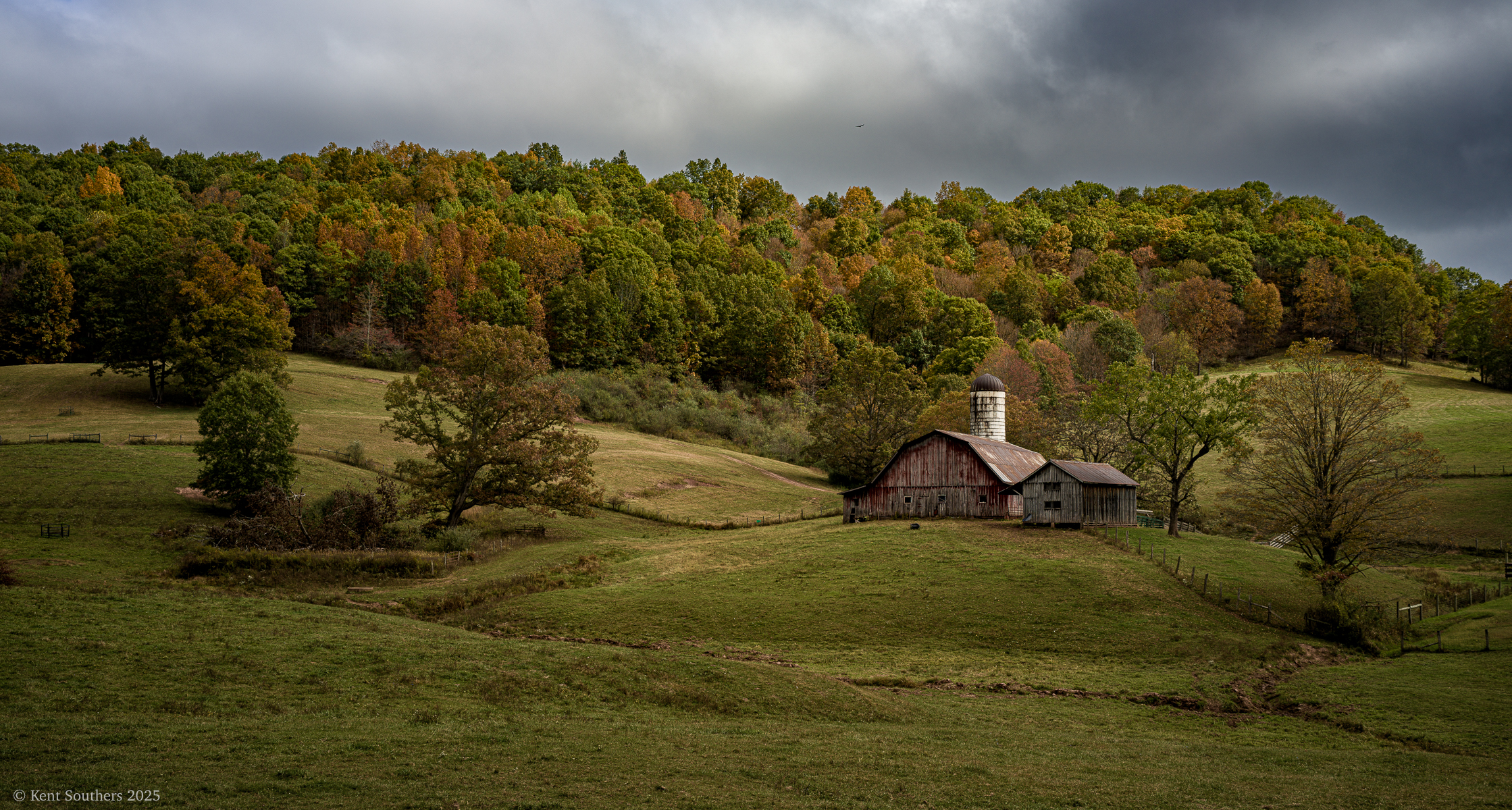
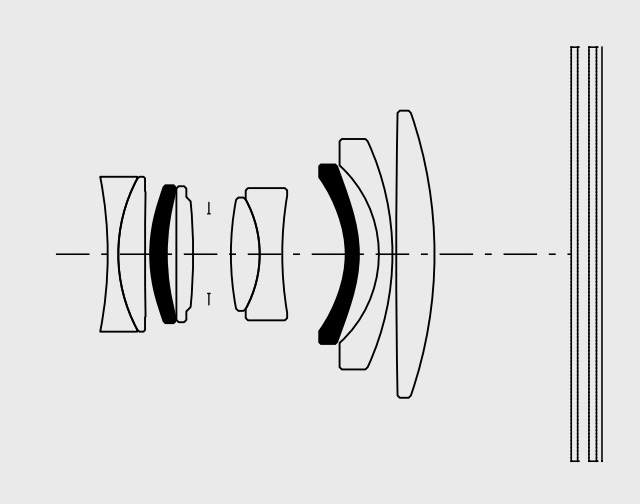
Early work with a new (to me) lens (similar to the large ratio of rear element to front element I referenced elsewhere).
The lens isn't solely responsible for everything, but it's contribution doesn't hurt.
Edited on Oct 20, 2025 at 09:45 PM · View previous versions
RustyBug wrote
Thanks.
Early work with a new (to me) lens (similar to the large ratio of rear element to front element I referenced elsewhere).
The lens isn't solely responsible for everything, but it's contribution doesn't hurt.
Edited on Oct 20, 2025 at 09:45 PM · View previous versions
Oct 20, 2025 at 09:42 PM
p.78 #17which lens has the most 3D POP?
I have followed this thread on and off for some years. Have any helpful a/b controlled comparison been posted?
I don't want to scroll though the whole thread, just interested in actual comps if we had them.
I don't want to scroll though the whole thread, just interested in actual comps if we had them.
Oct 20, 2025 at 09:45 PM
p.78 #18which lens has the most 3D POP?
nehemiahphoto wrote:
I have followed this thread on and off for some years. Have any helpful a/b controlled comparison been posted?
There were several that were posted in the original "What is 3-D" thread from 2009. Sadly, many of those have been lost to the archives / deletion / removal of images over time. One of the ones that was lost was quite interesting ... where the differences were presented ... and THEN, the "lesser" image was edited to render it more closely to match the "better" lens. The edited image was very close after skillful PP editing was applied. Granted, that was more than a decade ago, but the salient point is that the issue was well enough seen, by enough folks, that the gauntlet was thrown to see how much difference (microcontrast, etc.) could be offset in post, even if it wasn't original to the optic.
Fast forward 15 years ...
I don't have the right lenses in my current kit for doing AB controlled comparison ... meaning, mostly I don't buy many duplicate lenses that would NOT be in line with my perspectives about optical design contribution to shoot alongside those that are in line with my preferences. That would kind of be like asking someone to compare a Scotch with a Bourbon, when they're a dedicated Scotch drinker. They just wouldn't have the Bourbon around.
The AB controlled comparison would be best presented by two lenses that are significantly different in optical design, yet similar in Focal Length and aperture. If I ever pick up the VM 40/1.2 ... I'd likely do a comp of it with my 40 Cron for an AB controlled comp (as mentioned before). The 40 Cron is probably my "outlier" lens that could render f2 differently than the VM 40/1.2 would render at f2 (based on my viewing of the images posted with the VM 40/1.2
Some of my older Oly lenses (long since sold / traded) were on the "lesser" category ... and I did comps of them with my C/Y Zeiss glass, as well as my Canon glass (circa 2010). The differences were salient enough, that I moved away from my Oly glass, and migrated into the C/Y (for EF adaption) Zeiss glass. Only when I moved away from Canon (EF), did I then switch out my C/Y glass. Those were kinda tough to let go, because I had spent a bit of time finding the ones I wanted.
I digress, but if I get the right pairing to well present the difference ... I'll work up some comps. Not high on my "hurry up" radar / to do list. Reason being, I already did that for myself over a decade ago to learn what I learned about differences in optical rendering, that comes from different design approach. It was a significant investment in time and money to come to the understanding that I have, so yeah ... not in a hurry to repeat.
Just had a thought about a possible pairing ... the SL 35 Cron vs. the SL 35 Cron APO vs. M 35 Cron Pre-ASPH. Neither are in my kit, but I'd be curious how those compare, since they are all 35mm f2 and from the same mfr. Of course, there are plenty of other 35/2 lenses from other mfr's that could be in the mix. The key thing that I think most folks would want to see is to find the AB pairing that presents the most significant difference, vs. a bunch that are closely grouped together. The latter is what fuels the naysayers. Finding folks that happen to have both an SL 35 Cron APO and an M 35 Cron Pre-Asph (for example) and or the M35 KOB, to do the AB ... well, you get the gist.
To save you from going back through the thread (to find where I previously posted), here's a link (below) with Peter Karbe discussing optical design in the SL 35 Cron APO vs. 35 Summilux. At 1:24:23 ... notice the MTF charts difference. Specifically, how STEEP the rate of transition differences are. From that point, you may want to expand (earlier lead in) your viewing of Peter's explanations. Since human physiological depth cues are correlated to rate of change, the differences in toptic provide contribution to that perception (recognizing that it is a 2D medium emulating 3D perception cues, e.g. Trompe' Loeil).
Part of the reason that folks find the closer range focal distance, coupled with a faster aperture renders "3D-ish" is that the combination produces a more dramatic rate of change. As the focal distance becomes greater the rate of change decreases. As the lens is stopped down the rate of change decreases. Thus, the challenge can become finding an optic that contributes its rate of change in such degree that rates of change are retained (albeit more subtly, due to the aforementioned attributes) at "normal" or "distant" focal distances to still provide some visual depth cues. This is in part to why folks find it (more) challenging to find good cues with longer distant scenes, vs. those with "great pop" at near distance subjects (i.e. the rate of change is nuanced as the distance changes ... "visual" doppler effect-ish).
Additionally, since we know that changes in contrast (i.e. key lighting) provide for rates of change cues, also ... when faced with lower contrast lighting, lenses with slow rates of change fair less at retaining rates of change cues. Whereas, even in low contrast lighting, lenses with faster rates of change will contribute more cues, and thus provide a different level of transition cues.
Interestingly, folks rarely argue about the notion or preferences of using higher contrast lenses with lower contrast lighting / subjects and vice verse. But, as soon as one mentions the "3D" thing (which imo, is better presented as physiological response cues). some folks will come out of the woodwork, unhinged, unglued and out of their minds to decry any influence from the optic.
Ultimately ALL other factors influencing the human physiological response (lighting, distance, composition, etc.) that occur OUTSIDE the lens ... WILL PASS THROUGH the optical properties of the lens. What the lens does with that input > output varies, in its contribution to retain, enhance, or degrade the external factors, en route to the film plane. While technically "appeal to authority" may be a form of faulty logic (as a stand alone entity, in the absence of other evidential input) ... I would remind folks that Peter Karbe and other designers are no slouch in their craft, far beyond anything that those of us here have to offer. But, in the absence of Peter (et al) to personally provide what others are looking for, I refer to the video. For those who are interested, it is a long video (kinda slow at areas). The naysayers will refute anything that Peter has to offer, just as much as they refute anything offered by those here. Naysayers will say nay, sans any real effort to develop an understanding. It's just what they do.. Folks that are truly interested in the subject might find Peter's vast knowledge about optical design interesting / intriguing. Others, not so much (which is fine, too) ... but, it is still offered to all.
There are a multitude of factors that human physiology deploy in assessing the eye / brain perceptions of depth. Some of which are outside the realm of the optical contribution (as noted previously). But, if we keep the conversation relegated to the influence of optical design A vs. optical design B ... yes, optical designs can / do have differing rates of transition, etc. And, whatever magnitude of those other attributes reside outside the lens, will still pass through the lens, for its contribution to retain, enhance or retard the cues.
Ultimately, the matter begins with a very deep understanding of how the human physiological response cues function. From that, the combination of external to the lens attributes ... coupled with internal lens attributes, influencing the optical path ... provide the culmination of physiological response cues that reach the film plane. The throughput can then be FURTHER enhanced (or degraded) in post. But, the salient point is that the lens does contribute to the total process of physiological cues, within the realm of understanding its influence on rates of change, et al.
On a personal note, I often shoot in low contrast lighting (i.e. slower transition rate) as an ambient shooter. When starting off with "lesser" visual cues, the retention of what I've got to work with and/or the enhancement of transition rates safeguards my "lesser" starting points (external). Soft, flat, diffuse lighting + slow transition optics = really slow / flat depth visual cues. Soft, flat, diffuse lighting + faster transition optic = better depth visual cues. And when shooting with lighting that provides the cues, then the amplification is also applied. Imo, where it really is differentiated isn't in the OMG, look at the WOW POP ... it's more in the NICE, even when the other factors are working against you a bit. 15 years ago, I chased the WOW POP thing. Today, I'm more interested in the retention / anti-reduction / anti-loss that the optic offers.
At the end of the day, the physiological cues are a culmination of factors that begin with the Light > Subject / Comp > Lens > Processing in the realm of process throughput to final rendering. Vary any of those stages of the process and you'll enhance / retard accordingly. In the context of this topic (optical influence), the answer remains that the lens does influence the throughput for physiological cues. It also remains that the lens is not independently, the sole influence. The naysayers lock in on. the other stages of the process to the point of disregarding the optic as meaningful. For folks that truly want to understand ... they are well advised to recognize the entirety of all stages and how they work together wrt physiological cues. That said, "a rising tide lifts all boats". So, whereas optic A is differentiated from optic B ... the influence carries through, even as the other factors vary. Albeit, it will increase / decrease in the final output accordingly. Yup, it's the entire process, which includes the variations of the optic.
YMMV

Edited on Oct 21, 2025 at 07:27 AM · View previous versions
I have followed this thread on and off for some years. Have any helpful a/b controlled comparison been posted?
There were several that were posted in the original "What is 3-D" thread from 2009. Sadly, many of those have been lost to the archives / deletion / removal of images over time. One of the ones that was lost was quite interesting ... where the differences were presented ... and THEN, the "lesser" image was edited to render it more closely to match the "better" lens. The edited image was very close after skillful PP editing was applied. Granted, that was more than a decade ago, but the salient point is that the issue was well enough seen, by enough folks, that the gauntlet was thrown to see how much difference (microcontrast, etc.) could be offset in post, even if it wasn't original to the optic.
Fast forward 15 years ...
I don't have the right lenses in my current kit for doing AB controlled comparison ... meaning, mostly I don't buy many duplicate lenses that would NOT be in line with my perspectives about optical design contribution to shoot alongside those that are in line with my preferences. That would kind of be like asking someone to compare a Scotch with a Bourbon, when they're a dedicated Scotch drinker. They just wouldn't have the Bourbon around.
The AB controlled comparison would be best presented by two lenses that are significantly different in optical design, yet similar in Focal Length and aperture. If I ever pick up the VM 40/1.2 ... I'd likely do a comp of it with my 40 Cron for an AB controlled comp (as mentioned before). The 40 Cron is probably my "outlier" lens that could render f2 differently than the VM 40/1.2 would render at f2 (based on my viewing of the images posted with the VM 40/1.2
Some of my older Oly lenses (long since sold / traded) were on the "lesser" category ... and I did comps of them with my C/Y Zeiss glass, as well as my Canon glass (circa 2010). The differences were salient enough, that I moved away from my Oly glass, and migrated into the C/Y (for EF adaption) Zeiss glass. Only when I moved away from Canon (EF), did I then switch out my C/Y glass. Those were kinda tough to let go, because I had spent a bit of time finding the ones I wanted.
I digress, but if I get the right pairing to well present the difference ... I'll work up some comps. Not high on my "hurry up" radar / to do list. Reason being, I already did that for myself over a decade ago to learn what I learned about differences in optical rendering, that comes from different design approach. It was a significant investment in time and money to come to the understanding that I have, so yeah ... not in a hurry to repeat.
Just had a thought about a possible pairing ... the SL 35 Cron vs. the SL 35 Cron APO vs. M 35 Cron Pre-ASPH. Neither are in my kit, but I'd be curious how those compare, since they are all 35mm f2 and from the same mfr. Of course, there are plenty of other 35/2 lenses from other mfr's that could be in the mix. The key thing that I think most folks would want to see is to find the AB pairing that presents the most significant difference, vs. a bunch that are closely grouped together. The latter is what fuels the naysayers. Finding folks that happen to have both an SL 35 Cron APO and an M 35 Cron Pre-Asph (for example) and or the M35 KOB, to do the AB ... well, you get the gist.
To save you from going back through the thread (to find where I previously posted), here's a link (below) with Peter Karbe discussing optical design in the SL 35 Cron APO vs. 35 Summilux. At 1:24:23 ... notice the MTF charts difference. Specifically, how STEEP the rate of transition differences are. From that point, you may want to expand (earlier lead in) your viewing of Peter's explanations. Since human physiological depth cues are correlated to rate of change, the differences in toptic provide contribution to that perception (recognizing that it is a 2D medium emulating 3D perception cues, e.g. Trompe' Loeil).
Part of the reason that folks find the closer range focal distance, coupled with a faster aperture renders "3D-ish" is that the combination produces a more dramatic rate of change. As the focal distance becomes greater the rate of change decreases. As the lens is stopped down the rate of change decreases. Thus, the challenge can become finding an optic that contributes its rate of change in such degree that rates of change are retained (albeit more subtly, due to the aforementioned attributes) at "normal" or "distant" focal distances to still provide some visual depth cues. This is in part to why folks find it (more) challenging to find good cues with longer distant scenes, vs. those with "great pop" at near distance subjects (i.e. the rate of change is nuanced as the distance changes ... "visual" doppler effect-ish).
Additionally, since we know that changes in contrast (i.e. key lighting) provide for rates of change cues, also ... when faced with lower contrast lighting, lenses with slow rates of change fair less at retaining rates of change cues. Whereas, even in low contrast lighting, lenses with faster rates of change will contribute more cues, and thus provide a different level of transition cues.
Interestingly, folks rarely argue about the notion or preferences of using higher contrast lenses with lower contrast lighting / subjects and vice verse. But, as soon as one mentions the "3D" thing (which imo, is better presented as physiological response cues). some folks will come out of the woodwork, unhinged, unglued and out of their minds to decry any influence from the optic.
Ultimately ALL other factors influencing the human physiological response (lighting, distance, composition, etc.) that occur OUTSIDE the lens ... WILL PASS THROUGH the optical properties of the lens. What the lens does with that input > output varies, in its contribution to retain, enhance, or degrade the external factors, en route to the film plane. While technically "appeal to authority" may be a form of faulty logic (as a stand alone entity, in the absence of other evidential input) ... I would remind folks that Peter Karbe and other designers are no slouch in their craft, far beyond anything that those of us here have to offer. But, in the absence of Peter (et al) to personally provide what others are looking for, I refer to the video. For those who are interested, it is a long video (kinda slow at areas). The naysayers will refute anything that Peter has to offer, just as much as they refute anything offered by those here. Naysayers will say nay, sans any real effort to develop an understanding. It's just what they do.
. Folks that are truly interested in the subject might find Peter's vast knowledge about optical design interesting / intriguing. Others, not so much (which is fine, too) ... but, it is still offered to all.There are a multitude of factors that human physiology deploy in assessing the eye / brain perceptions of depth. Some of which are outside the realm of the optical contribution (as noted previously). But, if we keep the conversation relegated to the influence of optical design A vs. optical design B ... yes, optical designs can / do have differing rates of transition, etc. And, whatever magnitude of those other attributes reside outside the lens, will still pass through the lens, for its contribution to retain, enhance or retard the cues.
Ultimately, the matter begins with a very deep understanding of how the human physiological response cues function. From that, the combination of external to the lens attributes ... coupled with internal lens attributes, influencing the optical path ... provide the culmination of physiological response cues that reach the film plane. The throughput can then be FURTHER enhanced (or degraded) in post. But, the salient point is that the lens does contribute to the total process of physiological cues, within the realm of understanding its influence on rates of change, et al.
On a personal note, I often shoot in low contrast lighting (i.e. slower transition rate) as an ambient shooter. When starting off with "lesser" visual cues, the retention of what I've got to work with and/or the enhancement of transition rates safeguards my "lesser" starting points (external). Soft, flat, diffuse lighting + slow transition optics = really slow / flat depth visual cues. Soft, flat, diffuse lighting + faster transition optic = better depth visual cues. And when shooting with lighting that provides the cues, then the amplification is also applied. Imo, where it really is differentiated isn't in the OMG, look at the WOW POP ... it's more in the NICE, even when the other factors are working against you a bit. 15 years ago, I chased the WOW POP thing. Today, I'm more interested in the retention / anti-reduction / anti-loss that the optic offers.
At the end of the day, the physiological cues are a culmination of factors that begin with the Light > Subject / Comp > Lens > Processing in the realm of process throughput to final rendering. Vary any of those stages of the process and you'll enhance / retard accordingly. In the context of this topic (optical influence), the answer remains that the lens does influence the throughput for physiological cues. It also remains that the lens is not independently, the sole influence. The naysayers lock in on. the other stages of the process to the point of disregarding the optic as meaningful. For folks that truly want to understand ... they are well advised to recognize the entirety of all stages and how they work together wrt physiological cues. That said, "a rising tide lifts all boats". So, whereas optic A is differentiated from optic B ... the influence carries through, even as the other factors vary. Albeit, it will increase / decrease in the final output accordingly. Yup, it's the entire process, which includes the variations of the optic.
YMMV
Edited on Oct 21, 2025 at 07:27 AM · View previous versions
Oct 20, 2025 at 10:07 PM
p.78 #19which lens has the most 3D POP?
In a fast lens environment, bokeh is going to be a huge part of dimensionality. We already know these established lens makers do not design for bokeh as part of lens development:
‘Our predominant purpose in designing fast lenses is to give photographers the ability to achieve distinctive compositional effects with the aid of a shallow depth of field.’
‘..there is no need to stop down in order to increase the imaging quality: our lenses are essentially designed to offer maximum performance at fully open aperture.’
‘..the bokeh is not an inherent aspect of the optical correction procedure, but rather a welcome by-product of our design approach.’
‘The ZEISS Otus ML series is characterized by an extraordinary shallow depth of field that directs the viewer's gaze precisely to what matters.’
It seems clear the industry leaders not only want you to use the wide open aperture setting, they are using their lenses' bokeh fields as a means to redirect your gaze back to the focal plane data that, for near focus portraits, is measured in centimetres (or millimetres). That is the essence of their 3D model. It also plays into ever-faster, ever more accurate eye focus algorithms, for mirrorless OEM lenses. It's a win-win-lose scenario for lenses, cameras and us consumers.
Bokeh - A Literature Review
In our literature review, these bokeh descriptions with (often profound) design implications include:
‘point sources of light in backgrounds should be rendered as soft, round circles’
‘bokeh helps to isolate the subject by blurring the background, making it stand out more prominently’
‘this separation creates a sense of depth and dimensionality in the image’
‘it should not draw attention away from the intended focus’
‘blurring the background of your photos is a stylistic effect than can produce professional looking images, making the emphasis of your photo strikingly clear’
‘as a photographer and an artist, you want to have a message’
‘it lets us dissolve clutter, draws attention to the important parts of the image and transforms unnecessary details into delightfully creamy colours and tones’
‘bokeh has long been one of the most potent visual tricks in the photographer’s arsenal’
‘to capture attractive bokeh, you need a fast lens’
‘seven (aperture) blades is great for attractive bokeh, but nine is even better’
‘you’ll typically want to give all the visual attention to the subject you’re photographing. Creating a blurry, defocused backdrop is the perfect way of isolating them in the scene, by removing any distracting background clutter and replacing it with beautiful bokeh’
‘a picture look is created that appears almost three-dimensional – the characteristic ZEISS 3D Pop’
‘bokeh makes photographs visually appealing, forcing us to focus our attention on a particular area of the image’
‘the circles are round and soft with beautiful transitions between the blurry areas. That’s exactly what you call good bokeh’
‘characterized by an extraordinary shallow depth of field that directs the viewer’s gaze precisely to what matters. At the same time, the wonderfully harmonious bokeh – shaped by ten aperture blades – creates smooth transitions, elegantly showcasing the story’s subjects’
Analysis
These fifteen quotes all originated from major industry sources, either lens producers or photographic journals. They were chosen at random, as encountered in the research phase. Much of it is tendentious and might be best seen as attempting a forced consensus on photographic consumers.
They all describe the current idealised presentation of bokeh in an extraordinary consistency of opinion – a universal industry agenda. None attempt to provide insight of any kind on the finer points of the shapes or abstraction levels located in any part of the bokeh field - the trasnsition zone, the entry into the blur field and what we might call 'deep bokeh'.
Little wonder, therefore, that photographers have fallen in line with this manufactured schema and bought into this form of fast lens mentality with vigorous enthusiasm, and open wallets. Not that they have much in the way of alternatives they could turn to, until very recently.
They have had no access to any knowledge of discussion of the obvious options available to them. With each passing year, fewer of them can remember the elegance of vintage lenses, many of which provided greater image depth back in the film era. The state of photography - 2025 edition.
Oct 20, 2025 at 10:15 PM
p.78 #20which lens has the most 3D POP?
gdanmitchell wrote:
What I came up with at the end of the research phase were eight criteria for 3D, or in cinespeak: 'dimensionality'. They work together to create the look. Before listing them, there are other excellent resources for this material, in particular the Dirty photography club, a YouTube account. We are all finding our way along the path less trodden.
The point outlined above, of linear focus fade, is my criterion #1: *The first and most important criterion of image dimensionality deals with the transition zone and its critical role in displaying image depth.* The Transition Zone and the handling of its contents are key to a lifelike longitudinal (or axial/on-axis) representation of the real world in our image content. As discussed and shown above.
The other criteria are, in order:
2. Bokeh Structure Retention. This attribute describes the ability of lenses to image background elements (contents: objects, motifs) sufficiently that they retain their shape and are still recognisable, even in moderate-to-deep bokeh. Very important to deep scene 3D, even in well advanced bokeh.
3. Iris (aperture) Blade Counts should be sufficiently high; most cutting-edge lens makers now use 14-15-16 blades. This range is the new sweet spot. The producers receive no complaints for adopting high blade irises, only kudos for bokeh quality. A few recent longer focal length lenses are now fitted with 18-blade iris mechanisms. Image content in the out-of-focus zones that, by design, remains clearly identifiable and pleasantly soft can be further enhanced by a gorgeous soft haloing fade that surrounds them, using 'designer bokeh'. Leica, one of many, do not actually design for bokeh quality - at all! Circularity of irises is very probably a very important factor in the shaping of objects in the bokeh field, and you then get to avoid the jagged edges we see so commonly. Zeiss now fits 16 blade apertures to their Supreme Primes, for example.
4. Particularly in stills photography but also in cinema, curvature of field (or field curvature) was long-considered to be a major obstacle that must be overcome. Obviously, it should have been otherwise and should have been better understood, that curvature is an attribute of the human visual system – of perception, if you will. There was also the long experience cinema had accumulated with Cooke lenses, and their natural field curvature and field shaping.
5. Micro-contrast, so beloved of pixel-level fans and image croppers. It is an understandable preoccupation for the (proportionately few) large print makers, who desire fine detail in for example, landscape prints. Taken to extremes, however, high micro-contrast (high frequency spatial data) images of human faces are as repulsive as macro images of hairy spiders – you just see too much, skin pores, discolouration and imperfections. It’s the reason why advocates of naturalistic, deep imagery advise those new to the debate to stay away from modern APO lenses. Many such lenses use recently developed special glass formulations to deliver very high fine detail at the focal plane. I'll add that ARRI engineers actively reduce micro-contrast to meet with greater favor in the movies they are used to film.
6. The sixth criterion of dimensionality relates to the human preference for warm images over cool images. Even the perception of colour is difficult to ascertain in many edge cases. Some lenses appear warm but are actually on the cool side of the line in technical tests. In the stills world, many Voigtlander lenses are simply too cool for attractive people photography, while at the same time being well-regarded for uses they excel at, notably landscape and street photography. Image warmth needs to be handled well, to work effectively. It is not always as simple as dialling up a profile in post-processing or moving white balance a little.
An example is shown in Matt Osborne’s comparison of the Voigtlander 28mm F1.4 and the Thypoch Simera equivalent lens. Bleak European days never looked bleaker. YouTube video: ‘THYPOCH vs VOIGTLANDER (Simera 28mm 1.4 vs Nokton 28mm 1.5)’
7. The seventh criterion of dimensionality is the value of, and proportionate use of vignette. In the stills photography realm, the unquenchable pursuit of aberration eradication has led to the review community awarding kudos to lenses – even those of F1–F1.4 – that lack all traces of vignette in wide open usage, while sharply criticising lenses that incorporate some degree of vignette, even by design.
It’s a further example of unreasonable and unrealistic demands being made in ignorance of several countervailing factors. These factors have serious impacts on the utility, cost, design effort and size/weight of the lens in question – in particular, fast lenses. As evidenced here, natural human vision is best emulated in many high-end cine lenses by judicious use of artistic vignette, together with ‘focus fade’, lower contrast and softness of detail in the outer sections of image frames.
Drawing attention to centrally-oriented subject matter, surrounded by gracefully fading image content, is very much an established principle in cine lens design. It permits designers to get the best, most impactful and dramatic performance in the image segment that most photographers use for their main focus.
8. The eighth criterion of dimensionality is controversial but very important. It is the way lenses treat tonal variation, particularly how light is reflected from human faces. This issue deals with the ability of, and variation between, lenses to record the tonal range of the material being photographed.
Dear reader, do you think that all lenses pass the tonal range of the composition to the sensor in a more-or-less uniform way, every lens the same? Or is it true, or at least plausible, that some lenses produce more graceful highlights and greater detail in their shadows? The very fact that the question may be asked tells us how little we know about our cherished optical instruments.
We are talking here, not of micro-contrast that occurs within the overall tonal scale, but of the distribution of tones within each major section of that overall tone range captured in the image: the shadows, the midtones and highlights. Tonal gradation matters greatly to the apprehension of 3D.I like what you say here.
I find that for me one of the best ways to understand photographic images and the qualities that make an image and a rendering beautiful is to look at paintings. Lately, I have been especially looking at 17th Century Dutch painting, which both relates to the subjects I like to photograph and whose "rendering" I find especially beautiful. Spending time looking at Vermeer's faces, bodies, postures, and gestures, his spatial organization (or "dimensionality"), composition, rendering of light and color, his rooms, walls, and fabrics, his handling of windows, reflections, and translucency, his evocation of meaning and emotion, etc., is for me a way to learn a great deal about how to see photographs better and how to improve the images that I make, as well as a great pleasure in its own right.Useful to ask, "What makes a painting 'pop'?"
There actually is a lot written about spatial organization and the creation of volume in painting. The development of perspective during the Renaissance was a major innovation. Vermeer was even thought (and is still thought by some, but not by those experts who have looked most carefully) to have used a camera obscura to create the spatial and perspectival effects in his paintings. The usual things--the placement of objects and implied spaces, tonalities, changes in shadows and light, choice of point of view, the sizes of people and objects, etc. are all also discussed as elements.
The analyses that I have read of spaces and volumes in painting are usually very specific to a particular painting or artist, at least in my reading. Most of what I happened to have read is part of a more general discussion of a painting or a painter's work and is in books that address the issue in passing, so it is hard to direct you. But there is a very good website called "Essential Vermeer" where you may find something useful and interesting if you peruse for a bit. There is also a new book entitled "Closer to Vermeer" that is based on the recent exhibition in Amsterdam and which contains a great deal of new aesthetic analysis supported by sophisticated imaging techniques applied to his paintings and the changes he made, with what effects, as he composed them. In the writing about Vermeer, which I have been reading through for the last year or so, there is an emphasis on how his mastery of particular techniques combine to produce a very powerful set of effects that is characteristic of and distinctive to him. And only thirty-five of his paintings are known, approximately two for each year of his professional life. An unknown number of his paintings have been lost.
My own interest has been in how to see a visual rendering with more awareness so that I may better see images and paintings as well as scenes themselves (doesn't everything outside the doors of an art museum appear more intense and beautiful as you leave?) and so that I can compose photographs with more awareness of things like volumes, spatial organization, and the subtleties of lighting and color (as well as of facial expressions, postures, gestures, moments of interpersonal interactions, etc., etc.).
chiron wrote
philip_pj wrote
It's all provisional, and many different ways to learn by seeing.What I came up with at the end of the research phase were eight criteria for 3D, or in cinespeak: 'dimensionality'. They work together to create the look. Before listing them, there are other excellent resources for this material, in particular the Dirty photography club, a YouTube account. We are all finding our way along the path less trodden.
The point outlined above, of linear focus fade, is my criterion #1: *The first and most important criterion of image dimensionality deals with the transition zone and its critical role in displaying image depth.* The Transition Zone and the handling of its contents are key to a lifelike longitudinal (or axial/on-axis) representation of the real world in our image content. As discussed and shown above.
The other criteria are, in order:
2. Bokeh Structure Retention. This attribute describes the ability of lenses to image background elements (contents: objects, motifs) sufficiently that they retain their shape and are still recognisable, even in moderate-to-deep bokeh. Very important to deep scene 3D, even in well advanced bokeh.
3. Iris (aperture) Blade Counts should be sufficiently high; most cutting-edge lens makers now use 14-15-16 blades. This range is the new sweet spot. The producers receive no complaints for adopting high blade irises, only kudos for bokeh quality. A few recent longer focal length lenses are now fitted with 18-blade iris mechanisms. Image content in the out-of-focus zones that, by design, remains clearly identifiable and pleasantly soft can be further enhanced by a gorgeous soft haloing fade that surrounds them, using 'designer bokeh'. Leica, one of many, do not actually design for bokeh quality - at all! Circularity of irises is very probably a very important factor in the shaping of objects in the bokeh field, and you then get to avoid the jagged edges we see so commonly. Zeiss now fits 16 blade apertures to their Supreme Primes, for example.
4. Particularly in stills photography but also in cinema, curvature of field (or field curvature) was long-considered to be a major obstacle that must be overcome. Obviously, it should have been otherwise and should have been better understood, that curvature is an attribute of the human visual system – of perception, if you will. There was also the long experience cinema had accumulated with Cooke lenses, and their natural field curvature and field shaping.
5. Micro-contrast, so beloved of pixel-level fans and image croppers. It is an understandable preoccupation for the (proportionately few) large print makers, who desire fine detail in for example, landscape prints. Taken to extremes, however, high micro-contrast (high frequency spatial data) images of human faces are as repulsive as macro images of hairy spiders – you just see too much, skin pores, discolouration and imperfections. It’s the reason why advocates of naturalistic, deep imagery advise those new to the debate to stay away from modern APO lenses. Many such lenses use recently developed special glass formulations to deliver very high fine detail at the focal plane. I'll add that ARRI engineers actively reduce micro-contrast to meet with greater favor in the movies they are used to film.
6. The sixth criterion of dimensionality relates to the human preference for warm images over cool images. Even the perception of colour is difficult to ascertain in many edge cases. Some lenses appear warm but are actually on the cool side of the line in technical tests. In the stills world, many Voigtlander lenses are simply too cool for attractive people photography, while at the same time being well-regarded for uses they excel at, notably landscape and street photography. Image warmth needs to be handled well, to work effectively. It is not always as simple as dialling up a profile in post-processing or moving white balance a little.
An example is shown in Matt Osborne’s comparison of the Voigtlander 28mm F1.4 and the Thypoch Simera equivalent lens. Bleak European days never looked bleaker. YouTube video: ‘THYPOCH vs VOIGTLANDER (Simera 28mm 1.4 vs Nokton 28mm 1.5)’
7. The seventh criterion of dimensionality is the value of, and proportionate use of vignette. In the stills photography realm, the unquenchable pursuit of aberration eradication has led to the review community awarding kudos to lenses – even those of F1–F1.4 – that lack all traces of vignette in wide open usage, while sharply criticising lenses that incorporate some degree of vignette, even by design.
It’s a further example of unreasonable and unrealistic demands being made in ignorance of several countervailing factors. These factors have serious impacts on the utility, cost, design effort and size/weight of the lens in question – in particular, fast lenses. As evidenced here, natural human vision is best emulated in many high-end cine lenses by judicious use of artistic vignette, together with ‘focus fade’, lower contrast and softness of detail in the outer sections of image frames.
Drawing attention to centrally-oriented subject matter, surrounded by gracefully fading image content, is very much an established principle in cine lens design. It permits designers to get the best, most impactful and dramatic performance in the image segment that most photographers use for their main focus.
8. The eighth criterion of dimensionality is controversial but very important. It is the way lenses treat tonal variation, particularly how light is reflected from human faces. This issue deals with the ability of, and variation between, lenses to record the tonal range of the material being photographed.
Dear reader, do you think that all lenses pass the tonal range of the composition to the sensor in a more-or-less uniform way, every lens the same? Or is it true, or at least plausible, that some lenses produce more graceful highlights and greater detail in their shadows? The very fact that the question may be asked tells us how little we know about our cherished optical instruments.
We are talking here, not of micro-contrast that occurs within the overall tonal scale, but of the distribution of tones within each major section of that overall tone range captured in the image: the shadows, the midtones and highlights. Tonal gradation matters greatly to the apprehension of 3D.
I find that for me one of the best ways to understand photographic images and the qualities that make an image and a rendering beautiful is to look at paintings. Lately, I have been especially looking at 17th Century Dutch painting, which both relates to the subjects I like to photograph and whose "rendering" I find especially beautiful. Spending time looking at Vermeer's faces, bodies, postures, and gestures, his spatial organization (or "dimensionality"), composition, rendering of light and color, his rooms, walls, and fabrics, his handling of windows, reflections, and translucency, his evocation of meaning and emotion, etc., is for me a way to learn a great deal about how to see photographs better and how to improve the images that I make, as well as a great pleasure in its own right.
There actually is a lot written about spatial organization and the creation of volume in painting. The development of perspective during the Renaissance was a major innovation. Vermeer was even thought (and is still thought by some, but not by those experts who have looked most carefully) to have used a camera obscura to create the spatial and perspectival effects in his paintings. The usual things--the placement of objects and implied spaces, tonalities, changes in shadows and light, choice of point of view, the sizes of people and objects, etc. are all also discussed as elements.
The analyses that I have read of spaces and volumes in painting are usually very specific to a particular painting or artist, at least in my reading. Most of what I happened to have read is part of a more general discussion of a painting or a painter's work and is in books that address the issue in passing, so it is hard to direct you. But there is a very good website called "Essential Vermeer" where you may find something useful and interesting if you peruse for a bit. There is also a new book entitled "Closer to Vermeer" that is based on the recent exhibition in Amsterdam and which contains a great deal of new aesthetic analysis supported by sophisticated imaging techniques applied to his paintings and the changes he made, with what effects, as he composed them. In the writing about Vermeer, which I have been reading through for the last year or so, there is an emphasis on how his mastery of particular techniques combine to produce a very powerful set of effects that is characteristic of and distinctive to him. And only thirty-five of his paintings are known, approximately two for each year of his professional life. An unknown number of his paintings have been lost.
My own interest has been in how to see a visual rendering with more awareness so that I may better see images and paintings as well as scenes themselves (doesn't everything outside the doors of an art museum appear more intense and beautiful as you leave?) and so that I can compose photographs with more awareness of things like volumes, spatial organization, and the subtleties of lighting and color (as well as of facial expressions, postures, gestures, moments of interpersonal interactions, etc., etc.).
Oct 21, 2025 at 07:27 AM