which lens has the most 3D POP?
p.64 #1which lens has the most 3D POP?
I think the recurring problem/disconnect on this topic over the years has emanated from some of us maintaining dogmatic attitudes about how the effect occurs, or whether it even exists.
The fact of the matter is, most of the thoughts provided in this thread and others aren't mutually exclusive. There's a multitude of factors that play into each of our subjective perceptions of images that have been produced by different individuals, with different methods, and with different tools.
I simultaneously believe that there is truth to much of what @RustyBug@ @gdanmitchell and jeffersoncasey@ have stated above, as I have personally found most of the factors they've pointed at to be part of the equation. But again, none of them are mutually exclusive.
The biggest point I want to echo though, based on relevance to the OP, is what @RustyBug@ stated. Lenses absolutely can play a major role in the production of this so-called "pop." What I have found to be true is that it isn't so much that the lens is solely responsible for producing the look, but that certain lenses are able to contribute to the making of said look much more easily under a wider variety of conditions.
Really, the question should be something more to the effect of, "which lens helps the most in making 3D pop in images?" - as it isn't the lens itself that is doing so.
All that being said, the two lenses that have still continued to consistently yield this look for me are the Voigtlander 40/1.2 and Sigma 35/1.2.
Edited on May 25, 2025 at 02:55 PM · View previous versions
May 25, 2025 at 01:50 PM
p.64 #2which lens has the most 3D POP?
I watched some of the dirty photography club content and I can't take that guy seriously. He goes deep off the rails, and I don't believe it has anything to do with the number of elements or glass type used.
May 25, 2025 at 02:01 PM
p.64 #3which lens has the most 3D POP?
JohnDizzo15 wrote:
I think the recurring problem/disconnect on this topic over the years has emanated from some of us maintaining dogmatic attitudes about how the effect occurs, or whether it even exists.
The fact of the matter is, most of the thoughts provided in this thread and others aren't mutually exclusive. There's a multitude of factors that play into each of our subjective perceptions of images that have been produced by different individuals, with different methods, and with different tools.
I simultaneously believe that there is truth to much of what @RustyBug@@ @gdanmitchell and @jeffersoncasey@ have stated above, as I have personally found...Show more →
Well said. A variety of factors contribute to the "3d look", including the lens's contrast, resolution, and speed. But it's not just about the lens...lenses known for creating a 3D effect don't do it consistently. You also need the right external conditions for the effect to really stand out.
May 25, 2025 at 02:21 PM
p.64 #4which lens has the most 3D POP?
Subject
Light
Distance to the subject
Angle of subject to the lens
Background
Etc......
Light
Distance to the subject
Angle of subject to the lens
Background
Etc......
May 25, 2025 at 02:40 PM
p.64 #5which lens has the most 3D POP?
JohnDizzo15 wrote:
All that being said, the two lenses that have still continued to consistently yield this look for me are the Voigtlander 40/1.2 and Sigma 35/1.2.
Two from the Voigtlander 40mm f/1.2 Nokton:
Minimal post with Adobe Standard profile
All that being said, the two lenses that have still continued to consistently yield this look for me are the Voigtlander 40/1.2 and Sigma 35/1.2.
Two from the Voigtlander 40mm f/1.2 Nokton:
Minimal post with Adobe Standard profile
 |
||
 |
||
|
ILCE-7RM3 Voigtlander NOKTON 40mm F1.2 Aspherical lens 40mm f/1.2 1/8000s 100 ISO +1.7 EV
|
||
 |
||
|
ILCE-7RM3 Voigtlander NOKTON 40mm F1.2 Aspherical lens 40mm f/1.2 1/320s 100 ISO +2.0 EV
May 25, 2025 at 02:57 PM
p.64 #6which lens has the most 3D POP?
3D Pop? GM135 @ f4.
It looks a little 'off' to me. Almost as if the front bird has been cut and pasted into the scene.

It looks a little 'off' to me. Almost as if the front bird has been cut and pasted into the scene.
May 26, 2025 at 02:25 AM
p.64 #7which lens has the most 3D POP?
Fred Miranda wrote:
Two from the Voigtlander 40mm f/1.2 Nokton:
Oh wow, how difficult is it for you, that your children don't move and you have enough time for manual focus?

Two from the Voigtlander 40mm f/1.2 Nokton:
Oh wow, how difficult is it for you, that your children don't move and you have enough time for manual focus?
May 26, 2025 at 04:07 AM
p.64 #8which lens has the most 3D POP?
Fred Miranda wrote:
Two from the Voigtlander 40mm f/1.2 Nokton:
...
Minimal post with Adobe Standard profile
+1.7 EV?? + 2 EV??
Your exposure meter is faulty!
Anyway, I am not sure if these images show a 3D effect. The 3D effect is not a sharp subject superimposed on a largely blurred background. If it were, all fast lenses would be the kings of 3D pop.
Besides lighting effects (i.e., Caravaggio), the 3D effect is given - under the same illumination - by how gradually the transition between the plane in focus and planes ahead and behind said plane occurs. My Zeiss 100/2 Makro-Planar is a perfect example of how pleasant the transition is even at f/11. Few optics succeed in this.
May 26, 2025 at 08:48 AM

p.64 #10which lens has the most 3D POP?
Ripolini wrote:
- by how gradually the transition between the plane in focus and planes ahead and behind said plane occurs. My Zeiss 100/2 Makro-Planar is a perfect example of how pleasant the transition is even at f/11. Few optics succeed in this.
This is the contribution from the lens. I recall the 100/2 as being a strong performer in this regard, from the "What is 3D?" thread.
Some lenses are faster / slower than others. All lenses transition ... and that rate of transition is accompanied by the rate of lighting transition (i.e. modeling). The combination of those two provide an amplified rate of change. Add in the camera : subject distance and the rate is again different. Add in the subject : background distance and the rate is again (perceived) different. Factor in the rate of change variance between zones A, B, C and again, another piece of the puzzle.
As, all the puzzle pieces of the physiological perception for depth cues change, the effect increases / decreases accordingly. I recall once when I was shooting with my old Vivitar Series 1 100-400 ... typically a lower contrast, slow transition lens, compared to top tier optics. And, yet I caught my lighting / angle in such a way that it "popped", as there was enough of the other pieces of the puzzle to offset the weak lens.
With glass such as the 100/2 (for instance), the inherent optical rate of transition is contributing more to the equation, than a different rate of transition lens. Imo, Zeiss leans the most aggressive in their lens designs for this. That doesn't mean that all their lenses do ... nor, that other mfr's don't / won't / can't ... just that Zess probably designs for this more frequently than other mfrs tend to. Some others are a bit less aggressive / more gradual. Again, the lens designer sets the pace ... and that can range from mild > more.
May 26, 2025 at 09:54 AM
|
p.64 #11which lens has the most 3D POP?
Disagree on the point of it being a shared trait amongst all fast lenses and that pop shares equivalency with HDR in their respective lanes.
As has been previously discussed in this thread, 3D pop isn’t the same as pure isolation. I can isolate a subject with my phone, which isn’t anything to write home about.
3D pop, to me, is the conveyance of a sense of depth while also providing subject isolation, even if the DOF is larger or more of the frame is in focus. This is the reason many of us perceive it more prominently in lenses that are generally on the wider focal length side. For me, the Voigt 40, Sigma 35 are top. But the ones directly below it for me are the GM 24 and Sigma 20/1.4.
With those lenses I’ve found the trait in, two of those provide fairly in focus frames from normal distances, yet still manage to yield a sense of depth under the right conditions.
Edited on May 26, 2025 at 11:09 AM · View previous versions
May 26, 2025 at 10:14 AM
p.64 #12which lens has the most 3D POP?
One way to get this thing you all unfortunately continue to a. call “pop” and b. think you’ll get by choosing the right lens is what we see in the photos above:
More illumination on the primary subjects.
Primary subjects in the foreground
Angled (as opposed to front) light on the subjects.
Greater color saturation on the subjects.
Wider dynamic range on the subjects, including some white or near white tones and some black or near black tones.
Narrow zone of focus on the subjects.
Background OOF.
Background colors slightly (or a lot) muted and often with cooler tones.
Less dynamic range in the OOF background and typically less bright.
Some amount of vignetting to draw the eye to the primary subjects.
It isn’t the lenses folks.
May 26, 2025 at 10:35 AM
p.64 #13which lens has the most 3D POP?
So, there is a difference in POP and 3D pop. I agree about that and here i'm just pointing out the need for a shared language and use of words.
To my eyes Fred's (post #5 this page) images pop in its simplest way, both of them. The top image doesn't show any 3D pop, it's a case of the discussed subject pasted onto blurred background.
Some will read that image as 3D pop, hence the need of some definition.
The second image... well, borderline I would say. The grass shows the girls to be in the image, not just put on it, but the background is so far away that the sense of depth is quite limited despite the gradually more blurred grassed.
Choderboys birds (post #6 this page) is neither pop nor 3D pop. Perhaps a little pop thanks to the bright feathers but the color palette makes for a kind of brown-grey general impression when looking at the image.
All above is in my opinion. Your truth may be different.
May 26, 2025 at 10:36 AM
p.64 #14which lens has the most 3D POP?
gdanmitchell wrote:
One way to get this thing you all unfortunately continue to a. call “pop” and b. think you’ll get by choosing the right lens is what we see in the photos above:
[...]
It isn’t the lenses folks.
I had not seen your post when posting mine above. I agree about everything but have a question. You wrote [...]you all unfortunately continue to a. call “pop”. What do want us to call it? "this thing" doesn't seem as a good choice of denomination.
May 26, 2025 at 10:40 AM
p.64 #15which lens has the most 3D POP?
Ripolini wrote:
...
Minimal post with Adobe Standard profile+1.7 EV?? + 2 EV??
Your exposure meter is faulty!
Anyway, I am not sure if these images show a 3D effect. The 3D effect is not a sharp subject superimposed on a largely blurred background. If it were, all fast lenses would be the kings of 3D pop.
Besides lighting effects (i.e., Caravaggio), the 3D effect is given - under the same illumination - by how gradually the transition between the plane in focus and planes ahead and behind said plane occurs. My Zeiss 100/2 Makro-Planar is a perfect example of how pleasant the transition is even at f/11. Few optics...Show more →
Yeah, I'm not sure why that's the EV I used. Maybe I was still learning photography at the time?
Fred Miranda wrote
Two from the Voigtlander 40mm f/1.2 Nokton:...
Minimal post with Adobe Standard profile
Your exposure meter is faulty!
Anyway, I am not sure if these images show a 3D effect. The 3D effect is not a sharp subject superimposed on a largely blurred background. If it were, all fast lenses would be the kings of 3D pop.
Besides lighting effects (i.e., Caravaggio), the 3D effect is given - under the same illumination - by how gradually the transition between the plane in focus and planes ahead and behind said plane occurs. My Zeiss 100/2 Makro-Planar is a perfect example of how pleasant the transition is even at f/11. Few optics...Show more →
Yeah, I'm not sure why that's the EV I used. Maybe I was still learning photography at the time?
May 26, 2025 at 12:21 PM
p.64 #16which lens has the most 3D POP?
Jonas B wrote:
So, there is a difference in POP and 3D pop. I agree about that and here i'm just pointing out the need for a shared language and use of words.
To my eyes Fred's (post #5 this page) images pop in its simplest way, both of them. The top image doesn't show any 3D pop, it's a case of the discussed subject pasted onto blurred background.
Some will read that image as 3D pop, hence the need of some definition.
The second image... well, borderline I would say. The grass shows the girls to be in the image, not just put on...Show more →
Maybe it just takes a truly gifted photographer with blessed eyes to actually see the 3D pop the way you define it.
May 26, 2025 at 12:24 PM
p.64 #17which lens has the most 3D POP?
Fred Miranda wrote:
Maybe it just takes a truly gifted photographer with blessed eyes to actually see the 3D pop the way you define it.
No... I don't think so. As I mentioned it is an opinion and surely everybody has one.
I'm not sure but is there a sense of irritation in your comment? If so, why?
Maybe it just takes a truly gifted photographer with blessed eyes to actually see the 3D pop the way you define it.
No... I don't think so. As I mentioned it is an opinion and surely everybody has one.
I'm not sure but is there a sense of irritation in your comment? If so, why?
May 26, 2025 at 12:41 PM
p.64 #18which lens has the most 3D POP?
Jonas B wrote:
No... I don't think so. As I mentioned it is an opinion and surely everybody has one.
I'm not sure but is there a sense of irritation in your comment? If so, why?
Sorry, Jonas...I was just joking. I hope it didn't come across the wrong way.
Fred Miranda wrote
Maybe it just takes a truly gifted photographer with blessed eyes to actually see the 3D pop the way you define it.I'm not sure but is there a sense of irritation in your comment? If so, why?
Sorry, Jonas...I was just joking. I hope it didn't come across the wrong way.
May 26, 2025 at 12:44 PM
p.64 #19which lens has the most 3D POP?
Fred Miranda wrote:
Sorry, Jonas...I was just joking. I hope it didn't come across the wrong way.
Ah, OK, I was uncertain. Thanks.
Sorry, Jonas...I was just joking. I hope it didn't come across the wrong way.
Ah, OK, I was uncertain. Thanks.
May 26, 2025 at 12:49 PM
p.64 #20which lens has the most 3D POP?
I tend to not wade into these discussions which have are ongoing with never agreed upon terms describing perceptions. I prefer to study color, which is also puzzling
I will say, shallow DOF photos, especially higher contrast lenses, have a strong “cut out” with the subject looking pasted on an abstracted background. Fred’s examples are just this. And the GM 35:1.4 owl photo above. Looking at GM 85/1.4 v1 vs v2 photos you can see the cut out affect is much more pronounced on the v2 with its higher contrast. I remember posting this 10 years or so ago with the ZA 85/1.4–big cut out affect/smooth bokeh lenses.
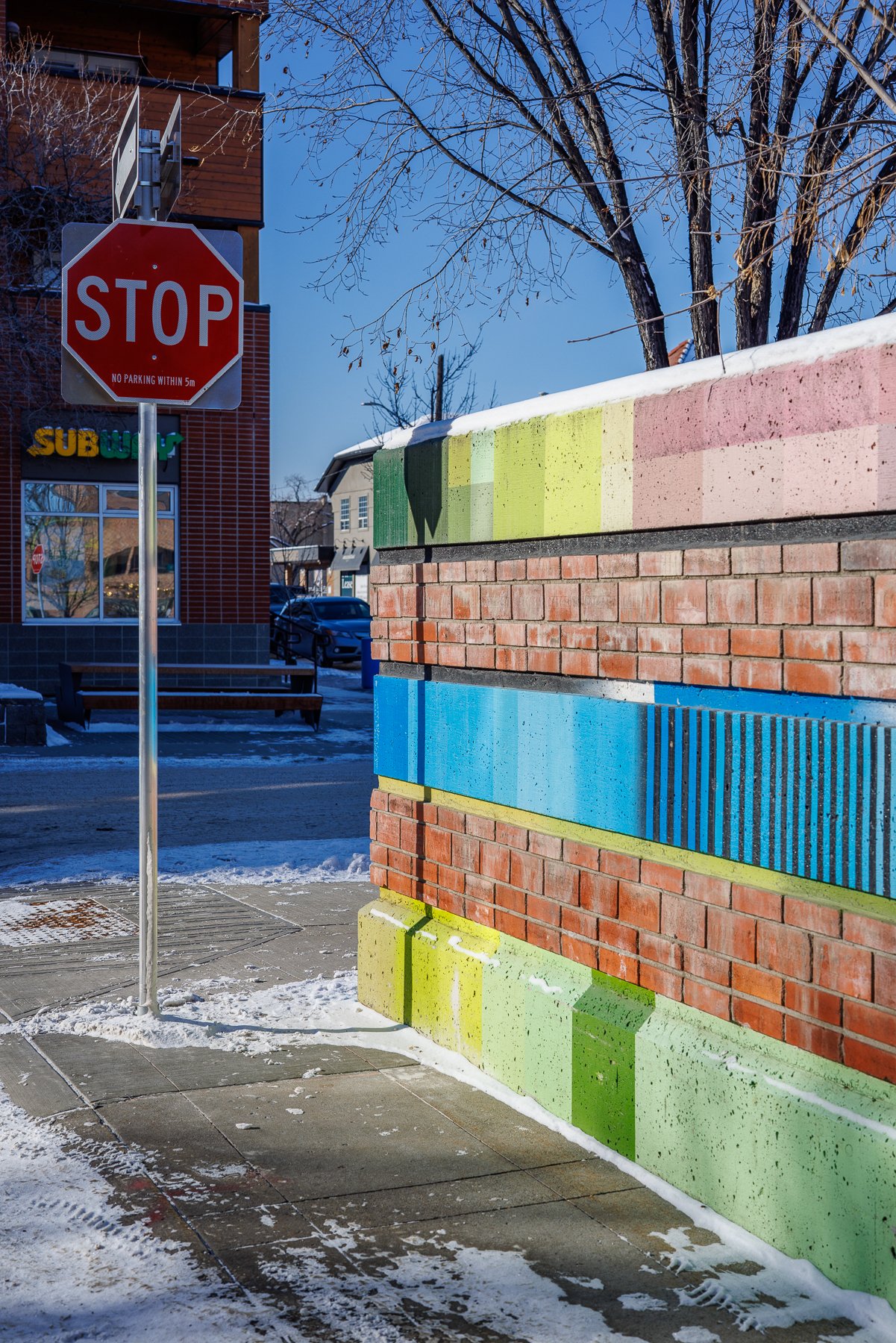
I am always more interested in photos that have a lot of depth or dimension WO or stopped down, but embedded with a visual context. The new Otus 50/1.4 FE shows tremendous depth to me. Here are two examples from petapixel. These are so much more visually pleasing and singular than GM 50/1.2 or 1.4 photos. Even online jpegs on a phone screen.

I will say, shallow DOF photos, especially higher contrast lenses, have a strong “cut out” with the subject looking pasted on an abstracted background. Fred’s examples are just this. And the GM 35:1.4 owl photo above. Looking at GM 85/1.4 v1 vs v2 photos you can see the cut out affect is much more pronounced on the v2 with its higher contrast. I remember posting this 10 years or so ago with the ZA 85/1.4–big cut out affect/smooth bokeh lenses.
I am always more interested in photos that have a lot of depth or dimension WO or stopped down, but embedded with a visual context. The new Otus 50/1.4 FE shows tremendous depth to me. Here are two examples from petapixel. These are so much more visually pleasing and singular than GM 50/1.2 or 1.4 photos. Even online jpegs on a phone screen.
May 26, 2025 at 12:51 PM