ruthenium wrote:
another desperate attempt at 3D...
I think there is some around the curtain where it folds around the table. But perhaps it is just the subject getting in the way here. I think for successful 3D The subject shape needs to be familiar, so although those chairs might have some 3D, it is kinda hard to imagine how they curve. The rest of the scene is straight and flat in at least one dimension
For me, '3D POP' isn't solely defined by that striking sensation of a subject seemingly leaping off the screen. It equally applies the other way around—when an image possesses such profound depth and dimensionality that the viewer feels effortlessly pulled right into the scene.
carstenw wrote:
I almost never walk out just to test equipment, life is too short for that, and thus I don't carry two identical lenses (for example 35mm f/1,4) basically ever.
However, I do go out with my Voigtländer 35mm f/1,4 Classic from time to time, and I never see 3D from it, whereas I will definitely see it with my Contax 35mm f/1,4.
That is how. . So you have the perfect lenses for the test and merely refuse to verify your claim. But still "know" what the result would be. Got it.
Daran wrote: . So you have the perfect lenses for the test and merely refuse to verify your claim. But still "know" what the result would be. Got it.
Well, the tense of my writing was wrong, I have definitely seen 3D from my Contax. I mean, I could keep trying with the CV lens, and keep verifying with the Contax, but at some point it is just accepted fact.
While that's not part of the optical contribution (the primary point of the lens dialogue), the potential for higher contrast lighting, with falloff transition rates into ambient lighting of lesser contrast (even if same luminance) ratio ... yes, can generate a variance in depth cues. Also, color temp variance of flash vs. ambient can create transitional separation cues.
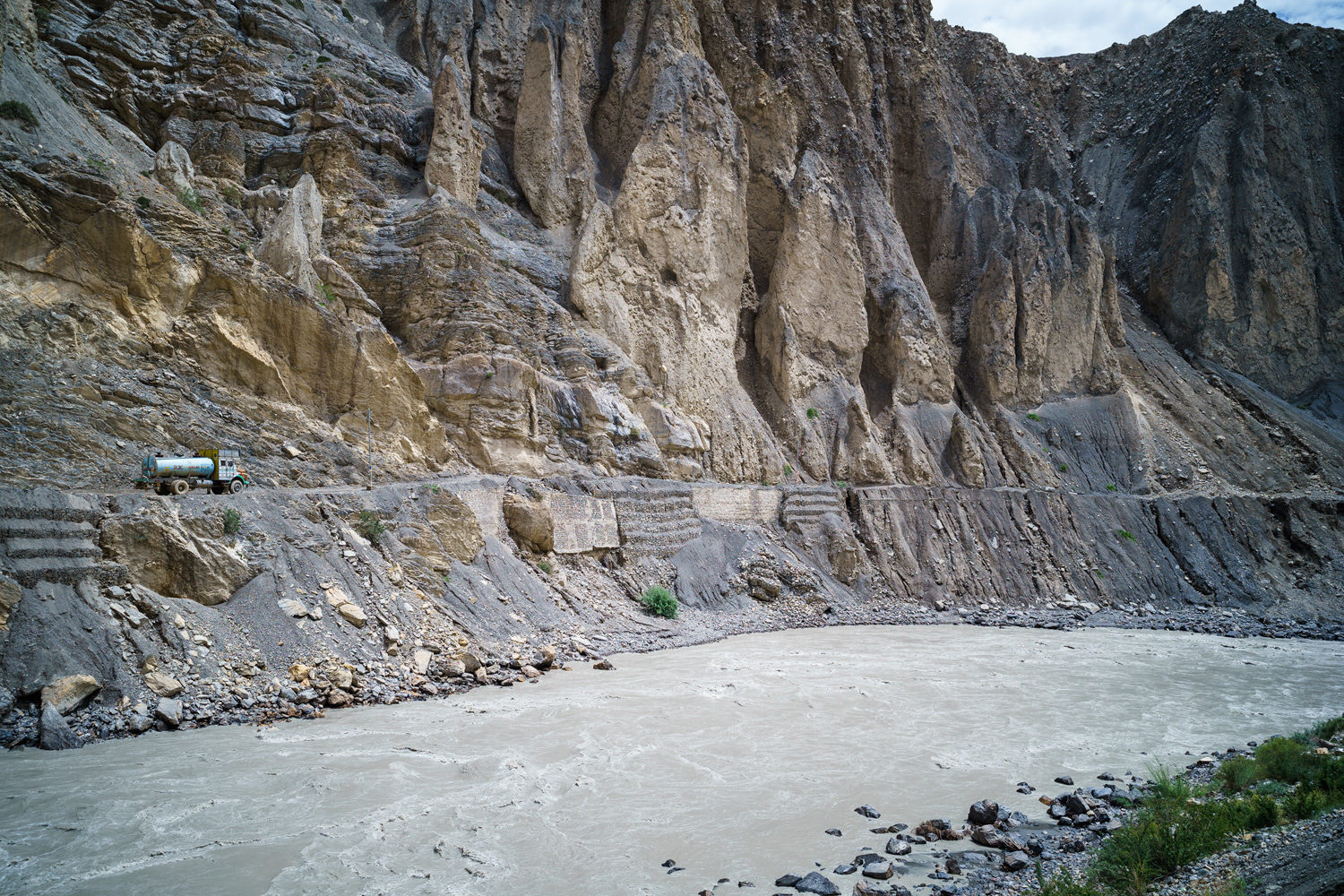
Here is one from a 28mm lens that impressed me, and it doesn't have the drawback of extending the contents into the longitudinal axis - the reason wide angles generally do much better than say, 40-50mm lenses at 'full depth of field' images. No significant leading lines to fool the eye, either.
RustyBug wrote:
While that's not part of the optical contribution (the primary point of the lens dialogue), the potential for higher contrast lighting, with falloff transition rates into ambient lighting of lesser contrast (even if same luminance) ratio ... yes, can generate a variance in depth cues. Also, color temp variance of flash vs. ambient can create transitional separation cues.
I don't think I've seen a single photo where flash improved the 3d pop effect...
j4nu wrote:
I don't think I've seen a single photo where flash improved the 3d pop effect...
While maybe not the kind of pop the OP was speaking to, you can create separation between the subject and background by lighting the subject a stop or so higher than the ambient. You need more than a flash to do this in a convincing way. I don't do this much these days, but an off-camera strobe in a big softbox will do the trick.
philip_pj wrote:
Here is one from a 28mm lens that impressed me, and it doesn't have the drawback of extending the contents into the longitudinal axis - the reason wide angles generally do much better than say, 40-50mm lenses at 'full depth of field' images. No significant leading lines to fool the eye, either.
It has crossed my mind that this account is an elaborate joke, and we’re all the victims. ;-)


 . So you have the perfect lenses for the test and merely refuse to verify your claim. But still "know" what the result would be. Got it.
 ...
...