Manual Focus Nikon Glass
p.2718 #1Manual Focus Nikon Glass
Andrea_Telleschi wrote:
thank you, it's the teamLAB Biovortex Kyoto
Ah. I still don't know what it is.
I even googled it. I still don't know what it is. I suspect I don't need to know!
I'd rather have pint of a good DIPA!
thank you, it's the teamLAB Biovortex Kyoto
Ah. I still don't know what it is.
I even googled it. I still don't know what it is. I suspect I don't need to know!
I'd rather have pint of a good DIPA!
Nov 18, 2026 at 03:28 PM
p.2718 #2Manual Focus Nikon Glass
From the back yard. E-Series 75-150mm f/3.5.
 EightMournigDoves
by James Muller, on Flickr
Eight doves in a tree.
EightMournigDovesby James Muller, on Flickr
Eight doves in a tree.
Nov 18, 2026 at 03:55 PM
p.2718 #3Manual Focus Nikon Glass
Jim, love that! Its such a delight to see even the fuzzyish ring around Saturn! That must have been fun to see that picture!
Now you have to try Jupiter and its moons Its pretty high in the southeastern sky 4-5am. To get the moons you have to overexpose Jupiter a bit. 3 of the 4 Galilean moons are pretty bright. Callisto is dim.
Jupiter is a lot brighter than Saturn, it may be about half the distance.
jimmuller wrote:
... <a nice photo of Saturn> ...
Gitzo tripod with Leofoto PG-4 Gimbal used to stabilize and manouvere the lens.Okay, I had to try this! Three pictures here, the original full-image version (re-scaled to 1400 long side then re-scaled again by Flickr) in which Saturn is just a dot in the sky, a 1:1 cropping, and for fun a version of that cropping re-scaled to a long side of 500. If we didn't already know what this was supposed to be it wouldn't be recognizable.
"I know, I know, a thousand questions. But first the trania." - Balok in The Corbomite Maneuver
https://live.staticflickr.com/65535/55660321010_75c6c73da0_b.jpgSaturnCompleteImage
by James Muller, on Flickr
https://live.staticflickr.com/65535/55660082439_c0418da501_w.jpgSaturnCropped1:1
by James Muller, on Flickr
https://live.staticflickr.com/65535/55659890481_a9d234150c.jpgSaturnScaledUp
by James Muller, on Flickr
Taken with the 300mm f/4.5 AI-S and...Show more →
Now you have to try Jupiter and its moons
Its pretty high in the southeastern sky 4-5am. To get the moons you have to overexpose Jupiter a bit. 3 of the 4 Galilean moons are pretty bright. Callisto is dim.Jupiter is a lot brighter than Saturn, it may be about half the distance.
jimmuller wrote:
saph wrote
Saturn (and a faint Titan off to the left). Nikon ZR and Reflex-Nikkor 1000mm f/11.... <a nice photo of Saturn> ...
Gitzo tripod with Leofoto PG-4 Gimbal used to stabilize and manouvere the lens.
"I know, I know, a thousand questions. But first the trania." - Balok in The Corbomite Maneuver
https://live.staticflickr.com/65535/55660321010_75c6c73da0_b.jpgSaturnCompleteImage
by James Muller, on Flickr
https://live.staticflickr.com/65535/55660082439_c0418da501_w.jpgSaturnCropped1:1
by James Muller, on Flickr
https://live.staticflickr.com/65535/55659890481_a9d234150c.jpgSaturnScaledUp
by James Muller, on Flickr
Taken with the 300mm f/4.5 AI-S and...Show more →
Nov 18, 2026 at 05:56 PM
p.2718 #4Manual Focus Nikon Glass
SiMuMe wrote:
jimmuller wrote:
This won't replace the Hubble Telescope but then it didn't cost nearly as much either! I'll take it.Well done Jim. Prior to Samy's post, I didn't think it was possible to take a picture of and see the overall Saturn shape from this planet without very sophisticated and very expensive gear. I like it, and do like your approach of sharing pictures of far away objects. My longest lens now is 180mm. I think maybe, just maybe, I'll be able to share little bird pictures. They will still look far away, but you did it first .
Siphiwe, apart from seeing Saturn's ring shape, its also fun watching those Galilean moons tracking with Jupiter on your screen. There are websites that will tell you which moon is which.
And yes, let's see some birds with your 180!!
jimmuller wrote:
saph wrote
A sensor with higher resolution than the Z5ii's 24 Mpxls might have captured more detail, or maybe not. A longer lens would have produced a bigger starting image. I had set the camera to save raw files, which I don't usually do. I looked at them, realized I couldn't replicate, let alone improve on, whatever amazing transformation Nikon's firmware was doing.This won't replace the Hubble Telescope but then it didn't cost nearly as much either!
I'll take it..Siphiwe, apart from seeing Saturn's ring shape, its also fun watching those Galilean moons tracking with Jupiter on your screen. There are websites that will tell you which moon is which.
And yes, let's see some birds with your 180!!
Nov 18, 2026 at 05:59 PM
p.2718 #5Manual Focus Nikon Glass
DeltaSigma wrote:
Glen,
What are those thin vertical lines showing up in a couple of your images?
Colin
Colin, you have spotted an issue I've been trying to figure out. The issue represents a peccadillo of the exporting engine in OnOne PhotoRaw 2026, which I use to apply the frames and sometimes other adjustments to my photos before exporting the final product. You will notice that I replaced the second and third images in my previous post, which were the ones that had the thin vertical black line in them and, as you will notice, the problem can be worked around; I just need to figure out how to do so consistently.
While I'm here, posting; here are a few more photos from Big Qualicum River, showing some of the riverside trees as seen through the 55 f/1.2 SC.
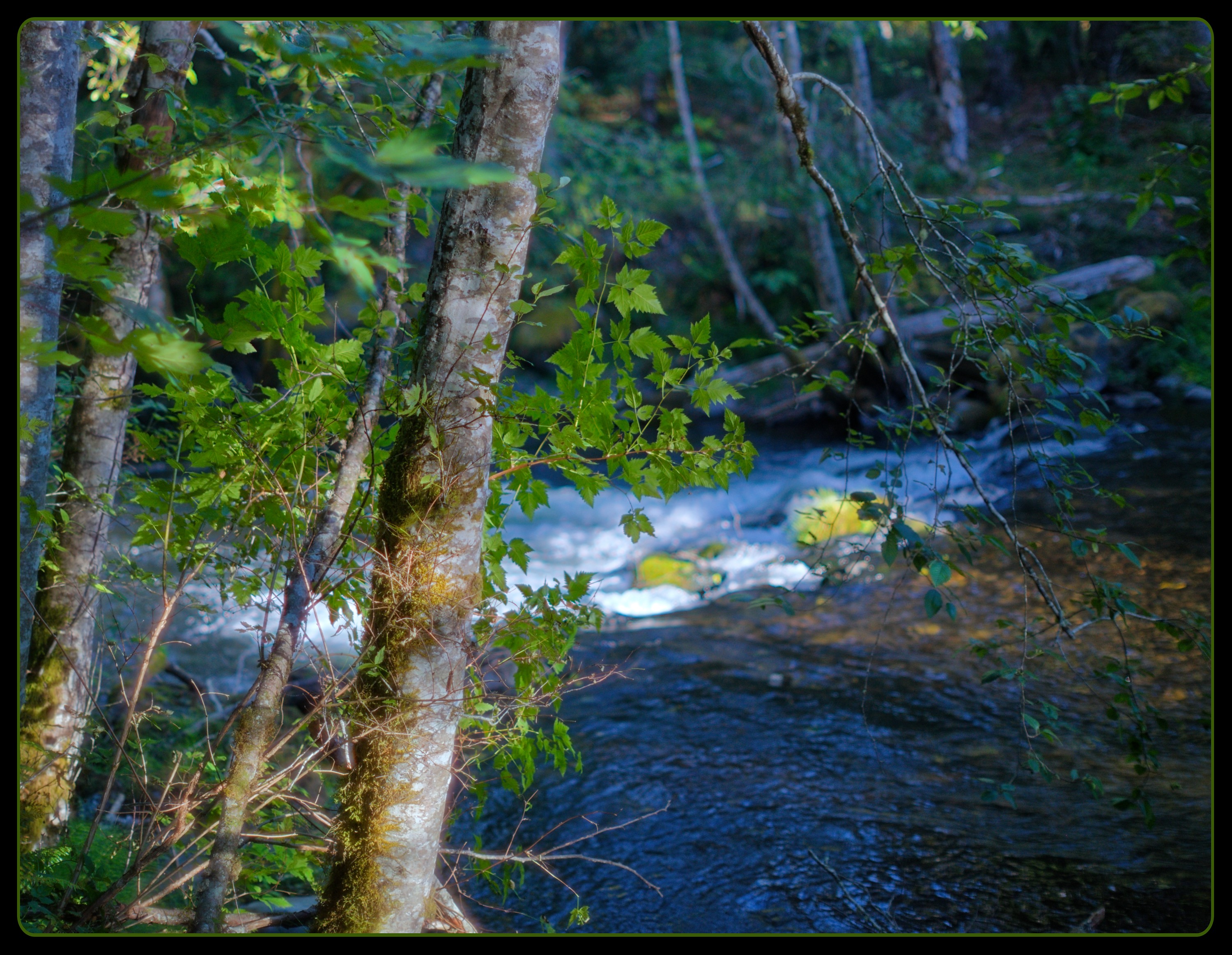
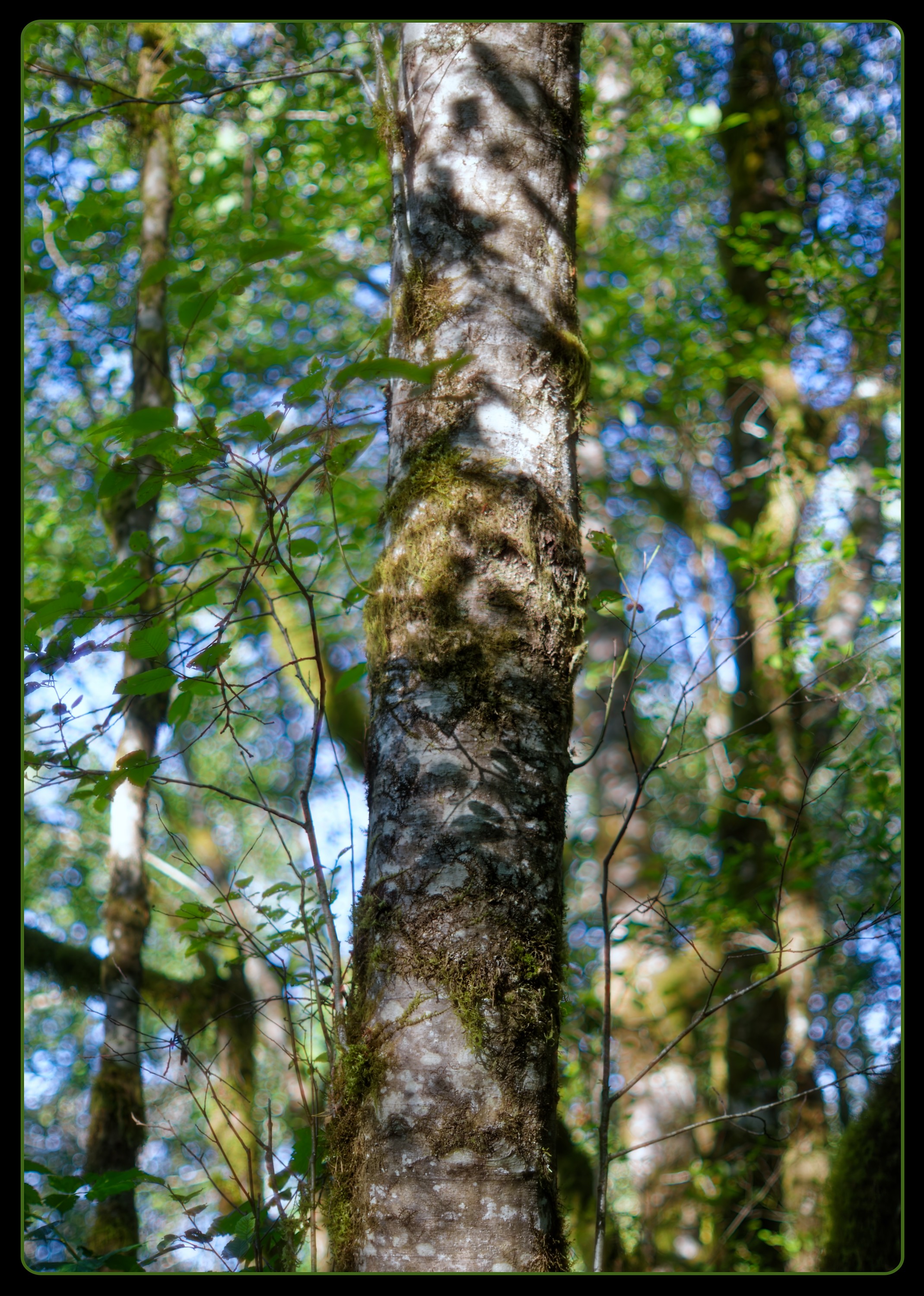
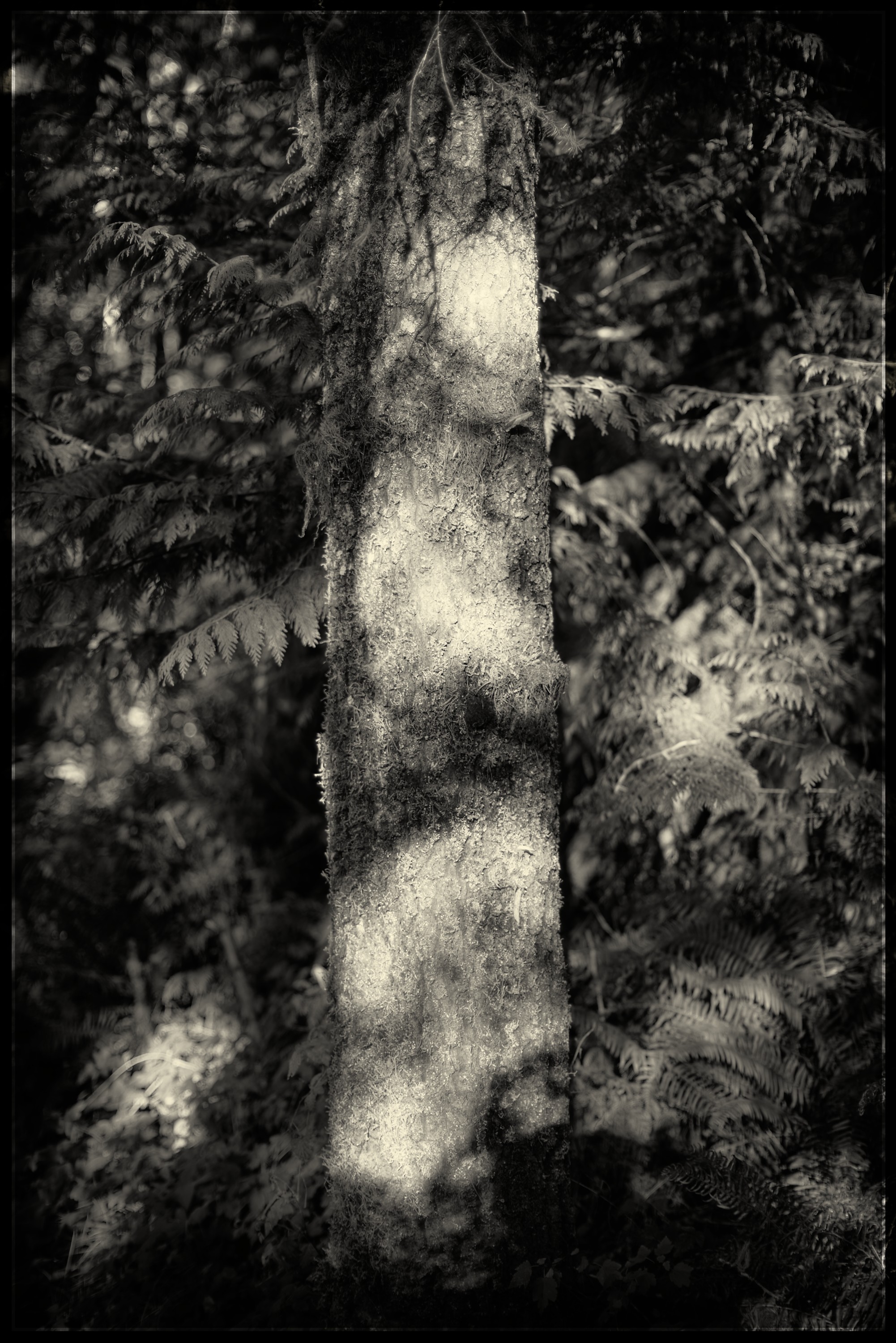
Glen,
What are those thin vertical lines showing up in a couple of your images?
Colin
Colin, you have spotted an issue I've been trying to figure out. The issue represents a peccadillo of the exporting engine in OnOne PhotoRaw 2026, which I use to apply the frames and sometimes other adjustments to my photos before exporting the final product. You will notice that I replaced the second and third images in my previous post, which were the ones that had the thin vertical black line in them and, as you will notice, the problem can be worked around; I just need to figure out how to do so consistently.
While I'm here, posting; here are a few more photos from Big Qualicum River, showing some of the riverside trees as seen through the 55 f/1.2 SC.
Nov 18, 2026 at 07:20 PM
|
p.2718 #6Manual Focus Nikon Glass
saph wrote:
Jim, love that! Its such a delight to see even the fuzzyish ring around Saturn! That must have been fun to see that picture!
Now you have to try Jupiter and its moons Its pretty high in the southeastern sky 4-5am. To get the moons you have to overexpose Jupiter a bit. 3 of the 4 Galilean moons are pretty bright. Callisto is dim.
Glad you like and yes it was fun!
As I start typing this the time is about 5:40AM. (Then I got distracted for an hour.) Jupiter and Mars are very close to each other, easily visible high in the sky to the south. Also Venus is up, lower, further east and much brighter. But this morning isn't convenient for me to rummage around with camera and tripod. Maybe tomorrow...
Jim, love that! Its such a delight to see even the fuzzyish ring around Saturn! That must have been fun to see that picture!
Now you have to try Jupiter and its moons
Its pretty high in the southeastern sky 4-5am. To get the moons you have to overexpose Jupiter a bit. 3 of the 4 Galilean moons are pretty bright. Callisto is dim.Glad you like and yes it was fun!
As I start typing this the time is about 5:40AM. (Then I got distracted for an hour.) Jupiter and Mars are very close to each other, easily visible high in the sky to the south. Also Venus is up, lower, further east and much brighter. But this morning isn't convenient for me to rummage around with camera and tripod. Maybe tomorrow...
Nov 19, 2026 at 05:42 AM
p.2718 #7Manual Focus Nikon Glass
Andrea_Telleschi wrote:
Z5 + 28 f/2.8 Ai-s (Kyoto, Japan)
https://live.staticflickr.com/65535/55650011025_26e6c28798_b.jpg20260321_DZ5_5038_PJ by Andrea Telleschi, su Flickr
Andrea, I did not get to comment on this image when you first posted. This is awesome! My late mother in law was born and raised in Kyoto and it is special to see images from there. Was this on tripod? What were the light sources and shutter speed?
Mary
Nov 19, 2026 at 03:04 PM
p.2718 #8Manual Focus Nikon Glass
mjgphotoz wrote:
https://live.staticflickr.com/65535/55650011025_26e6c28798_b.jpg20260321_DZ5_5038_PJ by Andrea Telleschi, su FlickrAndrea, I did not get to comment on this image when you first posted. This is awesome! My late mother in law was born and raised in Kyoto and it is special to see images from there. Was this on tripod? What were the light sources and shutter speed?
Mary
Thank you Mary; it’s a visual light installation, but the light level is very low. It was shot handheld at 1/60s—I believe (or rather, I hope) at the widest aperture—with an ISO of 1600, but the original file is still very underexposed. I increased the exposure by +3.25.
Andrea_Telleschi wrote
Z5 + 28 f/2.8 Ai-s (Kyoto, Japan)https://live.staticflickr.com/65535/55650011025_26e6c28798_b.jpg20260321_DZ5_5038_PJ by Andrea Telleschi, su Flickr
Mary
Thank you Mary; it’s a visual light installation, but the light level is very low. It was shot handheld at 1/60s—I believe (or rather, I hope) at the widest aperture—with an ISO of 1600, but the original file is still very underexposed. I increased the exposure by +3.25.
Nov 20, 2026 at 02:17 PM
p.2718 #9Manual Focus Nikon Glass
Andrea_Telleschi wrote:
https://live.staticflickr.com/65535/55650011025_26e6c28798_b.jpg20260321_DZ5_5038_PJ by Andrea Telleschi, su FlickrAndrea, I did not get to comment on this image when you first posted. This is awesome! My late mother in law was born and raised in Kyoto and it is special to see images from there. Was this on tripod? What were the light sources and shutter speed?
MaryThank you Mary; it’s a visual light installation, but the light level is very low. It was shot handheld at 1/60s—I believe (or rather, I hope) at the widest aperture—with an ISO of 1600, but the original file is still very underexposed. I increased the exposure by +3.25.
Nicely done!
Mary
mjgphotoz wrote
Andrea_Telleschi wrote
Z5 + 28 f/2.8 Ai-s (Kyoto, Japan)https://live.staticflickr.com/65535/55650011025_26e6c28798_b.jpg20260321_DZ5_5038_PJ by Andrea Telleschi, su Flickr
Mary
Nicely done!
Mary
Nov 20, 2026 at 04:04 PM