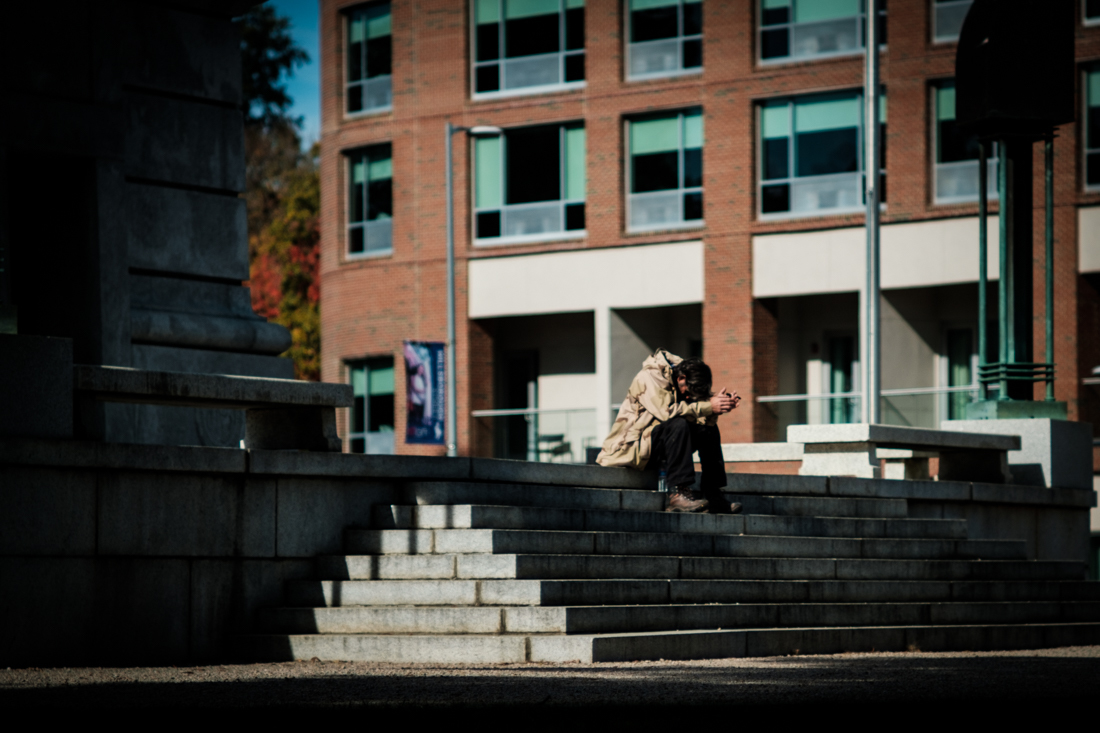
Marshal Press 6X9 camera loaded with Neopan Acros 120. The camera has a fixed Nippon Kogaku 105mm f3.5 Nikkor-Q lens. This might have been at 1/5 or 1/10s.
been crazy busy, for those aware of Abraham and his bone marrow transplant, his ANC is up to 1500 and he is doing well.... three more weeks of hospital.
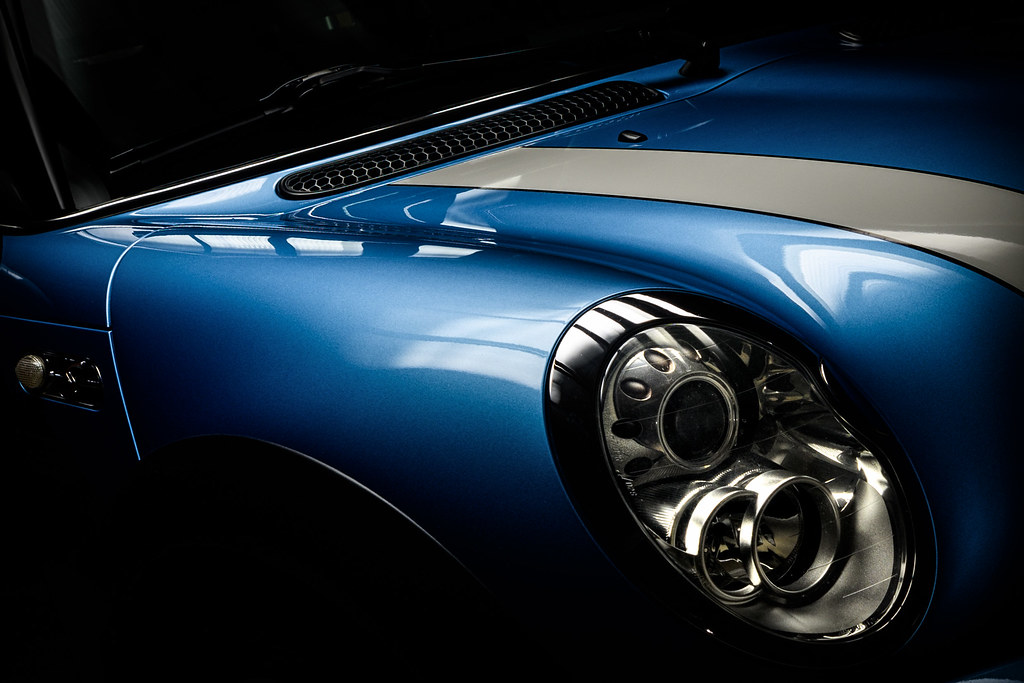
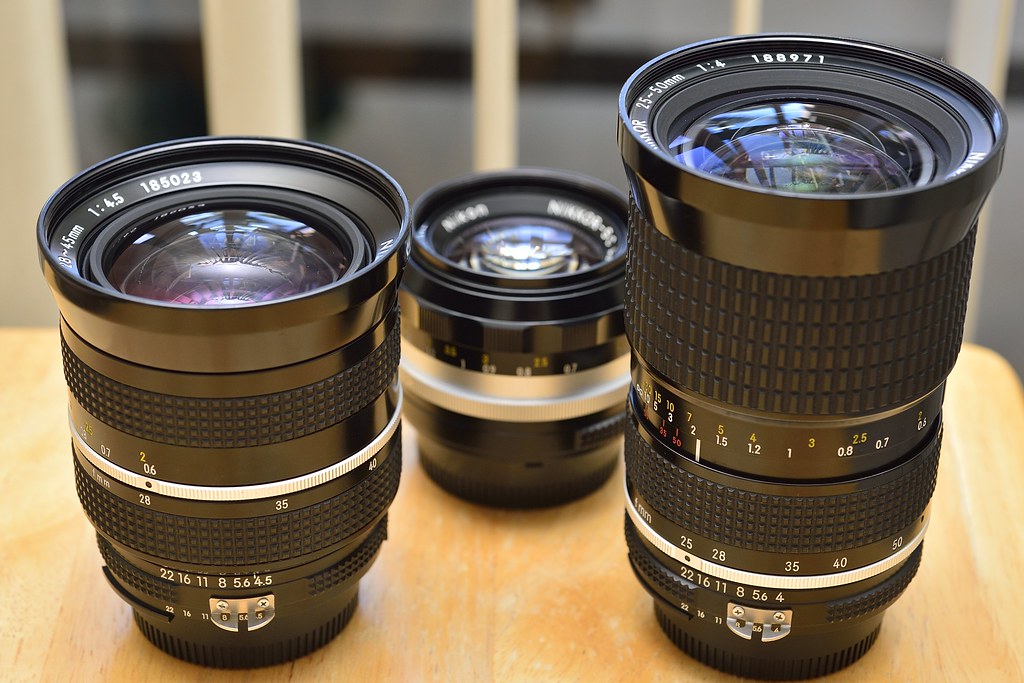
that 25-50mm is very sharp. If it was just a little more compact, it may be a great hiking lens for me. Not my kind of car, though, (size and suspension type ) but the color is great.
I have another one from the blue Mini - crop of the 24mm f/2.8, actually a pretty radical crop, since the full frame is the same as the image from yesterday. Same 10 seconds f/8 on D810, just different light painting and processing. Color is closer to real here. It's actually even brighter than in this image.
i have only used Photoshop Elements 6 and 12 and find it more than adequate for my needs. There's also a handy plugin that one can buy Elements+ which unlocks many of the standard Photoshop features which are disabled in PSE. ( PSE apparently has all the features of PS but as it is a cheap version Adobe limits the usable software).
It is dead easy to use and, provided that one is prepared to be systematic in file management, deletion etc., (which I am not!) provides simple and effective cataloguing.
The stitching of panoramas is usually seamless and easy. LR and PS are beyond my means at our R/$ exchange rate and I would recommend it to any hobbyist.
been crazy busy, for those aware of Abraham and his bone marrow transplant, his ANC is up to 1500 and he is doing well.... three more weeks of hospital.
kwoodard wrote:
Can always use Fuji's or Adobe's convert to DNG, then it doesn't matter what software you use.
Yeah, I guess I could go that route. Post processing is the one thing that I really do not enjoy. So looking to use the minimal steps possible
In a perfect world, I would just use the jpeg right out of the camera (+RAW for backup) and am working toward that for black and white shots.
I have been doing a fair amount testing with Custom Picture Control profiles on the Df for in camera processing and am liking how that is going. Of course the Fuji has a lot of profiles standard.
For now, I am putting this back off to the side. Spending too much time analyzing and not out shooting. Will stick with LR for the time being.
Plus I have a lot of great photos on this thread that everyone has posted the last week or so that I have to go back and take time to look at.
been crazy busy, for those aware of Abraham and his bone marrow transplant, his ANC is up to 1500 and he is doing well.... three more weeks of hospital.
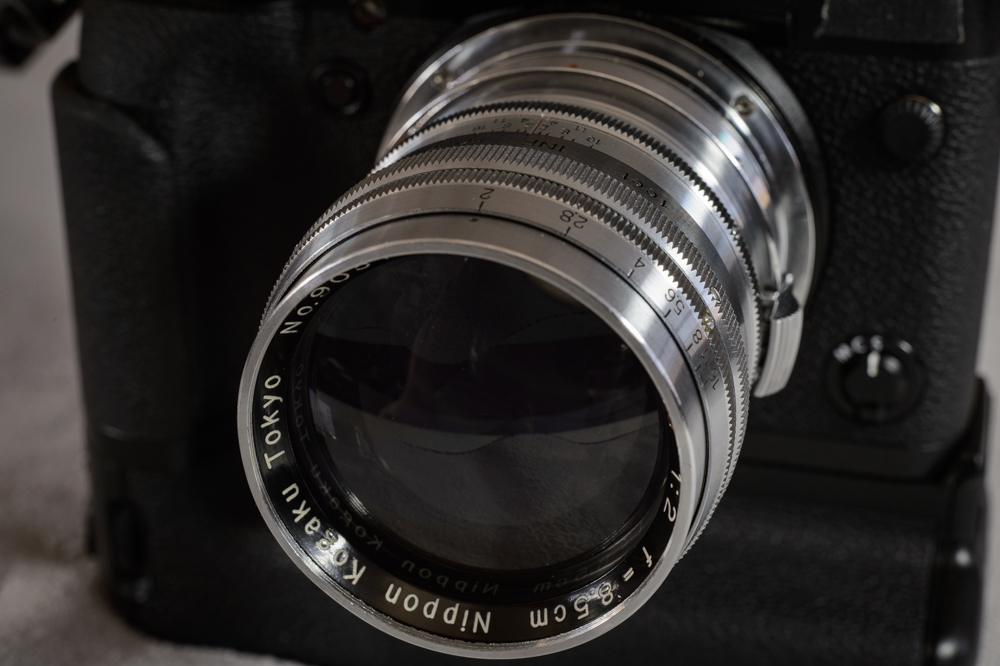
I have it in both Nikon S mount (like the one you linked) and in Leica Thread Mount (LTM/M39). Love them both. Great rendering on Fuji. I also use the one like you show on my Nikon S2 film camera.
Chrome plated brass. Heavy and built like a tank.
I would say that the price is a little high with oil on the blades, but I have noticed rangefinder lenses like these have really gone up in price (almost double) since I started getting the the other year.
Updated: BUT since it comes with the viewfinder, case and hood, that is probably a reasonable price today. Verify with the seller, but that may just be wear marks on the blades. From that angle and light it is hard to say. I have a couple RF lenses and the blades look similar and it is just wear marks and not oil.
You may notice minuscule air bubbles in the glass. Not uncommon for lenses that old and has zero impact on performance.
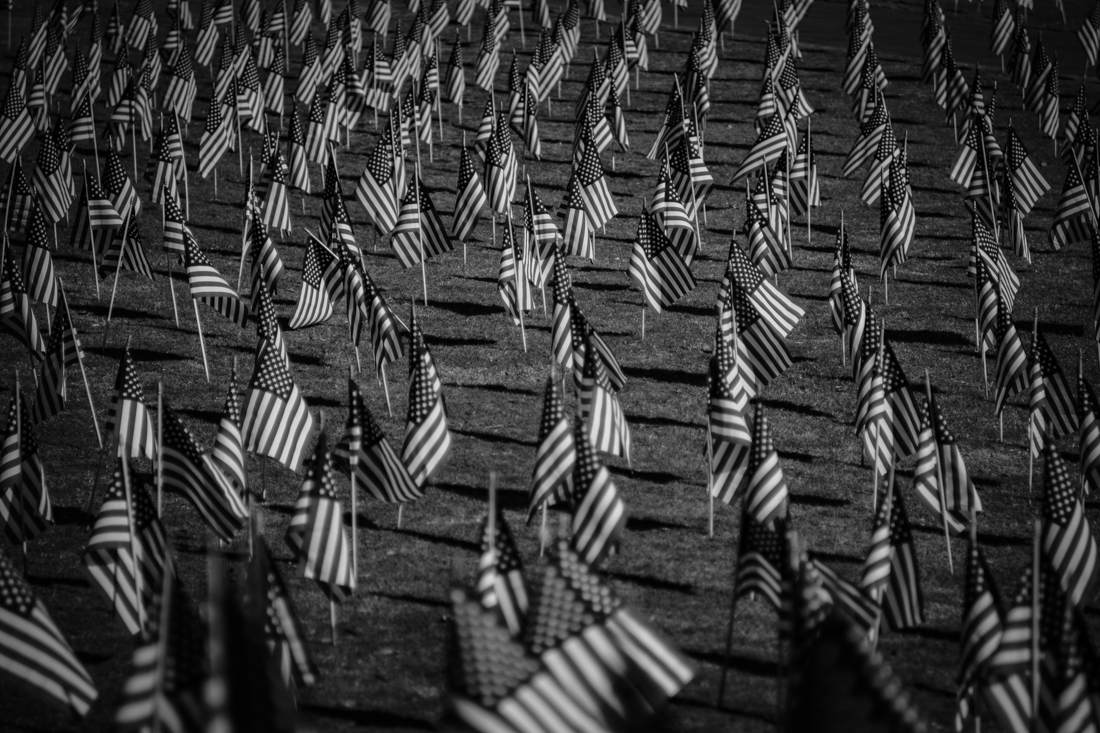
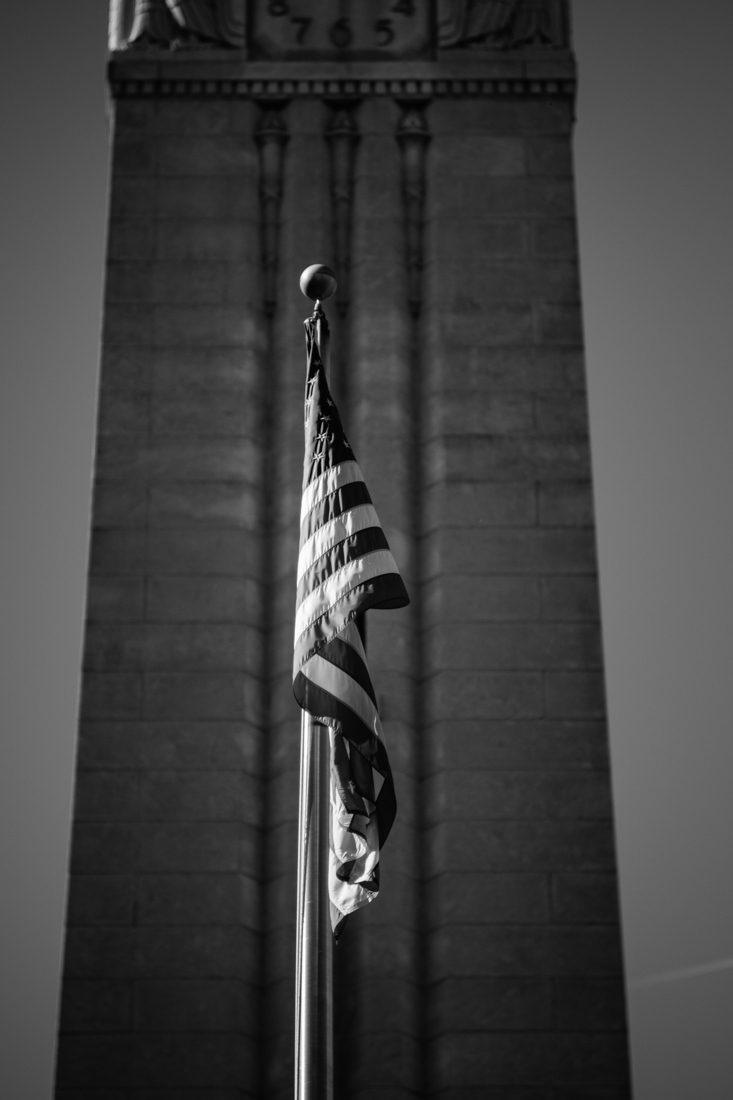
Here are a few taken with my S mount copy (older version of the one you show) Nippon Kogaku Tokyo vs Japan. Adapted to the X-T2 taken last Veteran's Day.
gbohannon wrote:
Here are a few taken with my S mount copy (older version of the one you show) Nippon Kogaku Tokyo vs Japan. Adapted to the X-T2 taken last Veteran's Day.
G
Very nice, seems to have a character to it that's very pleasing.
I am holding off on any more RF lenses until I get a workable view finder, patch doesn't seem to work well when its in a bright environment on my S3.
Just my opinion - I am not familiar with RF lenses, but as one who has restored numerous lenses, I avoid blades like that. That is a difficult repair, and the presence of oil means the lens was likely subject to high temperatures, such as a hot car, and the lubricant has most likely formed a haze on inner elements. I can clean up haze with a few hours work, but I never touch blades personally. Also, as time goes on they are likely to lose performance unless serviced (sticking).
I wanted to test this lens up against my primes. I did sharpness tests on it last summer and was very surprised that it had better sharpness than some of my primes (such as the 20mm f4 Ai). It's really amazing to spend hours with one cheap, tiny old lens and get results like this. All I needed was this one little lens for wide angle, normal, and pano aspects. It suffers just a bit with regard to sharpness, but otherwise is a wonderful little gem. I must admit though, on my next trip I'm leaving the zoom home. By the way, unlike my one modern zoom (28-300 3.5-5.6 AF-S), and I bet most of them, this one has one single non-parallax point for all focal lengths (80mm). That's amazingly useful for panoramas. It's inconvenient to have to look up the NPP every time you change focal lengths when making panos. I wonder why? It's a push-pull design, and the front rotates with focus.





 ) but the color is great.