Speaking of the Afghan girl, I was helping a student before the holiday that had the most amazing eyes I’d ever seen. She was maybe 19… I asked her if she had ever heard of the Afghan girl photo that was on the cover of National Geographic? She smiled really big and told me the girl was her aunt. Small world!
James Markus wrote:
Another iconic manual focus lens is the Nikkor 105mm f2.5 ai-s (grab your wallet Jim ). Though this is a poor test nowhere near the beauty of the Afgan Girl by McCurry it is a good test of my super tiny flash at about 7 feet, and lens at f4. Oscar is a "void" cat that in a darkened room is very hard to focus. He hangs around me constantly, but usually inside the MFD of whatever lens I am using.
James Markus wrote:
Though this is a poor test nowhere near the beauty of the Afgan Girl by McCurry ...
I have never had a subscription to N.G nor any photography magazine, never had academic connections to journalism, sociology, or art. In 1984 I was busy learning the intricacies of <something technical I can't tell you about>, married for seven years, and one year into being a non-student for only the second time in my adult life. So I had never heard of Afgan Girl, let alone seen it, until I clicked on that Wikipedia link. That photo, like so many great pics in this forum, tells me to just put down my camera and walk away. It also tells me it isn't about the glass or pixel count or aberration, it's about the image.
But there is more to it. The Wikipedia story also finishes that TV-cop show line with "...and nobody gets hurt." So much discussion over a picture. An image like that, or any image that moves us sufficiently, is a power tool that must be used carefully. My pics will never get that kind of distribution or notoriety, were for friends and family only (until I started putting on this forum). But I must still exercise caution. I could put a disturbing image on my wife's Auraframe, not a good idea. I could send a scan of an old slide to college friends who might not want to be reminded of something. OTOH they help preserve our own past and thoughts, and they spread my own vision of the world (such as it is) to others. So I have to keep shooting.
Now back to your regularly scheduled MFNG programming. Thanks for reading this, for making me think, and for the inspirations.
jimmuller wrote:
I have never had a subscription to N.G nor any photography magazine, never had academic connections to journalism, sociology, or art. In 1984 I was busy learning the intricacies of <something technical I can't tell you about>, married for seven years, and one year into being a non-student for only the second time in my adult life. So I had never heard of Afgan Girl, let alone seen it, until I clicked on that Wikipedia link. That photo, like so many great pics in this forum, tells me to just put down my camera and walk away. It also tells me it isn't about the glass or pixel count or aberration, it's about the image.
But there is more to it. The Wikipedia story also finishes that TV-cop show line with "...and nobody gets hurt." So much discussion over a picture. An image like that, or any image that moves us sufficiently, is a power tool that must be used carefully. My pics will never get that kind of distribution or notoriety, were for friends and family only (until I started putting on this forum). But I must still exercise caution. I could put a disturbing image on my wife's Auraframe, not a good idea. I could send a scan of an old slide to college friends who might not want to be reminded of something. OTOH they help preserve our own past and thoughts, and they spread my own vision of the world (such as it is) to others. So I have to keep shooting.
Now back to your regularly scheduled MFNG programming. Thanks for reading this, for making me think, and for the inspirations....Show more →
Jim, I guard my eyes as best I can from images that can pollute the soul. You can not unsee something once seen. Some images define an era, the culture, and the unvarnished truth. For me, they are like stepping stones through time.
James Markus wrote:
Jim, I guard my eyes as best I can from images that can pollute the soul. You can not unsee something once seen. Some images define an era, the culture, and the unvarnished truth. For me, they are like stepping stones through time.
In part, this very thread is also a mini collection of stepping stones in time. Both to enjoy, admire or not, and learn from. A very special place with old lens that have many stories to tell.
I’ve been guilty of neglecting the Nikkor 50mm f/1.2 for my other 50mm lenses. It shines wide open, and I’m determined to let it see more action in the weeks ahead.
JaKo wrote:
I’ve been guilty of neglecting the Nikkor 50mm f/1.2 for my other 50mm lenses. It shines wide open, and I’m determined to let it see more action in the weeks ahead.
AdaptedLenses wrote:
I’m officially looking forward to it! Might need to pull out the 55mm f/1.2 to compare against.
135mm f/2.8 AIS
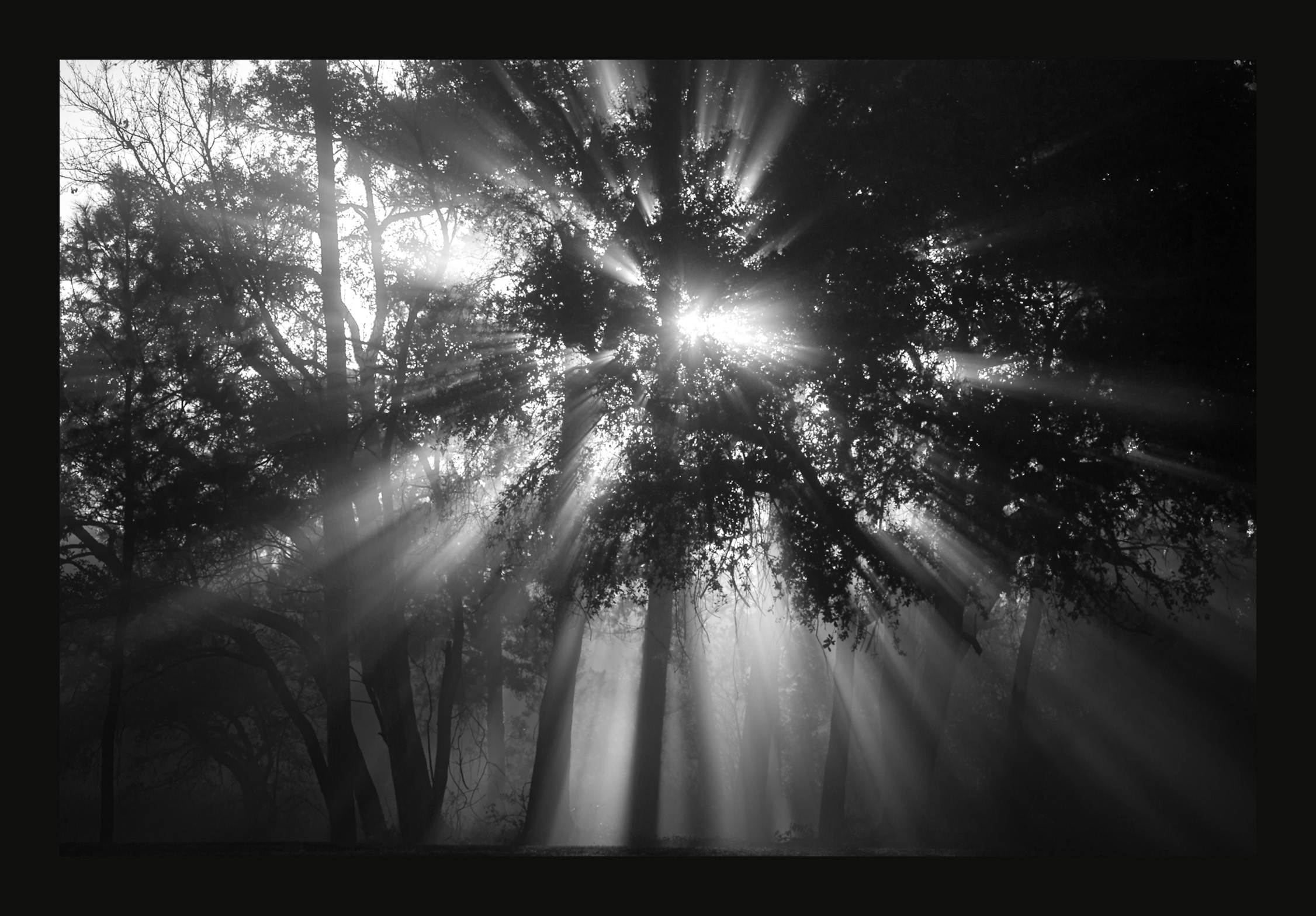
That shot of the sun through the trees reminds me of an experience I had x-c skiing maybe ten years ago. I came around a bend with the sun directly in front of me shining high through the trees laden with fresh powder. The wind at that moment blew a cloud of blinding, sparkling white swirling into the air and forming rays like that. Had this been the Middle ages I would have sworn I had a been visited by an angel. Maybe I was. It was a transcendent vision.
Every day I see pics in this thread which make me wish I could click the Like button several times. Alas, that doesn't work.
jimmuller wrote:
About that nick in the filter, that was an implied question, so thanks. I understand about it not being visible as a spot in a picture. What I wonder about is whether it could scatter enough light to cast a haze over a picture, or create a partial sun star or flare effect.
Speaking from personal experience, about the only time a front filter nick would have a visible effect is in out-of-focus highlights, so called "bokeh balls." I remember being plagued by an annoying squiggle in most such OOF highlights with only one lens, so I examined the lens and filter. Couldn't see anything, and I was getting worried that there might be some internal problem in the lens. Closer examination with a very bright LED flashlight revealed an almost invisible scratch in the filter in the same shape as the squiggle. The scratch was casting a shadow, but it had no effect scattering enough light to reduce contrast.
jimmuller wrote:
That photo, like so many great pics in this forum, tells me to just put down my camera and walk away. It also tells me it isn't about the glass or pixel count or aberration, it's about the image.
Jim, don't get confused with the main idea of this thread that Curtis started over 15 years ago. It's not about the image, or whether or not how good they are, it's about the glass we all love to use. Believe me, YOU get this place.