Speaking of vintage lenses... I went by the photo store yesterday and bought an inexpensive "fingerprint filter" for the 55mm. This morning I considered which lens should get it. All my others have UV filters from film days. This plain "protection" filter is a noticeably different color, clear instead of slightly orange. So I started re-arranging them. In the process I noticed that the NIkon brand UV filter I've had on the 50mm for 50 years had slight nick in the glass. I could see it easily as a black spec looking through the back of the lens. I have no idea how long the nick has been there, but I'd say that filter served me well and owes me nothing. A few clicks on the aperture ring would hide the nick. Maybe that nick makes no difference to image quality or maybe it contributes to the image degradation with the aperture wide open. That filter will be retired with gratitude. I'll probably spring the bucks for an expensive Nisi for the 55, and put the inexpensive filter on the 50.
This was the first Nikon lens I got for my FM2 in my teens. Recently I've read someone saying that late produktion Micro-Nikkor 55mm has a better coating. Is this true? And does it effect the color represenation?
Jepser wrote:
This was the first Nikon lens I got for my FM2 in my teens. Recently I've read someone saying that late produktion Micro-Nikkor 55mm has a better coating. Is this true? And does it effect the color represenation?
The Micro-Nikkor 55/2.8 came out in Dec. 1979 and was discontinued in 2020. These would have originally been NIC (Nikon Integrated Coating), but it is possible that some of the last-manufactured lenses would have been updated to the SIC (Super Integrated Coating?) which came out in the mid 2000's. According to Roland Vink, there is a 2006+ serial number block from #800250 to #814603, and those would be the best prospect for having SIC coating. There is _some_ improvement in flare control and contrast with SIC, but it is really subtle, and probably not worth paying a large premium for. However, if you just look for the 2006 serial number lenses, you might get lucky and not have to pay extra since not all sellers are aware of the SIC lenses.
I will say that I sought out (and paid for!) a 105/2.5 with SIC, but only because that is a lens I really worship.
grantgoodes wrote:
The Micro-Nikkor 55/2.8 came out in Dec. 1979 and was discontinued in 2020. ...
I will say that I sought out (and paid for!) a 105/2.5 with SIC, but only because that is a lens I really worship.
I was over at my local Hunts Photo & Video store a few hours ago. They had one of those in the used lens cabinet. (Also the same 35mm f/2.8 I have. I didn't ask about the price for the 55mm because I recently acquired the f/3.5 version and it looks like a winner. Besides, another forum member keeps warning me to watch my wallet.
jimmuller wrote:
I was over at my local Hunts Photo & Video store a few hours ago. They had one of those in the used lens cabinet. (Also the same 35mm f/2.8 I have. I didn't ask about the price for the 55mm because I recently acquired the f/3.5 version and it looks like a winner. Besides, another forum member keeps warning me to watch my wallet.
Jim, some of us will caution you from indulging, but most of us won't!
jimmuller wrote:
I was over at my local Hunts Photo & Video store a few hours ago. They had one of those in the used lens cabinet. (Also the same 35mm f/2.8 I have. I didn't ask about the price for the 55mm because I recently acquired the f/3.5 version and it looks like a winner. Besides, another forum member keeps warning me to watch my wallet.
THE disease is taking over, so many lenses, so little time.......
Dow Corning High Vacuum Grease was recommended to me here a while back on here. I have enough for hundreds of lenses now… but it’s cheap.
And Jim, you won’t see a nick on a front filter in a photo so no need to retire if you like it!
One from the 300mm ED-IF
Yogifi wrote:
I bought a bunch of neat tools about two years ago, all set, but thank you for the warning!
They finally came in handy when I was opening up my fm2n to check something the other day.
Haven't popped open the lenses until I get the right helicoid greases, Japan hobby tool set etc.
First experience with a service place (not fixation) and they flatout lied to me, confirmed myself.
AdaptedLenses wrote:
And Jim, you won’t see a nick on a front filter in a photo so no need to retire if you like it!
One from the 300mm ED-IF
...
Nice pic!
About that nick in the filter, that was an implied question, so thanks. I understand about it not being visible as a spot in a picture. What I wonder about is whether it could scatter enough light to cast a haze over a picture, or create a partial sun star or flare effect.
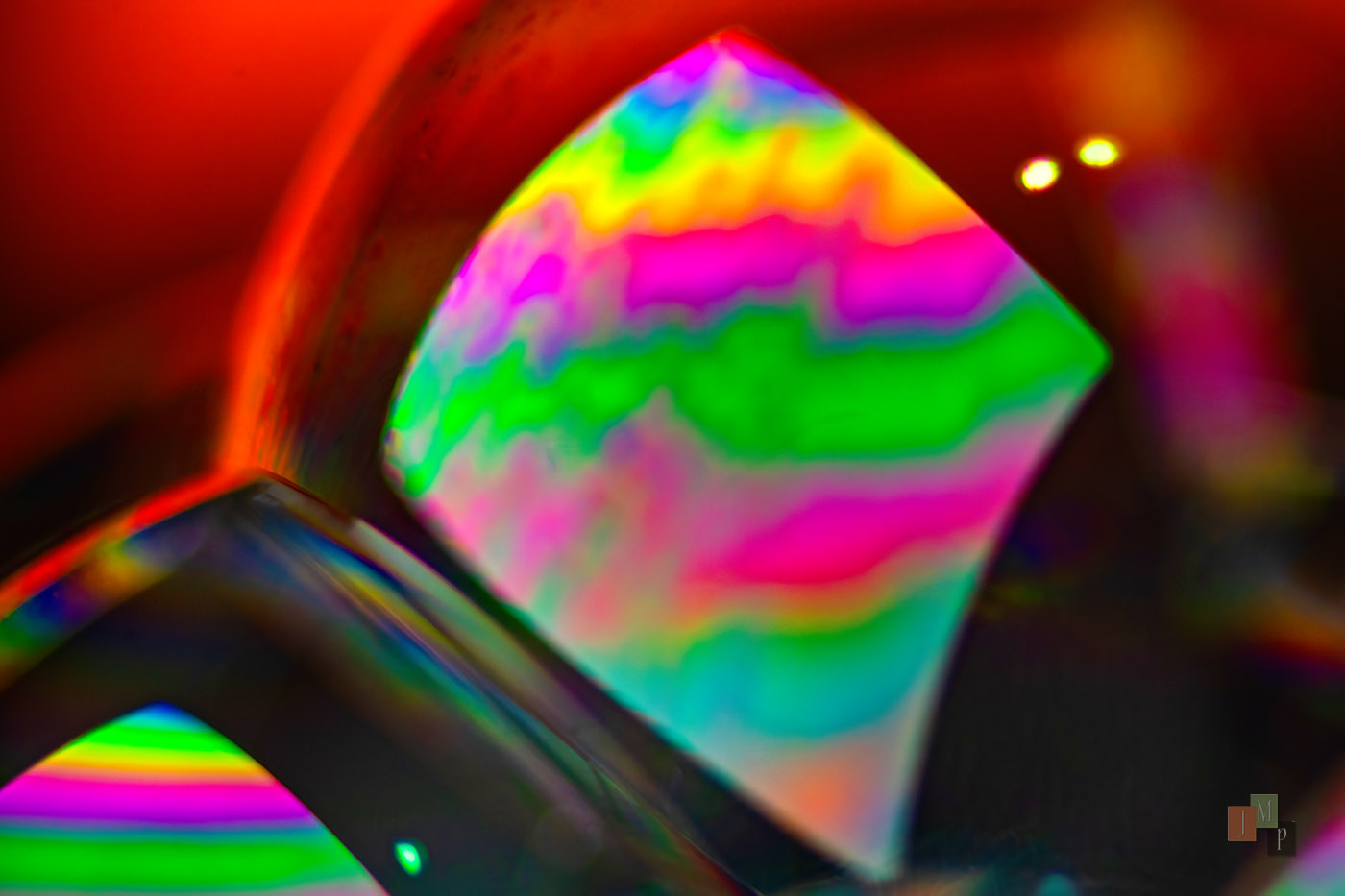
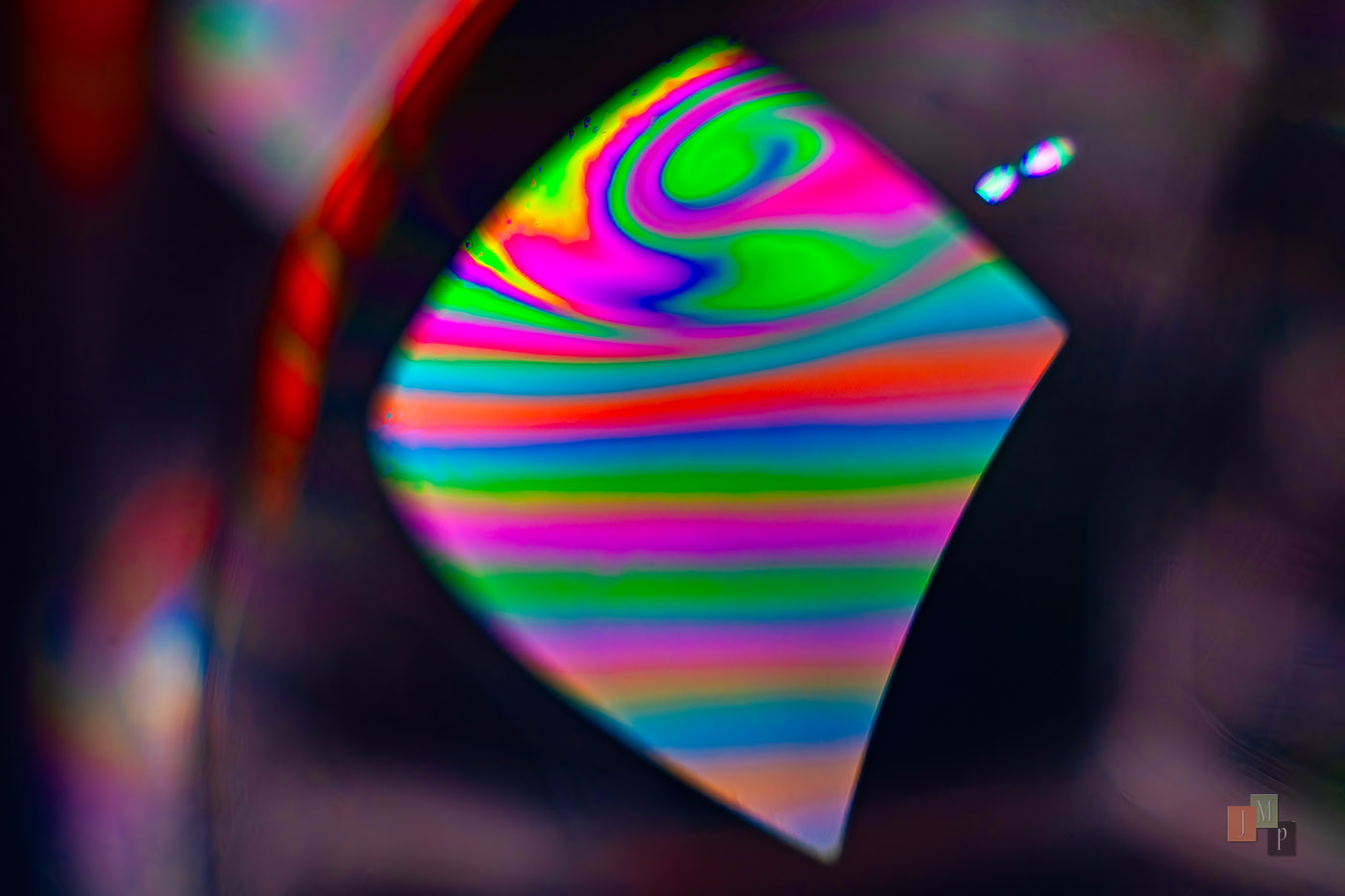
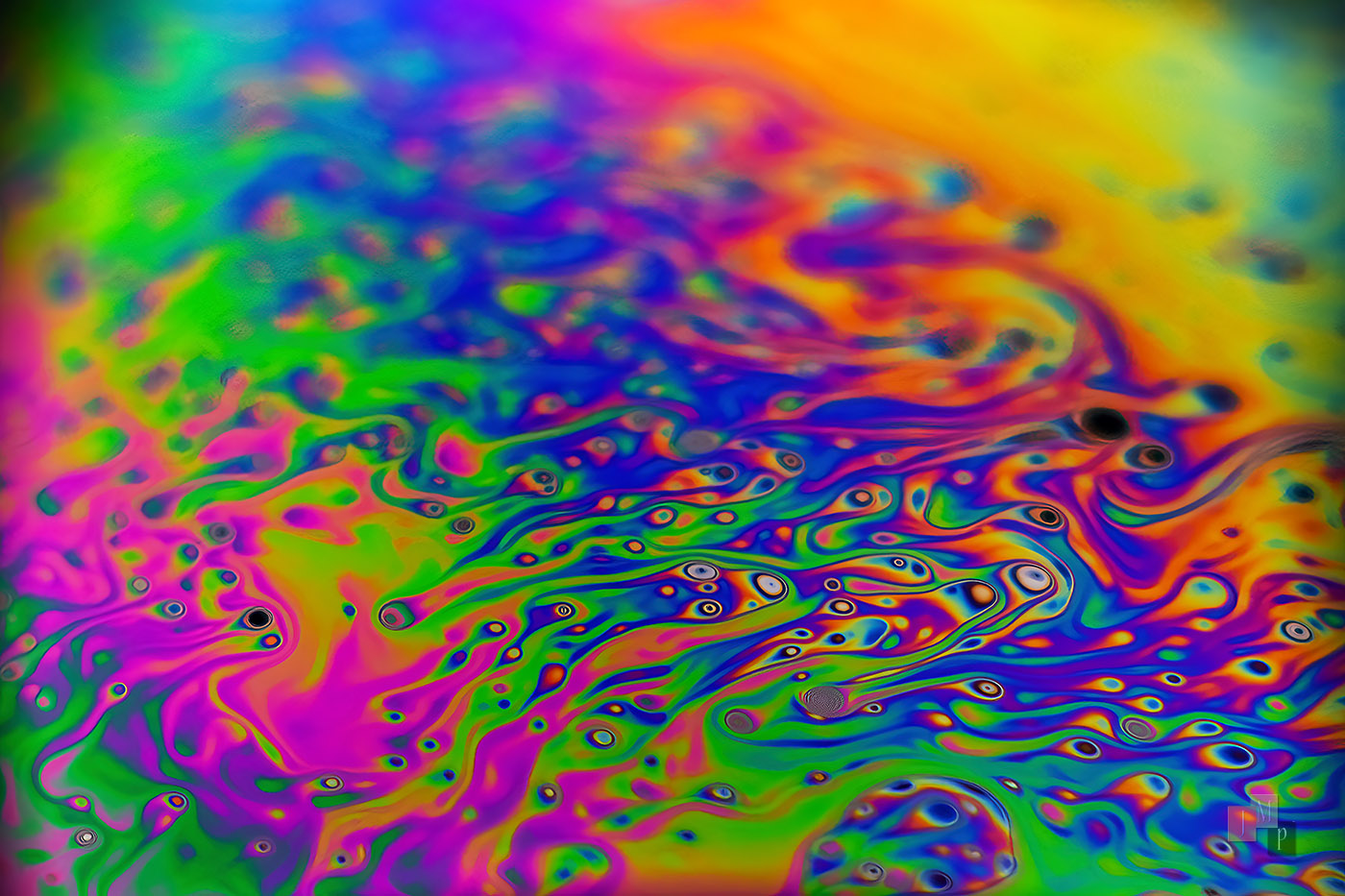
More Bubble shots using the D850 with the Nikkor 200mm-f4-ais-micro, 1.6xTC & 36mm extension tube. It was more about the color than the focus - which was done manually.
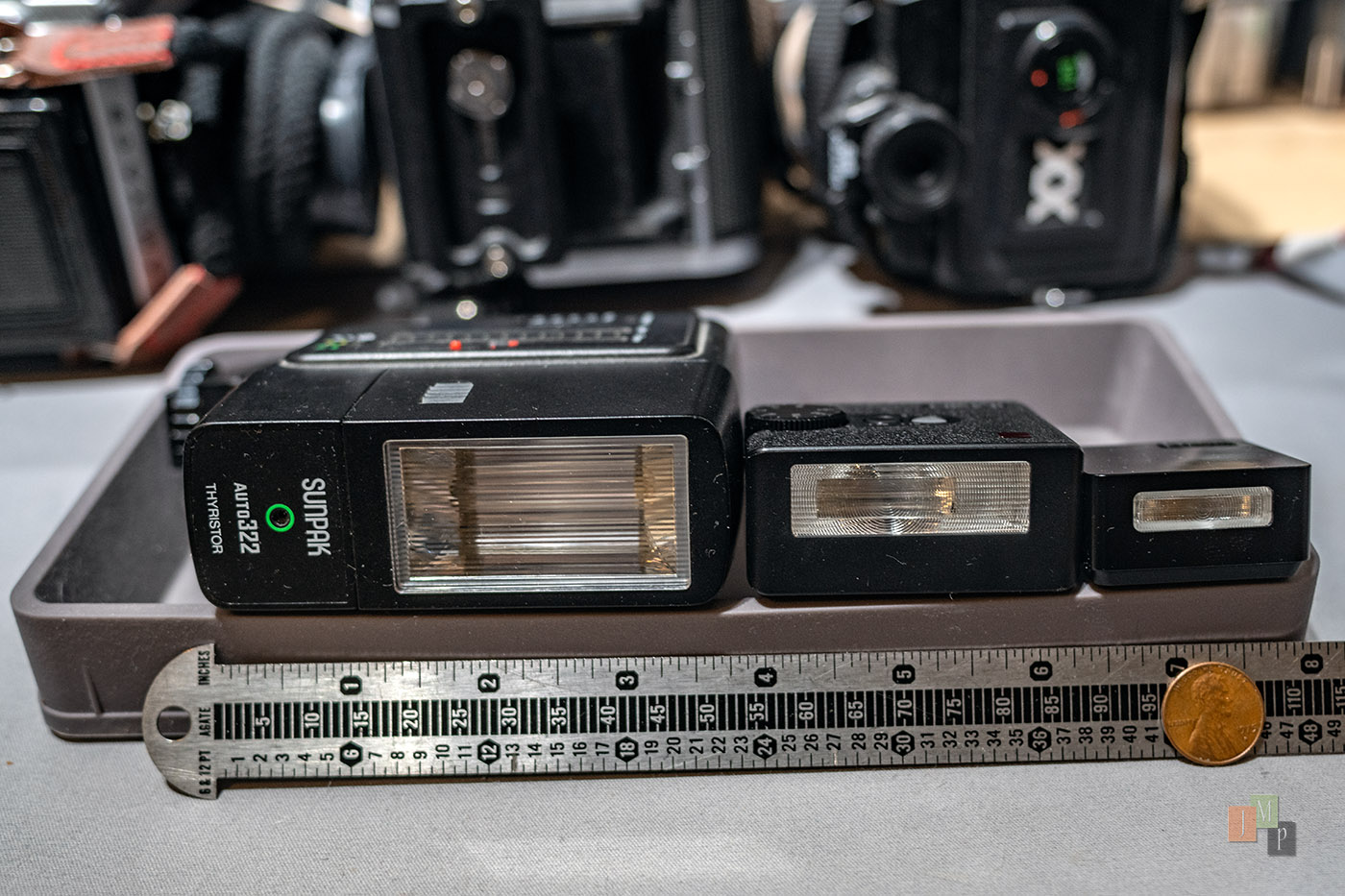
Before I left the press I had to make do with less than optimal lighting equipment. I had a small bag of Sunpak, and no name brand on camera strobes, plus slave triggers. To shoot interiors of model homes I would light areas of shadow with my odd collection, and there would be sometimes 3-4 strobes hidden within the shot at various power settings. Only the slave needed line of sight to the main strobe. I constantly was bouncing light off walls and ceilings to avoid harsh lighting and shadows (works great for portraits). My no name strobes were tiny, and were lost, dropped, or left behind at some point. So I tried to find some recently.. Sunpak's are amazing with builtin sync cords, and can articulate in many configurations, and my last 40 year old 321 auto works fine, but I added a 320, 322, and two 411's plus a couple small Godox iT20, and iM30. Dragging my studio strobes around isn't something I am willing to do anymore - too big & too heavy. Shot with the 28mm f2.8 ais - tiny softboxes are enroute.
@jimmuller Yes if direct sunlight hit the front it might rob some contrast or create flare, could test easily enough. More likely it just robs a bit of contrast and is totally invisible in practice.
@James Markus, those are excellent, the third is astounding. Too bold for my walls but would make a Great wall hanger for someone. (Maybe B&W?) Also love the small flashes, I used to do composites to hide flashes in the images with more directional (interesting) light. Small hide away lights to lift shadows would be fun to play with.
AdaptedLenses wrote:
@James Markus@, those are excellent, the third is astounding. Too bold for my walls but would make a Great wall hanger for someone. (Maybe B&W?) Also love the small flashes, I used to do composites to hide flashes in the images with more directional (interesting) light. Small hide away lights to lift shadows would be fun to play with.
Matt, the color palette is determined by the soap - it is too fluorescent (bold) for my tastes, and I preferred my first ones from 2015 color. Then it was a happy accidental discovery, and I got lucky that the interface was trapped between two large bubbles, rectangular, and lasted a long time. Playing with bubbles ended up getting me a client, and he made it the logo of his company. You never know sometimes.
jimmuller wrote:
Speaking of vintage lenses... I went by the photo store yesterday and bought an inexpensive "fingerprint filter" for the 55mm. This morning I considered which lens should get it. All my others have UV filters from film days. This plain "protection" filter is a noticeably different color, clear instead of slightly orange. So I started re-arranging them. In the process I noticed that the NIkon brand UV filter I've had on the 50mm for 50 years had slight nick in the glass. I could see it easily as a black spec looking through the back of the lens. I have no idea how long the nick has been there, but I'd say that filter served me well and owes me nothing. A few clicks on the aperture ring would hide the nick. Maybe that nick makes no difference to image quality or maybe it contributes to the image degradation with the aperture wide open. That filter will be retired with gratitude. I'll probably spring the bucks for an expensive Nisi for the 55, and put the inexpensive filter on the 50....Show more →
Interesting lesson. (I hope he didn't hit that lens with a hammer just to do that experiment.) The effect is about what I would have expected. The front end is all about light gathered by surface area. Even though the breakage looks severe a majority of that lens' surface was unaffected. Once light is chaotically scattered or even shielded it won't form an image. All the rest still works as intended as long as the lens pieces haven't shifted. Of course you and everyone else here knew that already.
OTOH if enough light is taken from one part of the lens and thrown to where it isn't supposed to be then it could become visible. The question is, how much is enough? Obviously that into-the-sun shot was plenty. I wonder, if he had opened up the aperture how different would it be? We and reviewers and the designers/authors of One Thousand and One Nights try to minimize flare, we obsess over subtleties and even pixel-level detail. We see, or think we see , differences between a 50mm and a 55mm. So we might as well keep up the pursuit of perfection, no?
Another iconic manual focus lens is the Nikkor 105mm f2.5 ai-s (grab your wallet Jim ). Though this is a poor test nowhere near the beauty of the Afgan Girl by McCurry it is a good test of my super tiny flash at about 7 feet, and lens at f4. Oscar is a "void" cat that in a darkened room is very hard to focus. He hangs around me constantly, but usually inside the MFD of whatever lens I am using.


 ) The effect is about what I would have expected. The front end is all about light gathered by surface area. Even though the breakage looks severe a majority of that lens' surface was unaffected. Once light is chaotically scattered or even shielded it won't form an image. All the rest still works as intended as long as the lens pieces haven't shifted. Of course you and everyone else here knew that already.
 , differences between a 50mm and a 55mm. So we might as well keep up the pursuit of perfection, no?