I have been enjoying your journey into false color.
On your Webb telescope comment - the array uses multiple narrowband IR filters to capture diferent spectra and then the data is heavily processed to shift IR wavelengths into visible. Webb Telescope image manipulation masterclass here:
Looks like you can download the worked files too. Have fun?
Colin
Thanks for the enlightening link, Colin! It was a very enjoyable video to watch, though I did not feel up to approaching the downloadable files and the mind-blowingly complicated job of processing them!
From the video, it appears that my take on the meaning of the information from the NYT article was pretty close to the truth. The differences include that the telescope apparently records only infrared light (i.e. not full spectrum) by using a range of filters in the infrared spectrum. The people who process the images then shift the range of infrared frequencies into the visible spectrum, which is to say that they make a false colour image out of the data, which would otherwise result in a monochromatic and thus much less understandable and less astrophysically informative image (informative in the sense that a line chart or bar chart can be informative, by using colour to indicate information like the chemical constituents of the cosmic matter). In doing so, however, they retain the relationships between the frequencies as they are shifted into the visible spectrum, which is not something any of us can reliably do with the images from our converted cameras.
A couple of other eye-opening pieces of information I took from that video are that:
1. Much of the processing (e.g. contrast, colour balance, and other variables that influence where components of the image appear to be in the perceived 3-dimensions of the subject as a result of the processing) is done on in response to input from scientists who view the images through the filter of current astrophysical theory, which I believe means that the results are to some extent biased to support current theory rather than whatever might more fully represent the objective reality. Thus the images might very well be processed differently in the future when the theory has evolved further.
2. The images are processed in a way that the people doing the processing believe would cause the images to make more sense to typical viewers (i.e. us regular folks).
In other words, there appears to be a similar amount of subjectivity and artistry involved in processing these images as there is when people like us process our infrared photos for false colour results.
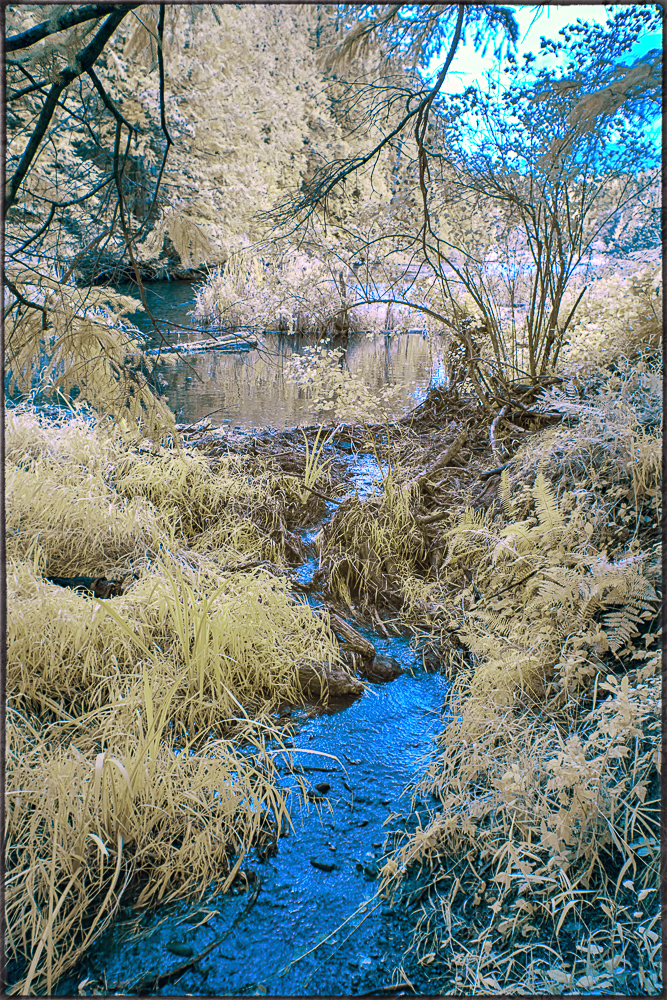
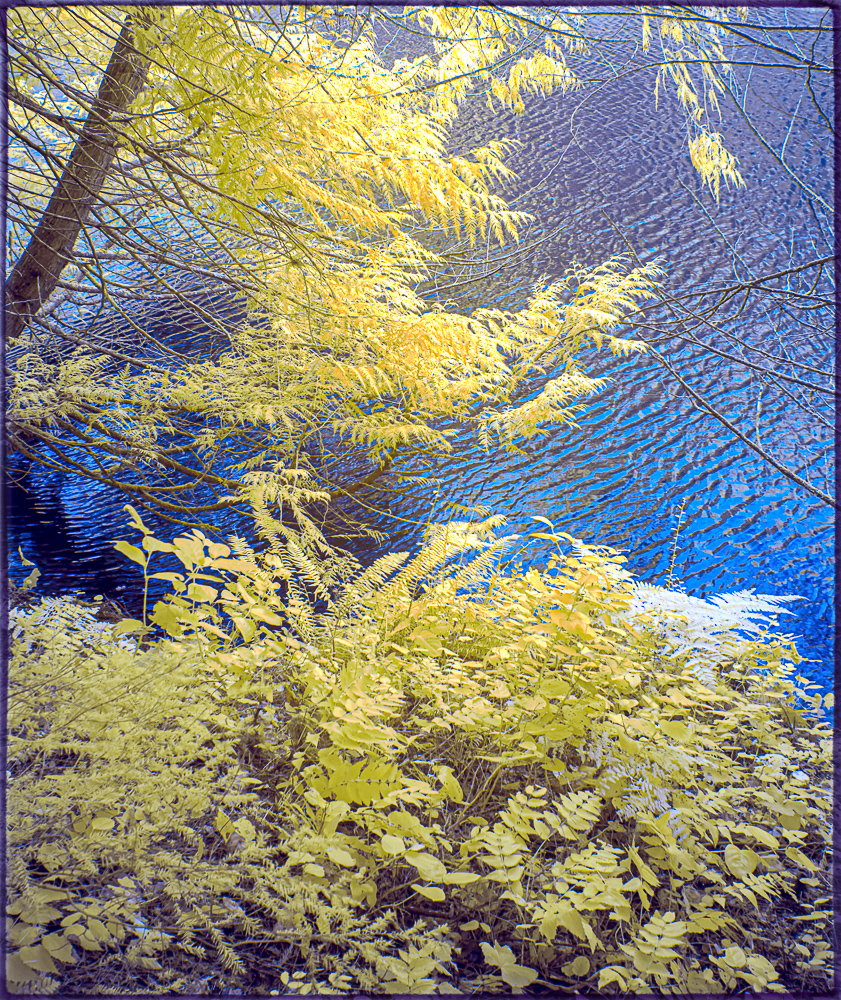
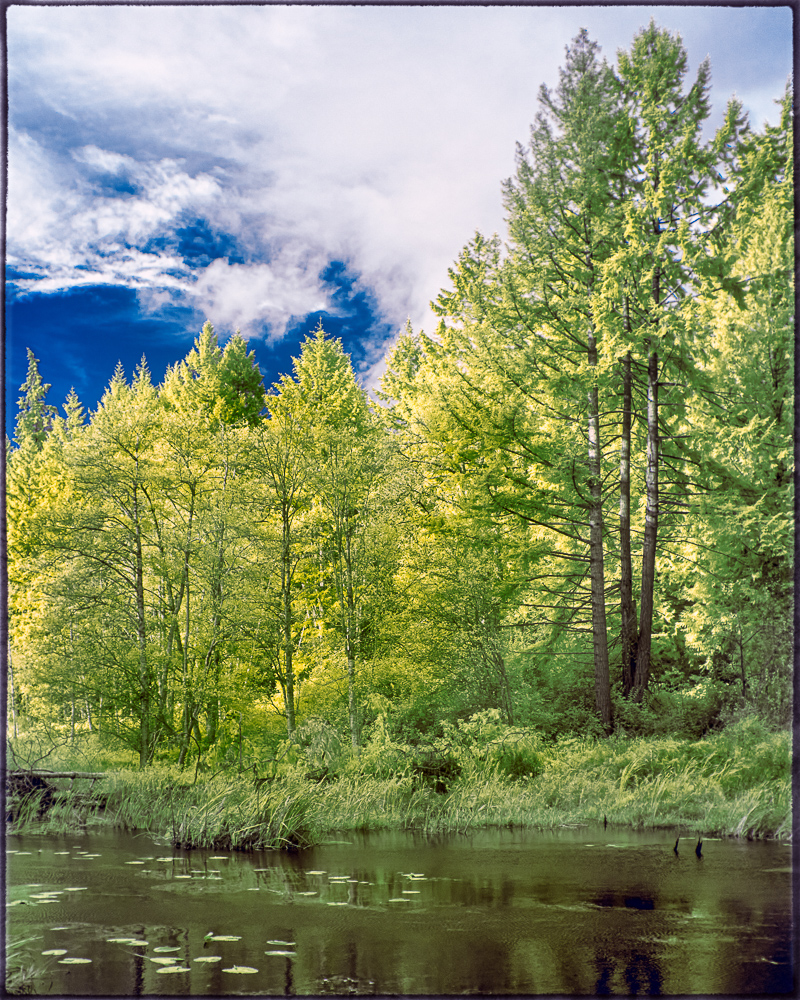
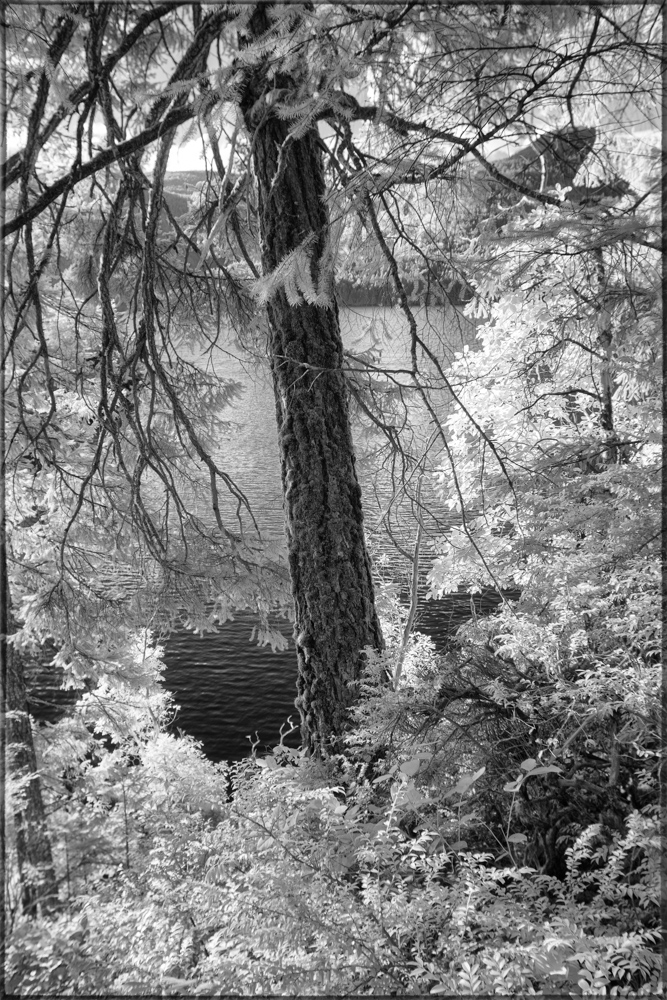
So, once again, I feel encouraged to post a few more false colour images (and one monochrome) from my IR converted Fuji X-T2. All four of these were taken in the fall with the 28 f/2 Ai-s on the Mitakon-Zhongyi focal reducer.
GroWeb wrote:
Thanks for the enlightening link, Colin! It was a very enjoyable video to watch, though I did not feel up to approaching the downloadable files and the mind-blowingly complicated job of processing them!
From the video, it appears that my take on the meaning of the information from the NYT article was pretty close to the truth. The differences include that the telescope apparently records only infrared light (i.e. not full spectrum) by using a range of filters in the infrared spectrum. The people who process the images then shift the range of infrared frequencies into the visible spectrum, which is to say that they make a false colour image out of the data, which would otherwise result in a monochromatic and thus much less understandable and less astrophysically informative image (informative in the sense that a line chart or bar chart can be informative, by using colour to indicate information like the chemical constituents of the cosmic matter). In doing so, however, they retain the relationships between the frequencies as they are shifted into the visible spectrum, which is not something any of us can reliably do with the images from our converted cameras.
A couple of other eye-opening pieces of information I took from that video are that:
1. Much of the processing (e.g. contrast, colour balance, and other variables that influence where components of the image appear to be in the perceived 3-dimensions of the subject as a result of the processing) is done on in response to input from scientists who view the images through the filter of current astrophysical theory, which I believe means that the results are to some extent biased to support current theory rather than whatever might more fully represent the objective reality. Thus the images might very well be processed differently in the future when the theory has evolved further.
2. The images are processed in a way that the people doing the processing believe would cause the images to make more sense to typical viewers (i.e. us regular folks).
In other words, there appears to be a similar amount of subjectivity and artistry involved in processing these images as there is when people like us process our infrared photos for false colour results.
So, once again, I feel encouraged to post a few more false colour images (and one monochrome) from my IR converted Fuji X-T2. All four of these were taken in the fall with the 28 f/2 Ai-s on the Mitakon-Zhongyi focal reducer....Show more →
Glen,
A perfect summary!
I suspect the scientists will be more interested in the instruments' spectroscopy capabilites rather than the imaging.
If anyone wants a high-res image from the James Webb telescope then I see that you can freely download from their website. US tax payers money after all.
I took the week between Christmas and New Year's Day off from work in the hopes that I would get to enjoy a little photography. Of course, it hasn't turned out that way. Between the frigid cold and the family activities, I haven't done any at all until this quick shot.
I received a Nikkor 28/3.5 Ai-S and a Lens Turbo II as a gift from my wife. I don't know how she knew I wanted these! While running a couple of errands yesterday, I stopped to take this quick test shot. I don't know that I've ever had a manual focus lens that snaps into focus the way this one does. I think it's going to be a fun lens to use.
spoupard wrote:
I took the week between Christmas and New Year's Day off from work in the hopes that I would get to enjoy a little photography. Of course, it hasn't turned out that way. Between the frigid cold and the family activities, I haven't done any at all until this quick shot.
I received a Nikkor 28/3.5 Ai-S and a Lens Turbo II as a gift from my wife. I don't know how she knew I wanted these! While running a couple of errands yesterday, I stopped to take this quick test shot. I don't know that I've ever had a manual focus lens that snaps into focus the way this one does. I think it's going to be a fun lens to use. ...Show more →
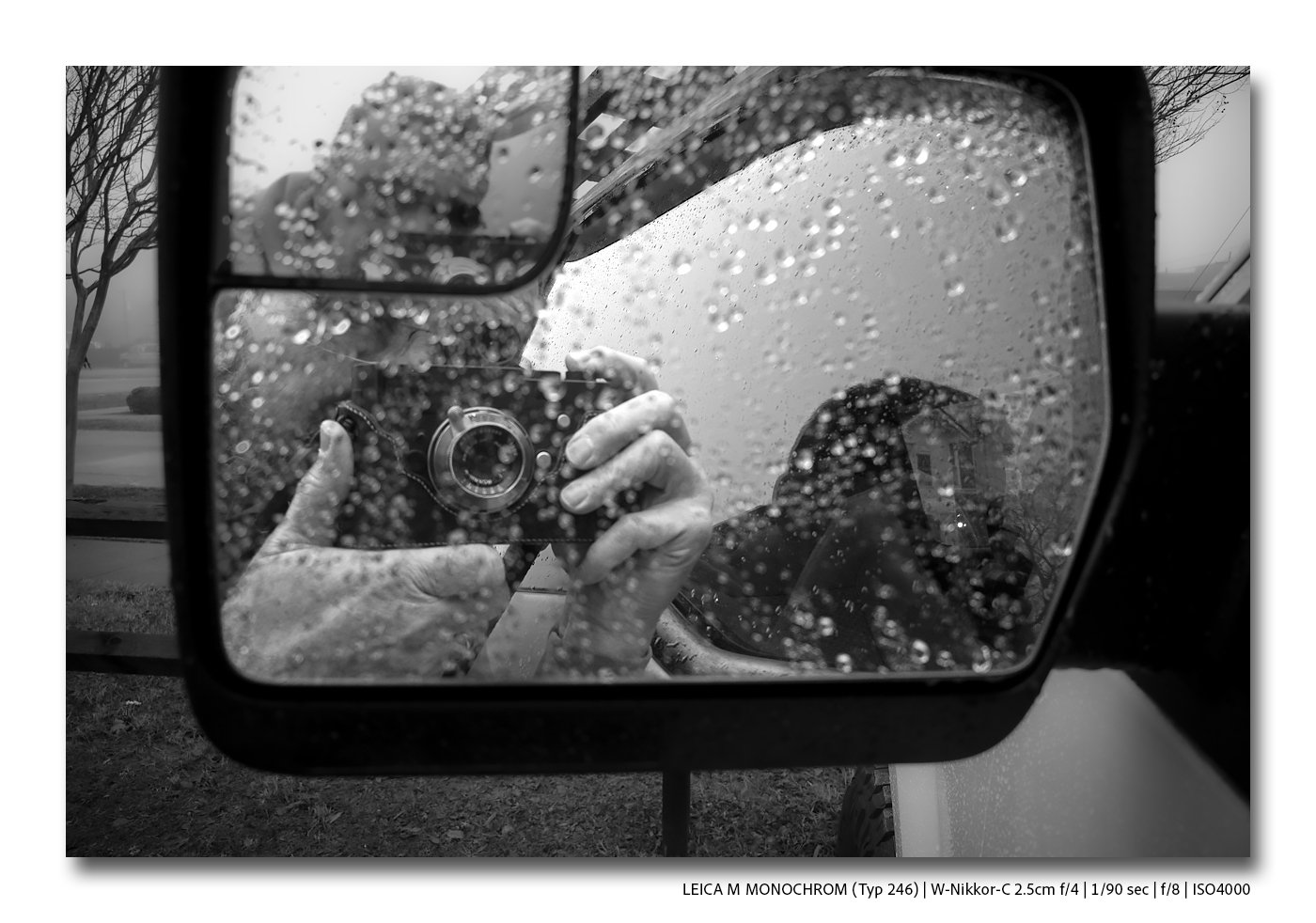
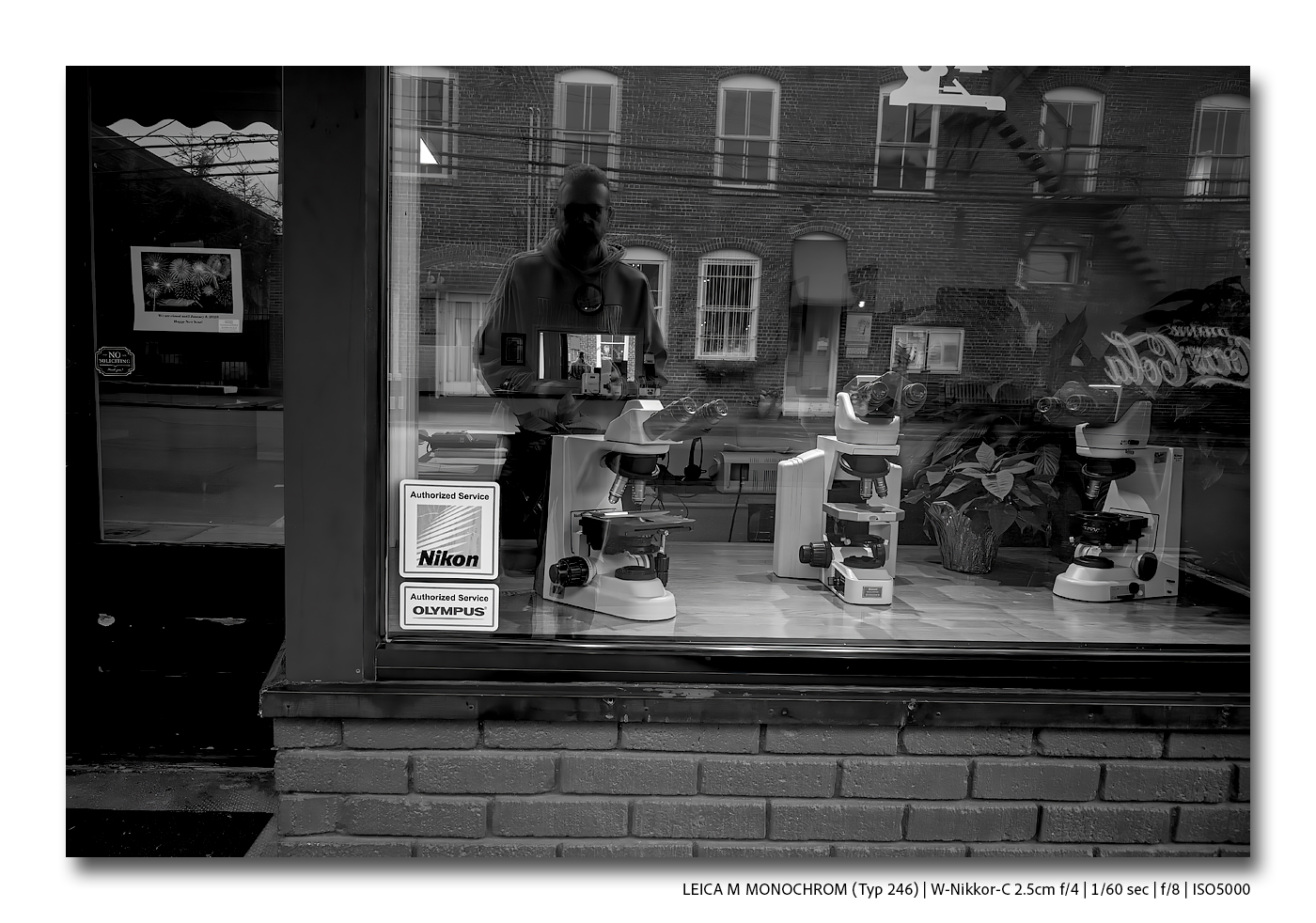
Woke up this morning to a foggy, damp, cool new year. Cup of coffee, grab the monochrom and embrace what is given and headed downtown. I used the Nikkor LTM 2.5cm/4, set the lens to f/8, Auto ISO and used zone focusing. Set my shooting limit to a "digital roll" of 24 exposures. Will see how they turn out and will post a few if they are keepers.


 While running a couple of errands yesterday, I stopped to take this quick test shot. I don't know that I've ever had a manual focus lens that snaps into focus the way this one does. I think it's going to be a fun lens to use.