rafaelcasd wrote:
It is simple Serge, I have no LTM film cameras and no interest in them, I chose to only use Nikkors and Nikons a long tie ago. if I were to get a rangefinder film camera it would be a S2 or S3.
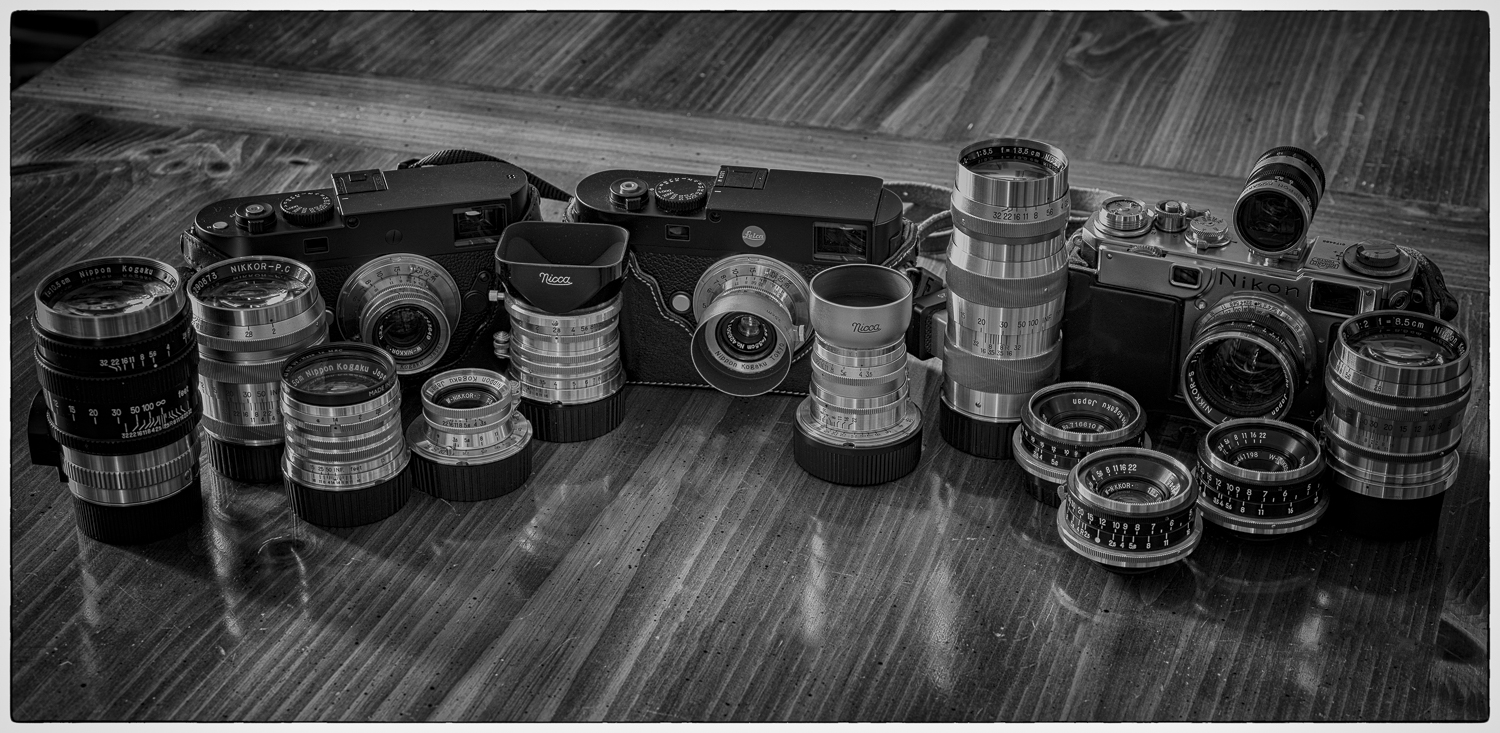
I will use my Nikkor rangefinder lenses on Nikon Z cameras, on these cameras the thread mount is a lesser option, a bayonet mount is much better mechanically than a screw-on lens and the S bayonet Nikkor are more abundant and cheaper than LTM ones. Nikon made every rangefinder focal length on the outside bayonet, which means the lens has its own helicoid, except for the 5cm. The rangefinder 5cm Nikkors I will have to get in LTM to have a focusing helicoid with it. There are focusing inner bayonet adapters but they are expensive.
What a beautiful boat, by the way, well captured....Show more →
Thanks, Rafael!
Great info on the S mount w-Nikkors and was not aware that they had their own helicoid.
I am only familiar with the 5cm f/2 LTM which is a beautifully built lens but have noticed the other focal lengths in this mount get pricey in a hurry. Will look into the S mount lenses specially since they are mechanically superior and much easier on the wallet.
Great info on the S mount w-Nikkors and was not aware that they had their own helicoid.
I am only familiar with the 5cm f/2 LTM which is a beautifully built lens but have noticed the other focal lengths in this mount get pricey in a hurry. Will look into the S mount lenses specially since they are mechanically superior and much easier on the wallet.
Regards,
Serge
Pardon me for posting this again (posted earlier in the year), but you can see the comparison of the LTM and S mount lenses.
Below, LTM on the left and center and five S mount lenses on the right side by the Nikon rangefinder.
I wouldn't know if the latter ones improve on the corner sharpness given this is the only 24mm I own.
I seem to recall Doug S had a review of 24mm variants (or maybe it was a 20mm comparison?).
Rafael might chip in here since he probably has one of each
My 18-35G at 24mm is better than the 24/2.8 NC however the 24/2.8 NC shines on my infrared DX camera so it spends a lot of time there. Alas, I don't have the hardware to answer your question.
Colin
Yes, I compared the 24s and 28s f2 vs f2.8 - mostly AIS versions. I was interested to see if the 24 f2.8 AIS was any sharper than the f2, as I have the f2 but keep reading that the f2.8 was sharper. I really only looked at these stopped down, as that's how I use them. I seem to recall it came down to more of an issue of field curvature, but I will dig through my old posts and find a link for you.
Following Doug's mountain sunrise pano with a seaside sunset pano.
This view point would be better at sunrise with the sun streaming from left of frame onto the town.
graytrekker wrote:
Yes, I compared the 24s and 28s f2 vs f2.8 - mostly AIS versions. I was interested to see if the 24 f2.8 AIS was any sharper than the f2, as I have the f2 but keep reading that the f2.8 was sharper. I really only looked at these stopped down, as that's how I use them. I seem to recall it came down to more of an issue of field curvature, but I will dig through my old posts and find a link for you.
Doug
I would be interested to see that if you can find it, thanks. So much if the performance of the shorter focal length lenses on digital seems to hinge on field curvature, I was quite surprised at the performance of my 24 2.8 AF on digital, I had been happy with it on film for more than 20 years! A 'lesser' brand of 24 I have (Sigma Superwide II) is the reverse, wasn't as good on film but better edge sharpness on digital.
Greetings everyone. We've had too much rain recently, destroying most of my subjects. Nevertheless, sometimes I just need to hear that Df shutter sound.
This one had the Sombre Picture Control in ViewNX-i applied.
One of my favorite TV shows. I was in VMAT-214 for a while and they didn’t like the name “Black Sheep.” Raphael can vouch for the fact I like the F4 Corsair.
In these troubled times I am meditating with micros.
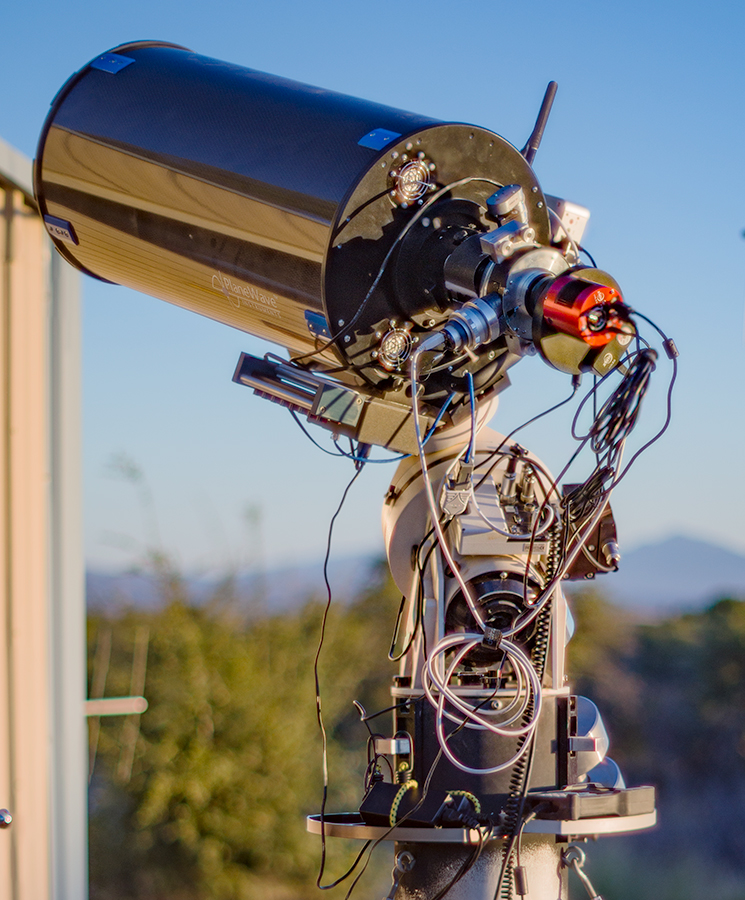
Actually while it looks complicated it simplifies the number of wires by using a fan-less I5 with a lot of USB ports.
I am using an Arduino driving a 17:1 gearhead stepper. This AF system can be used on virtually any lens including manual focus by changing a few parameters.
The guide scope is the ancient 300mm f/4 Takumar seen on the right in the previous set.
I am particularly pleased that I have an Arca Swiss mounting for the stepper.
Now I can sit in my warm room and do everything via WiFi.
Been getting marvelous results including 600mm shots of Andromeda, need to stack and share.
Samy Your light leak is surely the flexible bit on the hinge of your film holder and not the bellows.
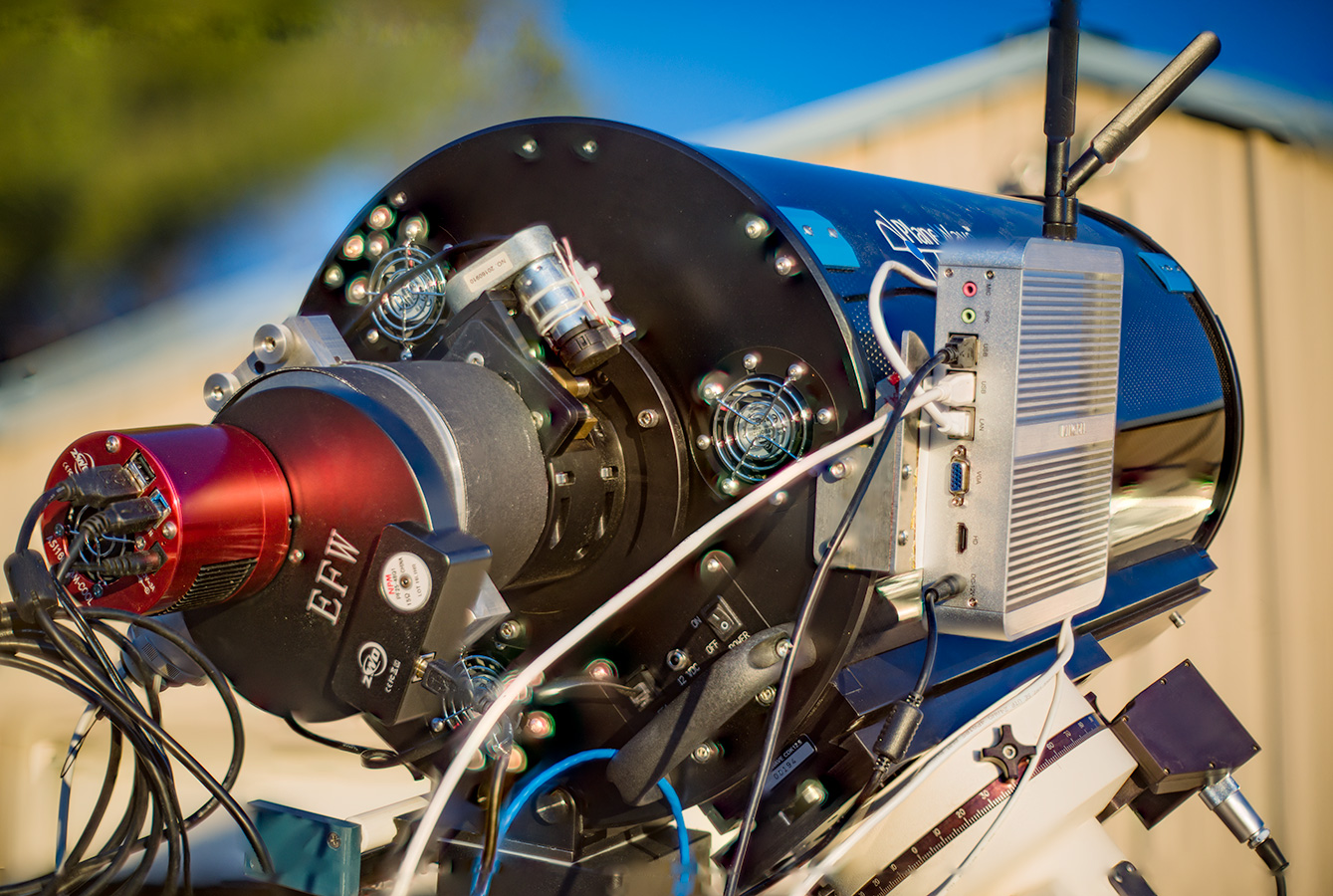
Here are a couple with the 2500mm f/8 mounted. There are still lot's of wires but with the mini pc mounted on the OTA there are far less that would get snagged once my power distribution is completed and shorter USBs arrive.
Here the guide camera is mounted ahead of the cold camera on a home made off-axis guider.
DeltaSigma wrote:
Following Doug's mountain sunrise pano with a seaside sunset pano.
This view point would be better at sunrise with the sun streaming from left of frame onto the town.
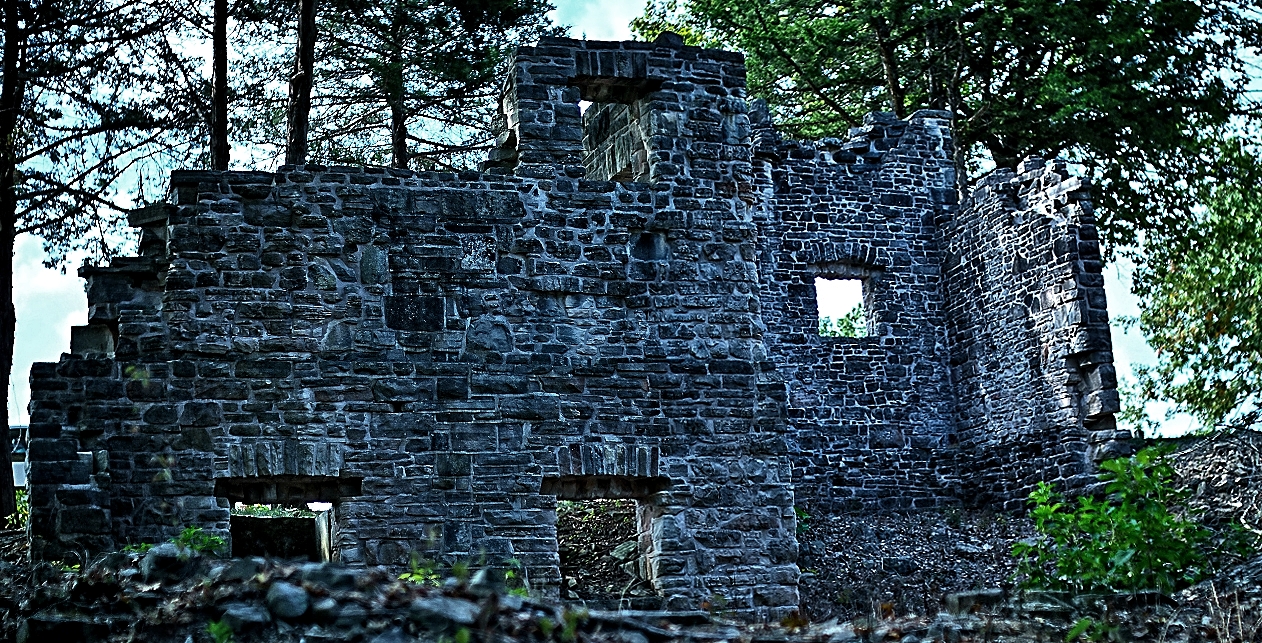
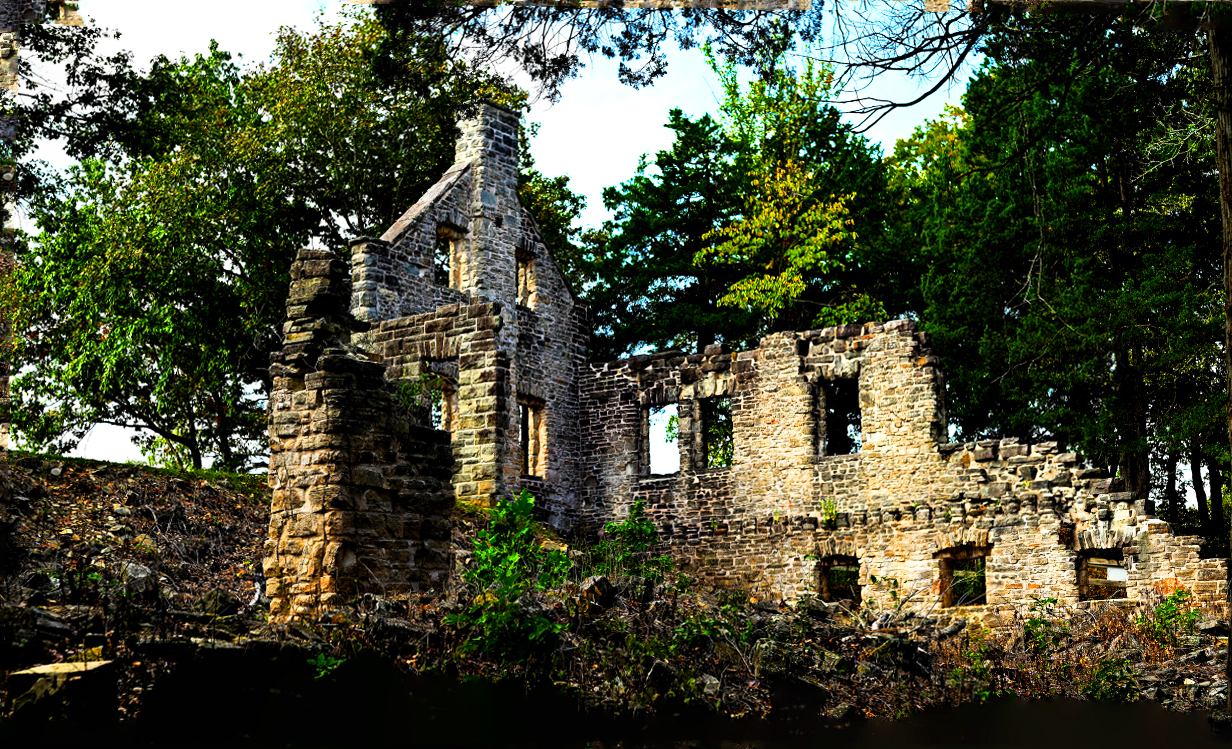
The Castle at Ha Ha Tonka. The story is all that's in these photo's mountain and spring were purchased by an old man who built the Castle for his retirement. It's quite the place and the photo's don't do it justice.
Shortly after it was built, the man died and it was left to his children. While vacant a fire destroyed the place. Must have been a big fire that destroyed two buildings? The heirs sold off the place to the State and it was designated as a State Park. As Mike Rowe would say "at least that's the way I heard it."